Every winter, back when I was coaching swim practice more than doing facials, I’d get the same question from at least one kid on the team: what do I put on my knuckles? They’re cracking again.
My answer changed depending on who was asking. A sprinter with sensitive skin got something lighter. A distance swimmer with rough, chlorine-beat hands got something heavier.
Shea, cocoa, mango- never the same butter twice, because the right one depends on the skin in front of you, the season, and what you’re actually trying to fix.
What is Shea Butter?
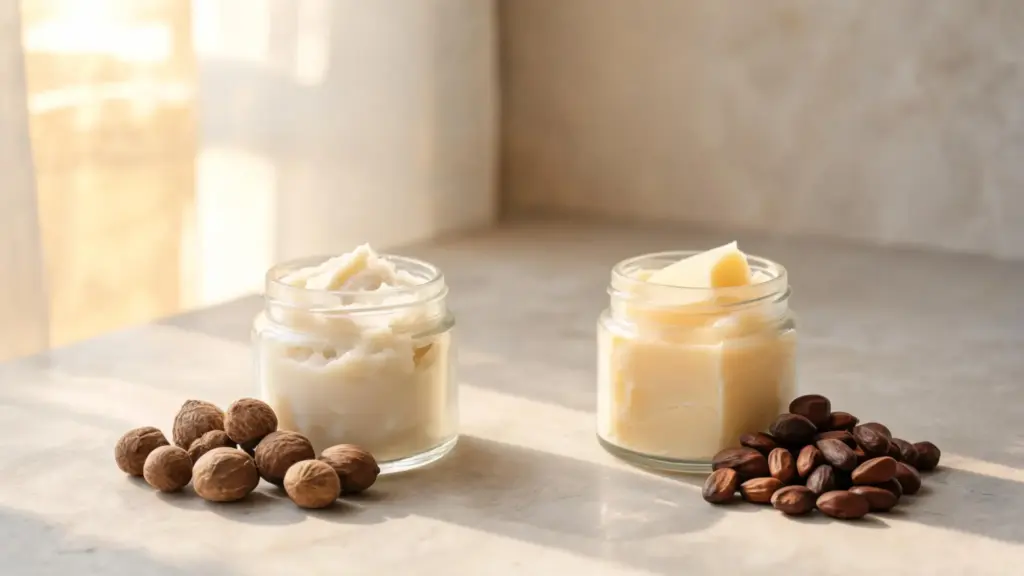
Shea butter comes from the nuts of the shea tree, which grows across parts of West and East Africa. It’s soft straight out of the jar, no warming required, and spreads easily between your fingers, leaving a protective, slightly rich feel behind.
One detail worth knowing before you buy: refined versus unrefined. Unrefined shea butter keeps its natural ivory or pale yellow color and a smoky, nutty scent.
Refined shea butter is processed to be closer to odorless and white. Neither is wrong; it’s a preference call, mostly about scent.
One note if you have a tree nut allergy: shea comes from a tree nut, and while highly refined versions are generally low in the proteins that trigger reactions, it’s not guaranteed. As of 2025, the FDA also no longer includes shea nut among the major tree nut allergens that require label warnings, but patch test first and check with an allergist if you’re unsure.
What is Cocoa Butter?
If shea butter is the flexible, everyday option, cocoa butter is the heavyweight, literally.
Cocoa butter is extracted from cocoa beans, and you can tell the moment you touch it: it’s firmer and denser than shea butter, often needing a bit of warming between your palms before it spreads easily.
It also has a noticeably higher melting point, which is why solid cocoa butter bars hold their shape at room temperature, and a rich, unmistakably chocolate-like scent that some people love and others find too strong for daily use.
Because of that thick, coating texture, cocoa butter is generally reserved for the body rather than the face.
Shea Butter vs Cocoa Butter vs Mango Butter at a Glance
These three plant butters share a rich, emollient feel, but their texture, scent, firmness, and practical uses differ enough to change which one feels right.
| Feature | Shea Butter | Cocoa Butter | Mango Butter |
|---|---|---|---|
| Source | Shea kernels | Cacao beans | Mango seed kernels |
| Texture | Soft and creamy | Firm and waxy | Firm yet smooth |
| Natural scent | Mild, nutty, earthy | Noticeably cocoa-like | Mild to nearly neutral |
| Skin feel | Rich and cushiony | Dense and sealing | Smooth and less scent-forward |
| Common body use | Dry skin and rough areas | Very dry body areas | Dry skin and body blends |
| Face consideration | May feel heavy | Often feels very heavy | Still depends on formula |
| Main appeal | Versatility | Firmness and scent | Texture and subtle aroma |
The table gives a fast starting point, but finished products can feel very different because oils, humectants, fragrances, emulsifiers, and processing all affect performance in everyday use.
Shea Butter vs Cocoa Butter: What Makes Them Different?
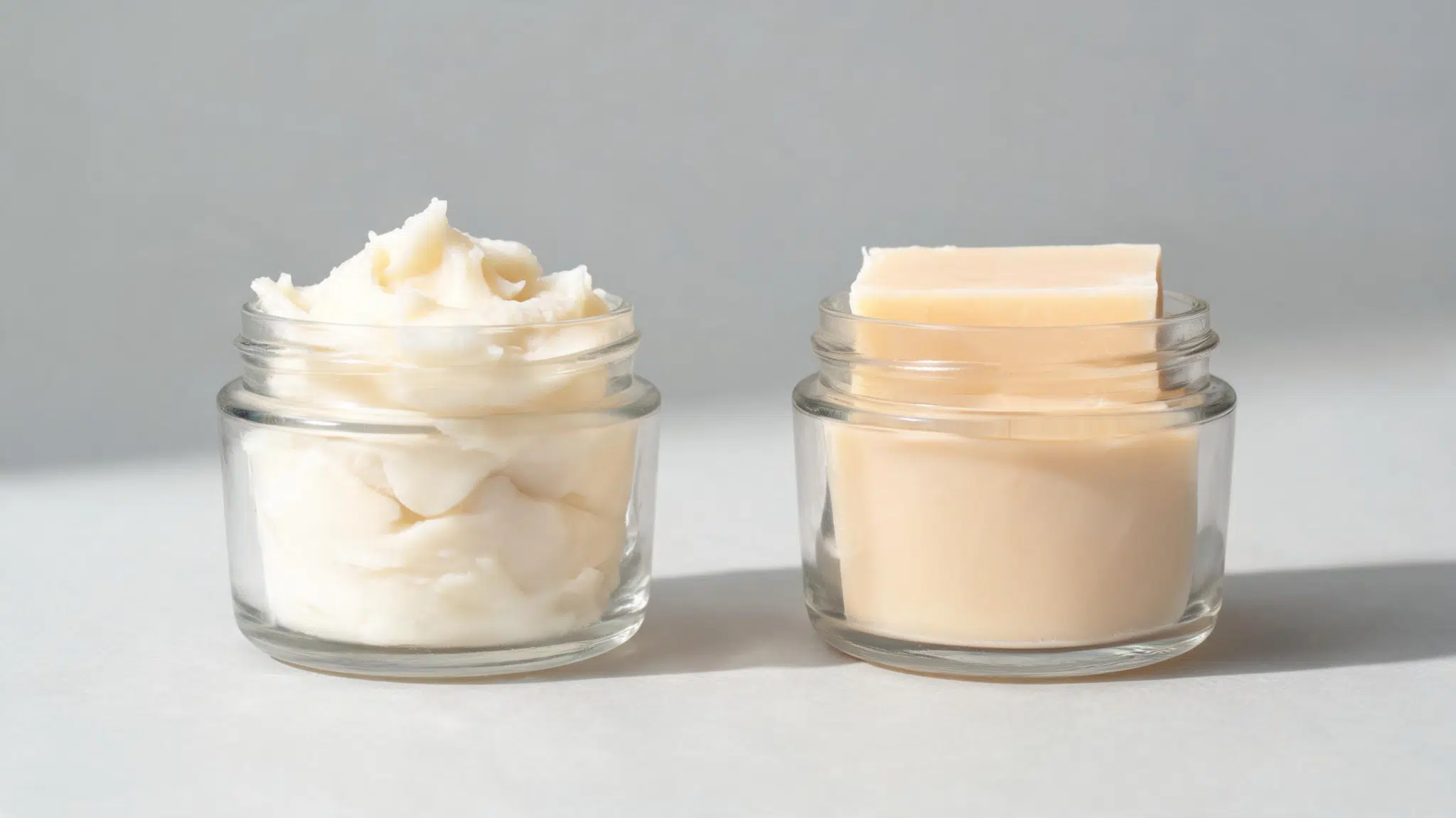
Shea and cocoa butter can both soften dry skin, but their source, texture, scent, skin feel, and use in cosmetic formulas make them noticeably different.
1. Source and Natural Characteristics
Shea butter comes from the kernels of the shea tree, Vitellaria paradoxa, while cocoa butter comes from cacao beans produced by Theobroma cacao.
Their different botanical sources influence their fatty-acid profiles, natural aroma, firmness, and appearance. Both are also available in refined and unrefined forms, which can change their scent, color, and overall sensory feel.
2. Texture, Firmness, and Spreadability
Shea butter is generally softer, creamier, and easier to scoop at room temperature. It warms quickly between the fingers and spreads comfortably over larger areas such as the arms and legs.
Cocoa butter is firmer and more solid, so it usually needs more warmth to soften. That extra firmness also makes it useful in balms and solid body products.
3. Scent and Sensory Experience
Unrefined shea butter usually has an earthy, nutty, or slightly smoky aroma, while cocoa butter has a more recognizable chocolate-like scent. Refined versions of both tend to smell milder.
Scent preference can strongly influence the choice, especially when the butter is used across large body areas or layered with fragranced products.
4. Skin Feel and Moisturizing Experience
Both butters act mainly as emollients that help skin feel softer and smoother. Shea usually leaves a rich but more flexible finish, while cocoa butter often feels denser and slightly more waxy.
The actual moisturizing experience also depends on the full formula, including oils, humectants, waxes, and other supporting ingredients.
5. Face, Body, and Cosmetic Uses
Shea butter appears frequently in creams, body butters, conditioners, lip products, and some facial moisturizers because of its softer texture.
Cocoa butter is common in rich body products, lotion bars, and balms where firmness is useful. For acne-prone facial skin, the complete formula matters more than choosing one butter by name alone.
The main differences come down to texture, scent, firmness, spreadability, and product use. Shea is generally softer and easier to spread, while cocoa butter is firmer, denser, and more strongly scented.
Mango Butter vs Shea Butter
Mango and shea butter have similar moisturizing roles, but their texture, scent, and skin feel differ. A shorter comparison makes the main differences easier to spot.
| Feature | Mango Butter | Shea Butter |
|---|---|---|
| Texture | Firmer and smooth | Softer and creamier |
| Scent | Mild to nearly neutral | Earthy or nutty when unrefined |
| Skin Feel | Smooth and rich | Rich and cushiony |
| Spreadability | Needs slight warming | Spreads more easily |
| Common Uses | Body butters, balms, creams | Creams, lotions, balms, hair products |
| Best For | Mild scent and firmer feel | Softer texture and richer spread |
Mango butter suits those who prefer a milder scent and firmer feel, while shea butter works well for anyone who wants a softer texture and easy spreadability.
Mango Butter Benefits for Skin and Body Care
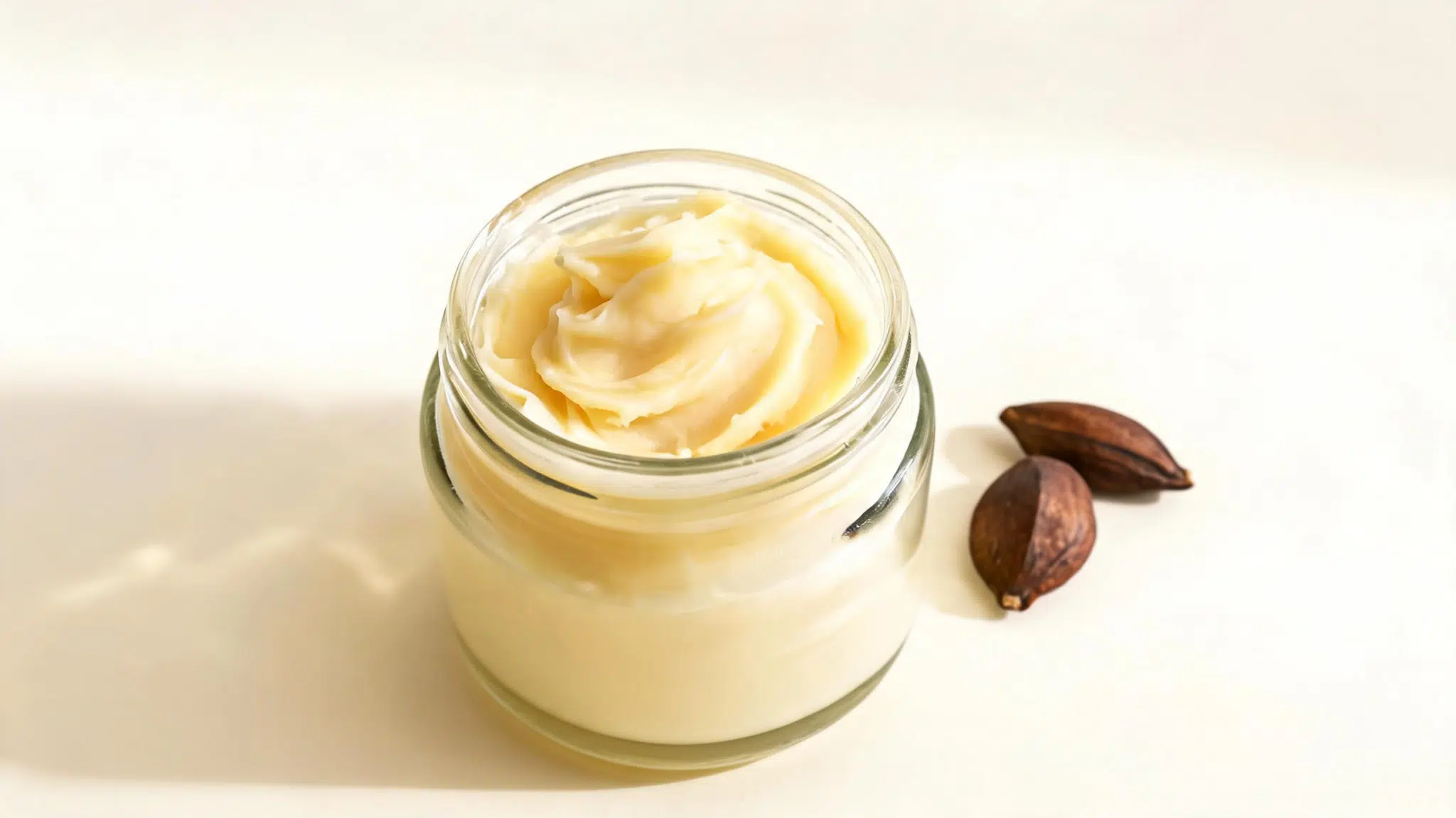
Mango butter offers practical skin and body-care benefits through its rich emollient texture, mild scent, and firm consistency, making it useful in several moisturizing formulas.
- Softens Dry and Rough Skin: Mango butter contains fatty acids that help soften rough, flaky, or dry-feeling skin. Its emollient properties support a smoother, more comfortable skin feel when used in moisturizing products
- Provides Richness Without a Strong Scent: Mango butter usually has a mild, subtle aroma, making it suitable for body butters, lip products, and fragranced formulas where a stronger natural scent could interfere with the product.
- Works Well in Balms and Body Butters: Its firm texture and fatty-acid composition make mango butter useful in balms and body butter blends. It can add structure while helping create a smooth, rich consistency.
These mango butter benefits make it a practical choice for moisturizing products, especially when a mild scent, firm texture, and comfortable skin feel are preferred.
DIY Blends: Shea, Cocoa, and Mango Butter Together
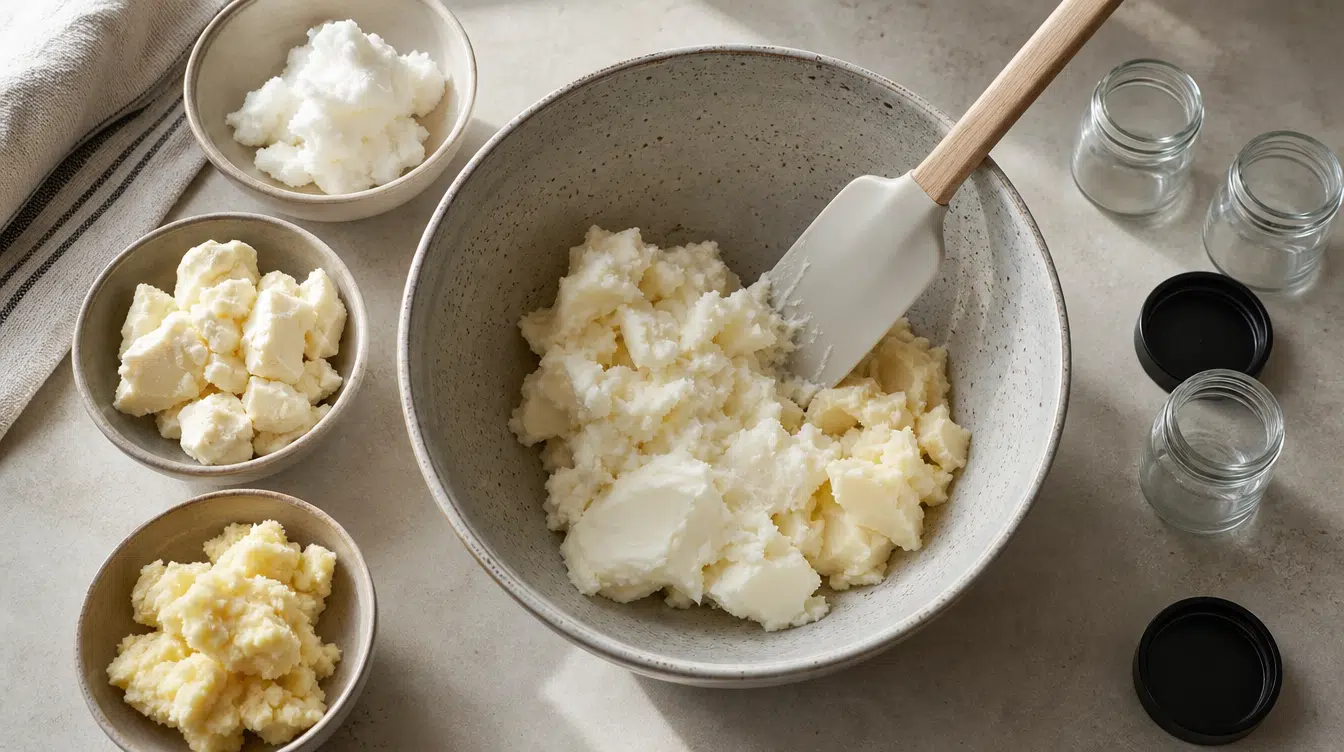
If you’ve been going back and forth trying to pick just one, here’s some good news: you don’t have to. Blending shea, cocoa, and mango butter lets you dial in exactly the texture, richness, and absorption you want, rather than settling for whatever a single butter gives you.
A few starting ratios to experiment with:
- Light body butter: mostly mango butter, with a smaller amount of shea butter mixed in.
- Rich body butter: equal parts shea and cocoa butter.
- Firm balm: cocoa butter combined with either shea or mango butter for structure.
If you do decide to blend your own, keep a few safety basics in mind: use clean tools and containers, store the finished mix away from heat and direct sunlight, and patch test the blend on a small area before using it more broadly.
Shea, Cocoa & Mango Butter: Which is Better for Your Skin Type?
Skin type matters when choosing between shea, cocoa, and mango butter. This quick comparison groups similar concerns to make the best fit easier to identify.
| Skin Type / Concern | Best Pick | Why It Matters |
|---|---|---|
| Dry, flaky skin | Shea / Cocoa | Shea suits regular moisture needs; cocoa offers a heavier feel for very dry areas. |
| Oily, acne-prone, or combination skin | Mango / Spot application | Mango often feels lighter, but any butter may feel heavy. Use mainly on dry areas and patch test first. |
| Sensitive skin / Pregnancy skincare | Any fragrance-free option | Simple, fragrance-free formulas and short ingredient lists matter more than the specific butter. |
| Rough elbows, knees, or heels | Cocoa | Its firmer, richer texture suits areas that need a heavier moisturizing layer. |
| Mature skin | Any | All three can support softness and comfort, but none should be treated as an anti-aging solution. |
| Stretch marks or scars | Any, supportive only | They can moisturize the area but are not proven to prevent, remove, or treat marks or scars. |
| Dry lips | Mango / Shea / Cocoa | Mango suits a lighter feel, while shea and cocoa offer richer coverage for very dry lips. |
These butters can support softness and comfort, but they are not proven treatments for scars, stretch marks, acne, or aging. Persistent concerns deserve professional advice.
What Real Users Say: Shea Butter vs Cocoa Butter on Reddit
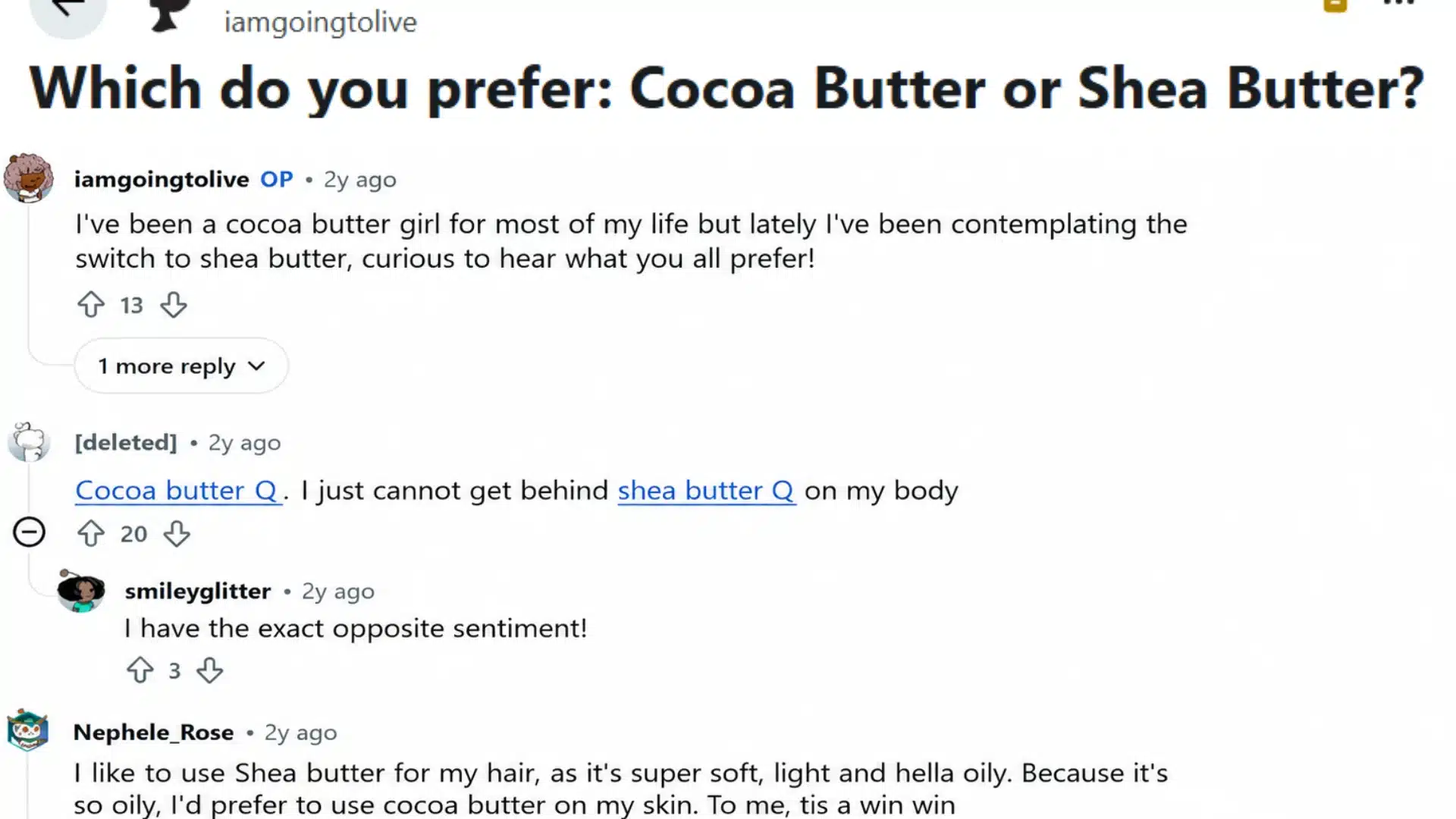
A Reddit discussion makes one thing clear: the cocoa butter vs. shea butter debate often comes down to personal preference. The original poster had relied on cocoa butter for years but was curious whether shea butter might be worth the switch.
The responses were noticeably divided. Some users stayed loyal to cocoa butter, praising how it felt on their skin and preferring it for everyday body care.
Others strongly favored shea butter, especially for its rich texture and the softness it provided after a shower. Some commenters found room for both, using them for different purposes.
The takeaway is simple: texture, absorption, scent, and how your skin responds may matter more than choosing a universal “winner.”
Common Mistakes When Choosing Shea, Cocoa, or Mango Butter
Most disappointing purchases come from choosing based on ingredient reputation alone. Looking at body area, formula, scent, and realistic claims can prevent several avoidable mistakes.
- Assuming natural means irritation-free: Plant-derived ingredients and added fragrance can still bother sensitive skin.
- Using body butter like facial moisturizer: Rich body formulas may feel excessive on oily or acne-prone facial skin.
- Buying cocoa butter for stretch-mark prevention: Moisturizing may improve comfort, but controlled trials did not show reliable prevention.
- Ignoring refined versus unrefined scent: Processing can change color, aroma, and the sensory experience of shea or cocoa butter.
- Judging a finished product by one ingredient: Humectants, oils, waxes, fragrance, and emulsifiers can change how the product performs.
A practical choice comes from matching the whole formula to skin needs. Ingredient names help narrow options, but they should not replace real product evaluation.
Tips for Getting Better Results From Body Butter
Body butter works best when the routine supports moisture retention rather than relying on a thick layer alone. Small application changes can improve comfort and reduce residue.
- Apply after bathing while skin is still slightly damp, which helps a moisturizer trap some of that water.
- Start with a small amount, then add more only where dryness remains noticeable.
- Warm firm cocoa or mango butter between the hands before spreading it over larger areas.
- Keep richer formulas on elbows, knees, heels, and hands when the rest of the body feels comfortable.
- Patch-test a new fragranced or botanical product before using it widely on easily irritated skin.
- Let each layer settle before dressing so clothing does not immediately wipe away the product.
Consistent, light-handed application usually feels better than coating the skin heavily. The right amount should leave skin comfortable, not persistently sticky or greasy.
Final Verdict
After everything we’ve covered, here’s the short version to keep in mind next time you’re standing in the skincare aisle debating shea butter vs cocoa butter or wondering if mango butter deserves a spot in your routine too.
A lot of people end up keeping all three on hand: a light mango butter cream for the face, a rich shea butter for everyday body use, and a firm cocoa butter bar for the roughest spots.
Still not sure which one is right for you? Grab a small jar of shea butter, patch test it this week, and see how your skin responds before committing to a full routine; your skin will tell you what it actually needs.
Frequently Asked Questions
Are Shea, Cocoa, and Mango Butter Vegan and Cruelty-Free?
All three are plant-derived, so they’re naturally vegan on their own. Whether a specific product is cruelty-free depends on the brand’s testing practices and any other ingredients blended in, so it’s worth checking the label or brand policy rather than assuming based on the butter alone.
How Long Do These Butters Last Once Opened?
Pure, unrefined butters generally stay usable for around one to two years if stored in a cool, dry place away from direct sunlight and moisture.
What’s the Difference Between “Raw” Butter and “Whipped” Butter?
Raw butter is the dense, solid form straight from processing. In contrast, whipped butter has been aerated to create a lighter, fluffier texture that spreads more easily and can feel less heavy on the skin, even though the underlying ingredient is the same.