
If you’ve got a jar of cocoa butter sitting in your bathroom cabinet, chances are you’ve wondered whether it’s meant for more than just your elbows and stretch marks.
It smells like chocolate, it melts into your skin like a dream, and it’s been a body-care staple for decades.
So naturally, the question comes up: can you actually put this stuff on your face?
Cocoa butter can be genuinely wonderful for very dry, flaky skin, but it isn’t the universal fix that skincare influencers sometimes make it out to be.
What is Cocoa Butter and How Does It Work on Skin?
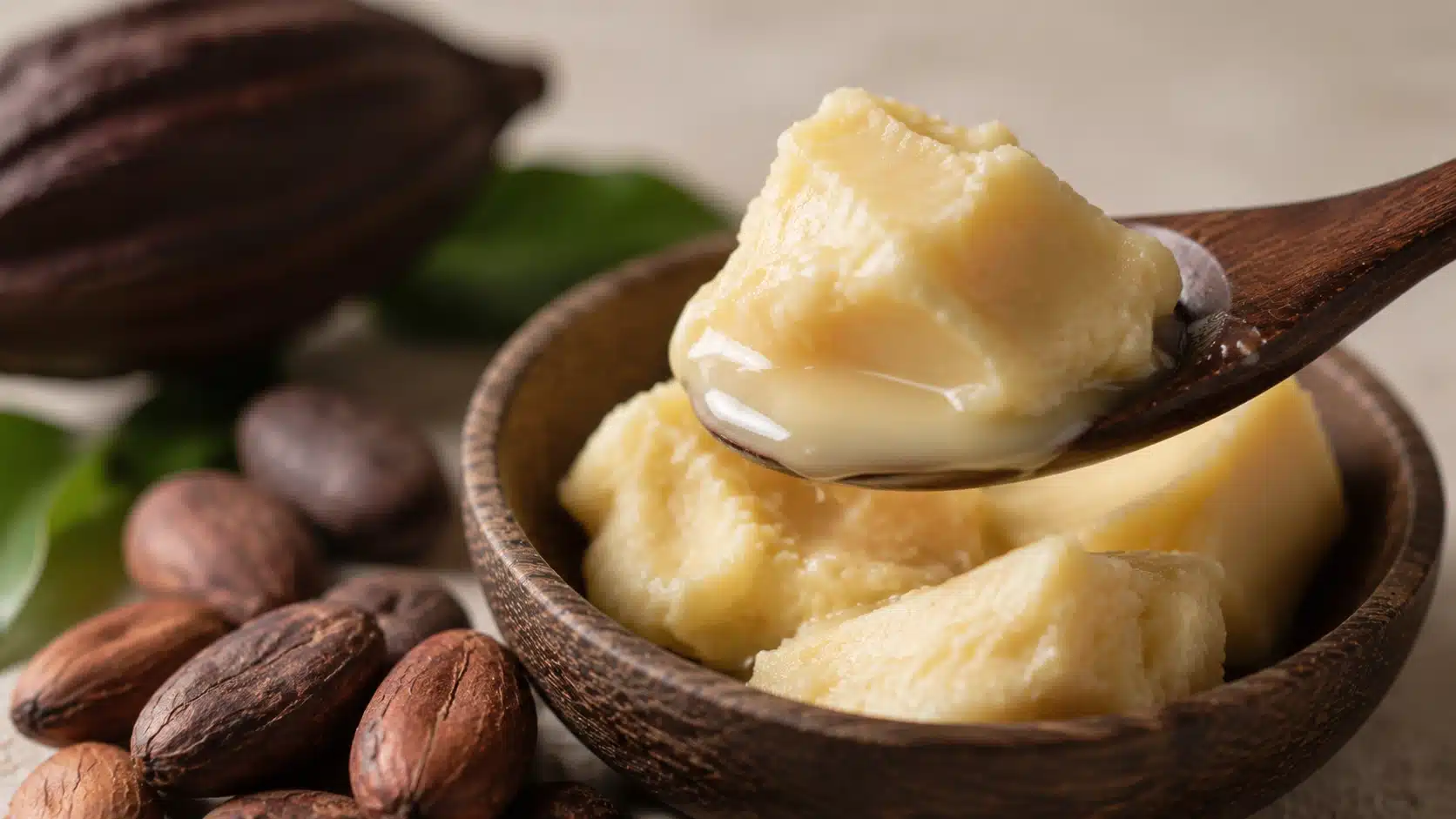
Cocoa butter is a fat extracted from cocoa beans yes, the same beans used to make chocolate. It’s solid at room temperature but melts as soon as it hits warm skin, which is part of why it feels so luxurious to apply.
It’s naturally rich in fatty acids like oleic, stearic, and palmitic acid, all of which help form a barrier on the skin’s surface that locks moisture in.
There’s a difference worth knowing here: raw, unrefined cocoa butter is thicker, more fragrant, and more concentrated than the cocoa butter found in most face creams and lotions.
Natural ingredients can be useful additions to skincare routines, but a look at NCCIH safety guidance highlights the importance of understanding how natural products are studied, used, and evaluated.
Is Cocoa Butter Good for Your Face?
Cocoa butter can be good for some faces, especially very dry or rough skin that responds well to rich moisturizers.
It works mainly as an emollient and occlusive, helping soften the skin and reduce moisture loss. Still, it is not the best choice for everyone.
Oily or acne-prone skin may react poorly because cocoa butter can feel heavy and may contribute to clogged pores, blackheads, whiteheads, or closed comedones.
People who already notice breakouts after using thick creams should be especially careful with pure cocoa butter. It is also important to remember that facial skin behaves differently from body skin.
A product that works well on dry elbows, arms, or legs may be too rich for the face, particularly in areas that produce more oil or clog easily. Keep that contrast in mind alongside its wider everyday applications across the rest of the body.
Benefits of Cocoa Butter for Your Face
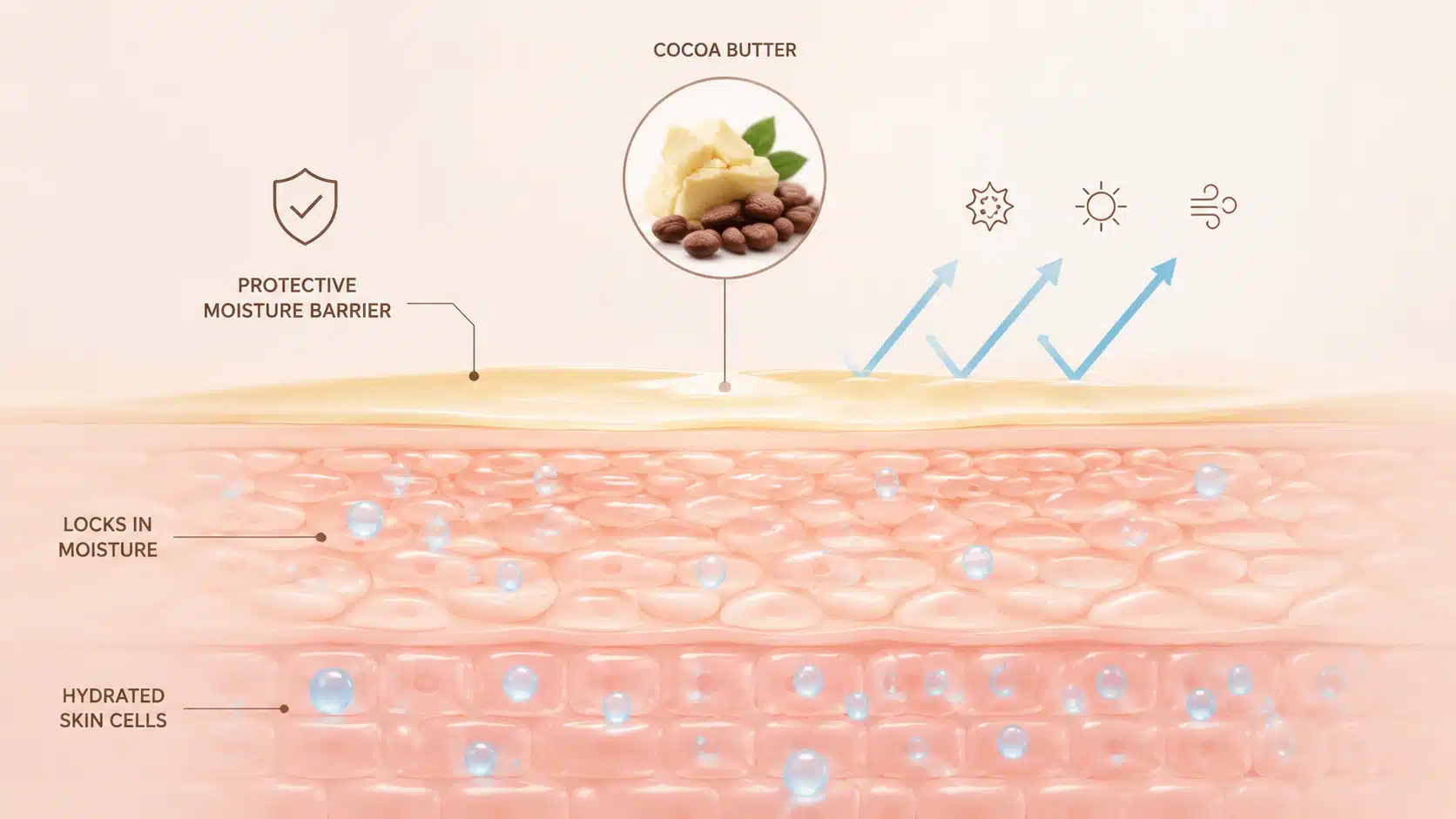
There’s a reason cocoa butter has stuck around in skincare for so long. When it’s used on the right skin type, in the right way, it brings real advantages to the table.
| Aspect | How It Works | Key Takeaway |
| Hydration Mechanism | Seals in existing moisture rather than adding water; acts like a raincoat, not a drink. | Best for skin that’s already dry, tight, or flaky |
| Moisturizes Dry Skin | Thick, occlusive texture reduces water loss throughout the day | Ideal richness for naturally dry skin |
| Supports Skin Barrier | Fatty acids reinforce the skin’s protective layer | Less redness, less flaking, faster recovery from stress |
| Softens Rough Areas | Targets dry patches: nose corners, eyebrows, chapped spots | Best used as a spot treatment, not all-over |
| Antioxidant Protection | Polyphenols help defend skin cells from pollution and UV stress | A bonus, not a substitute for sunscreen or serums |
At the end of the day, cocoa butter isn’t magic; it’s just really good at trapping the moisture your skin already has. If dryness, rough patches, or a compromised barrier are your main concerns, that sealing effect works in your favor.
Is Cocoa Butter Right for Your Face Skin Type?

Cocoa butter can behave differently across skin types, so suitability depends on dryness, oil production, sensitivity, and how easily pores become clogged during regular facial use.
1. Dry Skin
Dry skin may benefit from cocoa butter because its rich texture helps reduce moisture loss and soften rough areas. It can work especially well when the skin is not prone to acne or congestion.
For better comfort, apply a lighter hydrating product first, then use a small amount of cocoa butter to help seal that moisture into the skin daily.
2. Oily Skin
Pure cocoa butter is usually a poor match for oily skin because its dense texture can feel heavy and may increase the chance of pore congestion.
Oily skin still needs moisture, but a lightweight, non-comedogenic lotion or gel is often easier to tolerate. If you use cocoa butter, keep the amount very small and watch for new bumps or blackheads.
3. Acne-Prone Skin
Acne-prone skin needs extra caution with pure cocoa butter because rich, pore-clogging products can contribute to breakouts in some people.
A moisturizer labeled non-comedogenic is usually a safer starting point. These formulas are designed with acne-prone skin in mind and are less likely to add unnecessary heaviness while still keeping skin comfortable and adequately moisturized throughout the day.
4. Combination Skin
Combination skin often has dry cheeks and an oilier forehead, nose, or chin, so full-face application may not be necessary. Cocoa butter can be limited to genuinely dry areas that tolerate richer products well.
Keeping it away from frequently clogged zones may reduce unnecessary heaviness and make it easier to judge how the skin responds over time. For the oilier zones specifically, it can help to look into what shea butter offers, since it tends to sit lighter while still handling dryness on the cheeks.
5. Sensitive Skin
Sensitive skin and acne-prone skin are not the same, so cocoa butter may be tolerated by some sensitive faces and not others. A small patch test can help reveal redness, itching, or irritation before wider use.
Still, patch testing cannot reliably predict clogged pores that may develop gradually after repeated use, so watch for longer-term skin changes.
6. Mature or Very Dry Skin
Mature or very dry skin may appreciate cocoa butter because its occlusive texture helps reduce moisture loss and can make rough, tight skin feel softer.
That moisturizing effect may also make dry surface lines look less noticeable for a while. It should not, however, be presented as a proven treatment for wrinkles or as something that reverses signs of aging.
If richness is the priority but the choice still feels unclear, weighing shea against cocoa side by side can help you decide which suits mature skin best.
How to Use Cocoa Butter on Your Face More Safely
Cocoa butter is rich, so starting with a small amount and watching how the skin responds can help prevent unnecessary heaviness, irritation, or congestion.
- Step 1: Check the Formula and Use Less: Check whether the product is pure cocoa butter or a facial moisturizer containing Theobroma Cacao Seed Butter. Apply only a thin layer to dry areas.
- Step 2: Test a Small Area First: Apply a little cocoa butter to a small area before using it on your whole face. Stop if redness, itching, burning, or irritation develops.
- Step 3: Apply After Hydration: Use cocoa butter after a water-based serum or moisturizer. It mainly helps seal existing moisture into the skin rather than providing hydration on its own.
- Step 4: Watch for Congestion: Look for new blackheads, whiteheads, small bumps, or closed comedones. If breakouts increase after introducing cocoa butter, stop using it on the face.
- Step 5: Choose Lighter Options for Acne-Prone Skin: If clogged pores are common, choose a lightweight moisturizer labeled non-comedogenic or won’t clog pores instead of relying on pure cocoa butter.
Using cocoa butter carefully may suit dry skin, but persistent congestion suggests a lighter facial moisturizer may be a better everyday option.
Does Cocoa Butter Clog Pores?
Cocoa butter can clog pores in some people, especially those with oily or acne-prone skin. Its rich, occlusive texture helps reduce moisture loss, but that same heaviness can contribute to pore blockage and breakouts.
The American Academy of Dermatology warns that cocoa butter-containing products can clog pores and recommends non-comedogenic options for acne-prone skin.
A 2022 clinical study also found increased microcomedone formation after cocoa butter was applied to the skin, supporting its comedogenic potential.
Still, this doesn’t mean everyone will break out from using it. The finished formula, amount applied, frequency of use, and individual skin response all matter.
If blackheads, whiteheads, or small bumps appear after use, stop applying cocoa butter to the face and switch to a lighter, non-comedogenic moisturizer.
Is Cocoa Butter Good for Every Skin Type?
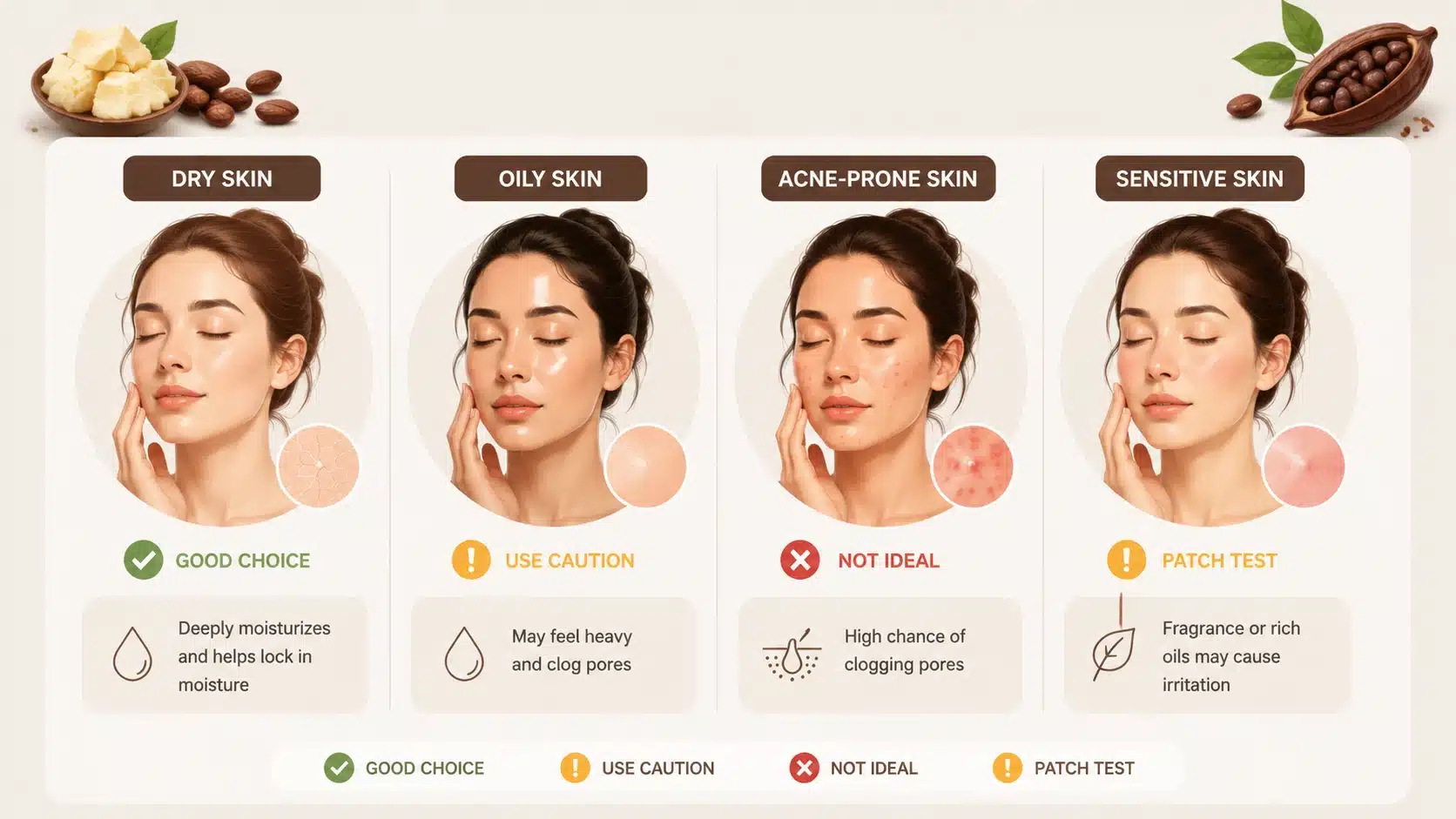
Since cocoa butter’s effects vary so much from person to person, it helps to break things down by skin type rather than treating it as a universal yes or no.
| Skin Type | Verdict | Reason | Best Use | Watch For |
| Dry Skin | May work well | Helps reduce moisture loss | Nightly, on cheeks and jawline | Rarely an issue here |
| Oily Skin | Use caution | Heavy texture may feel greasy | Small amount, dry areas only | Shine or clogged pores by midday |
| Acne-Prone Skin | Usually avoid | Higher chance of clogged pores | Skip, or patch test on a small area first | New breakouts within a few days |
| Sensitive Skin | Patch test first | Fragrance and rich oils may irritate | Diluted or blended with a lighter oil | Redness, itching, or stinging |
As you can probably tell, “good for your face” really depends on whose face we’re talking about. Dry skin tends to love cocoa butter; oily and acne-prone skin usually doesn’t, and sensitive skin is a toss-up worth testing carefully.
Possible Side Effects and Who Should Avoid Cocoa Butter
Even for people whose skin generally tolerates cocoa butter well, it’s worth watching for a few possible downsides and knowing upfront if you’re likely to run into them.
Possible side effects:
- Clogged pores, especially with daily, heavy application
- A greasy or heavy feeling, particularly in warmer weather
- New breakouts, most common in acne-prone skin
- Irritation from added fragrance, especially in raw or unrefined versions
You may want to skip cocoa butter if you:
- Experience frequent breakouts or active acne
- Have very oily or shine-prone skin
- Know your skin reacts poorly to rich oils or butters
- Have a known sensitivity to chocolate or cocoa-derived ingredients
If a product causes redness, itching, or irritation, a quick look at common rash triggers can help explain the reaction and guide your next step.
Cocoa Butter vs. Other Lighter Facial Moisturizers
Cocoa butter isn’t the only rich moisturizing option out there, and it’s worth knowing how it stacks up against the alternatives, including shea butter benefits that often come up in the same conversation.
| Option | Main Role | Texture | Useful For |
|---|---|---|---|
| Cocoa butter | Occlusive seal | Very rich | Very dry, non-acne-prone skin |
| Glycerin | Draws in water | Light | Most skin types |
| Hyaluronic acid | Binds water | Light | Dehydrated-feeling skin |
| Ceramide moisturizer | Supports barrier lipids | Cream or lotion | Dry, stressed skin |
| Squalane | Emollient softness | Silky | Skin avoiding heavy butter |
Shea butter tends to sit slightly lighter on skin than cocoa butter while still offering solid moisturizing power, which is part of why it’s often recommended as a middle-ground option for people who want richness without quite as much risk of clogged pores.
How to Choose a Cocoa Butter Face Product
Choosing the right cocoa butter product is about more than spotting the ingredient on the label. The full formula, texture, and skin type should all guide the decision.
- Choose products made for facial use
- Check for Theobroma Cacao Seed Butter on the label
- Pick lighter creams if skin gets oily easily
- Look for non-comedogenic claims for acne-prone skin
- Test a small amount before regular use
A suitable cocoa butter face product should moisturize without making the skin feel excessively greasy or congested. If breakouts increase, a lighter facial moisturizer may be a better choice.
Final Verdict
So, is cocoa butter good for your face? For dry skin that craves richness and barrier support, it absolutely can be used in moderation and on the right areas.
For oily or acne-prone skin, it’s a much riskier choice, and lighter alternatives will likely serve you better.
And if you’re somewhere in between, exploring shea butter benefits alongside cocoa butter can help you land on the richness level that actually agrees with your skin, rather than guessing and hoping for the best.
Curious whether cocoa butter, shea butter, or something else entirely is the right call for your skin? Try patch-testing a small amount tonight, watch how your skin responds over the next few days, and adjust from there.
Frequently Asked Questions
Can Pregnant Women Use Cocoa Butter on their Face?
Cocoa butter is generally considered safe during pregnancy since it’s a topical, non-medicated ingredient. Still, it’s a good idea to check with a doctor or dermatologist if you have specific skin sensitivities or conditions.
How Should Cocoa Butter Be Stored to Keep it Fresh?
Store cocoa butter in a cool, dry place away from direct sunlight. Heat can cause it to melt and separate, while prolonged sun exposure may degrade its antioxidant content over time.
Can Cocoa Butter Be Mixed with Other Facial Oils or Serums?
Yes, many people blend a small amount of cocoa butter with lighter oils like jojoba to soften its heaviness. Just introduce new combinations gradually to see how your skin responds.