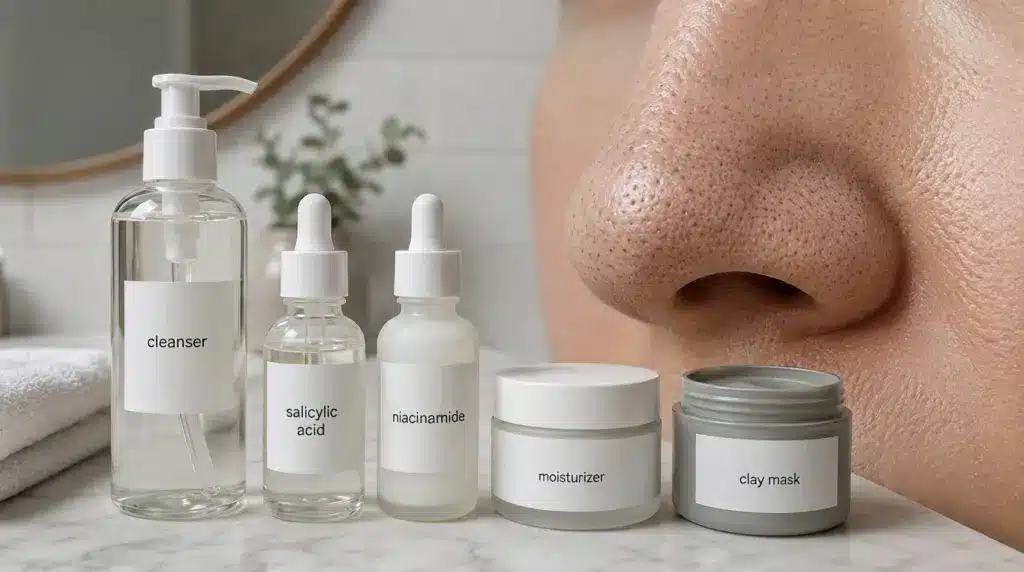
I spent years coaching competitive swimmers, which meant my face lived in chlorine and pool-deck sun for most of the year.
My nose paid for it, a scatter of tiny grey dots across the bridge that looked like they should scrub off and just wouldn’t. It took a while, and a fair bit of aesthetician training, to learn what I was actually looking at.
These are often sebaceous filaments; a normal part of your skin that helps move oil to the surface. They become more noticeable when excess sebum and dead skin cells collect in the pores.
If you’re looking to get rid of sebaceous filaments, the right approach is gentle care rather than harsh removal.
With the right at-home methods, skincare ingredients, and product choices, you can reduce their appearance and maintain smoother-looking skin.
What are Sebaceous Filaments?
Sebaceous filaments are tiny natural structures found inside pores that help move oil toward the skin surface. They contain sebum, dead skin cells, and other materials that support normal skin function.
They usually appear as small grey, white, or yellowish dots, especially on areas with more oil glands. The nose, chin, and forehead are common areas where they become easier to notice.
Unlike clogged pores, sebaceous filaments are not caused by dirt or poor hygiene, and they shouldn’t be confused with other bumps under skin such as cysts. They are present in everyone, although their visibility depends on factors like oil production, pore size, and skin texture.
People often notice them more under bright lighting or when looking closely in mirrors. While they cannot be completely removed, proper skincare can make them appear smaller and less prominent.
Why Do Sebaceous Filaments Appear on Your Nose?
The nose is one of the most common areas where sebaceous filaments become visible because it contains a higher concentration of oil glands.
When excess sebum combines with dead skin cells inside pores, these natural structures can become easier to see. Hormonal shifts can enlarge oil glands, which is part of why some people notice more visible pores than others.
Common factors that make them more visible include:
- Increased sebum production
- Hormonal changes
- Lack of regular exfoliation
- Heavy skincare or makeup products
- Enlarged pores
- Skin dehydration that affects texture
The appearance of sebaceous filaments does not mean the skin is dirty. Trying to remove all oil from the nose can actually make the skin uncomfortable and may disturb its natural balance.
A better approach is supporting normal skin function while managing excess buildup.
How to Get Rid of Sebaceous Filaments at Home Safely
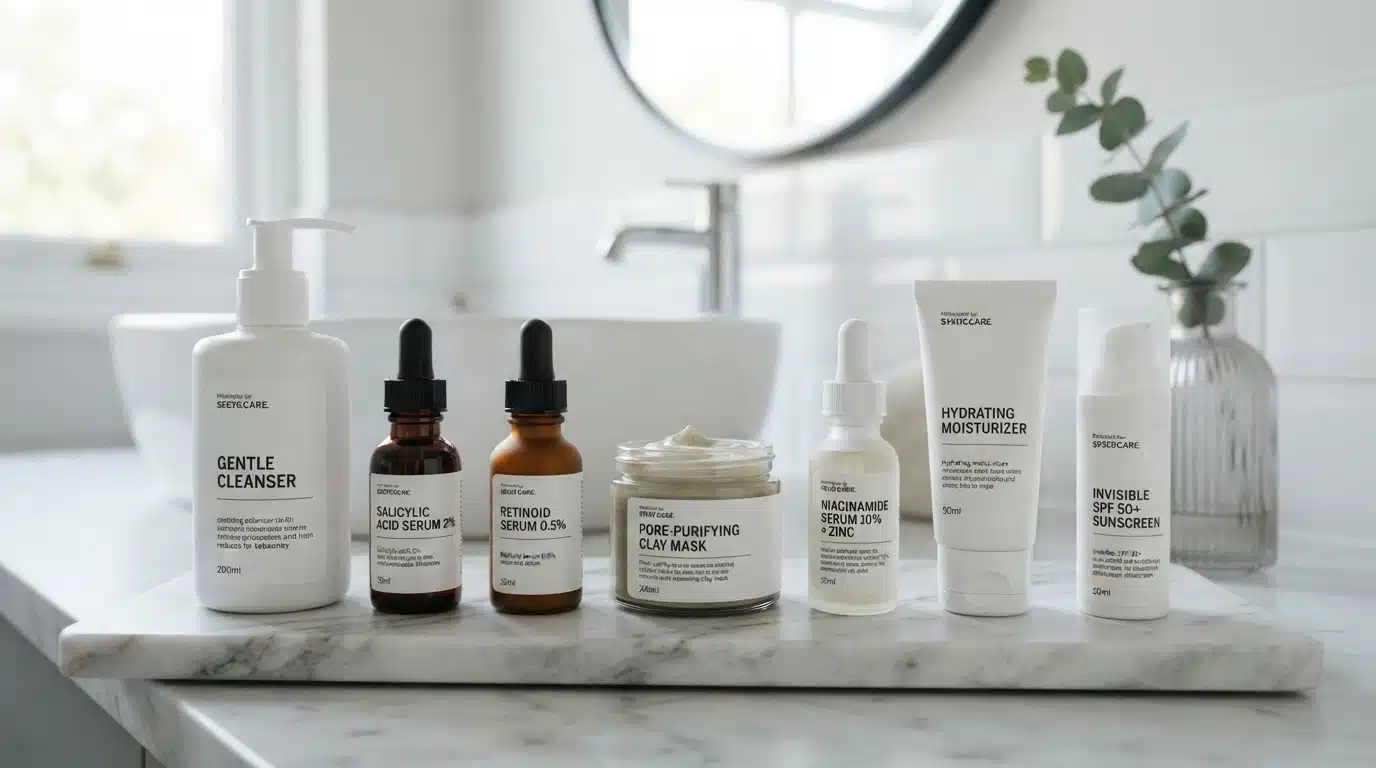
Reducing the appearance of sebaceous filaments requires a gentle and consistent approach. The right skincare ingredients can help manage excess oil, remove buildup, and improve the look of pores without irritation or damage to the skin barrier.
1. Use Salicylic Acid to Clear Oil Buildup
Salicylic acid is one of the most useful ingredients for managing visible sebaceous filaments because it can penetrate oil inside pores.
- It is a beta hydroxy acid (BHA) that helps loosen excess sebum and dead skin buildup.
- A 1–2% concentration is commonly used in skincare products and stays within FDA-approved limits for over-the-counter acne care.
- Beginners can start once or twice weekly and increase usage based on skin tolerance.
- Leave-on exfoliants may provide longer contact time compared with rinse-off cleansers.
Salicylic acid works best when paired with a simple routine. Using it too frequently may cause dryness or irritation, so balance is important.
2. Add Retinoids to Improve Skin Texture
Retinoids support natural skin renewal and can gradually improve uneven texture around pores. They are useful for people who want a long-term approach rather than temporary changes.
- Retinoids encourage regular skin cell turnover.
- They can help prevent buildup that makes pores look more noticeable.
- Beginners should start with lower-strength formulas.
- Apply them at night and follow with moisturizer.
Retinoids require patience because visible improvements usually take several weeks. Consistent use and proper sun protection are important for maintaining comfortable skin.
3. Try Clay Masks for Temporary Oil Control
Clay masks can help absorb excess oil from the skin surface and make pores appear cleaner for a short period.
- Kaolin and bentonite clay are common options.
- They work well for oily and combination skin types.
- Using a clay mask once weekly is usually enough.
- Avoid leaving masks on longer than recommended because they may cause dryness.
Clay masks aren’t a permanent solution, but they can help when paired with a regular skincare routine that also addresses deeper pore congestion.
4. Use Niacinamide to Support Oil Balance
Niacinamide is a gentle ingredient that works well for people who want better oil control without strong exfoliation.
- It helps regulate excess oil production.
- It supports the skin barrier and improves overall texture.
- A 4–5% concentration suits many skin types.
- It can be used alongside ingredients like salicylic acid and retinoids.
Because niacinamide is generally well tolerated, it is a useful option for sensitive skin that may not handle frequent exfoliation.
A balanced skincare routine can make sebaceous filaments less noticeable over time. Instead of trying to remove them completely, focus on keeping pores clear, controlling excess oil, and maintaining healthy skin.
Sebaceous Filaments vs Blackheads: Key Differences
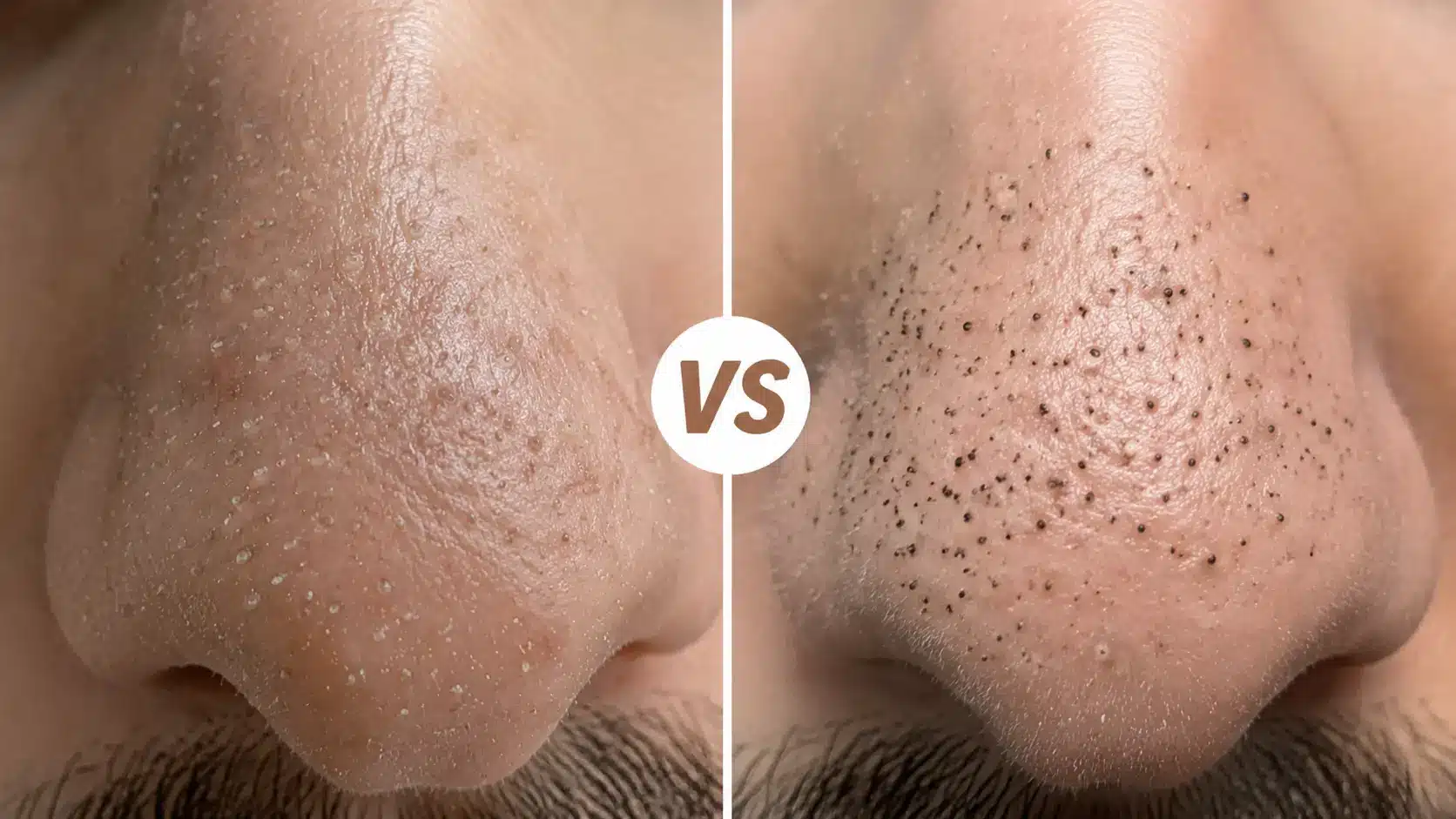
Sebaceous filaments and blackheads can look similar because both appear as small dots on the skin. However, they form differently and need different approaches, even though the same ingredients often target similar blackhead-prone areas.
| Feature | Sebaceous Filaments | Blackheads |
|---|---|---|
| Cause | Natural movement of oil through pores | Oil and dead skin trapped inside pores |
| Appearance | Small grey or light-colored dots | Dark spots with a raised texture |
| Location | Common on nose and chin | Often found on nose, cheeks, and chin |
| Nature | Normal part of skin function | Type of clogged pore |
| Treatment goal | Reduce visibility | Clear the blockage |
Tip: Avoid squeezing sebaceous filaments like blackheads. Since they naturally refill, frequent extraction can irritate your skin and make pores appear more noticeable. Use gentle ingredients like salicylic acid to manage their appearance instead.
Sebaceous filaments refill naturally because they are connected to normal oil production. Blackheads develop when pore contents become exposed to air and oxidize, creating a darker appearance.
How to Reduce Sebaceous Filaments on the Nose?
The nose tends to show sebaceous filaments more clearly because it produces more oil compared with many other areas of the face. A consistent routine focused on balancing oil and maintaining skin health can make them appear less noticeable.
- Step 1: Cleanse Gently: Use a mild cleanser to remove oil, sunscreen, and buildup without stripping the skin.
- Step 2: Apply Salicylic Acid: Use salicylic acid to clear oil and dead skin buildup inside pores. Start slowly to avoid irritation.
- Step 3: Avoid Harsh Removal Methods: Skip squeezing and frequent pore strips, as they only provide temporary results and may irritate the skin.
- Step 4: Moisturize Regularly: Apply a lightweight moisturizer to maintain hydration and support a healthy skin barrier.
- Step 5: Use Sunscreen Daily: Protect the skin with a broad-spectrum sunscreen rated SPF 15 or higher to maintain smoother texture and prevent environmental damage.
Following these steps consistently can help make sebaceous filaments less visible without damaging the skin or relying on temporary fixes.
Best Ingredients and Product Types for Sebaceous Filaments
Choosing products becomes easier when you understand what each ingredient does. A simple combination often works better than using multiple strong treatments together.
| Product Type | Main Purpose | Best Use |
|---|---|---|
| Salicylic acid exfoliant | Removes oil buildup inside pores | Oily and combination skin |
| Retinoid product | Improves texture and pore appearance | Long-term maintenance |
| Niacinamide serum | Supports oil balance and skin barrier | Sensitive and combination skin |
| Clay mask | Controls surface oil temporarily | Occasional oil management |
| Lightweight moisturizer | Maintains hydration | All skin types |
The best products are not always the strongest formulas. The right choice depends on skin sensitivity, oil production, and how well the routine fits daily habits.
Things You Should Avoid While Treating Sebaceous Filaments
Avoiding common skincare mistakes can help prevent irritation and keep sebaceous filaments less noticeable. Gentle care is more effective than aggressive methods that may damage your skin barrier.
- Do not squeeze or pick them: Sebaceous filaments refill naturally, and squeezing them often can cause irritation, redness, and unwanted skin damage.
- Avoid harsh physical scrubs: Rough exfoliation can disturb your skin barrier, increase sensitivity, and make your skin texture appear uneven over time.
- Do not overuse exfoliating acids: Overusing active ingredients may cause dryness, irritation, and discomfort instead of improving pore appearance.
- Avoid frequent pore strips: Pore strips may remove surface buildup temporarily but cannot stop sebaceous filaments from returning again.
- Do not skip moisturizer: Even oily skin needs hydration to maintain balance, support the barrier, and prevent excess dryness.
- Avoid mixing many active products: Combining strong ingredients together can increase irritation and make your skincare routine harder to manage.
Building healthy skincare habits helps manage sebaceous filaments without unnecessarily stressing your skin. Focus on consistency, gentle products, and realistic expectations for better results.
When to Seek Professional Treatments
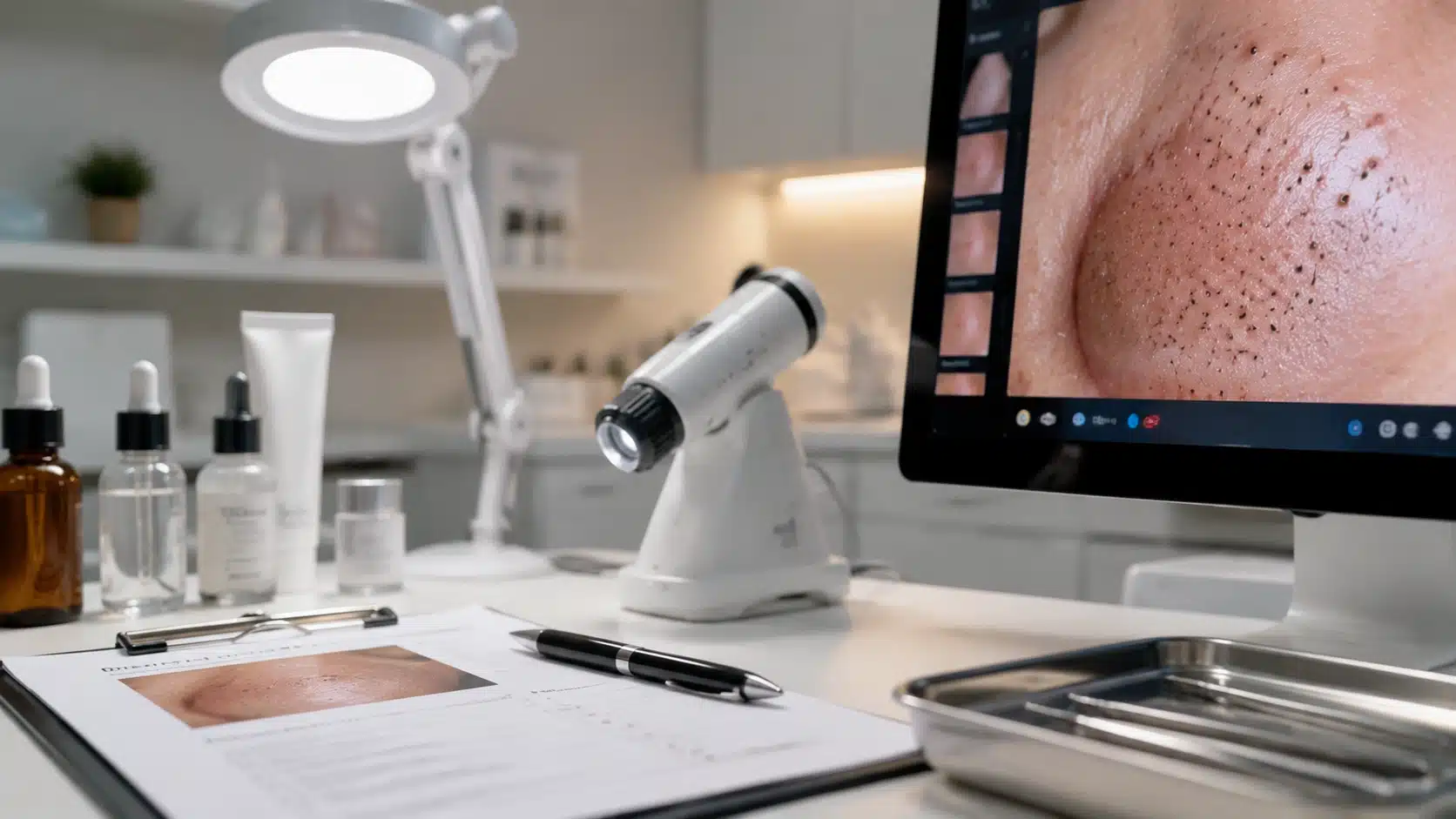
Sebaceous filaments are generally harmless and can often be managed with a consistent skincare routine. However, professional guidance may help if concerns continue despite using suitable products and gentle care.
Consider visiting a dermatologist if clogged pores do not improve, or if sebaceous filaments appear alongside frequent breakouts, painful pimples, or other acne-related concerns.
Professional advice is also recommended if you notice redness, swelling, irritation, or increased skin sensitivity around affected areas.
A dermatologist can evaluate your skin type and suggest suitable treatments, including prescription options like stronger retinoids or targeted solutions when needed.
Seeking expert help can clarify your skin concerns and support better long-term results when regular skincare doesn’t provide enough improvement.
How Long Does it Take to See Results From Treatments?
Sebaceous filaments do not disappear overnight because they are connected to natural oil production. Results depend on the ingredients used, skin type, and how consistently you follow the routine.
| Treatment | Expected Timeline |
|---|---|
| Salicylic acid | Around 4–8 weeks with regular use |
| Retinoids | Around 8–12 weeks for visible texture changes |
| Niacinamide | Several weeks for oil balance improvements |
| Clay masks | Temporary improvement after use |
| Consistent skincare routine | Gradual long-term improvement |
The goal isn’t to remove sebaceous filaments forever, but to make them less noticeable. A routine that is easy to maintain usually creates better results than aggressive methods used occasionally.
Final Thoughts
Sebaceous filaments are a natural part of healthy skin, but their appearance can be reduced with the right skincare habits.
Gentle cleansing, suitable ingredients like salicylic acid and niacinamide, and a consistent routine can help manage oil buildup and improve pore appearance.
If you’re looking to get rid of sebaceous filaments, focus on realistic solutions that support your skin instead of harsh removal methods.
Share your skincare tips or suggestions in the comments and let us know what works best for your skin.
Frequently Asked Questions
Can Sebaceous Filaments Become Less Visible with Diet Changes?
Diet may influence overall skin health, but it does not directly remove sebaceous filaments. Consistent skincare, suitable ingredients, and proper habits have a stronger effect on reducing their appearance.
Are Sebaceous Filaments More Common in Teenagers?
They can be more noticeable during teenage years because hormonal changes often increase oil production. However, people of all ages can have visible sebaceous filaments depending on their skin type.
Can Hot Water Remove Sebaceous Filaments?
Hot water cannot remove sebaceous filaments and may irritate the skin. Lukewarm water with a gentle cleanser is a safer option for maintaining healthy skin.
Should You Use Facial Tools for Sebaceous Filaments?
Facial extraction tools may cause irritation or damage if used incorrectly. Gentle skincare ingredients are usually a safer approach for managing their appearance.
Can Sebaceous Filaments Make Pores Permanently Larger?
Sebaceous filaments do not permanently enlarge pores. Their visibility depends on factors like oil production, genetics, and skin texture, not permanent pore changes.