I found my first avant-garde piece at a Goodwill in Pasadena. A boxy, black linen coat with one intentionally unfinished lapel and a collar that sat slightly off-center. It looked like a mistake. I bought it for $14 and wore it for years.
That coat taught me something most style guides skip: avant-garde fashion is not about owning expensive designer pieces.
It’s about understanding proportion, silhouette, and the quiet confidence of wearing something that makes people look twice.
If you’re here to shop for avant-garde clothing but aren’t sure where to start, this blog answers that question directly.
You’ll find shopping destinations at every budget, outfit frameworks you can actually use, and enough context to know what you’re looking at before you spend anything.
What is Avant-Garde Style?
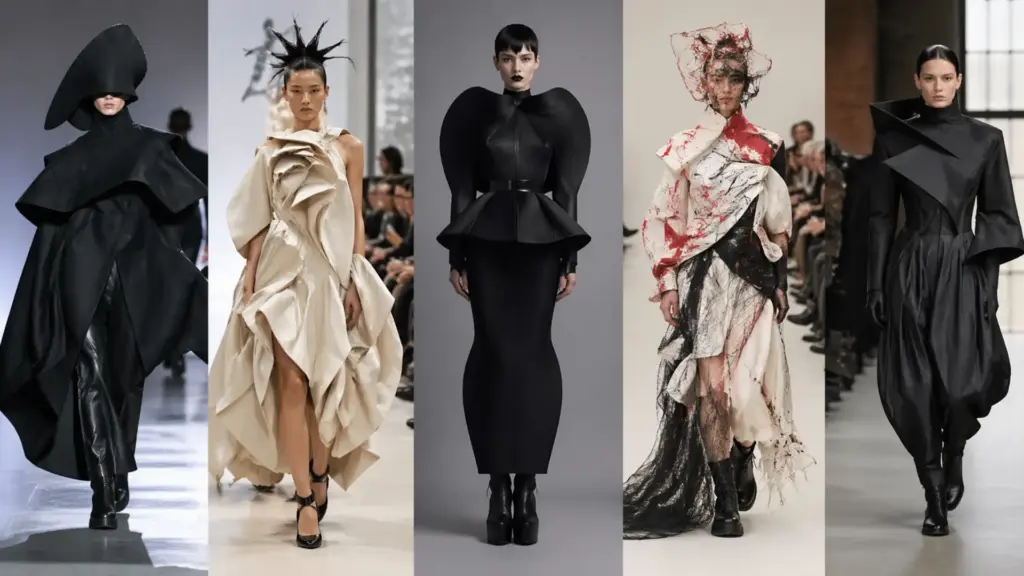
Avant-garde style moves beyond conventional fashion by focusing on experimentation, structure, and visual impact.
Rather than following traditional rules, it redefines how clothing interacts with the body, creating looks that feel deliberate and unconventional.
This approach often features exaggerated proportions, where oversized, elongated, or geometric shapes shift attention away from standard fits.
Deconstructed design plays a key role, with exposed seams and raw edges adding an unfinished, artistic quality. Unconventional materials, including technical fabrics and coated textiles, introduce depth and contrast.
Sculptural silhouettes challenge the body’s natural form, while the visual tension between garment and wearer creates a look that feels both striking and intentional.
What Makes Avant-Garde Style So Unique
Avant-garde is a French military term meaning “advance guard, ” originally used to describe the group that moves ahead of the main force.
Rather than following what is considered flattering, wearable, or commercially safe, avant-garde design questions those very standards. It shifts the focus from decoration to concept, structure, and intention.
The result is clothing that feels more like a statement or expression than a conventional outfit.
The Costume Institute at the Metropolitan Museum of Art has documented how designers like Kawakubo at Comme des Garçons redefined the silhouette in Western fashion with their early 1980s collections, introducing asymmetry, deconstruction, and what critics called “anti-fashion.”
Over time, those same collections have come to be recognized as among the most influential in modern fashion history.
What once felt radical is now studied, referenced, and, in many cases, adapted into more accessible forms.
This shift highlights a core truth about avant-garde style: it often begins at the edge of acceptance but gradually reshapes how people understand clothing itself.
In 2025 and into 2026, one of the most visible sub-trends within avant-garde fashion is Architectural Minimalism, designs that strip away decoration entirely to focus on geometric structure, negative space, and form.
It is a reminder that avant-garde does not require drama. Restraint, applied with intention, can be just as striking.
Best Places for Avant-Garde Fashion
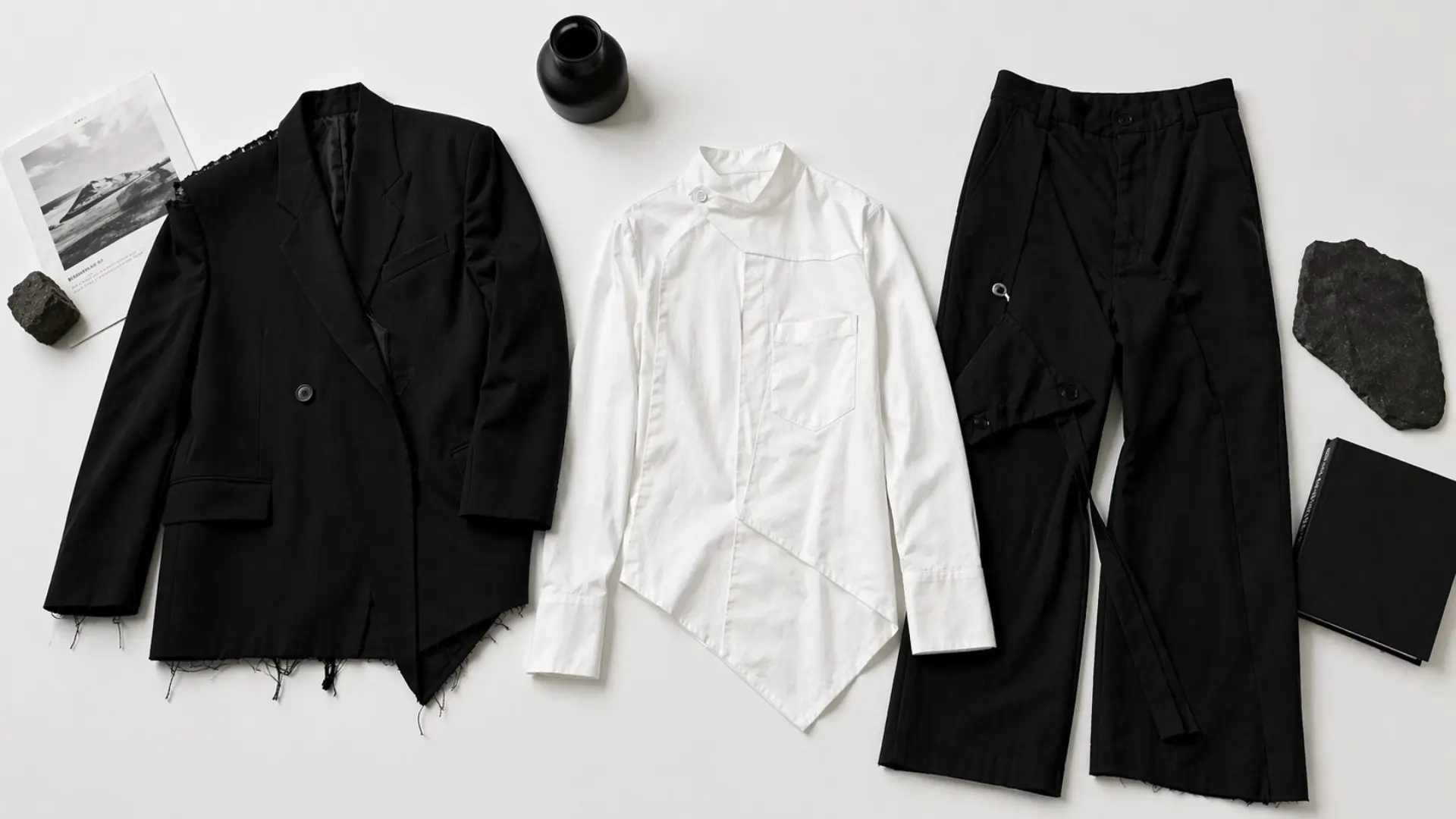
Most readers land here for one reason: finding the right places to actually buy avant-garde clothing. Not every retailer gets the aesthetic right, and not every price point makes sense for every budget. This breakdown keeps things practical and covers the full range, from archive investment pieces to accessible high-street finds.
1. Online Stores with True Avant-Garde Labels
If the goal is to access true avant-garde design, platforms like SSENSE, Farfetch, and Yoox are the most reliable starting points.
- SSENSE stands out for its clean curation and consistent access to labels such as Comme des Garçons, Rick Owens, and Ann Demeulemeester.
- Farfetch works differently by connecting multiple boutiques, making it useful for searching for specific or sold-out pieces.
- Yoox, on the other hand, focuses on past-season inventory. Pricing tends to be lower, and while selection can be unpredictable, it remains one of the better options for finding older Issey Miyake or Margiela pieces at a more reasonable cost.
2. Secondhand and Archive Platforms
Secondhand and archive platforms are where avant-garde fashion often feels more authentic, since many of the most interesting designs come from past collections.
- The RealReal offers authenticated resale of luxury brands, making it easier to search by designer or style with added confidence, though quality can vary across listings.
- Depop works differently, leaning into discovery and featuring indie labels, one-of-a-kind pieces, and emerging designers who have not yet reached mainstream retail.
- Grailed stands out as one of the strongest platforms for menswear-adjacent and unisex avant-garde, regularly featuring names like Yohji Yamamoto, Raf Simons archive, and CCP (Carol Christian Poell).
- Vestiaire Collective brings a more European focus, with consistent access to Belgian and Japanese designers, often in well-maintained condition.
- Etsy Underrated for avant-garde. Independent and handmade pieces with unconventional silhouettes surface here regularly, particularly from designers who are not yet signed to any wholesale platform. Worth searching with terms like “asymmetric,” “deconstructed,” or “sculptural.”
3. Affordable Options That Still Capture the Look
Affordable avant-garde options exist without compromising style, offering accessible pieces that focus on structure, proportion, and clean design across popular high-street fashion brands.
- COS: The most consistent high-street option for architectural and minimal silhouettes. Focus stays on proportion and clean structure rather than concept-heavy design.
- ASOS: Includes a curated avant-garde filter that can surface structured and asymmetric pieces from smaller or lesser-known brands.
- Zara: Occasionally releases strong structural designs in limited-edition drops, though consistency varies.
Trying Avant-Garde Fashion in Everyday Outfits
A full avant-garde outfit can feel like a large commitment for someone new to the aesthetic. Accessories offer a lower-stakes starting point.
A sculptural bag with an unconventional shape, a pair of minimalist architectural shoes, or a single piece of geometric jewelry can introduce the visual language of avant-garde without requiring a complete wardrobe shift.
The logic is the same as building a statement outfit: one strong element, kept clean around it. When the accessory is doing the conceptual work, everything else can stay simple.
When I style clients who are approaching avant-garde for the first time, I start in the shoe section.
Not because footwear is the most important element, but because it is the easiest thing to test on a regular day without feeling over-dressed.
How to Build an Avant-Garde Outfit
Building an avant-garde outfit comes down to smart choices in structure, proportion, and contrast, creating a look that feels intentional, balanced, and visually striking without overcomplicating it.
- Statement Piece: Choose one bold or unconventional item, such as an exaggerated coat or deconstructed top, to create a clear focal point without overwhelming the outfit.
- Proportion Play: Mix contrasting silhouettes like oversized tops with slim pants or cropped jackets with wide-leg bottoms to build visual tension and balance.
- Color Control: Stick to a tight palette like black, off-white, charcoal, or muted tones to keep attention on structure rather than distracting with bright colors.
- Fabric Contrast: Combine different materials, such as technical fabrics with linen or structured pieces with soft textures, to add depth without relying on loud design elements.
- Clean Base: Use simple essentials like plain tees, straight trousers, or fitted layers around the main piece to maintain balance and let the statement item stand out.
If you’re approaching avant-garde as a longer-term shift in how you dress rather than a single purchase, the same logic applies as building a capsule wardrobe, fewer pieces, chosen with more intention, that work together rather than compete.
Avant-Garde Outfits for Real Life
The biggest challenge with avant-garde fashion is not understanding it; it is actually wearing it outside of runway references. When the right setting meets the right balance of structure and simplicity, it becomes surprisingly wearable across a range of real situations.
1. Art Opening or Gallery Visit
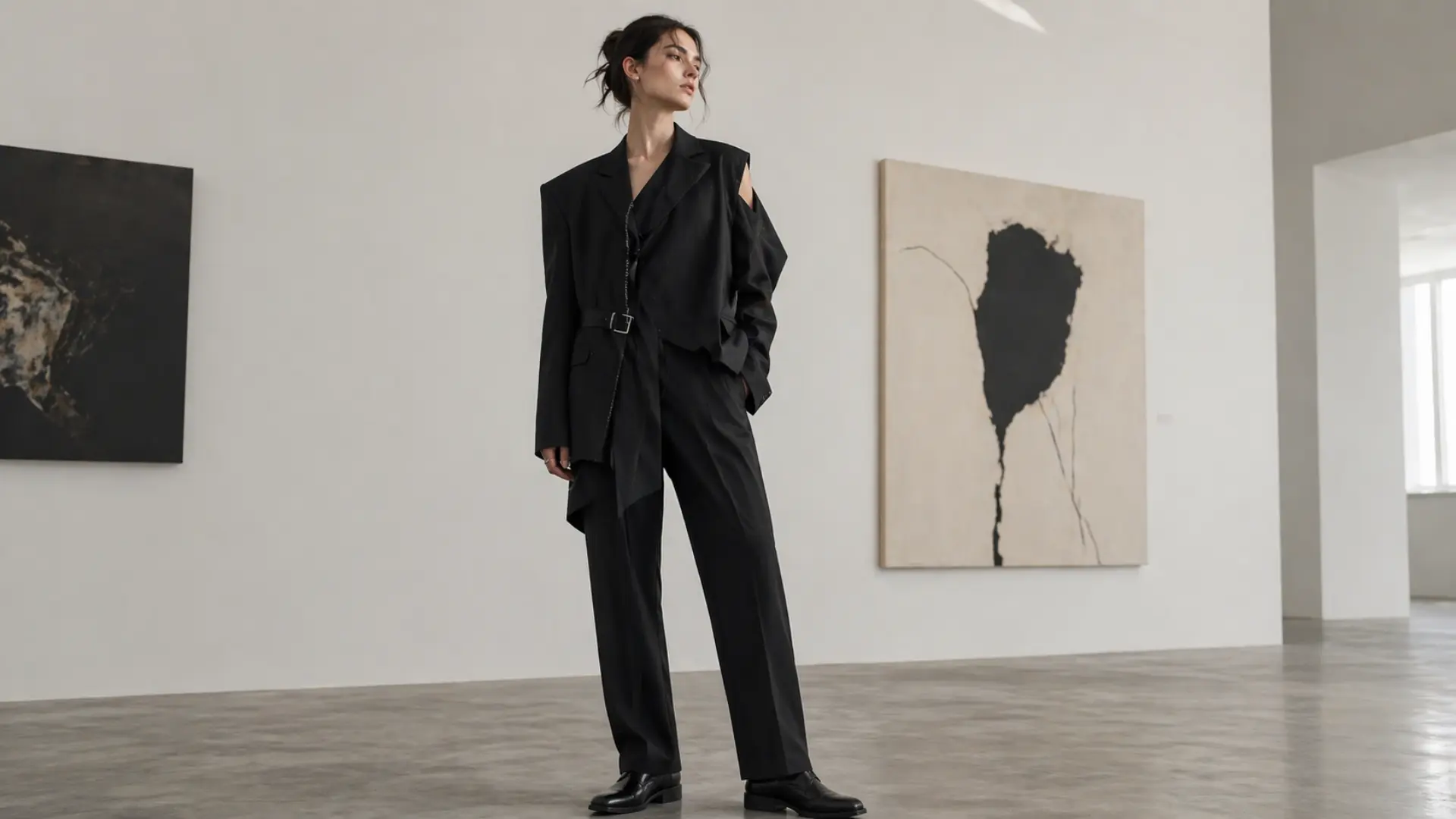
This is where avant-garde feels most at home. A deconstructed blazer or an asymmetric top paired with straight, dark trousers creates a look that feels intentional without appearing forced.
Clean shoes and minimal accessories keep the focus on the silhouette rather than overwhelming it.
The environment itself supports experimentation, making it easier to wear pieces that might feel too bold elsewhere.
2. Casual Day Out
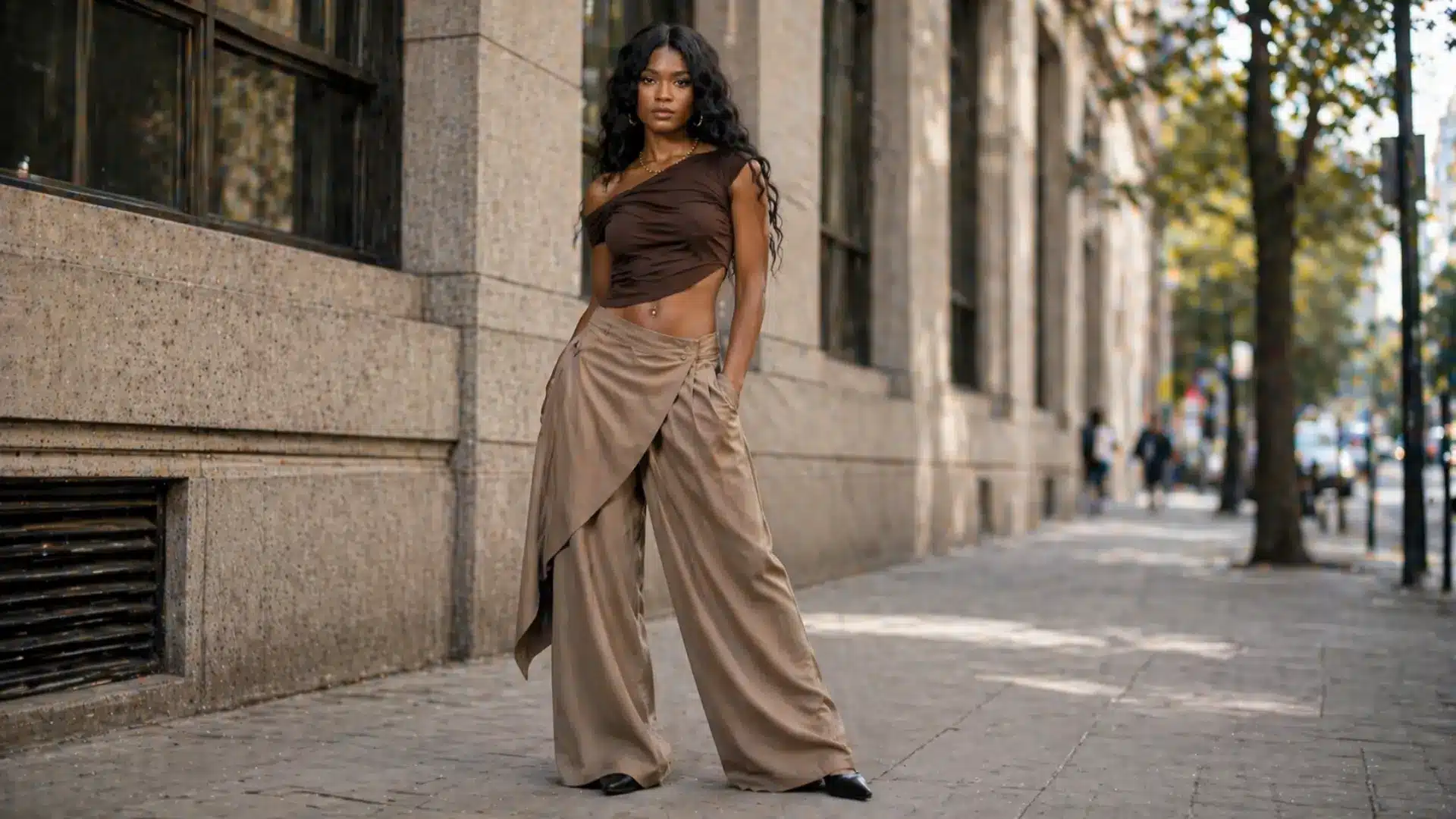
For everyday wear, one strong piece is enough. Wide-leg structural trousers, whether from COS, Issey Miyake Pleats Please, or a well-chosen vintage find, can carry the entire outfit.
Pair them with a plain fitted top and simple footwear like flat shoes or understated sneakers.
The structure of the trousers creates visual interest, while everything else keeps the look grounded and easy to wear.
3. Work or Office-Adjacent Settings
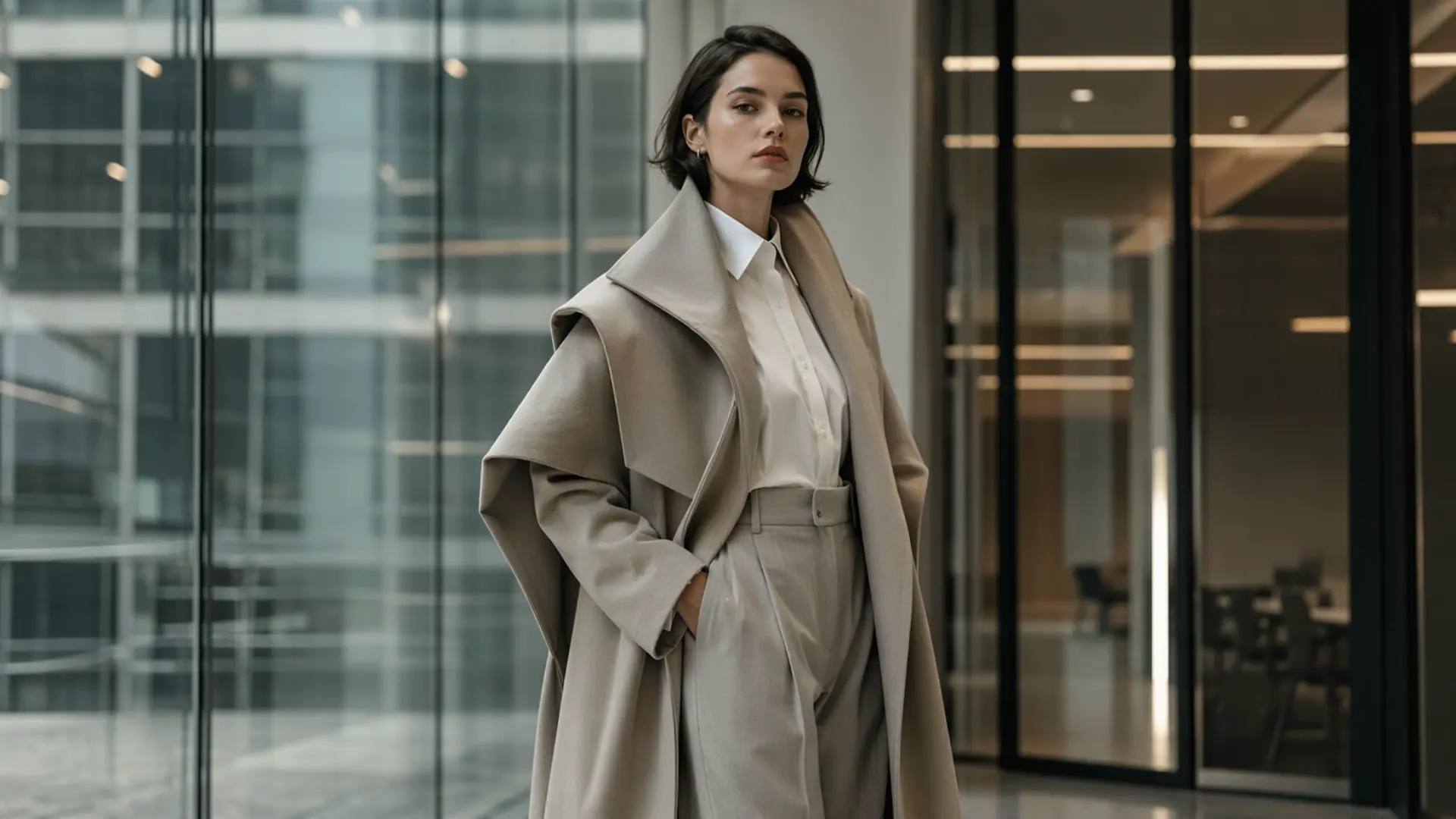
Avant-garde can work in professional settings when approached with restraint. Architectural tailoring is key.
A coat with unusual proportionslayered over standard separates creates a look that feels polished from a distance but reveals detail up close.
The most important factor here is fit. Structural pieces need to align with the body properly; they risk looking oversized rather than intentional.
4. Weekend or Street-Wear Context
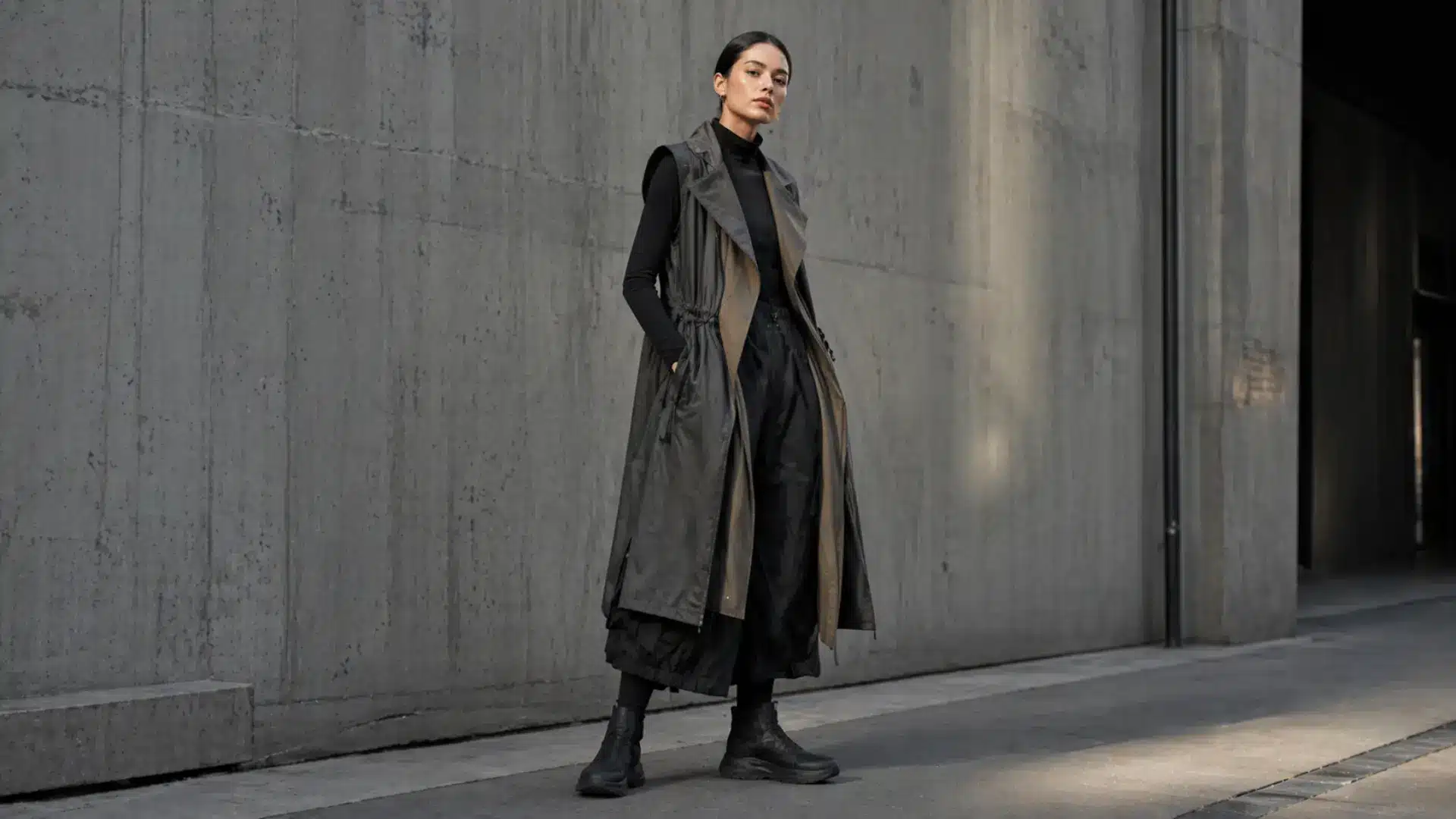
Layering becomes the main tool in more relaxed settings. A long deconstructed vest over a simple fitted base creates depth without adding complexity.
Technical outerwear with a defined silhouette adds structure, while contrast between layers builds visual interest.
Footwear should remain simple, such as clean leather shoes, minimalist boots, or low-profile sneakers, allowing the outfit to stay cohesive. One thing worth noting across all of these contexts: climate matters.
Avant-garde pieces that rely on substantial layering or heavy structured outerwear work well in cooler cities but need to be adapted for warmer environments.
Lightweight technical fabrics, open-weave linens, and minimal silhouettes carry the aesthetic without the weight.
Mistakes That Flatten an Avant-Garde Outfit
A few common errors can undercut even a well-chosen avant-garde piece:
- Stacking too many statement pieces: Avant-garde is about restraint as much as boldness. Two or more conceptual items competing in the same outfit tend to cancel each other out rather than amplify the effect.
- Ignoring fit within the piece itself: “Oversized” in avant-garde design is deliberate and proportioned. A piece that is simply too big reads as an ill-fitting garment, not an intentional silhouette.
- Over-accessorizing: A sculptural garment rarely needs embellishment. If the garment is the idea, jewelry, bags, and layered extras should disappear into the background.
- Buying without wearing context in mind: A piece that is right for a gallery opening may look disconnected when worn to a casual lunch. Before purchasing, it helps to think through at least two real situations where you would reach for it.
Conclusion
Avant-garde fashion has a reputation for being inaccessible, either because of price or because the aesthetic feels too abstract to wear in daily life. In practice, neither holds up.
The shopping is easier than it used to be. Archive resale platforms, accessible designers who take proportion seriously, and physical destinations like Dover Street Market make avant-garde style genuinely reachable without a designer budget.
The method stays the same at every price point: start with one piece you’d never normally reach for, wear it with the simplest things you own, and let the contrast do the work.
Structure over decoration. Intention over trend. That’s the whole philosophy.
Found your first avant-garde piece? Drop it in the comments. I’d love to see what caught your eye.
Frequently Asked Questions
Is Avant-Garde Fashion Only for Certain Body Types?
No, the Aesthetic is Built on Silhouette Play Rather than Flattering Any One Body Shape in The Conventional Sense. Many Avant-Garde Designers, Rei Kawakubo in Particular, Have Explicitly Rejected the Idea that Clothing Should Follow or Flatter the Body.
How is Avant-Garde Different from Minimalism?
Minimalism Reduces to Clean, Simple Lines and Limited Color. Avant-Garde Challenges the Form of The Garment Itself, Often Through Deconstruction, Unusual Proportion, or Conceptual Construction. They Can Overlap, but a Minimalist Outfit is Meant to Disappear Quietly.
Can Avant-Garde Style Work for Men or Non-Binary People Specifically?
Yes, and some of the strongest avant-garde labels have never been gendered in their collections. Yohji Yamamoto, Comme des Garçons, and Rick Owens all produce clothes without strict gender designation. Grailed is particularly strong for menswear-adjacent and ungendered avant-garde pieces.