A yard of fabric sounds simple until you are standing in front of a bolt, trying to picture what it actually looks like in real life.
The width changes, the price is listed by the yard, and suddenly cotton voile, curtain panels, and tote bags all feel like math problems.
Once the fabric is unrolled at home, the measurement finally starts to make sense. This blog breaks it down in the same practical way.
You will see the core measurements, how many inches in a yard of fabric by fabric type, easy yardage estimates for common projects, and a simple walkthrough for measuring fabric at home before you cut, sew, or buy more than you need.
How Many Inches in a Yard of Fabric?
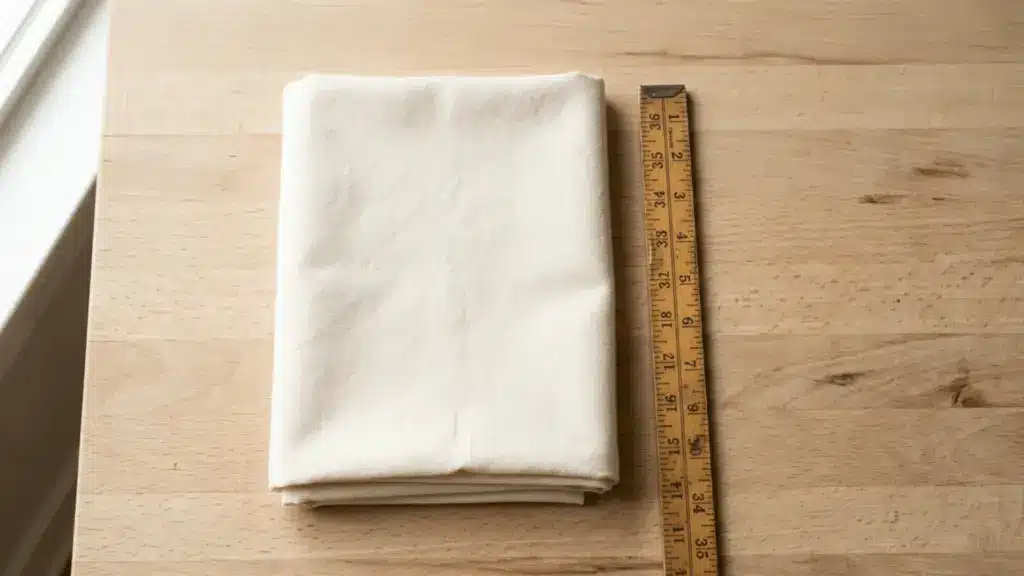
One yard of fabric is exactly 36 inches long, or 3 feet. This measurement stays the same for every fabric type, store, and material.
Fabric stores measure length along the selvage, the finished edge that runs the full length of the bolt. Width is a separate measurement and varies by bolt.
Use this formula to convert any yardage: multiply the yardage by 36 to get inches. So 1/2 yard x 36 = 18 inches.
| Yardage | Inches | Feet |
|---|---|---|
| 1/8 yard | 4.5 inches | 0.375 feet |
| 1/4 yard | 9 inches | 0.75 feet |
| 1/2 yard | 18 inches | 1.5 feet |
| 3/4 yard | 27 inches | 2.25 feet |
| 1 yard | 36 inches | 3 feet |
| 2 yards | 72 inches | 6 feet |
| 3 yards | 108 inches | 9 feet |
A yard of fabric measures length along the bolt. It does not tell you the fabric width. That is why two pieces can both be sold as one yard but still look different in total size if their widths are different.
For home projects, feet can be easier to picture. For example, 3 to 5 yards of curtain fabric equals 9 to 15 feet of material.
What Size is a Yard of Fabric in Different Widths?
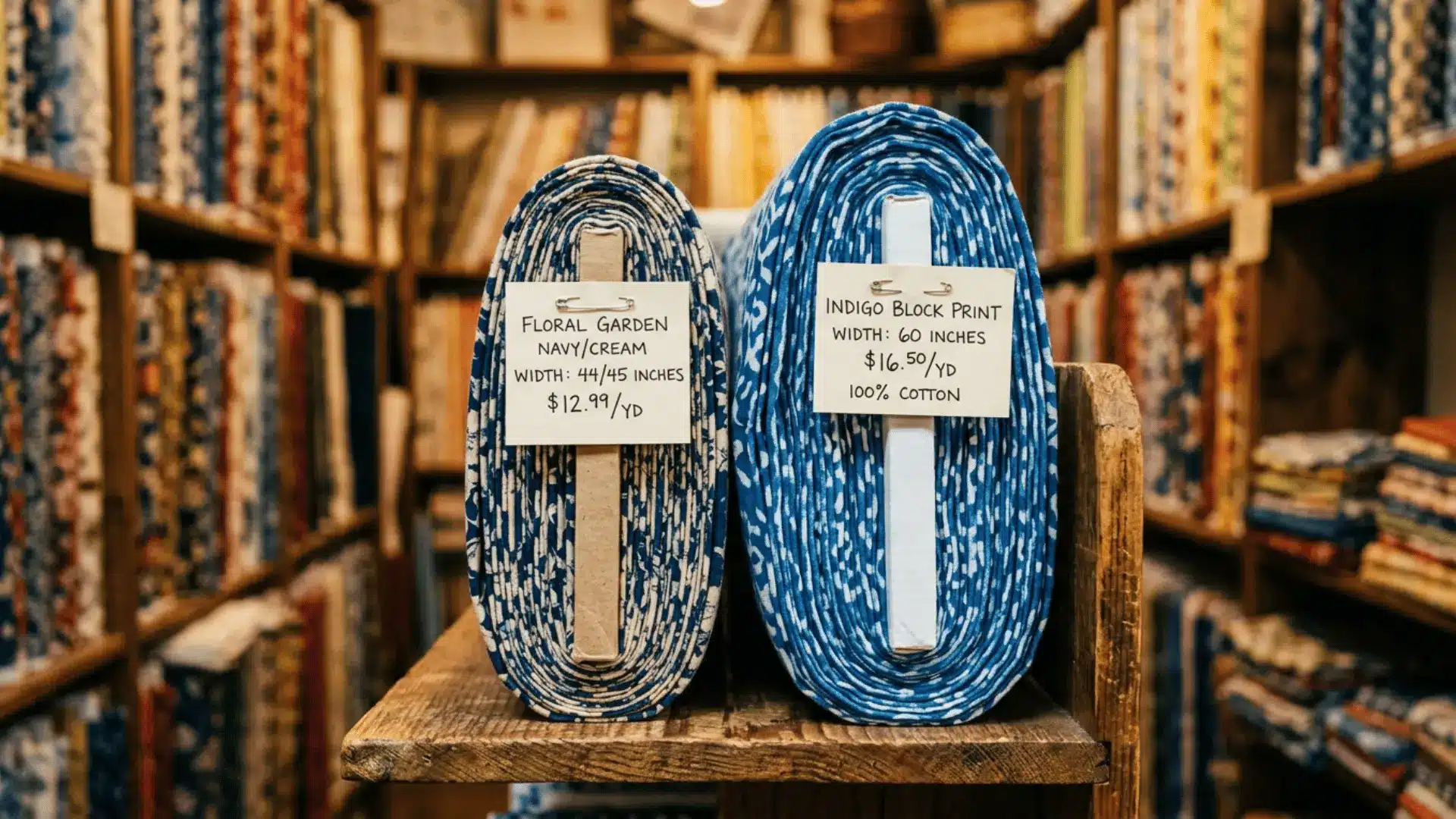
A yard of fabric is always 36 inches long, but its width depends on the bolt. That means two yards can have different total surface areas.
Width is printed on every bolt label. Common fabric widths are:
- Quilting cotton: 44 to 45 inches wide. Standard for patchwork and quilt projects.
- Apparel knits and jersey: 58-60 inches wide. Helpful for cutting garment pieces with fewer seams.
- Home decor and upholstery fabric: 54 to 60 inches wide, sometimes wider. Useful for furniture coverage.
- Specialty and felt fabrics: Width varies widely, from 36 inches to 72 inches or more.
- Vintage and narrow fabrics: Some older fabrics and specialty weaves run 33 to 36 inches wide.
How Does Fabric Width Affect One Yard?
Because width changes how much fabric you actually get from each yard, it can affect both cost and yardage. A yard is always 36 inches long, but the width can vary from bolt to bolt.
That means a wider bolt gives you more total surface area, even when the length stays the same.
| Bolt width | Square inches per yard | Square feet per yard |
|---|---|---|
| 36 inches (narrow) | 1,296 sq in | 9 sq ft |
| 44 inches (quilting cotton) | 1,584 sq in | 11 sq ft |
| 54 inches (home decor) | 1,944 sq in | 13.5 sq ft |
| 60 inches (apparel/upholstery) | 2,160 sq in | 15 sq ft |
A 60-inch yard gives you about 36% more fabric than a 44-inch yard of the same length. That extra width can make a real difference when your pattern pieces are large or when you need continuous fabric without seams.
In some cases, choosing a wider bolt may help you buy one less yard, but it depends on the project layout, pattern direction, and any matching required for prints or stripes.
Always check the bolt label before calculating yardage. If you’re sewing for a specific look, it also helps to know whether your fabric choice is breathable, especially for warmer climates or activewear projects.
How Many Yards of Fabric Do You Need?
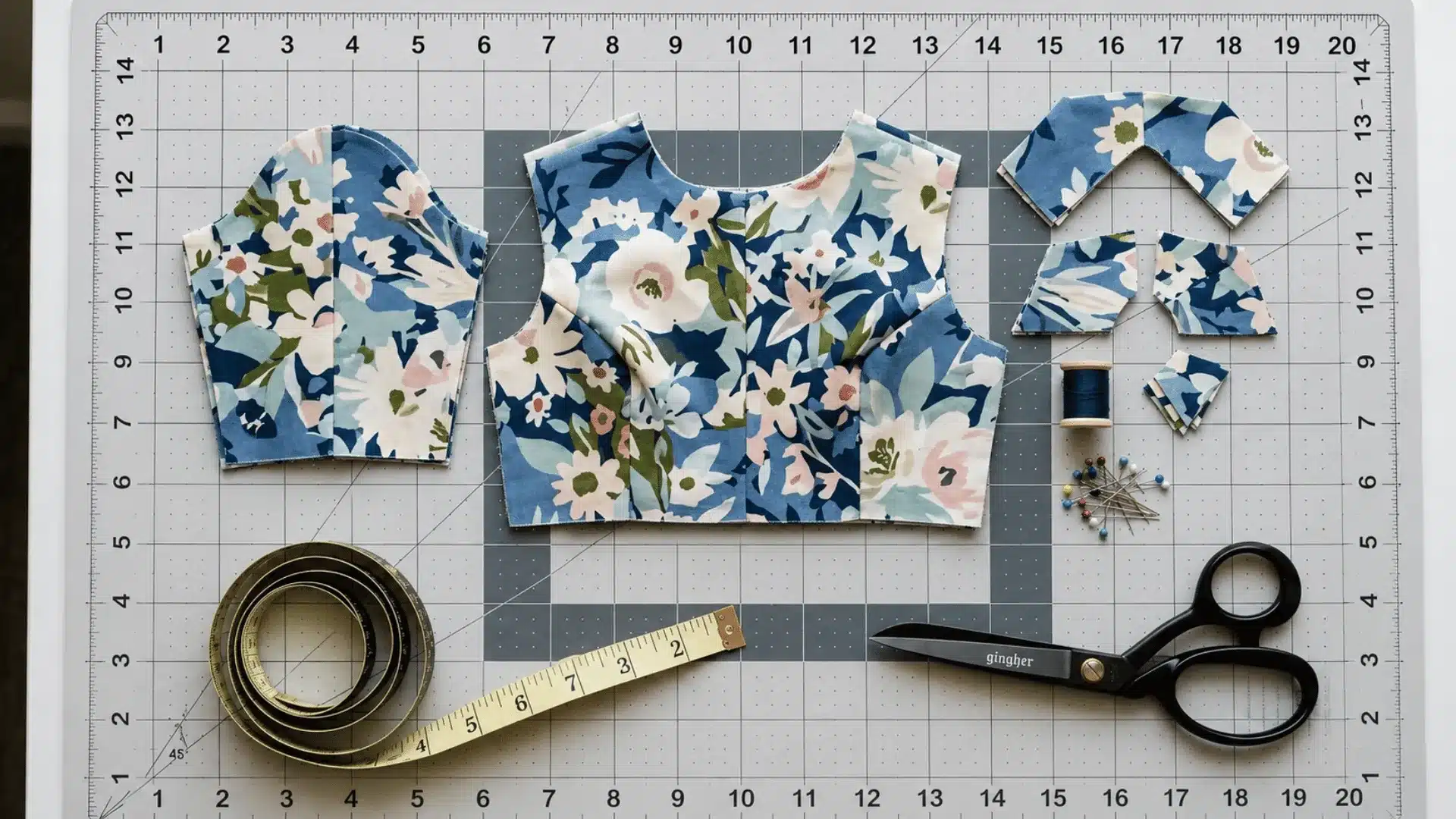
Fabric needs vary by width, project size, and print direction. For most 45-inch wide fabrics, use these as rough starting points:
- Simple A-line skirt: 1.5 to 2 yards
- Basic blouse or top: 1.5 to 2 yards
- Knee-length casual dress: 2.5 to 3 yards
- Wide-leg pants: 2 to 3 yards
- Standard tote bag: 0.75 to 1 yard
- Throw pillow cover (18×18 inches): 0.5 yard
These estimates are not exact, so buy 10 to 15 percent extra for shrinkage, cutting mistakes, crooked store cuts, or pattern matching.
If your fabric has stripes, checks, or a bold repeat, add one full pattern repeat to avoid running short when lining up seams.
If you’re working on home décor projects, try this free fabric calculator by Sailrite for more precise estimates.
This matters more than people think, especially when a print has to match cleanly across the front, back, or side seams.
How to Measure a Yard of Fabric at Home?
Cutting from a larger piece at home is straightforward once you know the steps. Here is what works reliably:
- Lay the fabric flat: Place the fabric on a clean, smooth surface. A cutting mat works best, but a hard floor can also work.
- Smooth out wrinkles: Remove folds, bumps, or bunched areas before measuring. Wrinkled fabric can lead to a shorter or uneven cut.
- Measure 36 inches: Place a measuring tape or yardstick at one end of the fabric and mark 36 inches along the length. Use fabric chalk, a washable pencil, or a small pin.
- Mark a straight cutting line: Draw a straight line across the full fabric width at the 36-inch mark. A long quilting ruler can help keep the line even.
- Cut the fabric carefully: Cut along the marked line using scissors or a rotary cutter. A rotary cutter with a cutting mat gives the cleanest edge, but scissors also work when used slowly.
One thing worth knowing: stores often add a small buffer when cutting at the counter, giving you 37 or 38 inches instead of exactly 36. That extra inch is yours to keep.
If you pre-wash fabric before sewing, expect around 2 to 5 percent shrinkage for cotton. Buy accordingly.
Common Fabric Measuring Mistakes to Avoid
A few small oversights can affect how smoothly the project comes together, so it helps to check the basics before moving ahead.
- Not buying extra fabric: Cutting mistakes, fabric flaws, and pattern matching quickly use up the exact amount a pattern calls for. Add at least 10 to 15 percent.
- Ignoring bolt width: A pattern designed for 60-inch fabric needs different yardage when cut from a 45-inch bolt. Always check the label.
- Forgetting print matching: Stripes, checks, and florals require extra fabric so the pattern lines up cleanly across seams.
- Skipping pre-washing: Cotton typically shrinks 2 to 5 percent in the first wash, which can change a finished garment’s fit.
- Ignoring directional prints: Upside-down motifs or one-way designs require careful layout and often need extra fabric to accommodate.
- Rushing the cut: An uneven cut at the store or at home creates mismatched seam lengths further down the project.
Conclusion
Understanding fabric measurements makes every sewing or craft project feel more manageable.
Once the yardage, width, and shrinkage are checked, it becomes much easier to buy the right amount without wasting money or running short halfway through a project.
A small extra cut can also save the project when prints need matching, edges are uneven, or mistakes happen during cutting.
Before placing an order or heading to the fabric counter, take a minute to compare the project needs with the bolt width and fabric type.
That simple check can make the final result cleaner and easier to finish.
Planning a sewing project soon? Share your fabric width and project type in the comment section, and let the fabric math begin.
Frequently Asked Questions
Is a Yard of Fabric the Same as a Meter?
No. One yard is 91.4 cm, while one meter is 100 cm. That makes a meter about 3.4 inches longer than a yard.
What is a Fat Quarter?
A fat quarter is an 18-by-22-inch fabric cut. It has the same area as a quarter yard but gives a wider, squarer piece. Fat quarters are popular for quilting because the wider shape is easier to cut blocks from than a long, narrow strip.
Can I Buy Less Than One Yard?
Yes. Many fabric stores sell smaller cuts, usually in 1/4-yard or 1/2-yard increments. Online shops may have minimum order rules.
Does Fabric Shrink After Washing?
Yes. Natural fabrics like cotton often shrink after washing, usually around 2 to 5 percent. Pre-washing helps avoid size issues before cutting.