I’ve been using lip gloss since my early teens. Back then, I didn’t think twice about what was in it. I just liked the shine and how it made my lips look.
One day, a friend casually asked me if I actually knew what was in lip gloss. I laughed at first, thinking it was a simple question, but then realized I had no idea. I couldn’t name a single ingredient.
That moment stuck with me and made me curious enough to start paying attention to what goes into the products I use every day.
If you’ve ever wondered the same thing, this guide will help.
I’ll walk you through the main ingredients you’ll find in most glosses, what each one does, and some myths you might have heard.
We’ll also look at which ingredients you might want to avoid and how to read the label so you can choose the best gloss for you.
Why Understanding Lip Gloss Ingredients Matters
Lip gloss is more than just shine. It’s a blend of oils, waxes, pigments, and other elements that each have their own role in the formula.
Some ingredients keep your lips soft and hydrated. Others add shimmer, color, or a glossy finish.
There are also components that help the gloss stay put, so it doesn’t fade or run off too quickly.
When you know what’s in your gloss, you can avoid ingredients you’d rather not use.
You can also look for the ones that give you the results you want, such as moisture, longer wear, or extra sparkle.
Understanding the ingredients helps you choose a formula that works best for your needs and your lips.
What is Lip Gloss Made Of: Key Ingredients Explained
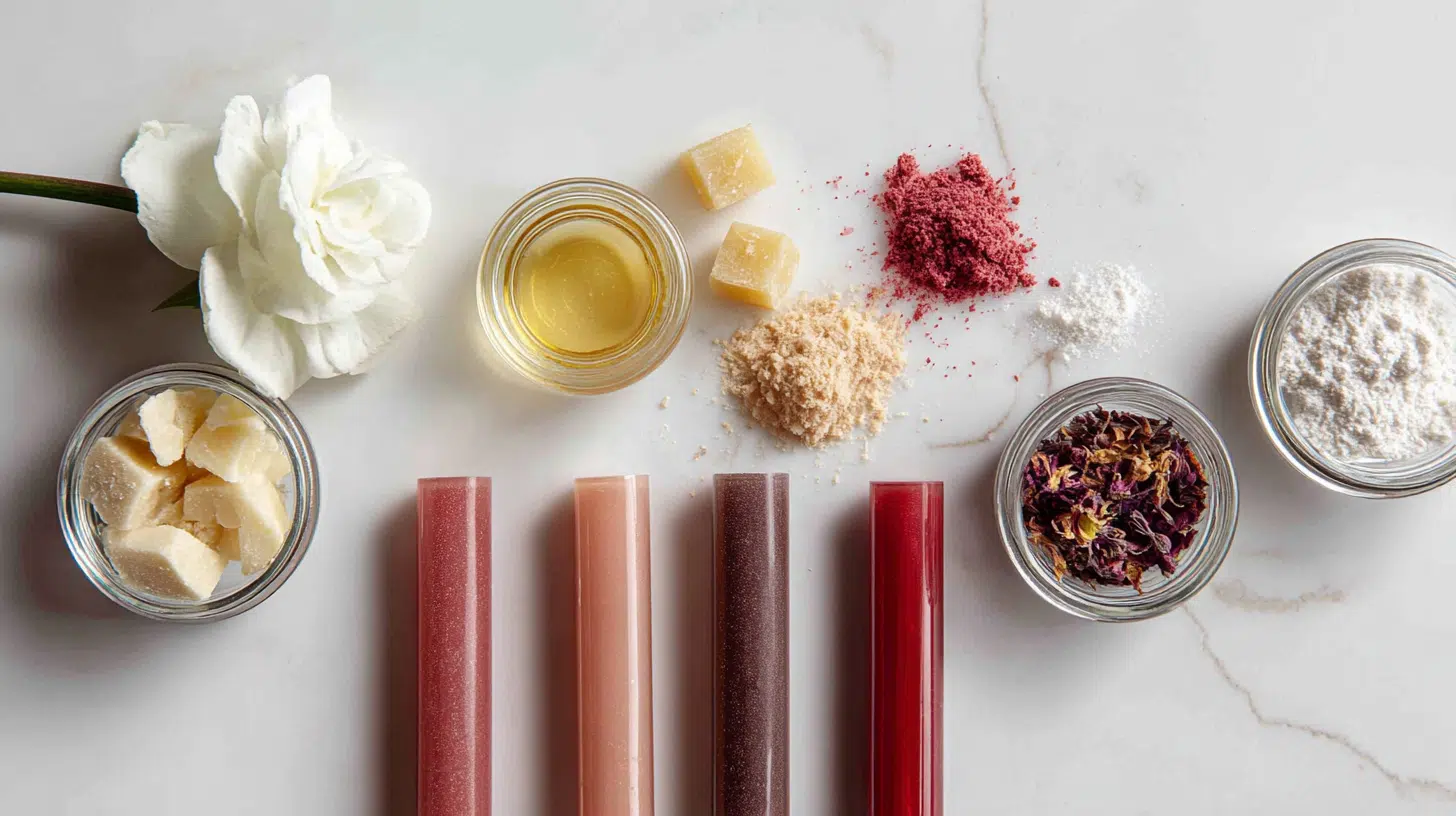
Lip gloss is made up of several types of ingredients, each with a specific role in creating the final product. Some give shine, others provide structure, and some add color or extra benefits.
Together, they create that smooth, glossy look many of us love.
1. Emollients and Oils
These are the moisturizing agents that give gloss a silky, comfortable feel. They help soften the lips, prevent dryness, and can influence how lightweight or heavy the gloss feels.
Some also add a subtle sheen before any pigment is applied. Common examples of such agents include:
- Castor oil
- Jojoba oil
- Coconut oil
- Lanolin
- Mineral oil
- Petrolatum
2. Waxes & Thickeners
These create the structure of the gloss, giving it shape and helping it cling to the lips.
They stop the product from running, especially in warmer temperatures, and add a slight protective barrier against the elements. Common examples include:
- Beeswax
- Candelilla wax
- Carnauba wax
- Polybutene
- Polyisobutene
3. Colorants & Pigments
These are what give lip gloss its signature look, whether it’s a sheer wash of color or a bold, vibrant finish. They can create shimmer, depth, or even a matte effect depending on how they’re used.
Natural sources like minerals and plants tend to produce softer tones, while synthetic options allow for brighter and more intense shades. Common examples include:
- Mica (shimmer)
- Iron oxides (color)
- Carmine (natural red from insects)
- Mineral or synthetic dyes
4. Fragrances or Flavorings
These are added to make wearing lip gloss a more pleasant experience. The right scent or flavor can make the product feel fresher, sweeter, or more playful.
They don’t change the performance of the gloss, but they do influence how enjoyable it is to use, making it feel more personal to the wearer. Common examples include:
- Peppermint
- Vanilla
- Fruit extracts
5. Moisturizers & Additives
These are the ingredients that care for your lips while you wear gloss. They help combat dryness, smooth out rough patches, and keep lips feeling soft over time.
Many of them also have nourishing properties that work even after the gloss has faded, so your lips stay comfortable throughout the day. Common examples of these include:
- Aloe vera
- Shea butter
- Vitamin E
6. Plumping Agents
These are included to enhance the appearance of lip volume. Some create a warming or tingling sensation that boosts blood flow for a short-term plump look.
Others attract and hold moisture in the lips, giving them a smoother, fuller appearance without the temporary sting. Common examples of these include:
- Cinnamon oil
- Capsaicin
- Hyaluronic acid spheres
7. UV Blockers
These are key for protecting the lips from sun damage, which can lead to dryness, dark spots, or premature aging.
They work by forming a shield on the lips that either reflects harmful rays or absorbs them before they can cause harm. Adding SPF to lip gloss makes it both a beauty and a protective product. Common examples include:
- Zinc oxide
- Titanium dioxide
Lip gloss is more than just shine, as it’s a combination of different ingredients that each play a role in how it looks, feels, and performs. Knowing what each group does can help you choose the gloss that fits your needs.
Debunking Myths About Lip Glosses
There are plenty of stories and assumptions about lip gloss that simply aren’t true. Some come from old manufacturing methods, while others are based on confusion with other lip products.
Myth: Lip gloss is made from whale sperm.
Truth: This is a common misconception. Older cosmetics once used spermaceti from whales for its waxy texture, but modern lip gloss uses plant-based or synthetic alternatives instead.
Myth: Lip gloss dries out your lips.
Truth: If a gloss contains moisturizing ingredients, it won’t dry your lips. Dryness may happen after it wears off, so reapplying or choosing a hydrating formula helps prevent it.
Myth: Clear lip gloss is the same as lip balm.
Truth: They may look alike, but balm is designed to protect and heal lips, while gloss is mainly for shine and appearance, though some glosses do include moisturizers.
Myth: Plumping glosses permanently enlarge lips.
Truth: Plumping glosses work temporarily by boosting blood flow or drawing in moisture. The fuller look fades within hours once the ingredients stop working.
Myth: Lip gloss is just for teens.
Truth: Gloss is worn by all ages. Options range from fun, glittery styles to subtle, moisturizing formulas perfect for everyday use
Potentially Harmful Ingredients in Lip Glosses
While many lip glosses are safe to use, some contain ingredients that certain people choose to avoid. These may cause irritation, allergic reactions, or raise concerns about long-term exposure.
| Ingredient | Purpose in Lip Gloss | Potential Concerns |
|---|---|---|
| Parabens | Preservatives that extend shelf life. | May cause skin irritation; linked to hormone disruption concerns. |
| BHA & BHT | Synthetic antioxidants that prevent oils from going rancid. | Possible skin irritation; potential long-term health concerns. |
| Phthalates | Improve flexibility and texture in formulas. | Linked to hormone disruption and allergic reactions. |
| Bee Venom | Used in plumping glosses for a swelling effect. | It can cause allergic reactions, redness, or swelling. |
| Formaldehyde-Releasing Agents | Slow-release preservatives. | May cause skin sensitivity; associated with allergy risks. |
| Artificial Dyes with Heavy Metals | Provide color using synthetic pigments. | Possible trace contaminants may trigger irritation or sensitivity buildup. |
Understanding these risks allows you to read labels more carefully and choose glosses that are gentler on your lips and overall health.
How to Read Lip Gloss Ingredients Label
Ingredient labels can look complicated, but understanding them makes it easier to choose a lip gloss that fits your needs. The key is to know what to focus on first so you don’t get lost in the long list of names.
Tips for reading lip gloss labels:
- Check the first few ingredients: these make up most of the formula
- Look for plant oils and butters: they often have simple, recognizable names
- Scan for allergens: helpful if you have sensitive skin or known reactions
- Seek certification symbols: vegan or cruelty-free icons show ethical sourcing
Being able to read a label lets you spot both the helpful and the questionable ingredients right away. It gives you more control over what goes on your lips and helps you choose products with confidence.
Conclusion
Now you know what is in lip gloss, from the base oils and waxes that give it texture to the pigments, moisturizers, and extras like SPF or plumping agents.
Each ingredient has a role, whether it’s for shine, color, hydration, or protection.
We’ve also looked at the differences between natural and synthetic ingredients, which ones may cause concerns, and how to read a label so you can spot what matters most to you.
If your goal was to understand exactly what lip gloss is made of, you now have the details.
You can read an ingredient list with confidence and choose a product that works for your lips, your style, and your values.
Go for your favorite brand, try a cleaner formula, or make your own, as it’s all in your hands!