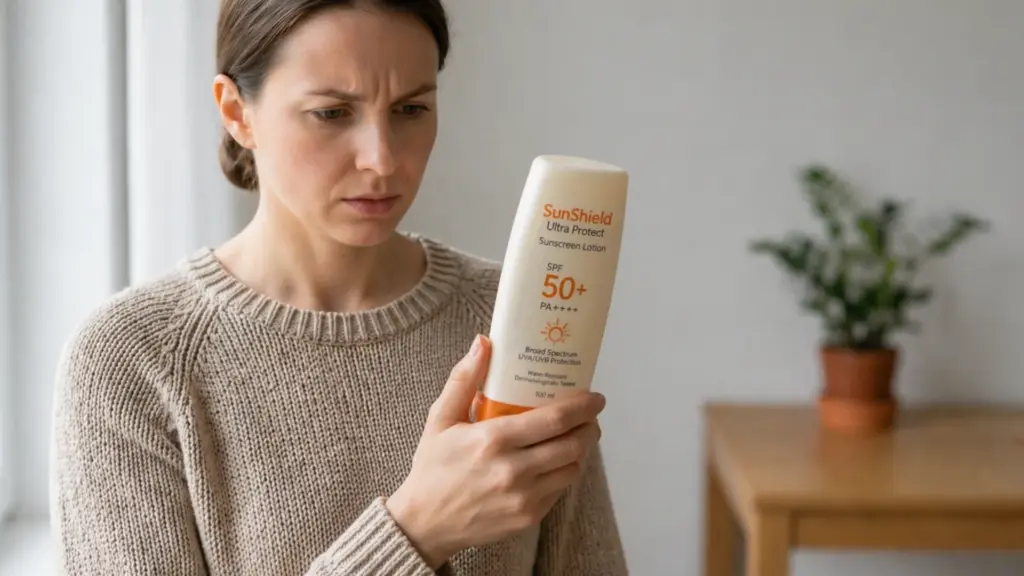
Every summer, sunscreen becomes part of the routine without much thought until the moment the ingredient list actually gets a closer look.
What seems like a simple product often contains complex chemical names that raise real questions about safety and long-term use.
Many people rely solely on SPF numbers, assuming that higher protection automatically means better choices.
But the ingredients behind that protection matter just as much as the label on the front, especially when trying to understand what ingredients to avoid in sunscreen.
In this blog, I will walk you through the key ingredients to avoid in sunscreen, and how to choose safer options without compromising on effective sun protection.
How Does Sunscreen Work?
Sunscreen protects your skin by blocking or absorbing harmful ultraviolet (UV) rays from the sun, which can cause sunburn, premature aging, and skin damage.
There are two main types: physical (mineral) and chemical sunscreens.
Physical sunscreens use ingredients like zinc oxide or titanium dioxide to sit on the skin’s surface and reflect UV rays away.
Chemical sunscreens, on the other hand, absorb UV radiation and convert it into heat, which is then released from the skin.
Both types help prevent damage caused by UVA rays, which lead to aging, and UVB rays, which cause burning.
For sunscreen to work effectively, it should be applied generously and reapplied every two hours, especially after sweating or swimming, to maintain consistent protection.
Most of the concerning ingredients in this post fall into the chemical category.
That does not automatically make all chemical sunscreens dangerous, but it does mean ingredient awareness matters more with these formulas.
Your daily skincare routine plays a big role in how well sunscreen performs. Knowing where it sits in your morning steps makes a real difference in consistent coverage.
What Ingredients to Avoid in Sunscreen
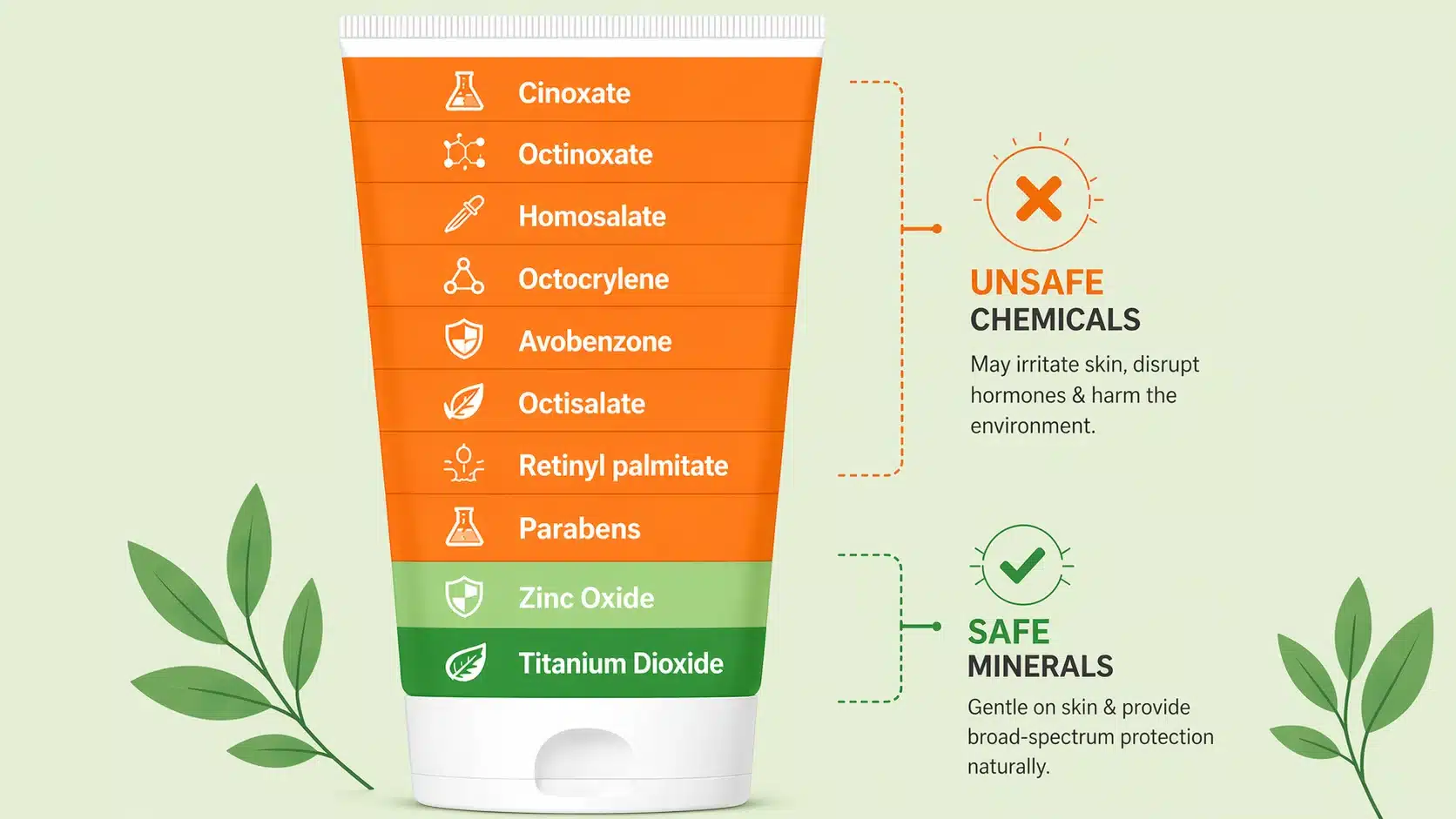
Not every chemical filter carries the same level of concern. Some are widely studied and debated, making it important to understand their effects before choosing your next sunscreen product.
1. Oxybenzone
Oxybenzone is one of the most widely used UV filters in American sunscreens and also one of the most scrutinized.
It can act as an endocrine disruptor, potentially interfering with hormone function.
The CDC has detected it in the bloodstream, urine, and even breast milk following topical use.
Beyond human health, it has been shown to damage coral reef ecosystems, leading to outright bans in places like Hawaii and the U.S. Virgin Islands.
2. Octinoxate
Octinoxate research and concerns are another common chemical filter that has attracted attention for possible hormonal activity.
Animal studies suggest it may mimic estrogen in the body, though human research is ongoing.
Several regions, including Hawaii and parts of the Caribbean, have banned it, along with oxybenzone, due to environmental concerns.
If a formula contains both oxybenzone and octinoxate, that is a clear signal to keep looking.
3. Homosalate
Homosalate is often used as a UV booster alongside other filters.
The European Commission has flagged it for potential toxicity at levels commonly found in commercial products and recommends a concentration cap below the current U.S. limit.
The regulatory gap between countries is worth factoring into your decision.
4. Octocrylene
Octocrylene can degrade over time, and when it does, it produces benzophenone, a compound flagged as a possible carcinogen.
It is also linked to skin sensitization and allergic reactions in some individuals, particularly with repeated exposure.
Its instability may mean it does not offer the same consistent protection as more stable alternatives.
5. Avobenzone
Avobenzone is one of the few chemical filters approved in the U.S. that offers broad-spectrum UVA protection.
The problem is that it breaks down quickly in sunlight, reducing its effectiveness within hours.
Manufacturers often add stabilizers like octocrylene to slow this degradation, which simply trades one concern for another.
On its own, avobenzone is relatively mild, but its instability makes formulation quality critical.
Many Korean skincare formulas skip avobenzone entirely, favoring more stable mineral filters or next-generation UV blockers not yet approved in the U.S.
6. Octisalate
Octisalate is generally considered one of the milder chemical filters, often used to stabilize avobenzone and improve water resistance.
It can cause mild skin irritation in sensitive individuals and may act as a penetration enhancer, helping other ingredients absorb more deeply into the skin.
It is commonly found in many broad-spectrum sunscreens due to its ability to improve formula stability and texture.
While it does not provide strong UV protection on its own, it supports the overall effectiveness of sunscreen products.
7. Retinyl Palmitate
Retinyl palmitate is a vitamin A derivative commonly used in skincare products for its mild anti-aging and skin-smoothing benefits. It supports cell turnover and improves skin texture over time.
Compared to stronger retinoids, it is gentler and suitable for sensitive skin. However, it may increase sun sensitivity, so daily sunscreen use is recommended.
If you already use retinol in your skincare routine, knowing how vitamin A derivatives interact with sunlight makes this ingredient especially worth watching.
8. Parabens
Parabens are preservatives widely used in skincare and cosmetic products to prevent the growth of bacteria and extend shelf life. Common types include methylparaben and propylparaben.
While they are effective and approved in small amounts, concerns exist about potential hormone disruption.
Many brands now offer paraben-free options, though current research indicates they are safe at the levels currently regulated.
9. Cinoxate
Cinoxate is a chemical sunscreen ingredient used to absorb UVB rays and help prevent sunburn. It is commonly found in sunscreen formulas and personal care products.
While effective for sun protection, it is less stable compared to newer filters and is often combined with other ingredients for better performance.
It may degrade more quickly when exposed to sunlight, which is why it is rarely used alone in modern formulations.
Despite this, it still plays a supportive role in enhancing UVB protection when paired with more stable sunscreen filters.
Safer Alternatives to Look For in a Sunscreen
Choosing a safer sunscreen often comes down to the type of UV filters, formula style, and how well the product suits sensitive skin.
| Recommendation | Why It Matters |
|---|---|
| Zinc oxide and titanium dioxide | When choosing a safer sunscreen, zinc oxide and titanium dioxide are the most reliable mineral filters with strong safety backing. |
| Mineral formulas | They sit on the skin’s surface rather than absorbing into it, which is the main reason I reach for mineral formulas first with clients who have sensitive skin or hormone-related concerns. |
| Non-nano formulas | Look for non-nano formulas, as smaller nano-sized particles raise questions about deeper skin absorption. |
| Cream-based sunscreens | Cream-based sunscreens are generally better than sprays because they provide even coverage and reduce inhalation risk. |
| Sensitive skin options | For sensitive skin, options like EltaMD UV Physical or Blue Lizard Sensitive work well. |
| Sunscreens for babies and kids | For babies and kids, Thinkbaby SPF 50+ or Aveeno Baby Mineral are trusted choices. |
| Best ingredient to start with | A sunscreen with zinc oxide as the primary active ingredient is usually the safest place to start. |
Safe and Effective Ways to Protect Your Skin Daily
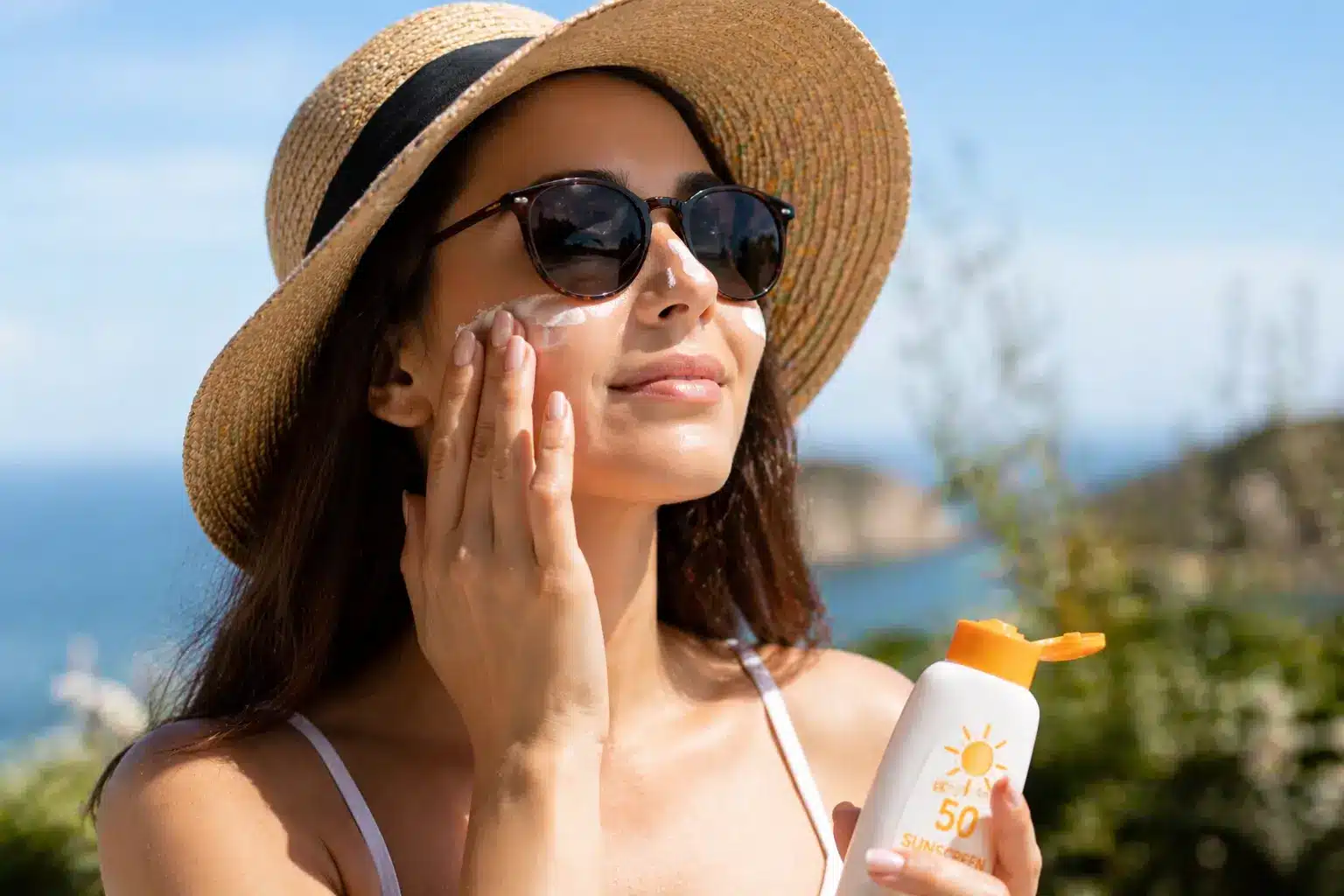
Protecting your skin safely comes down to choosing the right sunscreen, applying it correctly, and maintaining consistent habits that reduce daily sun exposure.
- Check ingredient labels: Read sunscreen labels carefully to avoid irritating ingredients and ensure suitability for your skin type.
- Avoid spray sunscreens: Skip spray formulas to reduce inhalation risks and ensure more even, controlled application on skin.
- Choose gentle formulas: Pick sunscreens that are skin-friendly and formulated with minimal environmental impact for safer daily use.
- Use broad-spectrum protection: Always choose products that protect against both UVA and UVB rays for complete skin defense.
- Apply SPF 30 or higher: Use sunscreen with at least SPF 30 daily, regardless of weather or indoor exposure.
- Apply before sun exposure: Put on sunscreen at least 30 minutes before going outside to allow it to absorb properly.
- Reapply consistently: Reapply sunscreen every 2 hours, especially after sweating, swimming, or towel-drying your skin.
- Wear protective clothing: Use long sleeves, hats, or sunglasses to add an extra layer of sun protection outdoors.
- Limit peak sun exposure: Avoid direct sunlight between 10 AM and 2 PM when UV rays are strongest.
Conclusion
Choosing a sunscreen used to feel simple, without giving a thought to which ingredients to avoid.
Reading the full ingredient list matters more than trusting the marketing language on the front of the bottle.
Sun protection is non-negotiable, but what goes into that protection deserves attention. Small, informed swaps can add up over years of daily use.
Taking a few extra minutes to check ingredients today can help avoid long-term skin concerns.
A well-chosen sunscreen should not only protect against UV damage but also align with your skin’s needs and comfort.
If this blog gave you something useful for your next shopping trip, I would love to hear your thoughts in the comments below.
Frequently Asked Questions
Can Sunscreen Ingredients Clog Pores or Cause Acne?
Some sunscreen ingredients, especially heavier chemical filters or added fragrances, can clog pores in acne-prone skin. Choosing non-comedogenic and mineral-based formulas can help reduce this risk.
Do Natural or Organic Sunscreens Work Better?
Natural or organic labels do not guarantee better protection. Effectiveness depends on active ingredients like zinc oxide or titanium dioxide, not marketing terms.
How Often Should Sunscreen Be Reapplied?
Sunscreen should be reapplied every 2 hours, or more frequently if sweating or swimming, to maintain effective protection throughout the day.