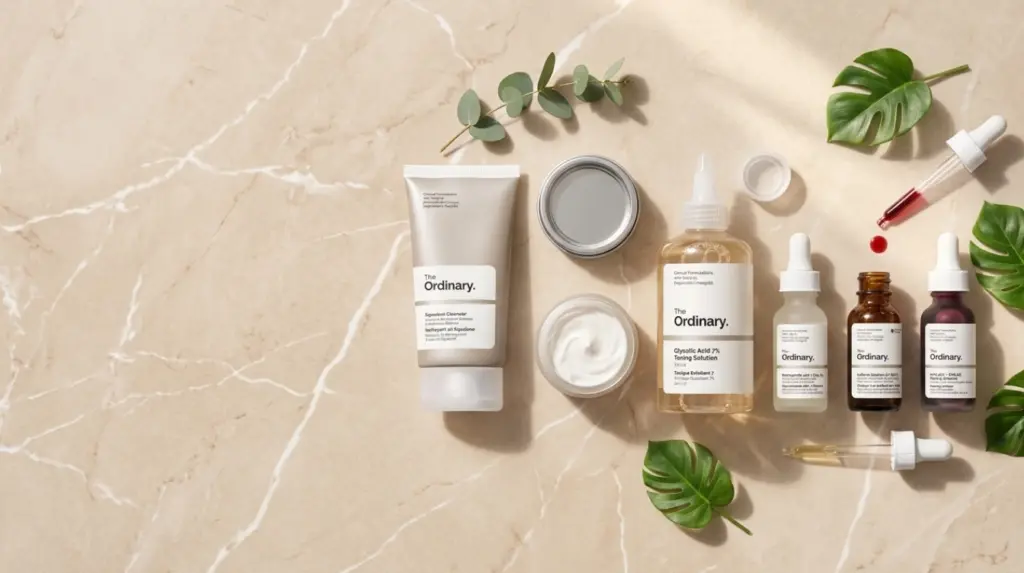
Building a complete The Ordinary skincare routine can feel confusing at first, since the brand sells serums named after ingredients rather than skin concerns.
It’s easy to grab the wrong products or apply everything out of order. A workable morning and night routine using only The Ordinary doesn’t need ten steps or a chemistry degree.
It just needs the right products, applied in the right order, at the right time of day.
Below is a full AM and PM routine built from The Ordinary’s lineup, plus guidance on matching products to your skin type, which ingredients to keep apart, and the common mistakes that slow down results.
Who Should Follow a The Ordinary Skincare Routine?
The Ordinary is designed for people who prefer ingredient-focused skincare and want targeted solutions without unnecessary steps. Its wide range of serums, acids, moisturizers, and treatments lets users choose products based on their individual skin needs.
This routine can be suitable for people dealing with:
- Excess oil and pores
- Dry or dehydrated skin
- Uneven-looking skin tone
- Rough texture
- Early signs of aging
- Skin barrier concerns
However, using more products does not always create better results. A simple routine with carefully selected products is often easier to maintain and helps you understand how your skin responds.
Beginners can start with a cleanser, one treatment product, moisturizer, and sunscreen before adding more active ingredients.
The Ordinary Skincare Routine Basics
Before picking products, it helps to understand the brand’s ingredient-first approach and how The Ordinary sorts its entire range. Every item falls into one of three stages, and knowing where a product fits removes most of the guesswork.
| Stage | Purpose | Example Products |
|---|---|---|
| Prep | Cleanse and prepare the skin surface | Squalane Cleanser, Glycolic Acid Toning Solution |
| Treat | Target specific concerns with active ingredients | Niacinamide 10% + Zinc 1%, Hyaluronic Acid 2% + B5 |
| Seal | Lock in hydration and support the skin barrier | Natural Moisturizing Factors + HA, Mineral UV Filters SPF 30 with Antioxidants |
Every product in this routine falls into one of these three stages, depending on the concern you are treating. Keep that order in mind as you move into the full morning and night routines outlined below.
Simple The Ordinary Skincare Routine For Beginners
A beginner routine should focus on creating healthy habits before adding stronger treatments. The goal isn’t to use every popular product, but to understand what your skin actually needs.
Morning Routine
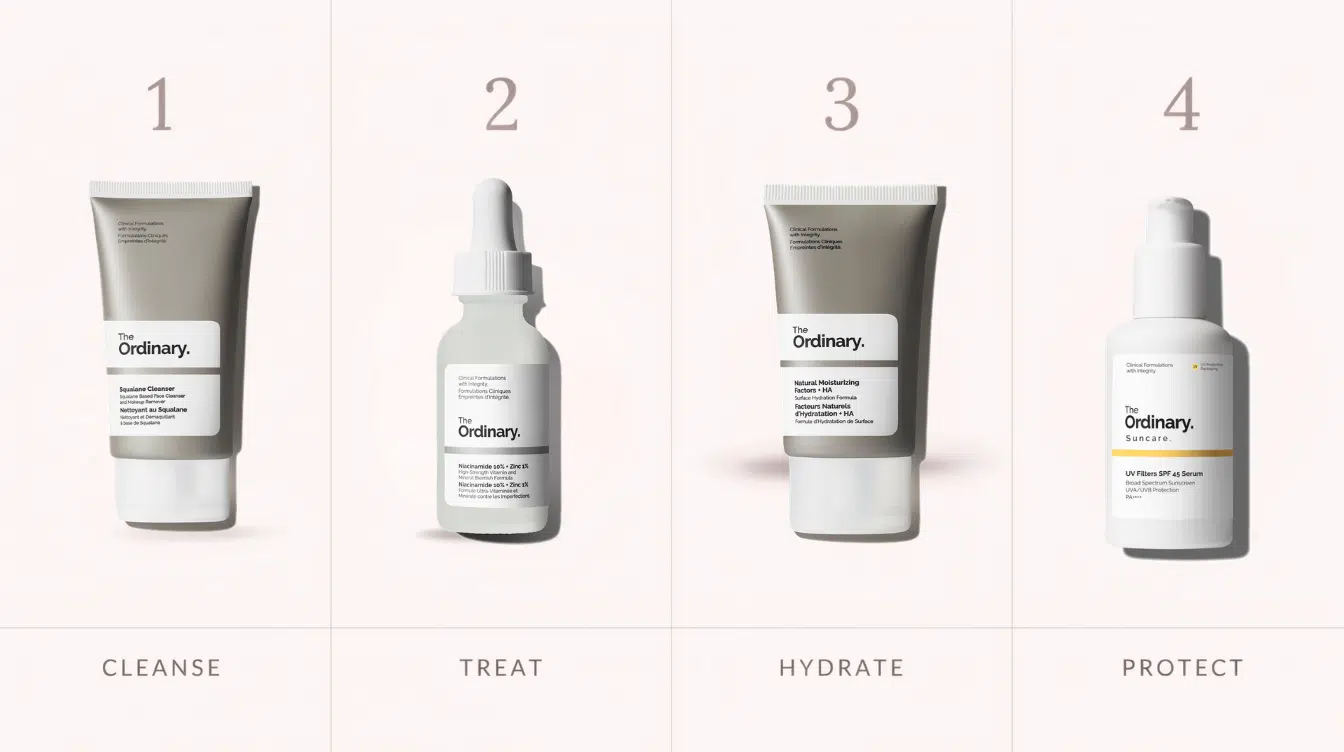
A morning routine built around The Ordinary should stay light and protective, since its main job is to shield skin before the day starts, not treat deep concerns.
- Squalane Cleanser: Massage onto dry or damp skin for about 30 seconds, then rinse with lukewarm water. Avoid scrubbing or hot water to prevent unnecessary dryness.
- Niacinamide 10% + Zinc 1%: Suitable for oily or acne-prone skin. For dry or more reactive skin, choose Hyaluronic Acid 2% + B5 instead. Apply a few drops and let it settle before moisturizing.
- Natural Moisturizing Factors + HA: Apply a thin, even layer to the face and neck to maintain hydration without making the routine feel heavy.
- Broad-Spectrum SPF 30+:Finish with sunscreen every morning. Apply generously to the face, neck, and ears, and reapply when spending extended time outdoors.
Apply a generous layer across the face, neck, and ears, since most people use far less than the recommended amount. Reapply roughly every two hours outdoors.
Night Routine
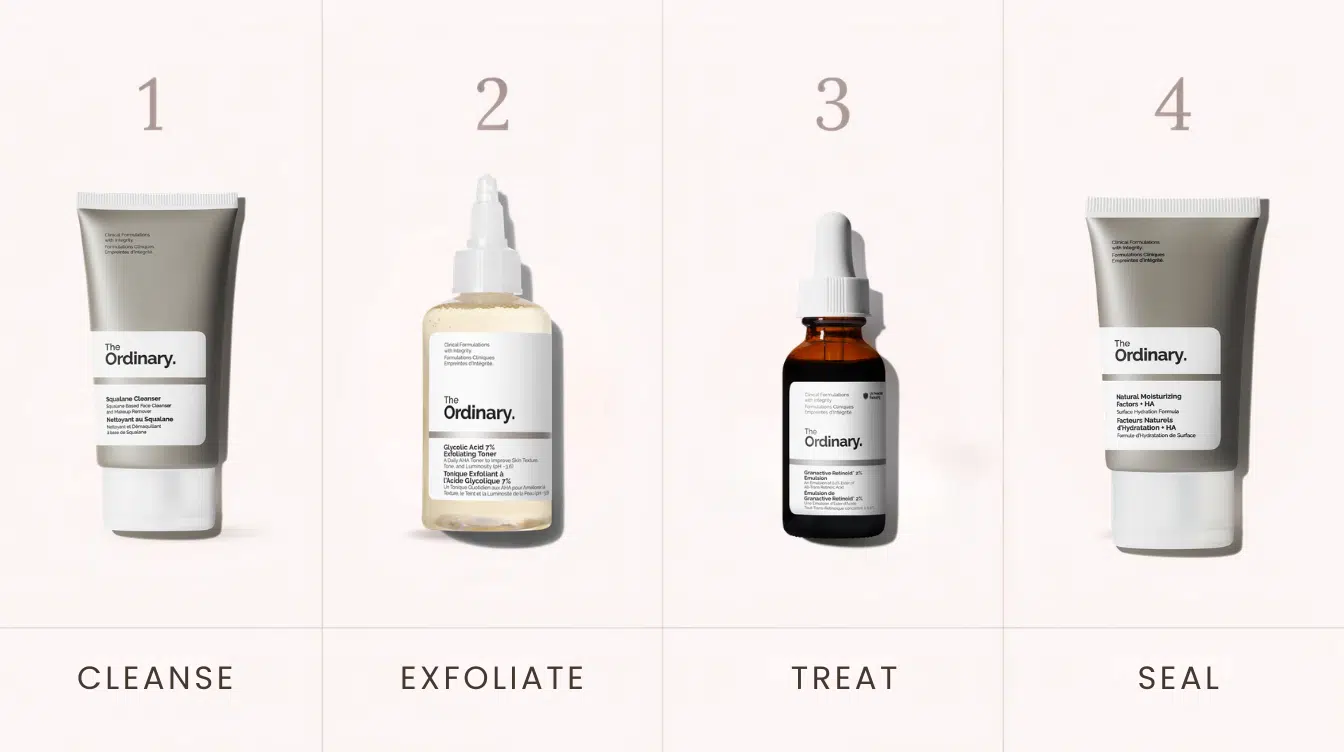
At night, skin repairs itself, so this routine shifts from protection to treatment and recovery, using stronger actives than the morning steps allow.
- Squalane Cleanser: Remove sunscreen, makeup, oil, and daily buildup. If you wear heavy makeup or sunscreen, start with an oil or balm cleanser before the Squalane Cleanser.
- Exfoliating Acid: Use Glycolic Acid 7% Toning Solution or Salicylic Acid 2% on selected nights. Start slowly and never combine an exfoliating acid with retinoids in the same routine.
- Treatment Serum: Use a suitable retinoid or peptide serum according to your skin goals. Beginners should introduce retinoids gradually and avoid applying them to irritated or broken skin.
- Moisturizer or Facial Oil: Finish with a moisturizer or a few drops of 100% Plant-Derived Squalane or Marula Oil if you need extra nourishment.
If your skin still feels dry after this step, you may need a richer formula or an extra-thin layer of oil.
The Ordinary Skincare Routine By Skin Type
Skin type provides a useful starting point, but the specific concern being treated should ultimately determine the active ingredient. The following combinations can help narrow down suitable choices.
| Skin Type | Prep | Treatment | Moisturise |
|---|---|---|---|
| Dry | Squalane Cleanser | Hyaluronic Acid 2% + B5 | Natural Moisturizing Factors + HA |
| Oily | Squalane Cleanser | Niacinamide 10% + Zinc 1% | Natural Moisturizing Factors + Beta Glucan |
| Acne-Prone | Squalane Cleanser | Salicylic Acid 2% Solution | Natural Moisturizing Factors + Beta Glucan |
| Sensitive | Squalane Cleanser | Hyaluronic Acid 2% + B5 | 100% Plant-Derived Squalane |
| Ageing/Texture | Squalane Cleanser | Retinoid | Moisturizing product or facial oil |
Use the table as a starting point, not a fixed prescription. Skin can respond differently to the same ingredient, so introduce treatments gradually and adjust according to tolerance.
Ingredients Not to Combine
Layering too many actives at once is one of the fastest ways to irritate skin, so it helps to know which mixtures to keep apart.
Retinoids plus exfoliating acids should not share the same routine, since combining them raises the risk of redness and peeling.
Vitamin C and Niacinamide can generally go together despite older ideas that they cancel each other out, though sensitive skin might prefer spacing them apart during the day.
Don’t stack multiple strong acids, like glycolic acid products and salicylic acid, in the same night; choose one per session, then swap it later.
If you add a new active, start it alone for a week before pairing it with anything else, so you can more easily trace reactions.
Common Mistakes to Avoid
A handful of habits are responsible for most of the frustration people report with The Ordinary, and each one is easy to fix once you notice it.
- Buying five or six serums at once instead of starting with one treatment product.
- Layering retinol with an exfoliating acid on the same night (see Ingredients Not to Combine above).
- Exfoliating more than three times a week.
- Judging a product after only a few days of use.
- Applying products from thickest to thinnest instead of the reverse.
Fixing even two or three of these habits usually brings noticeably calmer, more consistent skin within a few weeks.
How Often Should You Use The Ordinary Products?
Not every product belongs in the routine at the same frequency. Hydrating formulas can generally be used more regularly, while stronger treatments need a slower introduction based on skin tolerance.
| Product | Starting Frequency |
|---|---|
| Hyaluronic Acid 2% + B5 | Daily |
| Niacinamide 10% + Zinc 1% | Daily, if tolerated |
| Salicylic Acid 2% Solution | A few times weekly |
| Glycolic Acid 7% Exfoliating Toner | Limited weekly use |
| Retinoid | Start once or twice weekly |
If your skin remains comfortable, you can gradually adjust the treatment frequency. Redness, persistent dryness, burning, or peeling are signs to reduce active treatment rather than increase it.
The most useful routine is one that your skin can tolerate consistently. Frequency should be guided by the individual product instructions and your skin’s response.
How Long Does It Take to See Results From The Ordinary Products?
Skincare results rarely appear overnight because ingredients need time to support visible changes. The timeline depends on the product, your skin condition, and how consistently you use the routine.
Hydrating products like Hyaluronic Acid may make the skin feel softer and more comfortable sooner. Ingredients such as niacinamide, retinol, and exfoliating acids usually require more consistent use before you notice improvements.
Avoid changing products too quickly, because frequent switching can make it hard to tell what works for your skin. Instead, follow a routine consistently and monitor how your skin responds.
Patience plays an important role in skincare. A routine that fits your needs and is followed regularly is more likely to create lasting improvements than constantly trying new products.
Wrapping It Up
A full The Ordinary skincare routine does not really need a crowded shelf of serums or little potions.
You need a simple backbone: prep, treat, and finally seal, done in the right order, morning and night, with sunscreen never skipped, genuinely, no shortcuts. Start with the four-step morning routine and four-step night routine mentioned above, then tweak the treatment part to fit your skin type.
Give each added step several weeks before deciding it’s working. Once the basics feel calm and steady, switch to the five-step approach and add only one new active at a time.
Save this plan, pick your first three products today, and give your skin a full month before making any changes.
Frequently Asked Questions
Is the Ordinary Good for Teenagers?
Gentle products like the Squalane Cleanser or Niacinamide Serum are usually fine for teenage skin, particularly for oil control. Stronger actives such as retinol are typically better suited to adult skin unless a dermatologist recommends otherwise.
How Many the Ordinary Products Should a Beginner Buy?
Three products are enough to start: a cleanser, one treatment serum, and a moisturizer. Sunscreen makes four. You can add additional serums gradually once your skin has adjusted to the basics.
Can I Skip Sunscreen if My Moisturizer Has SPF?
Only if that SPF is broad-spectrum 30 or higher and applied generously. Since many people do not apply enough moisturizer with SPF to get the labeled protection, a dedicated sunscreen can make adequate coverage easier.
What if My Skin Feels Irritated After Starting a New Routine?
Pause any active ingredients and go back to just a cleanser and a plain moisturizer for a few days. Reintroduce one product at a time once the irritation settles.