Do you find yourself wondering which type of foundation is best for your skin or how to choose the right formula for your daily needs?
I’ve been there, and it took me a while to figure out what truly works for my skin.
In this blog, I’ll break down the different types of foundations for makeup, sharing what I’ve learned from my own experiences and the advice I’ve gathered along the way.
I understand how important it is to find something that feels just right, so this guide will help you make an informed choice without the confusion.
You’ll get clear, simple information on each foundation type and what makes it unique, helping you pick the one that suits your skin and lifestyle best.
What is Foundation Used For in Makeup?
Foundation is a makeup product designed to create an even base for the rest of your makeup.
It helps smooth out skin tone, cover imperfections, and provide a uniform surface so other products, like blush, bronzer, or highlighter, can be applied more evenly.
Foundation comes in different forms, including liquid, cream, stick, powder, and mousse, and offers varying levels of coverage from sheer to full.
The right foundation can also enhance your skin’s finish, whether you prefer a natural, dewy glow or a matte, polished look.
Choosing the right formula and shade depends on your skin type, desired coverage, and personal style
Types of Foundation for Makeup
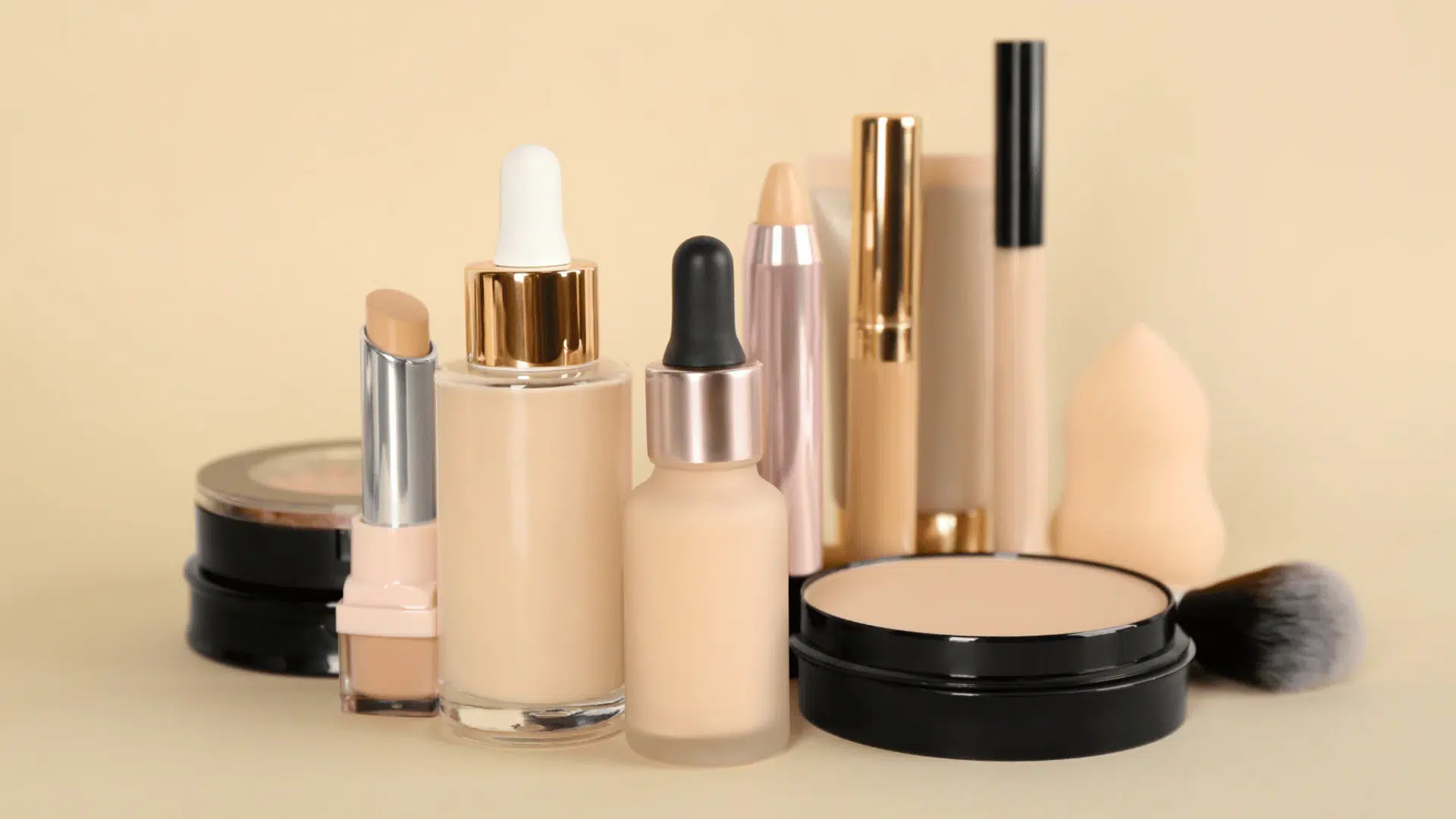
Foundation comes in various formulas to suit different skin types, coverage needs, and finishes. Let’s see a breakdown of each type:
- Liquid Foundation: Versatile and buildable, offering coverage from sheer to full. Available in matte, satin, or dewy finishes, making it suitable for most skin types. Apply with a brush, sponge, or fingers for flexibility.
- Powder Foundation: Provides light coverage, ideal for oily or combination skin. Helps control shine and can be used to set liquid foundation for longer wear. Offers a natural, matte finish.
- Cream Foundation: Offers full coverage with a hydrating formula, perfect for dry or mature skin. Blends smoothly, leaving a satin or radiant finish for a glowing look.
- Stick Foundation: Delivers medium to full coverage in a portable format. Ideal for touch-ups or travel, it’s easy to apply directly and blend on the go.
- Mousse or Whipped Foundation: Lightweight and airy, offering a soft, natural finish. Best for normal to combination skin, providing a breathable feel throughout the day.
Choosing the Right Foundation Based on Skin Type
To find the perfect foundation for your skin, consider your skin type and specific concerns with these helpful guidelines:
1. Skin Type Considerations
- Oily Skin: Look for matte or powder foundations that control shine and oil. Opt for oil-free, non-comedogenic formulas to prevent clogged pores and breakouts. Waterproof foundations offer better longevity for oily skin.
- Dry Skin: Hydrating cream or liquid foundations are ideal. Choose formulas with moisturizing ingredients like hyaluronic acid or glycerin, which provide a dewy finish without emphasizing dry patches.
- Combination Skin: Lightweight, buildable formulas are best. These balance hydration and oil control, avoiding foundations that are either too matte or too dewy.
- Sensitive Skin: Go for hypoallergenic, fragrance-free, and mineral-based foundations to reduce irritation and redness.
2. Matching Foundation to Skin Concerns
- Acne-Prone Skin: Use non-comedogenic foundations with oil-control properties and anti-inflammatory ingredients. Avoid heavy, cakey formulas that may highlight acne or texture.
- Redness: Choose foundations with good coverage and neutralizing undertones (yellow or green-based) to counteract redness. Opt for formulas with calming ingredients for added benefit.
- Aging Skin: Look for hydrating foundations with light-reflecting properties. Choose medium to full coverage formulas that don’t settle into fine lines. Cream or liquid foundations with added skincare benefits can help maintain skin’s suppleness.
It’s always best to test foundations in natural light and consider both your skin tone and undertones for the best match. You may also need to adjust your formula or shade seasonally to ensure a perfect fit.
Foundation Coverages You Need to Know
Understanding the different foundation coverage levels helps you choose the right one for your desired look and skin needs.
1. Sheer Coverage
Sheer coverage provides the lightest, most natural finish, letting your skin’s natural texture, like freckles, shine through. Ideal for even skin that just needs a bit of tone balancing, it’s perfect for a “no-makeup” look.
Sheer formulas are commonly found in tinted moisturizers, BB creams, or lightweight liquids. These foundations are great for those with minimal blemishes or redness, as they offer a fresh, dewy finish.
Sheer coverage also feels breathable, making it a great choice for hot days or light makeup wearers.
2. Medium Coverage
Medium coverage strikes a balance between natural and polished, evening out skin tone and covering minor imperfections without feeling heavy.
It’s versatile, suitable for most skin types, and often buildable, apply additional layers in areas that need more coverage.
This type of foundation gives you more control over coverage while maintaining a natural look. Medium coverage foundations can be layered for a more polished finish, making them perfect for everyday wear or a more radiant look.
3. Full Coverage
Full coverage offers maximum opacity, concealing blemishes, redness, pigmentation, scars, and uneven tone. Best for glam looks, photography, or when you want a flawless canvas.
These formulas are typically in creams, thick liquids, or stick foundations, and while they provide a flawless finish, they can feel heavier, so proper prep and blending are key.
Full coverage is ideal for those with acne, scars, or uneven skin tones, as it helps create a smooth, uniform complexion.
Quick Comparison Table
| Coverage Type | Finish & Look | Best For | Common Formulas |
|---|---|---|---|
| Sheer Coverage | Light, natural finish that lets skin texture show through. | Even skin, “no-makeup” look, hot days. | Tinted moisturizers, BB creams, lightweight liquids. |
| Medium Coverage | Balanced, buildable, evens out the tone while looking natural. | Most skin types, everyday wear, and minor imperfections. | Liquid or cream foundations. |
| Full Coverage | Maximum opacity for a flawless canvas. | Acne, scars, pigmentation, glam looks, photography. | Creams, thick liquids, stick foundations. |
Foundation Finishes: Matte, Satin, and Dewy
Foundation finishes, matte, satin, and dewy, play an important role in achieving the desired look, as they influence the overall appearance of the skin and suit different skin types and occasions.
1. Matte Finish
A matte finish eliminates shine, creating a flat, non-reflective surface. It’s ideal for oily or combination skin, as it controls oil and minimizes the appearance of pores, offering a polished, velvety complexion.
Matte foundations are great for warm or humid climates, long wear days, or professional settings where a shine-free look is necessary.
However, matte finishes can accentuate dryness in dry or aging skin, leaving it looking flat or emphasizing texture.
2. Dewy Finish
Dewy foundations provide a radiant, luminous glow, giving the skin a fresh, hydrated, and youthful appearance. They are perfect for dry, dull, or mature skin that needs extra moisture and luminosity.
These foundations often contain moisturizing ingredients and reflect light, enhancing skin’s natural vitality. Dewy finishes work well for casual, daytime, or social events where a glowing complexion is desired.
However, they can look oily or greasy on very oily or acne-prone skin.
3. Satin Finish
Satin finishes offer a balanced middle ground, providing a soft sheen without excessive shine.
They deliver a natural, skin-like finish and are best suited for normal to combination skin.
Satin foundations are versatile, making them ideal for everyday wear or occasions where you want a subtle glow without any shine.
Quick Comparison Table
| Finish | Best Suited For | Occasion/Preference | Appearance Effect |
|---|---|---|---|
| Matte | Oily, combination | Long wear, shine control, professional settings | Velvety, shine-free, polished |
| Dewy | Dry, dull, mature | Casual, daytime, social events | Radiant, hydrated, youthful glow |
| Satin | Normal to combination | Everyday wear, subtle glow for any occasion | Soft sheen, natural finish |
Foundation Application Methods: Brush, Sponge, and Fingers
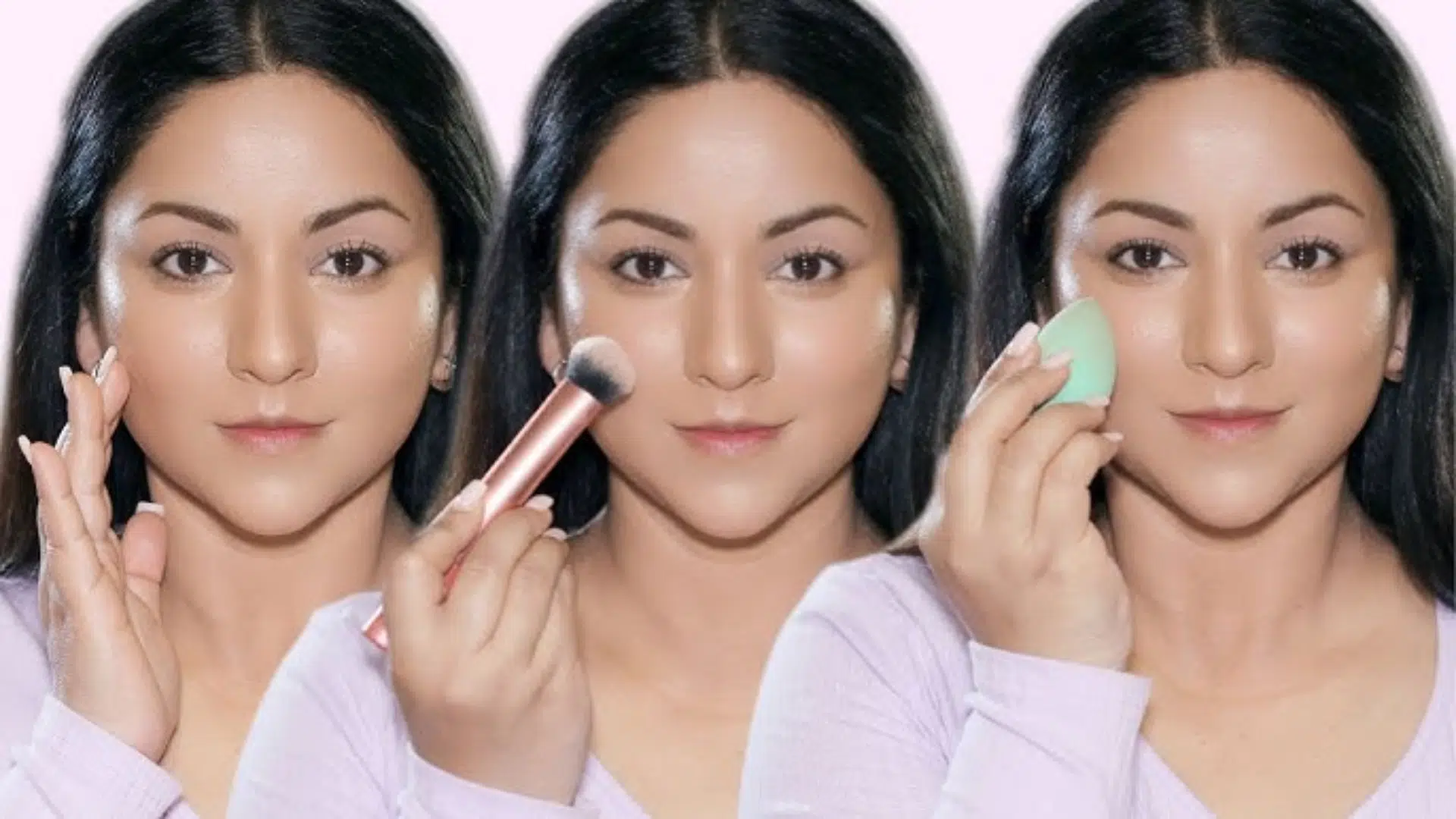
Each method of applying foundation, whether with a brush, sponge, or your fingers, has its unique advantages. Let’s see a breakdown of how to use each, along with their pros and cons:
1. Brush Application
Dab or dot foundation on your face, then use a dense, rounded, or flat foundation brush to buff and blend the product in circular or stippling (light tapping) motions.
- Pros: Provides the most coverage and an even, polished finish. Brushes don’t absorb as much product, so there’s less waste. They work well with medium to full coverage foundations, especially thicker or cream formulas.
- Cons: Some brushes, especially flat paddle types, may leave streaks if not used properly. Regular cleaning is necessary to avoid bacterial buildup.
- Best for: Those seeking higher coverage and a refined finish.
2. Sponge Application
After dampening the sponge, dot foundation on your face, then gently press and bounce the sponge over the skin to blend out the product. Avoid rubbing to prevent patchiness.
- Pros: Offers a natural, flawless, and lightweight finish with soft blending. There’s minimal streaking, and sponges are good for buildable coverage, especially with thicker or creamier foundations.
- Cons: Sponges absorb more product, leading to higher foundation waste. They also require regular cleaning and need to be dampened for optimal use.
- Best for: Beginners or anyone preferring a soft, natural, and skin-like finish.
3. Fingers Application
Dab foundation onto the face, then use clean fingers (preferably the ring finger) to gently tap and blend the product into the skin. The warmth of your fingers helps soften the formula for smoother application.
- Pros: Quick, convenient, and no tools are needed. The warmth of your fingers aids in blending cream or liquid formulas smoothly, offering a natural finish with good control for targeted application.
- Cons: May provide less coverage than brushes, and can be uneven if not blended well. Using fingers can also transfer oils or bacteria to your face if not kept clean.
- Best for: Minimal makeup looks, moisturizing or hydrating foundations, and spot blending or smaller coverage areas.
Quick Comparison Table
| Application Method | Coverage Level | Finish Effect | Ideal For |
|---|---|---|---|
| Brush | Medium to Full | Even, polished, high coverage | Fuller coverage and refined finish |
| Sponge (Damp) | Sheer to Medium | Natural, skin-like, soft blend | Natural finish, beginners, thick/cream foundations |
| Fingers | Sheer to Light | Natural, slightly dewy | Minimal makeup, quick touch-ups, hydrating formulas |
Tips on How to Make Foundation Last Longer
Achieving a long-lasting foundation requires the right prep, application, and setting techniques. Follow these steps to ensure your makeup stays fresh and in place throughout the day.
- Prep your skin: Cleanse, exfoliate, and moisturize to create a smooth base.
- Use primer: Apply a primer suited to your skin type to help the foundation grip better.
- Choose long-wear formulas: Opt for foundations labeled as long-lasting or transfer-resistant.
- Apply in thin layers: Build coverage gradually instead of applying too much at once.
- Set with powder: Lightly dust setting powder on areas prone to shine.
- Use a setting spray: Lock in makeup with a fine mist for extra staying power.
- Blot, don’t wipe: Use blotting papers during the day to control oil without removing makeup.
Conclusion
I hope this blog has helped clarify the different types of foundation makeup, their finishes, and how to apply them for long-lasting wear.
I understand how challenging it can be to choose the right foundation with so many options out there, and I wanted to address that frustration for you.
My goal was to make the process easier, giving you the tools to confidently select the foundation that fits your skin type, coverage needs, and desired finish.
By focusing on proper prep, application techniques, and setting methods, you can ensure your makeup lasts all day without fading or feeling heavy.
With the tips and guidance provided here, I’m confident you’ll find the perfect foundation that works for you.