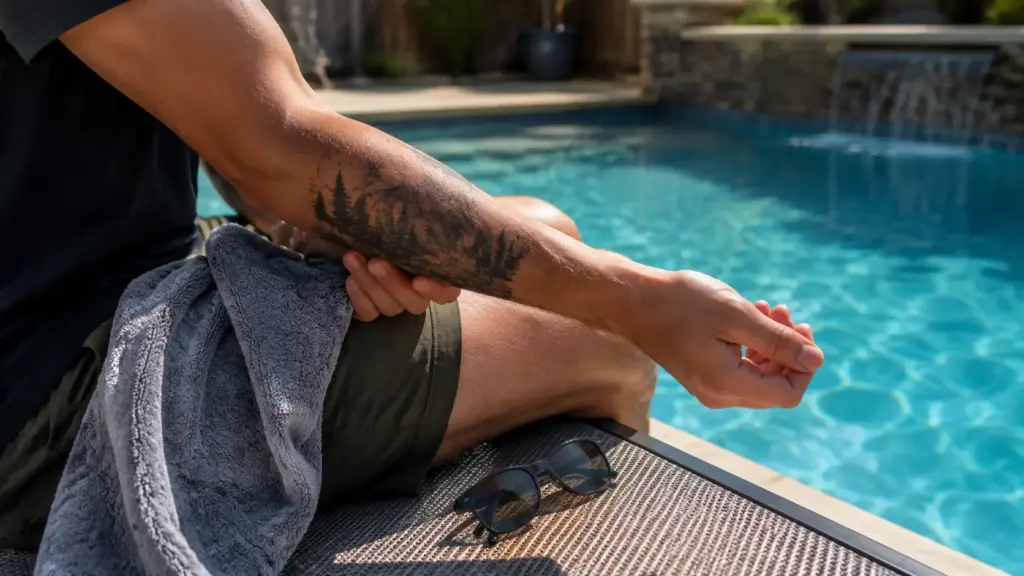
Your tattoo looks amazing right now, and yeah, you’re probably checking it in the mirror every chance you get.
But that skin underneath is still healing, whether you like it or not, and it really doesn’t care that you’ve got a beach trip booked or a pool sitting right outside your door.
As a former swim coach, I’ve watched plenty of clients try to sneak a fresh tattoo into the water early. It never goes the way they hoped. Jump in too soon and things can go wrong fast: infection, patchy spots, ink that just never settles right.
So, before you grab your swimsuit, it’s worth figuring out when you can swim after a tattoo, because rushing this part can undo all that money and pain you just put into it.
When Can I Swim After a Tattoo?
Quick answer: Wait two to four weeks after getting a tattoo before swimming, and only once the scabbing, peeling, and soreness are fully gone. Pools and hot tubs usually need the longer end of that window; some tattoos need longer still.
Week one is the roughest stretch. Skin peels, oozes a bit, and swimming is completely off the table.
By week two, things calm down on the surface, but there’s still healing happening underneath, so don’t get cocky and jump in the pool just yet.
Weeks three and four are usually when most tattoos get close enough to healed that swimming stops feeling like such a gamble. Past that point, you’re typically in the clear.
If you want the fuller picture of what’s happening layer by layer, the full tattoo healing timeline breaks down surface healing versus the deeper repair that keeps going for months.
Still, the actual number of days matters less than what your skin is doing in real time. Some people heal faster, some slower. Go by feel, not by what the calendar says.
Why Swimming Too Soon Can Harm a Tattoo?
Swimming too soon traps bacteria against an open wound, dries out the skin with chlorine, and can pull soft scabs loose before the ink underneath has settled.
None of that is a rule made up to ruin your summer. Water and fresh ink just aren’t friends yet.
| Water Exposure | What It Actually Does |
| Chlorine | Dries the skin out, leaves it irritated |
| Saltwater | Stings and disrupts the healing surface |
| Long soaks | Softens scabs early, can pull ink out with them |
| Pool right after inking | Common way people delay their own healing |
| Beach trip booked pre-tattoo | Same issue, plus sand and sun |
So no, one quick dip probably won’t wreck everything. But keep doing it, or stay in too long just once, and you’re basically asking for a slower heal and a tattoo that doesn’t look as sharp as it should.
Swimming Timeline by Water Type
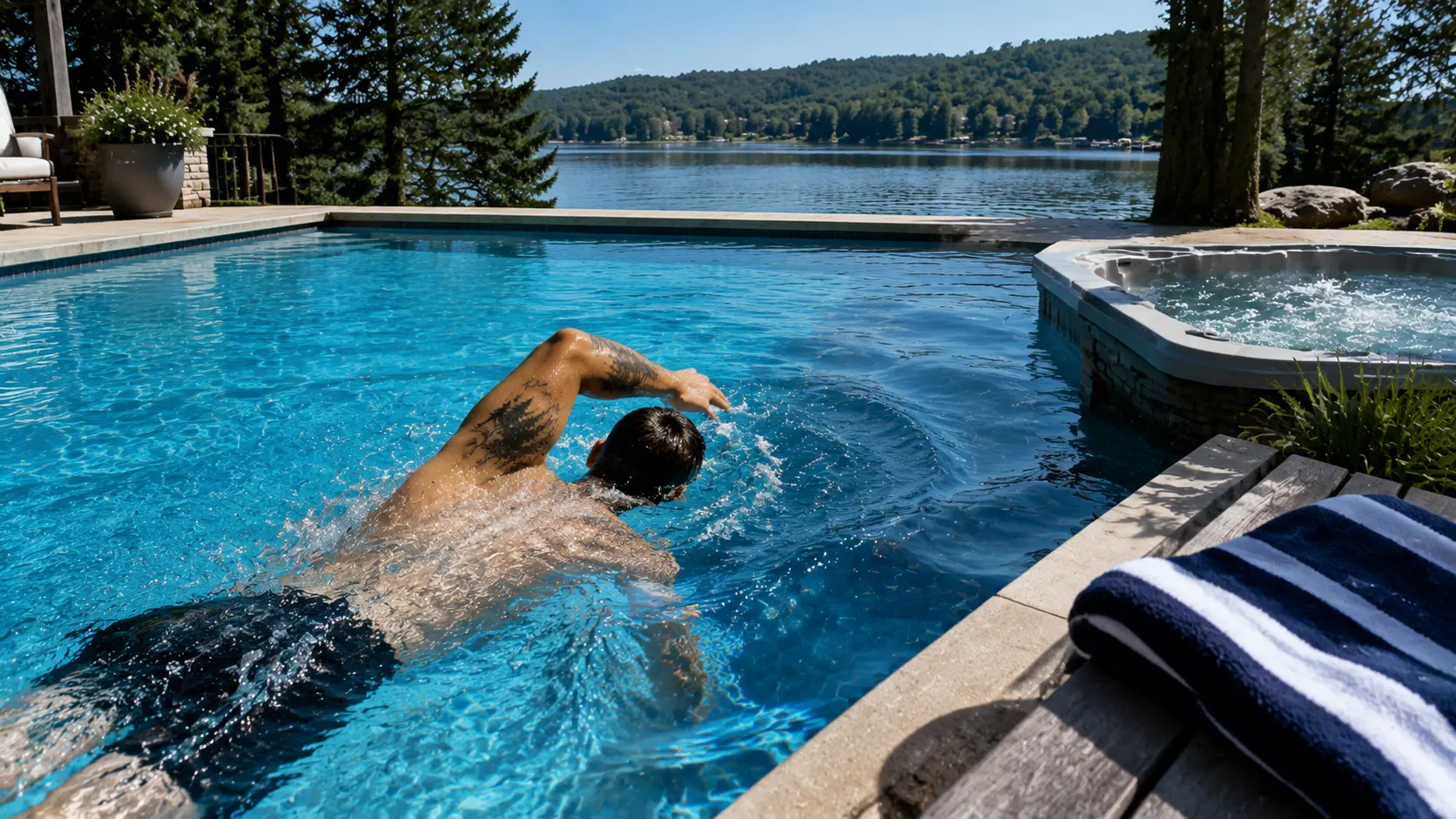
Pools, hot tubs, and lakes each carry different risks, so the wait time isn’t one-size-fits-all. Not every body of water is out to get your tattoo the same way, but they’re definitely not innocent either.
1. Swimming in a Pool
Give it two to four weeks. Chlorine can’t tell the difference between bacteria and your healing skin, so it dries out and irritates both equally.
Competitive swimmers usually plan tattoos around their season instead of right before a meet. Even after that window, ease back in slowly instead of doing a full lap session on day one.
Quick check before getting back in: no scabs, no peeling, no soreness, skin feels normal again.
2. Using a Hot Tub
Wait closer to four weeks or more here. Hot tubs are a warm bacterial soup, and the heat stresses healing skin further. Wrapping the tattoo and hopping in doesn’t protect it either; trapped moisture and heat make things worse.
If you’re leaning on a bandage for peace of mind, it helps to know the actual second-skin bandage window before assuming it buys you extra time in water. If you’re on the fence, skip the hot tub that day and wait it out.
3. Swimming in Lakes and Rivers
Freshwater gets overlooked, but it deserves the same caution as the ocean: algae, bacteria, runoff- you never really know what’s in there.
Stick to three to four weeks, and skip slow-moving or stagnant water especially. Moving water like a clean river current is usually a safer bet than a still pond.
Signs Your Tattoo is Ready for Swimming
Your skin is ready when there’s no scabbing, no peeling, no redness, and no soreness left, not when a certain number of days have passed. Here’s what to actually check before you get in.
- No scabs anywhere, not even small flaky ones near the edges
- Peeling has fully stopped, no more shedding when you touch it
- No redness left around the design, just your normal skin tone
- Doesn’t feel sore, tight, or sensitive when you press on it
- No fluid, ooze, or that shiny wet look tattoos get while healing
- Feels like regular skin again, not that tender “healing” texture underneath
If even one of these is still off, hold out a bit longer. A few extra days isn’t going to hurt anything, but jumping in too soon might undo weeks of healing in one swim.
How Tattoo Placement Affects Swimming Wait Time?
Placement changes your wait time because friction, movement, and daily contact slow healing in some spots far more than others.
| Placement | Typical Healing Time | Why |
| Upper arm or shoulder | 2 to 3 weeks | Minimal movement, heals quickly |
| Forearm | 2 to 3 weeks | Low friction area |
| Ankle or foot | 3 to 5 weeks | Constant friction from shoes and walking |
| Ribs or side | 3 to 4 weeks | Movement from breathing and bending |
| Hands or fingers | 3 to 4 weeks | Faster skin shedding, constant washing |
| Back or thigh | 2 to 4 weeks | Bigger tattoos here take longer |
Every tattoo heals differently, and placement can change how quickly your skin settles. Giving high-friction areas enough time can help protect your tattoo while it finishes healing.
How to Protect a Tattoo After Swimming?
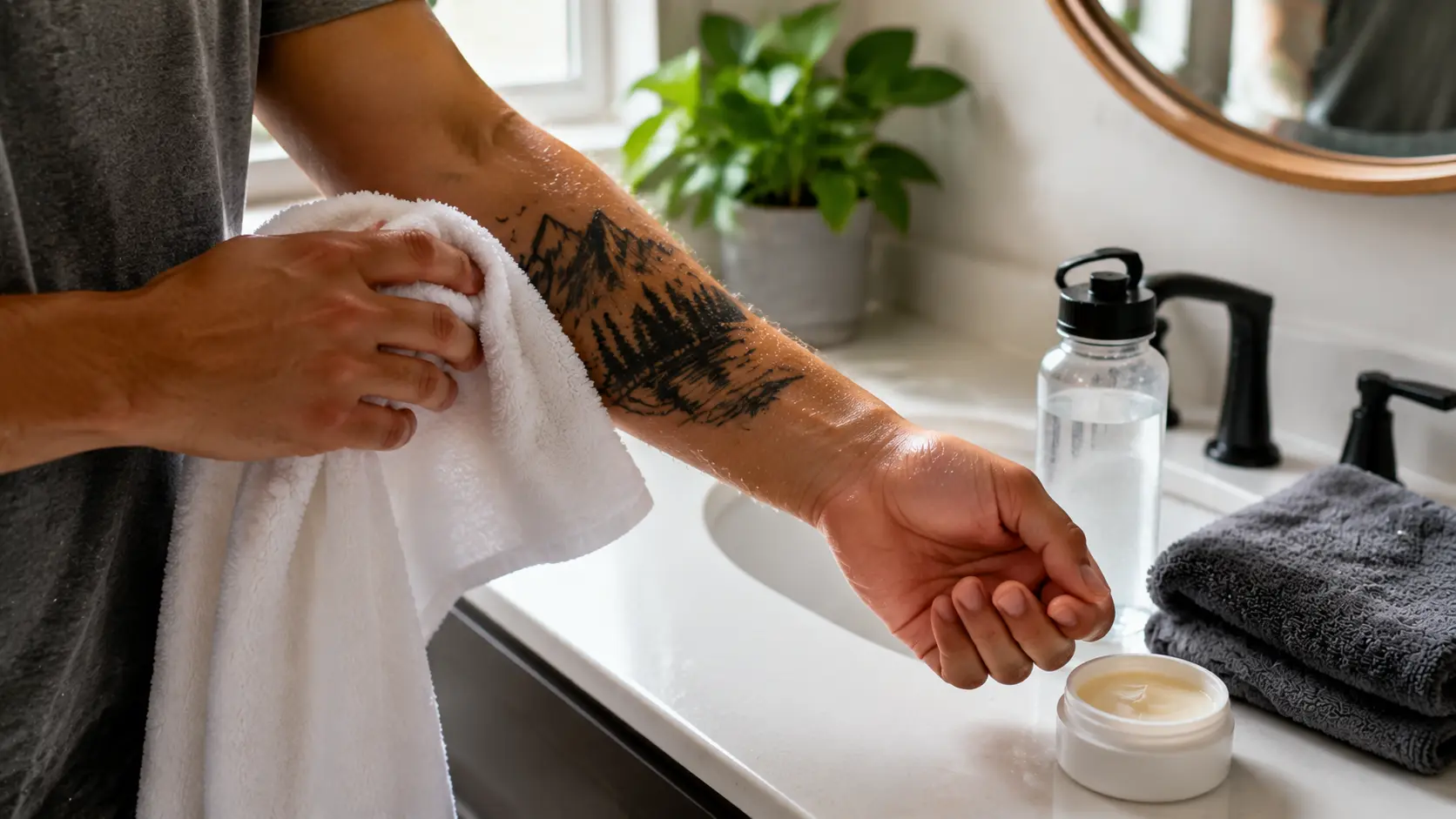
If you end up in the water early, rinse the area right away, moisturize as usual, and watch it closely for the next day or two. Life happens, and plans got made before the tattoo did.
- Rinse immediately: Use clean water right after you’re out to wash away chlorine or salt.
- Pat dry, don’t rub: Rubbing irritates skin that’s still healing.
- Moisturize as usual: Don’t skip your aftercare product just because you’re rushed.
- Avoid sun for the rest of the day: Sun and healing skin don’t mix.
- Watch it closely: Unusual redness, swelling, or pain over the next day or two needs attention.
None of this erases the fact that you got it wet early, but it’s the difference between a minor slip-up and an actual problem. It’s also worth knowing what actually fades ink over time, since one early swim matters far less than years of untreated sun exposure. Do these, and you’re probably fine.
What Other People Actually Did?
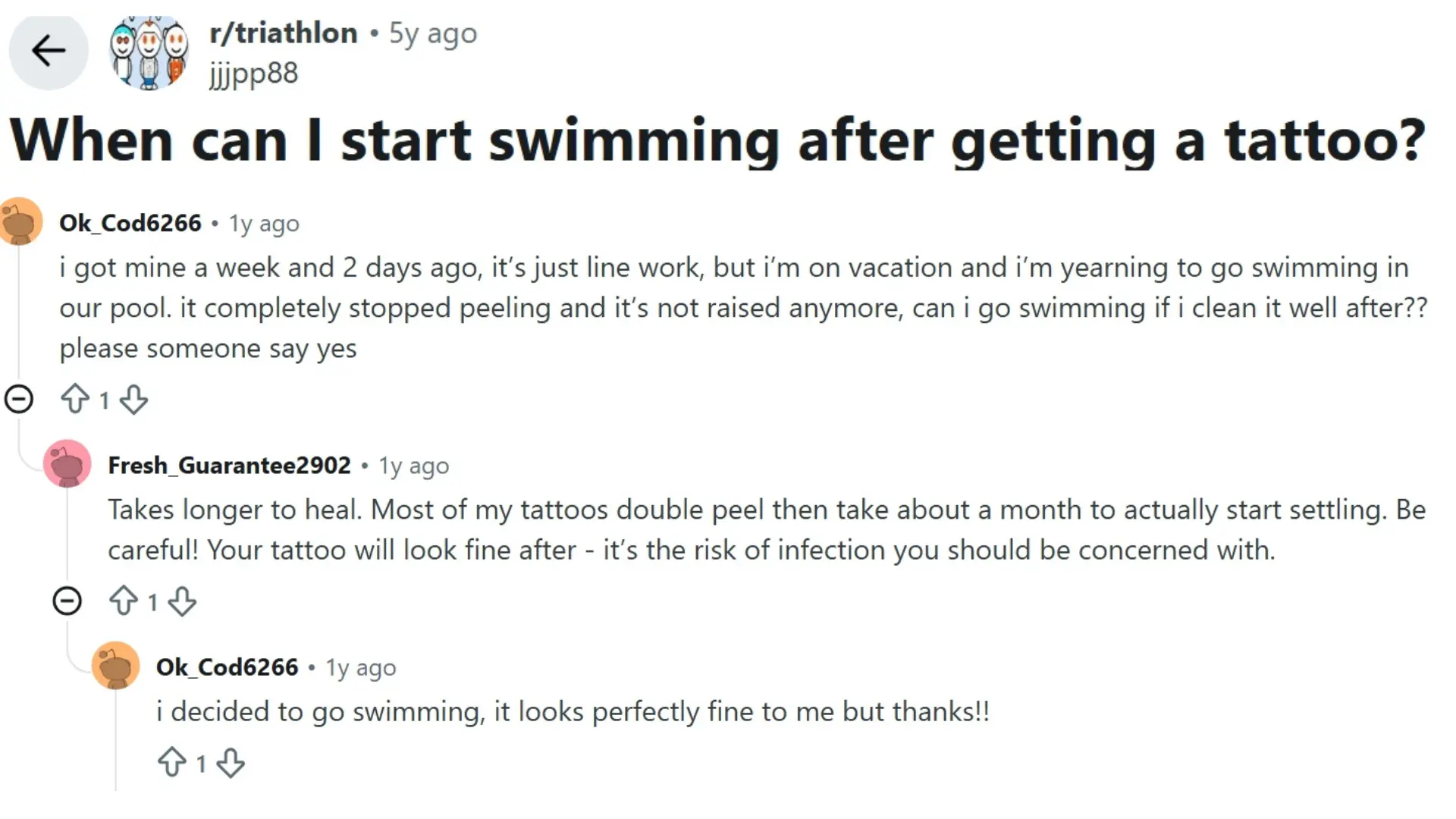
Some people wait it out exactly like their artist said and never run into an issue. Others admit they snuck into a pool early and got lucky. And then there are the ones who learned the hard way after jumping in too soon.
A few Redditors shared how they handled it. One traveler used a waterproof bandage every time they got in a pool or spring during a trip just a week after getting inked, and said it worked well for them.
Another swimmer admitted to getting in the water too soon once, developed a serious infection, needed antibiotics, and had to get the tattoo redone twice. They now stick to a firm two-week minimum every time.
None of this means you should treat internet stories as your healing schedule. But it does show something worth remembering: the two-to-four-week window is a starting point, not a guarantee, and your own skin will usually tell you more than someone else’s timeline ever could.
Can You Waterproof a Tattoo for Swimming?
To an extent, but it’s not something to rely on too heavily. Waterproof bandages work, but they’re not a shortcut around the actual healing process.
They’re meant for moments you genuinely can’t avoid, not an actual swim session or soaking in a pool for an hour.
If you do use one, keep it short, remove it as soon as you’re done, then clean and moisturize the area properly. Skipping that step kind of defeats the purpose.
Bottom line, a waterproof bandage buys you a little insurance for an unavoidable moment. It’s not a green light to swim like you’re already healed.
Conclusion
Your tattoo is permanent, so a few extra weeks of patience isn’t much to ask. Trust your skin over the clock, and don’t let a pool day pressure you into rushing something you can’t undo.
Trust your skin over the clock, listen to your artist, and don’t let some pool day pressure you into rushing something you honestly can’t undo once it’s done.
If you’re still wondering when you can swim after a tattoo, the honest answer is: whenever your skin says it’s ready, not whenever your schedule says it is.
Healing looks different for everyone, and that’s completely normal, so don’t compare your timeline to someone else’s.
Got questions about your specific tattoo? Ask your artist before you get in; they know your skin better than any article ever could.
Frequently Asked Questions
Is it Okay to Swim Once a Tattoo is Completely Healed, Even Years Later?
Yes, once a tattoo is fully healed, it’s just a permanent part of your skin at that point. Swimming, sun, chlorine, none of it poses any special risk anymore, so go ahead and enjoy the water.
Can Wearing a Rash Guard or Swim Shirt Replace Waiting for Your Tattoo to Heal?
No. Fabric might block direct friction, but water still gets through, and moisture trapped against healing skin can actually make things worse, not better.
Can I Take a Shower with a New Tattoo, Even Though I Can’t Swim?
Yes, showers are totally fine even with a fresh tattoo; keep it quick and gentle. Skip blasting the area with direct water pressure and pat it dry instead of rubbing it.