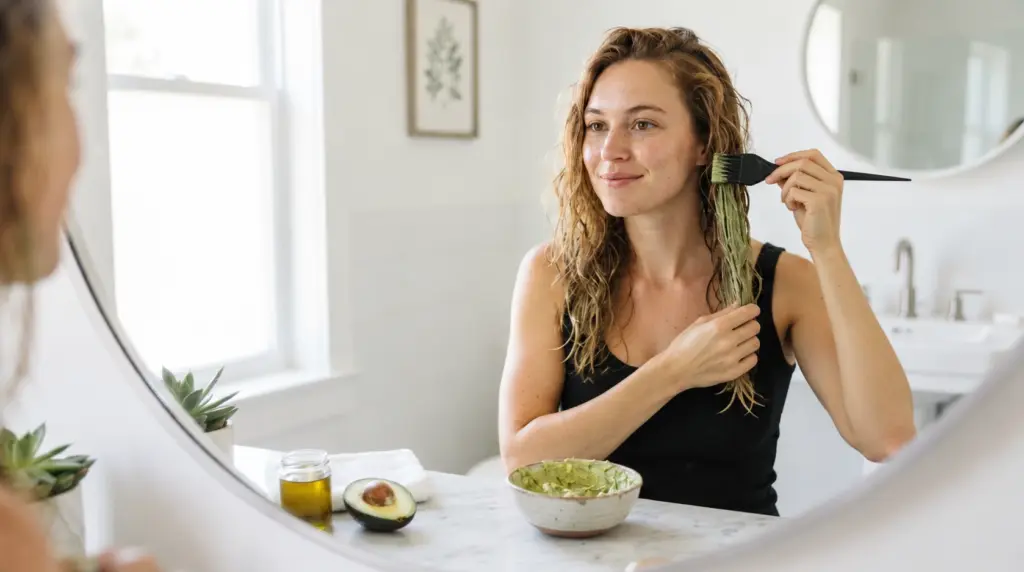
Homemade hair masks can sound better online than they feel once you actually have to rinse them out. An avocado hair mask is a good example.
Some people like the softer, smoother finish, while others find the mixture too rich, messy, or difficult to remove. That difference usually comes down to hair type, the recipe, and how much product is used.
I tend to judge any at-home beauty treatment after the hair is washed, dried, and styled, not while the mask is still sitting on it.
Start with a simple combination, pay attention to the finished result, and change only one thing at a time.
Does an Avocado Hair Mask Work?
An avocado mask can work as a temporary conditioning treatment for hair that feels dry, rough, or difficult to manage. The rich mixture may leave the lengths feeling softer, smoother, and easier to detangle after washing.
Research on fresh mashed-avocado hair masks is limited, but studies on plant oils help explain why oil-based treatments can affect how hair behaves.
In “Effect of Mineral Oil, Sunflower Oil, and Coconut Oil on Prevention of Hair Damage,” researchers found that coconut oil reduced protein loss in both damaged and undamaged hair, partly because it can penetrate the hair shaft.
What avocado cannot do is permanently rebuild damaged hair or act as a treatment for hair loss. That distinction matters because DIY hair care is often described with bigger promises than the evidence supports.
Hair type matters too. Coarse or curly lengths may handle richer mixtures comfortably, while fine hair can become flat or coated much faster.
The useful question is not simply whether avocado is good for hair. It is whether the recipe, amount, and placement make sense for yours.
What Real Users Say About Avocado Masks
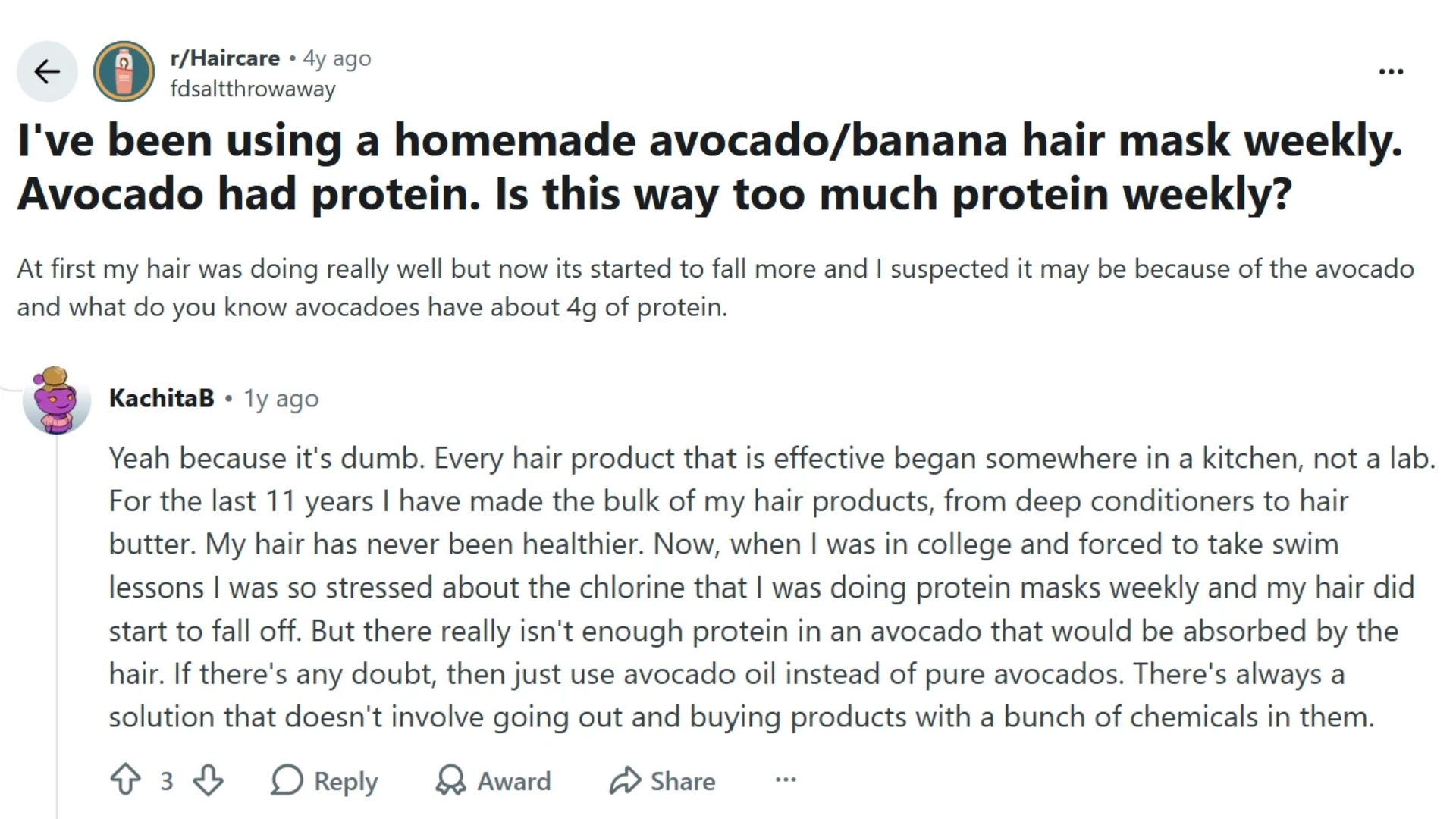
Community feedback is one reason avocado masks remain popular. It also shows why one person’s recipe should not automatically become another person’s routine.
Positive experiences often mention:
- softer-feeling ends
- easier detangling
- smoother-looking strands
- hair feeling more conditioned after washing
Less successful experiences tend to involve:
- greasy or flat hair
- stubborn bits of avocado
- residue that takes extra shampooing
- little noticeable difference
- difficulty knowing which added ingredient caused the result
I like the practical side of that feedback more than dramatic before-and-after claims. If a treatment works beautifully on thick, dry hair but leaves fine strands limp, both experiences can be valid.
A simple note on your phone can help. Record the ingredients, timing, and how the hair feels once styled. It is much easier to spot a pattern that way.
Benefits People Commonly Notice
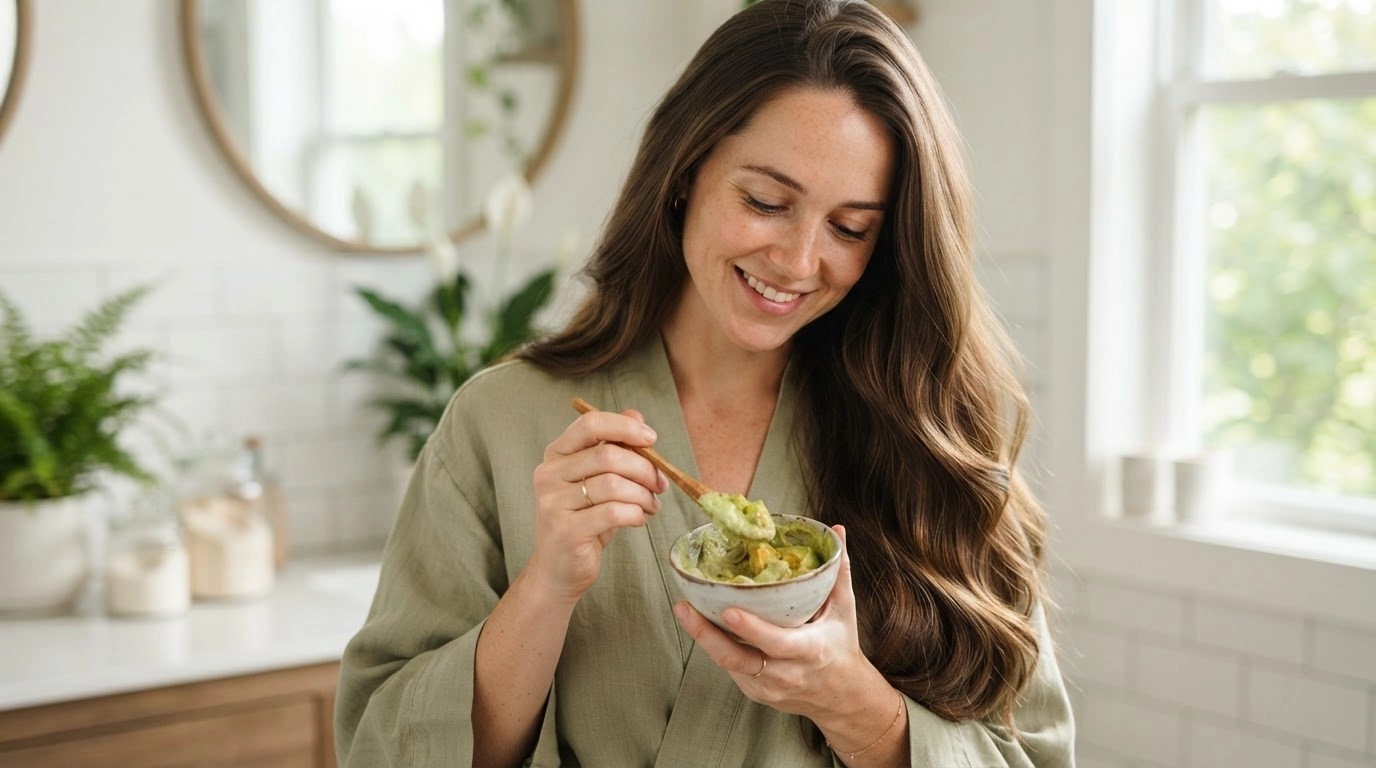
The most realistic benefits are temporary changes in how the hair feels, looks, and handles during styling.
1. Hair Feels Easier to Manage
Dry lengths can feel stiff and catch more easily during detangling. A rich mask may leave those sections softer, making brushing and normal styling less frustrating afterward.
This can be especially noticeable around rough ends. The goal is not to saturate the hair with as much product as possible. Even coverage through the areas that actually feel dry is usually enough.
2. Frizz May Look Less Noticeable
Hair often looks smoother after a conditioning treatment because dry, rough strands sit more neatly.
That can make flyaways appear less obvious and give the hair a shinier finish. Added oils can increase that effect, but they also make a recipe heavier. Coarse hair may welcome that richness, while fine hair can lose movement quickly.
3. Dry Ends Can Feel Softer
Heat styling, coloring, brushing, and everyday friction can leave the ends feeling rough even when the roots seem perfectly comfortable.
An avocado treatment may temporarily improve how those areas feel. It is better to think of this as added conditioning rather than repair. The mask can improve the finish without reversing existing structural damage.
4. Curly Hair Can Feel More Conditioned
Curly and textured hair may be much drier through the ends than near the scalp, which is why a well-matched curly hair routine often treats the roots and lengths differently. That makes targeted application especially useful.
Instead of automatically coating everything from root to tip, concentrate the mixture where the curls actually feel dry. Working in sections also helps distribute a thick mask evenly without using an unnecessarily large amount.
How to Use an Avocado Mask at Home
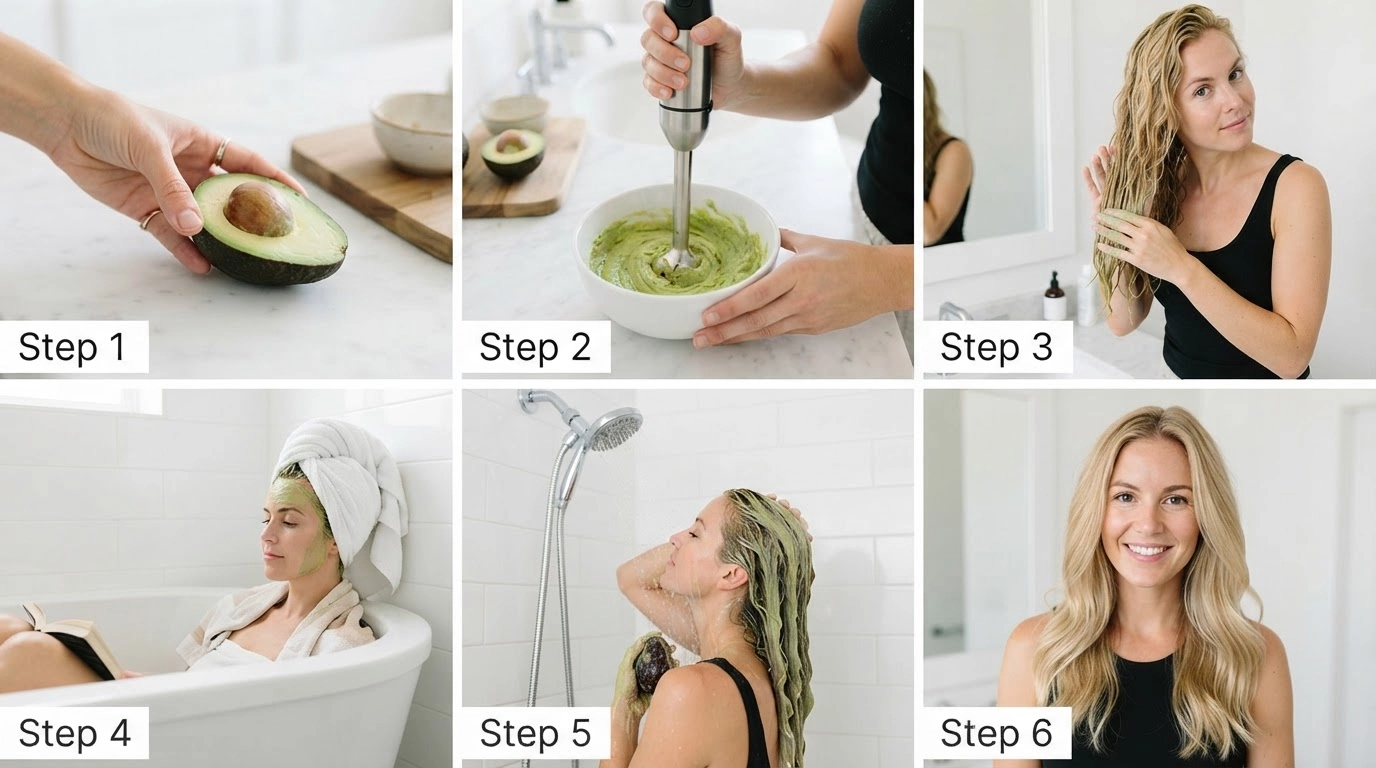
The preparation matters more than making the ingredient list complicated.
- Choose a ripe avocado. It should feel soft enough to blend easily but should not show signs of spoilage.
- Blend until completely smooth. A blender is much more practical than leaving small pieces from a quick fork mash.
- Detangle the hair first. This makes a thick mixture easier to distribute without pulling through knots.
- Work in sections if needed. Long, curly, or dense hair is much easier to cover evenly this way.
- Concentrate on the lengths and ends. If your roots already become oily quickly, they probably do not need a heavy coating.
- Leave the mask on for about 15 to 30 minutes. Longer is not automatically better.
- Rinse carefully with lukewarm water. Take your time rather than leaving small amounts behind. A proper washing routine also helps remove residue without rough handling or excessively hot water.
- Shampoo if the hair still feels coated. This is particularly useful after oil-rich recipes.
Wait until the hair is completely dry and styled normally before deciding whether the recipe suits you.
Homemade Avocado Hair Mask Recipes
There is no need to make the richest recipe first. Pick the version closest to your hair’s needs and adjust after you know how it behaves.
1. Avocado and Coconut Oil
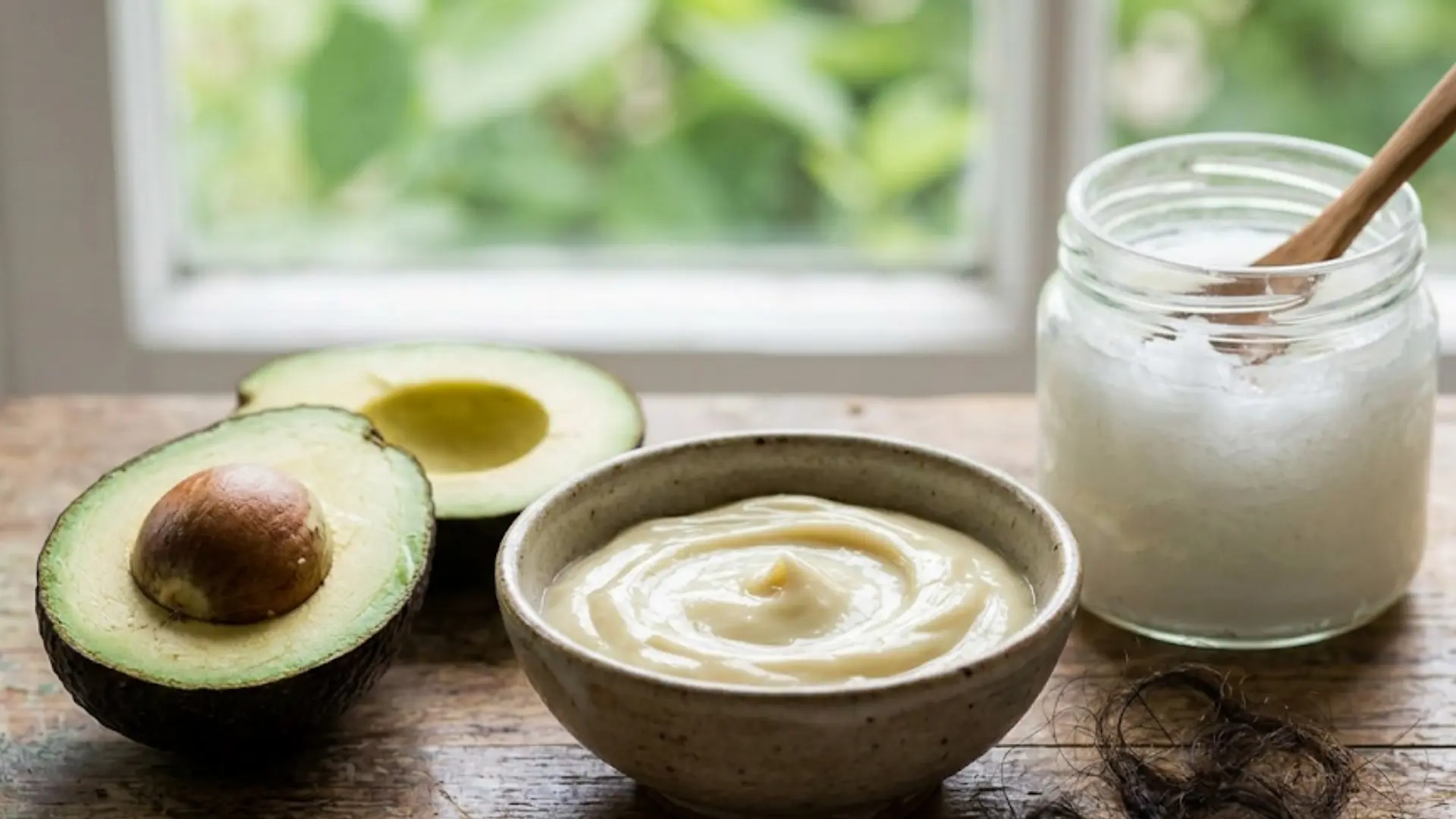
This combination is on the richer side, so it is better suited to dry, coarse, or rough-feeling lengths.
Blend ripe avocado with a small amount of coconut oil until the mixture is completely smooth. Start with less oil than you think you need.
You can make the next batch richer, but removing too much oil from fine hair usually takes more effort.
- Leave on: 20 to 30 minutes
- Better for: dry or coarse-feeling lengths
- Watch for: flatness or heaviness on fine hair
2. Avocado and Honey
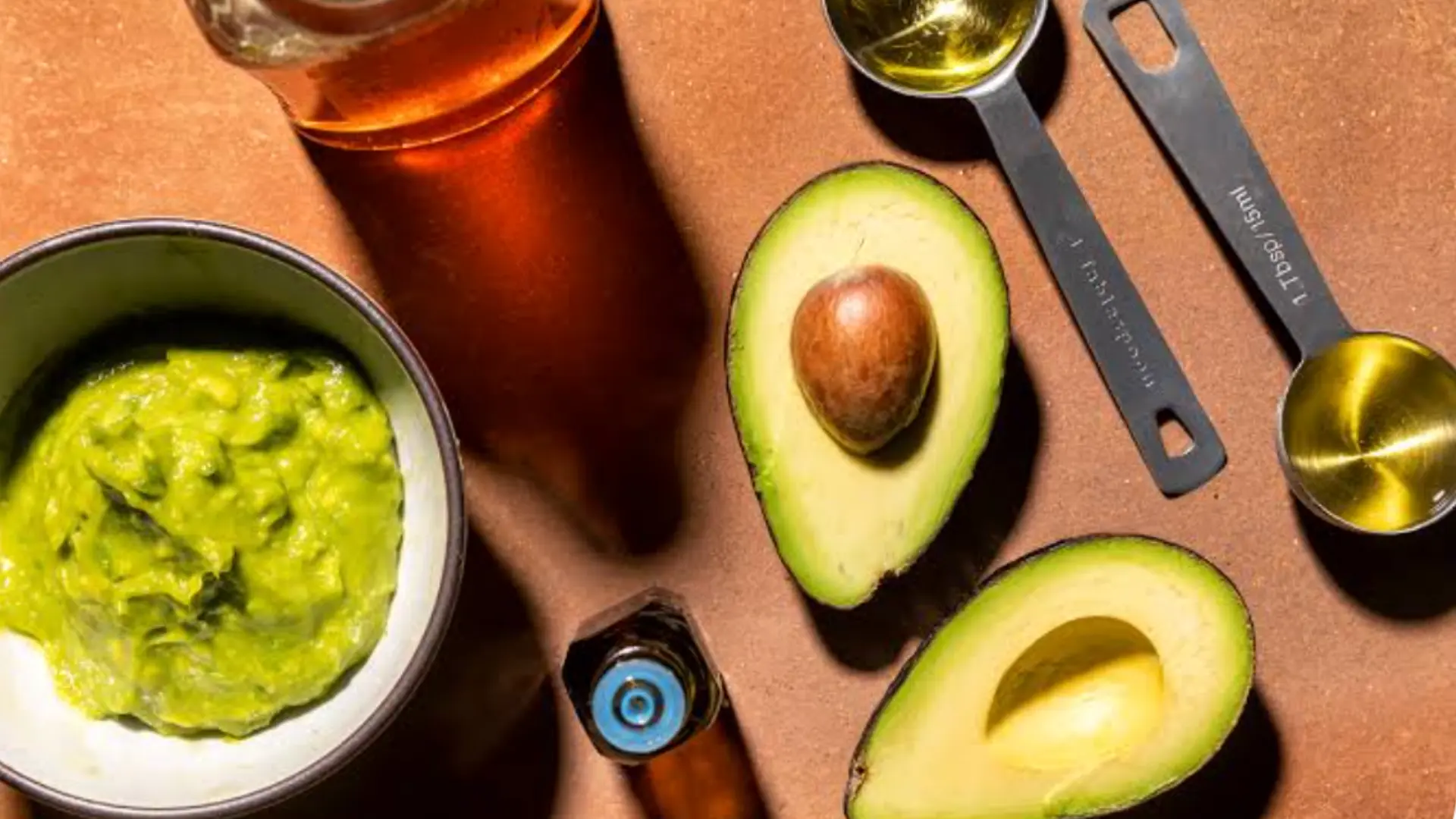
Honey creates a thicker, creamy mixture without adding as much oil as the previous recipe.
Use only a small amount and blend it thoroughly with ripe avocado. Adding extra honey does not automatically improve the result and can make the mask sticky and awkward to distribute.
- Leave on: 15 to 20 minutes
- Better for: dry or dull-feeling lengths
- Watch for: an overly sticky consistency
3. Avocado and Egg
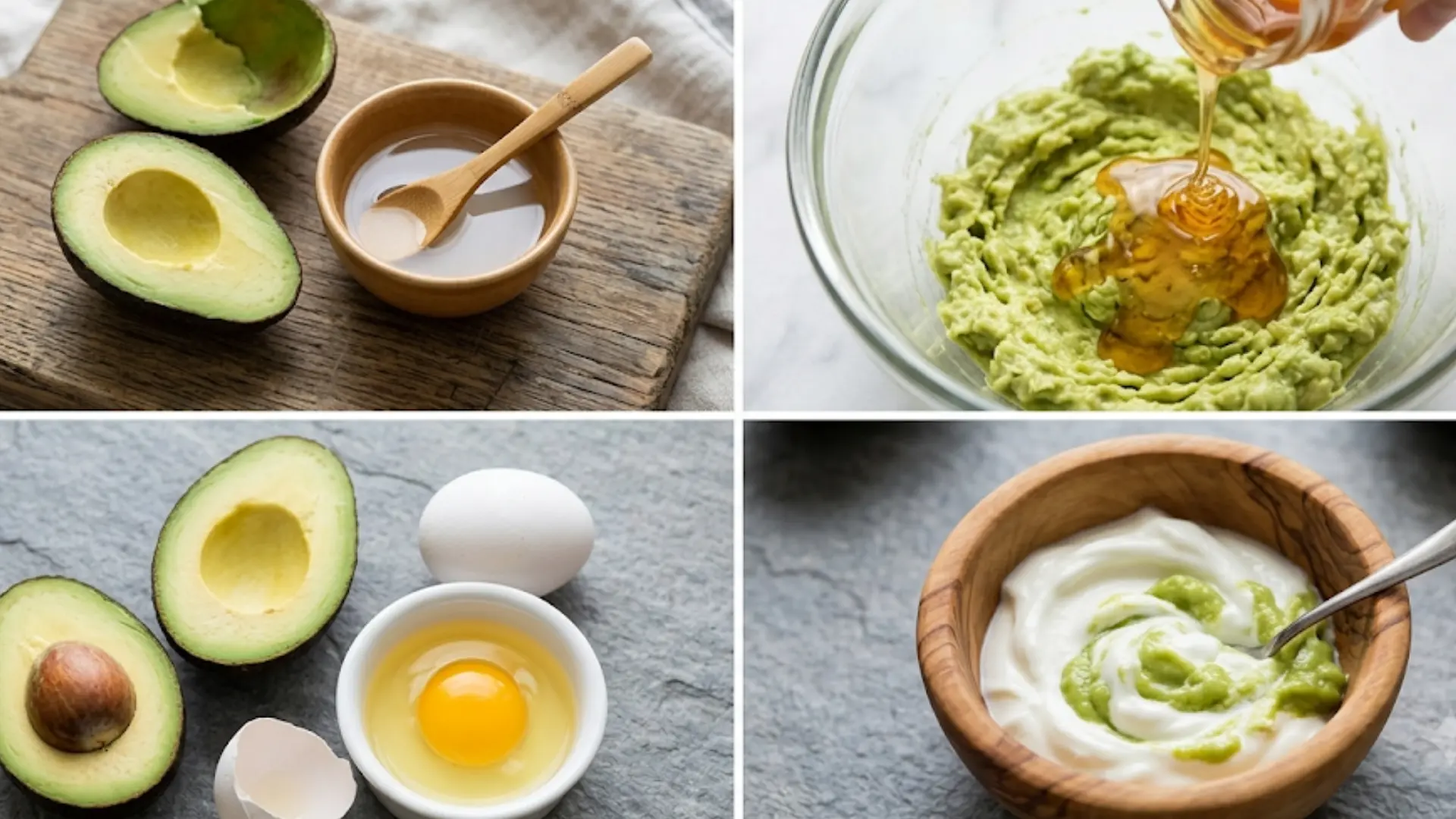
Egg appears in plenty of traditional homemade hair treatments, but it does not need to be an automatic addition.
This version makes more sense for someone who already knows their hair responds well to egg-based masks. Blend the mixture thoroughly and avoid very hot rinse water.
- Leave on: 15 to 20 minutes
- Better for: people familiar with egg-based treatments
- Watch for: difficult rinsing if the water is too hot
4. Avocado and Yogurt
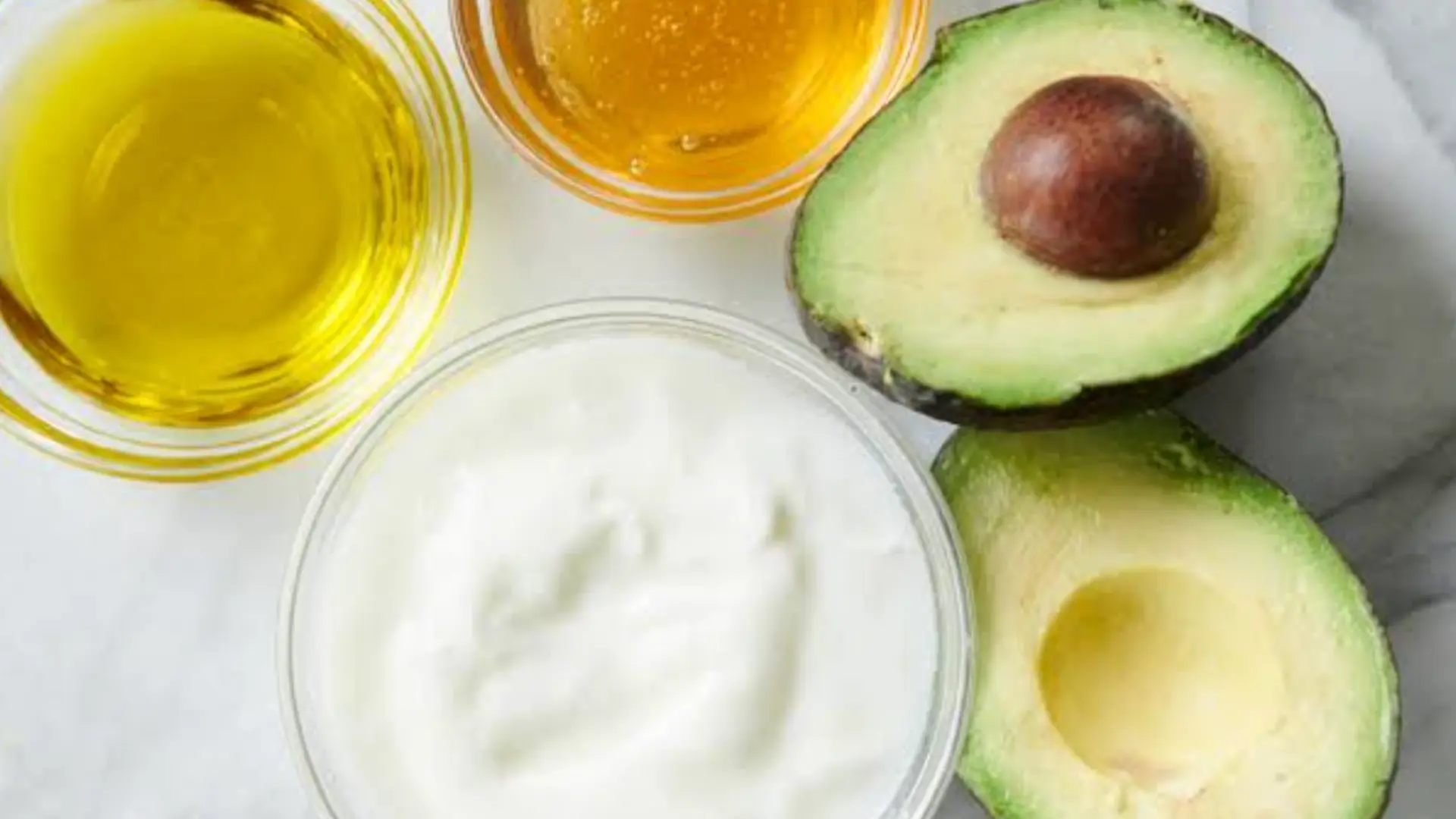
Yogurt creates a creamy mixture without relying on additional oil, so it may appeal to someone who wants a lighter homemade option.
Blend everything until the texture is even and use only enough to coat the areas that need conditioning.
- Leave on: about 20 minutes
- Better for: a lighter-feeling homemade treatment
- Watch for: uneven texture if the mixture is not blended properly
If you are comparing recipes, change only one ingredient between uses. A five-ingredient mask makes it almost impossible to know what your hair actually liked.
Choose a Recipe for Your Hair Type
The same mixture can feel very different on fine, curly, coarse, or oily hair.
Hair Type or Concern | Better Approach | What to Watch |
|---|---|---|
Fine hair | Start with plain avocado or a lighter mixture | Flatness and coated strands |
Dry or coarse hair | Use mainly through mid-lengths and ends | Applying more than needed |
Curly hair | Work in sections for even coverage | Pieces becoming trapped in dense curls |
Oily roots | Keep rich mixtures mainly below the scalp | Faster greasiness |
Rough ends | Concentrate treatment on lower lengths | Overloading healthy roots |
The richest recipe is not automatically the best one. Use enough to solve the actual problem rather than covering the whole head out of habit.
Wet or Dry Hair, Timing, and Frequency
Application can be adjusted around your hair type and routine. Use dry hair if you prefer applying the mask before shampooing.
Slightly damp hair can make a thick avocado mixture easier to spread through curly or dense sections. There is little reason to leave the mask on overnight.
More time does not automatically mean better conditioning, and it can create extra residue, mess, and a longer wash. Stick to the timing in your recipe instead.
For frequency, start occasionally rather than using it every wash day. Afterward, check whether your hair feels softer, detangles more easily, stays light at the roots, and still moves normally.
The cleanup matters. If your usual conditioner gives a similar result with less effort, the homemade mask does not need to become a regular step.
Common Avocado Hair Mask Mistakes
Most avocado-mask problems are practical rather than mysterious.
Mistake | Better Approach |
|---|---|
Using too much oil | Begin with a small amount |
Leaving chunks in the mixture | Blend until completely smooth |
Coating oily roots heavily | Focus on drier lengths |
Applying far too much mask | Use enough for even coverage |
Rinsing too quickly | Remove all visible residue |
Adding several ingredients at once | Test one change at a time |
Copying another person’s exact routine | Adjust it for your own hair |
One thing I learned around beauty counters is that using more product rarely fixes the wrong product choice. The same rule applies here. If a rich mask leaves your hair flat, an even richer version is unlikely to solve the problem.
When a Homemade Mask Is Not Enough
An avocado hair mask belongs in the conditioning category. It is not a treatment for persistent hair shedding, bald patches, unexplained thinning, scalp pain, or ongoing irritation.
If hair is falling out noticeably rather than simply feeling dry, changing the DIY recipe is not the most useful next move. Hair loss and excessive shedding can have different causes, so identifying what is happening matters before choosing a treatment.
The same applies to an irritated scalp. Stop using a homemade mixture if you notice burning, itching, redness, swelling, or another unexpected reaction.
Keep food-based masks for cosmetic concerns such as softness and manageability. Medical or persistent scalp and hair-loss concerns deserve proper professional evaluation.
Frequently Asked Questions
Can an Avocado Hair Mask Make Hair Grow Faster?
An avocado mask can help dry hair feel conditioned, but it should not be treated as a method for directly increasing hair growth or treating unexplained hair loss.
Can You Use an Overripe Avocado?
A very soft avocado can work well because it blends easily. Do not use one with mold, an unpleasant smell, or other clear signs of spoilage.
Do You Need Conditioner After an Avocado Mask?
Not always. If the hair already feels soft and manageable after the mask is shampooed out, additional conditioner may be unnecessary. Drier hair can still use its regular conditioner afterward.
Can You Save Leftover Avocado Hair Mask?
Fresh homemade mixtures are not formulated for long storage like commercial hair products. Make a small batch for one use rather than preparing a large amount to keep for later.
Is an Avocado Hair Mask Worth Trying?
An avocado mask is most useful when your hair feels dry or rough, and you enjoy uncomplicated DIY beauty treatments.
Start with a small batch, use one main add-in at most, and blend it until completely smooth. Then judge the result after your normal wash and styling routine rather than while the hair is still coated.
I prefer beauty steps that make the next part of getting ready easier. That is a good test here too. If your hair feels softer and the cleanup is reasonable, the recipe may deserve another use.
If you spend longer removing avocado than enjoying the result, simplify it or stick with your regular conditioner.