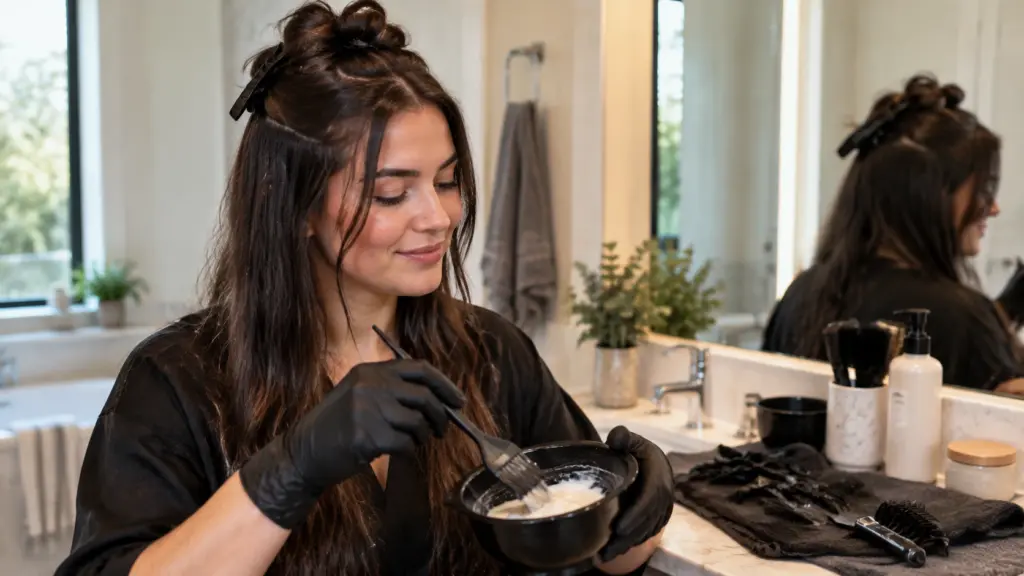

Healthy curls rarely come from expensive products or complicated styling tricks.
Most curly hair problems start when moisture disappears, the cuticle stays rough, and strands become harder to manage every day.
A consistent routine changes that. It protects hydration, reduces frizz, and helps curls keep their shape longer between washes.
I used to blame my hair for every bad wash day. The real issue was constantly switching products and using routines that stripped moisture instead of preserving it.
Once I shifted toward gentle cleansing and better conditioning, the difference showed up fast with softer texture, stronger definition, and less breakage.
Smarter drying habits also made styling easier without reaching for heat every single day.
How to Take Care of Curly Hair?
Curly hair is structurally different from straight hair. The follicle shape is oval rather than round, creating the bend in each strand.
That bend means the scalp’s sebum, the oil that naturally conditions hair, has a harder time traveling from root to tip.
The tighter the curl, the less sebum reaches the ends, which is why curly hair tends toward dryness and fragility.
Hair porosity is how well hair absorbs and holds moisture. Low-porosity hair has sealed cuticles that resist water but retain it once it’s inside.
High porosity hair absorbs water quickly but loses it as fast. Type 2 waves are easier to weigh down, type 3 curls are drier, and type 4 coils are the driest and most fragile
What Do Your Curls Actually Need?
Once you understand your curl type and porosity, knowing how to care for curly hair gets a lot more straightforward. Most issues, dryness, frizz, breakage, weak definition, trace back to a handful of daily habits. The tips below cover each one in order, from wash-day basics to overnight protection.
Tip 1: Wash Curly Hair Less Often
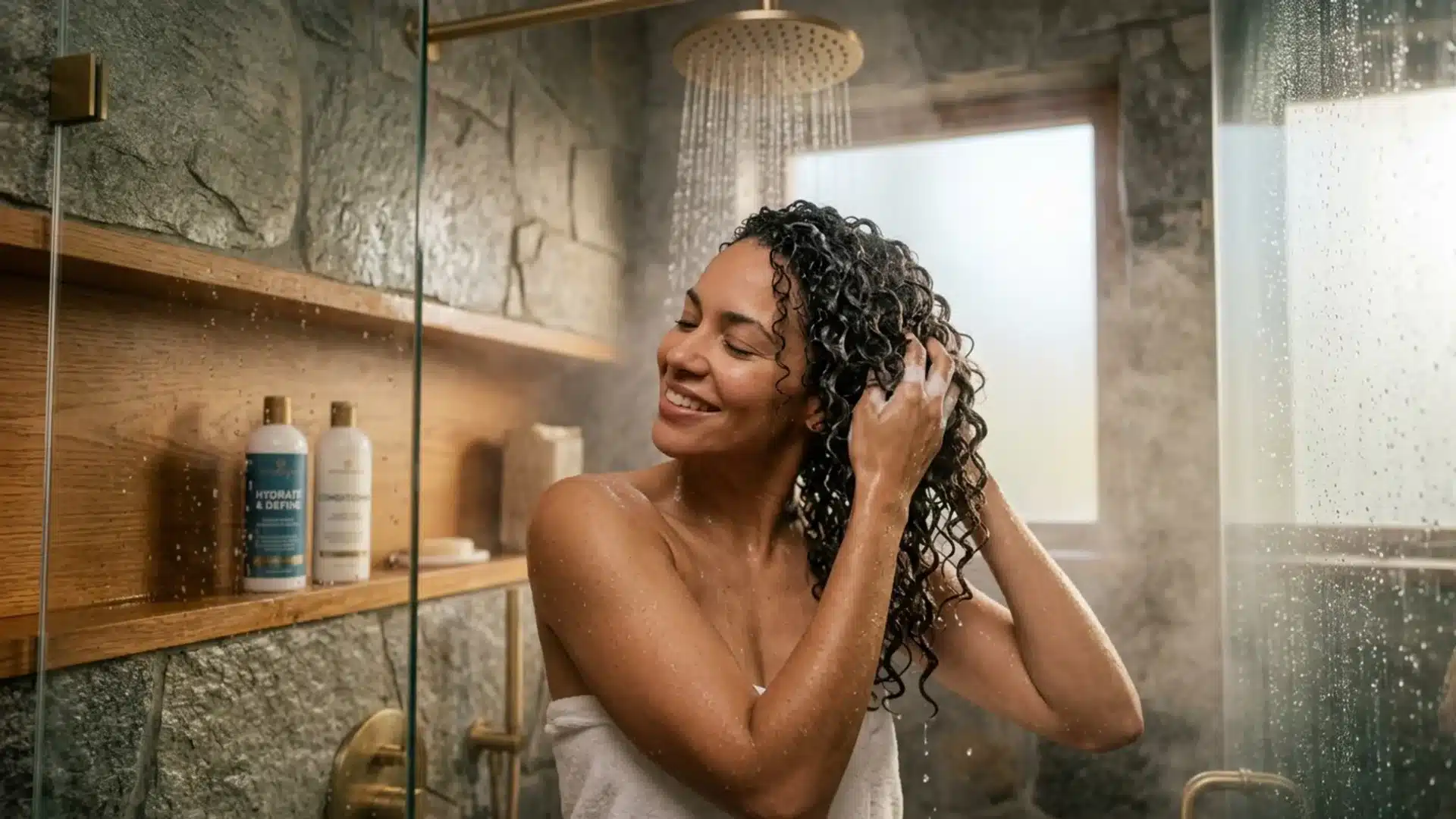
Daily washing strips the natural oils that curly hair already struggles to hold. Most people with curly or coily hair do best washing once or twice a week.
The right frequency depends on scalp condition, climate, and activity level, but overwashing is a common reason curls become dry.
If the scalp gets oily between washes, apply shampoo mainly to the roots and let the lather rinse through the lengths.
The ends do not need direct cleansing every time. Adjusting to a longer wash schedule can take time, but many people notice their curls stay moisturized longer and frizz less after a few weeks of consistent use
Tip 2: Use a Gentle Sulfate-Free Shampoo
Sulfates are the detergents in most shampoos that create a foamy lather. They clean well, but they also pull out the natural oils curly hair needs to stay soft.
Replacing a sulfate shampoo with a gentler, sulfate-free formula is one of the simplest changes with a noticeable payoff.
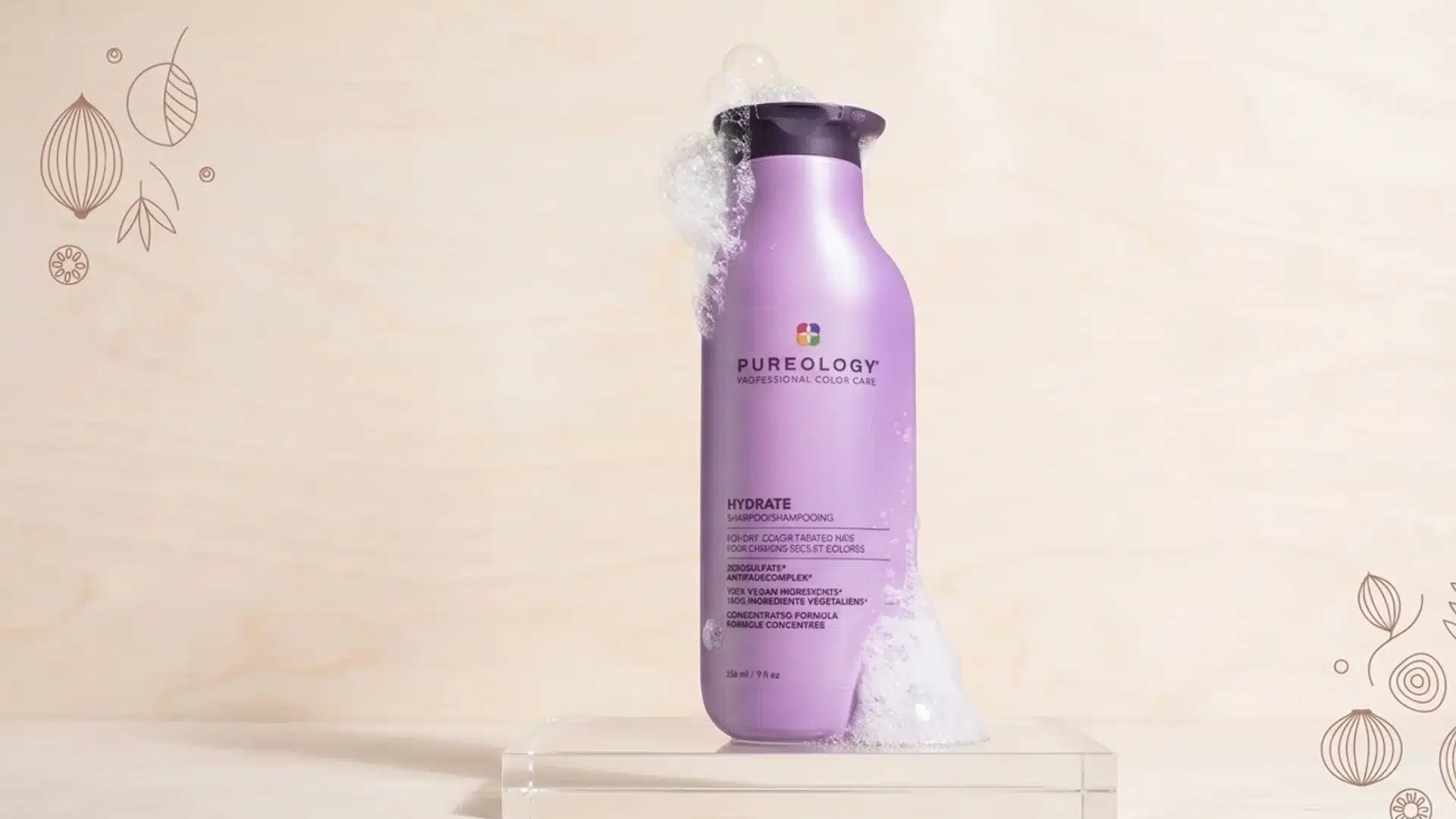
Many people with textured or curly hair switch to Hydrate Shampoo for Dry Hair because it helps cleanse without leaving strands rough or brittle afterward.
Look for formulas containing moisturizing ingredients such as aloe vera, shea butter, or glycerin.
Healthline recommends choosing products specifically designed for curly hair and avoiding anything that will dry out or weigh strands down.
If product buildup appears, use a clarifying shampoo once every four to five washes, then return to your gentle formula to avoid dryness and stripped curls.
Tip 3: Never Skip Conditioner
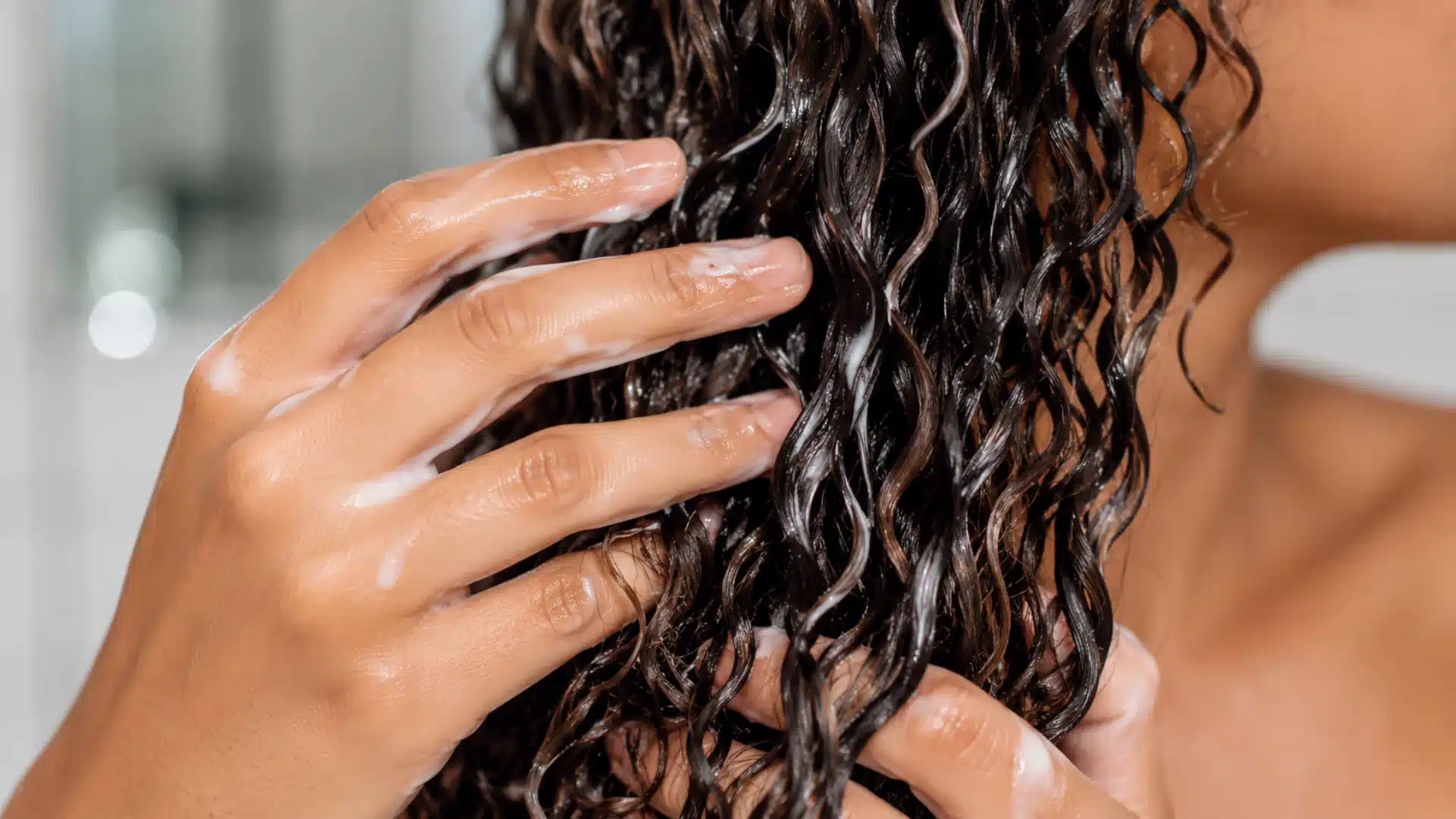
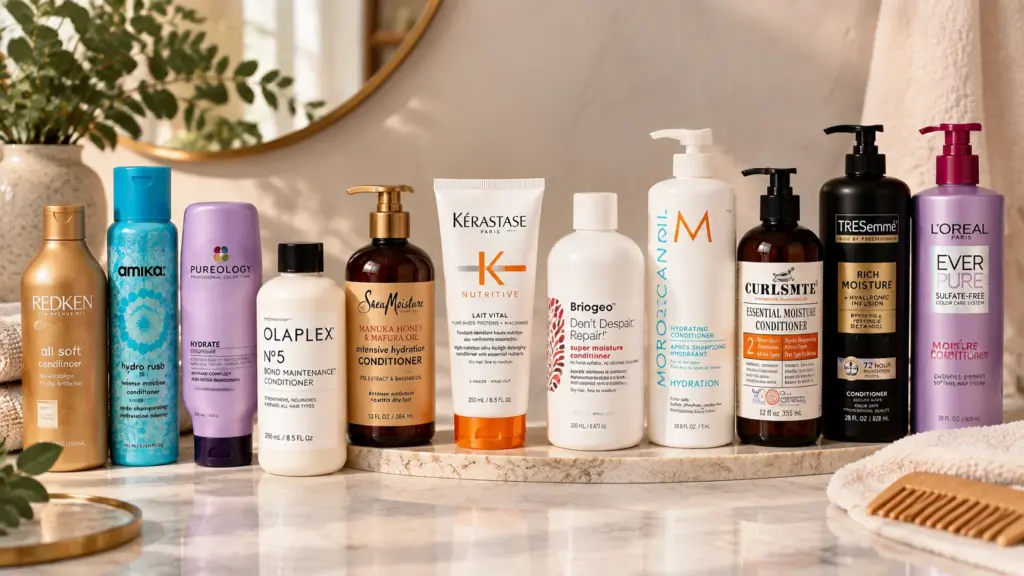
Conditioner is not optional for curly hair. Every wash should include a rinse-out conditioner applied from mid-length to ends.
It smooths the cuticle, adds slip for detangling, and replaces some of the moisture shampoo removed.
Apply it to damp hair, work it through with your fingers, and let it sit for two to three minutes before rinsing with cool water.
Cool water helps seal the cuticle and adds shine. After rinsing, apply a leave-in conditioner while hair is still wet.
Leave-in conditioner layers onto the rinse-out and keeps strands hydrated as hair dries. DIY conditioning hair volumizer is worth trying between wash days.
Tip 4: Deep Condition with Hair Mask
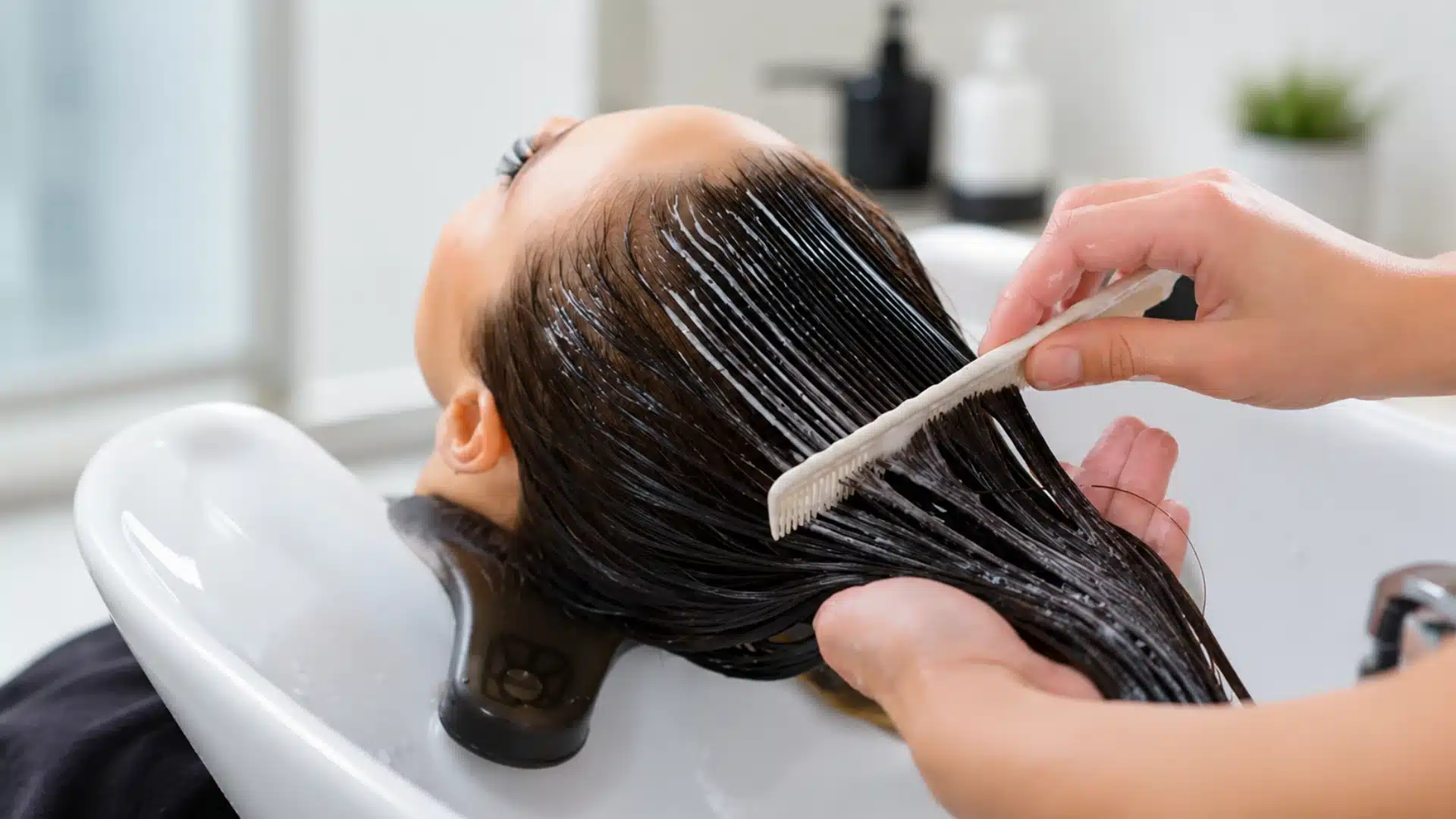
A standard conditioner moisturizes the surface of the strand. A deep conditioner or hair mask goes further, penetrating the cortex to repair and strengthen from within.
For most curly hair types, deep conditioning once a week makes a visible difference in softness and curl definition.
If curls are less prone to dryness, deep condition every two weeks. Apply to wet hair and leave under a shower cap.
Heat from your head helps the product absorb. Rinse with cool water. Shea butter, avocado oil, glycerin, and protein can also help restore elasticity.
Tip 5: Dry Curly Hair the Right Way
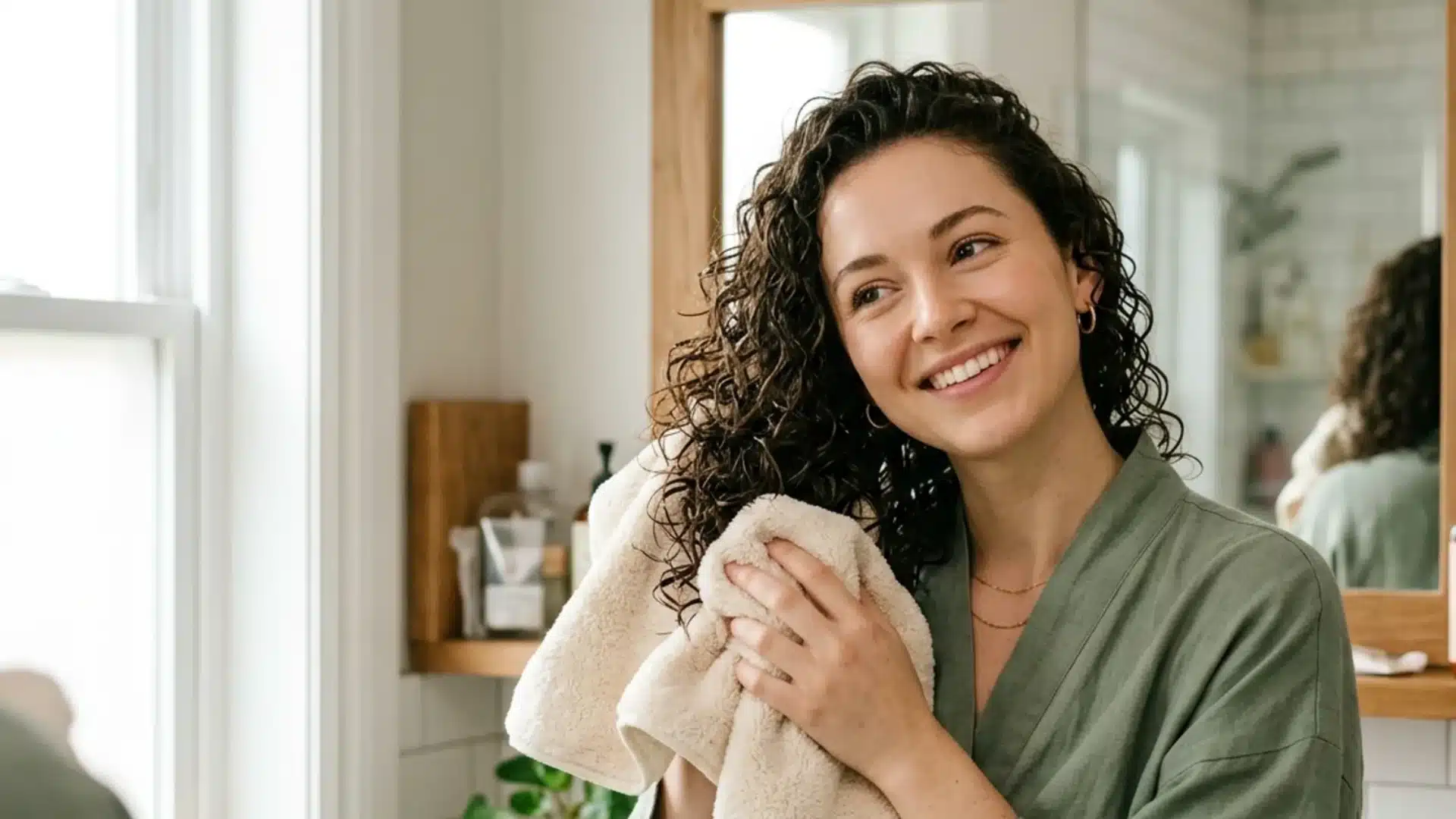
How you dry your hair matters as much as how you wash it. A regular terrycloth towel roughens the cuticle, causes frizz, and can break strands.
Use a microfiber towel or a plain cotton T-shirt instead, and gently wring out excess water without rubbing.
Air drying protects the natural curl pattern, while diffusing on low heat dries hair faster and helps reduce frizz.
Stylists recommend keeping a dryer at least six inches from the hair surface. Plopping with a cotton t-shirt also helps reduce frizz and maintain curl definition while drying.
Tip 6: Detangle Hair Carefully
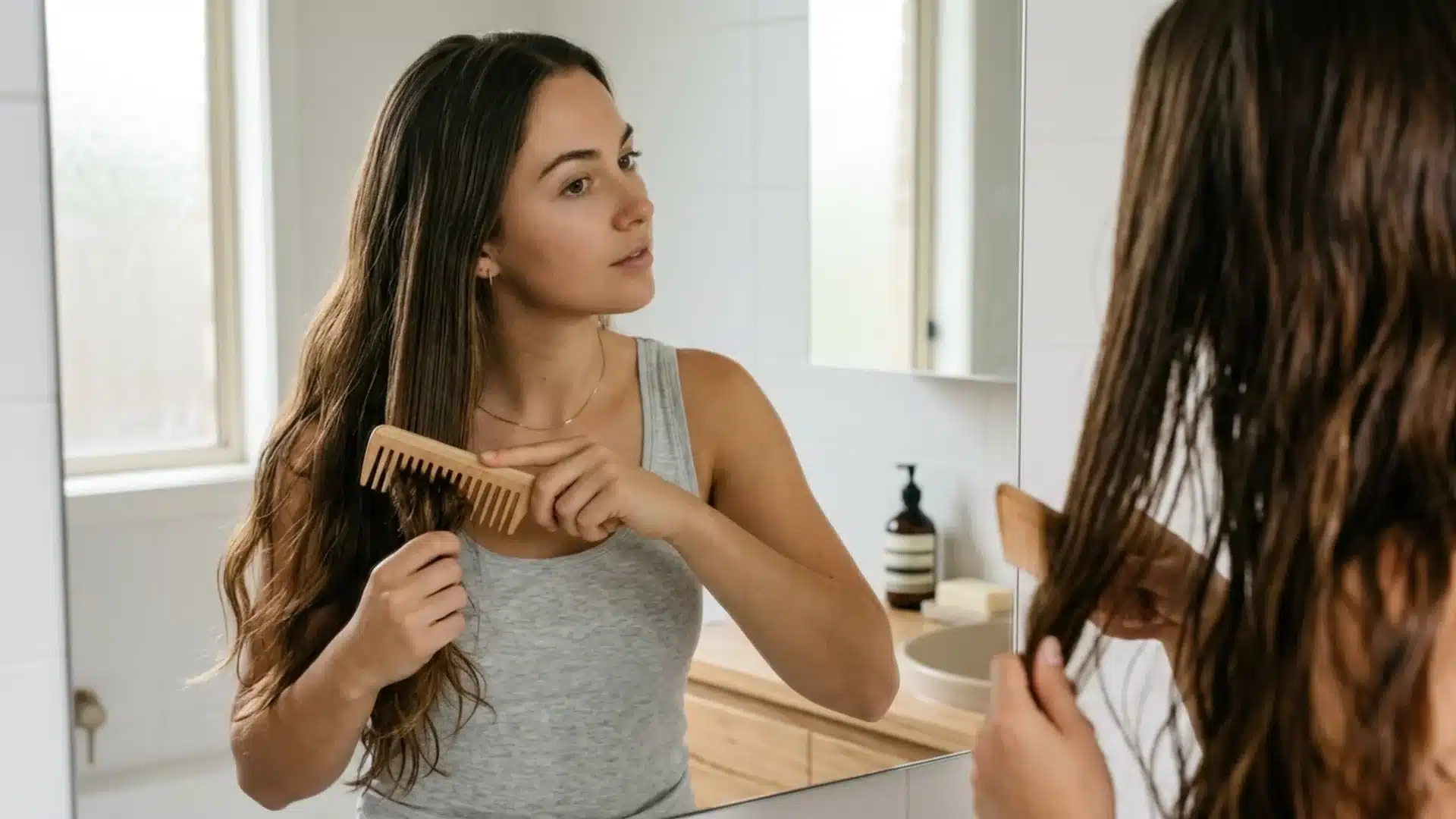
Curly hair tangles easily because the coils catch on each other. Detangling dry or nearly dry hair causes significant breakage.
Always detangle wet hair with conditioner to provide slip. Start at the ends and work your way up to the roots in small sections.
Use your fingers first to loosen the larger tangles before picking up a tool. A wide-tooth comb works well. A regular paddle brush on dry curls creates frizz and snaps strands.
Never force a knot. Add more conditioner if you hit resistance. I detangle in the shower with conditioner still in.
It takes a few extra minutes, but I’ve never lost as little hair as I do when I work through sections with my fingers first.
Tip 7: Use Leave-in Products for Definition
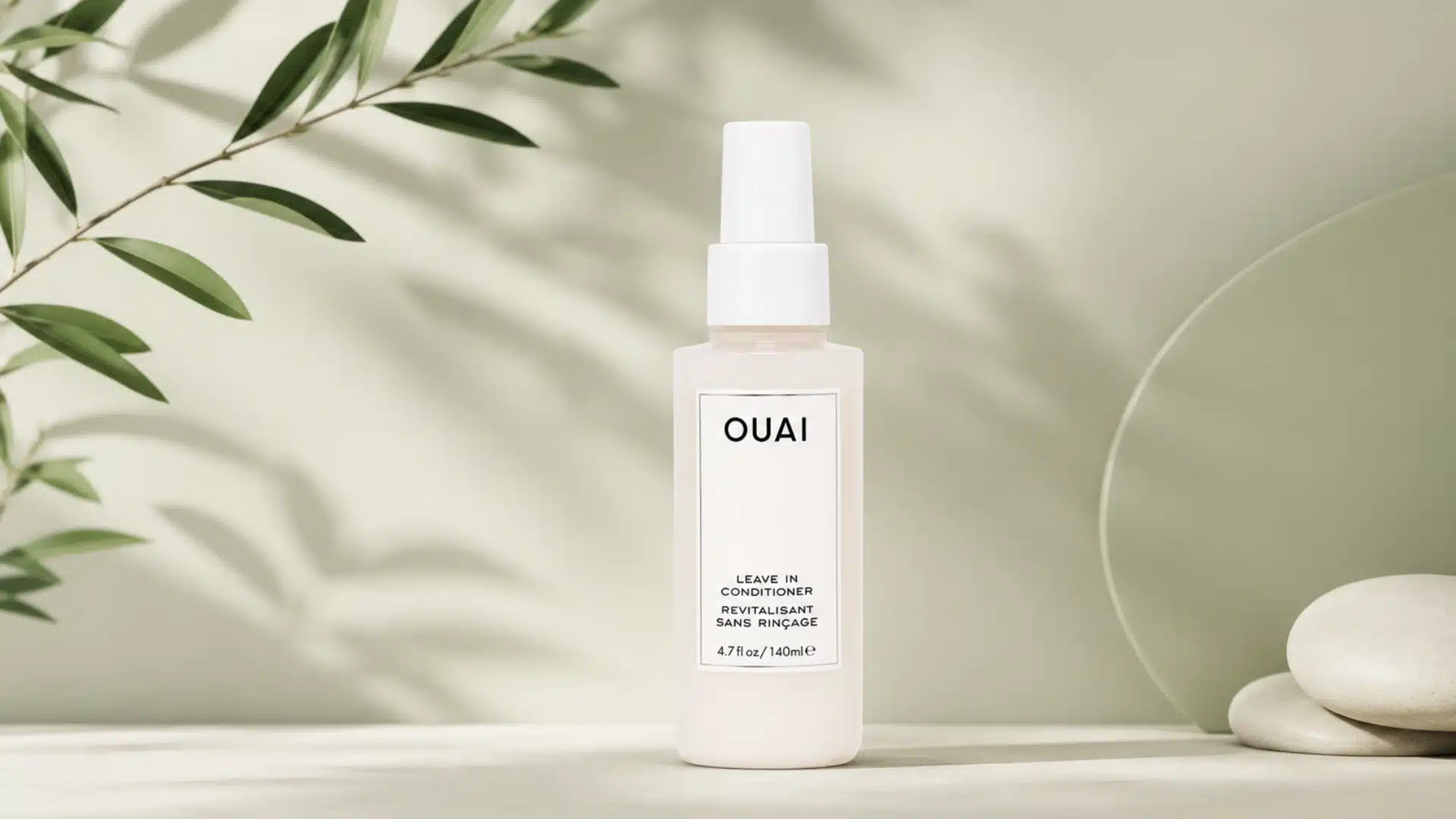
Leave-in conditioner keeps curls soft and moisturized between washes.
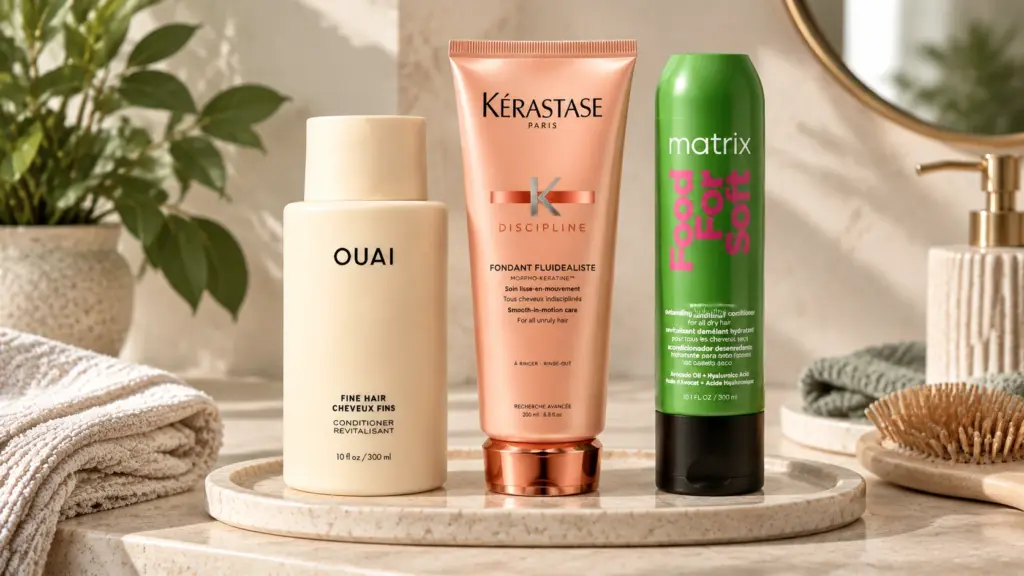
Products like OUAI Leave In Conditioner work especially well when applied to soaking-wet hair after showering for even coverage.
On top of leave-in, a curl cream or gel adds definition and hold. Curl creams are better for fine or low-porosity hair that tends to get weighed down easily.
Gels work well for thicker, high-porosity curls that need more hold to maintain their shape through the day.
Layering lightest to richest, leave-in first, then cream or gel on top, keeps each product performing well without fighting the one underneath.
Watch for buildup. If curls start to feel heavy or sticky, it’s time to clarify and properly reset the hair.
Tip 8: Avoid Too Much Heat
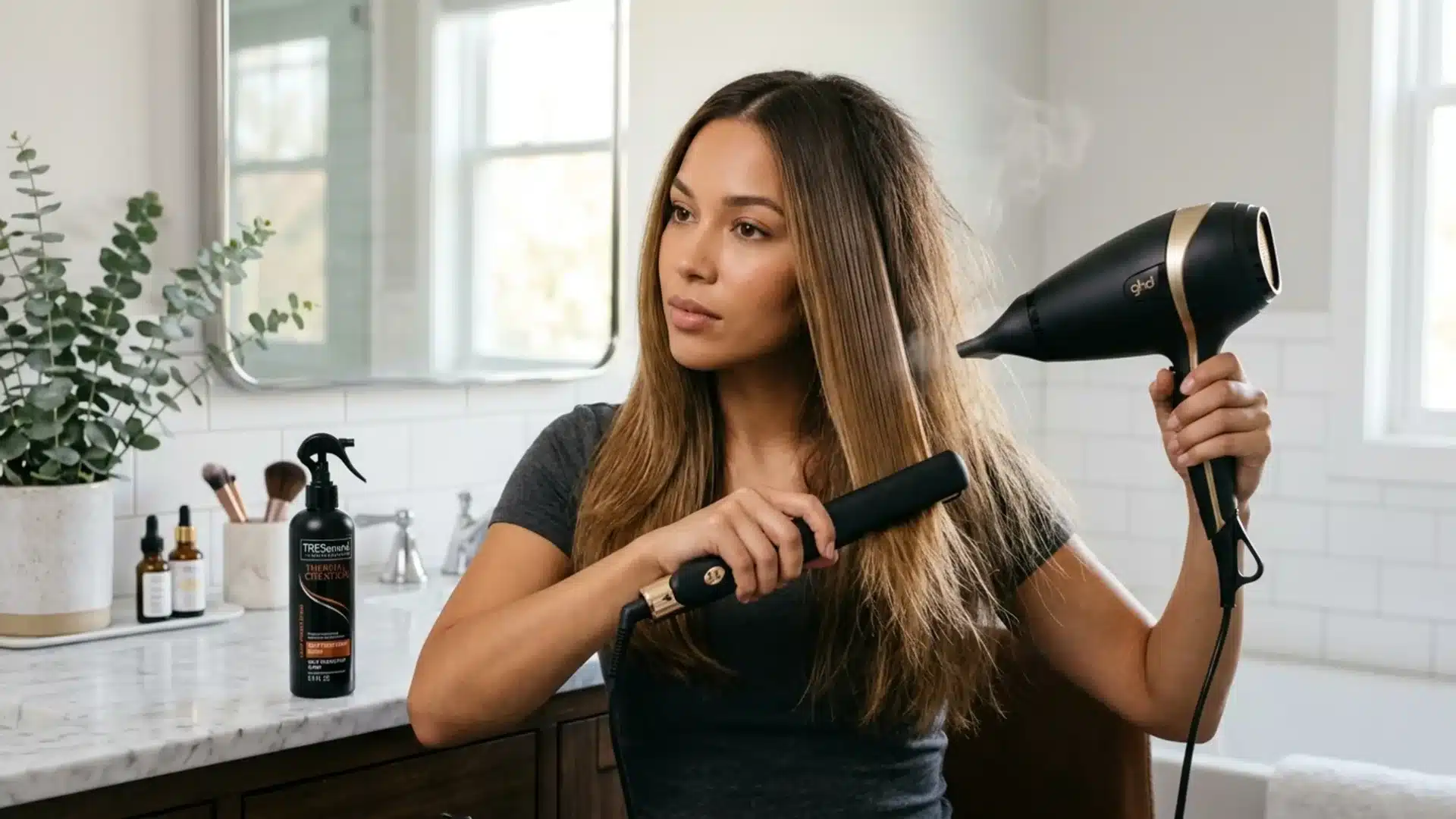
Research published in PMC confirms that blow drying raises hair temperature, causing moisture loss and cuticle damage over tim
Heat weakens curly hair over time, leading to looser curls, split ends, and breakage.
If you use a blow dryer, diffuse on low. If you flat iron or use a curling wand occasionally, apply a heat protectant first.
A spray containing silicone or keratin seals the cuticle and reduces heat damage. Beyond that, air-dry days are your friend.
Curly hair looks its best without heat most of the time, and protecting the natural pattern is easier than restoring it.
On oily scalp days, greasy hair quick fixes can help you get through without reaching for heat.
Tip 9: Protect Curly Hair While Sleeping

Eight hours of friction against a cotton pillowcase can leave curls flat, frizzy, and tangled by morning because cotton absorbs moisture and roughens the cuticle.
Switch to a silk or satin pillowcase, bonnet, or scarf to help curls stay smoother overnight.
The smooth surface lets hair glide instead of snag. If you have medium to long hair, the pineapple method works well.
Gather hair loosely on top of your head with a soft scrunchie to protect curls overnight. Shorter textures often do better with a bonnet.
Tip 10: Refresh Curls Between Wash Days

You don’t need to wash your hair to get your curls back.
A morning refresh takes about 3 minutes and extends your style for 1 or 2 more days.
Lightly mist your hair with water until it’s damp but not soaking. Add a small amount of leave-in conditioner or a curl refreshing spray, then scrunch gently from the ends upward.
If your curls have completely deflated overnight, re-wet them more thoroughly and scrunch in a little gel.
Let hair air dry or diffuse briefly after refreshing. Fewer washes each week help curls stay softer, healthier, and more defined.
Tip 11: Trim Curly Hair Regularly
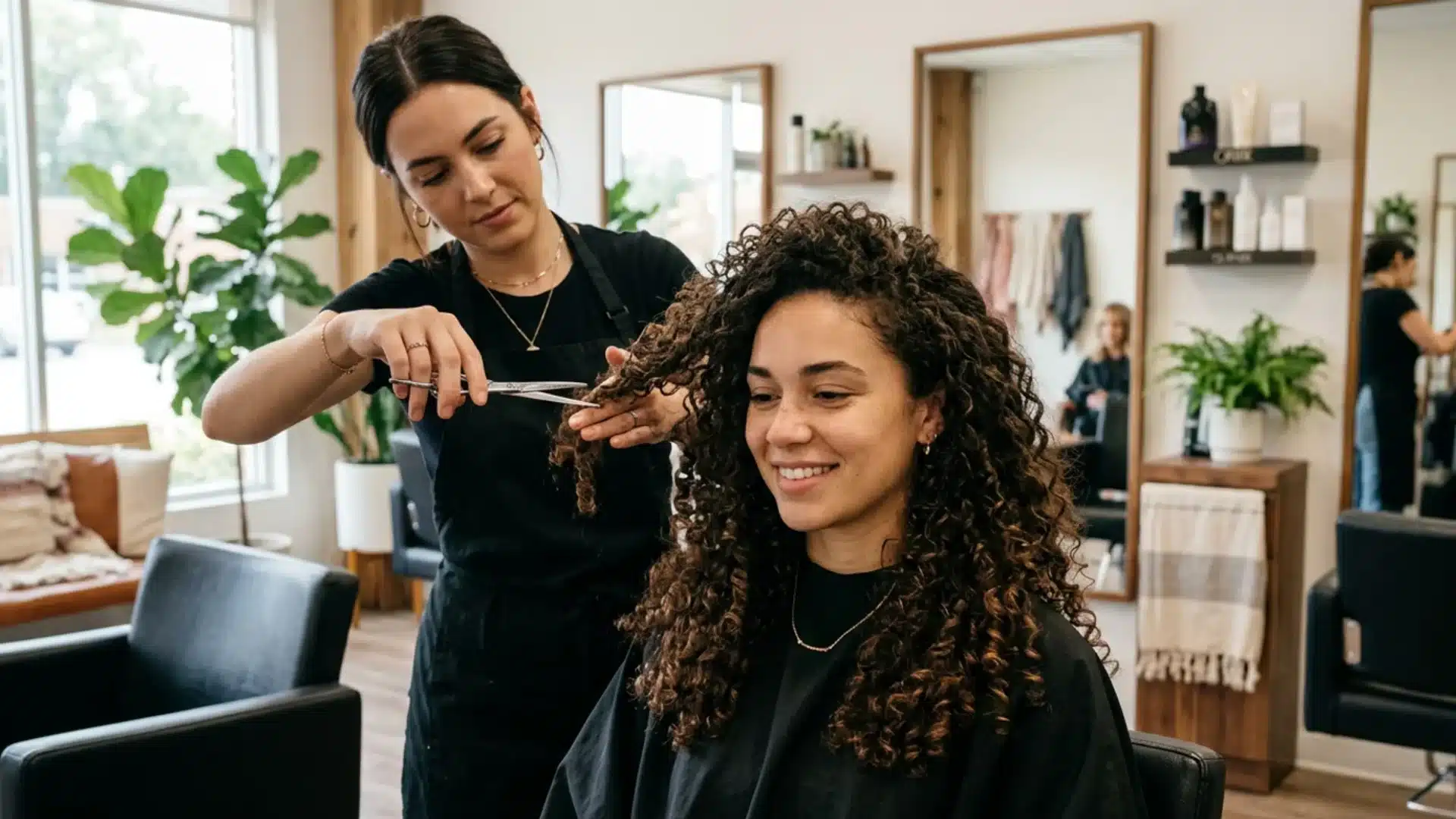
Split ends travel up the shaft if left alone. On curly hair, that damage makes the ends look fluffy rather than defined, and the overall shape starts to feel heavy and undefined at the bottom.
That’s why it’s important to trim your hair every 10 to 12 weeks to keep the ends clean, healthy, and the curls properly shaped.
One thing worth knowing: dry cutting works better for curly hair than wet cutting.
Curls shrink significantly when dry, so a stylist cutting wet hair is working blind to your actual curl shape.
A dry cut lets them see what they’re working with and remove only what needs to go. If you haven’t tried a dry cut yet, ask your next stylist about it.
Common Mistakes that Damage Curly Hair
Using harsh shampoos, brushing dry curls, excessive heat styling, rough towel drying, and skipping deep conditioning can all damage curly hair over time.
- Over-washing: Washing more than twice a week strips natural oils, leaving curls dry and brittle.
- Brushing dry curls: A brush on dry, curly hair separates the curl clumps, creating frizz. Detangle only wet hair with conditioner.
- Using heavy products on fine or low-porosity hair: Thick butters and oils meant for high-porosity curls will weigh down finer textures and cause buildup.
- Skipping heat protectant: Whenever heat touches your hair, the protectant goes on first. No exceptions.
- Copying routines that don’t fit your curl type: A routine built for 4C coils will not work on 2B waves. Start with your actual porosity and texture, not someone else’s.
Conclusion
Healthy curls don’t happen all at once. They happen because you show up consistently with a routine that fits your hair, not a routine built for someone else’s.
My worst wash days all had one thing in common: I was chasing someone else’s results with someone else’s routine.
The shift happened when I stopped that and started paying attention to what my own hair was actually telling me. The curl you saw on someone else’s feed is not the goal of your curls; at their healthiest, they are.
Pick one tip from this list that you haven’t tried yet and give it a full two weeks before judging it.
One change at a time is how you figure out what your curls actually respond to. Drop a comment below and tell me which one you’re starting with.
Frequently Asked Questions
How Often Should I Get a Protein Treatment for Curly Hair?
Most curly hair benefits from a light protein treatment once a month. Weak, stretchy, or limp curls may need one sooner, followed by deep conditioning.
Why Do My Curls Look Great when Wet but Frizz when Dry?
Frizz happens when moisture escapes during drying. Applying gel or curl cream over leave-in conditioner helps seal the cuticle and maintain curl definition.
Does Hard Water Affect Curly Hair?
Yes. Hard water minerals create buildup that blocks moisture. Monthly diluted apple cider vinegar rinses or a shower filter help restore softer, healthier curls.