I had a client sit down in my chair not long ago. Thick 4B hair, edges looking crisp. She mentioned her scalp had been dry and itchy for months.
She was washing every few days because that seemed like the responsible thing to do. It wasn’t working for her. Washing that often was stripping the natural oils her hair needed most.
She needed to wash less, not more. That conversation is something I come back to often because it shows how personal this question really is.
Your hair type, your scalp, and your weekly routine all factor in. There is no single rule, but there is a clear way to figure out what works for you.
What Actually Happens When You Wash Your Hair?
Washing your hair affects how your scalp functions, and getting the frequency wrong in either direction has real consequences.
Your scalp produces a natural oil called sebum through glands just below the skin’s surface.
Sebum travels down each strand, moisturizing hair from root to tip. Shampoo removes sebum along with sweat, product buildup, and dead skin cells, and that’s the point.
The problem shows up at the extremes. Wash too often and you strip oil faster than your scalp can replenish it. The result is a dry, tight-feeling scalp and brittle ends prone to breakage.
Go too long between washes, and sebum accumulates, weighing hair down, blocking follicles, and, in some cases, feeding the yeast that causes dandruff.
A peer-reviewed study in Skin Appendage Disorders found that both extremes carry measurable consequences for scalp health.
The balance point differs by hair type. That’s where this question needs to start.
How Often Should You Wash Your Hair, by Hair Type
Hair type is the single biggest factor in wash frequency. The five categories below cover most textures. Find yours, use it as a starting point, and adjust from there.
1. Fine or Straight Hair
Fine, straight hair tends to get oily faster than any other hair type. Sebum travels quickly down smooth, thin strands, so roots go flat and greasy within a day or two.
Washing every one to two days works well here. If the scalp leans oily, daily washing is fine, though a gentle, sulfate-free shampoo prevents the cycle of over-stripping that sends oil production into overdrive.
The goal is clean, not squeaky-clean.
What to use: A volumizing or clarifying shampoo without heavy silicones works best. Look for lightweight formulas labeled for fine hair or oily scalp. Avoid thick, moisture-heavy shampoos; they weigh fine hair down fast.
On off-days, a rice starch or cornstarch-based dry shampoo at the roots handles greasiness between washes without disrupting the scalp’s balance.
2. Medium or Normal Hair
If your hair doesn’t go flat within 24 hours but also doesn’t feel dry two or three days after washing, every two to three days is a reliable starting point.
The American Academy of Dermatology(AAD) recommends this range for most people. Pay attention to how your scalp feels rather than counting days; that’s a more accurate guide than any fixed schedule.
What to use: Most balanced shampoo-and-conditioner sets work well here. If you heat-style regularly, a hydrating shampoo paired with a lightweight conditioner (applied mid-length to ends, not the scalp) helps offset dryness without weighing roots down.
3. Thick or Wavy Hair
Thicker strands hold onto sebum longer. The oil takes more time to travel from root to tip, so hair stays cleaner-looking for longer.
Two to three washes per week are usually plenty. On off-days, a water rinse or a light conditioner through the lengths keeps texture without disturbing the scalp.
If you are still working out whether your texture is wavy or curly, that distinction matters here; wavy hair can typically handle more frequent washing than true curls.
What to use: A moisturizing shampoo applied only to the scalp, followed by a conditioner worked from mid-length to the ends. A weekly deep conditioning mask helps maintain softness between washes and reduces frizz on wavy textures.
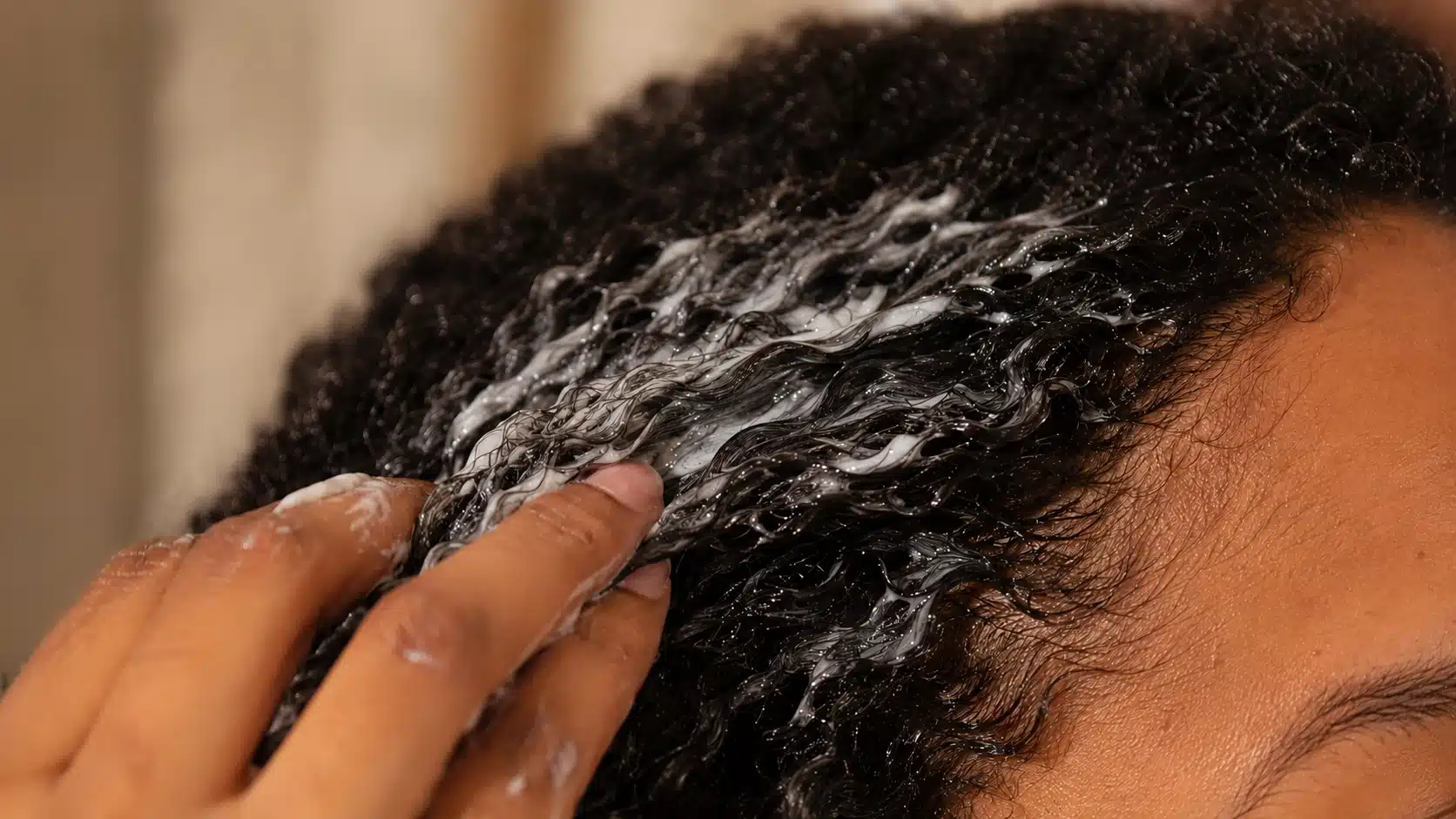
4. Curly, Coily, or Natural Hair
Tightly coiled and curly hair is naturally drier than most other types.
The shape of each strand makes it harder for sebum to travel from the scalp to the ends, so this hair type rarely benefits from the natural moisture that straight hair gets almost automatically.
AAD recommends washing natural hair once a week or every other week.
Dr. Shilpi Khetarpal of Cleveland Clinic notes that washing coarse, coiled, or tightly curled hair more often than the texture requires can lead to breakage over time.
For this hair type, wash day is less about frequency and more about quality.
Hair porosity also plays a role here. Low-porosity curly hair, which resists moisture absorption, often benefits from less frequent washing than high-porosity hair, which loses moisture more quickly between washes.
What to use: Use a sulfate-free moisturizing shampoo on the scalp, then apply a thick conditioner through the lengths. After washing, use a leave-in conditioner or light hair oil to lock in moisture.
Caring for coily and curly hair goes well beyond frequency, detangling technique, drying method, and product layering, all of which affect how long moisture stays in between wash days.
5. Chemically Treated or Color-Processed Hair
Chemical processing weakens the hair shaft. Color, perms, and relaxers all affect how the cuticle holds moisture. Washing too often speeds up color fade and increases breakage at the ends.
Twice a week is a reasonable maximum for most treated hair; once a week works well if the hair is particularly dry or fragile.
What to use: A sulfate-free, color-safe shampoo makes a measurable difference in how long color lasts. Pair it with a reparative conditioner containing protein-based ingredients like hydrolyzed keratin or amino acids to help rebuild the cuticle.
Why Does Scalp Condition Matter Before Choosing a Treatment?

Hair type gets you most of the way there, but scalp condition often overrides it. These are the conditions that change the calculation, and what to actually do about each one.
- Oily scalp: Wash sooner if roots feel greasy, itchy, or flaky. Use a balancing shampoo with salicylic acid or zinc.
- Dandruff: Wash more often with a medicated shampoo containing zinc pyrithione or ketoconazole. Washing less can make flaking worse.
- Dry or sensitive scalp: Wash less often and use a gentle, fragrance-free shampoo. Stick to cool or lukewarm water.
- Persistent irritation: See a board-certified dermatologist if redness, flaking, or itching continues after changing your wash routine.
Your scalp can shift with weather, styling products, hormones, sweat, and wash frequency. Pay attention to how it feels after each wash, then adjust slowly rather than changing everything at once.
How Does Your Lifestyle Impact Your Hair Wash Routine?
Even after accounting for hair type and scalp, everyday life shifts the equation. These four situations come up most often.
1. Exercise and Sweat
Heavy sweating does not always mean your hair needs a full shampoo. If your scalp feels salty or damp after a workout, rinsing with water can be enough.
You can also use a conditioner-only wash to freshen the hair without drying it out. If you train daily, shampooing two to three times a week and rinsing on other days usually keeps the scalp balanced.
2. Product Use
Styling products can change how often you need to wash your hair. Gels, pomades, waxes, and heavy creams leave buildup faster than light sprays or leave-in products.
If you use them every day, your scalp may feel greasy sooner than your hair type suggests.
A clarifying shampoo once a week or every other week can help clear residue without making your regular wash routine too harsh.
3. Age and Hormones
Your hair wash routine can change as you get older.
Oil glands often slow down with age, and hormone changes can make the scalp feel drier than before. This is common after menopause, but it can happen at other stages too.
Hair that once needed frequent washing may feel better with fewer wash days. Pay attention when your old routine starts making your scalp tight or dry.
4. Climate
Weather can also affect how often your hair needs washing.
Humid days can make the scalp feel oily faster, while cold and dry weather can leave it feeling tight or flaky. That is why one routine may not work all year.
In summer, you may need more rinsing or washing. In winter, your hair may do better with fewer shampoos and more moisture.
Signs You’re Washing Too Much or Too Little
Your hair usually gives you clear feedback before your routine needs adjusting. These are the signals worth reading before making any changes.
| Scalp Condition | Common Signs | What to Do |
| Oily scalp | Greasy roots, itchiness, visible flakes | Wash more often and use a balancing shampoo with salicylic acid or zinc |
| Dandruff | Persistent flaking linked to scalp oil | Use a medicated shampoo with zinc pyrithione or ketoconazole and wash regularly |
| Dry or sensitive scalp | Tightness, irritation, and redness | Wash less often, use a fragrance-free shampoo, and avoid hot water |
| Persistent irritation | Ongoing redness, flaking, or discomfort | See a board-certified dermatologist for evaluation and treatment |
Your scalp can change with weather, styling products, hormones, sweat, and how often you wash your hair. That is why the best routine is not fixed forever.
Pay attention to how your scalp feels after each wash, then adjust slowly instead of changing everything at once. If symptoms improve, stick with the routine for a few weeks before switching products again.
If redness, flaking, itching, or discomfort keeps coming back, it is better to get professional advice instead of guessing with stronger shampoos or home remedies.
What to Do Between Wash Days?

Stretching time between washes doesn’t mean putting up with flat or greasy-looking hair. A few straightforward habits keep things fresh without reaching for the shampoo bottle.
Dry shampoo absorbs oil at the roots and restores texture.
A rice starch or cornstarch-based formula works for most hair types; kaolin clay formulas tend to be gentler on fine or sensitive scalps. Use sparingly.
Heavy application creates its own buildup. A light spritz at the roots, worked in with fingertips, is enough for most people.
Co-washing (conditioning without shampooing) works well for dry and curly hair types. A conditioner rinse cleanses gently without stripping oils.
It won’t cut through heavy product buildup, so pair it occasionally with a clarifying shampoo to reset the scalp.
One persistent myth is worth addressing directly: washing your hair less often will train your scalp to produce less oil.
Research from Columbia University confirms that sebaceous glands are hormone-controlled, not habit-controlled. Oil production changes with age or hormonal shifts, not wash frequency.
That can seem greasy at first if you’ve been washing daily, but it’s not your scalp overproducing oil. It’s just oil behaving normally.
Conclusion
The answer to how often you should wash your hair isn’t on the shampoo bottle. It’s in your hair type, your scalp’s behavior, your weekly activity level, and how your hair feels from week to week.
Fine hair generally needs more frequent washing. Coily and curly hair need less. Everything else sits somewhere in between, adjusted by scalp condition and lifestyle.
Start with the baseline for your hair type, pay attention to what your scalp is telling you, and give yourself permission to adjust.
You don’t need a strict schedule. You need a routine that fits your actual hair, and the patience to refine it until it does.
Drop your hair type in the comments below and share what your current wash schedule looks like. I’d love to hear what’s working!
Frequently Asked Questions
Is It Okay to Just Rinse Hair with Water on Non-Wash Days?
Yes. A water rinse refreshes the scalp and lengths without removing the natural oils shampoo would strip. This works especially well for curly or dry hair types that benefit from added moisture.
It won’t remove product buildup on its own, so combine it with a proper shampoo wash when needed.
Can Washing Hair More Often Cause Hair Loss?
Frequent washing doesn’t directly cause hair loss. Seeing shed hairs in the shower is normal; those hairs have already completed their growth cycle.
Over-washing can cause breakage from dryness, which may look like shedding, but it’s different from hair loss at the follicle level. If shedding feels excessive and persistent, a dermatologist can help rule out other causes.
Does Water Temperature Matter When Washing Hair?
Warm water works better than hot water for most hair types. Hot water opens the hair cuticle and strips moisture, leaving hair feeling dry and frizzy after washing.
A cool rinse at the end seals the cuticle and adds visible shine — a small step that makes a real difference, especially on fine or chemically treated hair.
Should You Wash Your Hair Before or After a Workout?
After is the more practical choice for most people. Sweat and oil accumulate during exercise, and washing after clears that buildup effectively.
If your workout is light and you’ve recently washed, dry shampoo at the roots or a quick water rinse is usually enough to get through the day without a full wash.
How Do You Know Your Hair Type if You are Unsure?
Wash your hair with a gentle shampoo, skip all products, and let it air-dry without touching or brushing. Observe the pattern once fully dry.
Straight hair stays smooth with no visible wave. Wavy hair forms soft S-bends. Curly hair springs back into coils or spirals. Coily or kinky hair forms tight Z-patterns or zigzag coils.