Dry hair can feel soft under running water and turn rough, dull, and hard to style once it dries. That shift usually means the conditioner in your shower does not match what your hair needs.
Years coaching swimmers through chlorinated pools, and now working with clients who color, bleach, and heat style often, taught me that dryness rarely has one single cause.
The best conditioner for dry hair is not the richest bottle on the shelf; it is the one built around what is actually drying out your hair, whether that is texture, color processing, heat, or plain moisture loss.
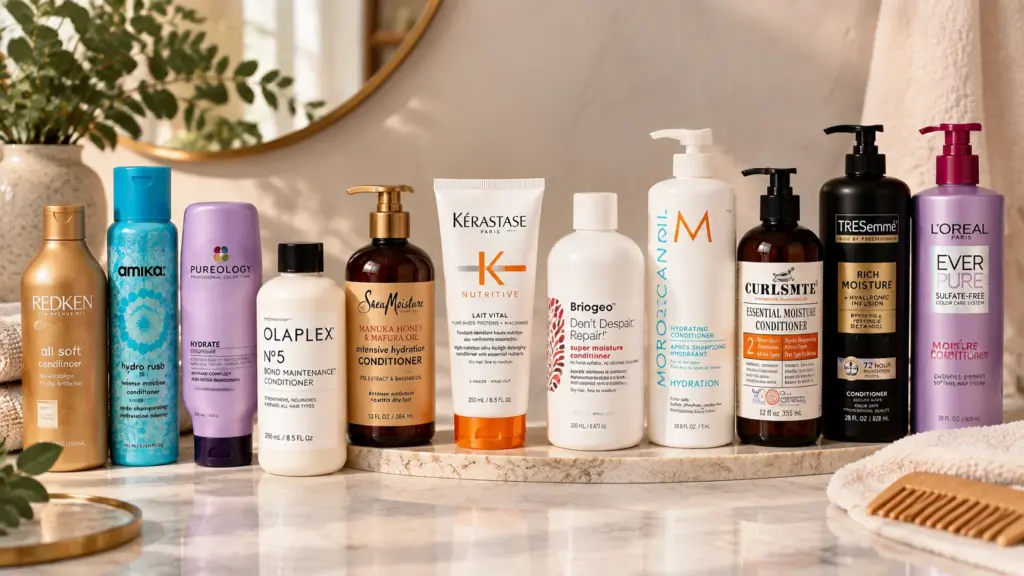
Below is a breakdown of the strongest hydrating conditioners for dry hair by texture, damage level, and budget.
What Dry Hair Needs From a Conditioner
Dry hair often feels rough, dull, frizzy, or hard to manage because the strands do not hold enough moisture to stay flexible. That lack of moisture shows up in how hair looks and behaves long before it becomes a bigger problem.
A conditioner’s real job is more specific than adding moisture. It should soften the hair, reduce friction between strands, support easier detangling, and improve how manageable hair feels once it is dry, not just while it is wet in the shower.
Dryness itself can come from more than one place: natural texture, heat styling that pulls moisture out over time, bleaching and coloring that change the hair’s structure, environmental exposure like sun and dry air, and a general lack of moisture retention in the hair shaft.
How These Conditioners Were Picked
I read full ingredient panels rather than relying on front-of-bottle claims, and matched each formula to a specific concern, color fade, heat damage, coarseness, or fine hair, instead of treating dry hair as one generic problem.
Patch testing anything new along the hairline before a full application is a habit I picked up working with sensitive-scalp clients, and it carries over into how I judge a product here too.
A few of these bottles are in my own shower right now, and the notes on how each one feels once hair is fully dry, not just rinsed out, come from using them myself.
Products are grouped by the situation they solve best rather than ranked one through eleven, since the best conditioner for dry hair depends on what is actually causing the dryness in the first place.
Best Conditioners for Dry Hair
This list is organized by hair need rather than a simple ranking, because dry hair isn’t one problem with one fix. Each pick explains why it stands out, who it’s a good match for, and when a different option might work better.
1. Redken All Soft Conditioner
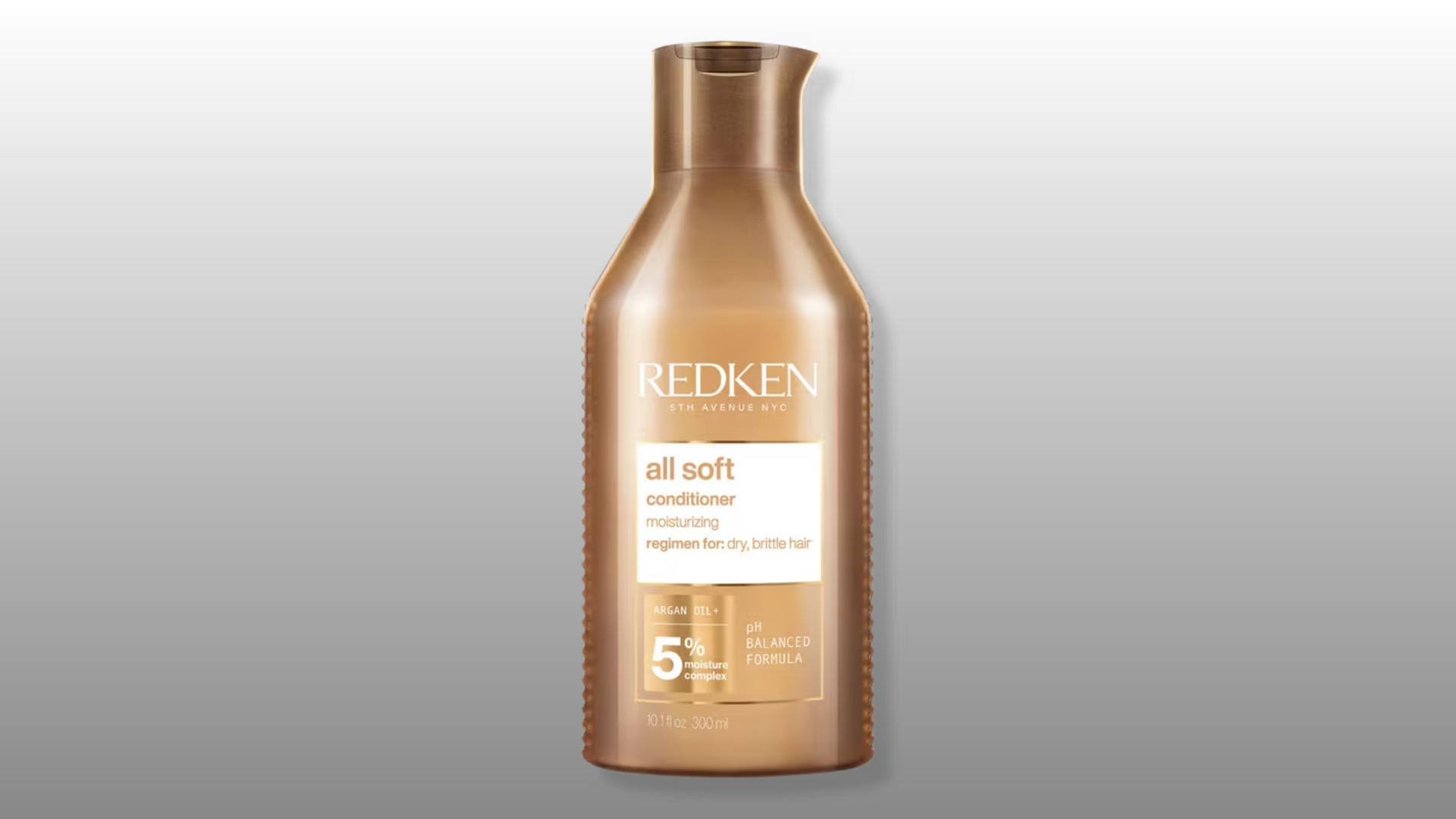
Redken All Soft Conditioneris a solid everyday option for dry hair because it balances softness with manageability without overloading the strands.
Hair typically feels smoother and easier to comb through once it is dry, and the formula holds up well for regular use rather than just occasional treatment. It is the one I point clients toward in the weeks between salon glosses, when ends feel rough but do not need a full repair step yet.
- Best fit: Dry, rough, medium-to-thick hair needing softness.
- Routine role: Regular rinse-out conditioner.
- Consider another option if: Fine hair becomes flat with richer formulas.
2. Amika Hydro Rush Intense Moisture Conditioner
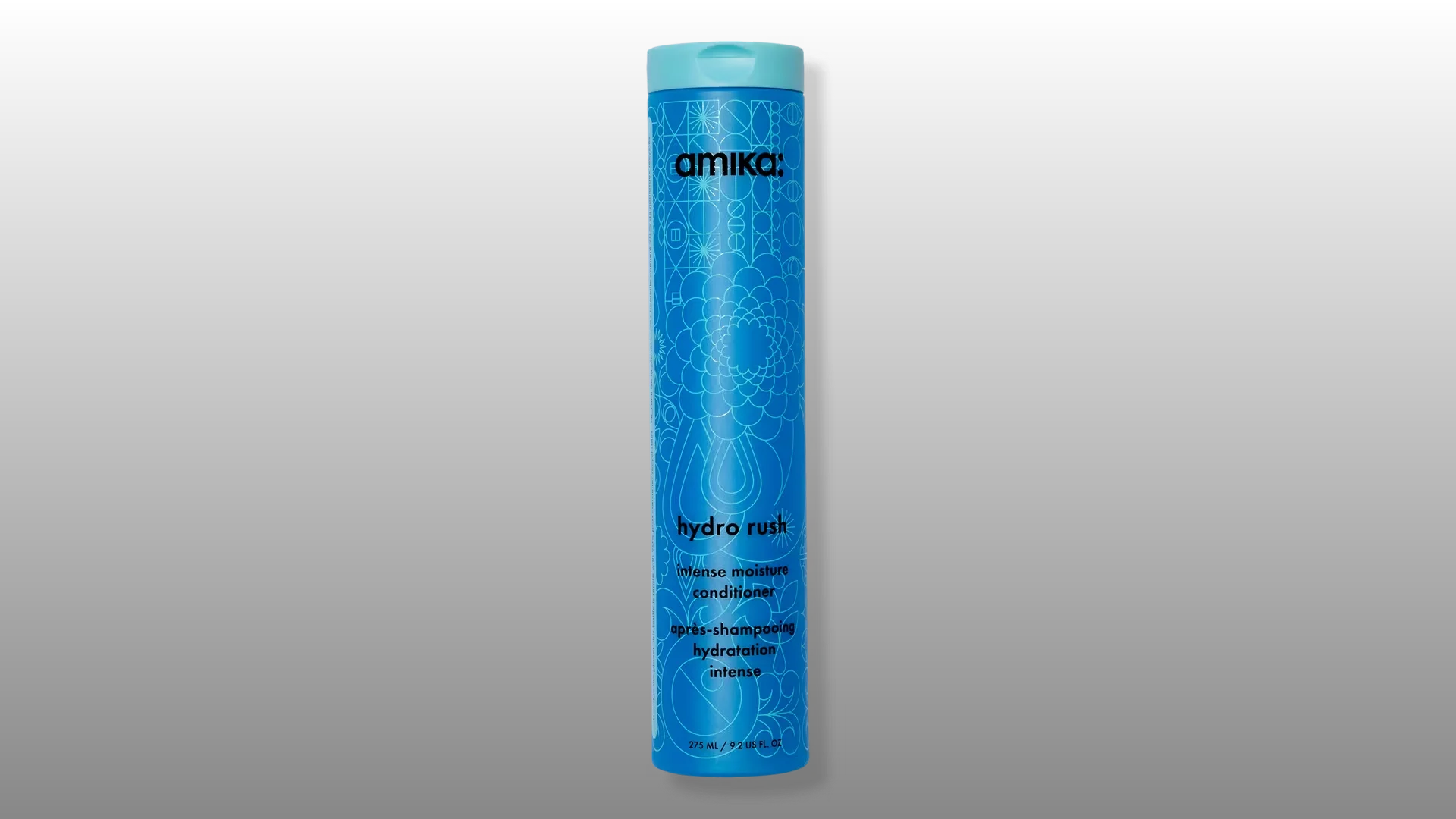
Amika Hydro Rush is a hydrating conditioner for dry hair that adds moisture without weighing fine or medium hair down, since not every case of dry hair calls for a heavy formula. That makes it a practical pick for people who want softness but still want their hair to move naturally.
- Best fit: Fine-to-medium dry hair.
- Routine role: Everyday moisture support.
- Consider another option if: Very coarse hair needs deeper conditioning.
3. Pureology Hydrate Conditioner
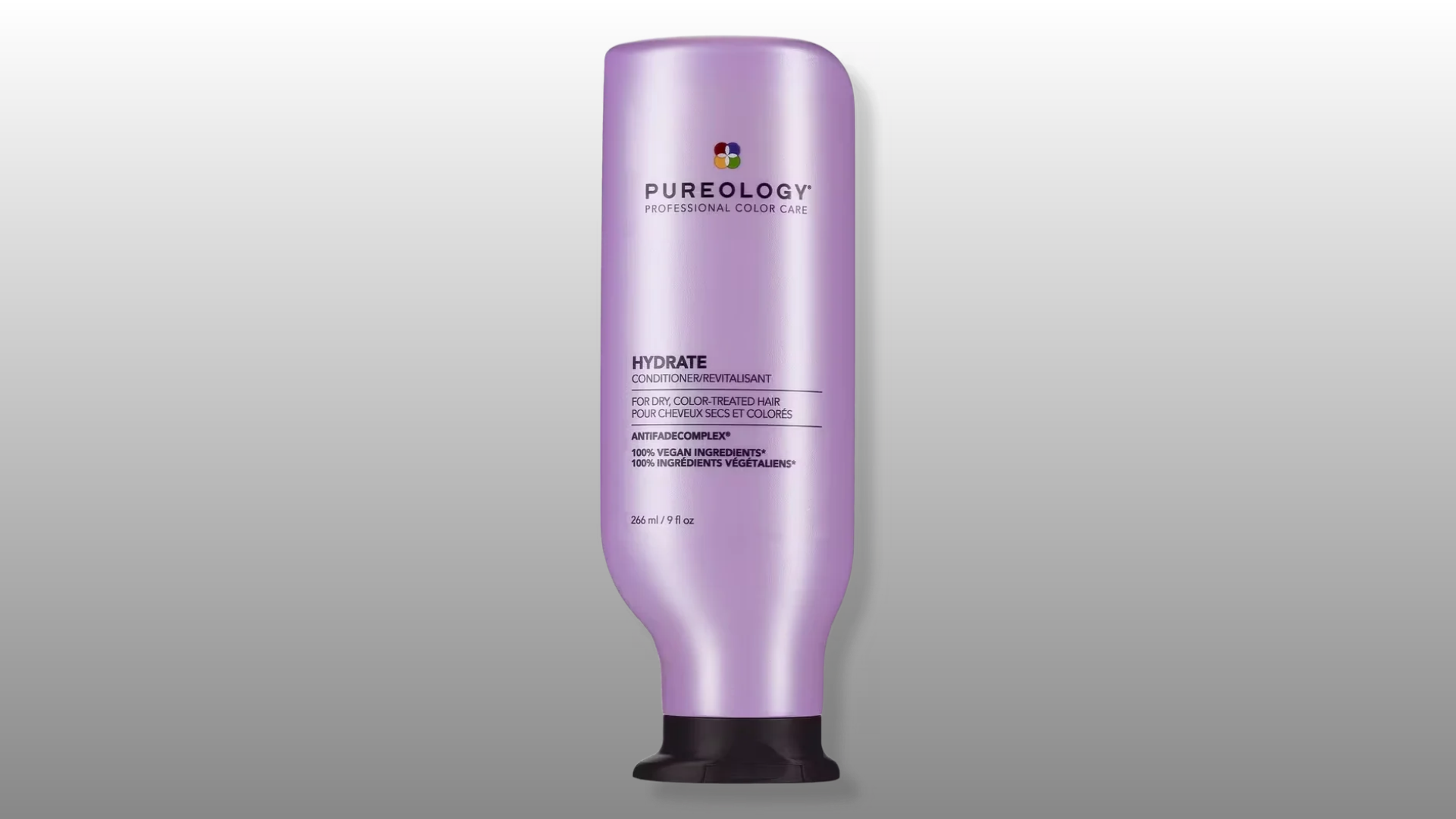
Pureology Hydrateis formulated to replace the moisture that colored and highlighted hair tends to lose faster, since chemical processing changes how the hair shaft holds onto moisture. It helps color-treated hair stay soft and manageable between salon visits.
- Best fit: Highlighted, colored, or chemically treated hair.
- Routine role: Consistent hydration step.
- Consider another option if: Your hair gets weighed down easily.
4. Olaplex No.5 Bond Maintenance Conditioner
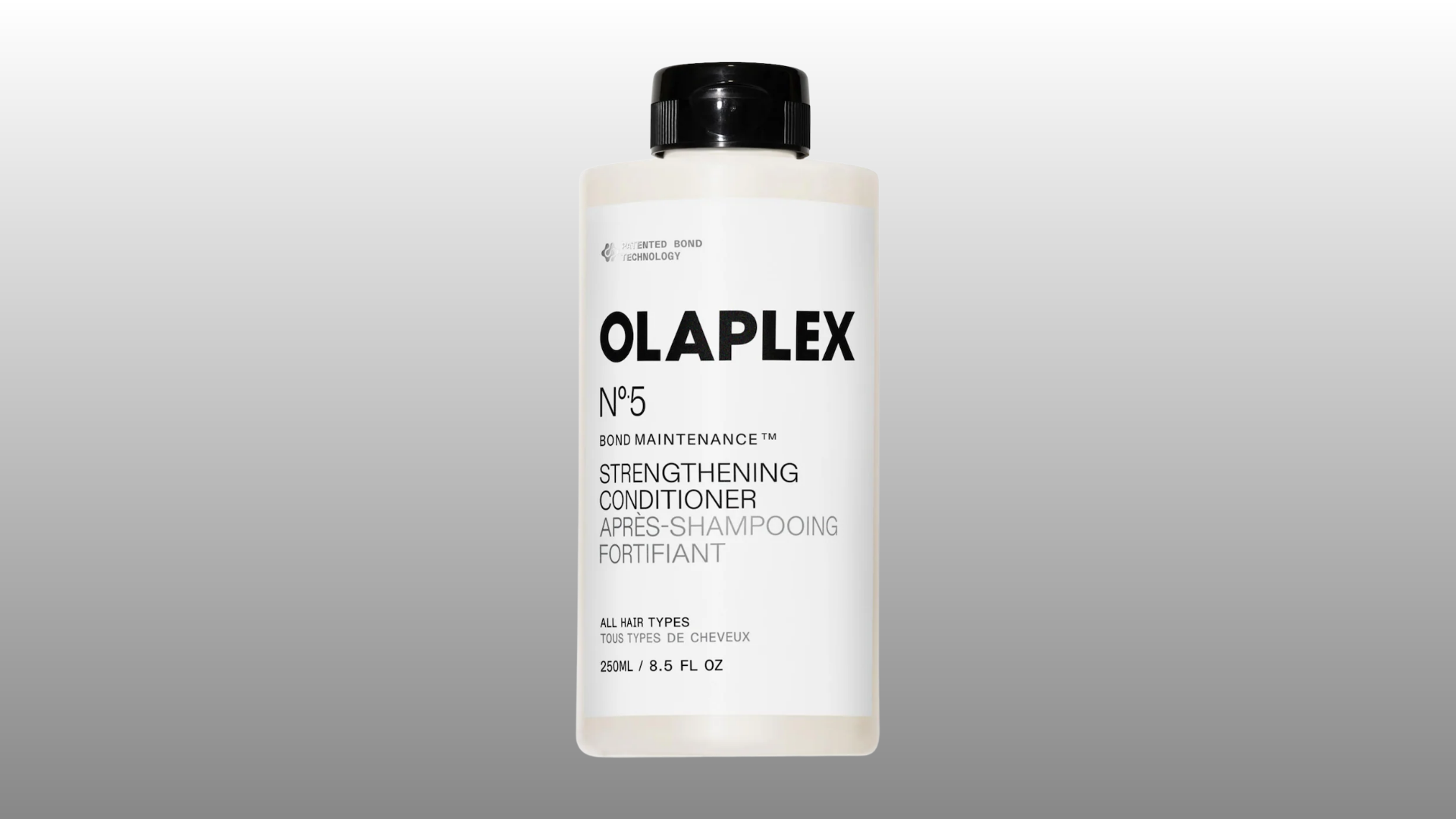
Olaplex No.5 supports the hair’s structure rather than just coating the strands. Dryness and damage aren’t always the same thing, and it matters which one you’re actually dealing with. Heat styling and bleach affect the internal bonds of the hair, not just the surface.
Chlorine was the first thing that showed me how fast bonds break down, long before I trained in skin and hair care, and this is about as close as a rinse-out gets to a professional bond treatment at home. If hair is actually breaking rather than just feeling dry, that is a signal to see a stylist or dermatologist, not a reason to keep switching bottles.
- Best fit: Bleached, chemically treated, fragile hair.
- Routine role: Part of a repair-focused routine.
- Consider another option if: Your hair only needs basic moisture.
5. SheaMoisture Manuka Honey & Mafura Oil Intensive Hydration Conditioner
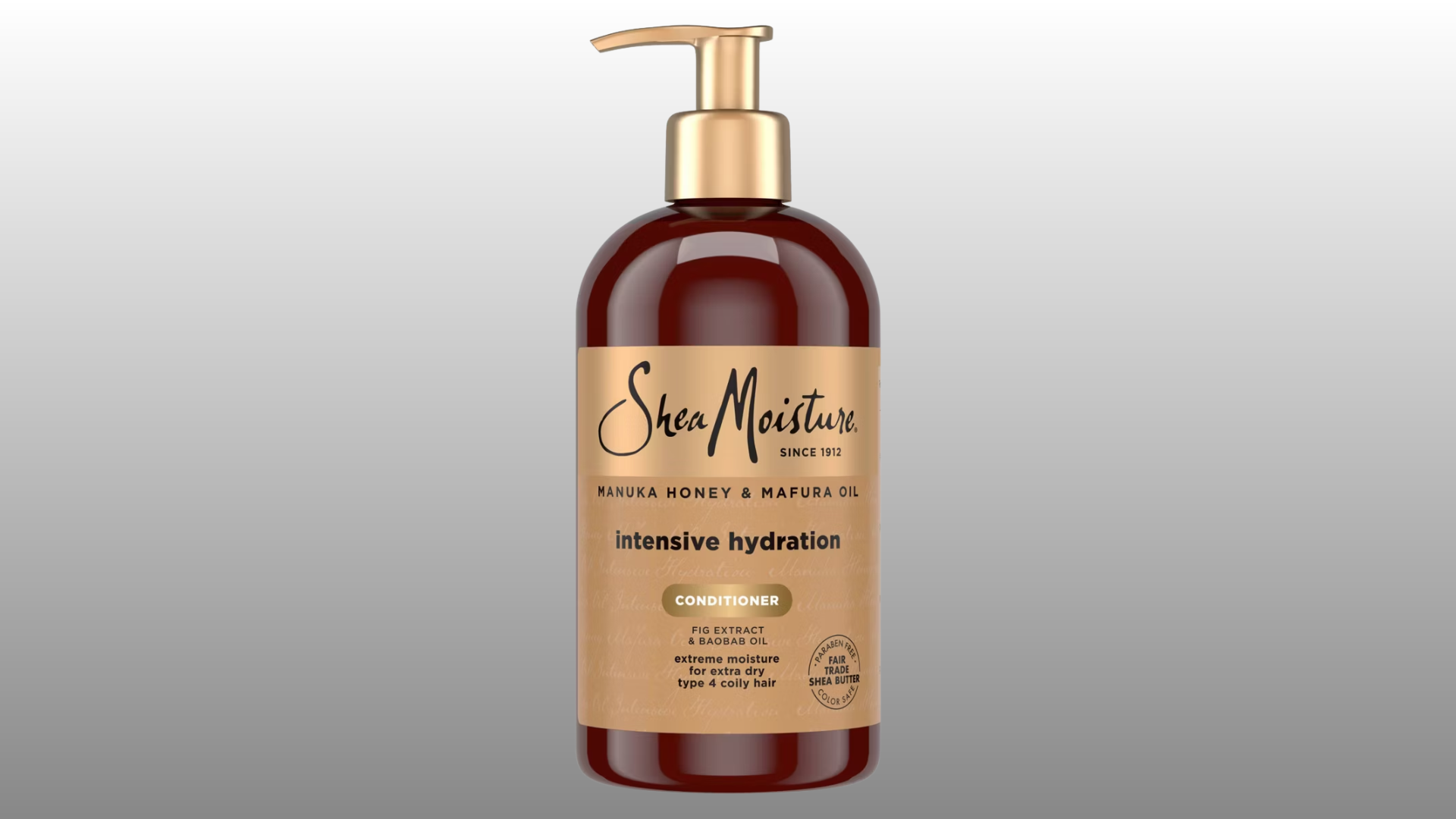
SheaMoisture’s Manuka Honey & Mafura Oil conditioner leans richer, making it a good match for coarse or textured strands that hold onto moisture more slowly than finer hair types. Some hair needs more than a standard formula can give it.
- Best fit: Very dry, thick, coarse strands.
- Routine role: Focus on mid-lengths and ends.
- Consider another option if: Your hair loses volume easily.
6. Kérastase Nutritive Lait Vital Conditioner
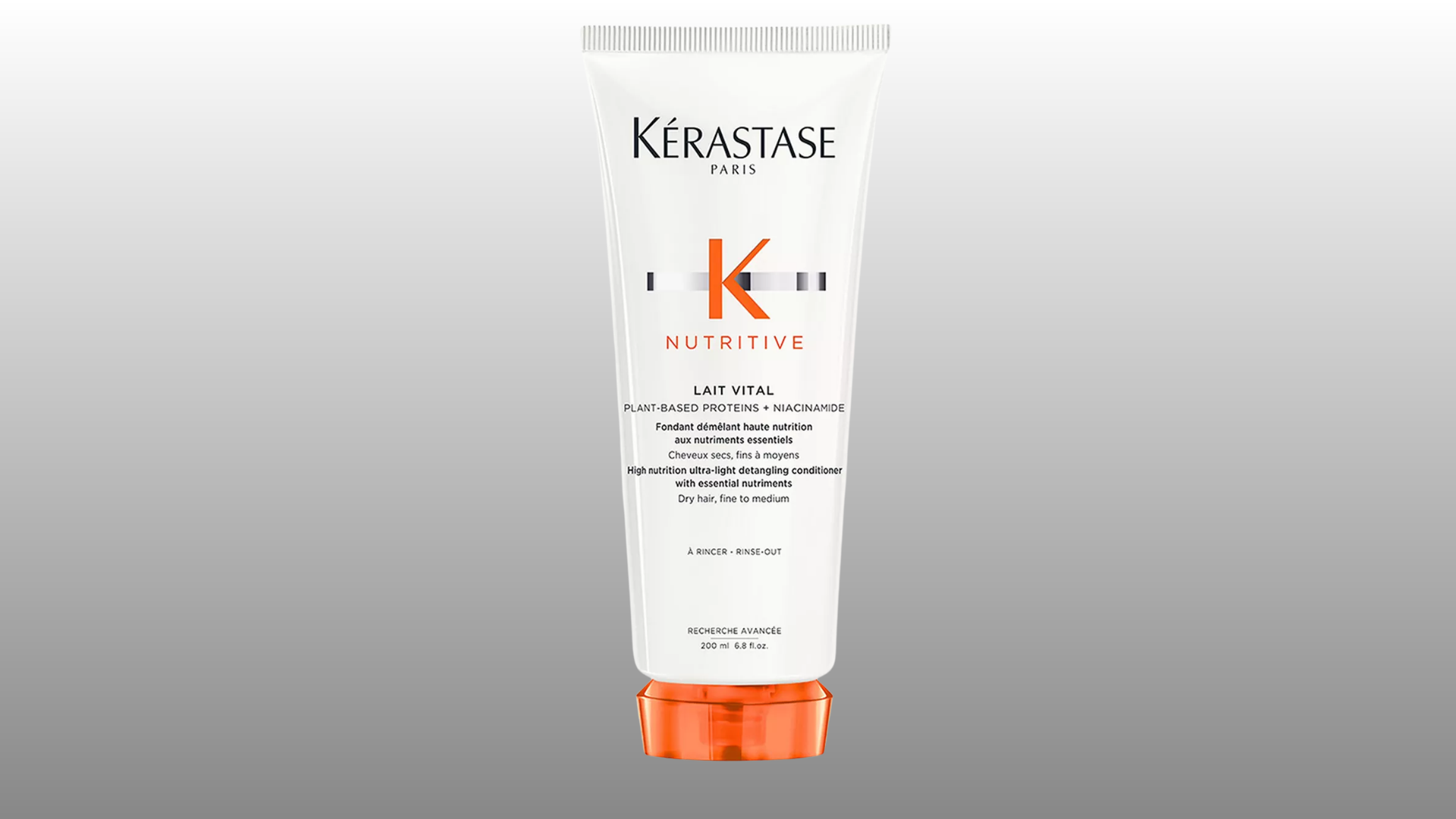
Kérastase Nutritive Lait Vital sits at the higher end of the category. It’s built around softness and nourishment for dry hair, and the difference tends to show up most in how refined the hair feels once dry.
- Best fit: Dry hair needing refined softness.
- Routine role: Regular conditioning step.
- Consider another option if: Budget is a priority.
7. Briogeo Don’t Despair, Repair! Conditioner
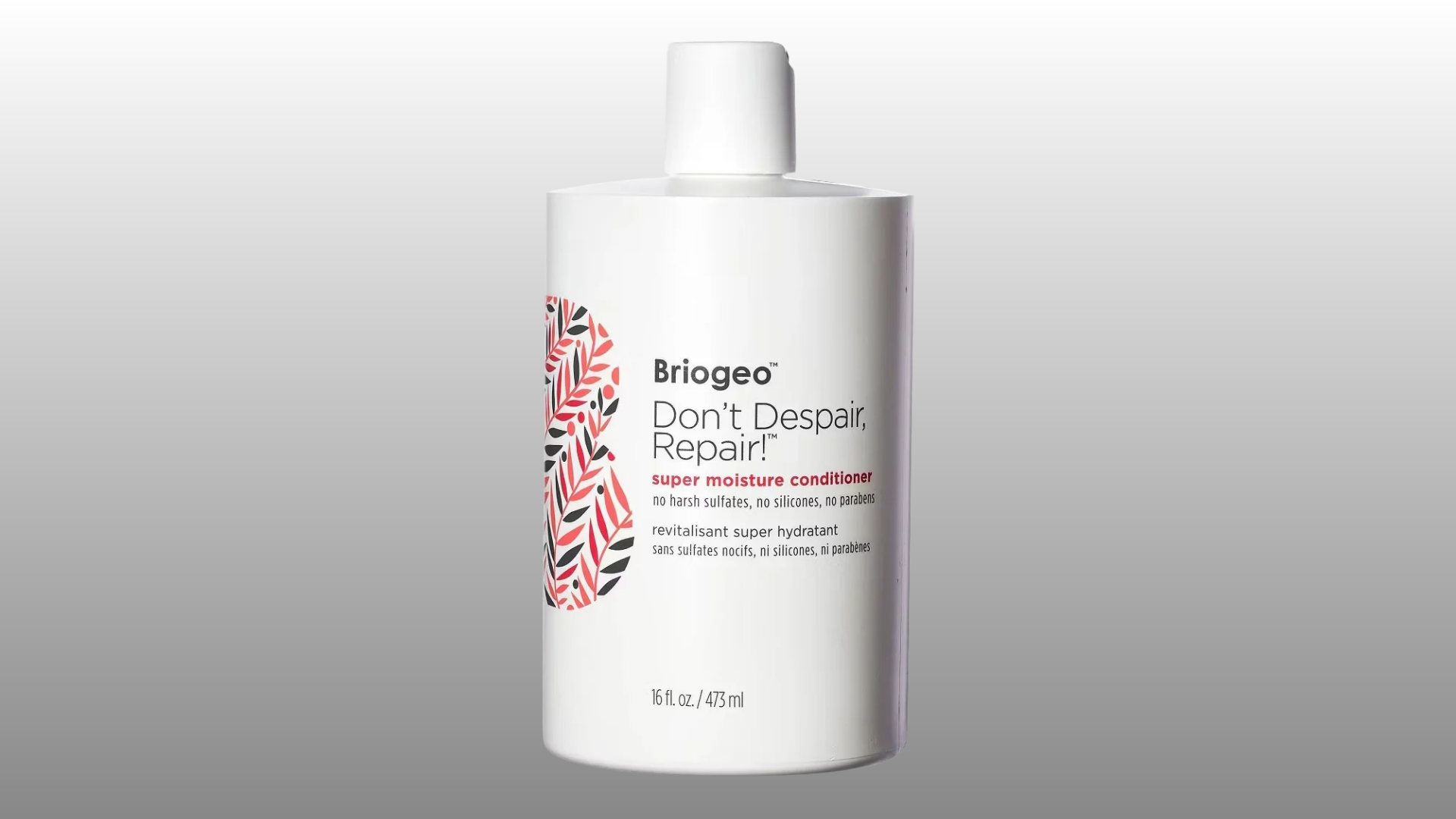
Briogeo’s Don’t Despair, Repair! conditioner is built to address hair that’s stressed from regular heat styling; it often needs both moisture and strengthening support at the same time. This makes it a practical middle-ground option rather than a single-purpose formula.
- Best fit: Dry hair affected by styling stress.
- Routine role: Repair-supporting conditioner.
- Consider another option if: You need only lightweight hydration.
8. Moroccanoil Hydrating Conditioner
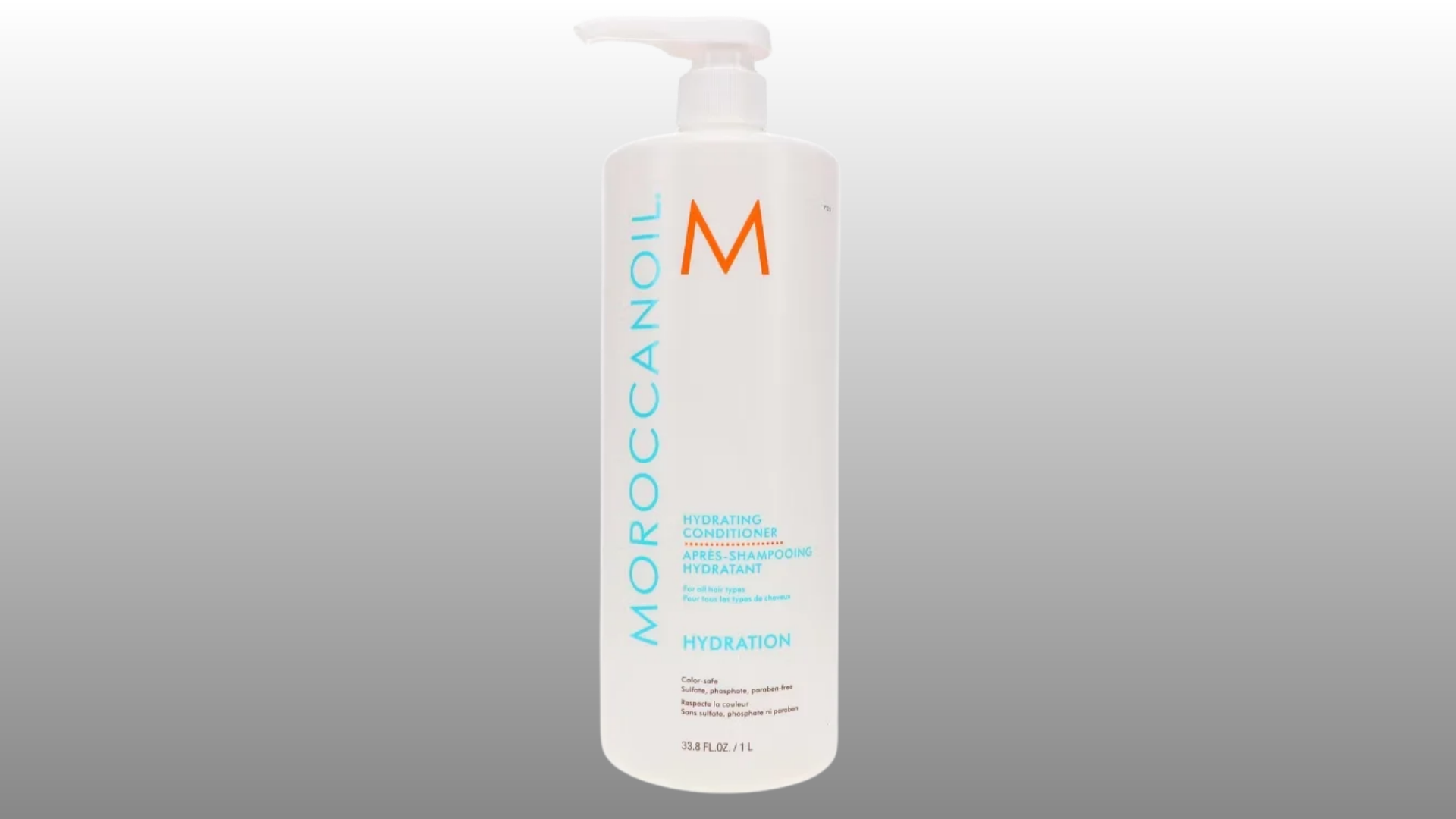
Moroccanoil’s argan oil–based formula is built with frizz in mind, which is often more about moisture and smoothness than anything else. It’s a reliable pick for hair that feels rough or unmanageable because it lacks softness, not damage.
- Best fit: Dry hair lacking softness and smoothness.
- Routine role: Regular hydration step.
- Consider another option if: Your hair needs intensive repair.
9. Curlsmith Essential Moisture Conditioner
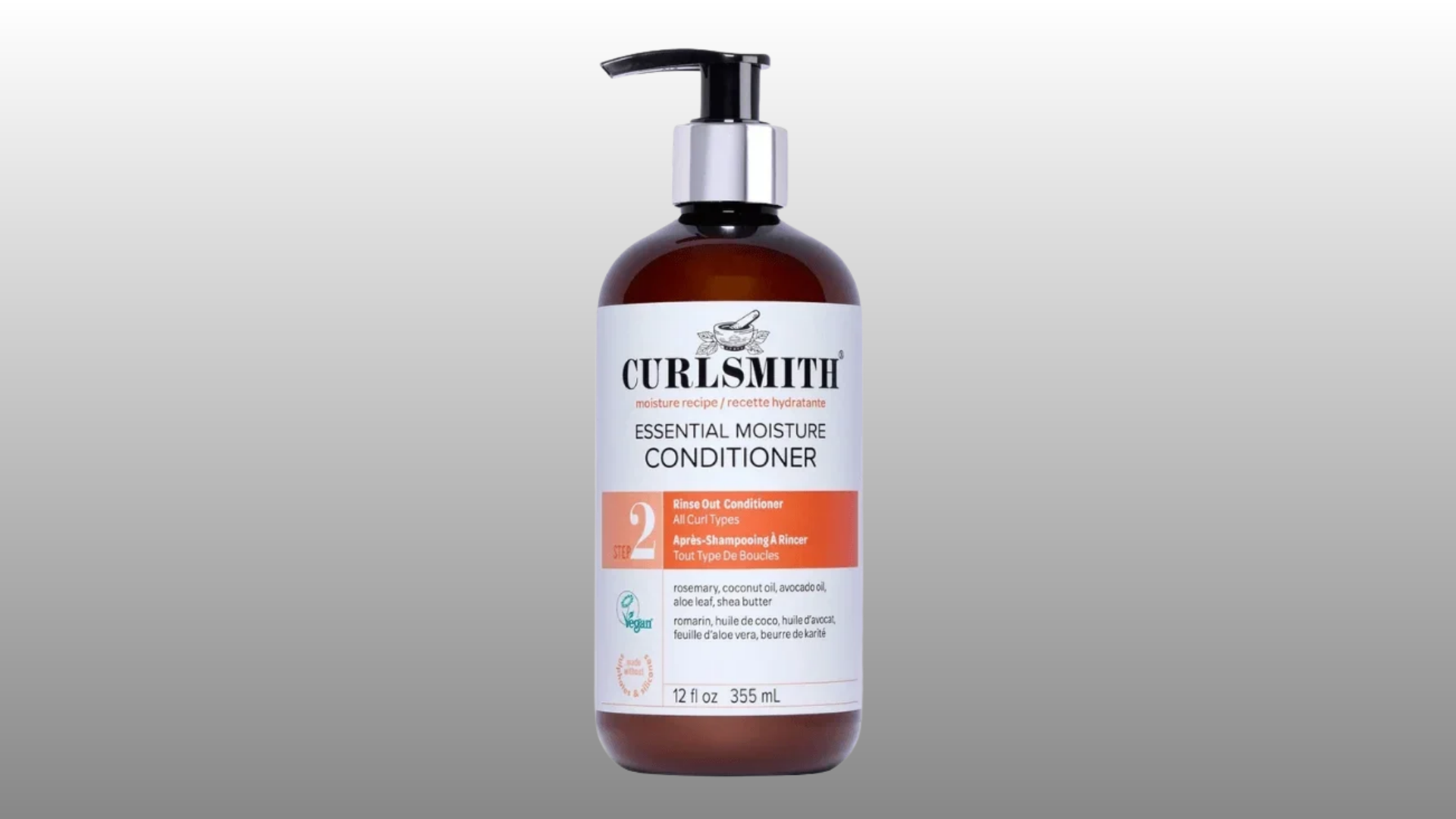
Curlsmith Essential Moisture gives curls the slip they need for detangling while keeping their natural movement intact. Curls generally need more conditioning support than straighter hair types because the bends in the strand make it harder for natural oils to travel evenly.
- Best fit: Waves, curls, and textured hair.
- Routine role: Wash-day moisture support.
- Consider another option if: Very coarse hair needs richer conditioning.
10. TRESemmé Moisture Rich Conditioner
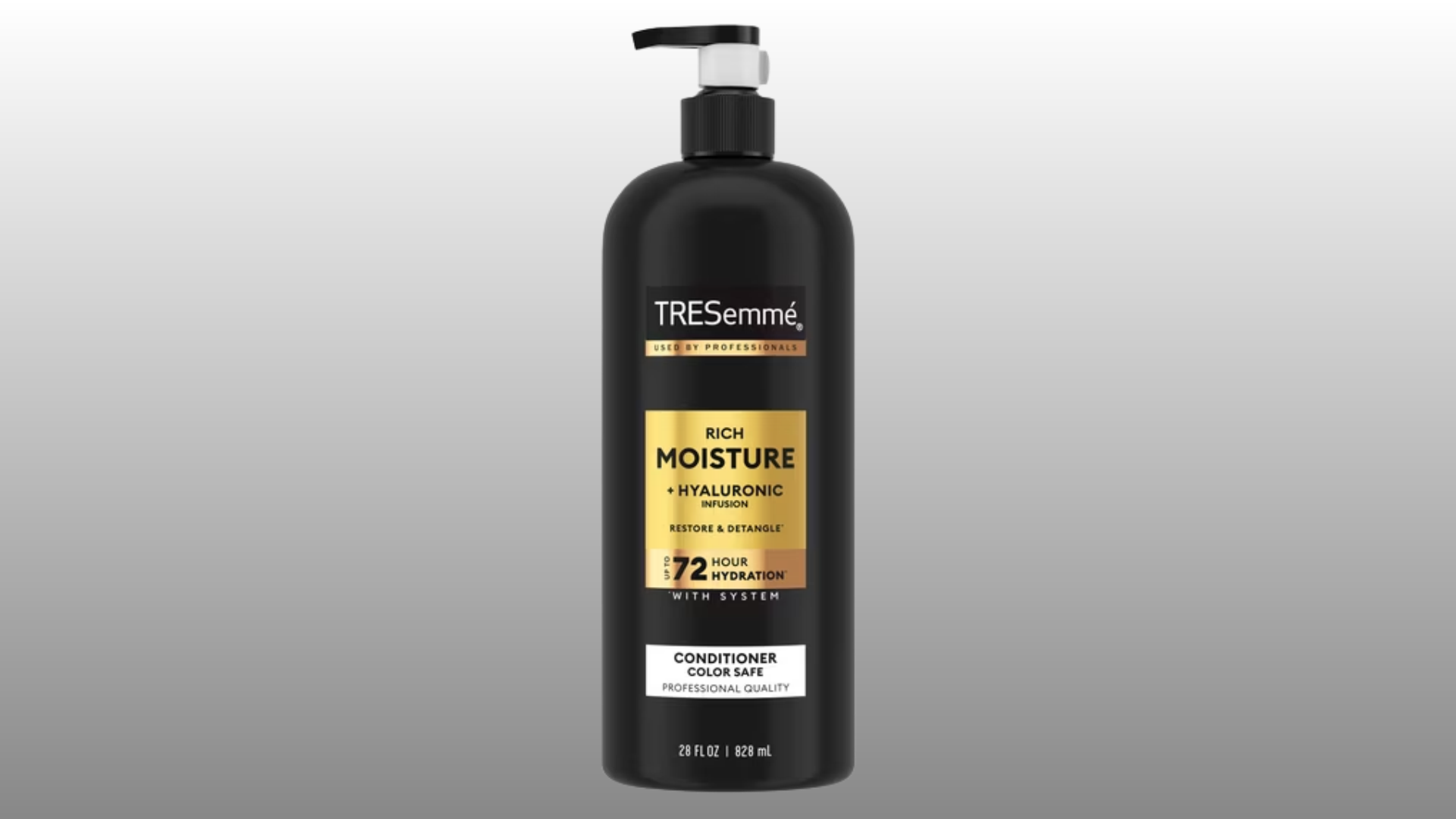
TRESemmé Moisture Rich delivers dependable everyday hydration at a lower cost, and the larger bottle size makes it practical for people who go through conditioner quickly.
- Best fit: Budget-conscious shoppers.
- Routine role: Regular conditioner.
- Consider another option if: Hair needs targeted damage repair.
11. L’Oréal Paris EverPure Moisture Conditioner
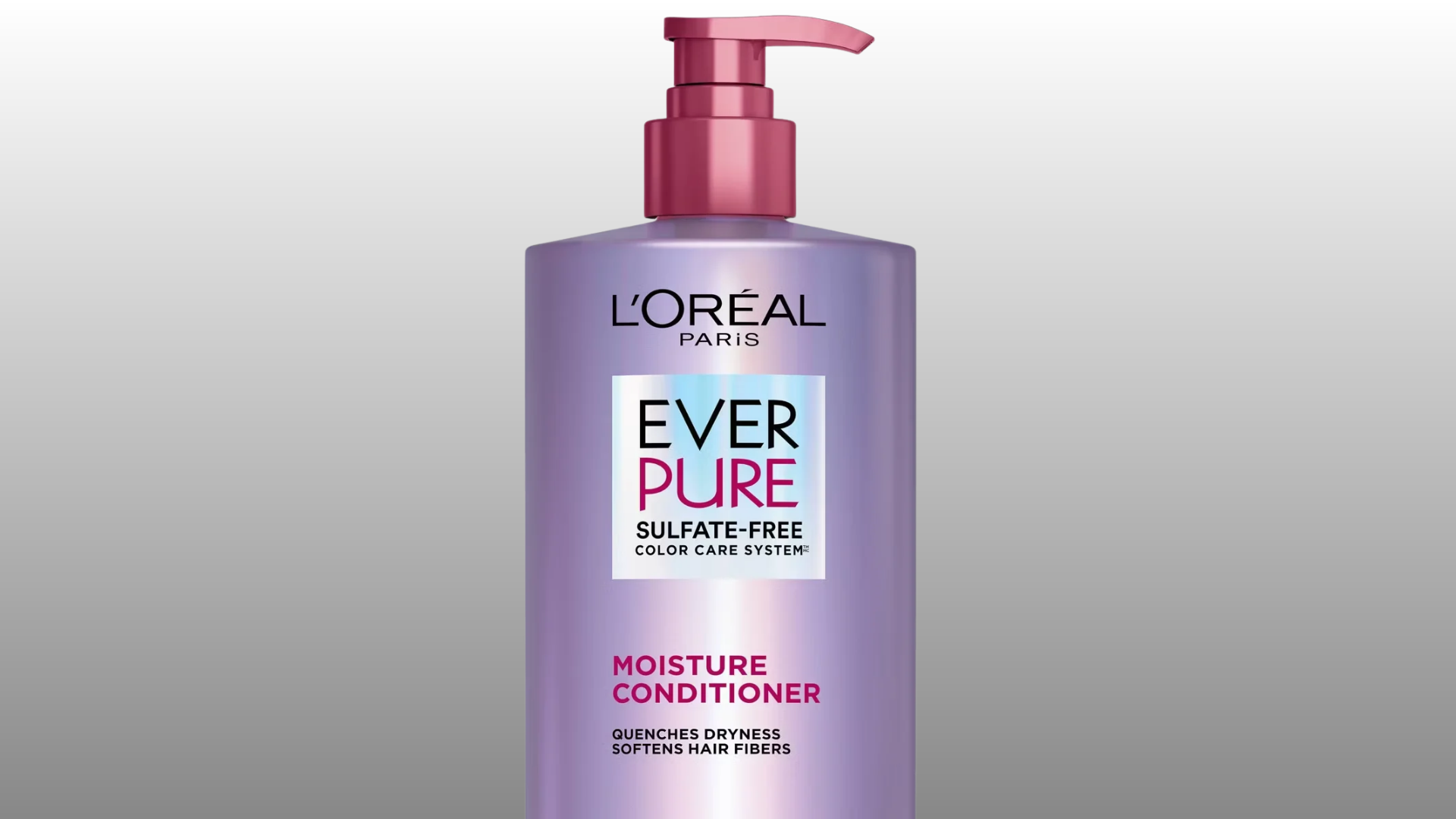
L’Oréal Paris EverPure Moisture is a straightforward, gentle option for hair that’s dry but not significantly damaged. It’s an easy entry point for anyone building a simple, moisture-focused routine without extra steps.
- Best fit: Normal-to-dry hair.
- Routine role: Simple moisture routine.
- Consider another option if: Your hair needs intensive treatment.
How to Choose the Best Conditioner for Dry Hair
Dryness alone doesn’t tell you enough. Hair texture and how well your hair holds on to moisture all play a part in which formula actually works for you.
Hair Texture Changes Conditioner Needs:
Hair Type | Conditioner Direction | Main Goal |
|---|---|---|
Fine hair | Lightweight hydration | Prevent heaviness |
Medium hair | Balanced moisture | Improve softness |
Thick hair | Rich conditioning | Reduce roughness |
Coarse hair | Deep moisture | Improve manageability |
Why Hair Porosity Matters When Choosing Conditioner
Porosity describes how easily hair takes in and holds moisture, and it can explain why the same conditioner works beautifully for one person and does nothing for another.
- Low porosity hair can struggle with heavier products, which may sit on the surface rather than being absorbed.
- Medium porosity hair usually handles a broad range of balanced formulas without issue.
- High porosity hair tends to lose moisture quickly and often benefits from richer conditioning.
Porosity is a guide, not a strict category. How your hair actually behaves after washing and drying matters more than fitting neatly into one type. If you have never checked yours, a simple at-home porosity test is worth doing before you commit to a new bottle.
Ingredients to Look For in Dry Hair Conditioners
Not every ingredient on a label does the same job, and knowing what each group contributes makes it easier to judge a formula beyond its marketing claims.
Ingredient Group | Examples | Main Role |
|---|---|---|
Humectants | Glycerin, hyaluronic acid | Attract moisture |
Oils | Argan, jojoba oil | Improve softness |
Butters | Shea butter | Rich conditioning |
Proteins | Keratin, rice protein | Support weakened strands |
Ceramides | Lipid ingredients | Improve smoothness |
The full ingredient list matters more than spotting one familiar name near the top.
Conditioner vs. Hair Mask: Which Does Dry Hair Actually Need?
A regular conditioner and a hair mask are not interchangeable, even though they often get treated that way. A conditioner is a maintenance step, meant to be used every wash to keep hair soft and detangled.
A hair mask sits on the hair longer, usually five to twenty minutes, and is built to deliver a heavier dose of moisture or protein in one sitting.
As a general rule, reach for a mask once a week if hair is very dry, color-treated, or heat-styled often, and rely on a regular conditioner the rest of the time.
Using a mask every single wash can weigh hair down or, for protein-heavy formulas, leave it feeling stiff rather than soft.
A good repair conditioner for damaged hair can close some of that gap on non-mask days, but it is not a full substitute for a weekly deep treatment on very damaged hair.
Common Mistakes That Keep Hair Dry Even With a Good Conditioner
These are the slip-ups I catch most often with clients, and a couple I made myself before I knew better.
- Rinsing with water that is too hot. It feels nice but opens the cuticle further and strips moisture right after conditioner adds it back.
- Applying conditioner at the roots. Scalp skin doesn’t need conditioning, and applying it at the roots can make hair look greasy fast, which can lead to over-washing.
- Skipping conditioner after clarifying shampoo. Clarifying strips buildup along with natural oils, so hair needs extra moisture support right after, not less.
- Not rinsing thoroughly enough. Leftover product can make hair feel coated rather than soft, which often gets mistaken for the conditioner “not working.”
- Using heat protectant inconsistently. A great conditioner cannot fully offset daily heat styling with no protection; the damage keeps outpacing the repair.
If you have cleaned up these habits and your hair still isn’t improving, that is usually the point to stop guessing and talk to a board-certified dermatologist instead of trying yet another conditioner.
Build a Simple Dry Hair Routine
A routine works best when each step has a clear purpose instead of piling on extra products out of habit. I ask clients to give a new conditioner three full washes before judging it, and to notice whether tangling and frizz actually improved, not just how the bottle smells.
That habit of tracking results, rather than switching products on a whim, is usually what separates a routine that works from one that just accumulates bottles.
- Cleanse gently, focusing on the scalp.
- Apply conditioner mainly through the lengths and ends.
- Detangle while hair still has slip.
- Rinse thoroughly, ideally with lukewarm rather than hot water.
- Add a leave-in if your hair needs it.
- Style based on your hair’s specific goals.
Final Verdict: Best Conditioner for Dry Hair
Finding the best conditioner for dry hair comes down to matching the formula to what is actually happening to your strands, not to how thick or expensive the bottle looks.
Fine hair does better with a lightweight hydrating conditioner for dry hair, while coarse, color-treated, or heat-styled hair usually needs something richer or bond-focused.
Pay attention to how your hair behaves once it has fully dried, since that tells you more than how it feels mid-rinse.
Patch test anything new, give it a few washes to settle in, and adjust from there instead of switching bottles at the first sign of frizz. Have a formula that changed your routine? Share it in the comments.
Frequently Asked Questions
Can Dry Hair Be Caused by Shampoo?
Dry hair can sometimes result from harsh cleansing routines that remove too much natural oil, leaving strands feeling rough, tight, or less manageable after washing.
How Long Does It Take for a Conditioner to Improve Dry Hair?
Most conditioners improve softness and manageability immediately, but noticeable changes in hair texture may require consistent use over several washes.
Should You Apply Conditioner Before Shampooing for Dry Hair?
Some people use pre-shampoo conditioning to add extra protection, especially when hair feels fragile or becomes tangled easily during washing.
Can Cutting Your Hair Help with Dry Ends?
Trimming cannot change the condition of the entire hair strand, but removing severely damaged ends can make hair feel smoother and easier to manage.
Is It Okay to Condition Dry Hair Every Day?
For most dry or textured hair, daily conditioning is fine and often helpful, since it is a lighter step than shampooing and rarely strips moisture the way daily shampooing can. Fine hair that gets weighed down easily may do better with conditioner every other wash instead.