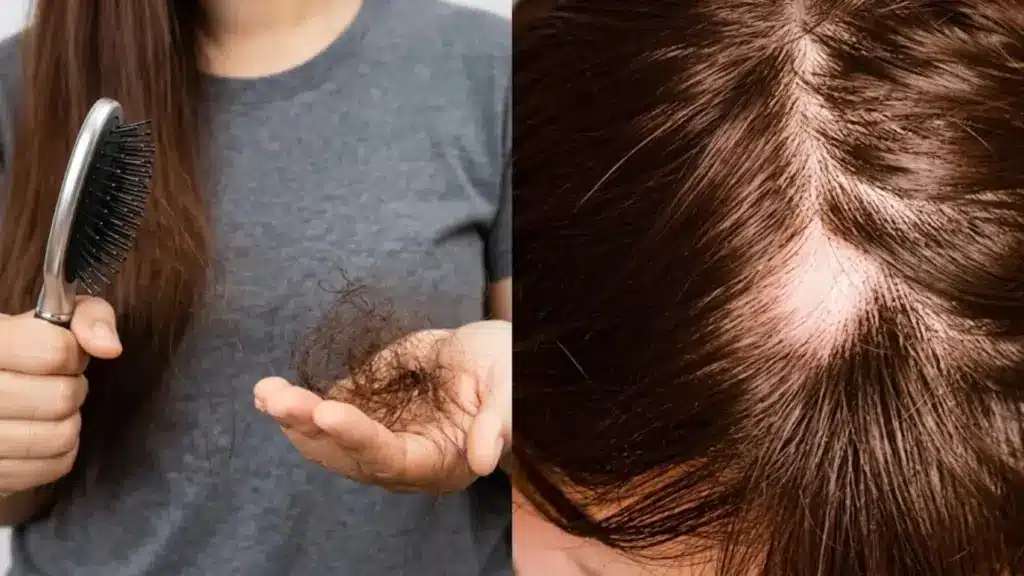
Hair shedding can feel alarming, especially when extra strands start showing up on your brush or collecting at the shower drain.
The truth is, hair shedding can happen for many reasons, including stress, lifestyle changes, or shifts in overall health.
In most situations, it is part of the natural cycle, but sometimes it can feel more noticeable than usual. That is why understanding what is normal and what is not really matters.
Many people assume the worst right away, but not every increase in shedding means permanent hair loss or damage.
In this blog, I will walk you through what each one actually means, how to spot the signs, and how to stop hair from shedding.
What is Hair Shedding?
Hair shedding is the natural ending of the hair growth cycle, where each strand moves through four phases: anagen (growth), catagen (transition), telogen (resting), and exogen (shedding).
In the final stage, the old hair falls out, and a new strand begins growing from the same follicle.
The American Academy of Dermatology estimates normal daily shedding at 50 to 100 hairs. On a healthy scalp, roughly 85 to 90% of follicles are actively growing at any given moment.
Excessive shedding, called telogen effluvium, happens when a stressor pushes an unusually large number of follicles into the resting phase at once, causing far more hair to fall than grows in.
It feels sudden and alarming, often noticed during washing or brushing. The good part is that it is usually temporary and improves once the underlying trigger is resolved.
Understanding Hair Loss and its Types
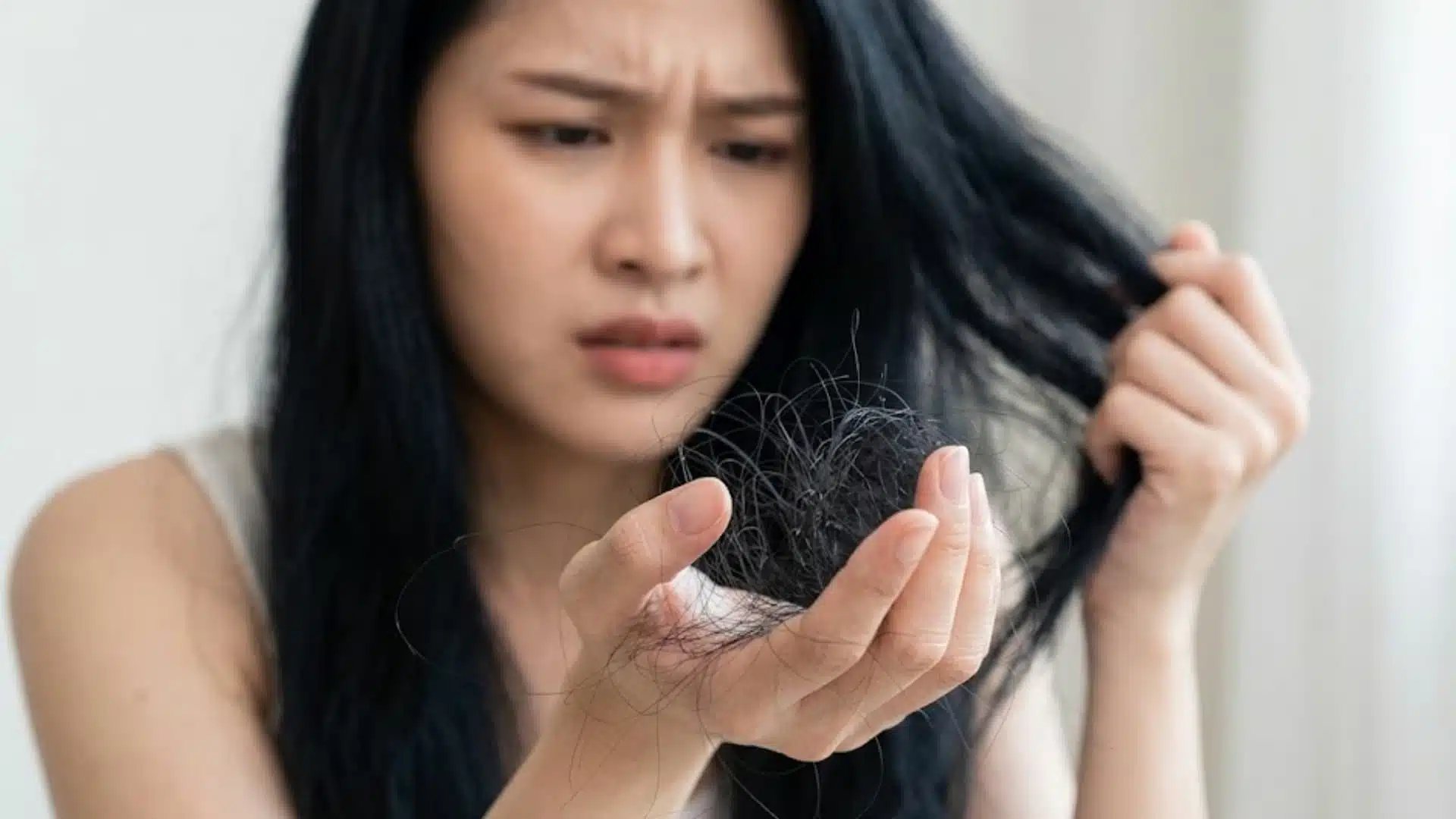
Hair loss is what happens when follicles stop producing new hair altogether, or start producing strands that are progressively thinner and shorter.
The follicle itself is compromised. During shedding, the follicle remains healthy and fully capable of growing hair again once the trigger passes. With hair loss, that capability is reduced or gone without intervention.
Main types:
- Androgenetic alopecia: It is driven by androgen sensitivity, which causes follicles to miniaturize over time, producing finer hair until production stops.
- Telogen effluvium: Itis triggered by stress, illness, surgery, or childbirth and is usually reversible. The follicles rest but do not close permanently.
- Alopecia areata: It is an autoimmune condition in which the immune system attacks healthy follicles, resulting in smooth, round bald patches on the scalp or body.
- Traction alopecia: Itdevelops from repeated physical tension on the hairline or part, often from tight styles like braids, ponytails, or extensions worn consistently over time.
For women dealing with androgenetic alopecia specifically, understanding the available restoration options early makes a meaningful difference.
Hair implants for women are one option worth considering before the condition progresses.
Difference Between Hair Shedding and Hair Loss
The simplest way to hold onto this: with shedding, regrowth continues. With hair loss, regrowth slows or stops. Everything else follows from that.
| Feature | Hair Shedding | Hair Loss |
|---|---|---|
| Follicle condition | Intact and healthy | Damaged, dormant, or under attack |
| What’s happening | Normal cycle ending, old strand releases | Follicle miniaturizes or shuts down |
| Regrowth | New strand begins within weeks | Slows, thins, or stops entirely |
| What you’re losing | The old hair, not the follicle | The follicle’s ability to regrow |
| Reversibility | Usually resolves once the trigger clears | Needs outside intervention |
| Example condition | Telogen effluvium | Androgenetic alopecia, alopecia areata |
How to Stop Hair From Shedding
Hair shedding can feel overwhelming, especially when it seems sudden or excessive, but in many cases, it can be managed with the right approach.
1. Improve Your Diet and Nutrient Intake
One of the most effective ways to reduce hair shedding is by supporting your body with the right nutrients. Hair follicles need iron, protein, biotin, and vitamins like D and B12 to stay in the growth phase.
Start by adding foods like eggs, leafy greens, nuts, and lean proteins into your meals. If you suspect a deficiency, consider getting blood work done before taking supplements.
Drinking enough water also matters, as dehydration can weaken hair strands and increase shedding over time.
2. Manage Stress and Sleep Patterns
Stress is a common trigger for sudden hair shedding, especially in conditions like telogen effluvium. When the body is under stress, more hair follicles shift into the resting phase.
To manage this, focus on daily habits like regular sleep, light exercise, and relaxation techniques. Simple practices such as deep breathing, walking, or limiting screen time before bed can help regulate stress levels.
Over time, lowering stress can help restore the natural hair growth cycle and reduce excessive shedding.
3. Use Gentle Hair Care Techniques
How you handle your hair daily can directly impact shedding. Rough brushing, tight hairstyles, and heat styling can weaken strands and cause breakage.
Switch to a wide-tooth comb and detangle hair gently, especially when wet. Avoid pulling hair into tight ponytails or buns for long periods.
When washing, use lukewarm water and a mild shampoo that does not strip natural oils. These small changes protect the hair shaft and help reduce unnecessary hair fall.
4. Support Scalp Health Consistently
A healthy scalp creates the right environment for hair to grow and stay strong. Keeping the scalp clean without over-washing is important.
Use a gentle cleanser 2 to 3 times a week, depending on your hair type. You can also massage your scalp for a few minutes daily to improve blood flow.
Some people benefit from using lightweight oils, such as coconut or argan oil, in small amounts. Consistent care helps maintain balance and supports healthier hair growth over time.
5. Introduce Targeted Treatments Slowly
If shedding continues, adding targeted treatments can help, but they should be introduced carefully.
Ingredients like minoxidil, caffeine-based serums, or low-strength retinol for the scalp may support hair growth. Start with one product at a time and give it a few weeks to show results.
Avoid layering too many treatments, as this can irritate the scalp. If shedding is severe or persistent, consulting a dermatologist ensures you are using the right approach for your specific condition.
Note: Persistent or sudden hair shedding can sometimes be linked to underlying health conditions or nutrient deficiencies. If shedding continues for several months or worsens quickly, a dermatologist or healthcare provider can help identify the cause and recommend the right treatment.
Common Triggers Behind Excessive Shedding
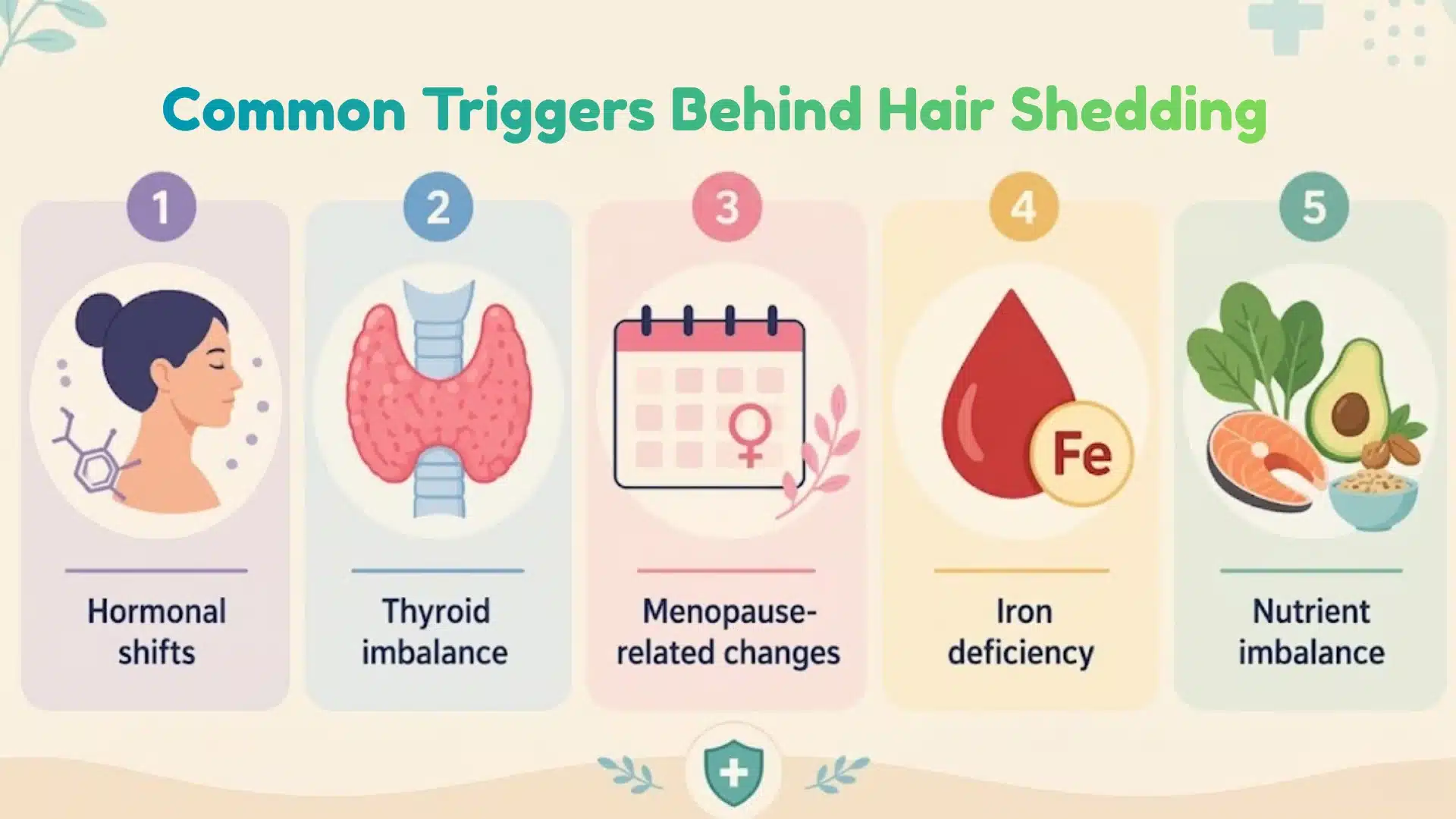
Not every shedding episode starts with obvious stress. Some of the triggers I see most often go unnoticed for months because they feel unrelated to hair.
- Hormonal shifts: Changes like postpartum estrogen drop or menopause can disrupt the hair cycle, leading to noticeable shedding that often appears a few months after the trigger.
- Thyroid imbalance: Both overactive and underactive thyroid conditions can disrupt hair growth, leading to thinning, dryness, and increased shedding across the scalp.
- Menopause-related changes: Declining estrogen levels during menopause gradually reduce hair density, often mistaken for normal aging, but linked to hormonal changes affecting follicles.
- Iron deficiency: Low ferritin levels reduce oxygen supply to hair follicles, pushing them into an early resting phase and leading to increased shedding even without diagnosed anemia.
- Nutrient imbalance detection: Blood tests checking iron, ferritin, thyroid, and zinc levels are commonly used to identify underlying causes and guide effective treatment for excessive shedding.
Symptoms of Hair Shedding and Hair Loss
Figuring out whether it is shedding or hair loss depends on pattern, timing, and scalp changes, such as a sudden fall, thinning areas, or visible bald patches over time.
| Hair Shedding | Hair Loss |
|---|---|
| Increased hair fall during washing or brushing | Gradual thinning or visible reduction in hair volume |
| Temporary condition, often linked to stress or hormonal changes | Long-term condition that may worsen over time |
| Hair falls evenly across the scalp | Hair loss may appear in patches or specific areas |
| New hair growth usually replaces lost strands | Reduced or slowed regrowth in affected areas |
| Often resolves on its own within a few months | May require medical treatment or intervention |
| Common after events like illness, childbirth, or stress | Can be caused by genetics, hormonal imbalance, or medical conditions |
When Should You See a Dermatologist
Shedding that resolves within 6 to 9 months is usually not cause for alarm.
But if it has lasted longer, or you are noticing bald patches, a widening part, or a scalp that is red, itchy, or tender, get a professional assessment.
The same applies if hair loss runs in your family, a medication you recently started triggered the change, or over-the-counter treatments have not made a difference after consistent use.
A dermatology visit typically includes a review of your medical history, a scalp examination, a pull test, and blood work to check iron, ferritin, thyroid, and zinc levels.
Most hair loss is treatable when caught early in scarring alopecia; specifically, early treatment is what prevents permanent follicle damage.
I always tell clients: take a photo of your part and hairline every six months. It is one of the most practical things you can do.
It is hard to notice a gradual change in the mirror, but comparing photos side by side makes patterns obvious very quickly.
For those dealing with advanced or permanent loss, it helps to understand the full picture, including what the hair transplant process involves in terms of recovery, costs, and realistic outcomes.
Conclusion
Most of the hair in your shower drain is just your body doing what it is supposed to do.
That took me a long time to accept with my own clients, because the alarm is real even when the cause is routine.
What I tell people is this: watch the pattern, not the count.
Sudden, diffuse shedding that clears on its own is almost always a reset, and understanding this is the first step in learning how to stop hair from shedding without overreacting.
A widening part, smooth bald patches, or thinning that keeps progressing month over month, those are worth a professional read sooner rather than later.
The earlier you catch real hair loss, the more options you have.
Are you dealing with hair shedding or hair loss? Drop your experience in the comments below.
Frequently Asked Questions
Will Frequent Hat-Wearing Lead to Hair Loss?
No, wearing hats does not cause hair loss. Only tight, friction-heavy hats may contribute to breakage, but they do not affect hair follicles or long-term growth.
Is It Normal to Lose a Lot of Hair in The Shower?
Yes, for most people. Hair in the shedding phase falls out more easily when wet, so the shower can make it look worse than it is. If you notice clumps or visible scalp, it may need attention.
How Long Does Telogen Effluvium Last?
Telogen effluvium usually lasts 6 to 9 months after the trigger ends. Shedding begins 2 to 4 months later and improves as normal growth resumes.