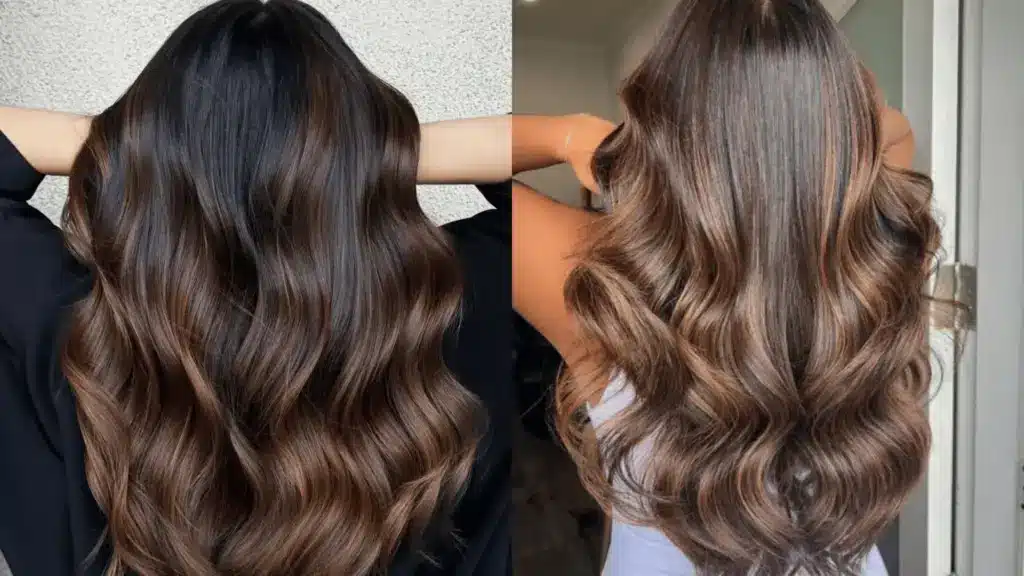
Sometimes the hardest part of changing your hair is not picking the color. It is deciding how bold or natural you want the transformation to feel once you leave the salon chair.
Dark hair holds depth and richness on its own, so even small pieces of brightness can completely change the mood, texture, and movement of the entire look.
I’ve been behind enough chairs to know that when a dark-haired client walks in holding two reference photos.
One of soft caramel waves and one of crisp, bright streaks, they’re not asking the same question. They just think they are.
That is where the debate around balayage vs highlights on dark hair becomes so personal.
Getting light to show up, and stay showing up, takes a specific approach. Here’s what you need to know before you book.
What is Balayage on Dark Hair?
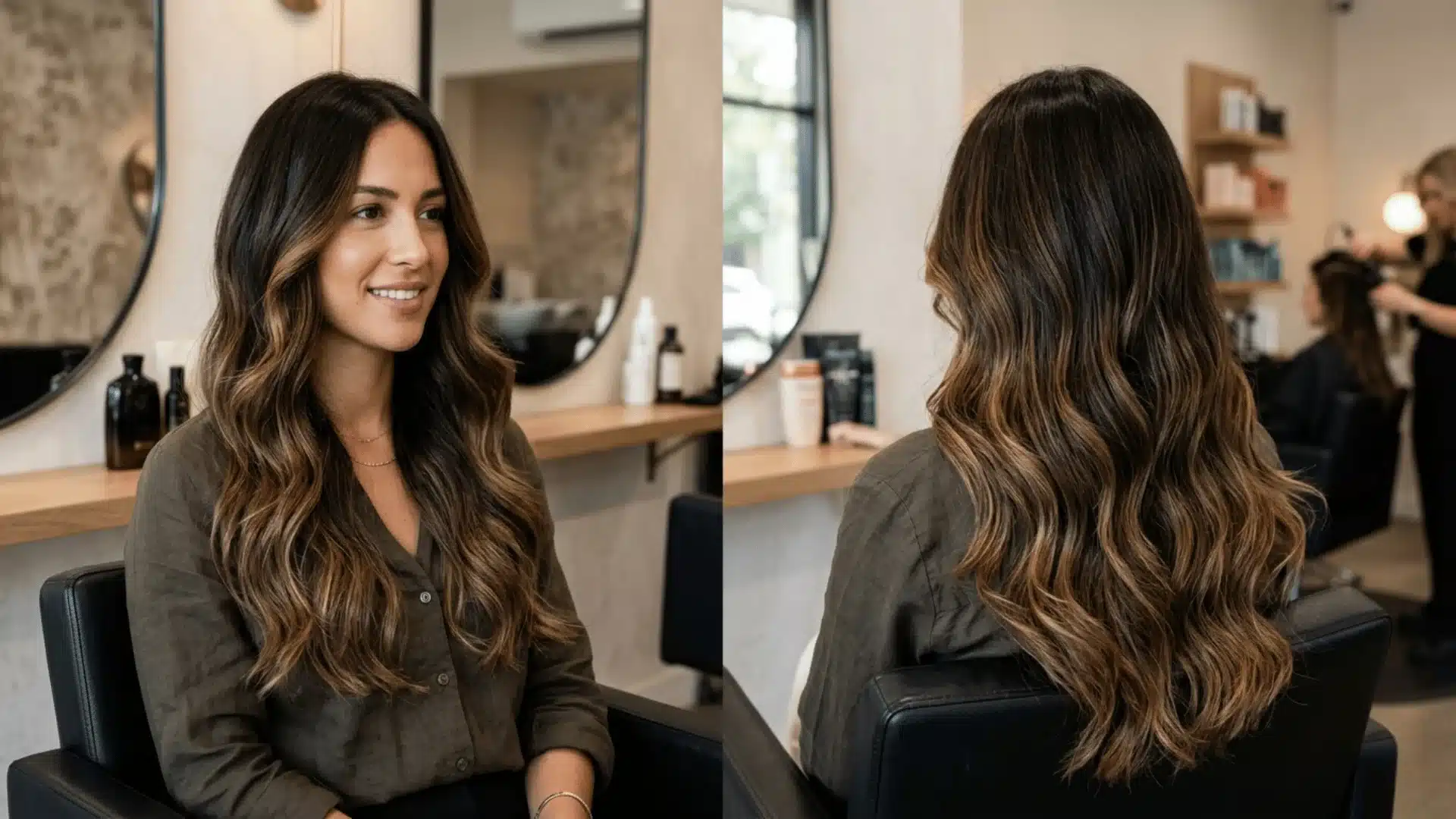
Balayage is a freehand painting technique where a colorist sweeps lightener onto the surface of selected hair sections, starting at mid-length and working toward the ends.
The name comes from the French verb meaning “to sweep,” and that motion is exactly what the result looks like: a soft, graduated shift from your natural dark root to a warmer, lighter tip.
On dark hair, balayage typically produces tones in the caramel, honey, or warm chocolate range.
The technique works with your existing color rather than overriding it, so the contrast is subtle rather than stark.
For dark brunettes or South Asian hair with deep, warm undertones, this often reads as a natural sun-warmed glow.
Because lightener is applied only from mid-lengths down, there’s no hard regrowth line at the root.
How Highlights Transform Dark Hair?

Highlights use foils to separate small sections of hair, apply lightener directly to those sections from root to tip, and then wrap them to process.
The foil traps heat, which helps the lightener lift more effectively and uniformly. The result is a more consistent, structured band of lighter color running the full length of each strand.
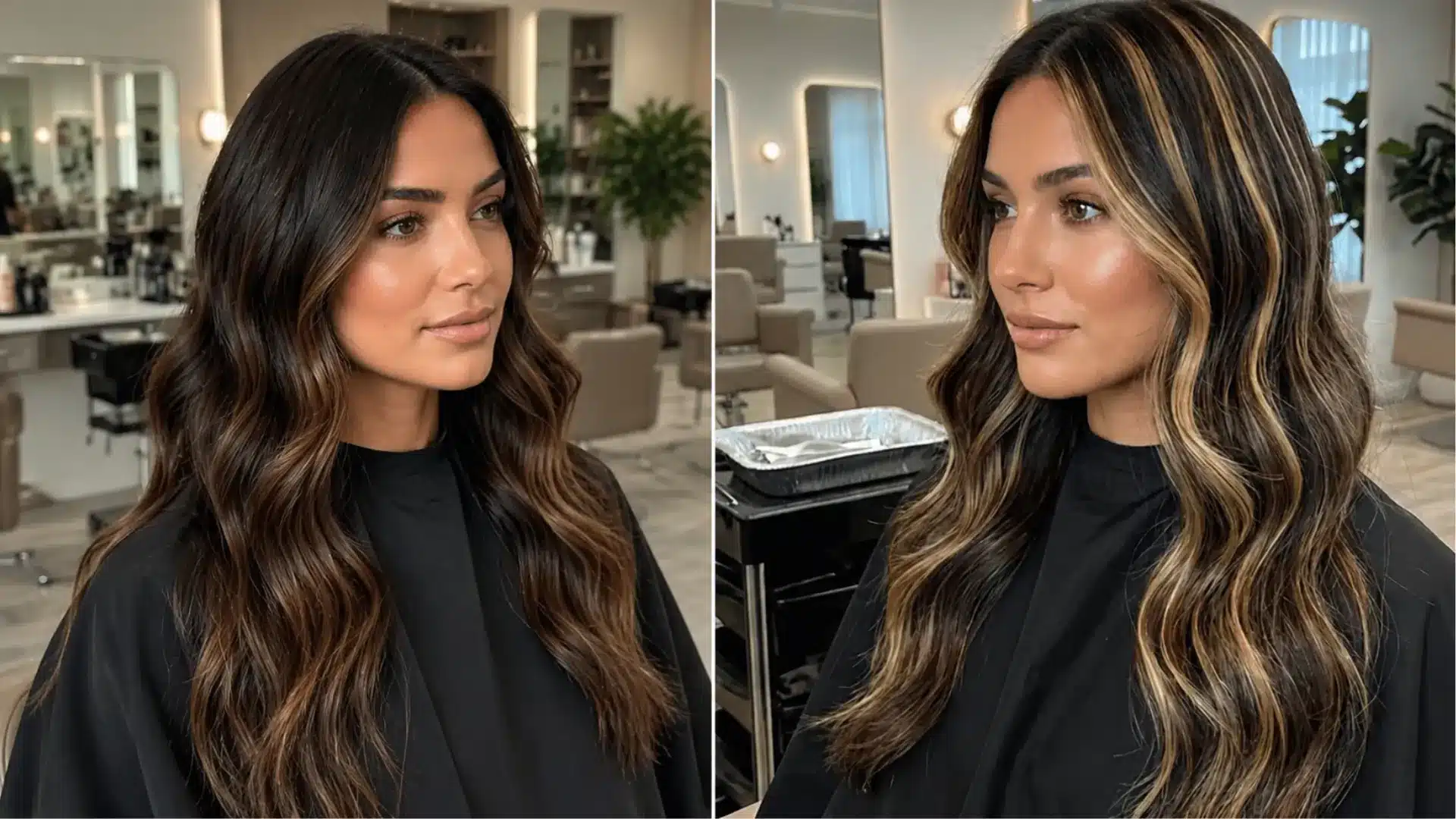
Blonde, ash, or warm highlights against a dark base read dramatically differently than the same colors on a lighter base.
You see the definition clearly, and it reads as an intentional, bold choice.
Dark roots against a significantly lighter highlight can look sharp and unintentional if left too long.
Toning sessions between appointments can help manage brassiness, which is a particular concern when lifting dark pigment aggressively.
The darker the starting point, the more the hair wants to pull warm, orange tones during the lightening process.
Balayage vs Highlights on Dark Hair: At a Glance
Choosing between balayage and highlights on dark hair often comes down to the final look, maintenance level, and how noticeable the color change should be.
| Feature | Balayage on Dark Hair | Highlights on Dark Hair |
|---|---|---|
| Technique | Hand-painted color application | Foil-based sectioned application |
| Final Look | Soft, blended, natural dimension | Bright, structured, noticeable contrast |
| Root Appearance | Seamless grow-out | Visible regrowth lines over time |
| Salon Touch-Ups | Every 3-6 months | Every 6-8 weeks |
| Brightness Level | Subtle to medium brightness | Medium to very bright results |
| Best For | Natural sun-kissed effect | Dramatic color transformation |
| Appearance of Dark Hair | Softer ribbons of color | Defined streaks and brightness |
| Cost Over Time | Higher upfront cost but fewer visits | Lower initial cost but frequent upkeep |
| Works Best On | Wavy, curly, layered hair | Straight or structured hairstyles |
| Popular Shades | Caramel, mocha, honey brown | Blonde, ash, platinum, chunky tones |
Technique and Application: How They Differ for Dark Hair
The difference between these two methods is most visible in the placement and the lift level.
Balayage sits on the surface of the hair, applied by hand with a brush, and concentrates color mid-shaft and lower.
Foil highlights are placed in precise, woven sections and processed under heat from root to tip.
For dark hair specifically, balayage usually requires a developer strength of 20 to 30 volume and lifts hair 2 to 4 shades lighter than the base.
Foil highlights can push higher, sometimes reaching 5 or 6 shades of lift, which is why they’re the better fit if you want a dramatic or platinum result.
If you want more brightness than standard balayage delivers but a softer finish than full foil highlights, foilayage is often where dark-haired clients land.
This kind of choosing the right technique thinking applies to most beauty decisions, not just hair color.
In my experience, thick dark hair almost always needs at least one staging session before reaching a true caramel or honey blonde result.
Hair texture matters here, too. Thick hair benefits from foil highlights because the defined sections cut through density and create movement.
Finer dark hair often responds better to balayage, where a lighter touch prevents over-processing thin strands.
Maintenance Differences Between Balayage and Highlights
Balayage requires fewer visits because the color starts at the ends and fades gradually. Most dark-haired clients return every 3 to 5 months for a refresh.
Between appointments, a color-safe shampoo and a weekly hydrating mask are the main upkeep steps. Purple shampoo helps keep light ends from going brassy, especially if your highlights lean ash or cool.
Foil highlights are a bigger time commitment. Regrowth on dark hair is clearly visible by the 6-week mark, and most clients are back in the chair by weeks eight to ten.
Add toning sessions on top of that if warmth creeps in between visits.
For anyone thinking long-term about color changes and grow-out, highlights can make the transition look softer and more natural over time.
Cost varies by salon, stylist experience, and hair length, but balayage tends to run at or slightly above the price of full foil highlights because it requires more time and a higher degree of hand skill.
Partial highlights are usually the least expensive entry point.
For at-home upkeep, both techniques benefit from bond-building treatments. Products using bond-repair technology help offset the structural damage that comes with any lightning strike.
Which Technique Causes More Damage?
Before booking balayage or highlights on dark hair, it helps to understand how bleaching affects hair strength, porosity, and long-term maintenance needs.
- Dark Hair Needs Stronger Lightening: Dark hair contains deeper natural pigment, so bleach must work harder and longer to create noticeable lighter shades.
- Bleaching Weakens Hair Structure: Lightener opens the cuticle and breaks down protein bonds, which can reduce elasticity and make strands feel dry or fragile.
- Porous Hair Fades Faster: After bleaching, hair becomes more porous, causing toner to wash out quickly and brassiness to return between salon visits.
- Balayage Limits Overall Exposure: Balayage keeps bleach away from the scalp and roots, treating fewer sections of hair during each appointment.
- Foil Highlights Create More Intense Processing: Full foil highlights lighten strands from root to tip, giving brighter results but increasing total chemical exposure on dark hair.
One practical note: get a professional consultation before booking a big lift. A colorist who knows your hair history, texture, and condition can tell you whether you need a single session or a staged process to reach your goal safely.
Can You Combine Balayage and Highlights?
Yes, balayage and highlights can absolutely be combined, and many stylists use both techniques together to create more dimension on dark hair.
This combination is often called “foilyage,” where freehand balayage is paired with foil highlights to achieve both softness and brightness at the same time.
Balayage alone gives a blended, natural finish, while highlights add stronger lift and more noticeable contrast.
Mixing the two techniques helps dark hair look brighter without losing depth near the roots.
It also allows stylists to customize the placement depending on hair thickness, texture, and face shape.
For example, highlights may be used around the face for brightness, while balayage creates softer ribbons through the rest of the hair.
This approach works especially well for people who want a noticeable color change without harsh lines or constant salon maintenance.
The final result usually looks more dimensional, balanced, and natural than using just one technique alone.
Balayage vs Highlights on Dark Hair: Which is Better?
Balayage on dark hair is the right starting point if you want subtle warmth, a soft grow-out, and fewer appointments.
The result looks intentional but low-effort, which is the whole point.
Highlights are the better fit if you want clear, defined streaks, significant brightness around the face, or a more dramatic shift from your natural base.
They suit clients who don’t mind a regular maintenance schedule and want a consistent, polished look rather than a lived-in one.
The answer comes down to four things: How much contrast do you want, how often will you maintain it, how healthy is your hair currently, and does your lifestyle have room for regular salon visits?
If you’re not sure, foliage is worth asking about. It gives more lift than balayage and a softer finish than full foils, and many dark-haired clients find it the better middle ground once they try it.
One thing worth noting: the idea that highlights are inherently too damaging for dark hair, and balayage is always the safer choice, isn’t quite accurate. Done well, with proper bond-building products and a realistic timeline, foil highlights on dark hair can be healthy and beautiful. The technique matters less than the colorist’s judgment and the at-home care that follows.
Conclusion
Both balayage vs highlights on dark hair can look genuinely good.
What separates a great result from a frustrating one isn’t usually the technique; it’s whether the choice matched your actual lifestyle and maintenance habits.
If you want soft warmth that grows out gracefully and you’d rather space out your salon visits, balayage is likely your fit.
If you want real brightness, defined contrast, and you’re comfortable with a regular schedule, go with highlights. And if you want some of both, ask about foliage at your next consultation.
Before you book, have an honest conversation with your colorist about your hair history, how much lift is realistic in one session, and what your at-home routine actually looks like.
That conversation will do more for your result than any technique comparison.
Drop a comment below with your current hair color and what look you’re going for. I’m happy to help you think it through.
Frequently Asked Questions
Can Weather and Water Affect Balayage or Highlights on Dark Hair?
Yes, environmental factors like hard water, humidity, chlorine, and sun exposure can fade color faster and increase brassiness in dark hair, making regular toning and color-safe hair care more important.
Can I Go from Highlights Back to Balayage without Damaging My Hair?
Yes, but it depends on how light your highlights are and how much history your hair has. A colorist will likely need to assess whether your hair can handle more lightening to blend or refresh the color. In some cases, allowing highlights to grow out first is the smarter step before transitioning to a balayage placement.
Will Balayage on Very Dark (black) Hair Look Different from On Dark Brown Hair?
It will. Black hair has a much denser base of natural pigment, so lightener lifts more slowly, and the range of tones you can reach in one session is narrower. Balayage on black hair often produces warm amber or copper tones rather than caramel or blonde, which can still look beautiful, but is a different result.
Can I Get Balayage or Highlights on Previously Colored Dark Hair?
Yes, but previous color history matters. If you have layered color builds, box dye, or treatments like keratin or relaxers in your hair, the way your hair lifts can be uneven or unpredictable.