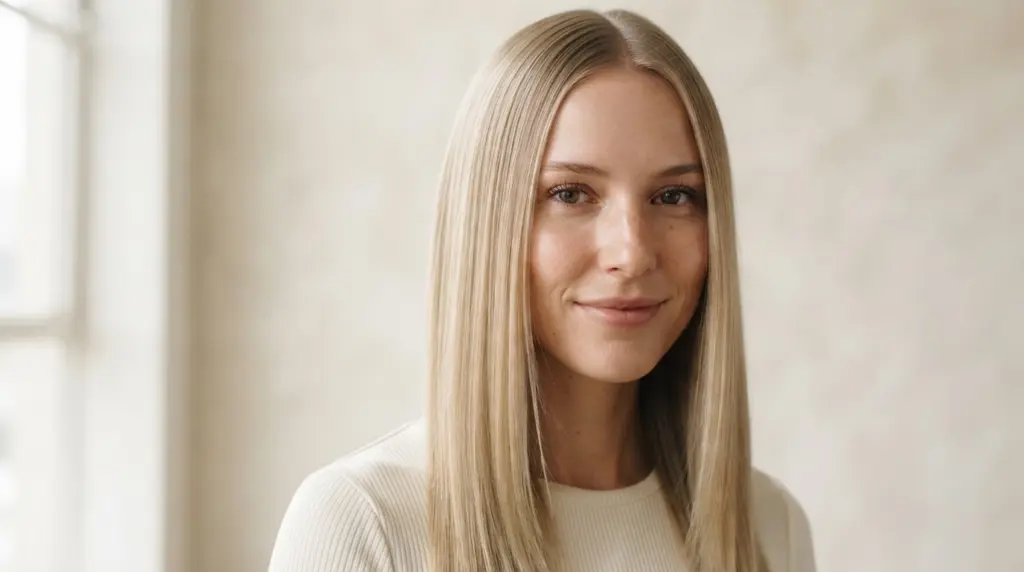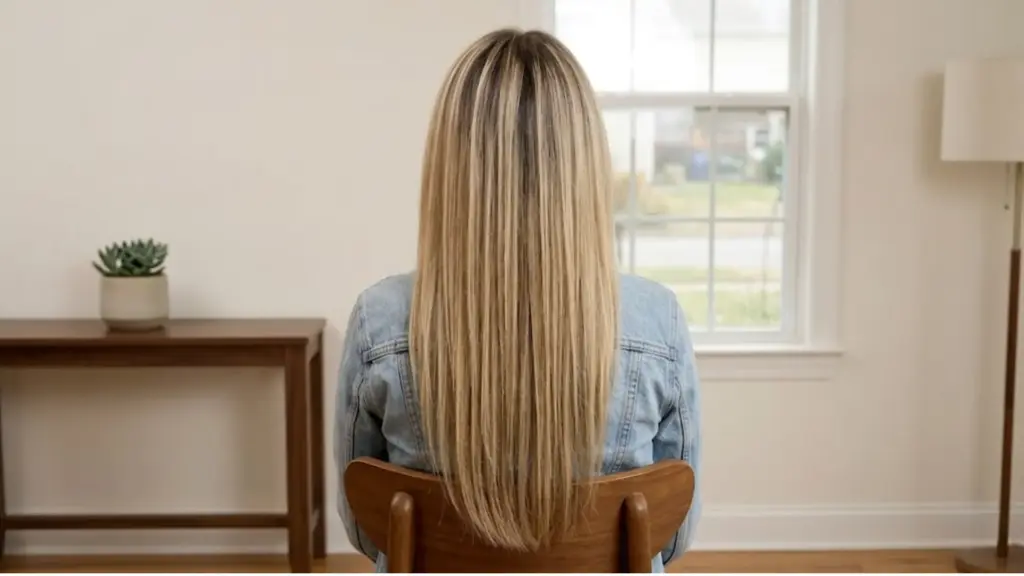
A lot of people do not realize their hair color has changed until someone points it out or an old photo suddenly makes it obvious.
The bright blonde hair from childhood slowly darkens, softens, and sometimes turns fully brown over the years.
I still remember a client sitting in my chair and pointing to her roots in disbelief at the same situation.
That moment often leads to the question: Why does blonde hair turn brown? It can feel strange because the change occurs naturally, without any major event triggering it.
In this blog, you will get to know the scientific explanations and reasons why it happens, and hair care habits to prevent the hair darkening.
Understanding Changes in Hair Pigment
Natural hair color comes from pigment-producing cells called melanocytes found inside hair follicles. These cells produce melanin, the pigment that determines hair shade.
There are two main types of melanin: eumelanin, which creates brown and black tones, and pheomelanin, which creates yellow and red tones.
Blonde hair contains very low levels of eumelanin, which is why it appears lighter than brown or black hair. As the body grows, genes controlling pigment production can become more active over time.
During puberty, hormonal changes, such as increased testosterone and estrogen levels, may stimulate melanocytes to produce more eumelanin.
This often causes blonde hair to slowly darken into dirty blonde or brown shades during the teenage years. Many children naturally lose their bright blonde hair as part of normal genetic and hormonal development.
Why Does Blonde Hair Turn Brown?
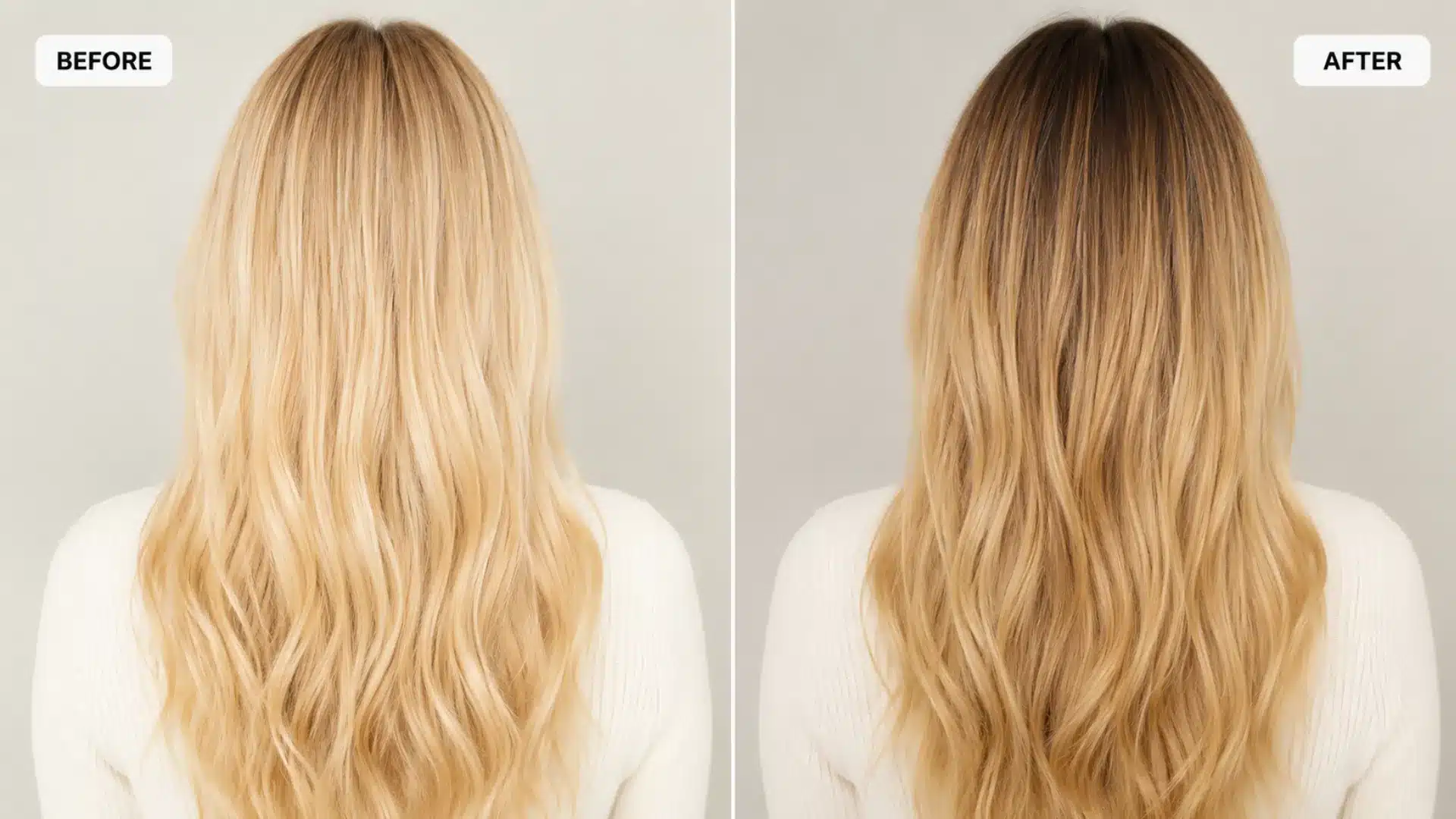
Blonde hair can change over time for several different reasons, and most of them are completely natural. Understanding these causes can help explain why blonde hair does not always stay the same shade forever.
1. Genetics and Family History
Genes strongly influence natural hair color and how it changes over time.
Many children are born with light blonde hair because their bodies produce very little dark pigment early in life.
As they grow older, certain genes may trigger higher eumelanin production, causing the hair to darken naturally. This pattern often runs in families.
For example, a parent who had blonde hair as a child but brown hair as an adult may pass down the same trait. In many cases, darker hair later in life is simply part of a person’s genetic makeup.
2. Hormonal Changes
Puberty is one of the most common times when blonde hair begins to darken because hormone levels rise quickly during the teenage years.
Pregnancy, stress, and other hormonal shifts may also change hair color in some people.
Hormones can stimulate melanocytes, the cells responsible for producing melanin, which may increase the dark pigment in the hair. Some changes are temporary, while others last permanently.
The relationship between hormones affecting hair growth goes deeper than most people expect, and it does not stop at color alone.
3. Aging and Natural Hair Maturation
Hair color naturally changes as the body matures. Blonde hair is most common during childhood because children often produce lower amounts of dark melanin.
As the body develops through adolescence and early adulthood, melanin production may increase slowly.
This can turn bright blonde hair into dirty blonde, dark blonde, or light brown shades over time.
The process usually happens gradually rather than overnight.
4. Sun Exposure and Environmental Factors
Sunlight can temporarily make blonde hair appear lighter because UV rays break down some of the pigment in the hair shaft.
This is why hair often looks brighter during the summer months. When sun exposure decreases, the naturally darker tone may become more noticeable again.
Pollution, chlorine from swimming pools, and hard water minerals can also affect how blonde hair looks.
These external factors do not change the melanin inside the follicle, but they can coat the hair shaft and make it appear dull or darker than it actually is.
5. Hair Products and Mineral Buildup
Certain hair products can leave buildup on blonde hair over time.
Residue from shampoos, conditioners, styling sprays, and oils may coat the hair, making it appear darker or less vibrant.
Hard water is another common cause because minerals like iron and calcium can collect on the hair shaft. This buildup sometimes creates dullness or brassiness, especially in lighter hair colors.
Brassiness is different from natural pigment change because it affects the surface appearance rather than the hair’s actual melanin levels.
At What Age Does Blonde Hair Usually Turn Brown?
Blonde hair can begin turning darker at different ages, but the change usually starts between ages 7 and 15.
Many children with very light blonde hair notice it becoming darker during late childhood or early puberty as hormone levels and melanin production increase.
For some people, the shift happens slowly through the teenage years and continues into their early twenties.
Bright blonde hair may gradually become dark blonde, dirty blonde, or light brown over time.
Some people keep their blonde hair well into adulthood. Others see a noticeable shift much earlier. Both are normal outcomes that depend almost entirely on genetics.
Real User Experience with Hair Darkening
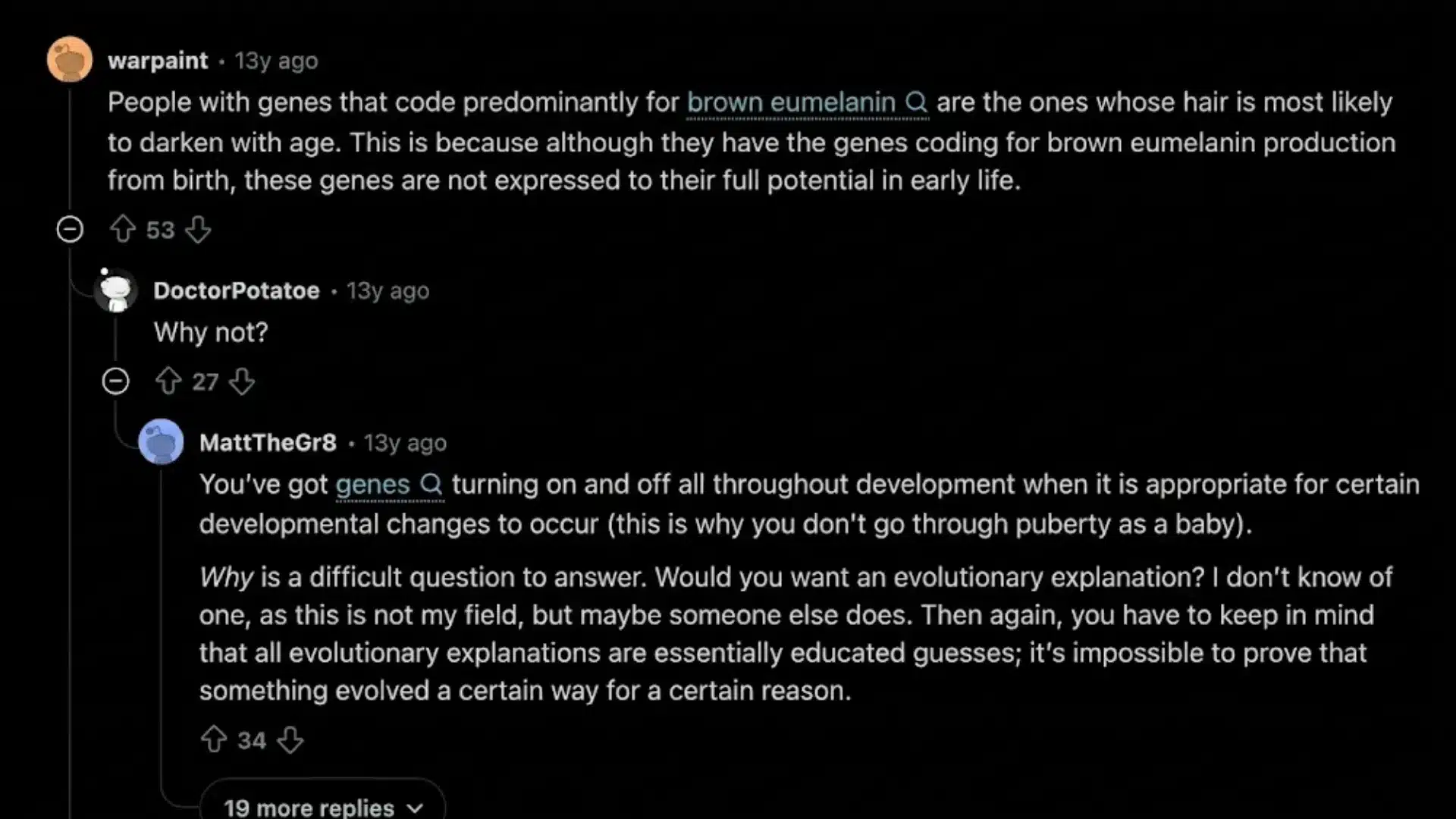
Many Reddit users shared personal stories about starting life with bright blonde or even red hair, only to notice it turning darker over the years.
One popular explanation mentioned in the discussion was that genes responsible for brown eumelanin become more active with age.
In simple terms, the pigment for darker hair may already exist from birth, but increases as the body develops.
Several users also pointed out that sun exposure can lighten existing hair, though it does not change the natural color growing from the roots.
A few people described dramatic shifts from platinum blonde to dark brown by adulthood, while others experienced changes from black to blonde and then darker shades later.
Overall, the Reddit conversation shows that changing hair color during childhood and adulthood is more common than many people think and is largely tied to genetics and natural development.
Temporary Darkening vs Permanent Color Change
Not all blonde hair darkening means the natural hair color has permanently changed. Knowing the difference can help determine whether the change is temporary or part of the natural aging process.
| Criteria | Temporary Darkening | Permanent Color Change |
|---|---|---|
| Main Cause | Product buildup, hard water, chlorine, or pollution | Increased melanin production due to genetics and aging |
| Where the Change Happens | On the outer layer of the hair | Inside the hair follicle |
| Common Appearance | Hair looks dull, brassy, or slightly darker | Hair gradually changes from blonde to darker blonde or brown |
| How Fast Does It Happen | Can happen quickly within days or weeks | Usually develops slowly over months or years |
| Can It Be Reversed? | Yes, often improves with clarifying shampoo or a purple toning treatment | Usually permanent naturally |
| Most Common Age | Any age | Often begins between childhood and early adulthood |
Hair Care Habits That Prevent Blonde Hair from Turning Brown
Some habits reduce dullness, brassiness, and buildup that may make blonde hair appear darker than it really is. Consistent care also helps maintain shine and softness.
- Use Purple Shampoo: Helps reduce yellow and brassy tones that can make blonde hair look darker or dull.
- Wash Hair With Filtered or Soft Water: Reduces mineral buildup caused by hard water, which may affect the appearance of blonde hair.
- Protect Hair From UV Exposure: UV protection sprays help prevent dryness and color fading caused by long sun exposure.
- Use Clarifying Shampoo Occasionally: Removes product residue, chlorine, oil, and pollutants that collect on the hair shaft.
- Limit Heat Styling: Excessive heat can lead to hair loss, dry out blonde hair, and make it lose brightness over time.
- Avoid Heavy Hair Products: Thick creams and oils may leave residue that weighs down blonde hair and reduces shine.
- Rinse Hair After Swimming: Chlorine and pool chemicals can affect the tone and texture of blonde hair.
- Deep Condition Regularly: Keeps blonde hair smooth, healthy, and reflective, helping lighter tones appear more vibrant.
- Trim Hair Frequently: Removing damaged ends helps hair look fresher and brighter overall.
- Eat a Balanced Diet: Healthy nutrients support overall hair health and help maintain natural shine and strength.
Conclusion
Hair color is not always permanent, especially for natural blondes.
A shade that starts out bright blonde in childhood can slowly shift into dark blonde or brown over the years because the body changes with age.
That is why the question of why blonde hair turns brown is so common among people who notice their hair looking different during their teens or early adulthood.
Genetics usually control the process, but hormones, sunlight, and daily hair care habits can also affect how blonde hair looks over time.
In many cases, the change happens so gradually that people barely notice it until they compare old photos.
Did your blonde hair change as you got older? Share your story, age, or experience in the comments below because many readers can relate to the same transition.
Frequently Asked Questions
Does Cutting Hair Make Blonde Hair Grow Back Darker?
No, haircuts do not change natural pigment production. Hair may seem darker after a cut because healthier ends reflect light differently, making the color appear richer or more even.
Why Do Some Siblings Have Different Blonde Shades?
Siblings inherit different combinations of genes from their parents. One sibling may keep lighter blonde hair longer, while another develops darker tones earlier because of different genetic traits.
Is Ash Blonde More Likely to Turn Brown?
Ash blonde hair already has cooler, slightly darker undertones, so the shift toward brown shades may appear more noticeable than in very light golden blonde hair.