Most men don’t notice they’re losing their hair until the damage is already visible.
A photo from the wrong angle, harsh bathroom lighting, or a quick glance at the crown can suddenly reveal thinner hair, receding temples, and a hairstyle that no longer works.
The good news? Thinning hair doesn’t have to make you look older. The right haircut can create the illusion of fuller, thicker hair while sharpening your overall appearance.
As a barber, I’ve seen countless men ask for cuts that make their hair “look thicker.” But the real difference comes from choosing a style that works with thinning hair instead of fighting it.
In this blog, we’ll cover the best hairstyles, grooming tips, and styling techniques to help thinning hair look fuller, cleaner, and more confident.
What Makes a Haircut Good for Men with Thinning Hair?
A haircut for thinning hair works when the structure of the cut does the heavy lifting, not the styling product. The shape you choose either draws attention toward the scalp or pulls the eye away from it.
Shorter, more uniform lengths reduce contrast between thinning spots and the rest of the hair, while well-placed weight on top can create the appearance of density without any product.
The goal is architectural: build a silhouette that feels intentional. Fine hair and thinning hair are two different things. Fine hair refers to the strand diameter.
Thinning hair means fewer strands overall, or strands that have miniaturized. The right cut addresses whichever applies to you.
Best Hairstyles for Men with Thinning Hair
Thinning hair does not limit great style options, and the right haircut can add structure, texture, and confidence while making hair appear fuller and more balanced.
1. Buzz Cut
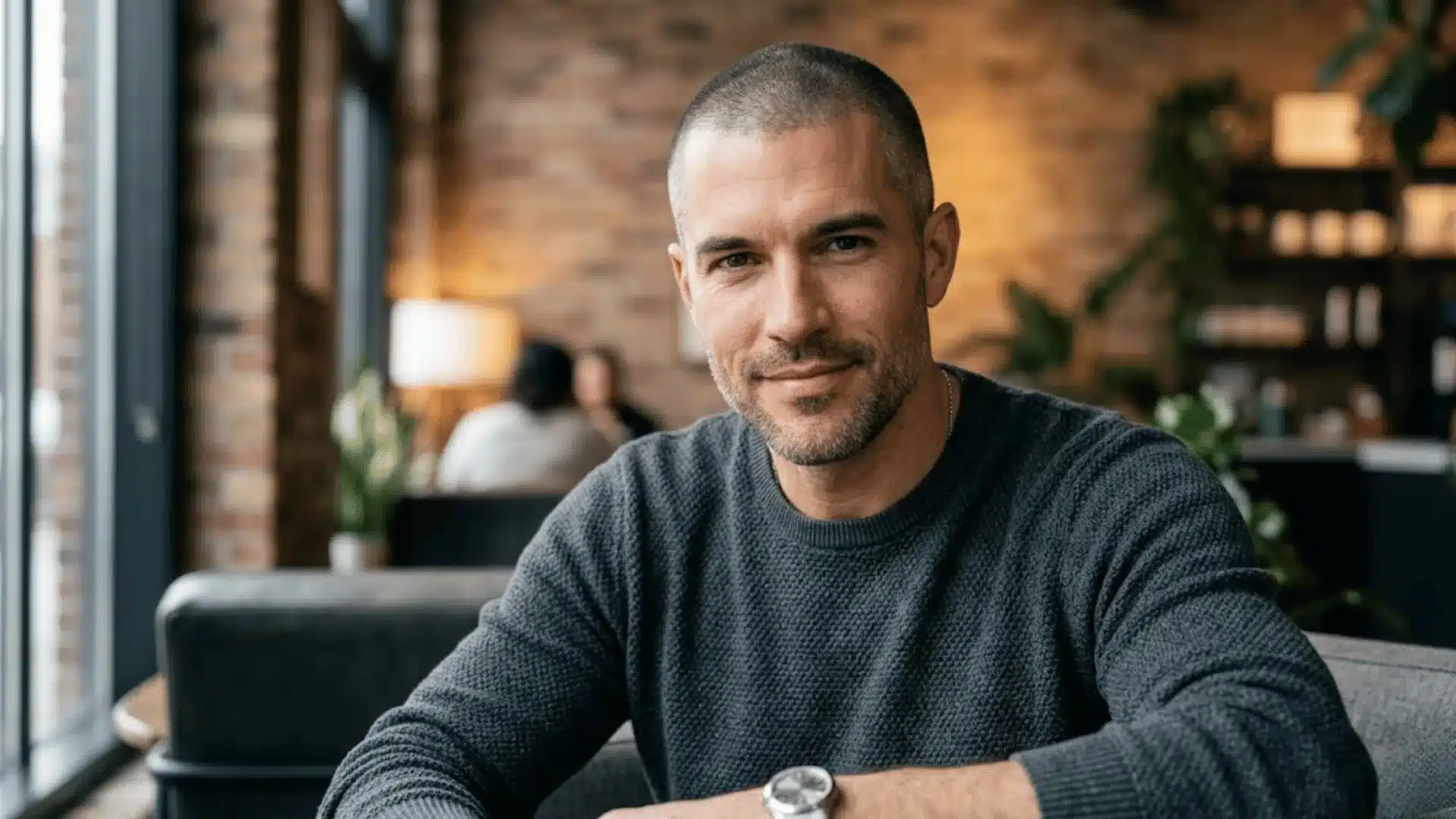
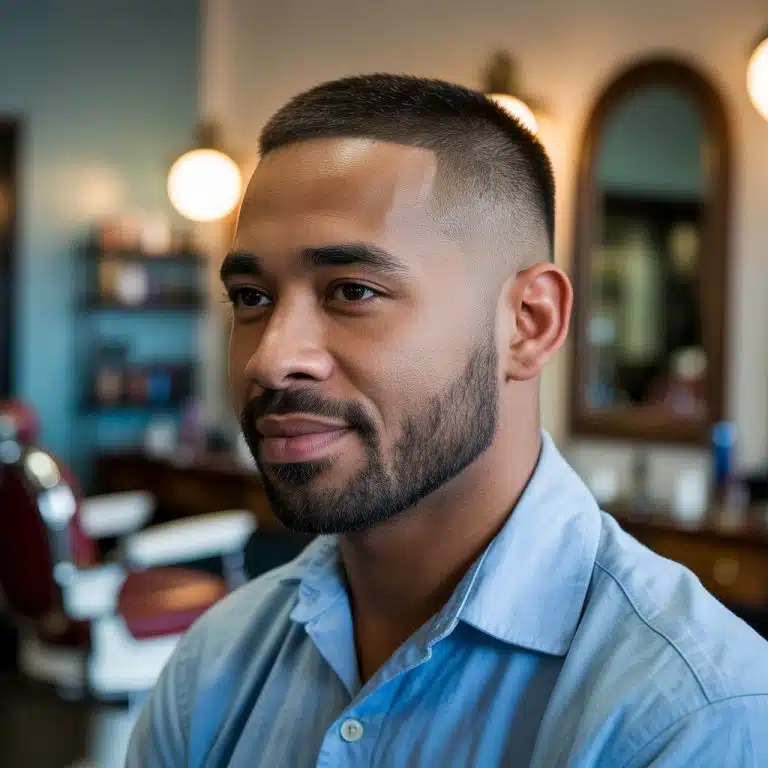
The buzz cut is the most direct approach to thinning hair. By reducing all hair to a uniform short length, it removes contrast between thicker and thinner zones entirely.
There are no patches, no see-through spots under bright light. The scalp shows slightly but evenly, which reads as a style choice rather than a sign of loss.
Pair it with a beard to shift visual weight toward the jaw. That combination is genuinely good-looking, not a workaround.
Best For: Advanced thinning across multiple areas where an ultra-short, uniform look creates a clean and intentional appearance.
2. Crew Cut
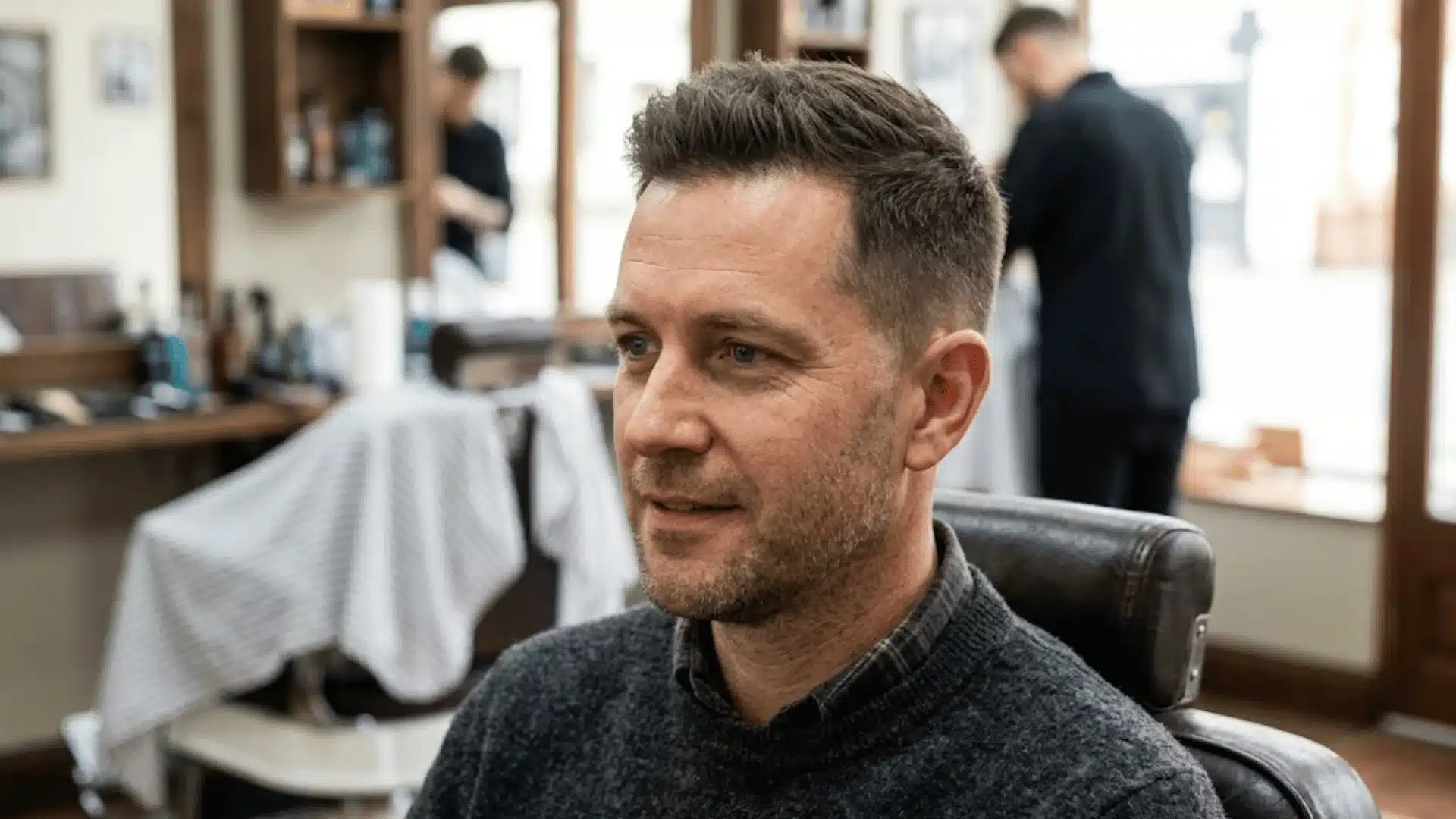
The crew cut leaves more hair on top than a buzz cut, with tapered sides and back.
The top retains enough length to style forward or upward, which is useful for mild to moderate thinning at the temples or crown.
Tapered sides reduce bulk where you do not need it, while the weight on top fills the area where coverage matters most. A matte clay on the top section adds texture and thickness without shine.
Best For: Men wanting a classic haircut that subtly adds structure while maintaining enough length for everyday styling.
3. Textured Crop
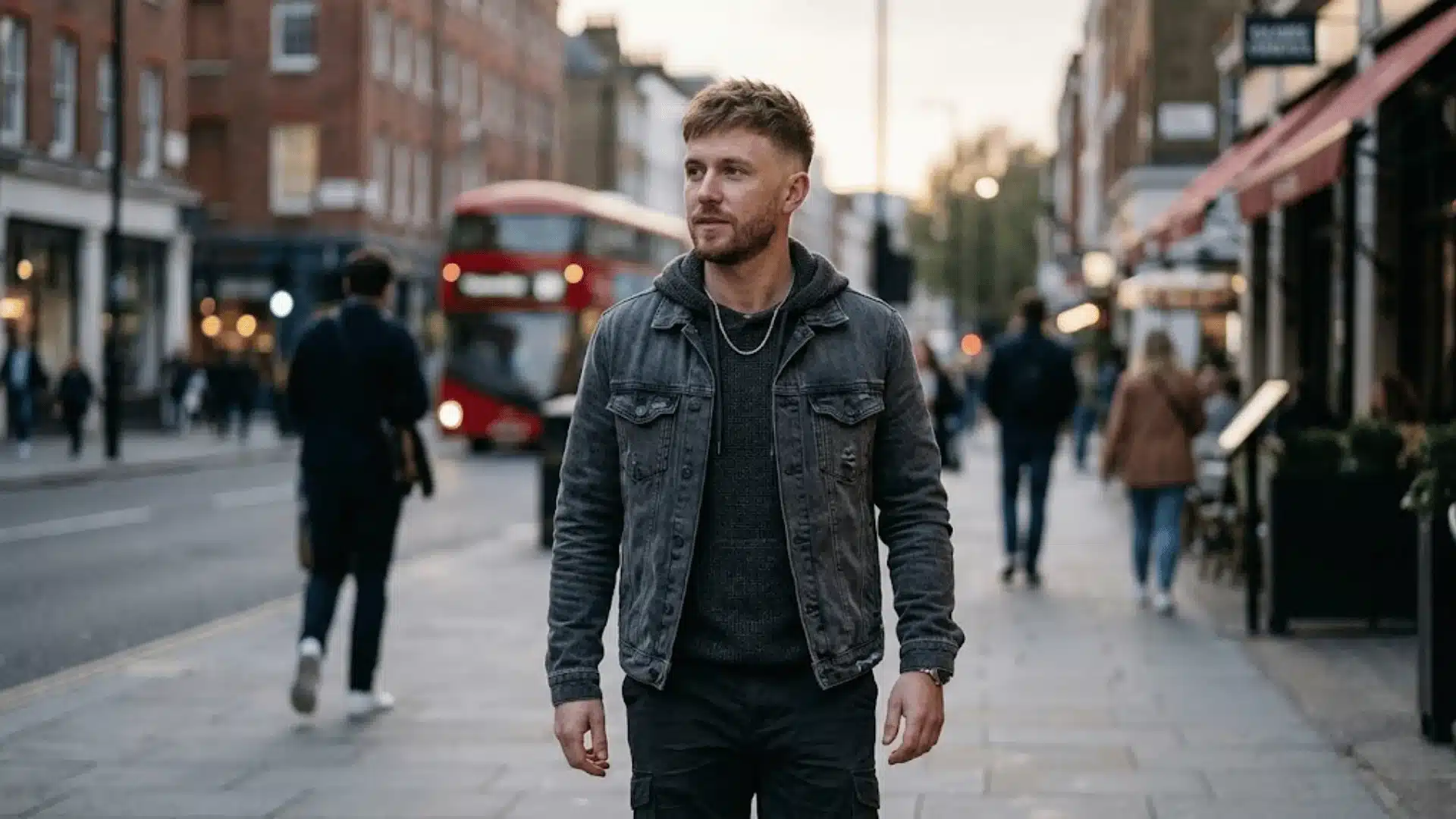
The textured crop concentrates weight at the front and top, with closely cropped sides. Choppy layers create movement that reads as fullness, even when individual strands are fine or sparse.
Styling forward covers a receding hairline naturally. I find this cut useful for men with temple thinning who want something current without overcomplicating the style.
Ask your barber for textured ends rather than a blunt fringe; it sits more naturally on thin hair.
Best For: Fine, lifeless hair that needs movement and separation to create a naturally fuller visual effect.
4. Comb-over Fade
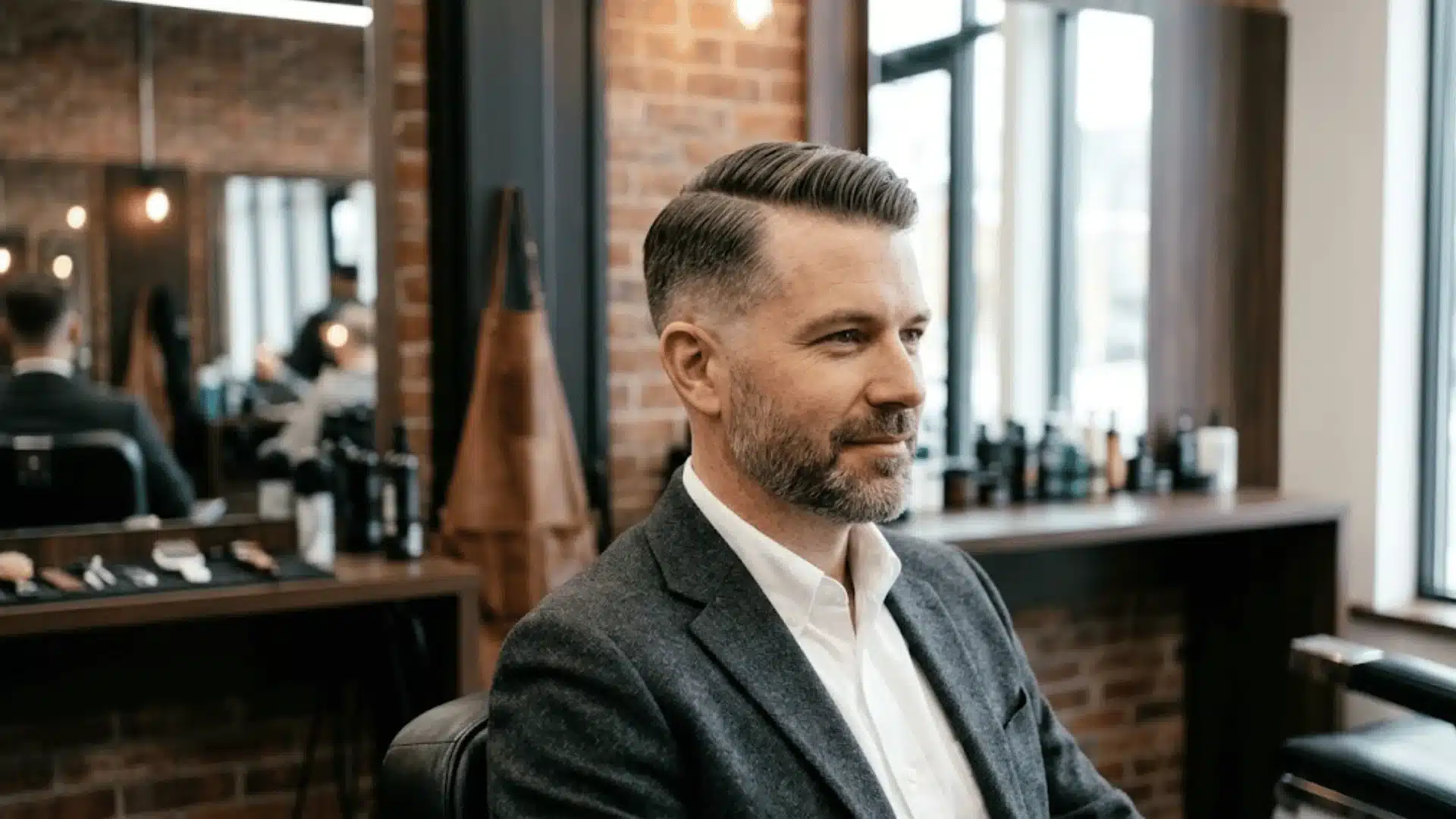
The comb-over fade is one of the most requested balding haircuts for thin-haired men who want to keep some length.
Hair stays longer on one side of the top and combs across thinner areas, while faded sides create a clean, structured outline. The fade reduces bulk at the sides, so the top looks fuller by comparison.
A mid fade with a natural side part is the most wearable version for everyday settings. If a cleaner cut is the goal, types of fade haircuts can help narrow the options.
Best For: Professionals seeking a modern, polished haircut that blends contemporary style with strategic coverage.
5. Side Part with Taper

A clean side part with a low taper is a timeless haircut for men with thinning hair on the crown or hairline.
The part adds direction and volume to the top, while the tapered sides keep the overall shape structured.
Slightly longer hair on top works in your favor here: the weight falls to one side and creates natural coverage without effort. A taper grows out more gracefully than a sharp fade, which matters between barber visits.
Best For: Formal workplaces where a refined, timeless haircut is preferred over trend-driven styles.
6. High and Tight
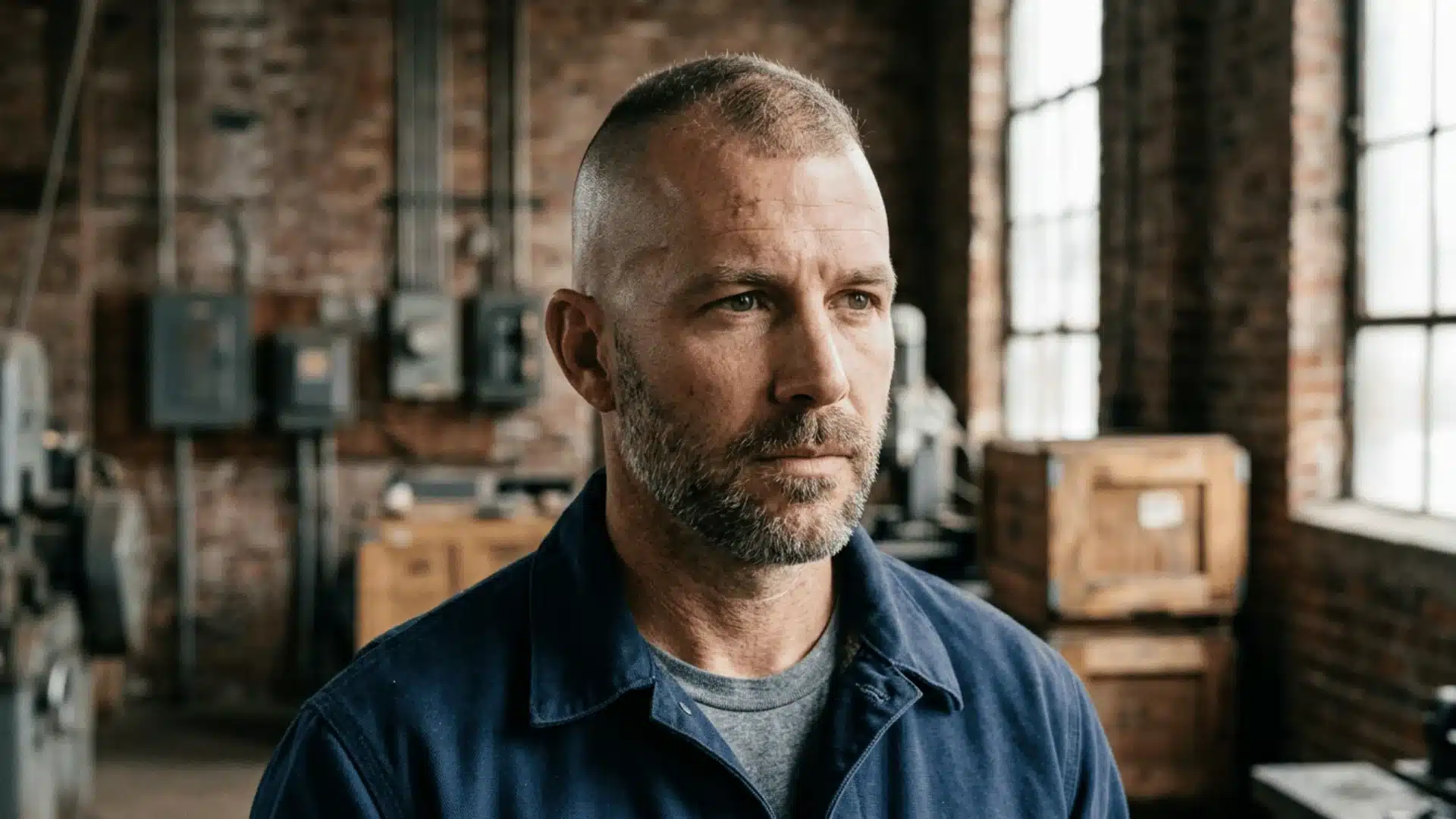
The high and tight shaves the sides and back very close, leaving short but visible hair on top. It is a military-inspired style that reads as intentional on men with thinning crowns.
Because the sides are taken down so short, whatever hair remains on top looks dense by comparison.
The silhouette is clean, and the maintenance is simple. Men with oval or square face shapes tend to get the sharpest result with this cut.
Best For: Active lifestyles that demand a sharp, athletic haircut requiring minimal upkeep between cuts.
7. Caesar Cut
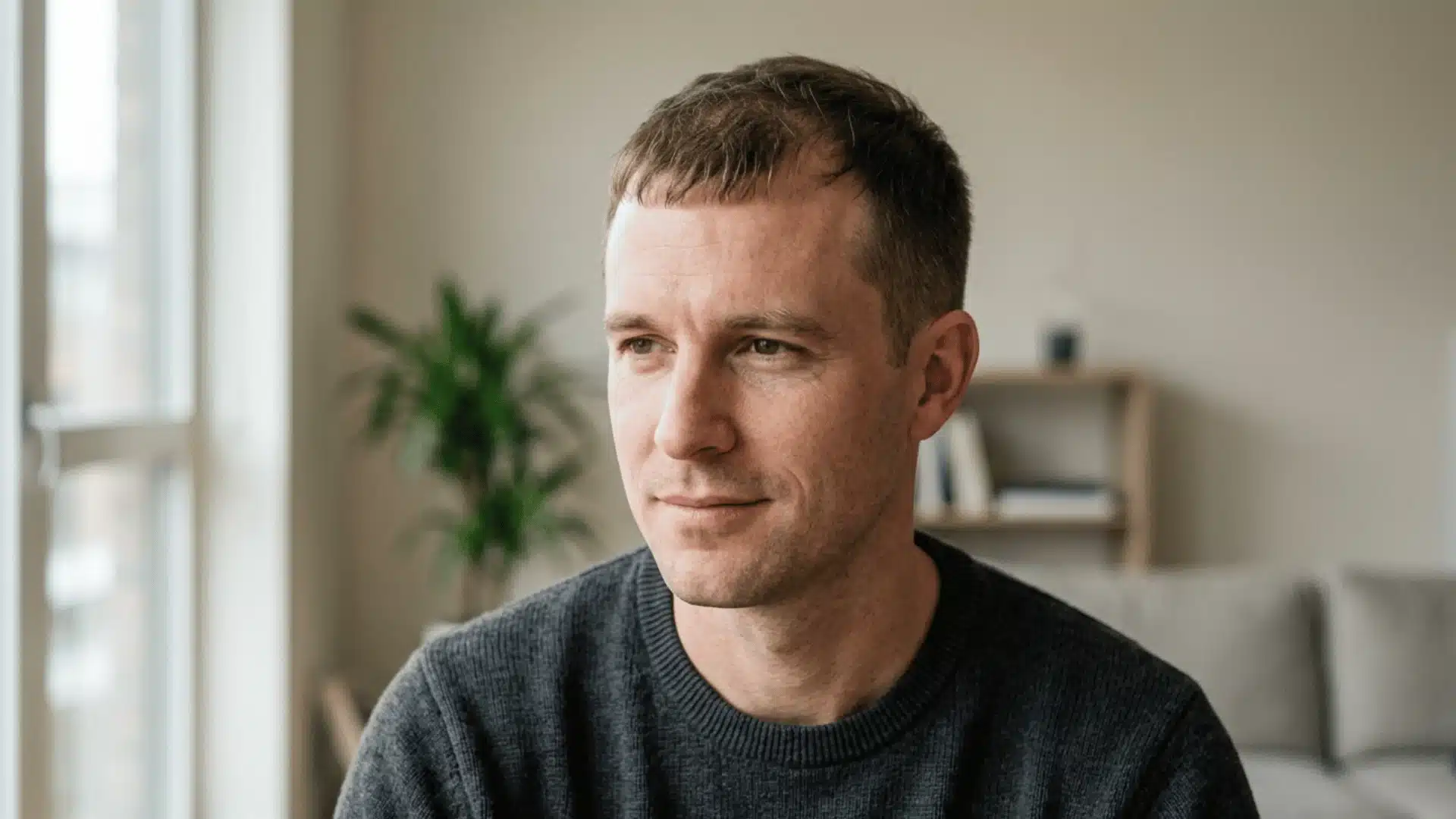
The Caesar cut features a short, flat fringe sitting just over the forehead. It suits men with a receding hairline because the forward-styled fringe draws attention to the front of the face rather than the crown.
Hair is kept at a consistent one to two inches across the top, with shorter sides.
The uniform length avoids the see-through look that longer hair creates on fine strands. It is a low-fuss style that needs very little product to maintain.
Best For: Straight hair types that benefit from a short forward fringe to soften a receding hairline.
8. Undercut with Textured Top
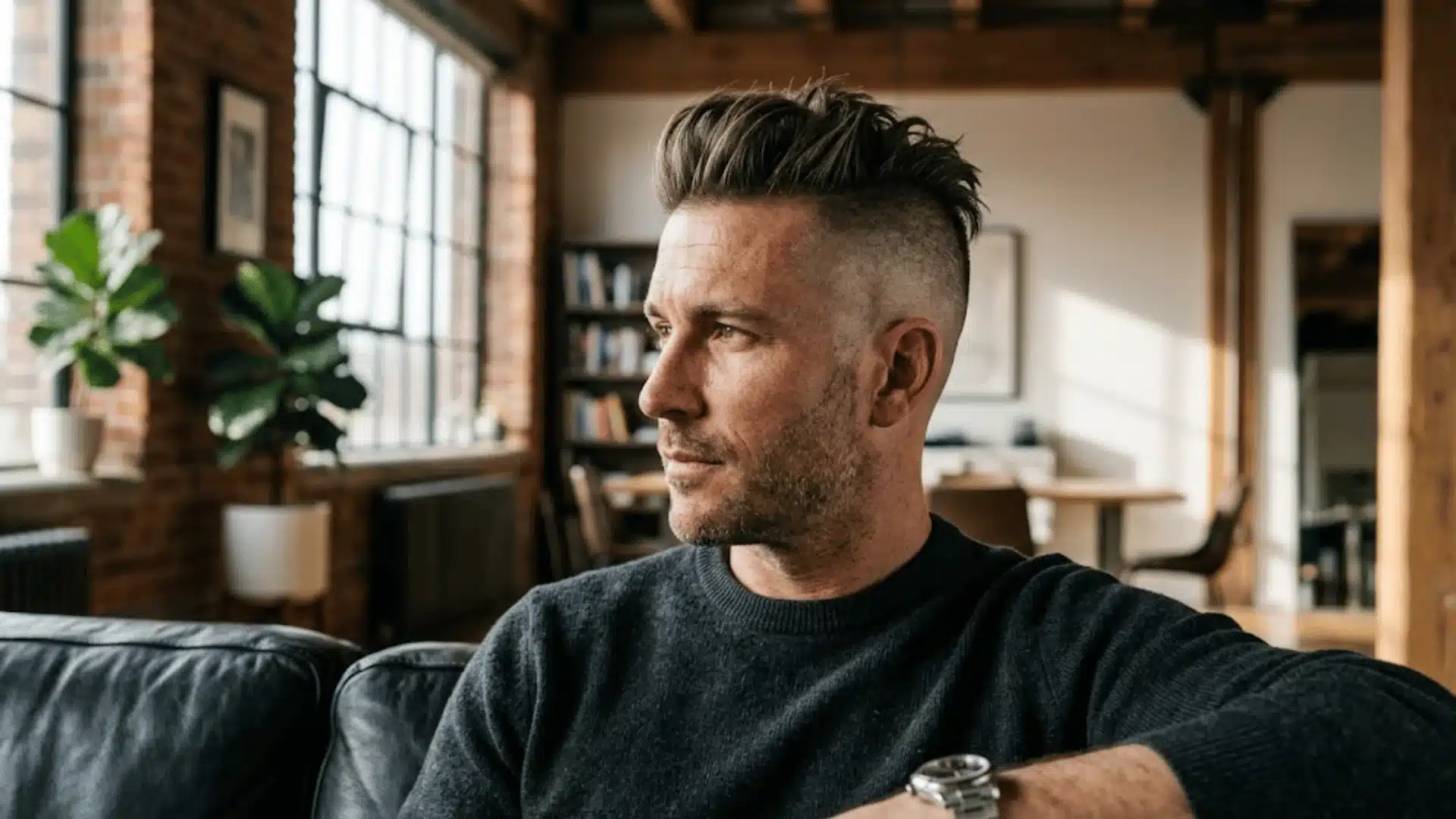
An undercut removes all hair from the sides and back, leaving the top section longer. For thinning hair, this works best when thinning is concentrated at the sides rather than the crown.
A short, textured top with matte-finish fiber or texture powder adds body without revealing scalp. The length difference between the shaved sides and the top reads as a deliberate style choice.
The comparison between skin fade for men and an undercut is worth reviewing before booking.
Best For: Fashion-conscious men who enjoy strong contrast and a more statement-making hairstyle.
9. Slick Back with a Low Fade
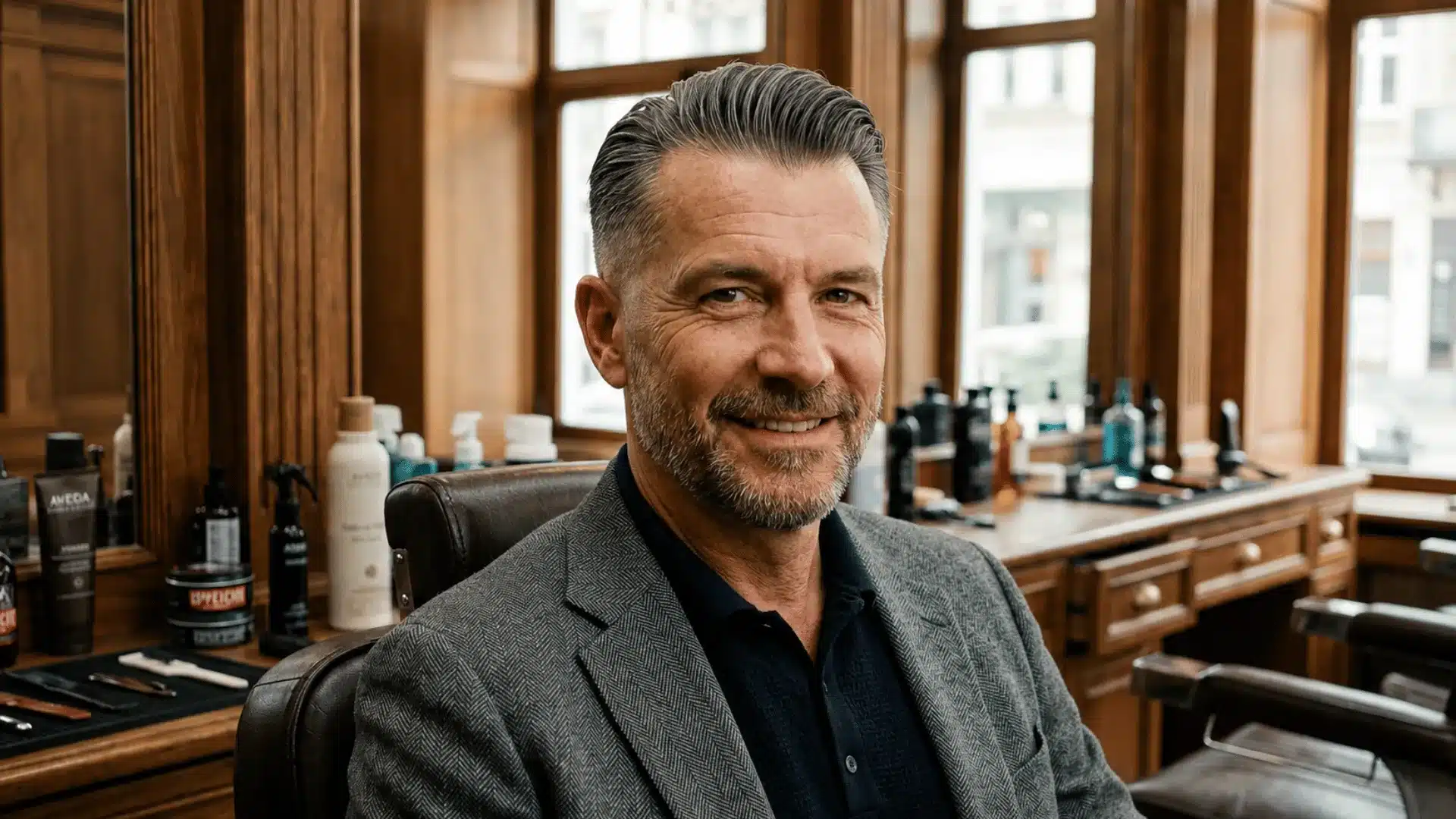
A slick back with a low fade works for men with denser hair at the front that thins toward the crown.
Styling the front section back and upward creates lift and height, drawing the eye toward the forehead and away from the crown. The low fade keeps the overall shape clean.
This is the stronger option when thinning sits in the back half of the scalp. A pre-styling tonic on damp hair before blow-drying maximizes lift without weighing strands down.
Best For: Strong frontal density paired with thinning toward the back of the scalp.
10. Textured Quiff
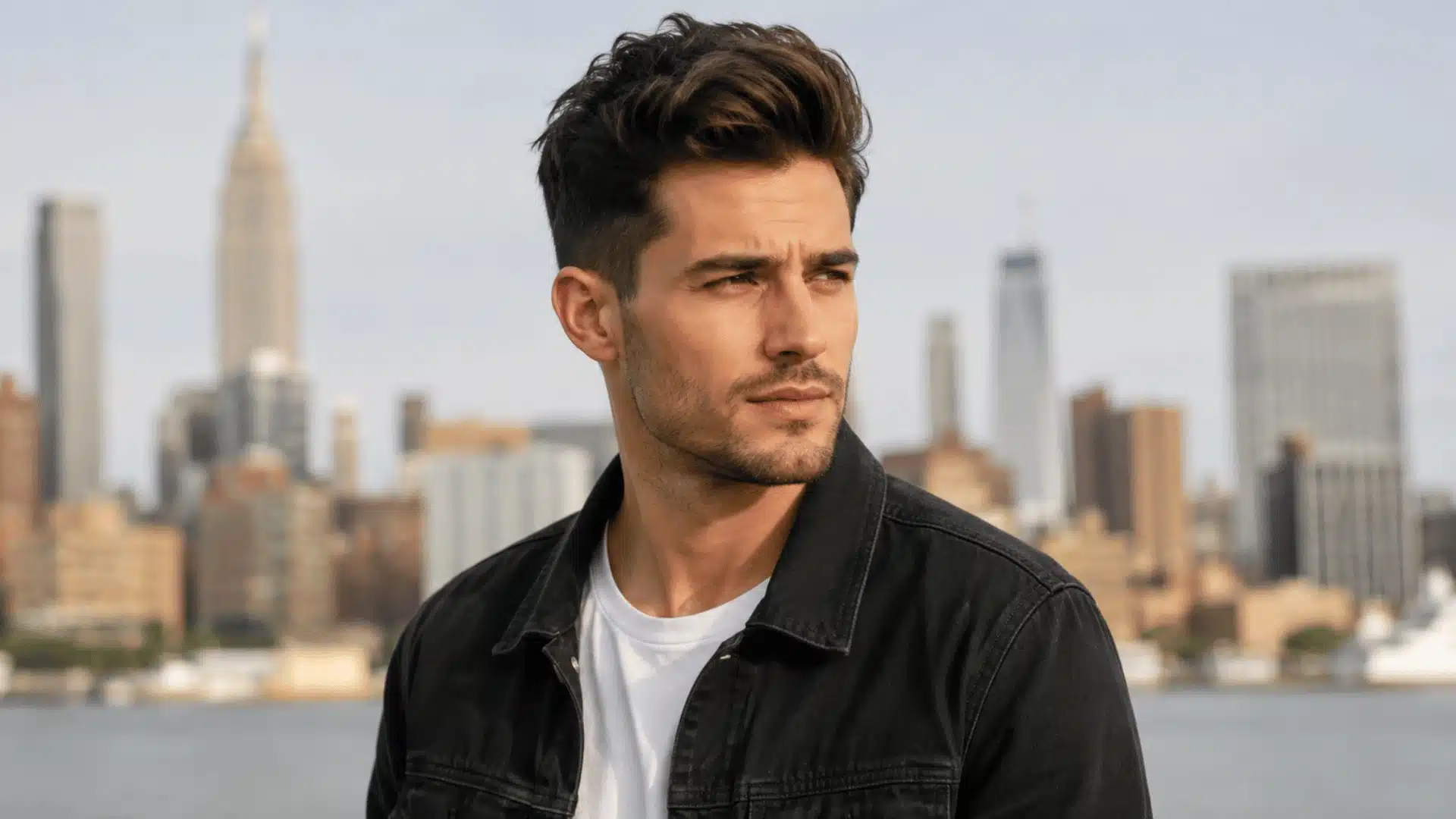
A textured quiff suits men with mild thinning who want height on top. Hair is blow-dried upward and slightly forward, creating a lifted front section that adds visual volume.
Shorter sides keep the proportions balanced. It is less structured than a slick back and suits a casual everyday style. Mousse or a lightweight volumizing tonic on damp hair before blow-drying gives the best result.
Not ideal for significant thinning, but very effective for early-stage or fine hair.
Best For: Younger men experiencing early thinning who still want noticeable volume and height.
11. Low Fade with Textured Top

A low fade with a textured top is a reliable everyday cut for thinning hair. The fade starts low near the ears and tapers gradually, keeping the sides clean without severity.
The top is cut into short, choppy layers that add texture and movement. This style grows out well between barber visits.
Ask for a low rather than a mid or high fade if you want something that looks polished at week three as well as week one. It is the cut I come back to most in the chair when a client is unsure.
Best For: First-time fade wearers wanting a versatile haircut that remains presentable as it grows out.
12. French Crop
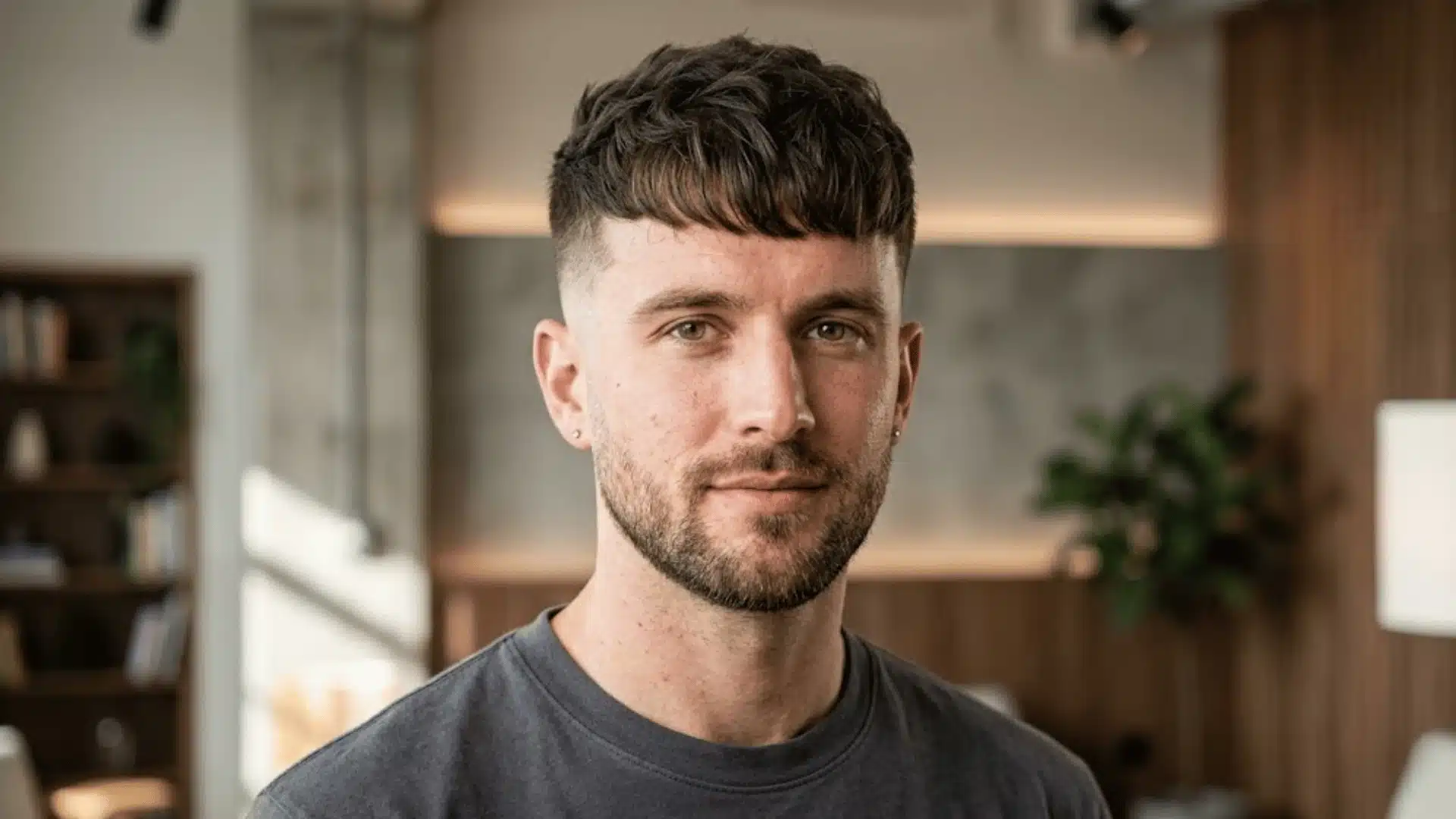
The French crop features a stronger horizontal fringe that sits forward across the forehead. It works well for men with thinning at the hairline because the fringe covers recession and shifts focus toward the eyes.
The sides are cropped tight, creating contrast that makes the fringe look denser. Style it slightly forward with a small amount of matte clay.
It is a sharp, clean option that holds well throughout the day and suits most face shapes.
Best For: Men who prefer a contemporary European-inspired style with strong facial framing and texture.
13. Faux Hawk with Tight Sides
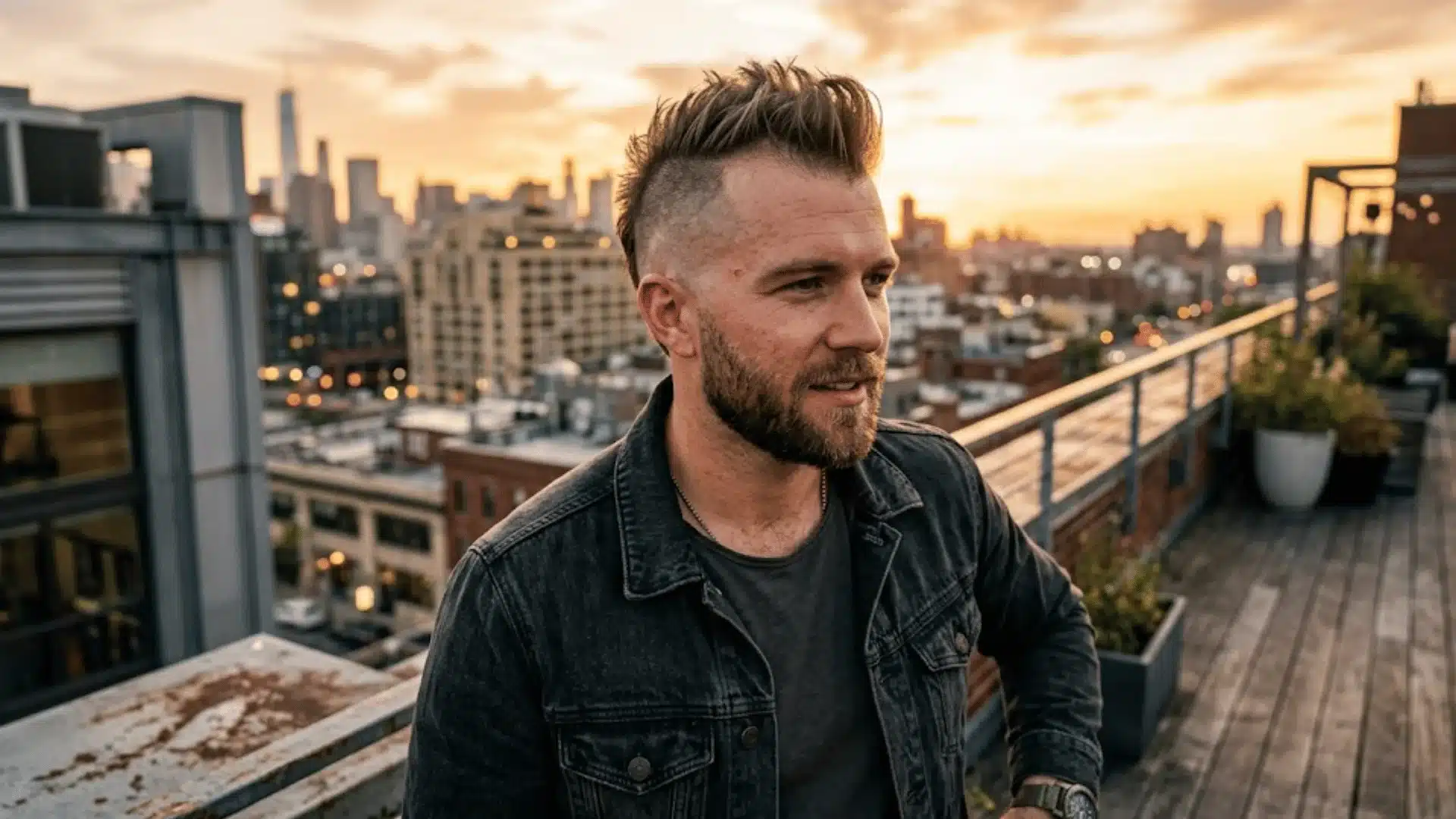
The faux hawk keeps a strip of longer hair along the center of the top, with cropped or faded sides.
A softer version works best for thinning hair: the center strip sits upright with a light product rather than hard gel spikes. Tighter sides make the center strip read as fuller.
This style draws attention along the top of the head, useful when thinning sits at the temples. Keep the top section textured rather than smooth for the most natural finish.
Best For: Confident personalities looking to add visual height without committing to an extreme haircut.
14. Short Pompadour with Fade
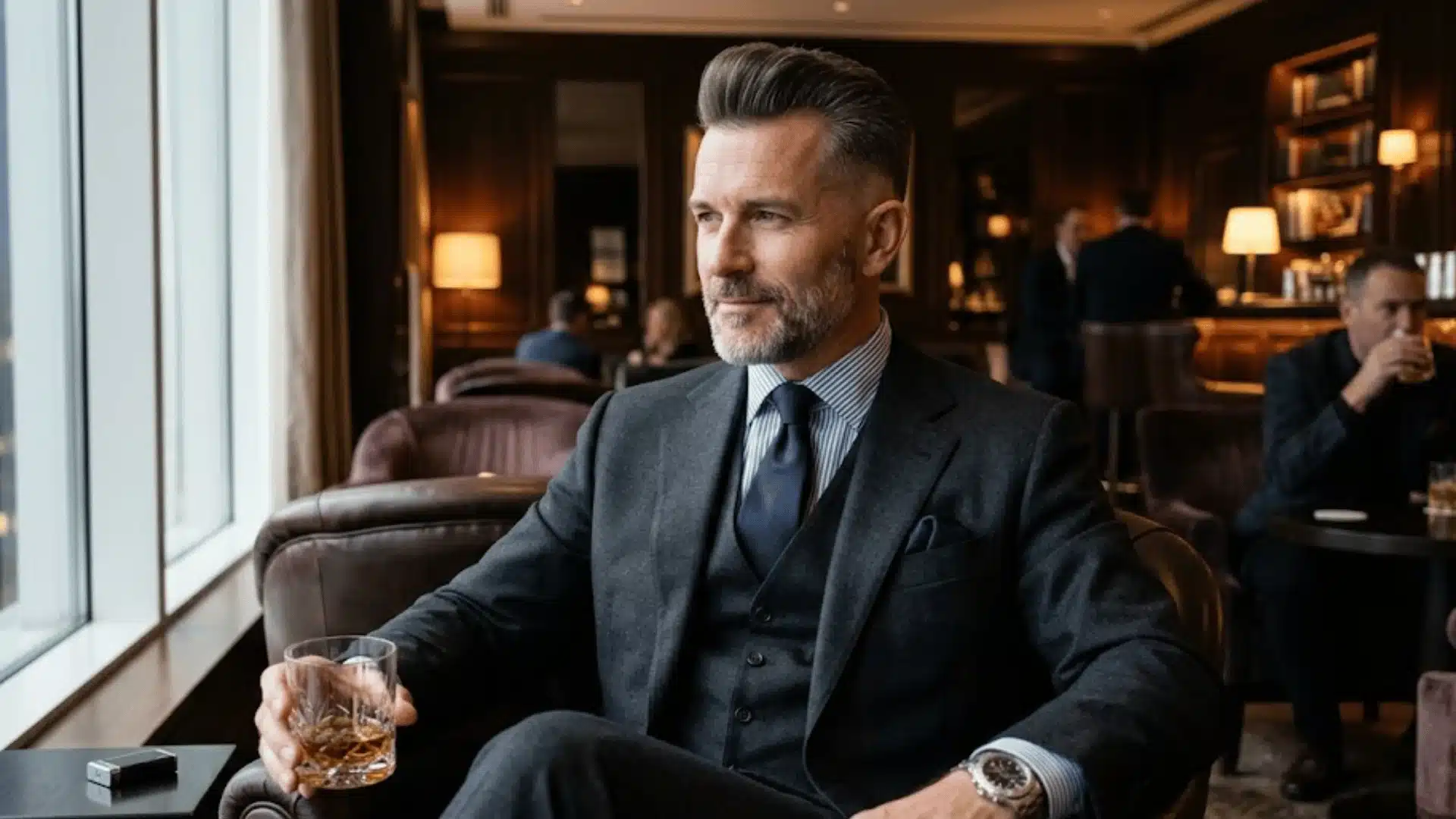
A short pompadour works for men with front density who are thinning at the crown.
The front section is blow-dried upward and back, creating height at the hairline while drawing the eye away from sparse areas behind. The fade at the sides keeps the silhouette modern.
Use a volumizing pre-styler before blow-drying, then finish with a matte pomade. It holds structure well through the day without needing much touch-up between morning and evening.
Best For: Men willing to spend a few extra minutes styling for a more elevated appearance.
15. Taper Fade
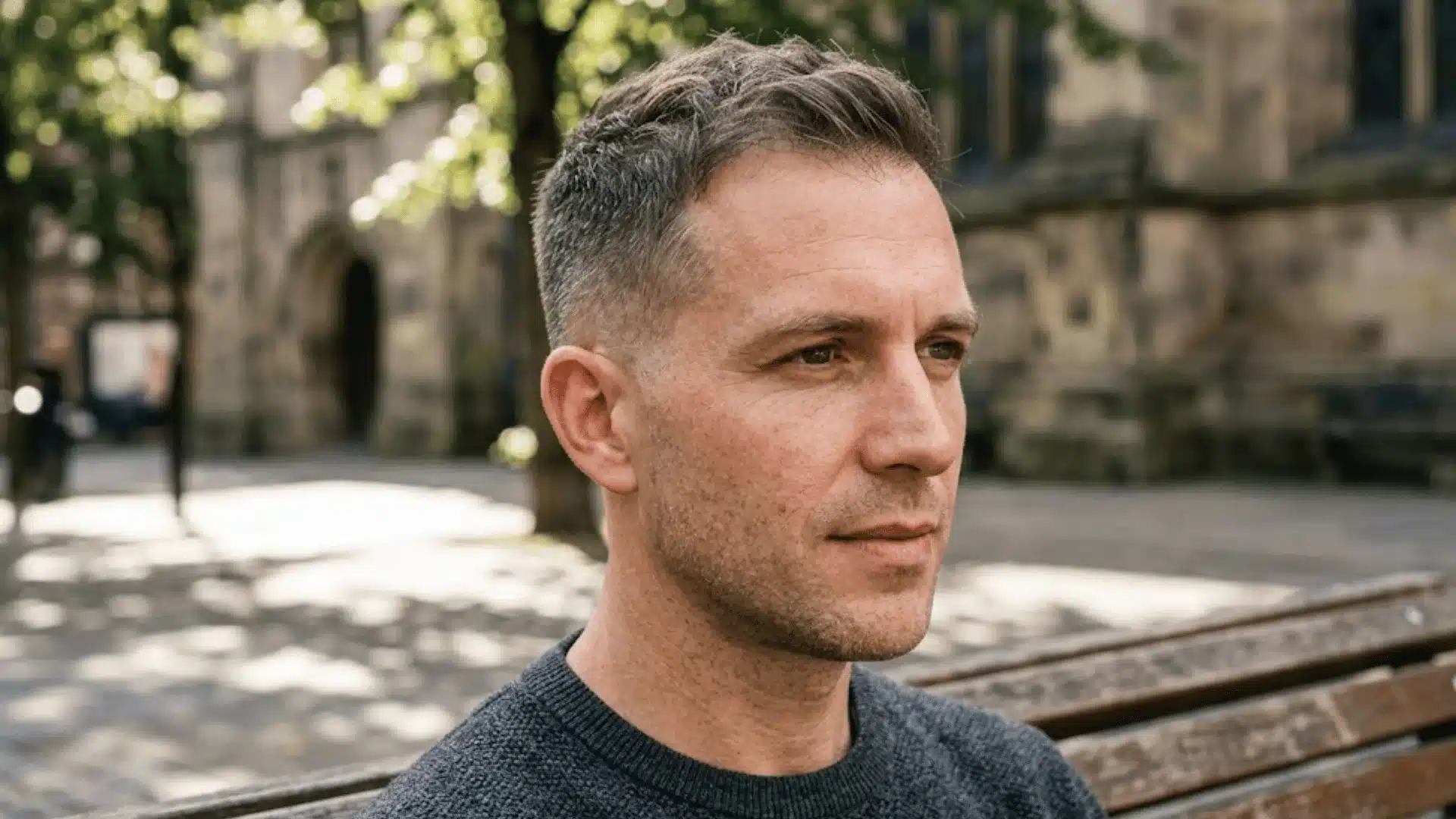
The taper fade blends the sides gradually from medium to short as it reaches the neck, rather than fading to skin.
This gentler version of the fade suits men who want a clean look without the contrast of a sharp skin fade. It grows out more naturally, making it practical for men who visit the barber every five to six weeks.
Combined with a short, styled top, it is one of the most wearable everyday cuts for thinning hair across all face shapes.
Best For: Those who prefer soft transitions and a clean finish without exposing too much scalp.
16. Ivy League Cut
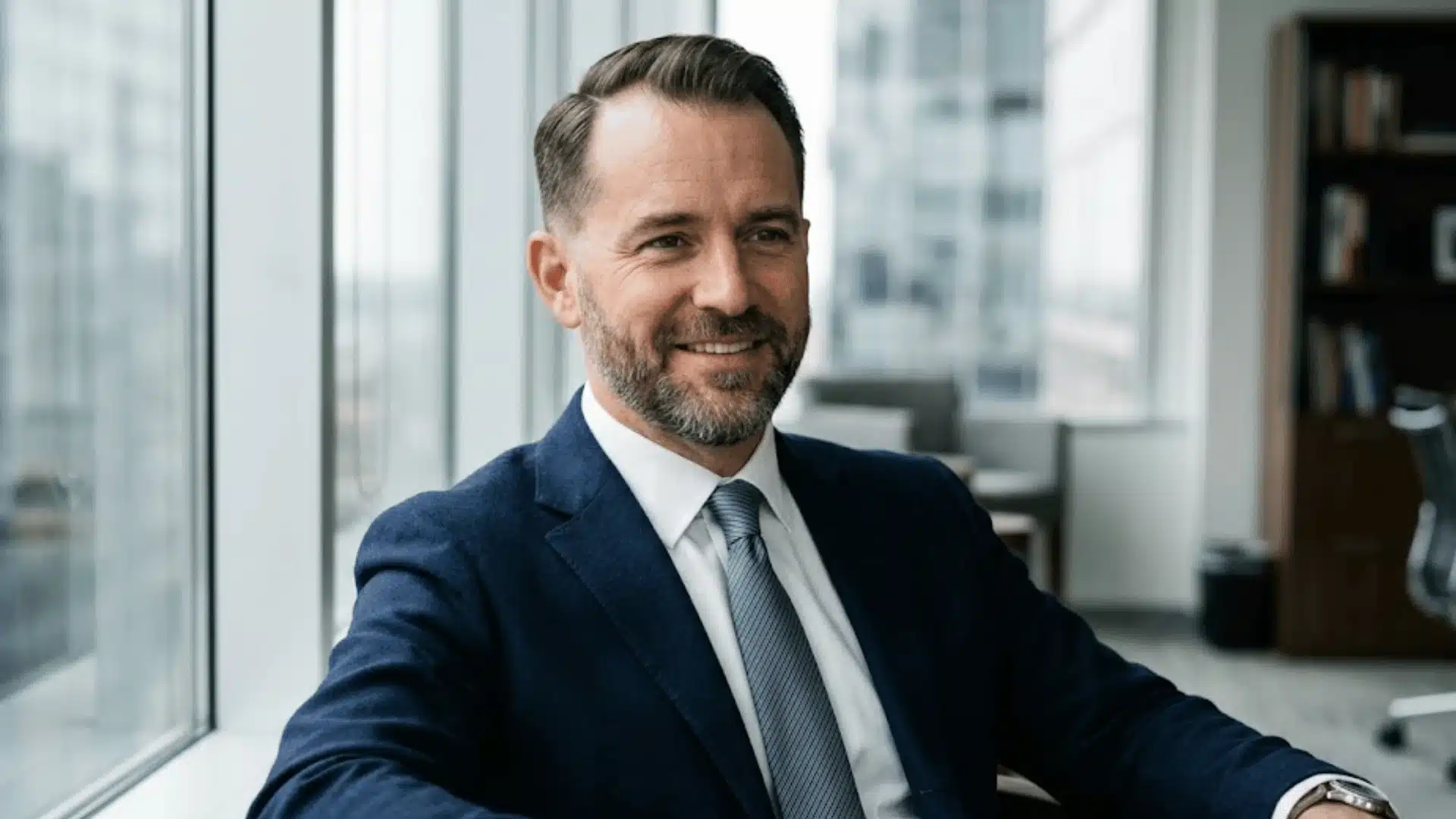
The Ivy League is a longer version of the crew cut with enough length on top to part on one side. The side-parted top adds direction, creating an illusion of fullness.
For men with mild thinning, this cut holds well when a lightweight product keeps the part in place.
The sides stay short but not faded, giving it a classic appearance that works in both formal and everyday settings without requiring frequent barber visits to maintain.
Best For: Executives and professionals seeking a sophisticated haircut that transitions easily between settings.
17. Military Regulation Cut
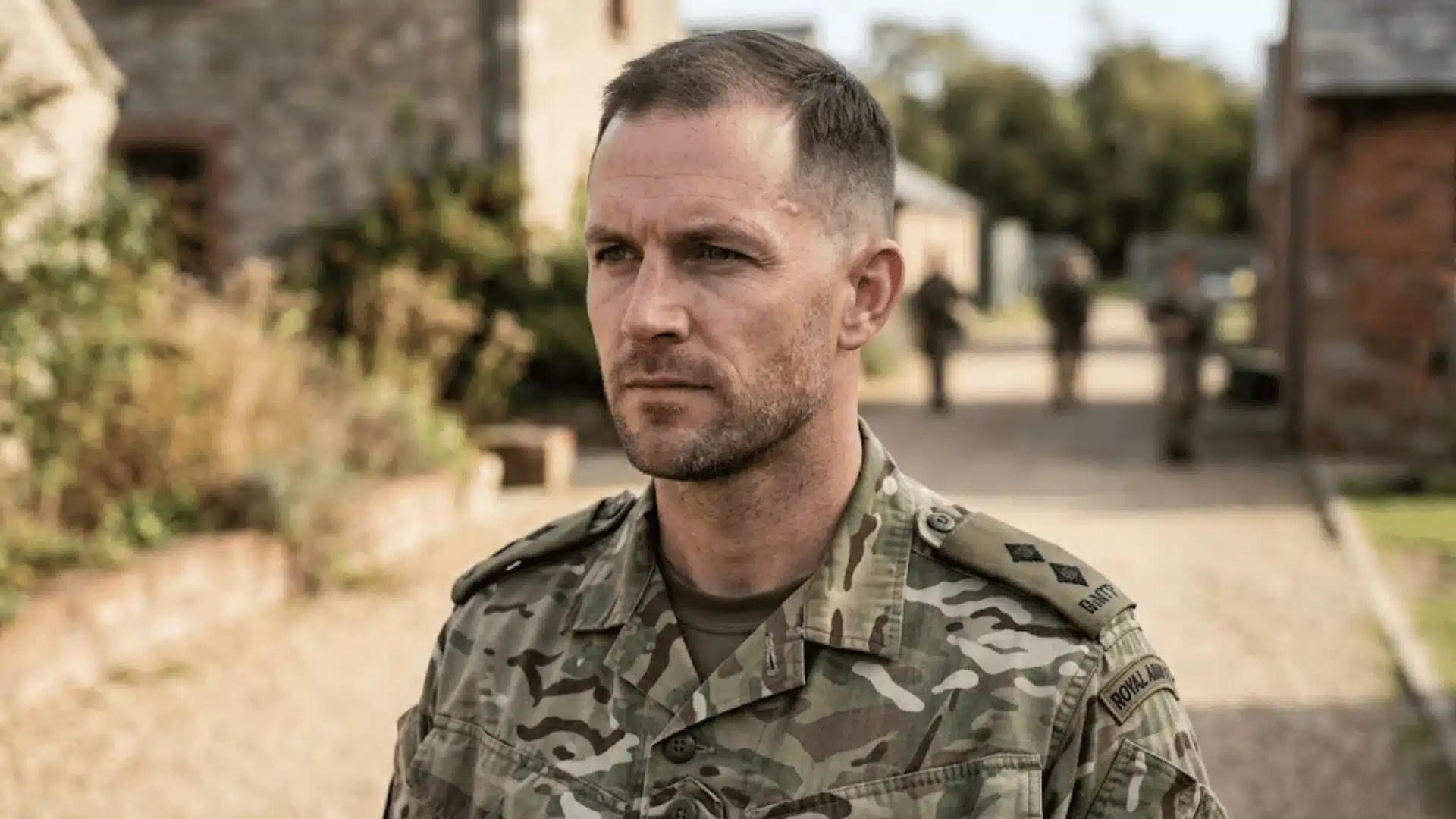
The military regulation cut is a structured short style with clean lines and even length across the top, tapered neatly at the sides and back.
It reads as intentional and considered, which suits men with thinning hair who do not want to look like they are compensating.
The even length on top prevents any one area from looking significantly thinner than another. It needs minimal product and stays neat for several weeks between trims.
Best For: Minimalists who value practicality, discipline, and a consistently neat appearance throughout the month.
18. Skin Fade with Short Crop
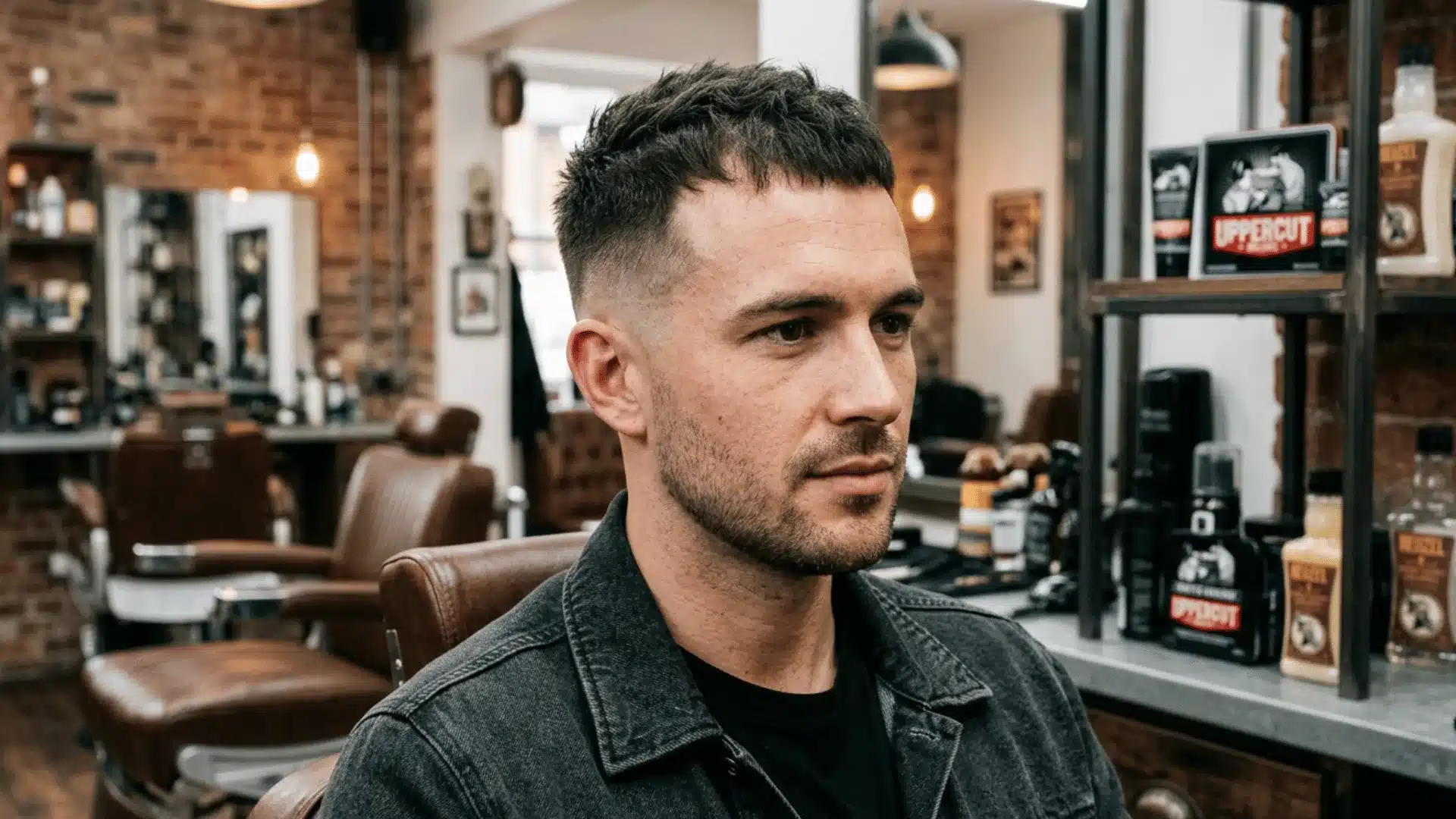
A skin fade taken to the skin at the sides, paired with a short textured crop on top, is a bold but effective combination for thinning hair.
The extreme contrast between the skin-close sides and the crop makes even fine or sparse hair look substantial by comparison.
It needs a visit to the barber every two to three weeks to stay sharp.
Best For: Bold style preferences where strong contrast helps maximize the visual density of remaining hair.
19. Temple Fade with Natural Top
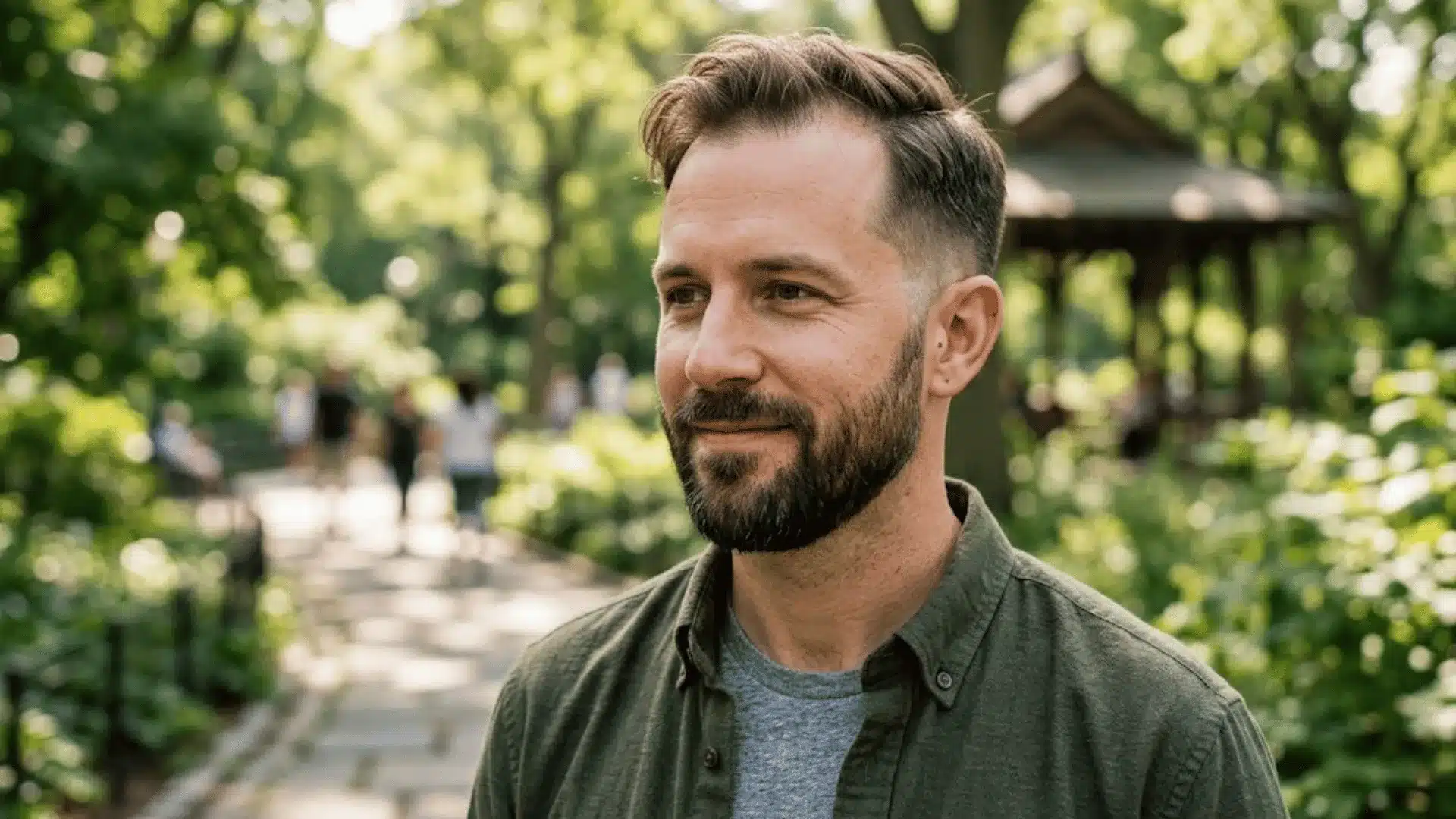
A temple fade clips the hair close just around the temple area while leaving the top and most of the sides at a natural length.
For men with temple recession, this style keeps focus on the top section and away from the receding corners. It is a low-contrast option that suits men who want something clean but not severe.
It grows out neatly without frequent visits and is one of the subtler options for men who want a quiet fix rather than a dramatic change.
Best For: Early temple recession that needs subtle refinement rather than dramatic reshaping of the haircut.
20. Side-Swept Fringe
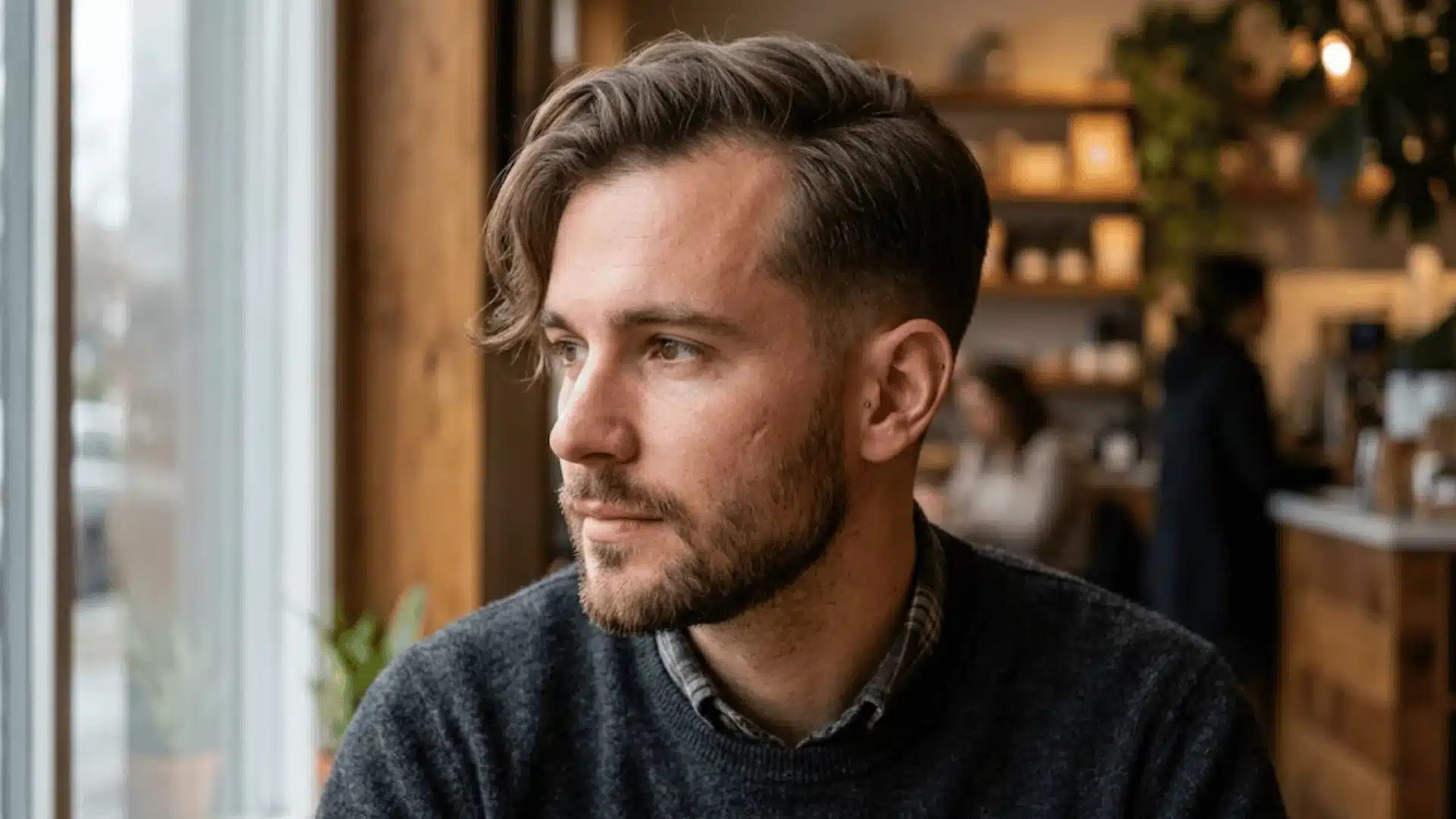
A side-swept fringe styles the top forward and across the forehead to one side. It covers a receding hairline effectively while keeping the look casual and relaxed.
Short sides prevent the fringe from looking heavy relative to the rest of the cut. A small amount of matte cream or light mousse holds the sweep without adding shine.
This is a good option for men with early-stage hairline recession who want a style that reads as deliberate without going dramatically short.
Best For: Men wanting casual, youthful styling that naturally disguises recession around the forehead corners.
21. Short Spiky Top with Fade
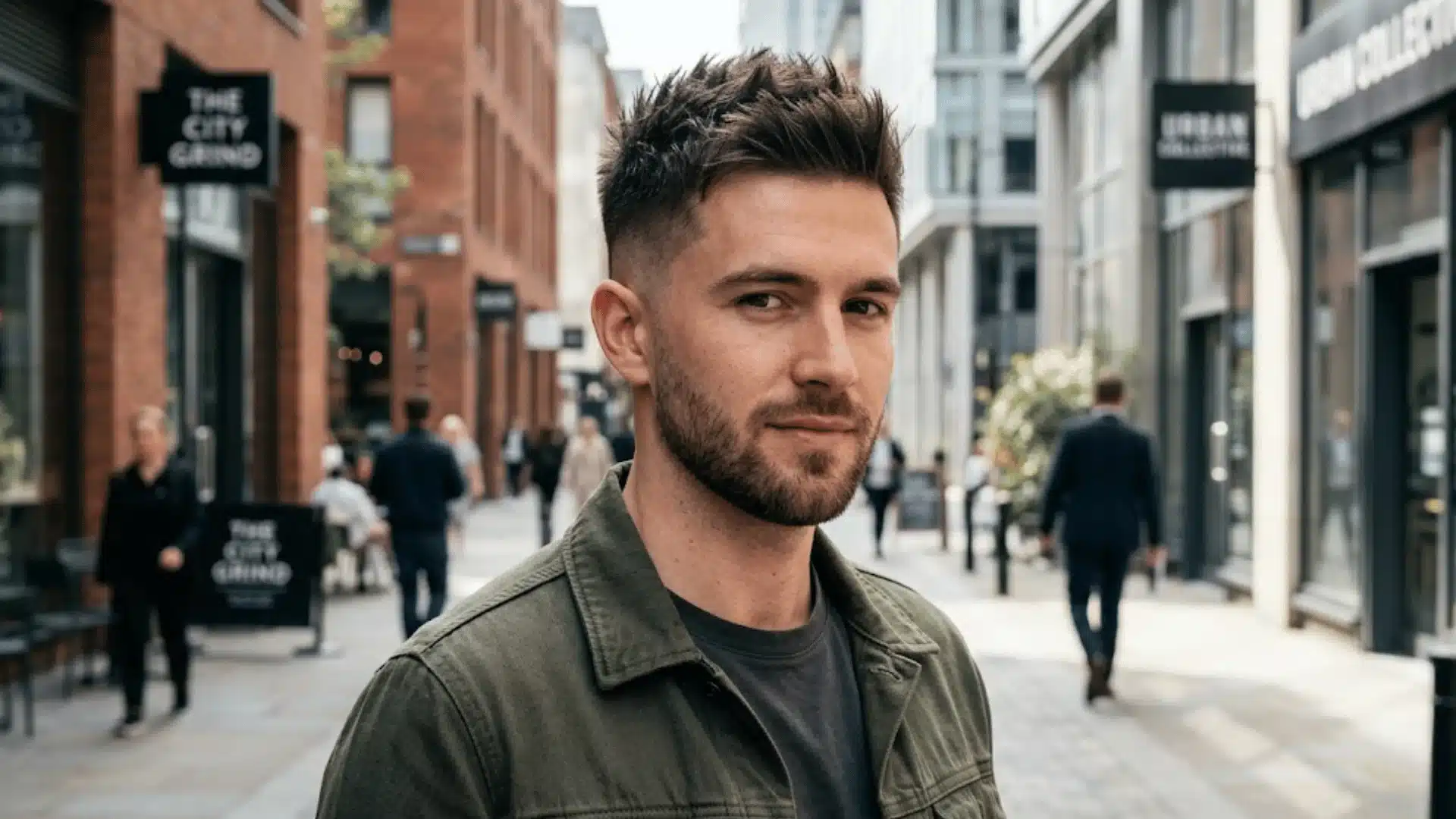
Short, controlled spikes add vertical lift to thinning hair, keeping it from lying flat against the scalp.
A matte-texture powder or paste gives the spikes grip and body without the shine that would reveal the scalp underneath. Pair the spiky top with a clean mid or low fade for a structured silhouette.
The spikes create an impression of density through movement. Keep them short and controlled; the intention is texture, not a throwback to heavy gel from twenty years ago.
Best For: Hair that tends to lie flat and benefits from added lift, texture, and definition.
22. Brush Cut
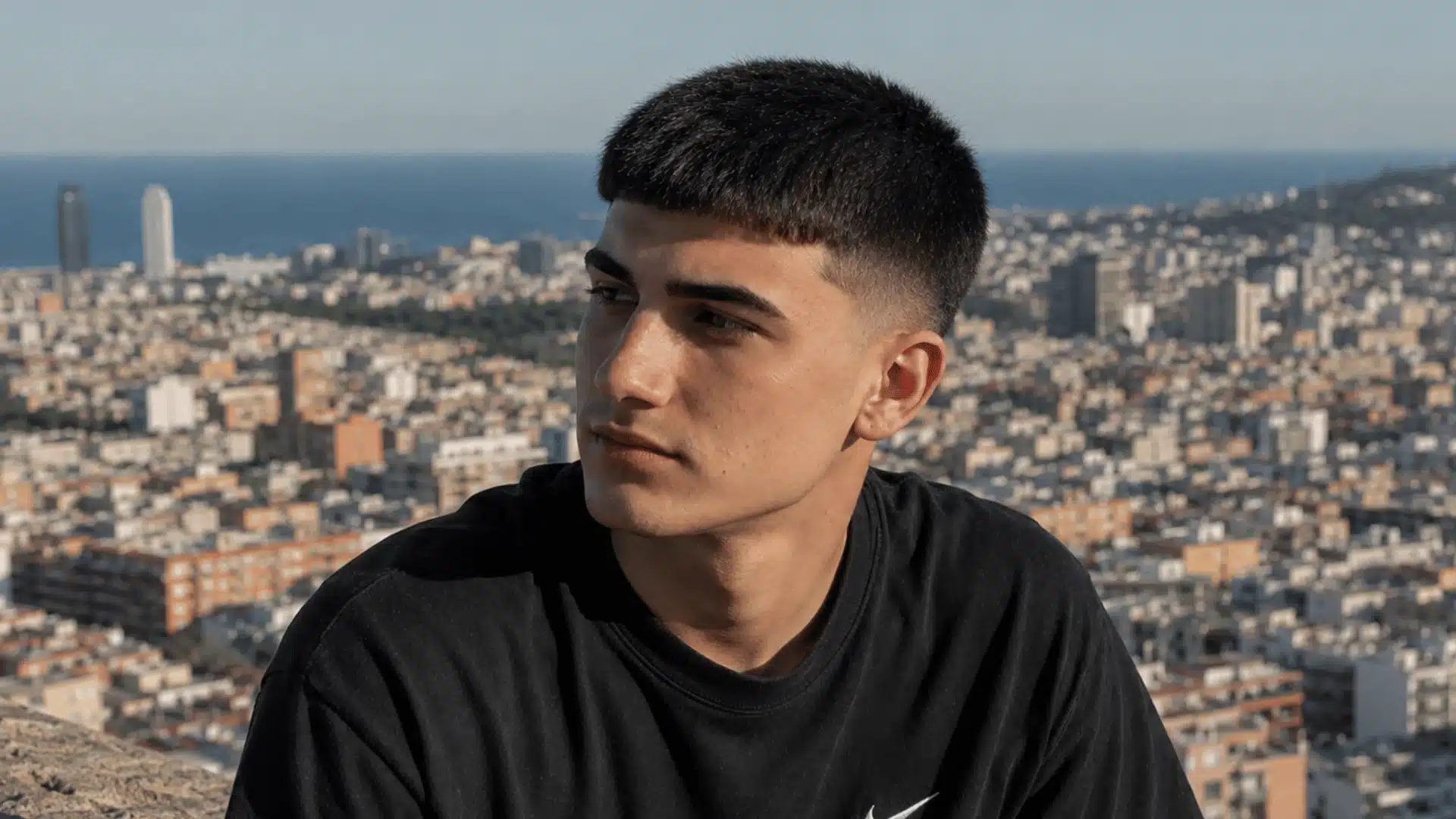
The brush cut sits between a crew cut and a buzz cut in terms of length. Hair on top is long enough to brush briefly in the morning but short enough to need minimal product.
It is a practical, masculine style that adds a subtle amount of texture with minimal maintenance. For thinning hair, the short length keeps the scalp from showing through under light.
A soft, natural part can be worked in for men who want a little more direction on top.
Best For: Practical men seeking a low-maintenance style with slightly more versatility than a buzz cut.
23. Disconnected Undercut
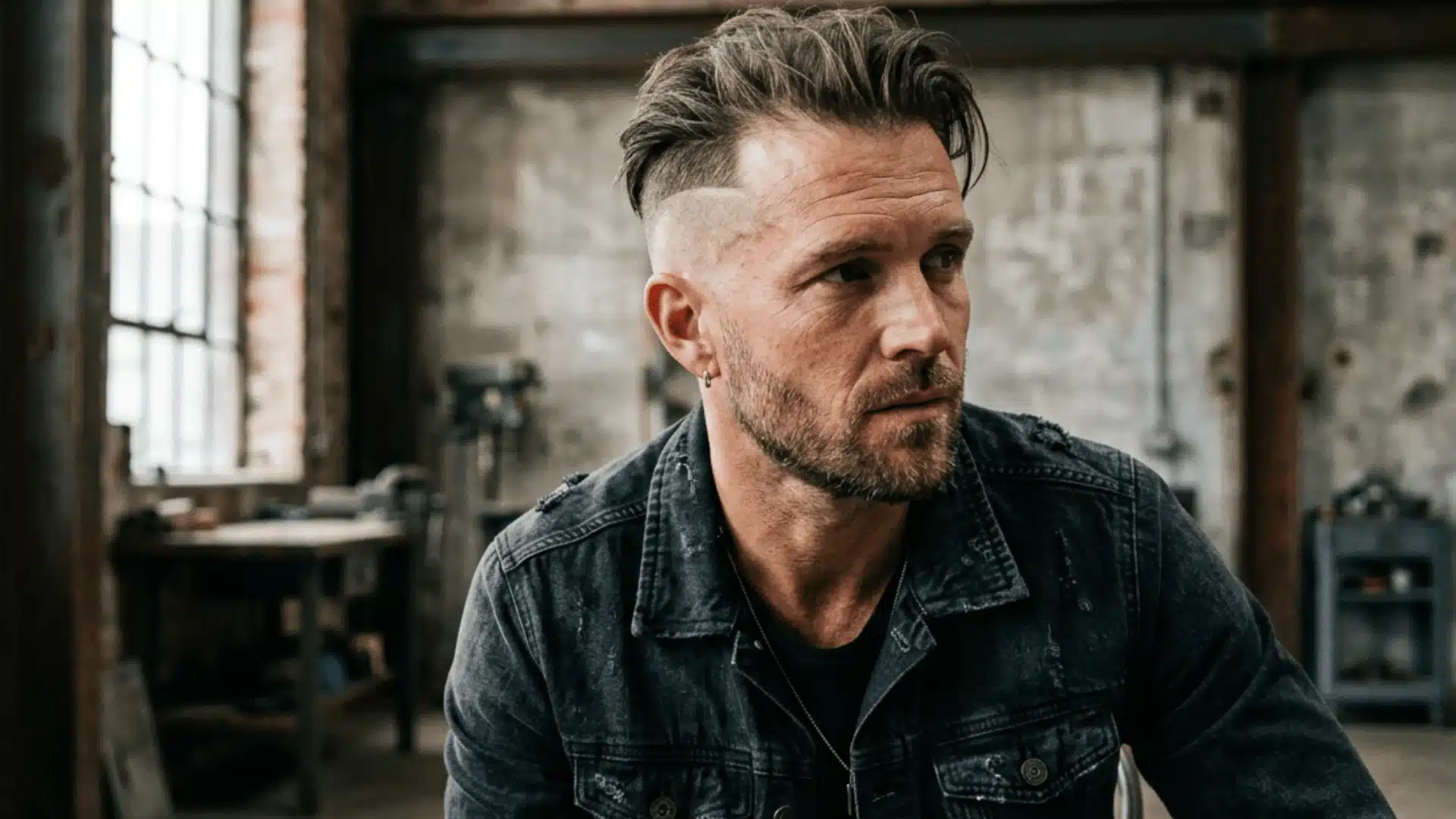
The disconnected undercut has a sharp, well-defined line where the sides meet the top, with no blending or fading. The disconnected line frames the longer top section, making it look intentional rather than sparse.
It suits men with angular face shapes best and works for thinning hair when the thinning is minimal at the crown.
Style the top with matte clay to add texture and hold without making individual strands look flat or limp against the scalp.
Best For: Angular face shapes that suit sharp lines, strong contrast, and defined haircut boundaries.
24. Comb-over without Fade
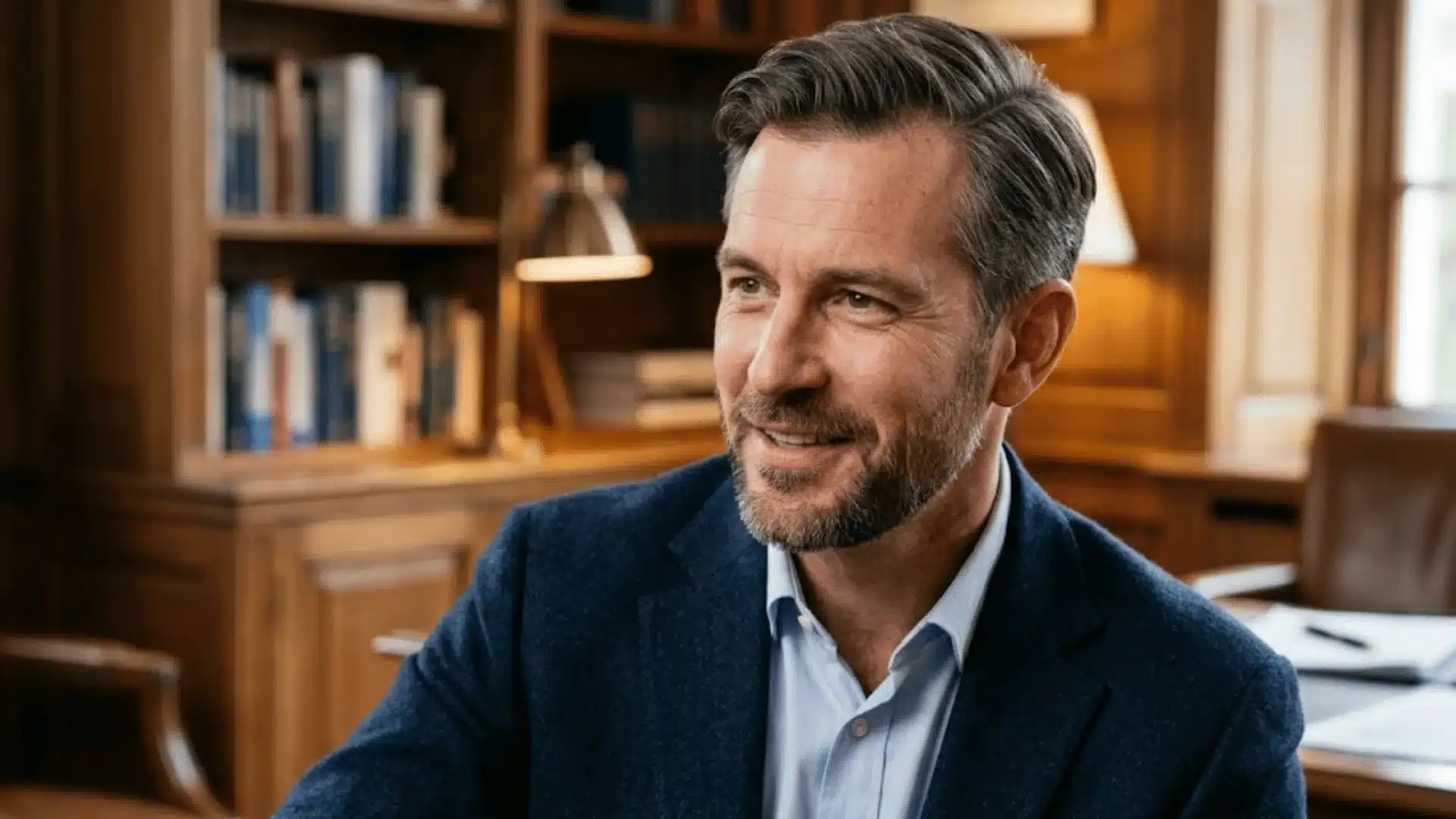
A comb-over without a fade uses a gradual scissor taper rather than clipper-faded sides, creating a softer transition. It is a more natural-looking style that suits professional settings.
The side part is defined but not sharp, and the hair on top falls across softly rather than sitting plastered down. A little lightweight pomade holds it in place without stiffness.
This gentler version of the comb-over suits men who want coverage without a dramatic contrast on the sides.
Best For: Mature professionals who prefer subtle coverage and traditional barbering over modern fade styles.
25. Short Textured Layers
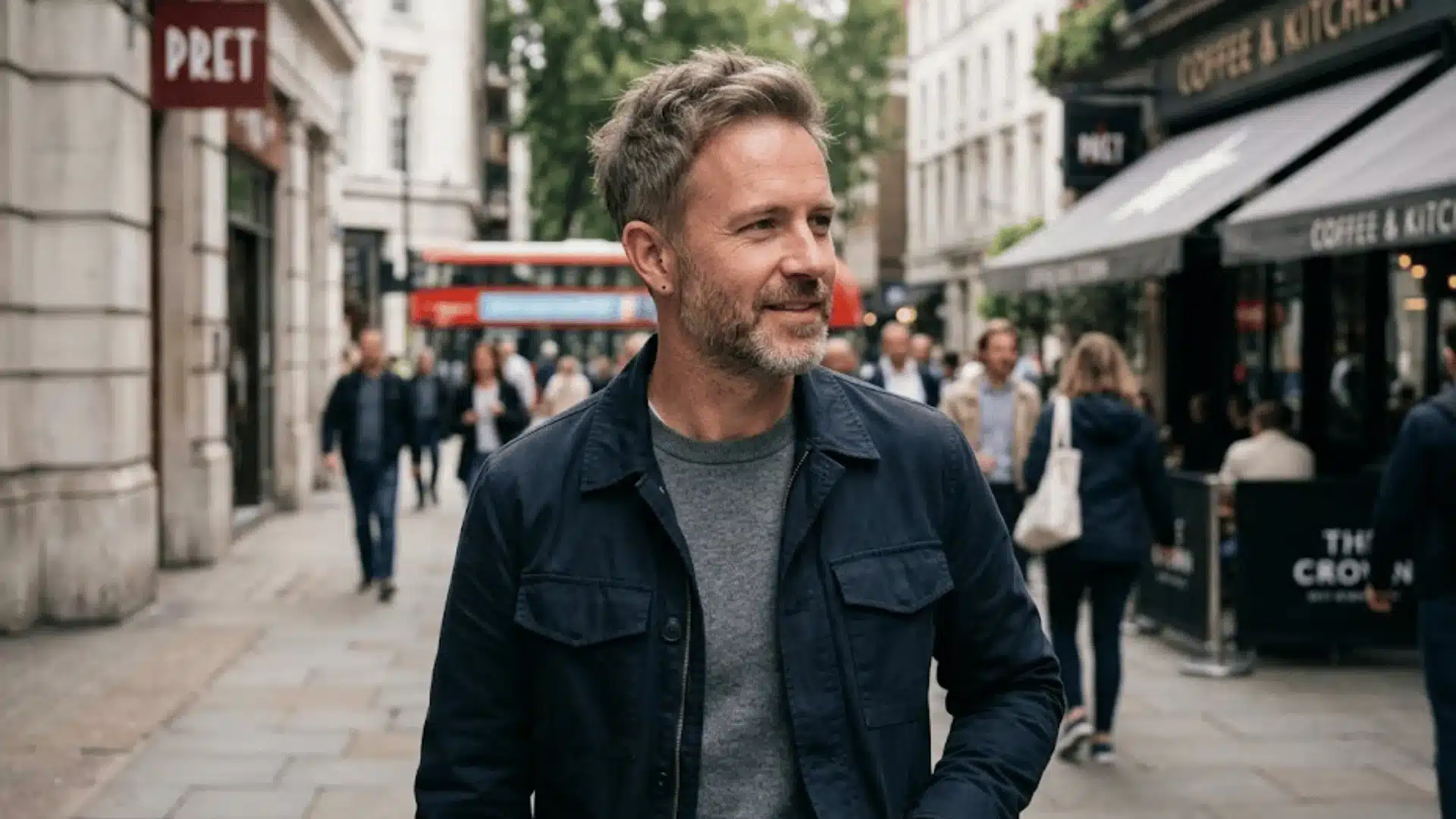
Short textured layers cut throughout the top of the hair add movement and body to fine or thinning strands. Rather than a single flat length on top, layers create dimension that reads as fullness.
This works best on men with mild, even thinning, rather than specific bald patches. The layers are short enough to hold their shape without flopping.
A sea salt spray or texture powder on damp hair before blow-drying amplifies the effect without weighing anything down.
Best For: Even thinning throughout the scalp where added dimension can create the illusion of greater density.
26. High Fade with Short Textured Top
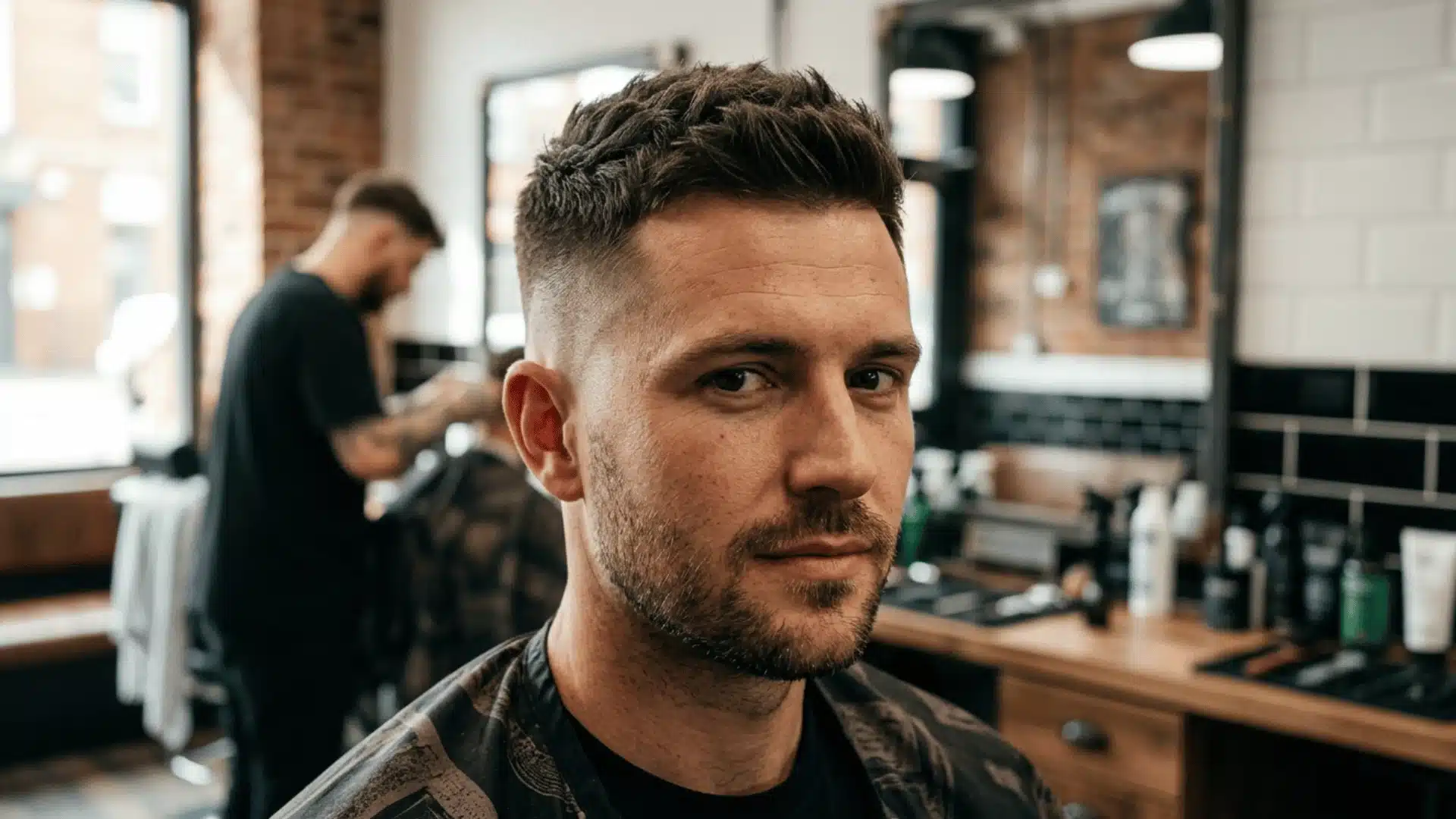
A high fade takes the sides up close to the crown, leaving a small section of short, textured hair on top. For men comfortable with a bold look and some crown density remaining, this is a sharp option.
The high fade means very little transition between the top and sides. The top section is styled with a matte product for texture and grip.
Without enough density on top, the high contrast can work against you, so be honest with your barber.
Best For: Men comfortable with shorter sides who want maximum emphasis on the remaining top hair.
27. Natural Wave Style with Shorter Sides
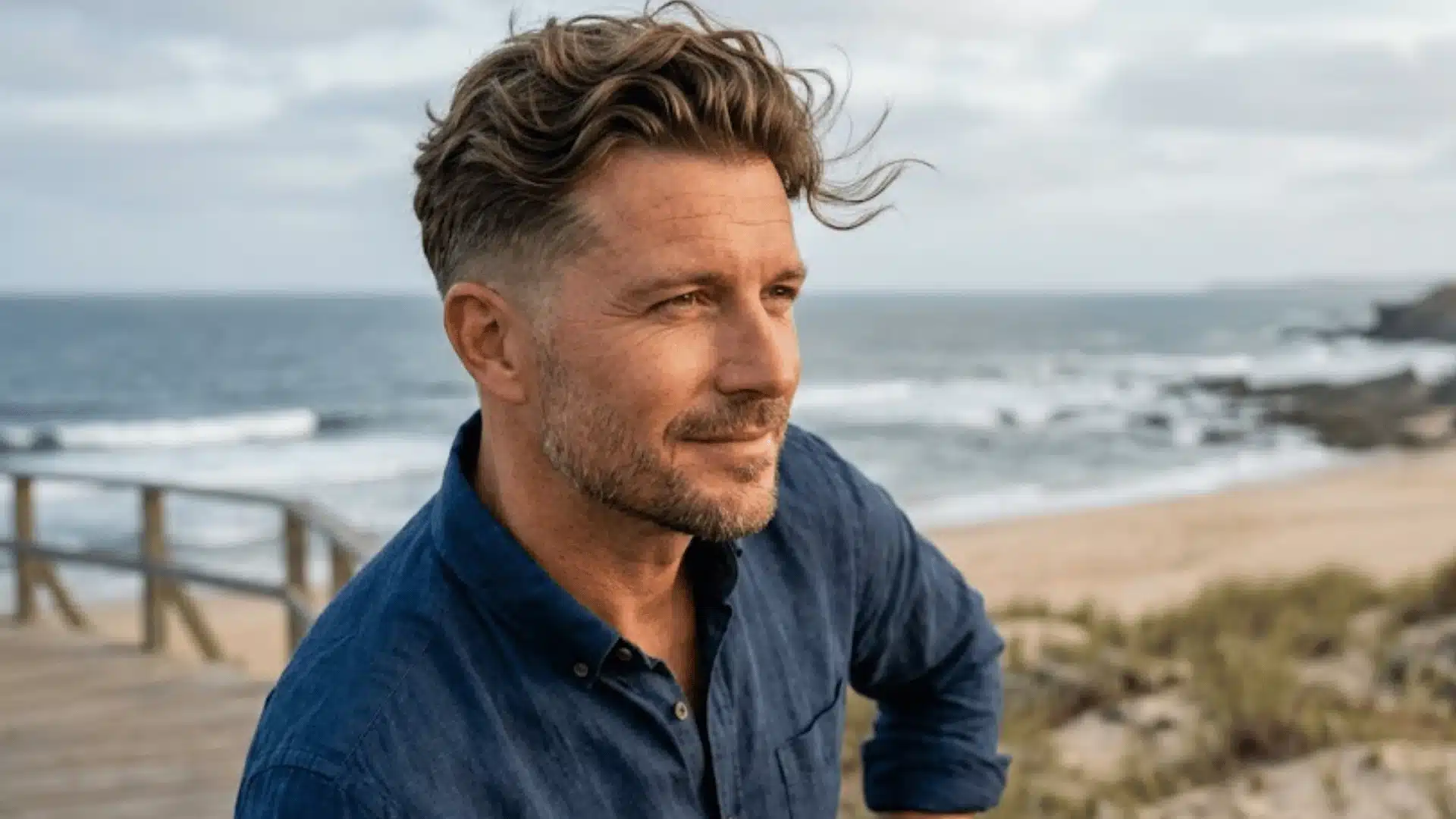
Men with naturally wavy or slightly curly hair have an advantage when it comes to thinning: the wave pattern creates volume that straight hair cannot replicate.
A style that embraces the natural wave, with shorter sides and a longer top left to wave naturally, works well for mild thinning. Avoid overloading with product, which weighs the waves down.
A light curl cream or mousse on damp hair before air-drying gives the best natural volume without clumping the strands together.
Best For: Naturally wavy textures that can use their built-in volume to mask mild thinning effectively.
28. Mohawk Taper
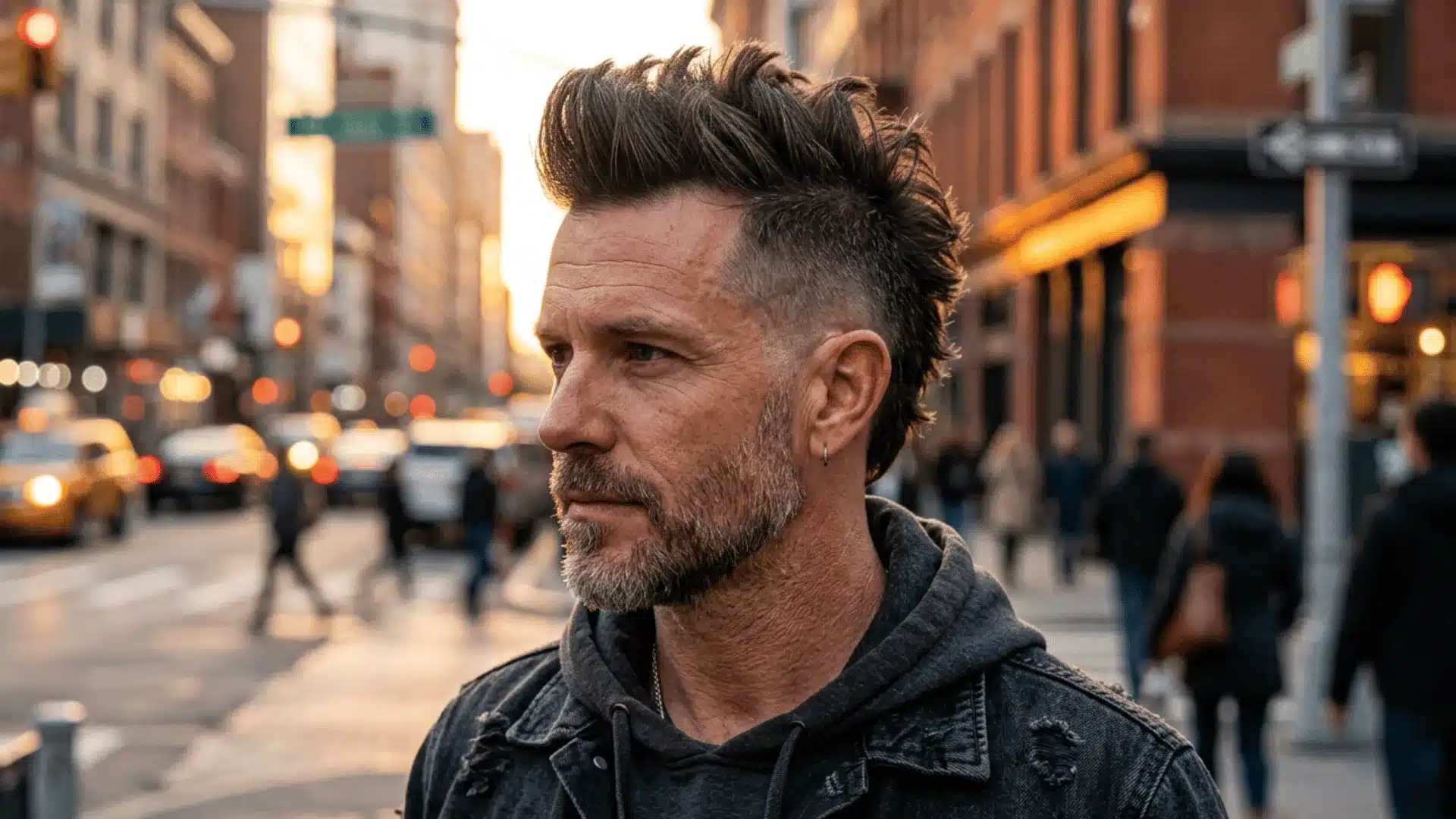
A Mohawk taper keeps a central strip of hair longer on top, tapering to nothing on the sides. It is a softer alternative to the traditional Mohawk and suits men who want height without aggressively shaved sides.
For thinning hair, the taper takes focus away from the sides entirely and concentrates attention on the central strip.
The central section can be textured with a matte product for added body. It is a statement-oriented option for men who want a distinctive everyday style.
Best For: Individualistic dressers looking for a distinctive everyday haircut that stands apart from classic styles.
29. Flat Top
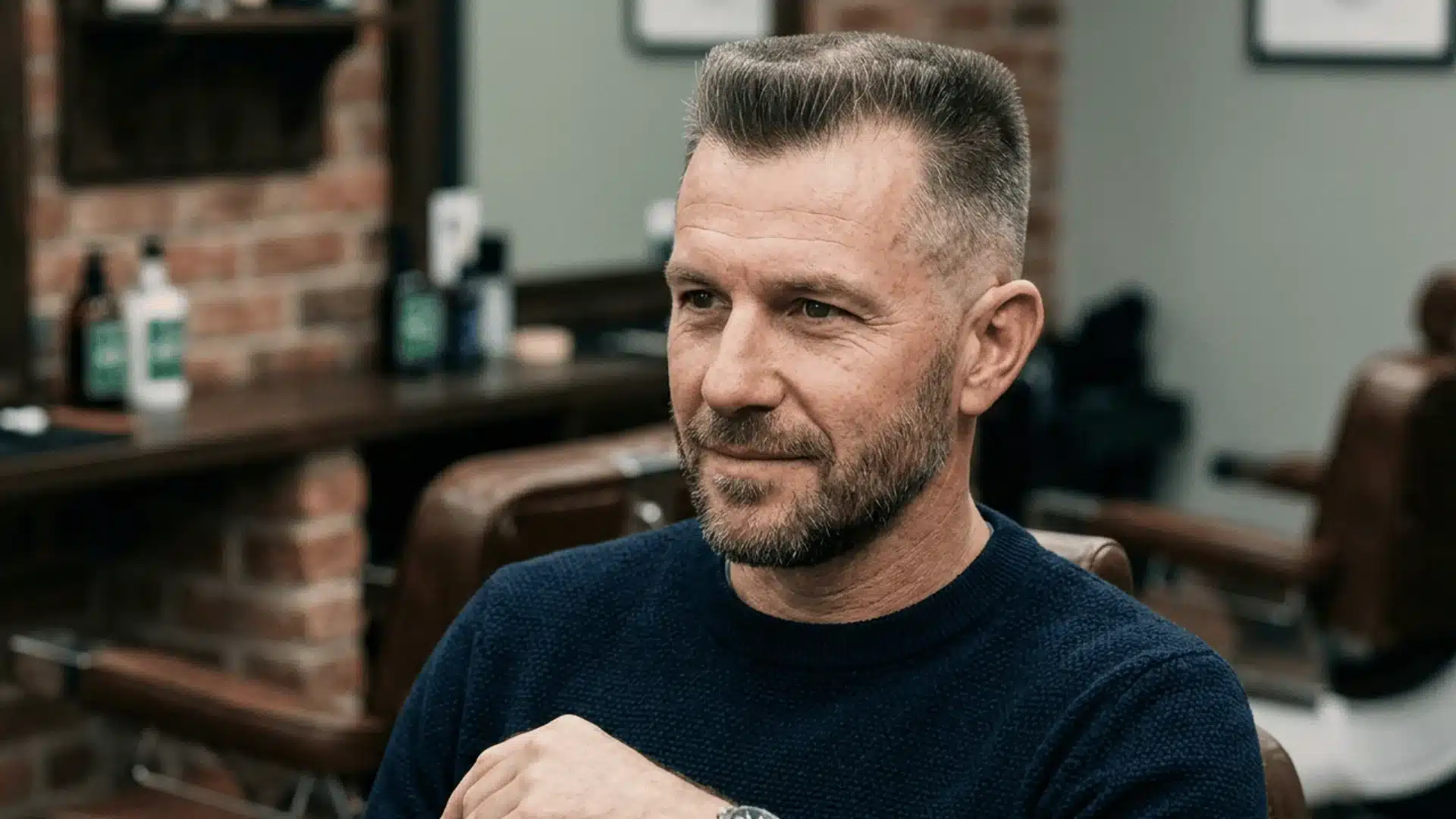
The flat top creates a horizontal, level surface across the top of the head by cutting the hair into a precise flat plane.
It adds visible height and structure, drawing the eye upward rather than toward the scalp. For men with early-stage crown thinning, the flat top directs attention to the shape rather than the density.
It suits oval and square face shapes best. A strong-hold matte product is needed to keep the flat surface in position throughout the day.
Best For: Oval and square face shapes that benefit from extra height and strong geometric structure.
30. Soft Textured Crop with Drop Fade
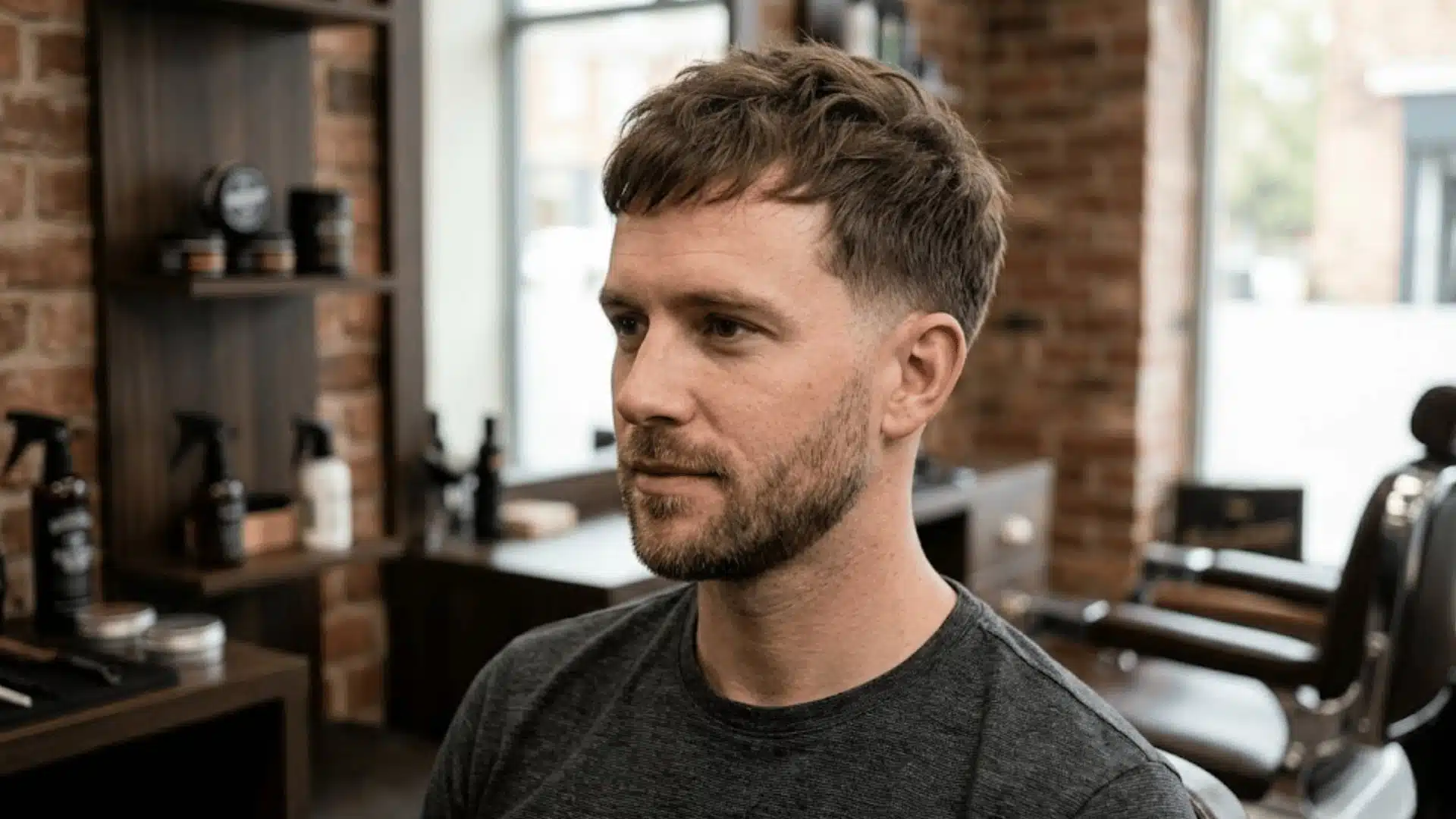
A soft-textured crop paired with a drop fade is one of the most balanced options for men with thinning hair. The drop fade curves behind the ear and dips lower at the back, following the natural curve of the skull.
This creates a rounded, tailored silhouette more refined than a standard fade. The crop on top is short and choppy, adding texture without needing density.
It grows out cleanly and suits most face shapes. Worth discussing with your barber as a first step.
Best For: Men unsure where to start, seeking a balanced haircut that complements most face shapes and ages.
Styling Tips to Make Thin Hair Look Thicker
The haircut is architecture, but the product and technique you use at home either support it or undo it. Getting these details right matters.
- Use matte-finish products only: Any shine will reflect light off the scalp, making thinning more visible. Matte clay, fiber pomade, or texture powder all add grip and body without drawing attention to sparse areas.
- Blow-dry upward from the roots: Direct warm air upward using your fingers or a vented brush. This lifts the roots and builds volume that holds through the day, especially at the crown and top.
- Apply a pre-styling tonic on damp hair: A lightweight volumizing tonic sprayed into damp hair before blow-drying coats each strand before heat styling, adding measurable thickness.
- Avoid heavy gels and oils: These clump strands together and create gaps that expose the scalp. The heavier the product, the thinner the hair looks.
- Choose a side or natural part: A center part splits the hair down the middle and reveals more scalp. A soft side or natural part adds direction and visual fullness without effort.
- Wash hair every1 to 2 days: Product and oil buildup weigh fine hair down. Regular washing with a residue-free shampoo keeps strands lifted and ready to style.
How Do Beards Help Balance Thinning Hair?
A well-maintained beard changes the visual balance of the face and draws attention downward, away from the scalp. This is simply a good use of what you have.
A medium-length beard paired with a buzz cut or crew cut is one of the most balanced combinations for men with significant thinning.
The beard adds structure and definition to the lower face, which anchors the overall look. Keep it neatly trimmed and use beard oil to maintain its condition.
A shapeless, unkempt beard does not do the same visual work as a clean, maintained one.
Conclusion
Finding the right hairstyles for men with thinning hair comes down to choosing a cut that feels natural, suits the hairline, and works with daily grooming habits.
Some men look sharper with a buzz cut or crew cut, while others get better shape from a textured crop, fade, or side part.
The best style is the one that makes thinning hair look intentional instead of hidden. Keep the products light, avoid shiny finishes, and let a good barber guide the final shape.
A simple haircut change can make a big difference in confidence. Which haircut would you try first? Share your choice in the comment section.
Frequently Asked Questions
Can Thinning Hair Grow Back Naturally?
Hair regrowth depends on the cause of thinning. Stress-related shedding may improve over time, while male pattern hair loss usually requires treatments like minoxidil or finasteride to slow progression.
Should Men with Thinning Hair Use Conditioner?
Yes, lightweight conditioners help maintain moisture and reduce breakage without flattening the hair. Heavy formulas designed for thick curls may weigh fine hair down.
Can Certain Hairstyles Make Hair Loss Worse?
Tight hairstyles that pull constantly on the roots, such as tight braids or man buns, can contribute to traction alopecia over time. Most short hairstyles do not worsen genetic hair loss.