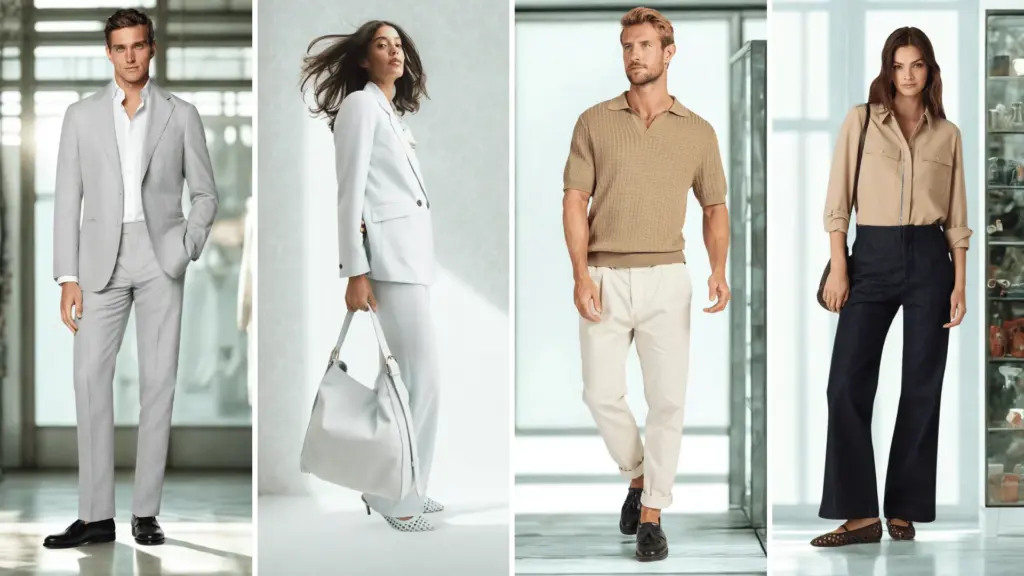
You’ve been invited to a “smart casual” dinner. You stare at your wardrobe. You pick up the blazer. You put it back. Sound familiar?
After years of styling clients in Los Angeles from startup pitch meetings to gallery openings to last-minute dinner reservations, I can tell you this moment of wardrobe paralysis is almost universal.
And it almost always comes down to one thing: not knowing the actual rule behind the dress code, not a lack of clothes.
Smart casual vs business casual often get mixed up, but the difference matters. One leans relaxed with personality, while the other stays structured and professional.
Misjudging it can leave you looking out of place, either overdressed or underdressed.
This guide breaks down the real differences, when to wear each style, and how to build outfits that work confidently in both settings.
What is Business Casual?
Business casual is a dress code that emphasizes professionalism without the full weight of a formal suit.
It sits in the middle ground of most traditional workplaces, where showing up polished matters, but a tie would feel out of place. Think tailored trousers, a button-down shirt, and clean leather shoes.
A blazer is optional but often expected in client-facing settings. Clothes should be pressed, fitted, and consistent across the week.
There is less room for personal style experimentation here, and more expectation that you look the same on a Tuesday as you do on a Thursday.
Business casual is the default in industries such as finance, law, real estate, and corporate healthcare.
It is appropriate for job interviews at traditional companies, in-person client meetings, professional conferences, and standard office days where appearance still carries professional weight.
What is Smart Casual?
Smart casual means looking put together without trying too hard.
It sits a step below business casual and a step above what you would wear running errands. The goal is intentional, not formal. Clothes should fit well, fabrics should hold their shape, and the overall look should feel considered rather than thrown together.
This is the dress code for dinner reservations, creative workplaces, casual Fridays, gallery openings, and networking events in relaxed industries. In tech and media, it is the daily default.
What sets smart casual apart is personality. A leather sneaker instead of a loafer, dark jeans instead of chinos, a blazer over a plain tee instead of a button-down.
The pieces are more relaxed, but the fit and finish stay the same. When the dress code is vague, smart casual is usually the right answer. Neat, easy, and considered is the target.
If defining personal style still feels unclear, understanding your unique style essence can help shape both directions with more confidence.
Men vs Women: Business Casual and Smart Casual Breakdown
Still unsure which dress code applies to your situation? The table below breaks down the key differences across the most common styling decisions.
| Category | Business Casual | Smart Casual |
|---|---|---|
| Tops (Men) | Oxford or button-down shirt, sweater over a collared shirt | Polo, checked shirt, plain tee under jacket, knit crew neck |
| Tops (Women) | Silk blouse, cotton button-down, fine-knit sweater layered over blouse | Blazer over tee, patterned blouse, knit crop top with high-waisted trousers |
| Bottoms (Men) | Dark chinos, slim dark jeans (culture-dependent) | Slim dark or light chinos, dark indigo or black jeans |
| Bottoms (Women) | Tailored trousers, midi skirt, shift dress with blazer | Slim dark jeans, tailored chinos, wide-leg trousers, midi dress |
| Footwear (Men) | Leather loafers or derbies (brown or black) | Suede loafers, Chelsea boots, clean leather sneakers, desert boots |
| Footwear (Women) | Closed-toe flats, block heels, kitten heels, leather loafers | Ankle boots, espadrilles, clean white sneakers, low block heels |
| Color Palette | Muted: navy, grey, black, charcoal, sage. Max two colors | Richer: olive, burgundy, teal, coral, mustard. Max three colors |
| Accessories | Leather belt, analog watch. Minimal and matched | Statement earrings, pocket square, patterned socks, crossbody bag |
| Formality Level | Office-appropriate, structured, polished | Relaxed but intentional, suited to social and casual work settings |
You do not need a large wardrobe to cover both dress codes. You need the right overlap. Spend the most on shoes and blazers since they anchor the look and are noticed first. Save on basics.
Before investing, getting clear on which cuts and silhouettes actually suit your body can make every purchase work harder and feel more intentional.
Business Casual Outfit Ideas for Men and Women
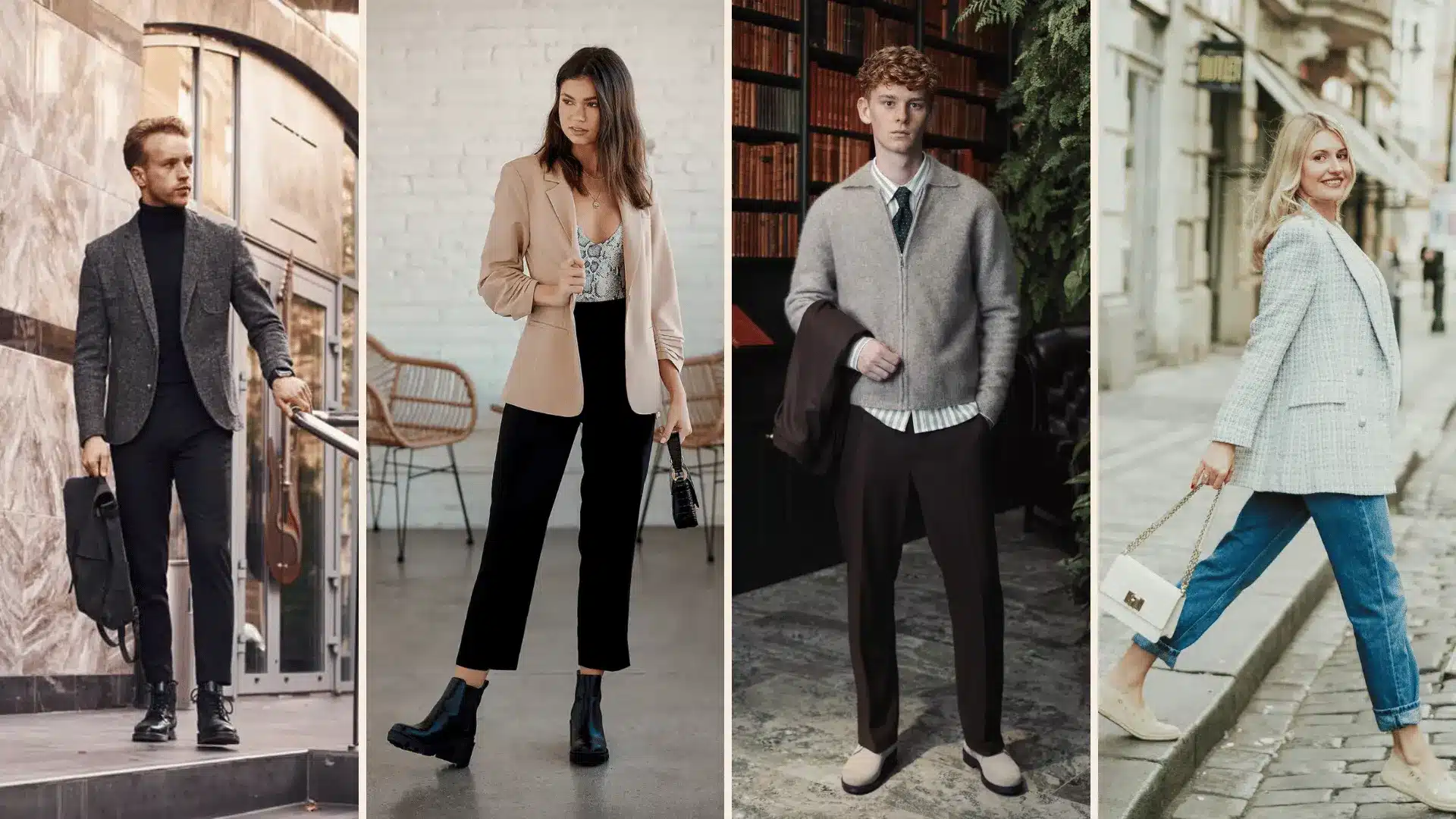
Business casual style blends tailored fits, polished fabrics, and structured layers, creating a professional look that stays comfortable and adaptable for everyday workplace settings.
- For men, a button-down shirt tucked in with flat front slacks and leather loafers is the baseline. An optional blazer in navy or grey lifts the combination for client-facing days. Oxford shoes work better than loafers in more conservative industries. In cooler weather, a merino wool sweater over a collared shirt with dress trousers is clean without being stiff.
- For women, tailored trousers with a silk or satin blouse and closed-toe pumps are a standard combination. Pencil skirts worn at the knee, paired with a structured blazer and block heels, work in most corporate environments. A shift dress in a neutral or muted tone, paired with a blazer and heels, reads business casual reliably.
Layering for office settings matters. A cardigan or fitted blazer over a sleeveless blouse handles temperature shifts without disrupting the overall look.
The styling logic for professional settings differs from casual dressing mainly in fit and finish. Clothes should sit properly, not tight and not loose, and fabric should hold its shape through the day.
Smart Casual Outfit Ideas for Men and Women
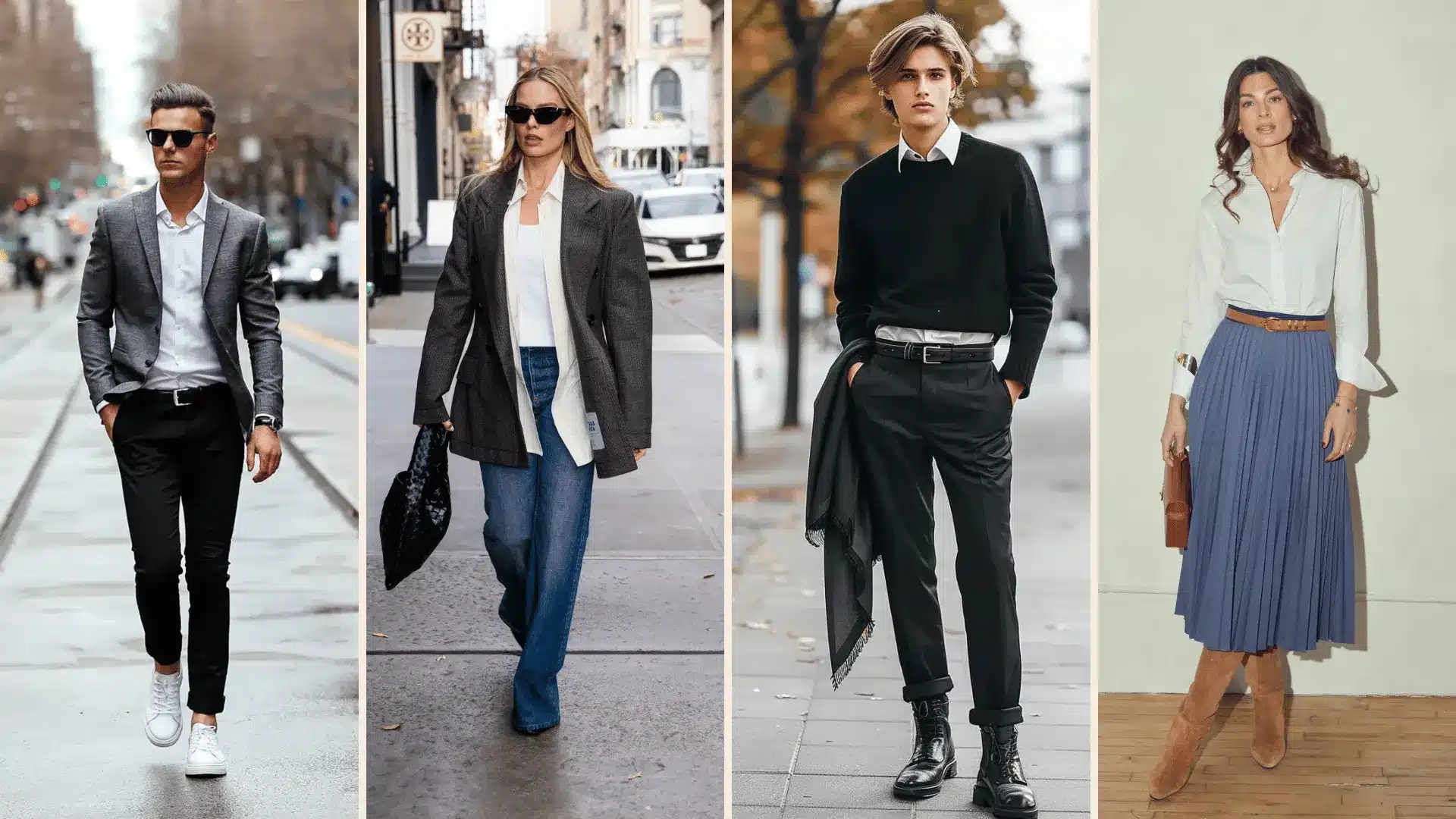
Smart casual style combines comfort and polish with versatile pieces like polos, blazers, blouses, and knitwear, paired with well-fitted bottoms and clean footwear for effortless, adaptable outfits.
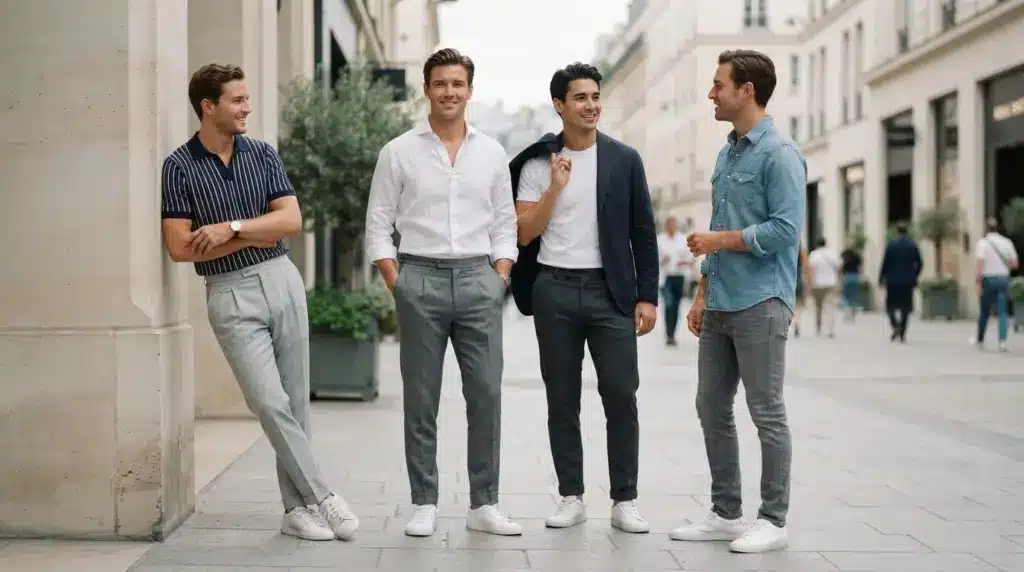
- For men, a solid-color polo shirt with chinos and clean white sneakers works well. A casual blazer over a plain T-shirt, paired with dark jeans and leather sneakers, reads smart casual without trying too hard. In cooler months, a crewneck sweater over a collared shirt with loafers is a reliable combination.
- For women, a structured blouse tucked into dark jeans with ankle boots reads smart casual confidently. Midi dresses with a denim jacket and flat sandals work through spring and summer. A knit top with wide-leg trousers and loafers is one of my go-to combinations for clients attending evening events where the dress code isn’t clearly defined.
In winter, a long cardigan over a fitted turtleneck with tailored trousers and block-heeled boots keeps the balance between cozy and put together.
When to Choose Smart Casual vs Business Casual
Choosing the right dress code depends on context, industry expectations, and occasion. Reading these signals helps maintain a polished look without feeling overdressed or out of place.
- Job interviews: Business casual remains the safest option, even in relaxed workplaces, as it communicates professionalism, preparation, and respect for the opportunity and company culture.
- Casual Fridays: Most workplaces shift toward smart casual, but still avoid overly relaxed clothing like gym wear, flip-flops, or heavily distressed denim that looks unprofessional.
- Work social events: Team dinners or company happy hours usually follow a smart casual dress code, unless the invitation specifies otherwise.
- Industry culture: Expectations vary widely, with creative industries embracing relaxed styles, while corporate sectors like finance and law maintain more structured, polished dress codes.
- First-time situations: When unsure, business casual is the safer approach, as it is easier to remove a blazer or layer than risk appearing too underdressed.
- Social gatherings: Smart casual works well for events like dinner parties, gallery openings, casual weddings, and daytime gatherings where comfort and style naturally balance.
- Formal social cues: Business casual rarely appears outside work, but when it does, it signals a more refined setting where presentation and first impressions carry greater importance.
How to Build a Versatile Wardrobe
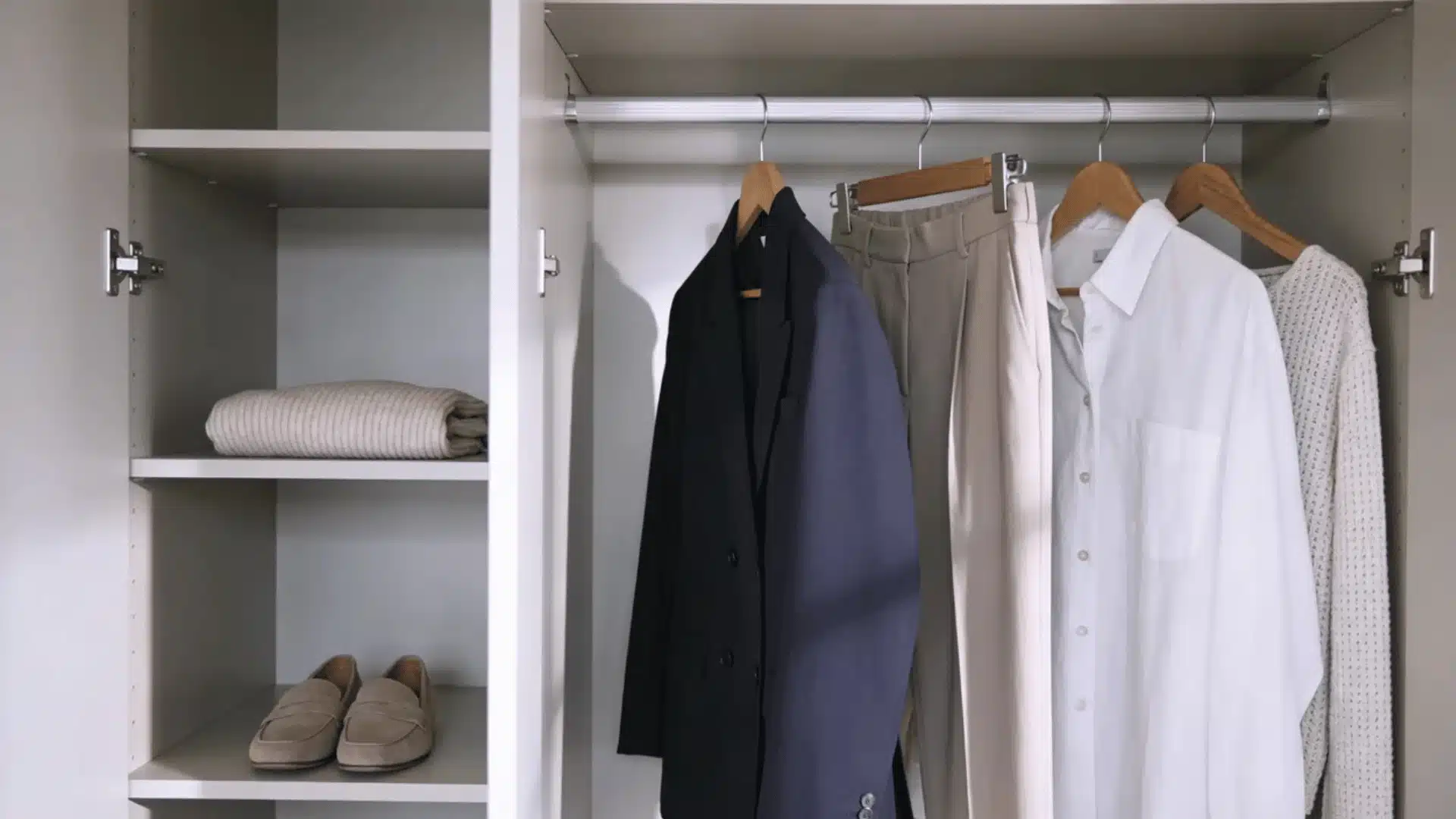
The overlap between smart casual and business casual is larger than most people realize. A handful of versatile pieces can cover both without building two separate wardrobes, and most of them work across gender presentations.
- Start with neutral-colored trousers or tailored pants in navy, black, and charcoal. These anchors both dress codes, pair them differently, and they move seamlessly between a business-casual office day and a smart-casual dinner without much effort.
- Add two or three quality button-down shirts or structured blouses, depending on your style, and the same number of fitted knit tops or crewneck sweaters for layering.
- A well-cut blazer in a neutral tone is the single most versatile piece across both dress codes; it sharpens a smart casual outfit and anchors a business casual one.
- For footwear, loafers cover the widest range. Clean leather sneakers work for smart casual. Oxford shoes or block-heeled boots handle business casual depending on the setting and your wardrobe direction.
The key to wardrobe versatility is investing in pieces that hold their shape and color after repeated wear.
Cheap basics show their age quickly. A few better-quality items in neutral tones go further than a larger wardrobe of trend-driven pieces.
Fabric matters too: linen, cotton, wool, and quality synthetics wear differently by climate, and the right one for your environment makes the difference between looking put-together and looking wilted by noon.
Smart Casual vs Business Casual Outfit Mistakes
Avoiding common styling mistakes helps maintain a polished look in both smart casual and business casual settings, ensuring outfits appear intentional, appropriate, and well-put-together in any professional environment.
- Wearing distressed or very light-wash jeans in a business casual environment. Even if denim is technically allowed, the finish matters.
- Treating smart casual as casual. Clean, fitted, and intentional are all still requirements.
- Ignoring footwear, a sharp outfit paired with dirty or overly casual shoes quickly drops the overall impression.
- Adding athletic wear like leggings, joggers, or athletic sneakers to either dress code. These do not translate to professional or semi-professional settings.
- Overdressing for smart casual by bringing full business formal pieces. It reads as out of place rather than polished.
- Wearing clothing that does not fit well. Both dress codes depend heavily on fit. A well-fitted basic always reads better than an expensive piece that does not sit right.
Conclusion
Business casual is for the world of work. Smart casual is for every occasion outside that still deserves effort. The key is knowing which environment you are stepping into, because once that is clear, choosing the right outfit becomes much easier.
When in doubt, dress one notch up. A blazer you didn’t need is easy to drape over a chair.
Walking into a room visibly underdressed is a much harder recovery and one I’ve watched derail first impressions more times than any wardrobe mishap I can think of. Polish is always noticed. The absence of it is noticed faster.
Now that you have the full picture, the definitions, the outfit formulas, the industry rules, and the wardrobe essentials, you have no reason to second-guess the wardrobe again.
Still have questions? Drop them in the comments below, we read every one.
Frequently Asked Questions
Can Sneakers Ever Work in Business Casual?
Clean, minimal sneakers may work in relaxed offices, especially in tech or creative fields. Stick to neutral colors and avoid athletic designs. In traditional industries like finance or law, sneakers are usually not appropriate, so it’s safer to choose loafers or dress shoes instead.
Is Smart Casual Appropriate for Office Work?
Smart casual can work in offices with relaxed dress codes, such as startups or creative workplaces. The key is balance. Outfits should still look neat and intentional, even if they include jeans or casual layers. When unsure, lean slightly more polished.
What Colors are Best for Business Casual Outfits?
Neutral tones like navy, black, grey, and white dominate business casual wardrobes. These colors create a consistent, professional look and mix easily. Subtle patterns are acceptable, but bold prints and bright colors are usually better suited for smart casual settings.