You’re halfway through applying a press-on set, and a drop of nail glue lands on your finger. It dries in seconds. Now it won’t budge.
Many people try to pull it off right away, only to realize the glue grips tightly and won’t let go.
That moment of panic is common during at-home manicures, especially when nail glue dries faster than expected. I’ve had it happen mid-set, with the glue already spreading before I could react.
Pulling dried glue before it’s ready to come off can cause irritation, redness, and discomfort. Removing it does not have to be complicated. Several simple household methods can safely loosen the adhesive.
This blog explains how to get nail glue off your skin using gentle techniques that protect the skin while effectively removing stubborn glue.
Why Does Nail Glue Stick So Strongly to Skin?
Nail glue is designed to create a fast, durable bond, which is why it can stick so stubbornly to skin. Most nail glues contain cyanoacrylate, a powerful adhesive commonly used in quick-bonding products.
Cyanoacrylate is essentially the same compound found in super glue, which is why nail glue can feel almost impossible to remove from skin on first contact.
- This compound reacts almost instantly upon contact with moisture. Human skin naturally contains small amounts of moisture, oils, and tiny surface textures.
- When nail glue comes into contact with the skin, the cyanoacrylate reacts with the moisture and begins hardening within seconds. This reaction creates a tight seal that is strong enough to hold artificial nails firmly in place.
The texture of the skin also plays a role. Small ridges and pores allow the glue to grip more easily, making the bond feel even stronger.
Because of this strong reaction, removing nail glue from skin requires patience and gentle techniques rather than force.
If the glue is still tacky, act immediately: rinse the area with warm water and rub gently. Fresh glue hasn’t fully polymerized yet and is significantly easier to remove than glue that has been sitting for more than a minute.
Once nail glue has fully dried and hardened, it requires one of the targeted softening methods below. Knowing which stage you’re at helps you pick the right approach from the start.
Best Ways to Remove Nail Glue from Skin
When nail glue sticks to skin, the safest approach is to soften the adhesive first rather than pulling it off immediately. Here are all the methods that work, starting with the gentlest:
| Method | Speed | Best For |
|---|---|---|
| Warm soapy water | Slow (10–15 min) | Fresh or light glue, all skin types |
| Petroleum jelly / Vaseline | Slow (5–10 min) | Sensitive skin, overnight treatment |
| Olive oil / Coconut oil | Moderate (5–8 min) | Natural option, cuticle area |
| Hand lotion / Moisturizer | Slow (5–10 min) | Light residue, everyday fix |
| Rubbing alcohol | Moderate (2–5 min) | Middle ground; stronger than oil, milder than acetone |
| Acetone nail polish remover | Fast (2–5 min) | Stubborn or large glue spots, normal skin |
| Nail file / Buffer | After softening only | Thin leftover residue only |
How to Get Nail Glue Off Your Skin?
Several simple household methods can help you get nail glue off your skin without harming it. Each approach works by softening the adhesive bond first, so the glue releases rather than tears.
1. Use Warm Soapy Water
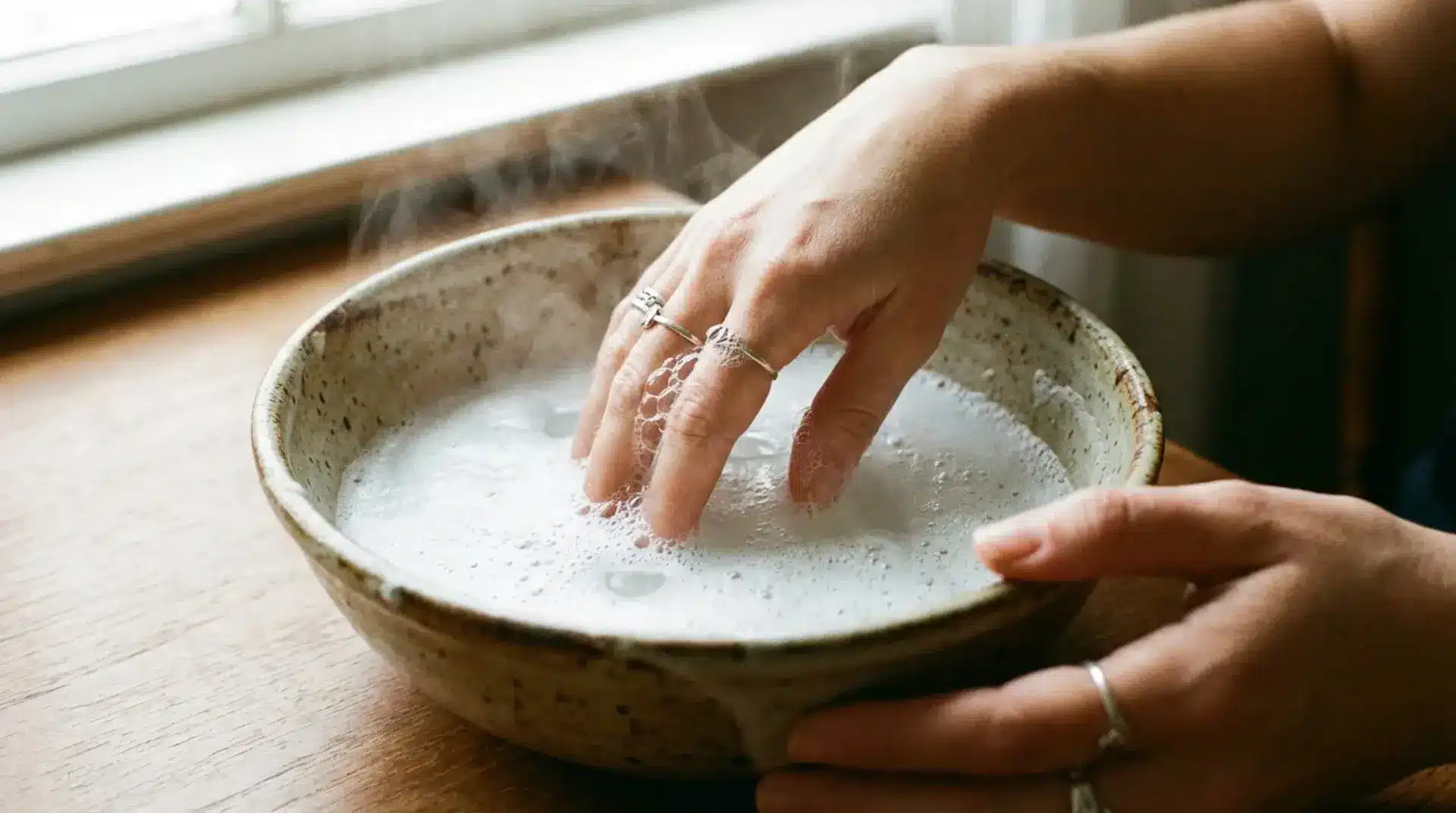
Warm, soapy water is one of the simplest approaches and works especially well for fresh or light glue.
Fill a small bowl with warm water and add a mild hand soap. Soak the affected area for about ten to fifteen minutes. The warmth and moisture help soften the hardened adhesive and weaken its bond with the skin.
After soaking, gently rub the area with your fingers or roll the glue away from the skin. In many cases, the glue will begin to loosen and slide off slowly without causing irritation.
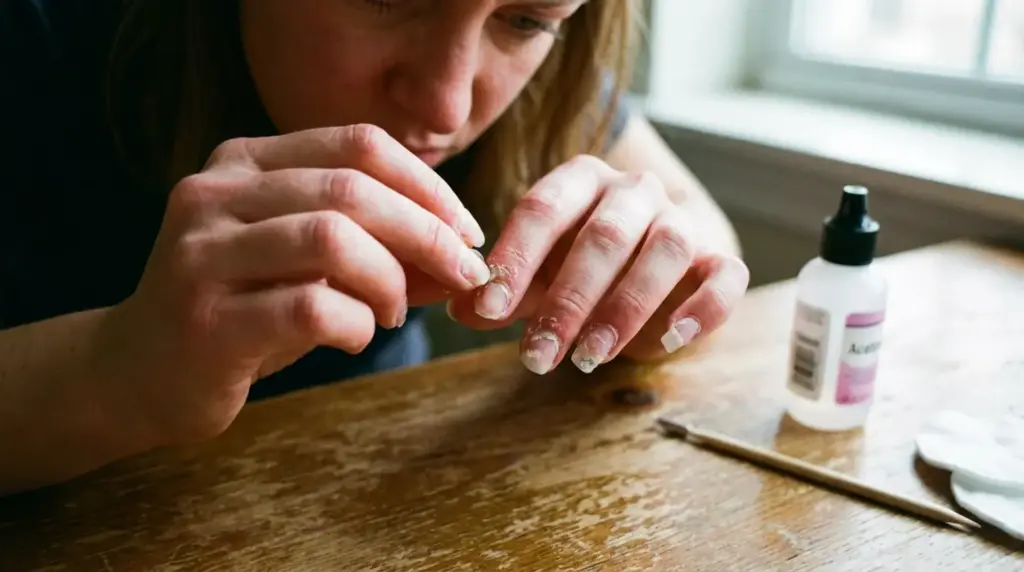
2. Try Acetone-Based Nail Polish Remover
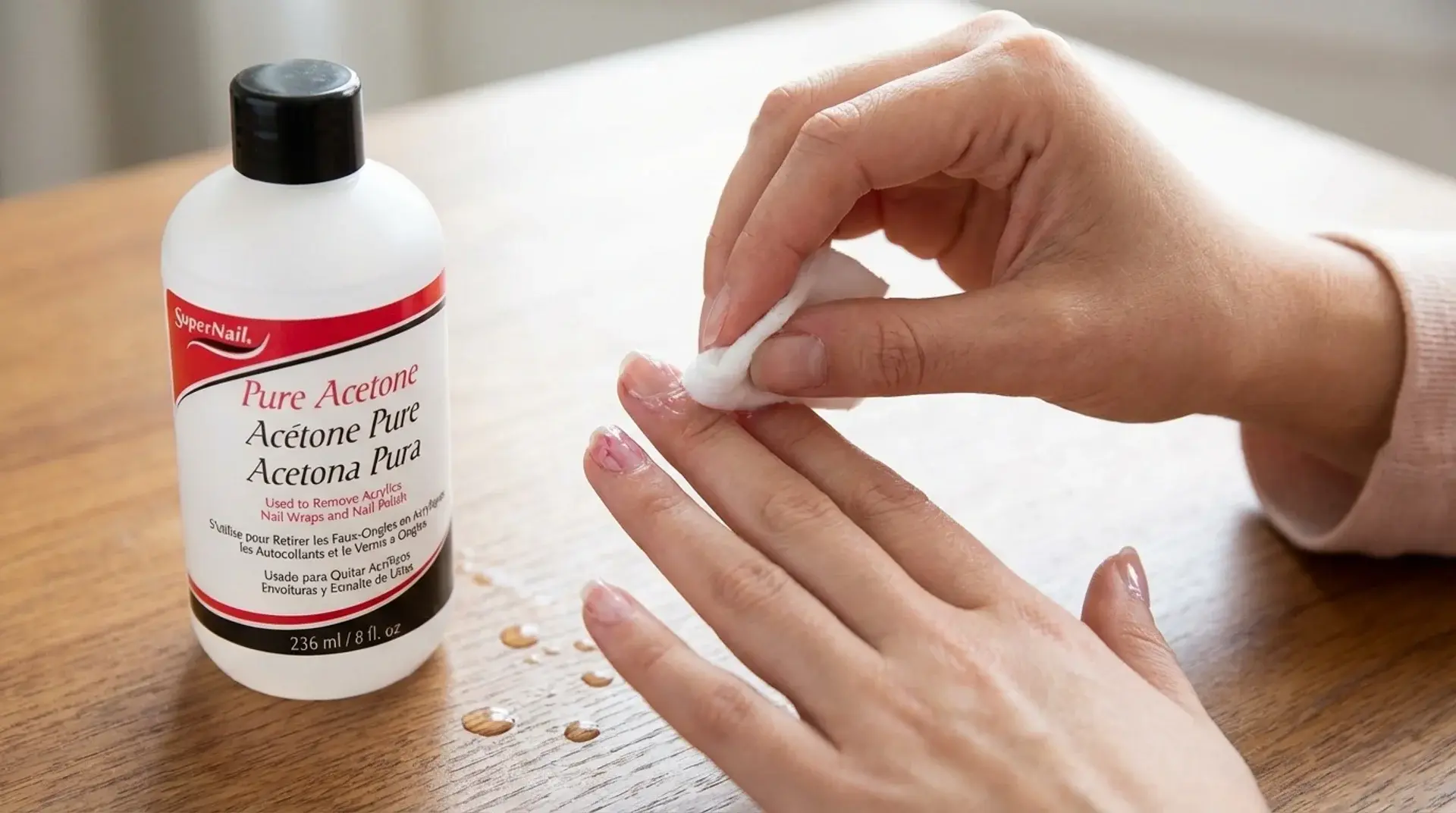
Acetone is the fastest option and works well for stubborn or larger glue spots.
Acetone breaks down cyanoacrylate, the adhesive used in nail glue. Apply a small amount of acetone to a cotton pad and hold it against the glued area for several seconds.
Aim for 5–10 minutes of contact for dried glue; a quick wipe rarely does the job. This helps soften the glue so it can be wiped away more easily.
Once the glue begins to dissolve, wash the skin thoroughly with soap and water. It is also helpful to apply moisturizer afterward because acetone can dry out the skin.
Avoid soaking skin in acetone for prolonged periods (more than 10–15 minutes), as extended exposure can cause significant dryness, cracking, and, in sensitive individuals, irritation resembling a mild chemical burn.
Ensure good ventilation when using acetone, and keep it out of reach of children.
If you prefer to avoid acetone altogether, our guide on removing nails without harsh chemicals walks through several gentler alternatives in more detail.
3. Apply Petroleum Jelly
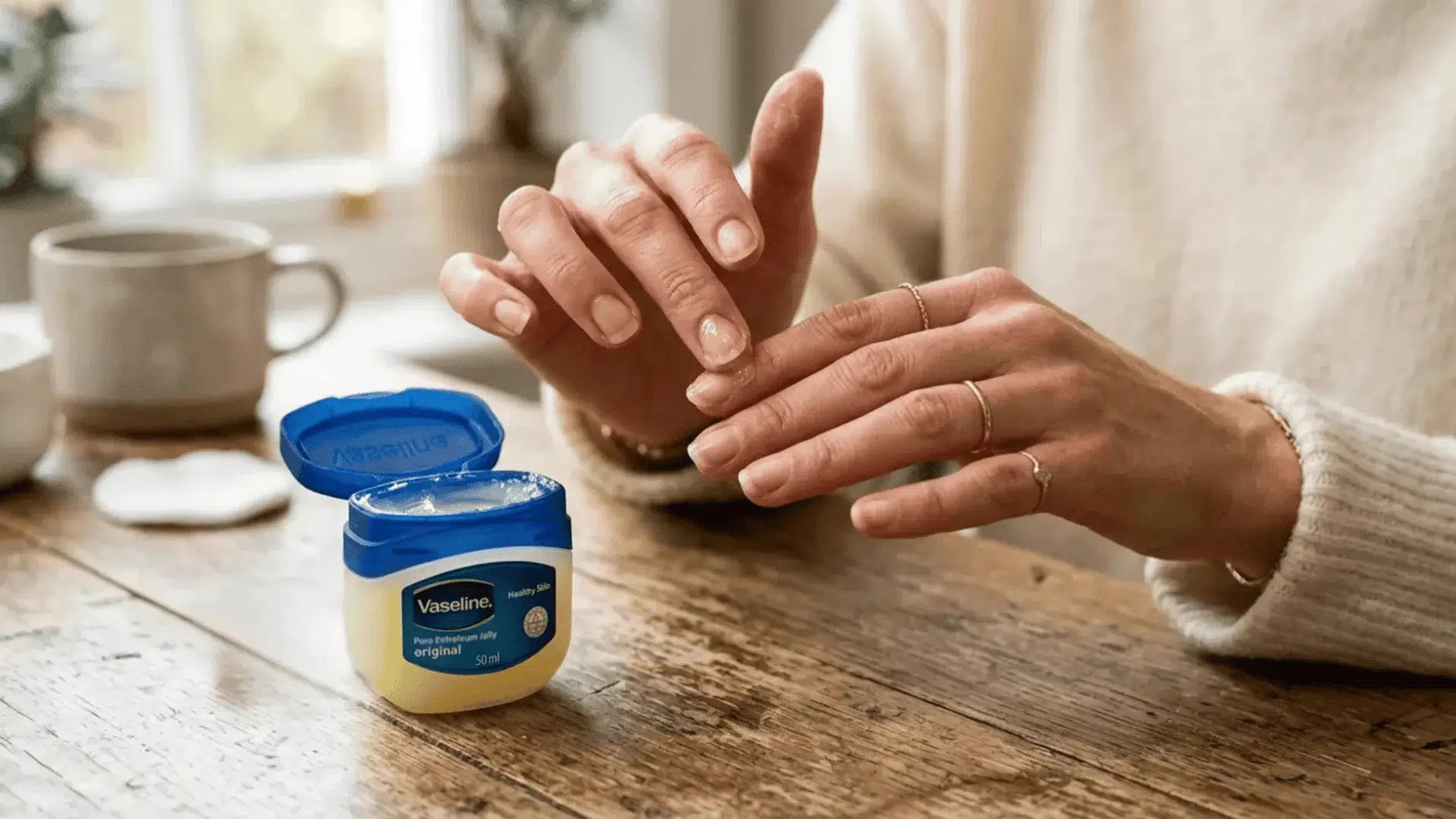
Petroleum jelly works more gradually than acetone but is a good choice for sensitive skin.
Products such as petroleum jelly or Vaseline work well. Apply a small amount around the glued area and massage it gently into the skin. Over time, the oil helps break down the adhesive bond.
Continue massaging and slowly roll the glue away from the skin. This method works more gradually but is often comfortable for sensitive skin.
Overnight method: Apply a generous layer of petroleum jelly or cuticle oil to the glued area before bed, then cover with a cotton glove or wrap loosely with a bandage. The trapped warmth and moisture work through the night to soften the adhesive. By morning, the glue should roll off with very little effort.
4. Use a Gentle Nail File or Buffer
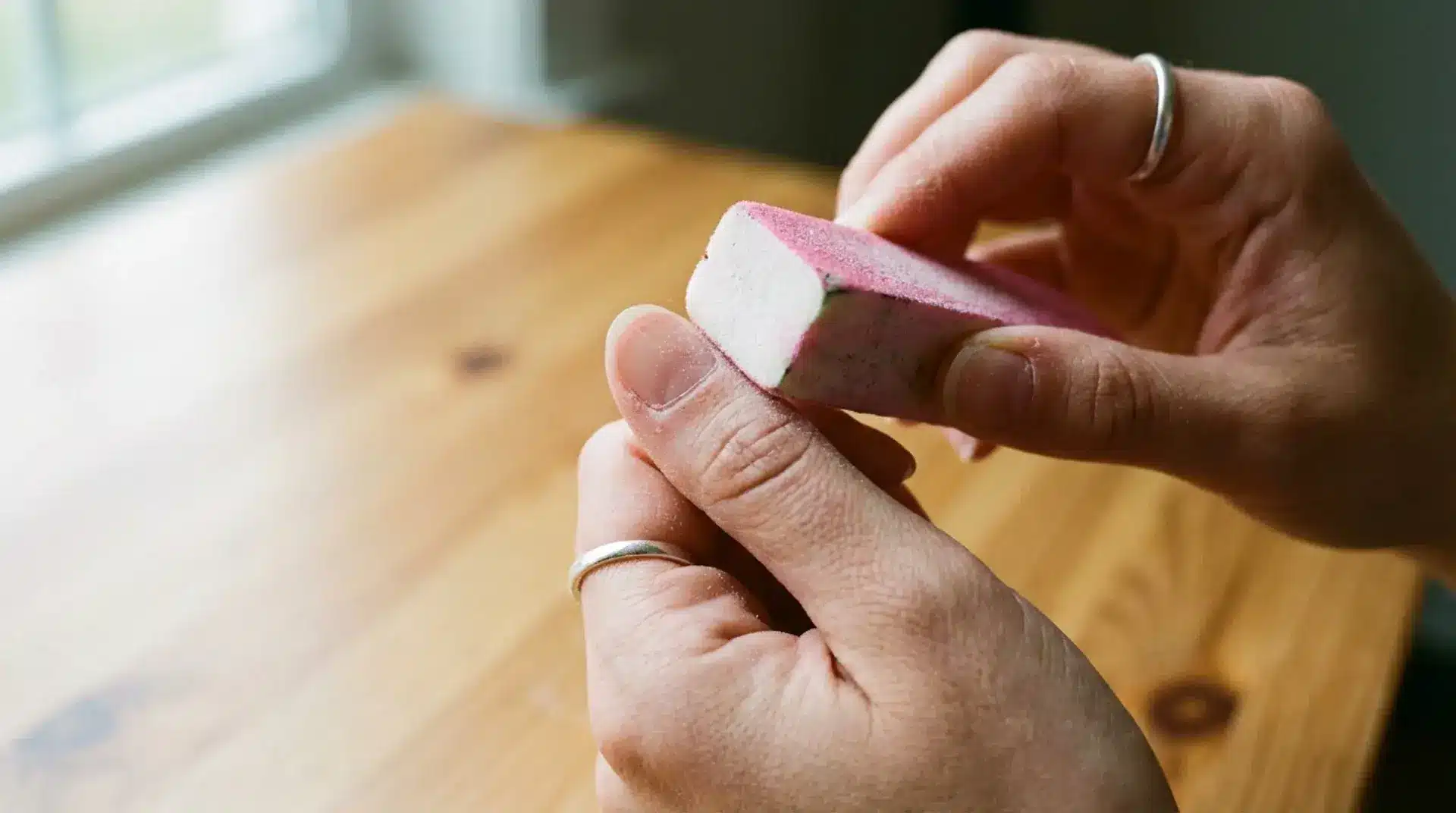
If a thin layer of glue remains after softening, light friction can help remove the residue.
Use a soft nail buffer or gentle nail file and lightly rub the glued area. A pumice stone dampened in warm, soapy water also works well here and is slightly more effective than a standard nail file for leftover residue.
This should only be done after the glue has softened through soaking or oiling.
The goal is to slowly remove the leftover adhesive. Avoid pressing too hard or scraping the skin, as harsh friction can cause irritation.
5. Use Olive Oil or Coconut Oil
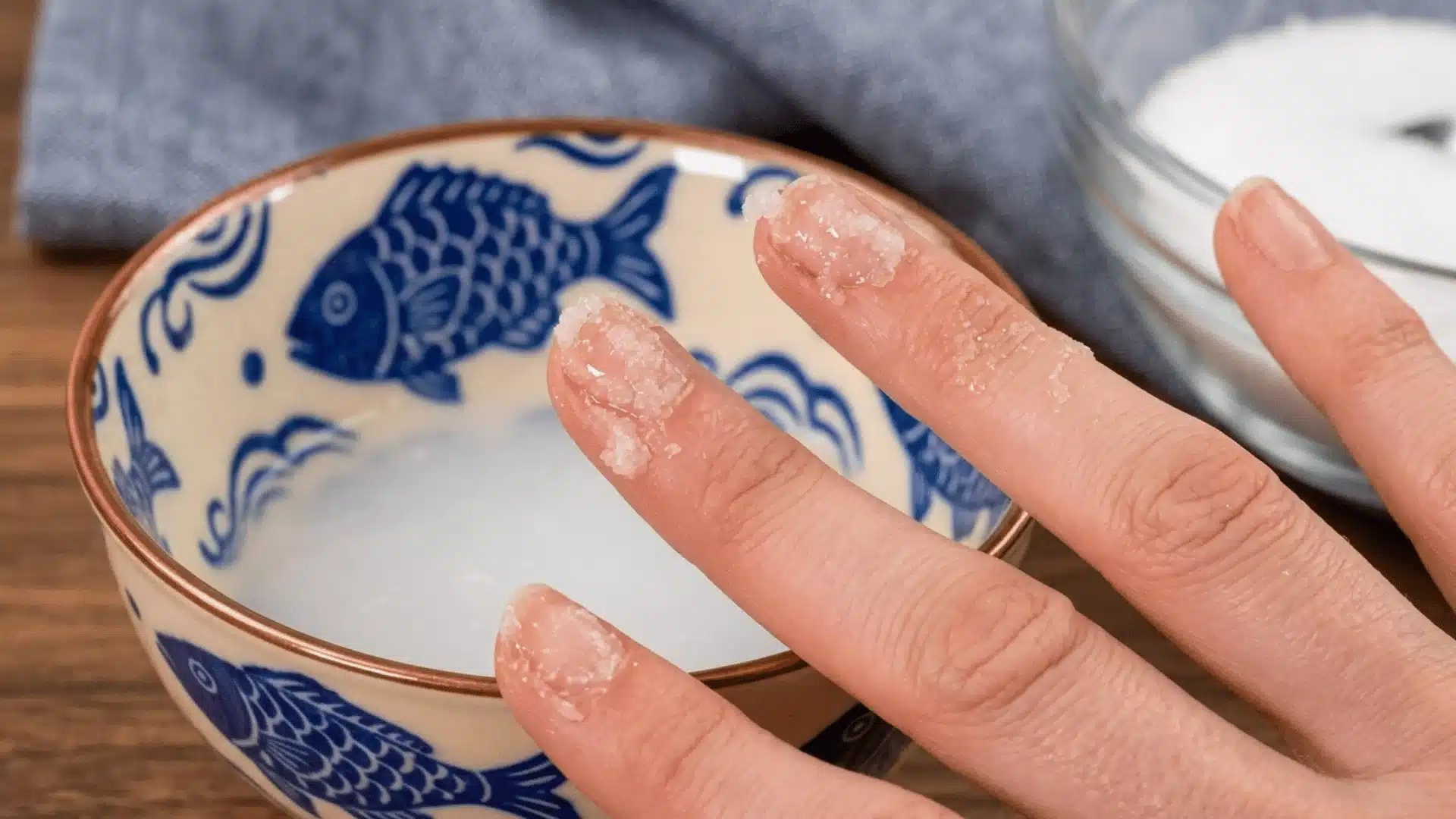
Olive oil and coconut oil both work well here, and they’re especially gentle near the cuticle area.
Heat olive or coconut oil until slightly warm, then massage it into the glued area. The oil gradually softens the glue, reducing its grip on the skin. Cuticle oil works just as well.
Continue rubbing the area for a few minutes until the glue begins to loosen and roll away.
6. Try Hand Lotion or Moisturizer
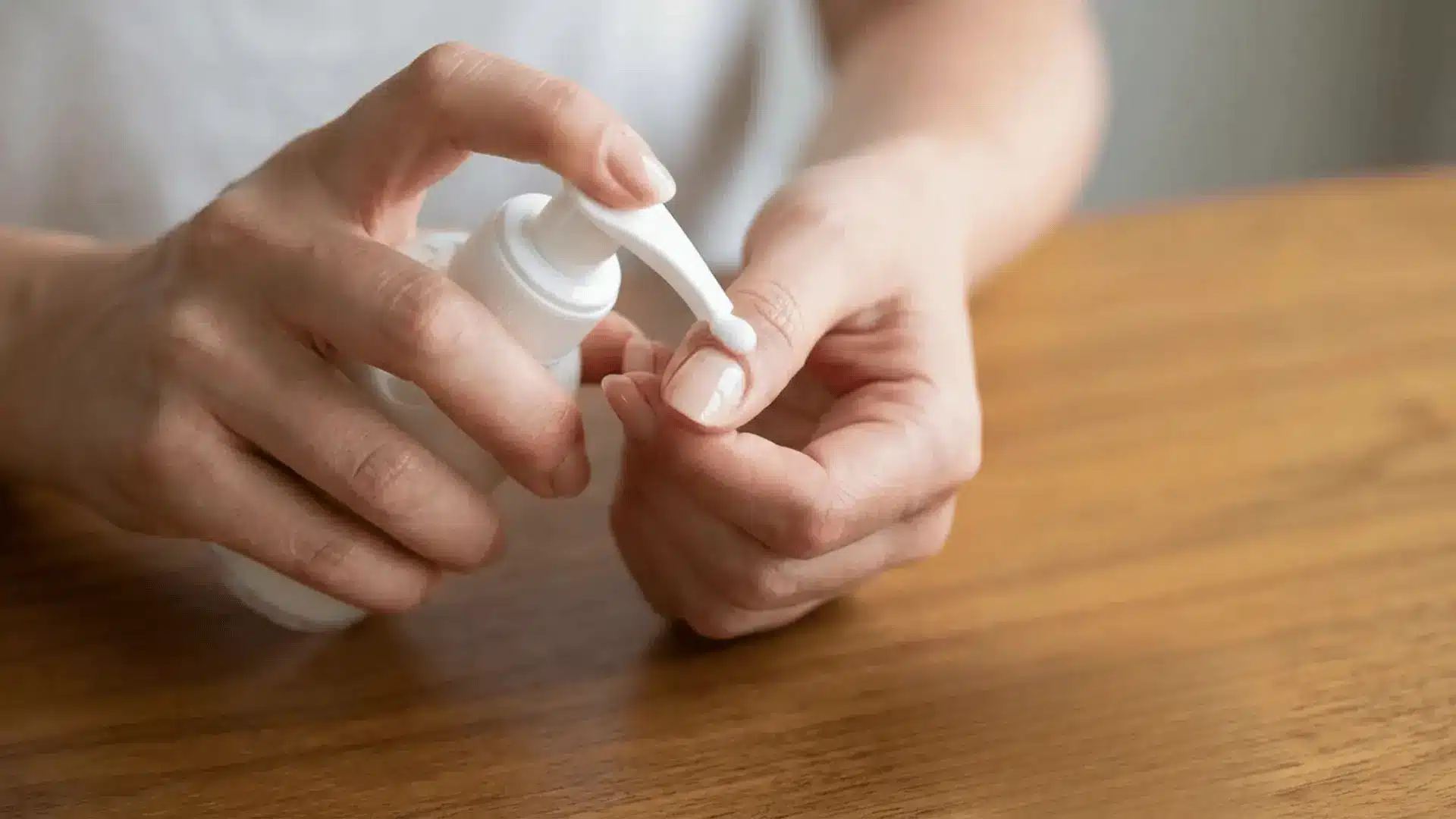
A thick hand cream is the lowest-effort option, especially if you catch the glue before it fully hardens.
Apply a generous layer of lotion over the glue and allow it to sit on the skin for several minutes. As the skin absorbs the moisture, the glue may begin to soften.
Gently rub the area afterward to remove the loosened adhesive.
7. Rubbing Alcohol
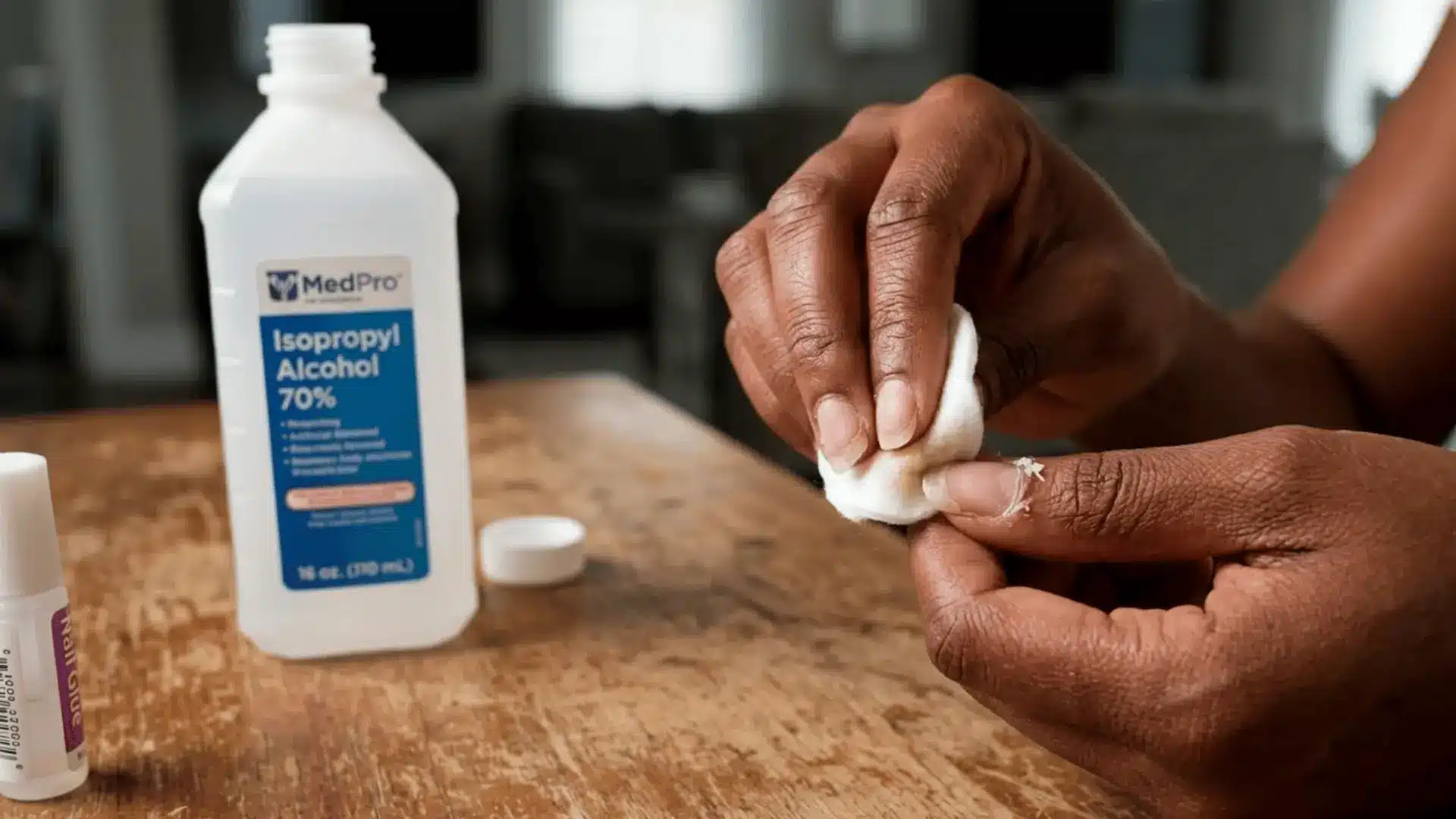
Rubbing alcohol (isopropyl alcohol) is a useful middle-ground option that is stronger than oils but considerably gentler on skin than acetone.
Soak a cotton ball or pad in rubbing alcohol, then press it against the glued area for 2–5 minutes. The alcohol helps weaken the adhesive bond, making the glue easier to rub or roll away.
Follow up with a moisturizer, as alcohol can be mildly drying.
This method is particularly useful for people who want something more effective than oil but need to avoid acetone, for example, if the glue is near a broken cuticle or sensitive area.
Is Nail Glue on Skin Dangerous?
Getting a small amount of nail glue on the skin is usually not dangerous.
Nail glue is formulated to bond quickly, so when it comes into contact with the skin, it may feel tight as it dries, but this reaction is generally harmless for most people.
Some temporary effects can still occur. The skin may feel dry or slightly stiff because the adhesive forms a thin layer on the surface.
If the glue remains for a long time, mild irritation or redness can appear, especially around sensitive areas.
In rare cases, especially when a larger amount of glue is applied and left on the skin for an extended period, there is a risk of a chemical reaction that can progress to blistering or symptoms resembling a mild chemical burn.
This is uncommon with small amounts but is worth knowing, particularly for those with sensitive or reactive skin.
People with sensitive skin may notice stronger reactions such as itching or discomfort. In most cases, the real problem happens when someone tries to pull the glue off too quickly.
Forcefully removing it can damage the outer layer of skin. Gentle methods are always the safest way to remove nail glue.
What to Do if Your Fingers Are Glued Together
This is a more urgent situation that rarely gets covered. If nail glue bonds two fingers or the finger to the nail together, do not try to pull them apart. Forced separation can tear the skin.
Instead, soak the joined area immediately in warm, soapy water. Gently work the fingers apart using a slow, rocking motion side to side, not a straight pull.
If warm water isn’t working, apply acetone carefully around the edges of the bond using a cotton swab, allow it to penetrate for a few minutes, then continue the gentle rocking motion.
If the skin feels painfully tight or you cannot separate the fingers after 15–20 minutes of trying, seek medical advice rather than forcing it.
Important: Do not use acetone on broken, irritated, or bleeding skin. If nail glue has bonded sensitive areas such as the eyes, mouth, or large sections of skin, or if swelling, severe pain, or skin injury occurs, seek professional medical attention promptly. Avoid using excessive force to separate bonded skin, as this can cause tearing and increase the risk of infection.
What to Avoid When Removing Nail Glue from Skin
Removing nail glue from skin requires patience. Many people make the mistake of trying to remove it quickly, which can cause unnecessary irritation or minor skin damage. Avoiding a few common mistakes helps protect the skin while the adhesive loosens naturally.
- Pulling The Glue Off Forcefully: Trying to rip the glue off the skin can remove the top layer of skin along with it. This may lead to redness, soreness, or small skin tears.
- Using Sharp Tools: Objects such as tweezers, knives, scissors, or metal tools should never be used to scrape glue from the skin. These tools can easily cut or scratch the skin, increasing the risk of injury.
- Applying Harsh Chemicals: Products that are not meant for skin, such as industrial cleaners or strong solvents, should never be used to remove nail glue.
- Scraping The Skin Aggressively: Repeated or aggressive scraping with nails or rough tools can irritate the skin and make the area sensitive. Gentle rubbing after soaking is a much safer option.
- Soaking in Acetone for Too Long: More than 10–15 minutes of acetone contact can cause dryness, cracking, and, in sensitive skin, irritation that looks like a chemical burn. Set a timer.
Patience is what actually protects your skin here; softening the adhesive gradually is always faster than dealing with an irritated or damaged area afterward.
Tips to Protect Skin When Using Nail Glue
Preventing nail glue from sticking to the skin is much easier than removing it later. A few simple habits during a manicure can help reduce accidental contact and keep the process clean and safe.
- Apply Small Amounts Of Glue: Use only a tiny drop of nail glue for each nail. Excess glue spreads quickly, increasing the risk of it contacting the surrounding skin.
- Use A Protective Barrier Around Nails: Apply a thin layer of petroleum jelly around the cuticle and nearby skin. This creates a barrier that helps prevent glue from bonding to the skin.
- Keep tissues or cotton pads nearby: Having them ready allows quick cleanup if the glue spreads beyond the nail area.
- Avoid Placing Glue Too Close To Skin: Focus on applying glue to the center of the nail rather than near the edges. This reduces the chance of overflow.
- Wash Hands After Application: Once the manicure is finished, washing hands helps remove any leftover glue residue before it fully dries on the skin.
- Don’t Apply Glue on Damp Nails: One overlooked cause of overflow is applying nail glue immediately after washing hands. Even slight surface moisture causes the glue to spread more than intended. Pat the nails completely dry and wait a full minute before applying glue.
When Nail Glue on Skin May Need Medical Attention
In most situations, nail glue on the skin can be removed safely at home using gentle methods. However, there are a few uncommon cases where professional medical advice may be necessary.
If the skin becomes severely irritated or develops intense redness, it could indicate that the skin is reacting strongly to the adhesive. Persistent discomfort should not be ignored.
Blistering or swelling around the glued area is another sign that the skin may be damaged or inflamed. These symptoms may require proper medical care.
Immediate attention is also important if nail glue comes into contact with the eyes or the mouth. These areas are sensitive and should be examined by a healthcare provider.
A strong burning sensation that does not fade after washing the area may also signal irritation.
If any of these symptoms appear, seeking medical advice helps ensure the skin heals safely.
Conclusion
Nail glue on the skin can feel stressful at first, especially when it dries quickly and won’t come off. The good news is that most situations are simple to handle with the right approach.
Gentle methods such as soaking, using oils, or applying a small amount of acetone can help loosen the adhesive without harming the skin.
The key is patience. Pulling or scraping the glue too quickly can irritate the skin, while softening it gradually allows the bond to release safely.
With a little care, nail glue usually comes off without causing lasting problems.
Most cases can be managed easily at home using everyday items. If nail glue mishaps occur during a manicure, remember that a calm, gentle approach works best.
Have a go at a trick for removing nail glue from skin? Share the experience or tips in the comments below.
Frequently Asked Questions
Can Nail Glue Damage Skin?
Short contact with nail glue usually does not cause serious harm. The adhesive forms a thin layer that sits on the surface of the skin. Problems mainly happen when the glue is pulled off forcefully. Rough removal can irritate the skin, cause redness, or remove the top layer of skin. Using gentle methods, such as soaking or oil, helps prevent irritation.
What Dissolves Nail Glue Quickly?
Acetone-based nail polish remover is the fastest way to dissolve nail glue because it breaks down the adhesive used in most nail glues. Rubbing alcohol is a slower but gentler alternative. Applying a small amount with a cotton pad helps loosen the bond quickly.
Is it Safe to Peel Nail Glue off Skin?
Removing nail glue from the skin is only safe after the adhesive has softened. If the glue is still firmly attached, pulling it off can irritate the skin or cause small tears. Soaking the area in warm water or using oil first helps loosen the glue, making removal much safer.