
You open your closet, stare at a pile of clothes, and still feel like you have nothing worth wearing. Sound familiar?
Most men are stuck in this loop, owning too many random pieces that do not work together. That is the exact problem a well-built men’s capsule wardrobe is designed to solve.
It is not about owning less for the sake of it; it is about owning the right things.
The average man wears only about 20 percent of his wardrobe regularly, meaning the other 80 percent is taking up space and draining his budget without giving back.
The real problem is not quantity; it is a lack of intention. As a stylist who has helped clients rebuild their closets from scratch, some starting with nothing more than a single thrifted blazer and a good pair of dark jeans, I can tell you the fix is simpler than most men expect.
In this blog, you will get a clear, practical system to fix that, built for real life, not runway trends.
What Makes a Capsule Wardrobe So Useful
A capsule wardrobe for men is a small, well-planned collection of clothes that all work together.
Instead of stuffing your closet with random pieces, you keep only versatile items you can mix and match easily. The goal is simple: fewer clothes, better outfits.
The concept has been around since the 1970s, when London boutique owner Susie Faux coined the phrase to describe a tightly edited wardrobe of timeless pieces.
It gained mainstream traction when designer Donna Karan applied the idea to her iconic “Seven Easy Pieces” women’s workwear collection, but the logic translates directly to men’s dressing, and arguably works even better given how consistent men’s wardrobe fundamentals tend to be.
It works because it cuts down clutter and removes daily guesswork. You do not waste time deciding what to wear, and your style looks more consistent without trying too hard.
Why Most Men’s Wardrobes Don’t Actually Work?
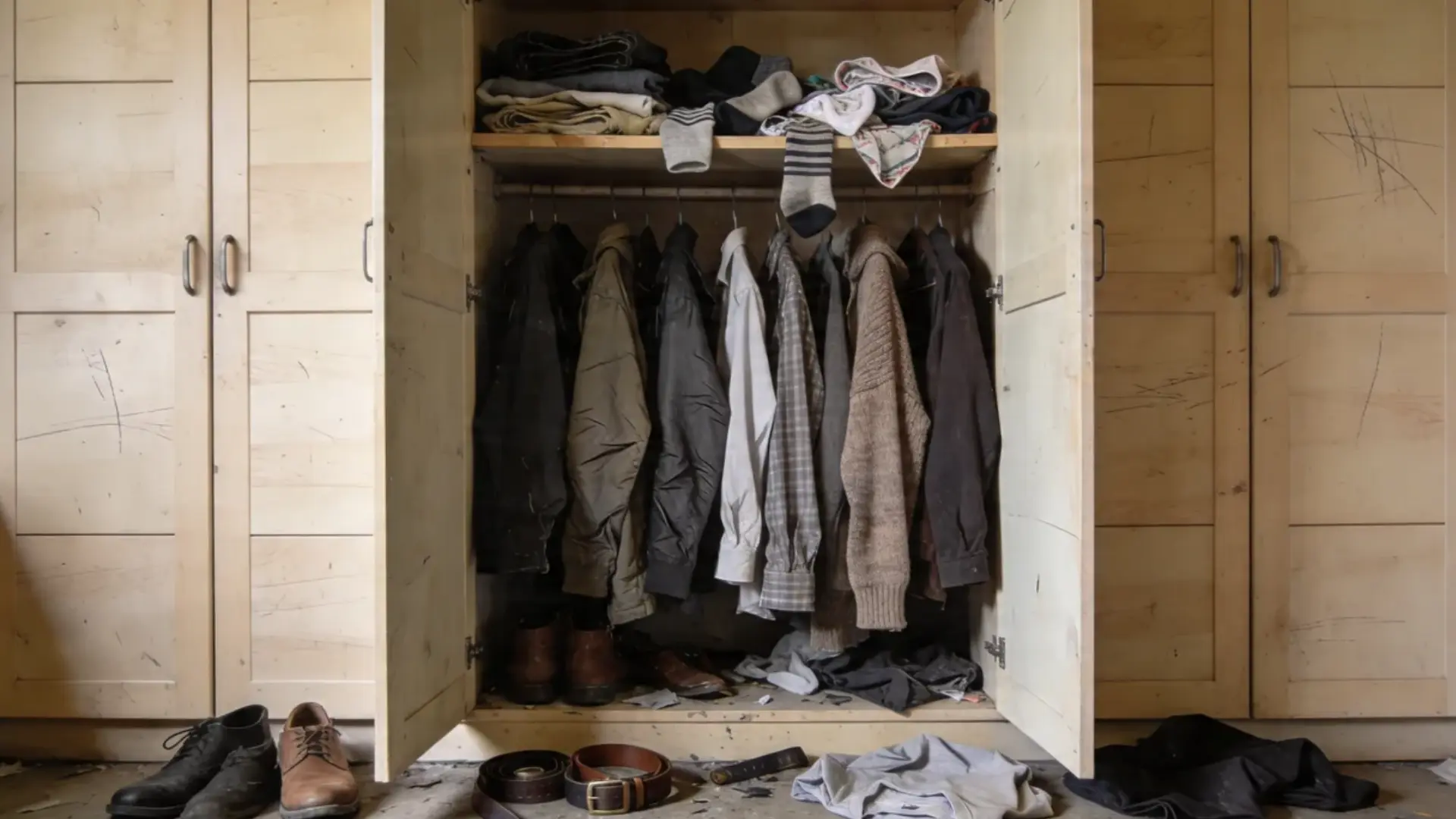
Walk into the average man’s closet, and you will find the same pattern every time: a cluster of items worn on heavy rotation, a graveyard of impulse buys with tags still on, and a nagging sense that something is still missing.
Most men build their wardrobes reactively, buying what catches their eye rather than what fills a genuine gap.
One client, a project manager in his mid-thirties, came to me owning over 60 shirts and still wearing the same three every single week.
When we laid everything out, the problem was clear: he had no neutral base to build on. Once we identified four anchor pieces, the rest of his wardrobe suddenly started working together.
He gave away 40 shirts and told me afterward it felt like he had more to wear, not less. A capsule wardrobe fixes this by forcing intentionality upfront.
Every piece has to earn its place and demonstrate that it works with at least three other items before it makes the cut. That single rule changes how the whole system functions.
Core Principles of a Capsule Wardrobe
Build a wardrobe where every piece earns its place, works harder for you, and fits seamlessly into your daily routine without adding unnecessary complexity or clutter.
- Versatility matters: Each item should pair easily with multiple outfits, reducing the need for excess clothing.
- Stick to neutral colors: Shades like black, white, navy, and grey make mixing outfits simple and consistent.
- Quality over quantity: Fewer well-made pieces last longer and look better than a closet full of cheap items.
- Think seasonally: Rotate clothes based on the weather while keeping your core wardrobe intact year-round.
- Focus on fit: Well-fitted clothes instantly elevate your overall look, even with basic pieces.
- Fabric is function: A linen shirt in August and a wool-blend crewneck in January are technically the same “top”, but only the right fabric makes each one wearable.
- Match your lifestyle first: A capsule built for a remote worker looks different from one built for daily client meetings. Start with where you actually spend your time, not where you imagine spending it.
Note: Before adding any piece, run it through three checks in this order: comfort, context, then polish. If it fails the first two, no amount of polish will save it in daily wear. This order matters because most men evaluate clothes in reverse.
Key Pieces Every Capsule Wardrobe Men Need
A solid capsule wardrobe starts with a few reliable essentials that cover daily needs, work settings, and casual outings without overcomplicating your choices or style.
1. Tops

Your tops form the base of most outfits, so keep them simple and versatile. Plain t-shirts work for everyday wear and layering. Stick to neutral shades so everything pairs without effort.
Button-down shirts work well in both casual and semi-formal settings. Polo shirts sit right in between, giving you a slightly sharper look without feeling overdressed.
Fabric note: For year-round use, 100% cotton or a cotton-modal blend holds up best across most climates. If you are building on a tight budget, a well-cut secondhand Oxford shirt in good condition will frequently outperform a new fast-fashion equivalent.
2. Bottoms
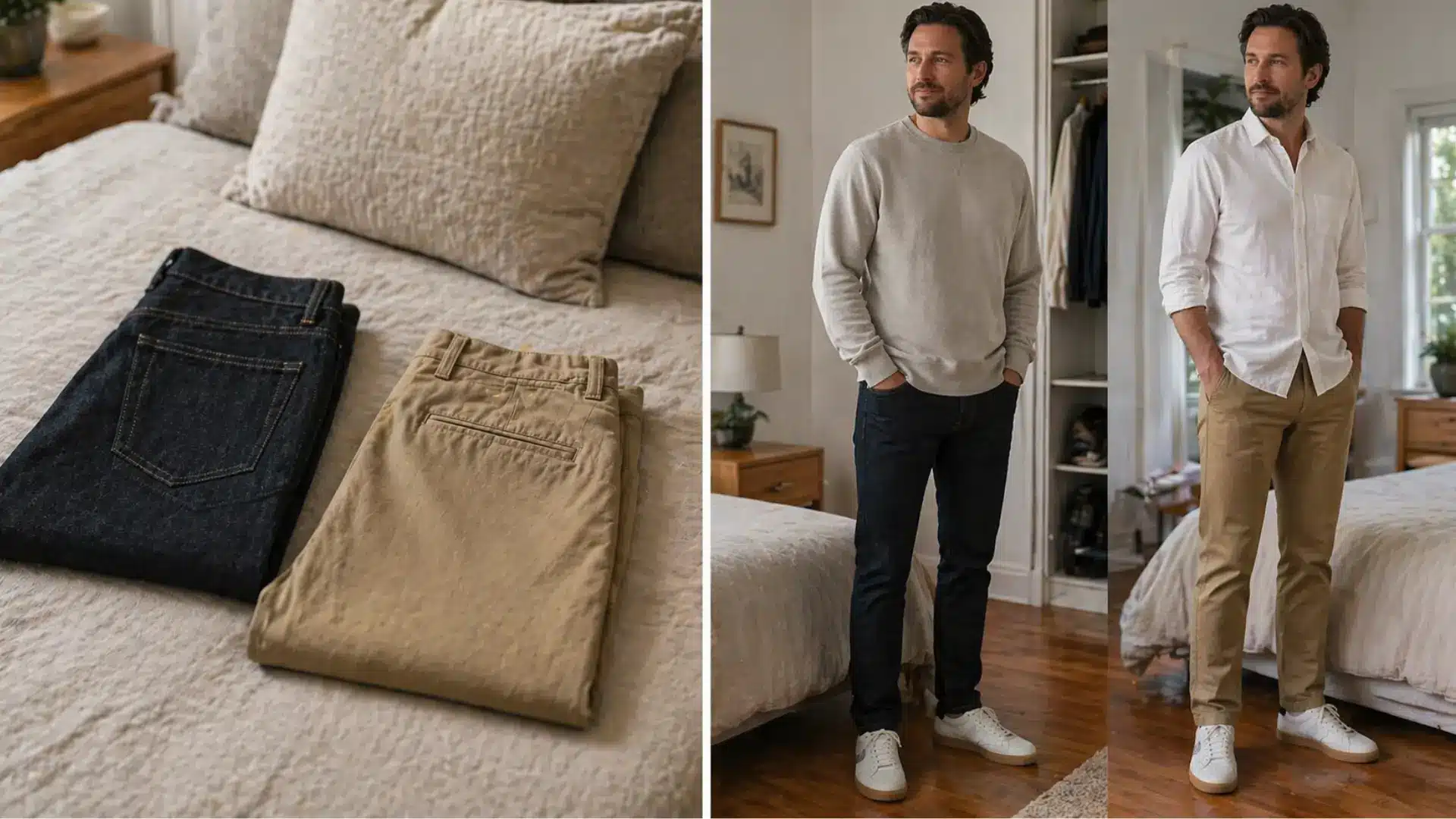
Bottoms should balance comfort and structure. Dark jeans are a go-to for casual and smart-casual looks.
Chinos offer a cleaner alternative when you want to step things up slightly, and if you are not entirely sure what chinos actually are or how they differ from dress trousers, that is worth understanding before you buy, since getting the wrong cut can undermine an otherwise solid outfit.
Tailored trousers are essential for formal settings or work environments. Keeping these in classic colors ensures you can rotate outfits without clashing or overthinking combinations.
3. Outerwear
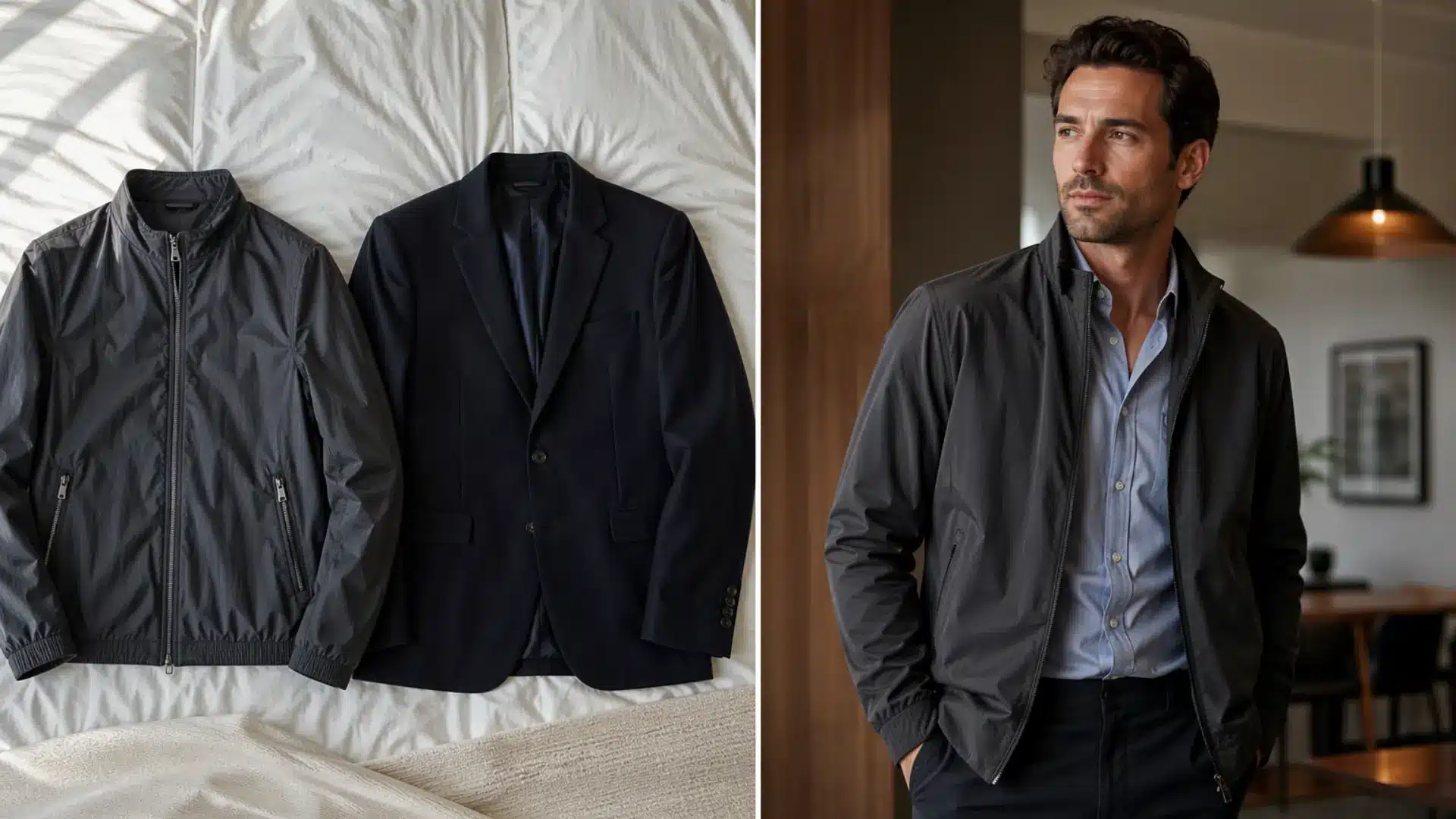
Outerwear ties your whole outfit together, especially in changing weather. A lightweight jacket is perfect for layering during mild conditions.
A blazer instantly sharpens your look for meetings or dinners. A seasonal coat, whether for winter or rain, keeps you prepared without sacrificing style. Focus on pieces that complement most of your wardrobe.
Investment priority: Of all the categories in a capsule wardrobe, outerwear delivers the highest cost-per-wear return. A well-constructed coat worn daily through five winters beats three cheap ones that lose their shape by February.
4. Footwear
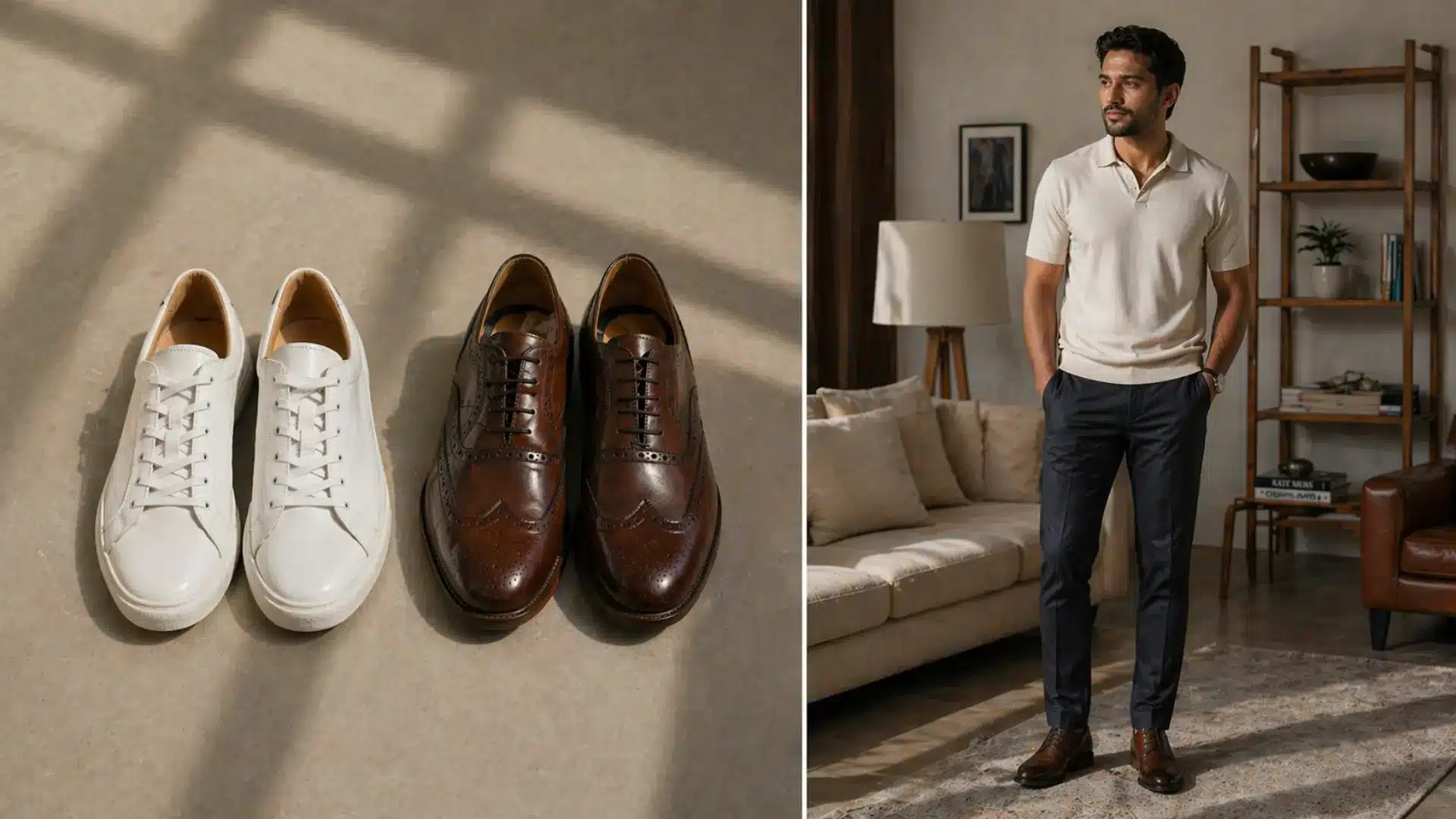
Shoes can make or break your outfit, so keep them functional and clean. White sneakers are ideal for daily wear and casual outfits. Formal shoes are necessary for business or formal occasions.
Chelsea boots in tan or black leather are one of the most versatile options you can add. They work with dark jeans, chinos, and tailored trousers, bridging casual and smart-casual without effort.
Casual loafers offer a relaxed yet polished option for in-between moments.
There are several distinct cuts and constructions worth knowing before you buy, and understanding the loafer styles that work best for each occasion will help you pick one pair that actually pulls multiple looks together rather than sitting unused. Stick to minimal designs so they work across multiple outfits.
The belt rule: Your belt leather and shoe leather must match: black shoes with a black belt, brown shoes with a brown belt.
5. Accessories
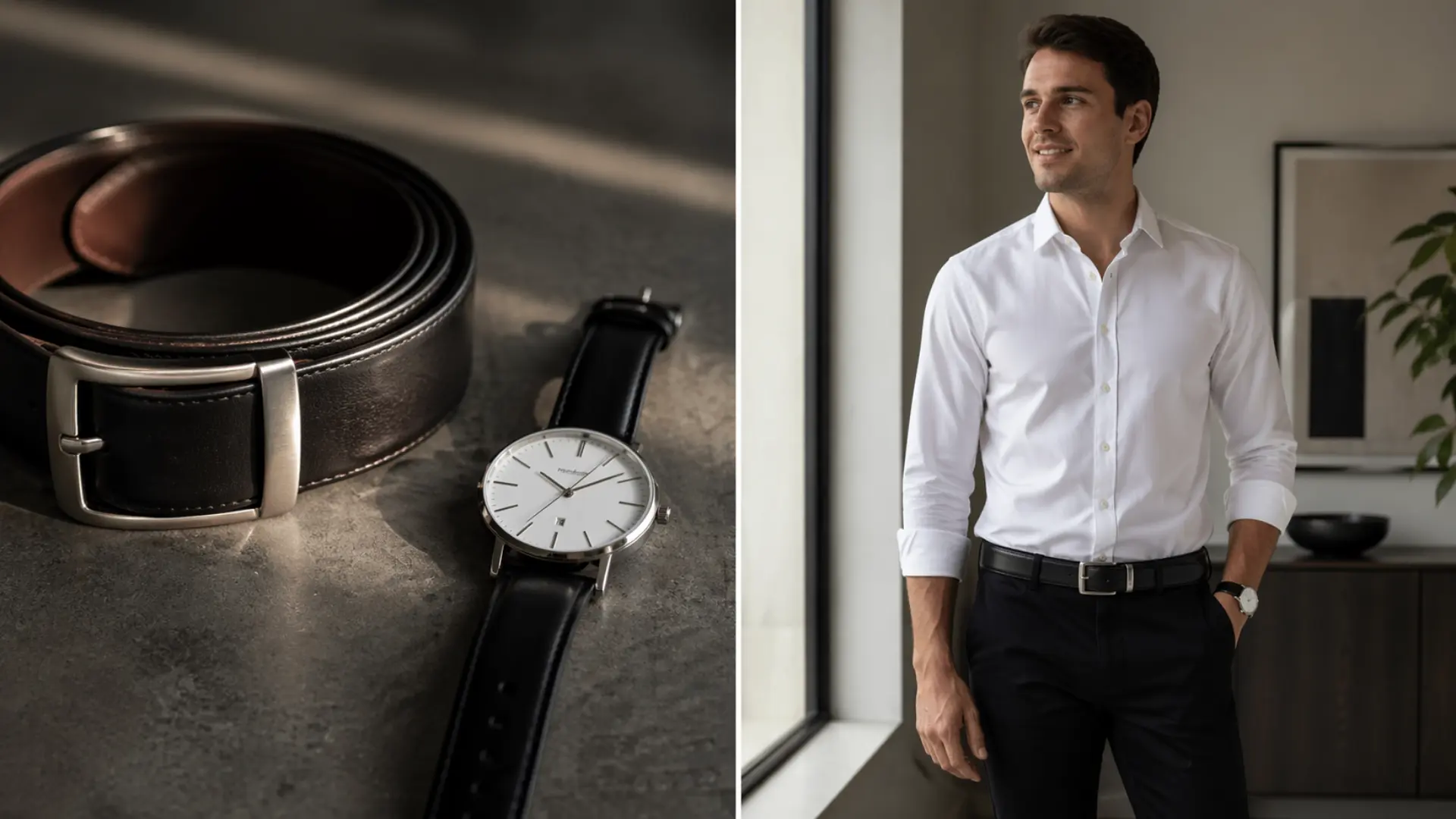
Accessories should stay minimal but purposeful. A good belt ties your outfit together and keeps things practical.
For watches, a slim dress watch on a leather strap handles formal and semi-formal occasions; a clean-face field watch or minimalist steel case works for everything else.
You do not need both to start; pick the one that matches where you spend most of your time and add the second when the gap becomes obvious.
A pair of quality sunglasses in a classic frame, tortoiseshell or matte black, rounds out the accessories without cluttering the system. Keep the rest minimal to avoid clutter. The goal is to support your overall look, not distract from it.
Step-by-Step: How to Build Your Capsule Wardrobe?
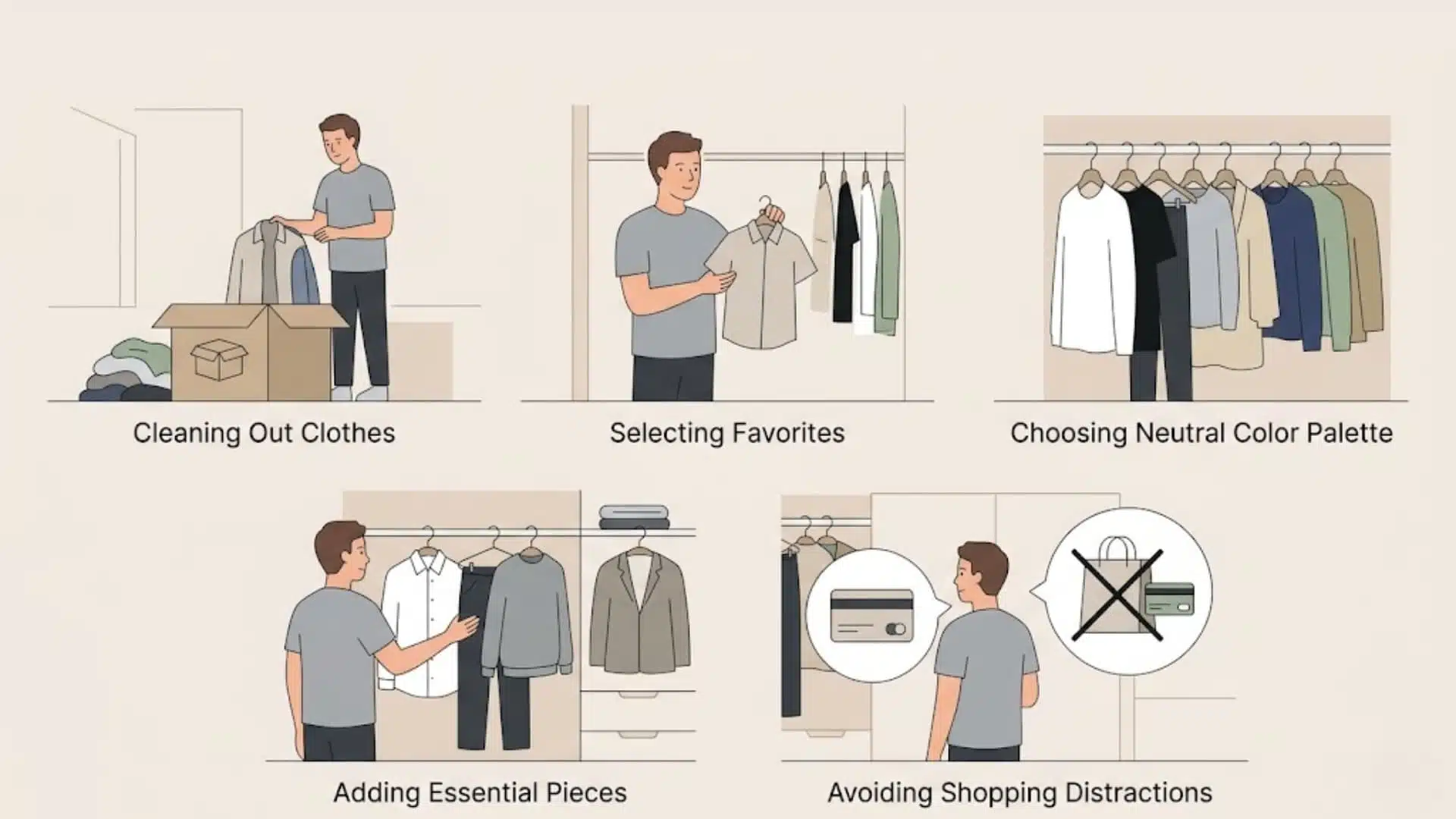
Building a capsule wardrobe is not about throwing everything away; it is about refining what you own into a system that actually works every day.
1. Clean Out Your Current Wardrobe
Start by taking everything out and reviewing each piece honestly. If you have not worn something in months, it likely does not belong.
Focus on removing items that do not fit, feel uncomfortable, or do not match your current lifestyle.
This step clears mental clutter and gives you a clear view of what you are actually working with.
2. Identify What You Actually Wear
Look at the clothes you naturally reach for every week. These are your real essentials, not the ones you think you should wear. Notice patterns in colors, fits, and styles.
This helps you understand your personal preferences and build around them instead of copying generic lists that may not suit your routine or comfort.
3. Choose a Color Palette
Pick a set of neutral base colors like black, white, navy, and grey, then add one or two accent colors if needed. This makes mixing outfits effortless and avoids mismatched combinations.
A consistent palette ensures that almost every piece works together, which is the core idea behind a capsule wardrobe that saves time and effort.
4. Fill Gaps with Essentials
Once you know what you have and what you wear, identify missing pieces that complete your wardrobe. This could be a proper pair of chinos, a versatile jacket, or reliable footwear.
Focus on buying items that integrate easily with your existing clothes rather than adding random pieces that create more confusion when choosing daily outfits.
Before you buy anything new, ask whether it works with at least 3 items already in your wardrobe. If the answer is no, it does not belong in a capsule, no matter how well it looks on the rack or how good the sale price is.
5. Avoid Impulse Buying
This is where most people mess up their progress. Avoid buying clothes just because they look good in the moment or are on sale.
Always ask if the item fits your palette, matches multiple outfits, and serves a purpose. Staying disciplined here keeps your wardrobe intentional and prevents it from slipping back into clutter and inconsistency.
Capsule Wardrobe Men for Different Lifestyles
A capsule wardrobe for men works best when tailored to real daily routines, ensuring every piece supports comfort, functionality, and versatility across different environments and lifestyle needs.
- Office-Based Professionals: Focus on structured pieces like tailored trousers, blazers, and Oxford shirts to maintain a polished appearance that transitions smoothly between meetings, office hours, and after-work settings.
- Remote Workers: Prioritize comfort with well-fitted basics like t-shirts, chinos, and lightweight layers while maintaining a clean, presentable look suitable for video calls and quick outings.
- Students and Casual Lifestyles: Build around durable, versatile essentials like tees, hoodies, jeans, and sneakers that handle long days, varied schedules, and social settings without constant outfit changes.
- Travel-Focused Wardrobes: Choose wrinkle-resistant, multi-purpose clothing that packs light and adapts easily across casual, smart, and formal situations without overloading your luggage or complicating choices.
- Lifestyle-Based Approach: A capsule wardrobe system works best when built around daily habits, ensuring every piece supports real routines instead of ideal scenarios that rarely match everyday life.
Common Capsule Wardrobe Mistakes Men Should Avoid
Avoid these mistakes if you want your capsule wardrobe to actually stay simple, useful, and easy to maintain without unnecessary stress or confusion.
- Chasing trends: Trendy items go out fast and rarely align with your core wardrobe, creating clutter rather than consistency.
- Ignoring proper fit: Even basic clothes look off if they don’t fit well, ruining the whole point of a clean wardrobe.
- Overcomplicating things: Adding too many rules or pieces defeats the idea of simplicity and makes daily dressing harder.
- Skipping seasonal updates: Not adjusting for weather leaves you either underprepared or holding unnecessary items.
- Buying without purpose: Every piece should serve a role; it becomes just another unused item in your closet.
- Treating fit as permanent: Bodies change over time, and a capsule wardrobe built around clothes that no longer fit is not a wardrobe; it is a storage unit. Budget a small amount annually for basic tailoring.
Organizing Your Capsule Wardrobe
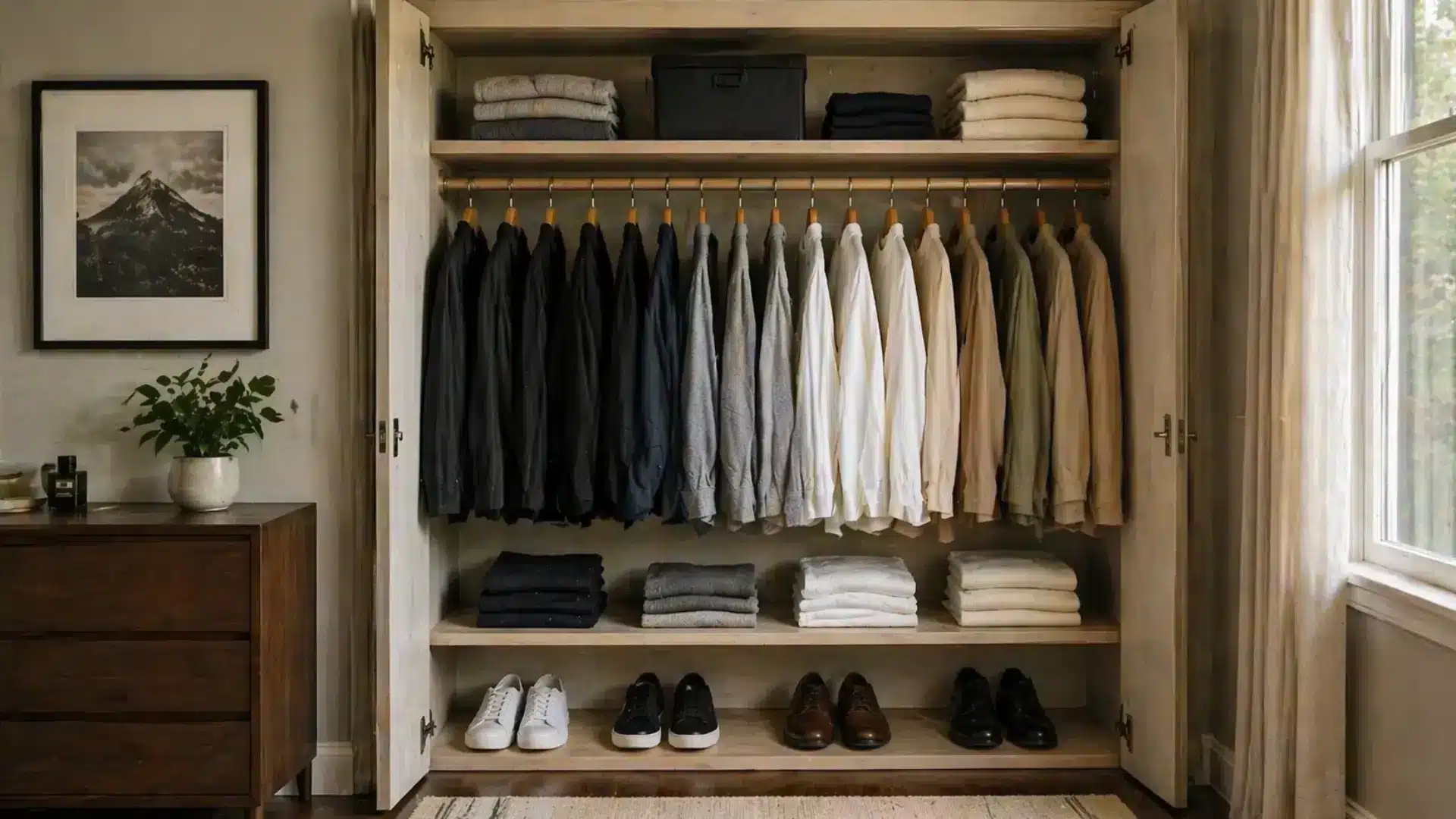
Once you have the right pieces, organizing them properly makes daily use much easier. Start with a clean closet layout where similar items stay together, like tops, bottoms, and outerwear.
Use a mix of folding and hanging based on the item. T-shirts and knitwear can be folded, while shirts, jackets, and trousers should be hung to maintain shape.
Keep everything visible at a glance so you do not forget what you own. This reduces confusion and saves time.
A simple rotation system also helps, placing frequently worn items within easy reach while keeping the rest accessible but not in the way.
Conclusion
A capsule wardrobe is not about limiting your style; it is about making it work harder for you, every day.
By focusing on pieces that genuinely earn their place, you save time, eliminate the low-level stress of daily dressing, and build a wardrobe that fits your actual life rather than the life you imagine wearing clothes in.
You do not have to overhaul everything at once. Start by identifying the three to five pieces you already reach for most, and build your palette around them.
From there, each decision becomes more deliberate and less effortful. That is how a capsule wardrobe actually takes hold, not through a dramatic Sunday purge, but through a slow, consistent shift in how you think about what you own and why.
If you found this helpful or have your own approach, please share your thoughts in the comments below.
Frequently Asked Questions
How Many Clothes Do You Really Need?
There is no fixed number, but most men can manage well with around 20 to 30 core pieces. The key is not the exact count, but how well each item works with others.
Does a Capsule Wardrobe Limit Your Style?
No, it refines your style by focusing on pieces that work together, helping you look more consistent, confident, and put-together without needing excessive clothing.
What Breaks a Capsule Wardrobe System?
Impulse buying breaks the system by adding items that do not match existing pieces, creating clutter, and reducing the flexibility that makes a capsule wardrobe work effectively.