If you’ve ever stared at a skincare aisle wondering whether to grab a retinol serum or ask your dermatologist for a prescription tretinoin, you’re not alone.
Navigating the world of retinoids can feel overwhelming; claims, concentrations, and confusing labels make it hard to know what will actually work for your skin.
In this guide, you’ll learn which one delivers faster results, which is gentler for sensitive skin, and how to start a routine that actually works, without causing unnecessary irritation or frustration.
By the end, you’ll feel confident choosing the right retinoid and creating a safe, effective routine tailored to your skin and goals.
What Tretinoin and Retinol Actually Are
Both tretinoin and retinol belong to the retinoid family, a group of compounds derived from vitamin A. They share the same end goal, but they take very different paths to get there.
Tretinoin
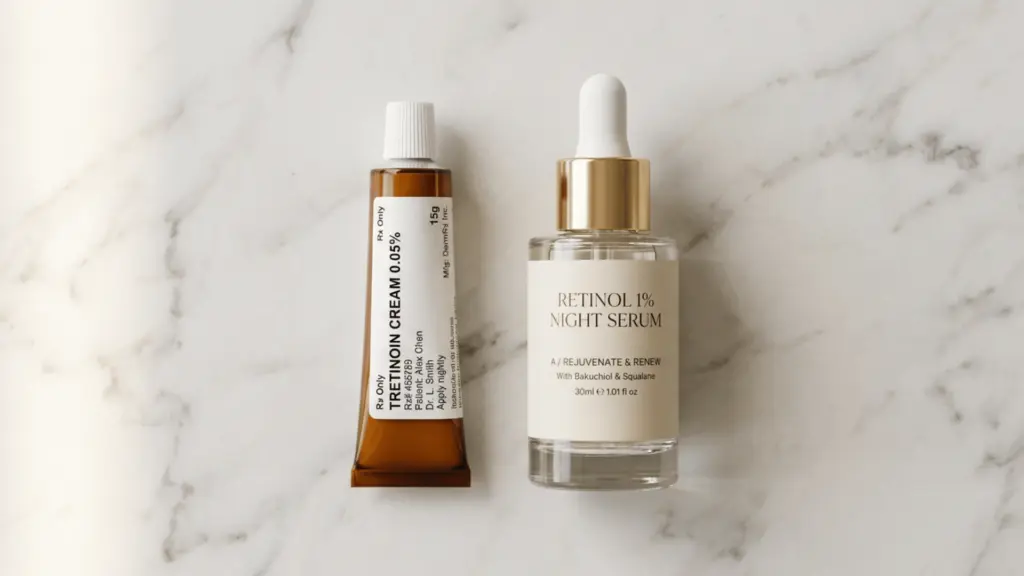
Tretinoin (sold under brands like Retin-A) is the active form of vitamin A, known clinically as all-trans retinoic acid. Because it’s already in its active state, your skin can use it immediately, no conversion needed.
That’s a big part of why it works faster and more intensively than over-the-counter options.
It requires a prescription in most countries due to its potency. Common concentrations range from 0.025% to 0.1%.
Even at the lowest end, it can cause dryness, peeling, redness, and temporary breakouts (often called “purging,” when clogged pores clear rapidly in the first few weeks). It also increases sun sensitivity, so daily SPF is non-negotiable.
Retinol
Retinol is a naturally occurring form of vitamin A found in over-the-counter serums and creams. Unlike tretinoin, it must be converted in the skin into active retinoic acid. That extra step makes it gentler and slower-acting.
Typical concentrations range from 0.025% to 1%. With consistent use, retinol genuinely does improve fine lines, texture, and collagen production.
The keyword is consistent; it takes longer to show results, but it’s significantly more tolerable for most skin types. Formulation matters a lot here: encapsulated or stabilized retinol tends to outperform basic OTC options.
Note: This section covers prescription skincare with medical implications. This is for informational purposes only; consult a licensed dermatologist before starting tretinoin.
How Understanding Retinoids Helps Your Skin
Knowing how retinoids work helps you use them safely, maximize benefits, and avoid common mistakes.
- Boosts Skin Renewal: Retinoids accelerate cell turnover, helping improve texture, fade hyperpigmentation, and prevent clogged pores.
- Stimulates Collagen Production: Regular use promotes firmer, plumper skin, reducing the appearance of fine lines and wrinkles.
- Tailored Product Choice: Understanding the difference between tretinoin and retinol helps you select the right strength for your skin type and goals.
- Manages Side Effects: Awareness of potential dryness, irritation, or photosensitivity ensures you can take precautions like moisturizing and using SPF.
- Sets Realistic Expectations: Knowing how long it takes for results to appear helps maintain patience and adherence to a routine.
- Supports Effective Routine Design: Knowledge allows you to combine retinoids with supportive products and avoid conflicts with other actives for optimal outcomes.
Comparing Tretinoin and Retinol
This table highlights the key differences between tretinoin and retinol, helping you choose the right retinoid based on potency, cost, availability, and suitability for your skin type.
| Feature | Tretinoin | Retinol |
|---|---|---|
| Form | Active retinoic acid (no conversion needed) | Precursor; converted in skin |
| Availability | Prescription only | Over the counter |
| Potency | 10–20 times stronger than retinol | Milder, depends on formulation |
| Speed of Results | Faster (weeks to months) | Slower (months with consistent use) |
| Side Effects | More pronounced, especially at the start | Milder and more tolerable |
| Concentration Range | 0.025% to 0.1% | 0.025% to 1% |
| Cost | Higher due to prescription and medical consultation | Lower; widely available OTC |
| Shelf Life | 6–12 months once opened; store in a cool, dark place | 12–24 months in airtight, opaque packaging |
| Accessibility | Requires dermatologist guidance | Easily purchased without a prescription |
How to Start Your Retinoid Routine
Learning how to start your retinoid routine correctly ensures better tolerance, minimizes irritation, and maximizes the visible improvements in texture, fine lines, and overall skin health.
1. Choose the Right Concentration
Starting with a lower strength gives your skin time to adapt and reduces the risk of excessive irritation. For tretinoin, 0.025% is generally the best beginner concentration.
For retinol, choose between 0.025% and 0.25%. If you have sensitive skin, remain at the lowest strength until consistent tolerance develops.
2. Apply at Night on Clean, Dry Skin
Retinoids are best applied in the evening because sunlight can reduce their effectiveness and increase sensitivity. After cleansing, allow your skin to dry completely for 10–15 minutes before application.
Applying retinoids to damp skin can increase absorption, making irritation, redness, and peeling more likely during the adjustment period.
3. Start Slowly
Patience is essential when introducing a retinoid. Begin by applying it one or two nights each week. If your skin remains comfortable after several weeks, increase usage gradually to every other night.
Eventually, you may progress to nightly application. Slow, consistent use delivers better long-term results than rushing.
4. Use a Pea-Sized Amount
A pea-sized amount is enough to cover the entire face when spread evenly. Using more product will not accelerate collagen production, acne improvement, or anti-aging benefits.
Instead, excessive application often leads to unnecessary dryness, flaking, redness, and irritation. Consistency matters far more than the quantity applied each night.
5. Follow with Moisturizer and SPF
Supporting your skin barrier is crucial when using retinoids. Apply a gentle moisturizer after your retinoid to minimize dryness and maintain hydration.
Every morning, use a broad-spectrum SPF 30 or higher. If irritation occurs, try the sandwich method: moisturizer, retinoid, then another layer of moisturizer for added comfort.
The FDA recommends using sunscreen as part of your daily skincare routine. You can review their official guidance on how to protect your skin from the sun.
Which Retinoid is Right for Your Skin?
There’s no single correct answer here. The best retinoid is the one your skin can consistently tolerate.
| Choose Tretinoin If: | Choose Retinol If: |
|---|---|
| You have moderate to severe acne | You’re new to retinoids |
| You have significant sun damage or hyperpigmentation | You have sensitive or easily irritated skin |
| You want faster, prescription-strength results | You want gradual anti-aging and skin maintenance benefits |
| You’re willing to manage dryness and peeling during the adjustment period | You prefer a gentler introduction to vitamin A |
| A dermatologist has recommended it | You want an over-the-counter option you can start using immediately |
Special Considerations
- Darker skin tones: Start with the lowest concentration available. Retinoid-related irritation can trigger post-inflammatory hyperpigmentation, which is harder to treat than the original concern.
- Mature or dry skin: The sandwich method and a richer moisturizer are especially helpful.
- Acne-prone skin: Both tretinoin and retinol can cause purging early on. This usually settles within four to six weeks and is a sign the product is working.
Can You Use Both Together?
No. Combining retinol and tretinoin does not increase efficacy but does increase the risk of irritation. Transition gradually from retinol to tretinoin instead, and keep other strong actives on separate nights.
Give your skin time to adapt when switching retinoids. Stop retinol a few days before starting tretinoin, and watch for irritation to protect your skin barrier. This ensures a smoother transition and a low risk of redness or peeling.
Avoid using AHAs or BHAs the same night as retinoids. Schedule them on alternate nights or in the morning, and always use SPF. This helps prevent over-sensitizing the skin and supports healthy barrier function.
Consistency is key. Following a structured routine with either retinol or tretinoin allows your skin to adjust, improving tolerance and long-term results. Regular, steady use maximizes benefits while minimizing irritation.
Side Effects of Using Retinoids
Retinoids are highly effective, but they can cause temporary skin reactions. Knowing what to expect helps you manage them safely.
1. Dryness and Peeling
Retinoids accelerate cell turnover, which can lead to dryness and flaking, especially in the first few weeks. Using a moisturizer helps minimize these effects.
Regularly applying a gentle, hydrating moisturizer immediately after using a retinoid can significantly reduce discomfort. Layering serums with hyaluronic acid can also help retain moisture and improve skin tolerance.
2. Redness and Irritation
Some users may experience redness, stinging, or sensitivity. Start with a lower concentration and gradually increase usage to reduce discomfort.
Avoid harsh cleansers or alcohol-based toners during the adjustment period, as these can worsen irritation. Limiting application to every other night at first often helps the skin acclimate.
3. Increased Sun Sensitivity
Retinoids temporarily thin the outer layer of skin, making it more prone to sunburn. Daily SPF 30 or higher is essential during treatment.
In addition to sunscreen, wearing wide-brimmed hats and seeking shade can further protect your skin. Consistent sun protection also prevents post-inflammatory hyperpigmentation caused by UV exposure.
4. Purging
Initial breakouts, or purging, can occur as clogged pores clear more quickly. This is usually temporary and indicates the retinoid is working.
Purging typically lasts a few weeks and can be managed by keeping the routine gentle, avoiding additional active treatments, and maintaining a consistent cleansing routine to reduce inflammation.
5. Discoloration or Temporary Sensitivity
Some people may notice slight hyperpigmentation or heightened sensitivity to other skincare products. Using gentle cleansers and avoiding harsh actives helps prevent additional irritation.
If sensitivity persists, reduce the frequency of retinoid application or switch to a lower concentration. Incorporating soothing ingredients like niacinamide can help calm the skin while maintaining efficacy.
It’s also worth checking that any cosmetics you use during this period are formulated for reactive skin; our roundup of best makeup brands for sensitive skin can help narrow down your options.
Note: This is for informational purposes only. If you experience severe or persistent reactions, stop use and consult a dermatologist.
Common Retinoid Mistakes to Avoid
These are key errors people often make when using retinoids and how to prevent them for safe, effective results.
- Skipping the adaptation period: Starting tretinoin immediately after retinol can cause excessive irritation. Always allow your skin a few days to adjust to prevent severe redness or peeling.
- Using strong exfoliants: AHAs, BHAs, or other actives can increase sensitivity and risk of damage. Schedule them on alternate nights to protect your skin barrier.
- Neglecting SPF: Retinoids increase sun sensitivity; daily SPF is essential. Even minimal sun exposure without protection can cause burning and post-inflammatory hyperpigmentation.
- Over-applying: Using more product does not speed up results and can increase dryness, peeling, and redness. Stick to recommended pea-sized amounts for optimal effectiveness.
- Ignoring skin reactions: Failing to monitor irritation or adjust frequency can worsen redness, flaking, or breakouts. Respond early to mild reactions to avoid long-term damage.
- Mixing retinoids together: Combining tretinoin and retinol on the same night increases irritation without added benefit. Focus on one retinoid at a time to allow safe adaptation.
- Starting too high: Using high concentrations from the beginning can overwhelm your skin and trigger severe reactions. Begin with the lowest strength and gradually increase as tolerated.
On wash-off nights when you skip retinoids, a thorough but gentle cleanse matters. Our step-by-step guide on how to properly cleanse and remove product from skin covers techniques that keep the barrier intact.
Retinoid Alternatives for Sensitive Skin
Not everyone’s skin can handle retinoids, and that’s okay. If both retinol and tretinoin cause persistent irritation even at low concentrations, there are gentler options worth trying.
1. Retinaldehyde (Retinal)
Retinaldehyde sits one conversion step closer to retinoic acid than retinol, which means it works faster, but it’s still gentler than tretinoin.
It’s a solid middle-ground option for skin that wants more than retinol but can’t tolerate a prescription.
2. Adapalene
Originally prescription-only, adapalene (Differin) is now available over the counter in low concentrations. It’s a third-generation retinoid specifically studied for acne and is generally considered better tolerated than tretinoin.
If acne is your primary concern and retinol hasn’t cut it, adapalene is worth asking your pharmacist or dermatologist about.
3. Bakuchiol
Bakuchiol is a plant-derived ingredient that has shown some retinol-like activity in clinical studies, improving fine lines and skin tone without the typical retinoid irritation.
It doesn’t work the same way biochemically, but for very sensitive skin or those who are pregnant and avoiding vitamin A derivatives, it’s a reasonable option. Results tend to be milder and slower than even retinol.
If you’re building around alternatives, a sensitive skin routine framework helps you layer supportive ingredients without triggering inflammation.
Additional Tips for Best Results
A successful retinoid routine depends on more than just choosing the right product. Keep these best practices in mind to help your skin adjust and achieve the best possible results:
- To maximize the benefits of retinoids, consistency is crucial. Apply your retinoid at the same time each night to establish a routine, allowing your skin to adapt gradually and reducing the likelihood of irritation.
- Layer hydrating or barrier-repair products, like ceramides or hyaluronic acid, to support skin health. This helps prevent dryness and flaking during the initial adjustment period.
- Introduce new skincare products slowly when using retinoids. Avoid adding multiple actives, like niacinamide or vitamin C, all at once, as this can overwhelm your skin and reduce the effectiveness of your retinoid routine.
- Keep your skin protected from environmental stressors. Avoid excessive heat, harsh winds, or polluted air immediately after application, and always use sunscreen in the morning to prevent sun-induced damage.
Retinoids work gradually; visible improvements in texture, fine lines, and pigmentation may take weeks to months. Track your progress and adjust the routine based on how your skin responds rather than rushing for faster results.
Conclusion
Choosing between tretinoin and retinol depends on your skin goals, tolerance, and need for speed. Tretinoin works faster and stronger but requires professional guidance, while retinol is gentler, accessible, and effective over time.
Following a consistent routine with proper application, moisturization, and SPF protection ensures long-term skin health.
By understanding the differences, starting slowly, and listening to your skin, you can achieve smoother, clearer, and more radiant skin safely.
Share your experience with retinoids, your routine, favorite products, or any questions in the comments below to help others and join the conversation.
Frequently Asked Questions
Can Retinoids Be Used on the Body, Such as the Neck, Chest, or Hands?
The blog focuses exclusively on facial application and never mentions using retinoids on other body areas, even though neck, chest, and hand aging are common concerns among retinoid users.
Does Diet or Nutrition Affect How Well Retinoids Work?
The blog covers topical routine, moisturization, and SPF but never touches on whether internal factors like vitamin A intake, diet, or hydration levels influence retinoid performance or tolerance.
How Do Retinoids Interact with Hormonal Changes, Such as During Menopause or the Menstrual Cycle?
The blog mentions pregnancy as a contraindication for tretinoin but says nothing about how hormonal fluctuations (menopause, cycle phases) may affect skin sensitivity or retinoid efficacy.
Are There Any Retinoid Alternatives for People Who Cannot Tolerate Either Retinol or Tretinoin?
The entire blog is built around choosing between these two options. It never mentions alternatives like bakuchiol, retinaldehyde, or adapalene for people who experience severe sensitivity to both.