
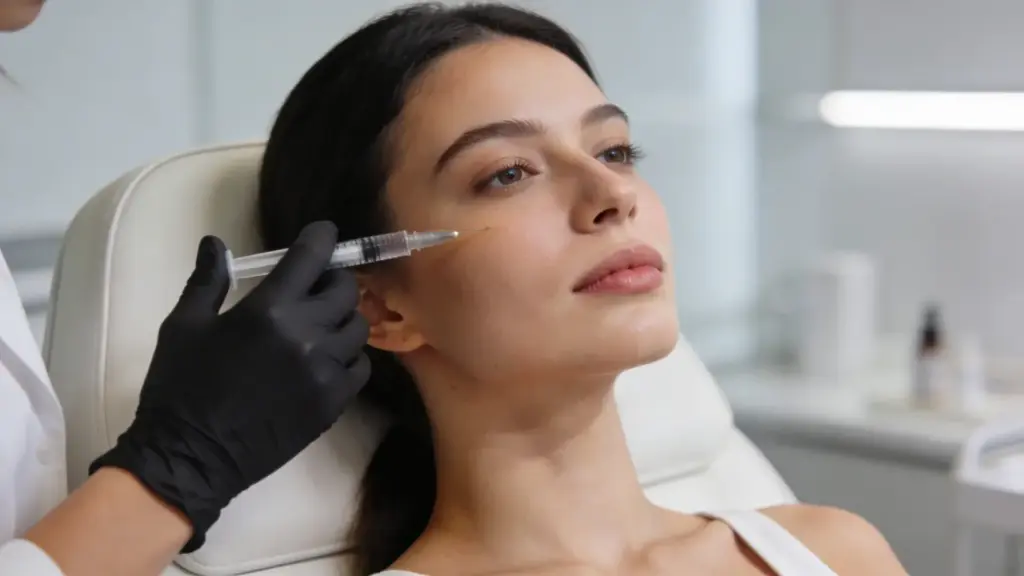
You’re staring at your reflection, noticing those little lines that weren’t there last year, and suddenly everyone’s talking about injectables.
Botox or fillers? Which one actually does what, and why does it feel like no one explains it plainly? If you’ve ever left a consultation more confused than when you walked in, you’re not alone.
The truth is, Botox vs fillers aren’t interchangeable. They fix completely different problems, work through different mechanisms, and suit different skin concerns entirely.
One treatment focuses on relaxing muscle movement, while the other restores lost volume.
Choosing the wrong option for your concern often leads to disappointment, not because the treatment failed, but because it was never the right fit.
This blog breaks down exactly how each injectable works, what it treats, who it’s best for, and whether combining the two actually makes sense.
Botox vs Fillers: What You Need to Know First
Think of Botox vs fillers like cousins in the world of injectables. They’re related, but definitely not twins.
Both are FDA-approved, minimally invasive treatments delivered through quick injections with little to no downtime, making them two of the most popular “lunchtime” beauty boosts.
That’s where the similarities end. Botox works by gently relaxing facial muscles to smooth expression lines, while dermal fillers add volume and hydration to restore youthful contours.
Understanding this core difference is the first step to choosing what will best enhance your natural glow.
What is Botox and How Does it Work?

Botox is one of the most studied injectable treatments available, and it is a purified form of botulinum toxin type A, derived from a naturally occurring bacterium.
When injected in tiny, carefully controlled amounts, it works by gently blocking the nerve signals that tell specific facial muscles to contract.
This temporary relaxation softens the dynamic wrinkles that form from repeated expressions like smiling, frowning, or raising your eyebrows.
Botox has been FDA-approved for cosmetic use since 2002 and has helped millions of women and men achieve a smoother, more refreshed appearance.
Popular options include the original Botox Cosmetic alongside well-known alternatives like Dysport, Xeomin, Jeuveau, each a slightly different formulation of botulinum toxin with the same core mechanism of action.
Working with clients across a range of skin concerns, I consistently make clear that Botox does not erase wrinkles. It simply pauses the muscle movements that create them, giving your skin a chance to look beautifully rested and youthful.
Beyond cosmetics, Botox is also used medically to manage chronic migraines, excessive sweating, TMJ-related jaw pain, and an overactive bladder.
What are Dermal Fillers and How Do They Work?
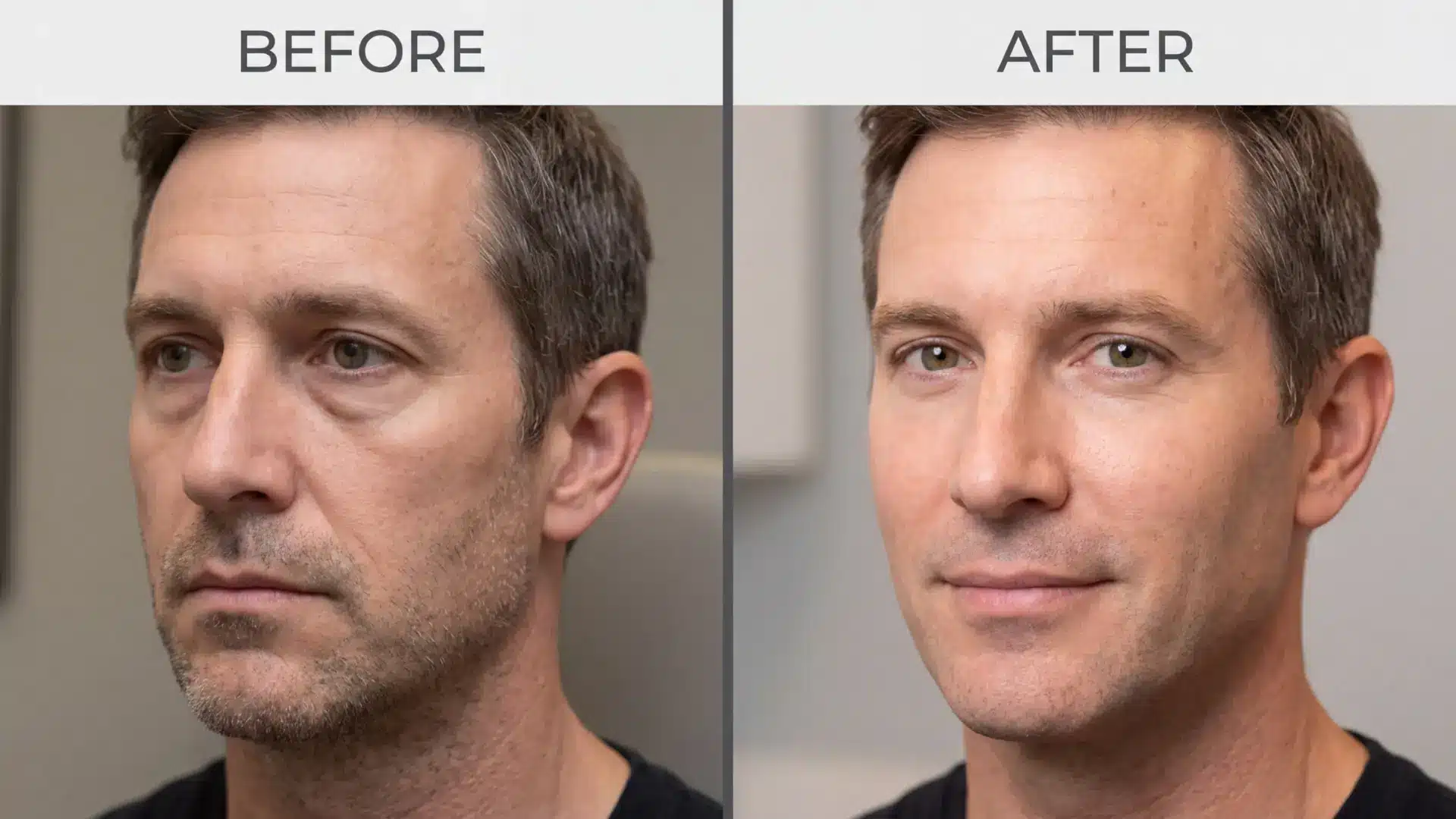
Dermal fillers are smooth, gel-like substances that are injected just beneath the skin to restore lost volume and create a softer, more youthful contour.
The most common type is made with hyaluronic acid, a substance your body naturally produces that draws in moisture and plumps the treated area instantly.
Unlike Botox, which relaxes muscles, fillers physically add fullness where time or genetics have caused hollowing or deeper folds.
Results appear right away, which many people love because you can see the difference before you even leave the chair.
Popular brands include Juvederm and Restylane for hyaluronic acid fillers.
Fillers are wonderful for addressing static lines that stay visible even when your face is relaxed. They help bring back that fresh, bouncy glow many of us miss as we age.
If you’ve been curious about semi-permanent options for the lip area specifically, it’s worth reading about lip blush results to understand how different cosmetic treatments age over time before committing to one approach.
Botox vs Fillers: Detailed Comparison
Botox and dermal fillers are two of the most popular non-surgical cosmetic treatments, often grouped together but designed for different purposes. Both are used to reduce visible signs of aging, yet they work in completely different ways.
1. Type of Wrinkle Treated
Botox is formulated to address dynamic wrinkles, which are the lines that form when your facial muscles move.
Every time you smile, squint, or raise your eyebrows, those repetitive contractions crease the overlying skin, and over time, those creases start to stick.
Fillers work on a completely different category called static wrinkles, the ones visible on your face even when you are completely at rest.
Volume loss and reduced collagen production cause these. Understanding which type you are dealing with is the most important first step.
2. How They Work Beneath the Skin
The real distinction between these two treatments lies not in what they target on the surface, but in how each one works beneath it.
Botox temporarily blocks the nerve signal telling a targeted facial muscle to contract. As that muscle relaxes, the skin above it folds less, which softens expression lines until nerve activity gradually returns over the next few months.
Dermal fillers do not affect muscles at all. Instead, they are placed beneath the skin at a precise depth to physically restore volume where the face has lost structure.
The exact mechanism varies by filler type, but the goal is always the same: add back what time or genetics have taken away.
3. Injection Depth and Technique
One technical difference that is rarely talked about is the injection depth.
Botox is always placed directly into the target muscle layer because that is where it needs to act. Fillers are injected at varying depths depending on what you are correcting.
Lip fillers sit in a more superficial layer of tissue, while cheek and jawline fillers are placed deeper to rebuild structural volume.
Providers may use a fine needle or a blunt-tipped cannula for filler, with the cannula typically reducing the risk of bruising.
This depth variation is a core reason why anatomical knowledge and provider experience directly affect how safe and natural your results look.
4. Results Timeline
The Botox toxin needs a few days to settle into the muscle before you notice any change, with most people seeing visible smoothing between3 and 7 days after treatment.
The full effect typically becomes clear around the 10 to 14 day mark, so waiting at least two weeks before assessing the outcome is important.
Fillers produce results you can seeright away since you are physically adding volume in real time.
That said, swelling in the first 48 hours can make the area look more pronounced than the final settled result.
5. Longevity and Maintenance Requirements
Botox results are temporary by design, and for most people, they last between three and six months before muscle movement gradually returns.
How quickly the effects fade depends on the dose administered, the specific muscles treated, and how fast your body metabolizes the toxin.
Regular appointments are what keep results consistent over time.
Fillers last considerably longer. Hyaluronic acid fillers in the lips typically hold for 6 to 12 months, while cheek fillers can remain effective for up to 2 years.
Collagen-stimulating options like Sculptra approach that same two-year window but build results progressively across multiple sessions rather than delivering instant volume in a single appointment.
6. Safety, Side Effects, and Suitability
Both treatments are considered low risk when performed by a licensed provider. According to a study published in JAMA Dermatology, fewer than 1% of patients experience significant side effects when these procedures are performed correctly.
Common side effects for both include bruising, mild swelling, and temporary redness at the injection site, which typically resolve within a few days.
Botox can occasionally cause a drooping eyelid if the toxin migrates slightly, though this is rare and resolves on its own.
A more serious complication specific to fillers is vascular occlusion, in which filler enters a blood vessel and obstructs local blood flow. All filler treatments should be performed only by trained medical professionals.
Botox should be avoided during pregnancy, while breastfeeding, or by those with neuromuscular disorders.
Note: If you notice sudden vision changes, skin turning white or blue, or severe pain at or near the injection site immediately following a filler treatment, seek emergency medical attention. These can be early warning signs of vascular occlusion and require prompt intervention from a qualified professional.
Botox vs Fillers: The Key Differences at a Glance
Both treatments are injectable and minimally invasive, but they work in very different ways, target different concerns, and last for different lengths of time.
| Aspect | Botox | Fillers |
|---|---|---|
| Best for | Dynamic wrinkles from muscle movement | Volume loss and static lines |
| How it Works | Relaxes targeted muscles | Adds volume under skin |
| Main Substance | Botulinum toxin type A | Gel or implant-like filler materials |
| Primary Effect | Softens expression lines | Plumps, fills, and contours |
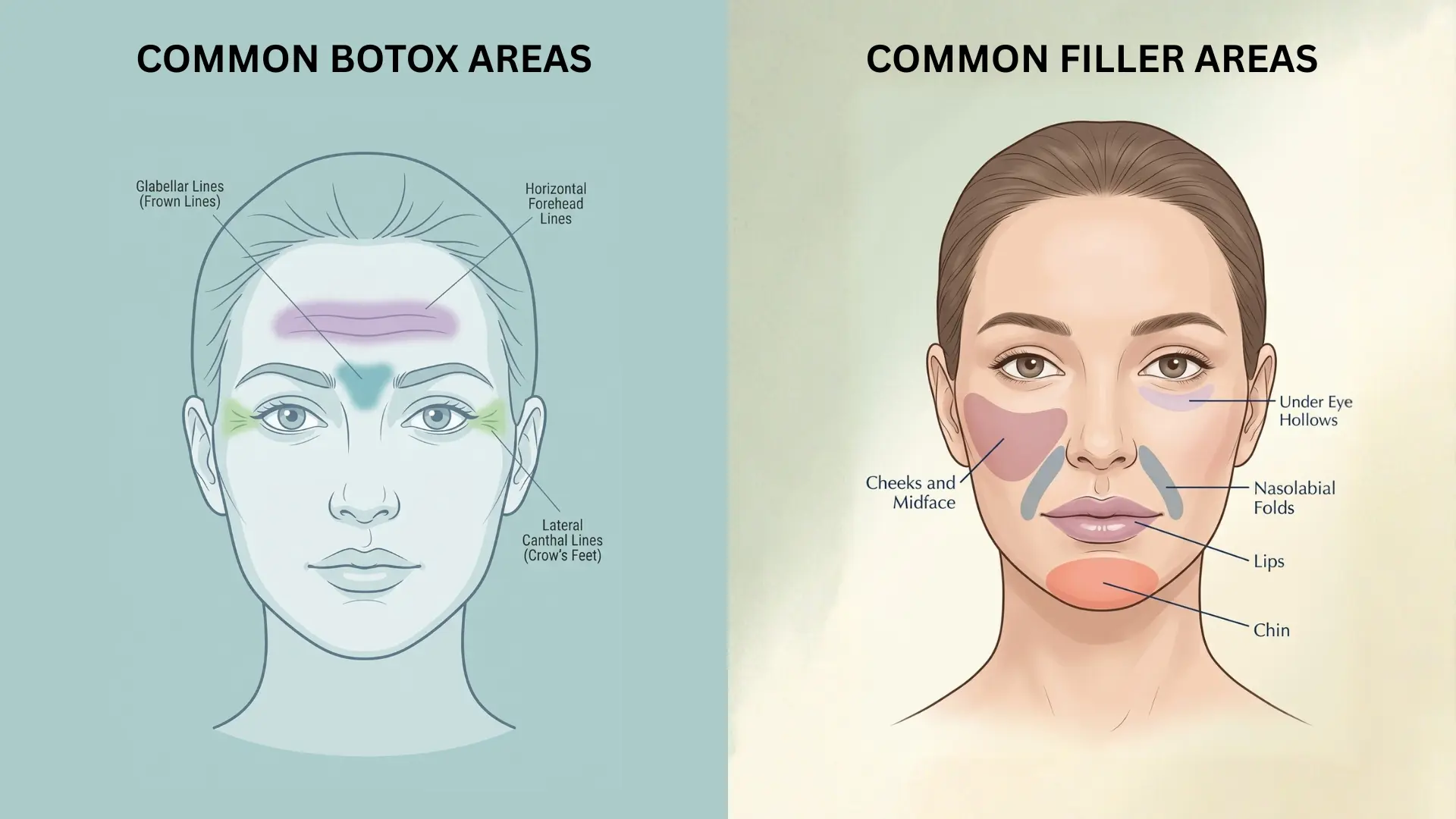
| Common Areas | Forehead, frown lines, crow’s feet | Lips, cheeks, folds, chin |
| Full Results | Usually within 1 to 2 weeks | Often immediate, then settles |
| How Long Does it Last | About 3 to 6 months | About 6 to 18 months |
| Maintenance Needed | More frequent touch-ups | Less frequent touch-ups |
| Injection Target | Muscle | Skin or deeper soft tissue |
| Reversible Option | Wears off naturally over time | Some hyaluronic acid fillers can dissolve |
| Common Cosmetic Goal | Smooth facial lines | Restore fullness and shape |
Botox vs Fillers: Cost Comparison
Before you book that consultation, it helps to know exactly what you are walking into budget-wise. The sticker price of Botox or fillers is rarely the full picture, and many people are caught off guard by the extras.
According to the American Society of Plastic Surgeons’ latest cost data, the average cost of a botulinum toxin injection is $435, though real-world pricing ranges more widely.
Fillers cost more because they are priced per syringe rather than per unit, and most treatment areas require more than one syringe per visit.
| Cost Factor | Botox | Dermal Fillers |
|---|---|---|
| Pricing model | Per unit | Per syringe |
| Average unit cost | $11 to $25 per unit | $715 to $901 per syringe (HA vs. non-HA) |
| Units or syringes per session | 20 to 60 units, depending on area | 1 to 3 syringes, depending on area |
| Average session cost | $435 to $550 | $715 to $1,800+ |
| Frequency of treatments | Every 3 to 6 months | Every 6 to 24 months |
| Annual maintenance cost | Approx. $900 to $2,200 | Approx. $715 to $3,600+ |
| Insurance coverage | Not covered for cosmetic use | Not covered for cosmetic use |
| FSA or HSA eligible | Sometimes, check your plan | Sometimes, check your plan |
| Medical use insurance coverage | Possible for migraines, hyperhidrosis, TMJ | Generally not applicable |
Most reputable clinics charge a separate consultation fee ranging from $50 to $200, though some providers apply this toward your treatment cost if you proceed.
A topical numbing cream used during filler appointments is sometimes billed additionally at $20 to $50. Touch-up appointments, which are fairly standard, especially after a first Botox session, may carry a small fee unless your provider includes them in the original quote.
Arnica supplements or prescribed aftercare products to manage bruising are another small add-on that can run $15 to $40.
Loyalty programs through Allergan’s Allē platform or Galderma’s Aspire Rewards program offer points and discounts on repeat treatments.
I think they are genuinely worth enrolling in if you plan to maintain results long-term. These programs are free to join and can meaningfully offset annual costs over time.
Note: Caution: Very low Botox or filler pricing can be a red flag. It may point to poor product quality, limited provider experience, or unsafe treatment practices. In most cases, fixing a bad result costs more than choosing a qualified provider from the start.
Can Botox and Fillers Be Used Together Safely?
Yes, Botox and fillers are commonly used together in what many call a liquid facelift.
They work well together precisely because they target completely different problems.
Botox relaxes the muscles that create dynamic wrinkles, while fillers restore volume and smooth static lines that appear even when your face is at rest.
This combination often delivers more balanced, natural-looking rejuvenation than either treatment alone.
In my experience guiding clients through these options, women notice they look rested and radiant after treating forehead lines with Botox and adding subtle cheek volume with fillers.
She told me she finally felt refreshed without looking overdone.
That said, a word of caution is important. The FDA notes that the safe use of dermal fillers in combination with Botox has not been studied in large controlled clinical trials.
While experienced providers perform these treatments together routinely with excellent safety records, there can be increased temporary side effects such as swelling, bruising, or redness.
Serious complications remain rare when you choose a qualified, board-certified injector.
Always discuss your full medical history during consultation. Proper planning and technique make all the difference for safe, beautiful results.
Botox vs Fillers: Which One is Right for You
After understanding how both treatments work, many of my clients come back to the same question: which one is actually right for me?
The answer depends entirely on what you want to achieve with your skin.
Choose Botox if you want to:
- Smooth lines from facial expressions
- Prevent new wrinkles from forming
- Slim the jawline or treat TMJ
- Get a quick, no-downtime treatment
Choose Fillers if you want to:
- Restore lost volume in cheeks or lips
- Fill deep static lines at rest
- Enhance facial contours (jawline, chin)
- Plump and defined lips
Choose Both if you want:
- Full-face rejuvenation without surgery
- To treat both dynamic and static aging
- A “liquid facelift” effect
- Natural, balanced, long-lasting results
Why More People are Getting Botox in their 20s
One of the more common questions that comes up during consultations is whether it makes sense to consider Botox before expression lines actually set in.
It is a fair question, and the honest answer depends more on your skin’s individual behavior than on your age.
The thinking behind early or preventive Botox, sometimes called “baby Botox” or “prejuvenation,” is straightforward.
Repeated facial movements create creases over time, and if those movements are gently reduced before the lines become permanent, the skin has less repetitive folding to contend with.
This is why some providers now recommend lower-dose treatments for patients in their mid-to-late twenties who are already seeing early expression lines form at rest.
Individual genetics, sun exposure history, and skin thickness all factor into when expression lines begin to deepen, which means the right time varies considerably from person to person.
Baby Botox uses smaller doses than a standard session and focuses on specific areas, most often the forehead, crow’s feet, and frown lines, before they settle into permanent static wrinkles.
Aftercare Tips for Best Botox and Fillers Results
Based on my years of experience, following simple aftercare rules helps minimize swelling and bruising and ensures the best possible outcome with both Botox and fillers.
- Stay upright after treatment: Remain upright for at least 4 hours after your appointment to prevent the product from moving to unwanted areas, especially important after Botox.
- Avoid touching treated areas: Do not rub, press, or massage the treated spots for 24 hours. Gentle cleansing is fine, but avoid direct pressure on the skin.
- Skip intense physical activity: Avoid strenuous exercise, hot yoga, or heavy lifting for 24 to 48 hours, as increased blood flow can worsen swelling or bruising.
- Limit alcohol and blood thinners: Stay away from alcohol and supplements like aspirin or fish oil for 24 hours before and after treatment unless approved by your provider.
- Use a cold compress carefully: Apply a cold compress gently in short intervals to reduce swelling, especially after fillers, without putting pressure on the area.
- Sleep with head elevated: Keep your head slightly raised during the first night after fillers to help minimize swelling the next morning.
- Avoid heat exposure: Stay out of saunas, steam rooms, and direct sunlight for at least 48 hours, as heat can increase bruising and swelling.
- Keep your skin hydrated: Drink plenty of water to support skin hydration, which helps improve and maintain filler results.
Conclusion
Choosing between Botox and fillers isn’t about picking the “better” treatment. It’s about matching the right solution to what your face actually needs right now.
Expression lines and volume loss are two completely different problems, and treating one when you have the other leads to underwhelming results every time.
The smartest thing you can do is understand what each injectable does, know your own concerns, and walk into a consultation already informed.
That preparation puts you in control of the conversation rather than relying entirely on a sales pitch. Your face changes over time, and so will your treatment plan, and that’s perfectly fine.
Still unsure about Botox vs fillers or trying to figure out which one fits your concerns better? Drop your question in the comments below, and let’s talk it through.
Frequently Asked Questions
Can Men Get Natural-Looking Botox and Fillers?
Yes. Men regularly get Botox and fillers, and natural results are possible when treatment respects male facial structure and uses conservative dosing.
Do Fillers Stretch the Skin over Time?
Not typically when they are used appropriately. Fillers are designed to restore volume, and many are temporary. Repeated overfilling, however, can create an unnatural look, which is why provider judgment and product choice matter.
Do Fillers Work Under the Eyes for Dark Circles?
Sometimes, but only in carefully selected cases. Fillers may help when dark circles are caused by hollowing under the eyes, not pigmentation. Because this area is delicate, under-eye treatment should be done only by an experienced injector.
