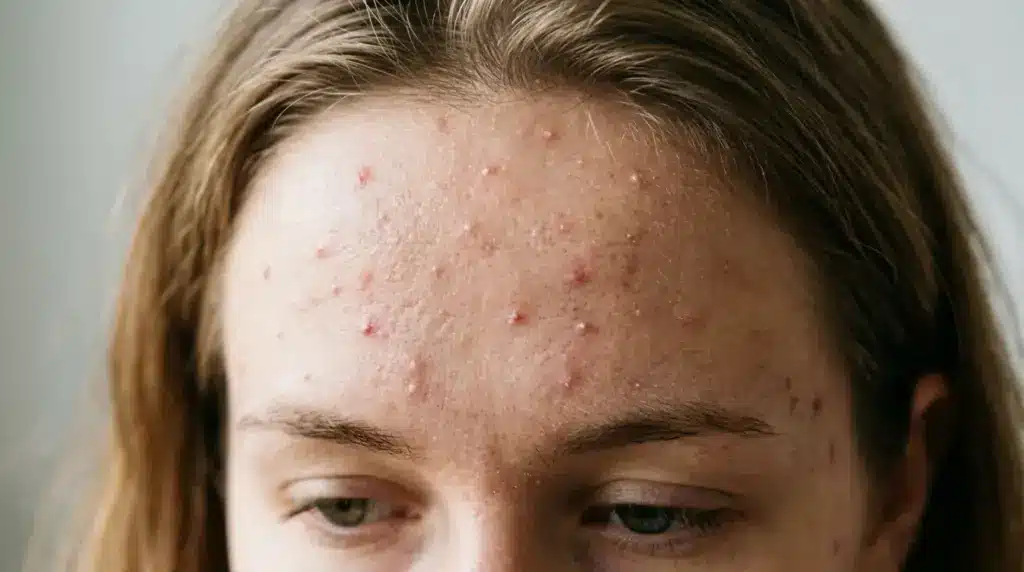
Forehead acne has a talent for showing up right before something important, a presentation, a date, a day you were finally feeling good in your skin.
One morning, it is not there, and the next, it is, clustered right across your T-zone like it never got the memo to leave.
The frustrating part is not just the breakout itself. It is not knowing what caused it or if the 12 things you tried last month made it better or worse.
Here is the thing: forehead acne rarely has one single cause, but it almost always has a traceable reason.
When people search “acne on forehead meaning,” they are often looking for a deeper explanation, something that connects the breakout to a root cause rather than just calling it “clogged pores”.
That is a fair instinct, because understanding the process is what makes the solution make sense.
What Acne on Forehead Actually Means?
When your skin contains tiny oil-producing glands called sebaceous glands, which sit just below the surface and are connected to hair follicles.
These glands release an oily substance called sebum, which is normal and necessary, as it keeps skin soft and protected.
When sebum is produced in excess and mixes with dead skin cells that have not shed properly. Together, they form a plug that blocks the pore opening.
Once a pore is blocked and oxygen-poor inside, a naturally occurring skin bacterium called cutibacterium acnes begins to multiply rapidly.
Your immune system responds with inflammation, redness, swelling, tenderness, and that is the pimple you see.
Common Causes Of Acne On Forehead
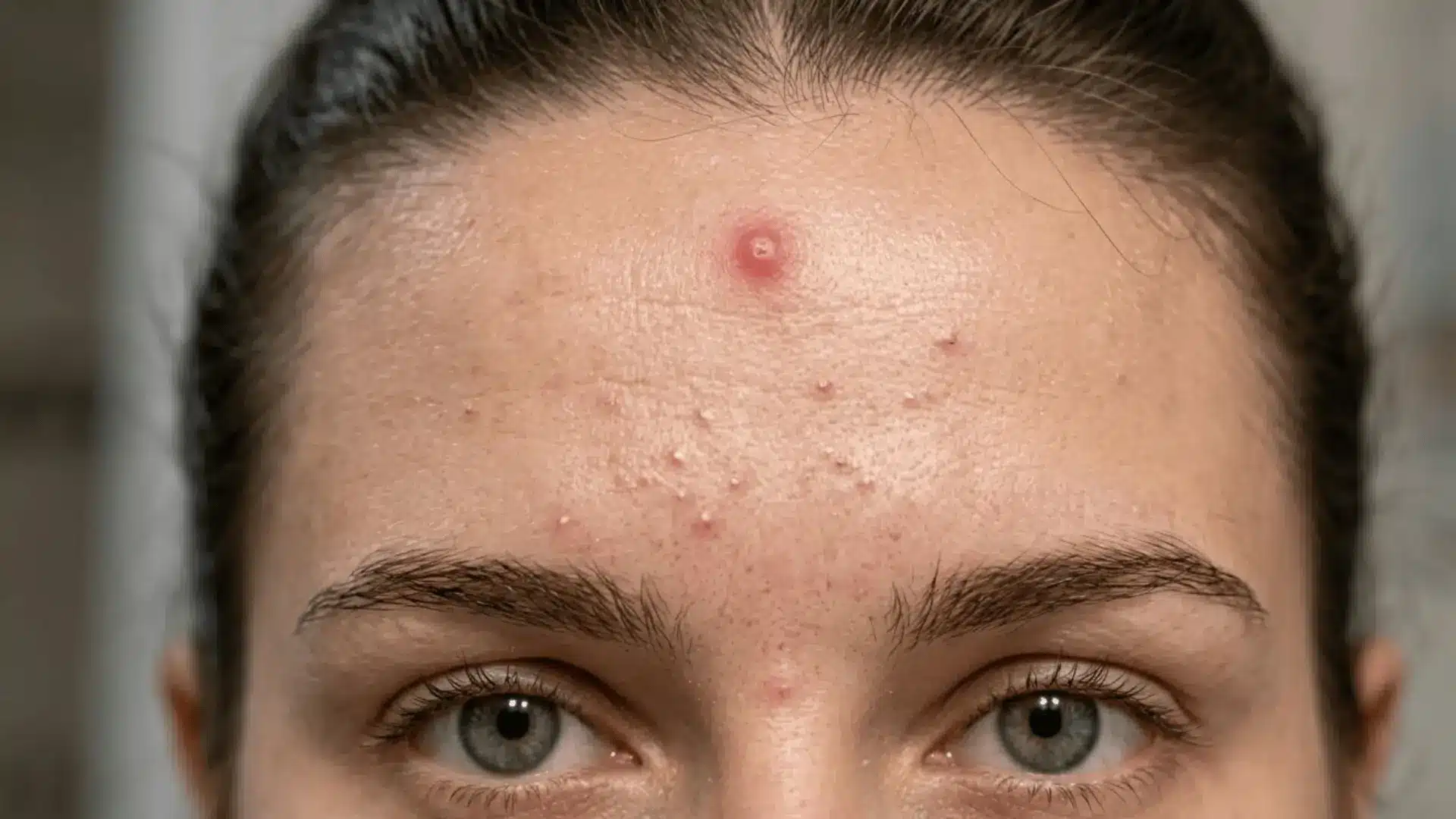
Forehead acne rarely has a single cause. More often, it is a combination of internal triggers and everyday habits layering on top of each other. Here are the most common contributors:
1. Hair Products and Hairline Breakouts
Hair care products can easily transfer onto the forehead, especially near the hairline.
Ingredients like heavy oils, silicones, and waxes may block pores when they come into contact with the skin. This type of breakout is often called pomade acne and tends to appear in clusters along the hairline.
Even shampoo residue left behind during rinsing can irritate pores, making the forehead particularly sensitive to what is used on the hair.
2. Sweat Build Up After Physical Activity
Sweat alone is not harmful, but when it stays on the skin, it mixes with oil and dead cells, creating an ideal environment for acne-causing bacteria.
After workouts or long periods of sweating, the forehead becomes more prone to clogged pores. If the skin is not cleansed soon after, buildup increases the chances of breakouts.
This is why post-activity skincare plays a key role in keeping the forehead clear.
3. Friction from Caps and Headwear
Frequent use of caps, helmets, or headbands creates constant pressure and friction on the forehead.
This traps heat, sweat, and bacteria against the skin, leading to what is often referred to as mechanical acne.
The combination of blocked airflow and repeated rubbing makes the forehead a common target for this type of acne.
4. Cleansing Habits and Skin Barrier Balance
Improper cleansing can quietly contribute to forehead acne. Leaving behind makeup, sunscreen, or daily grime allows pores to clog over time.
On the other hand, washing too often or using harsh cleansers can weaken the skin barrier, causing irritation and increased oil production.
Finding the right balance is important, as both neglect and overcare can lead to similar breakout patterns on the forehead.
5. Hormonal Changes
Hormones play a strong role in how much oil the skin produces.
During periods such as puberty, menstrual cycles, or high stress, the body releases signals that can increase sebum production. Stress also raises cortisol levels, which further pushes oil glands into overdrive.
Androgens, the hormones most commonly associated with this response, directly stimulate the sebaceous glands to produce more oil.
These internal triggers often show up clearly on the forehead, making it a common area for breakouts linked to emotional and hormonal fluctuations.
6. Diet Patterns
Certain food choices can influence how the skin behaves. Foods that raise blood sugar quickly may lead to increased oil production, which can contribute to clogged pores.
Some people also notice breakouts after consuming dairy, possibly due to hormonal responses within the body.
Since reactions vary, observing personal patterns over time can help identify whether diet plays a role in forehead acne.
7. Pollution and Environmental Exposure
Daily exposure to polluted air can affect the skin more than expected.
Tiny particles from the environment settle on the forehead and mix with oil, leading to blocked pores and irritation. Over time, this buildup can also create oxidative stress, weakening the skin’s defense system.
In areas with higher pollution levels, consistent cleansing becomes even more important to reduce its impact on acne.
8. Phone and Hand Contact Habits
Frequent contact between the forehead and everyday surfaces can transfer bacteria and oils directly onto the skin.
Phone screens, in particular, carry a high amount of buildup from regular use. Resting the forehead on hands during work or while thinking can also contribute to pore congestion.
These small habits often go unnoticed but can play a steady role in triggering or worsening acne over time.
Different Types Of Forehead Acne
Not all forehead breakouts are the same type of acne, and identifying what you are dealing with changes how you approach treatment.
- Comedones: Whiteheads and blackheads form when pores get blocked with oil and dead skin. They are non-inflammatory and respond well to gentle exfoliation and salicylic acid treatments.
- Papules and pustules: Red papules and pus-filled pustules signal bacterial activity and irritation. These breakouts should not be squeezed, as doing so can worsen inflammation and increase scarring risk.
- Nodules and cysts: Nodules and cysts develop deeper within the skin, causing pain and swelling. These require professional care since common treatments do not penetrate deeply enough.
- Fungal acne: Small, itchy, similar-looking bumps near the hairline may indicate fungal acne. Standard treatments fail here, while antifungal ingredients like ketoconazole or zinc pyrithione are more effective.
Everyday Habits that Quietly Trigger Forehead Acne
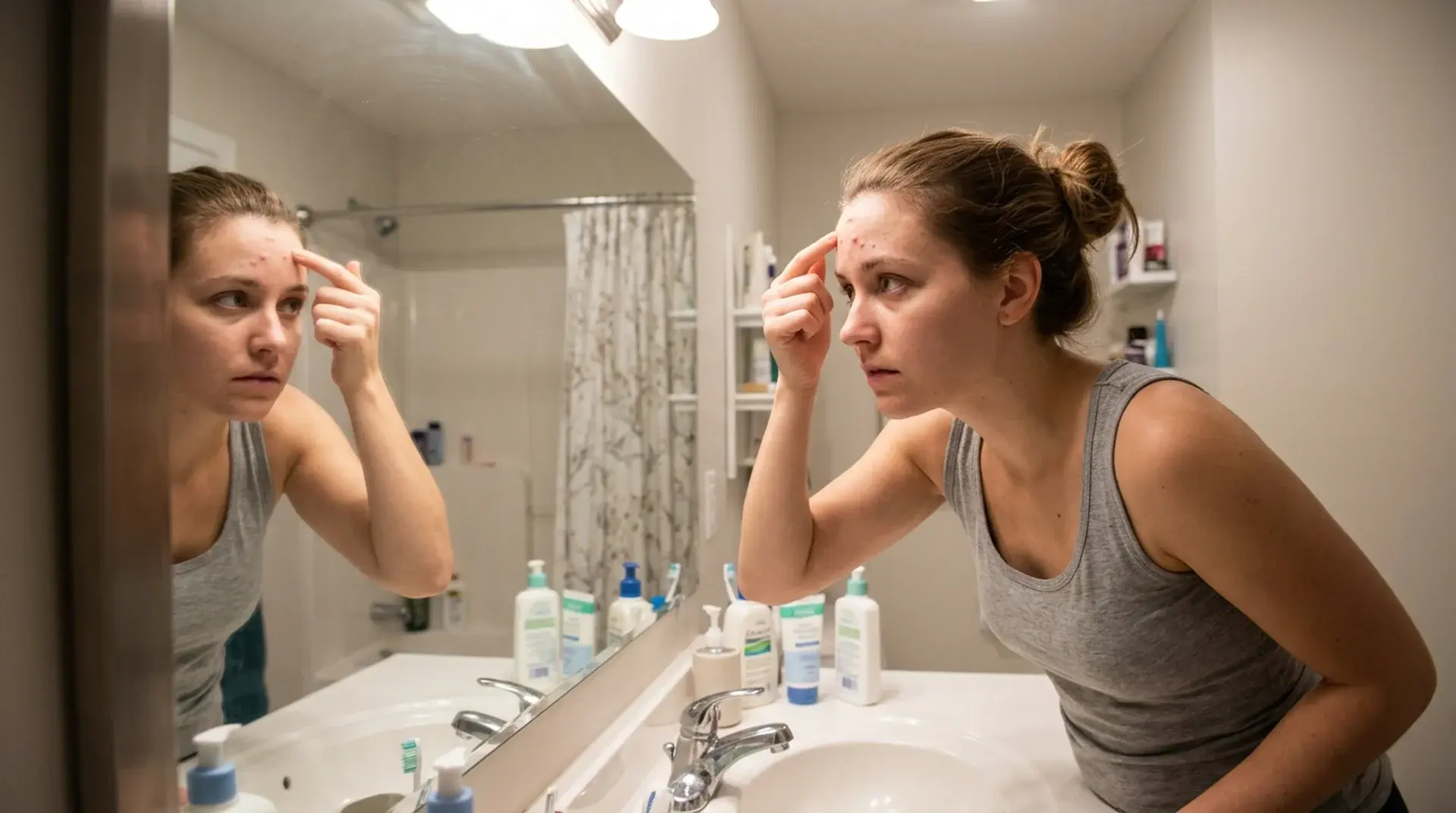
Some of the most consistent forehead acne triggers are small daily habits that slowly build up over time.
| Habit or Trigger | Why It Causes Forehead Breakouts |
|---|---|
| Touching the forehead often | Hands transfer bacteria, sweat, and oils directly onto the skin throughout the day. |
| Repeated hair adjustments | Constantly moving hair away from the forehead spreads oils and product residue onto pores. |
| Infrequent hair washing | Oily hair and styling products sit against the forehead and hairline for long periods. |
| Dirty pillowcases | Pillowcases collect oil, sweat, dead skin, and hair products that stay against the skin overnight. |
| Heavy skincare products | Mineral oil, lanolin, and thick plant butters can clog pores along the forehead more easily. |
| Skipping moisturizer | Dehydrated skin often produces more oil, which can worsen forehead acne over time. |
| Using the wrong moisturizer | A lightweight, oil-free moisturizer helps support the skin barrier without clogging pores. |
If persistent breakouts are not responding to your at-home routine, an acne facial with a licensed professional can help clear congestion more deeply and reset your skin’s baseline.
Treatments and Habits That Manage Forehead Acne Effectively
Consistency beats intensity here. The clients who clear their forehead acne fastest are not the ones who add the most products; they are the ones who build simple, repeatable habits and give them time to work.
- Gentle daily cleansing routine: Cleanse twice daily using a mild, sulfate-free face wash that removes oil and dirt without stripping skin, helping maintain balance and preventing irritation that can worsen forehead breakouts.
- Lightweight hydration and barrier support: Use gel-based moisturizers with ingredients like hyaluronic acid or glycerin to hydrate without clogging pores, helping regulate oil production and improving skin tolerance to acne treatments.
- Targeted active skincare ingredients: Apply salicylic acid to clear pores, niacinamide to reduce inflammation, and azelaic acid to treat bacteria and marks, creating a balanced routine that supports clearer forehead skin over time.
- Hair product control habits: Keep hair clean and avoid applying conditioners or styling products near the hairline, as residue transfer can clog pores and trigger breakouts along the forehead area.
- Avoiding pore-clogging ingredients: Choose non-comedogenic products and avoid heavy ingredients like coconut oil or lanolin in skincare and haircare, reducing the risk of blocked pores and recurring forehead acne.
- Daily sunscreen for skin protection: Apply a lightweight SPF 30 or higher every day to prevent dark spots, protect the skin barrier, and reduce oil imbalance caused by sun exposure and dehydration.
- Home remedies: Use aloe vera gel, diluted tea tree oil, or honey masks occasionally to soothe inflammation and reduce bacteria, supporting skincare routines without overwhelming sensitive forehead skin.
- Medications and clinical treatments: Over-the-counter benzoyl peroxide or retinoids can help moderate acne, while persistent or severe cases may require prescription treatments or dermatologist guidance for effective long-term control.
- Consistency and realistic timelines: Follow a steady routine for at least four to eight weeks, as frequent product switching can disrupt progress and keep forehead acne from improving despite using effective treatments.
Disclaimer: Skin reactions and acne severity vary based on factors such as hormones, skin sensitivity, medical conditions, product ingredients, and lifestyle habits. Some active ingredients may cause dryness, irritation, or allergic reactions, especially when combined incorrectly or overused. Persistent forehead acne, painful cystic breakouts, or acne that does not improve with consistent care may require evaluation and treatment from a licensed dermatologist.
What to Avoid if Forehead Acne Keeps Coming Back?
Recurring forehead acne is often made worse by habits, not just by a lack of products.
Overwashing or scrubbing too hard can strip the skin barrier and trigger excess oil production, leading to more clogged pores.
Picking or squeezing pimples can push bacteria deeper, increase inflammation, and leave dark marks or scars.
Another common mistake is using too many active ingredients at once.
Combining salicylic acid, benzoyl peroxide, retinoids, and exfoliants can overwhelm the skin, making breakouts look worse. It is usually better to introduce one treatment at a time.
Scalp health also matters; oil, dandruff, and hair product buildup can easily transfer to the forehead, triggering repeated breakouts.
A simpler routine usually works better. Also, avoid using benzoyl peroxide and retinoids in the same application, since that can cause extra irritation.
Conclusion
The meaning of acne on the forehead is usually less mysterious than it feels.
In most cases, forehead breakouts are your skin’s way of reacting to extra oil, clogged pores, sweat, hair products, stress, or simple daily habits that keep adding up.
The upside is that these triggers are often easy to spot once you stop guessing and start looking at the routine closely.
A gentle cleanser, one reliable active ingredient, a regular moisturizer, and sunscreen can do far more than a shelf full of random products.
Stick with a routine long enough to judge it fairly, and get professional help if the acne feels deep, painful, or never seems to settle.
Forehead acne can be frustrating, but it is usually manageable with consistency.
What has been the biggest trigger behind your forehead breakouts lately? Share in the comments below.
Frequently Asked Questions
Does Dandruff Cause Forehead Acne?
Dandruff can contribute to forehead acne in certain cases. Flakes and excess scalp oil can easily transfer onto the skin, especially during sleep or when hair rests against the forehead.
Why Does Forehead Acne Get Worse in Summer?
Hot weather can increase sweat, oil production, and product buildup on the skin. When sweat stays trapped under hats, bangs, or sunscreen for too long, the forehead can break out more easily.
Can Dirty Pillowcases Cause Forehead Acne?
They can contribute. Pillowcases collect oil, sweat, hair products, and bacteria over time. When the forehead presses against that surface every night, it can make recurring breakouts harder to control.