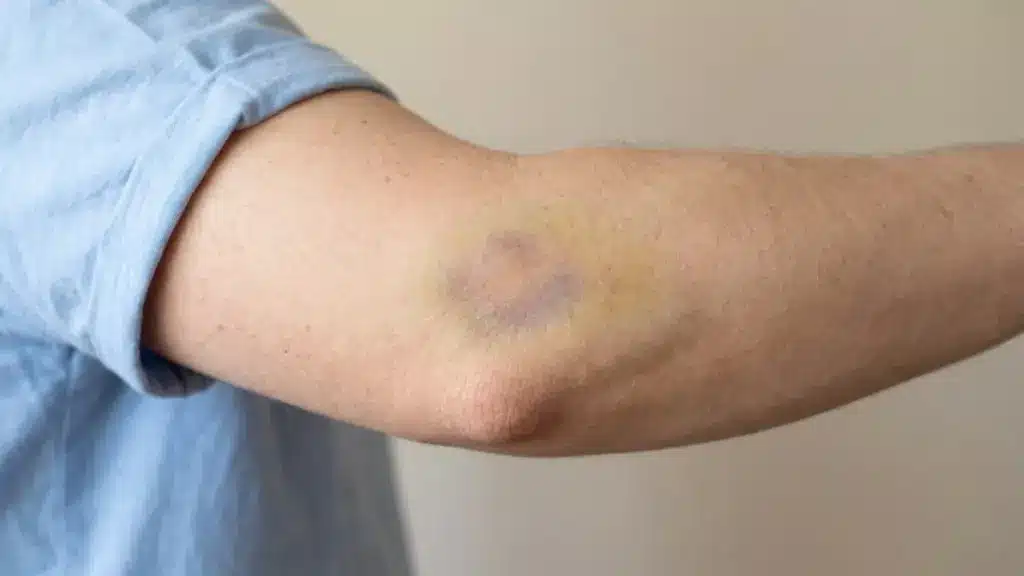
You notice it while getting dressed or washing your hands, a dark patch on your skin that wasn’t there before. It may not hurt much, but it still makes you pause.
How did it get there, and more importantly, how long does it take for a bruise to go away?
Especially when the color keeps changing, and the healing feels slow.
I have watched clients in my aesthetics practice and swimmers I used to coach, stare at bruises and wonder if something was off.
Almost every time, the answer was the same: the body was just taking its time. That small moment can turn into concern, especially when there is no clear answer.
Understanding what your body is doing beneath the surface can bring a sense of relief and help you feel more in control of the healing process.
What Happens When a Bruise Forms?
When a bruise forms, it usually means small blood vessels under the skin have been damaged after a bump or hit.
I often explain it in simple terms: the skin stays intact, but underneath, those tiny vessels break and leak blood into the surrounding tissue.
That trapped blood is what creates the dark red, purple, or blue color you see.
Over time, the body slowly breaks down and absorbs this blood, which is why the color changes as it heals. A bruise looks different from other injuries because there is no open cut or bleeding on the surface.
There are a few distinct types of bruises worth knowing.
- A contusion is the everyday bruise caused by minor capillary damage near the surface.
- A hematoma is a deeper pooling of blood that often forms a raised, firm lump and takes much longer to clear.
- Petechiae are tiny pinpoint red or purple dots that look like a bruise when clustered together. These are worth showing a doctor, especially if they appear without any injury.
- Purpura are similar small bleeds that occur without trauma and may signal a clotting issue.
Unlike a cut, where the skin breaks, or swelling, which may not change color, a bruise shows visible discoloration without an external wound.
From what I have seen, this is why bruises can look concerning even when the injury itself is minor.
How Long Does it Take for a Bruise to Go Away?
In many cases, the color fades gradually as the body breaks down and reabsorbs the trapped blood under the skin.
According to Nemours, bruises often disappear within 2 weeks, though some may last a bit longer depending on the situation.
From what I have seen, larger or deeper bruises can take 2 to 4 weeks to fully heal because there is more blood for the body to clear out.
From my experience working with clients post-procedure after facial treatments, laser sessions, or waxing, I have seen bruises appear where the skin was already sensitized, and those tend to take a day or two longer to fade than bruises from a simple bump.
The skin has less reserve to work with. That said, the timeline still holds: most clear within two weeks with basic care.
Healing time is not the same for everyone. Factors like age, overall health, skin type, and how hard the impact was can all affect recovery.
Older adults or people on certain medications may notice bruises sticking around longer than expected.
Bruise Healing Stages and Color Changes
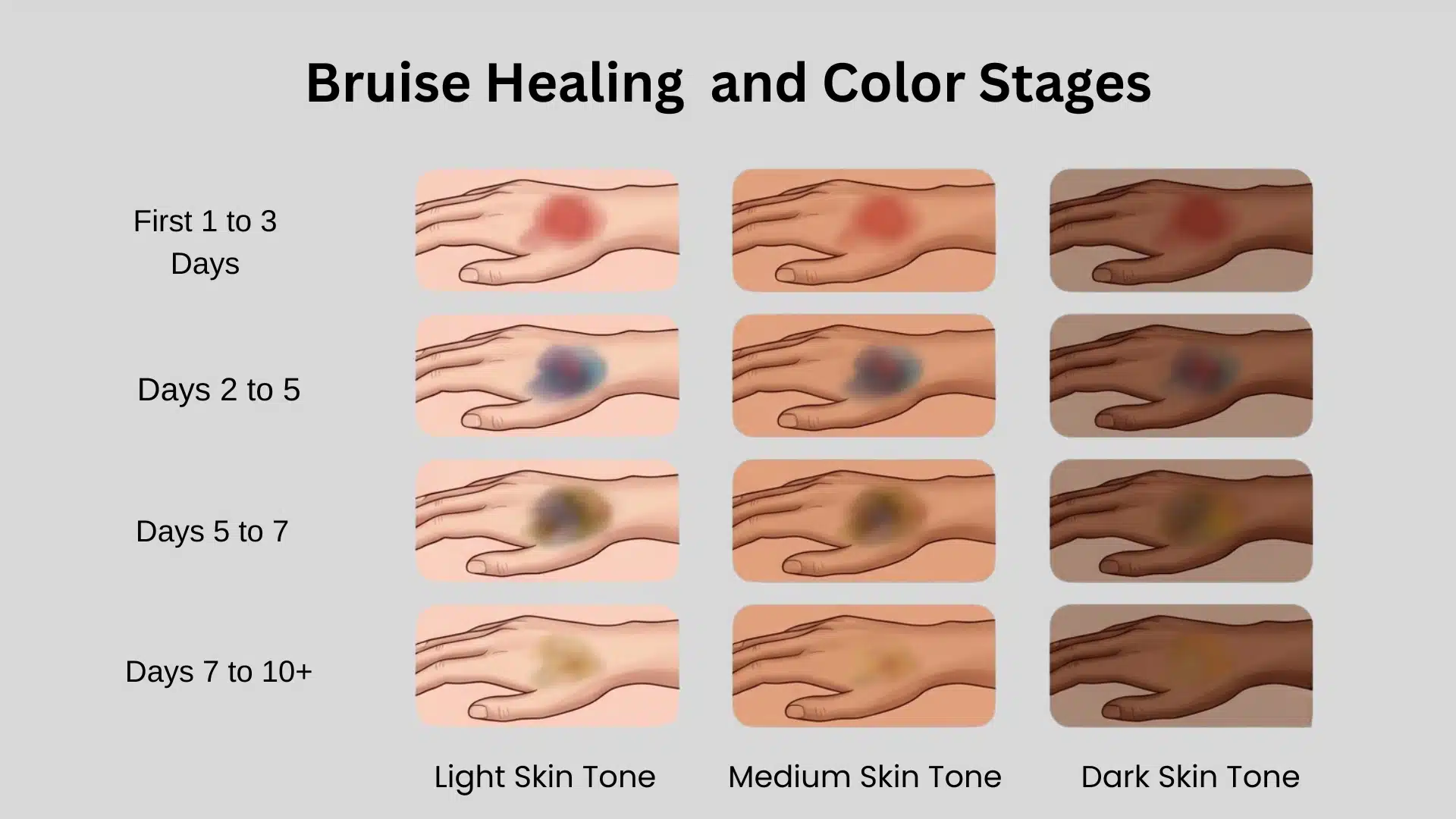
A bruise does not stay the same color while it heals. It goes through a series of changes as the body breaks down and clears the trapped blood under the skin.
Stage 1: Red or Purple (First 1 to 3 Days)
In the first stage, the bruise usually appears red or deep purple right after the injury. This happens because fresh blood leaks from broken blood vessels and collects under the skin.
At this point, the area may feel sore, tender, and slightly swollen.
I often notice that this is when the bruise looks the most intense and feels the most sensitive to touch. The color can look darker if the injury was stronger.
This stage is normal and shows that the body has just started responding to the damage.
Stage 2: Blue or Dark Purple (Days 2 to 5)
After a couple of days, the bruise often turns blue or a darker shade of purple. This change happens because the trapped blood loses oxygen, which alters its color.
The area may still feel tender, though the swelling usually starts to go down.
From what I have seen, this stage can make the bruise look worse, even though it is actually part of the natural healing process.
Pain is still possible, especially if the bruise is large or located on a sensitive part of the body.
Stage 3: Green (Days 5 to 7)
Around the middle of the healing process, the bruise may turngreen. This is when the body starts breaking down hemoglobin, the substance in blood that carries oxygen.
As it breaks down, it creates new compounds that change the color.
The bruise usually becomes less painful during this time. The color may look unusual, but it is completely normal and part of the body’s cleanup process.
Stage 4: Yellow or Brown (Days 7 to 10+)
In the final visible stage, the bruise turns yellow or light brown. This means the body is almost done clearing away the remaining blood.
The discoloration becomes lighter and less noticeable each day. The yellow tone is a clear sign that healing is nearly complete.
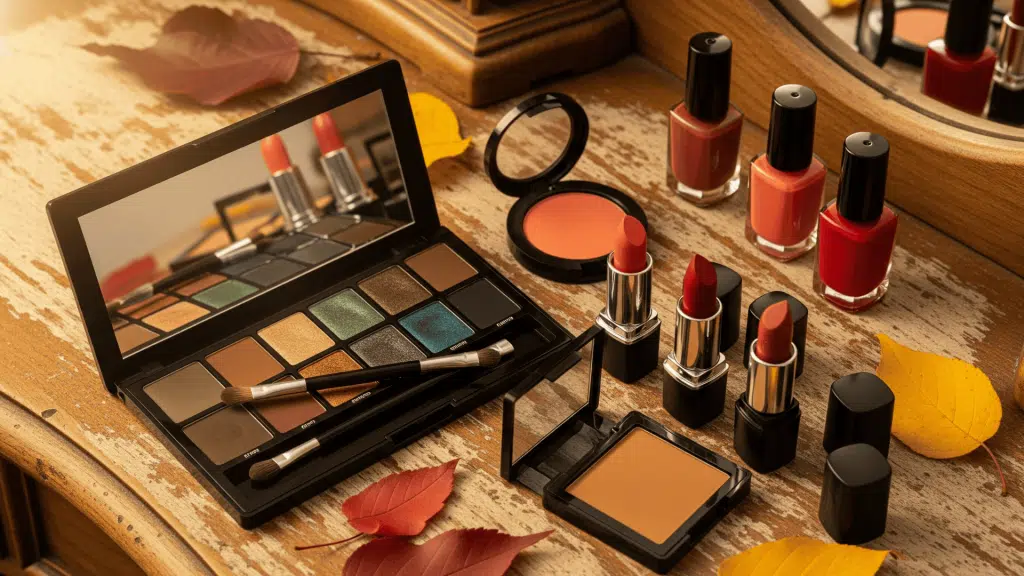
Once the skin surface is intact and unbroken, a color-correcting concealer (peach or orange-toned for the blue/purple stage, yellow-toned for the green stage) is generally safe.
I always advise clients to apply with a light hand and avoid rubbing, which can aggravate the underlying tissue. Do not apply makeup over broken or blistered skin.
If you are prone to reactions, reaching for makeup safe for sensitive skin can make a real difference, especially when the skin around the bruise is still recovering.
A bruise is fully healed when the skin returns to its normal tone, and there is no pain or tenderness left. I always look for two signs: no visible discoloration and no sensitivity when touching the area.
Factors That Affect How Long a Bruise Lasts
Not all bruises heal at the same speed, and I have seen this vary a lot from person to person. Some fade quickly, while others take weeks to fully disappear.
- Age: Older adults tend to bruise more easily and heal more slowly because the skin becomes thinner and blood vessels are more fragile over time.
- Skin thickness and sensitivity: Thinner or more sensitive skin shows bruising more clearly and may take longer to recover compared to thicker skin.
- Severity of impact: A mild bump may fade in days, but a strong hit causes deeper bleeding under the skin, which naturally takes longer to clear.
- Location on the body: Bruises on areas like legs or feet often last longer due to slower circulation, while facial bruises may heal faster.
- Medical conditions or medications: Blood thinners, certain supplements, or health conditions can slow clotting and extend healing time.
- Nutrition and hydration: A well-balanced diet with enough vitamins and proper hydration supports faster healing, while deficiencies may delay recovery.
- Water exposure and chlorine: This one comes from my years coaching swimmers. Prolonged time in chlorinated water does not cause bruises, but it can make existing ones appear more vivid temporarily.
How to Make a Bruise Heal Faster
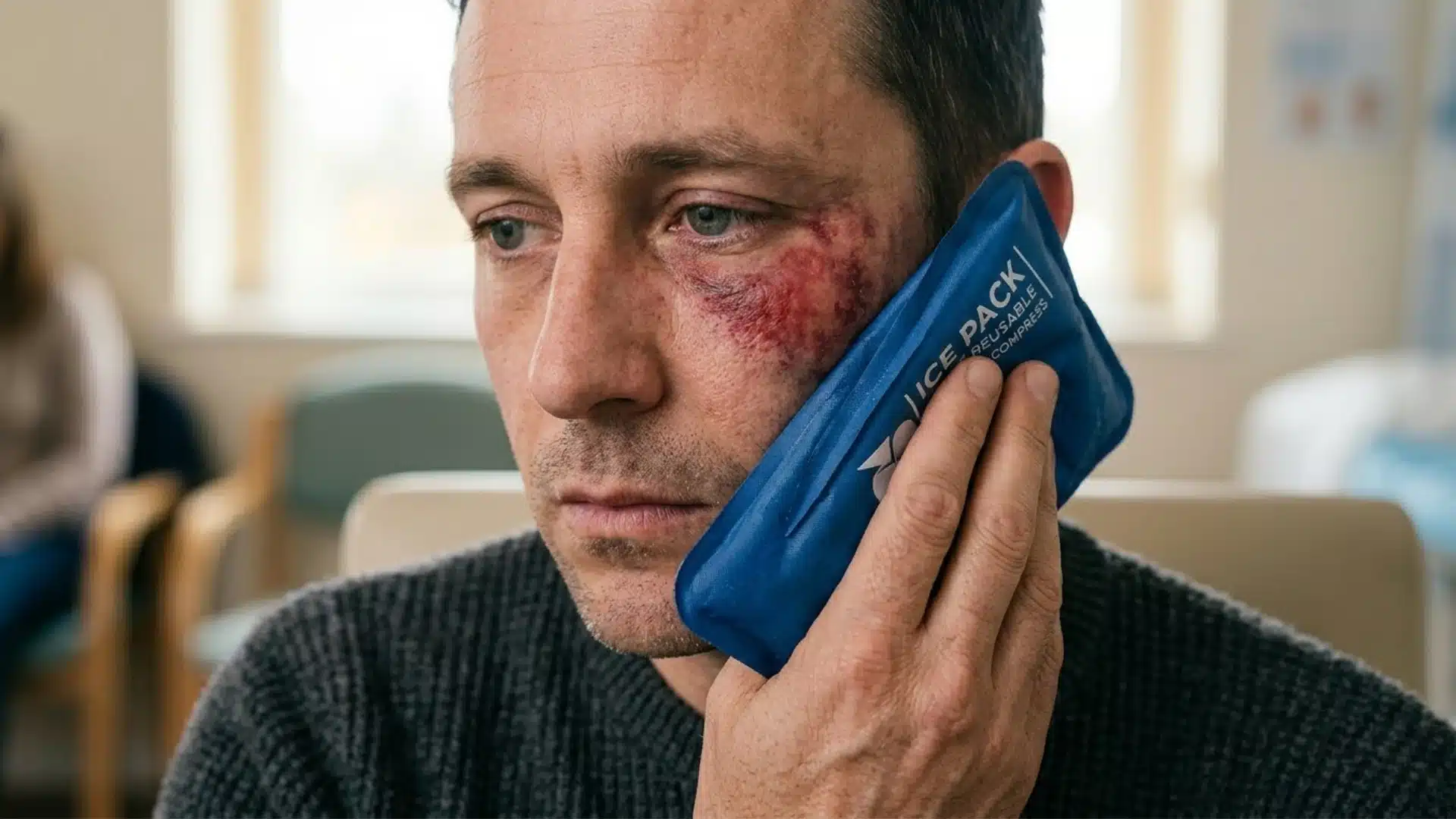
The key is to support the body at the right time during the healing process. Early care focuses on limiting bleeding under the skin, while later care helps improve circulation.
1. First 24 Hours Care
In the first 24 hours, I focus on reducing swelling and limiting how much blood collects under the skin. A cold compress works well for this.
Apply it for about 10 to 15 minutes at a time, a few times a day. It helps tighten blood vessels and control inflammation. Rest is just as important.
Mayo Clinic recommends elevating the bruised area above heart level, where possible, as this helps reduce blood flow to the site and limits how much the bruise can spread in those early hours.
Avoid putting pressure on the area and keep it elevated if possible. Elevation helps reduce blood flow to the injured spot, which can prevent the bruise from getting larger.
2. After 48 Hours
After the first couple of days, switch to methods that support healing rather than cooling.
A warm compress is helpful at this stage because it improves blood flow and helps the body clear out trapped blood.
Light movement also helps, and avoiding anything intense, but simple movement can improve circulation and prevent stiffness.
My approach with clients is the same one I use for myself: observe the bruise daily, note if it is progressing through stages, and adjust care if it stalls.
Patch test, track, adjust, and it applies here just as much as it does in a skincare routine.
3. Natural remedies people often use
Some people like to use natural options, and I have seen a few that can be helpful when used carefully.
Arnica is often used in creams to reduce discoloration, while aloe vera can soothe the skin.
Vitamins also play a role, as vitamin C supports skin repair, and vitamin K helps with blood clotting.
These options may support healing, but they are not instant fixes. I usually suggest using them alongside basic care rather than relying on them alone.
Signs that Need Medical Attention
While occasional bruising is normal, some patterns should not be ignored. Knowing when to seek medical advice can help catch underlying issues early and prevent complications.
- Bruise not fading after 2 to 3 weeks: If a bruise stays the same or does not lighten over time, it may need medical evaluation to rule out deeper tissue injury or healing issues.
- Severe swelling or pain: Intense pain, tight swelling, or worsening discomfort can signal a more serious injury beneath the skin, such as muscle or tissue damage.
- Frequent unexplained bruising: Can be linked to blood-clotting disorders like hemophilia or von Willebrand disease, vitamin deficiencies, or medication side effects.
- Bruising with no injury: Bruises that appear without any known impact, particularly on the torso, or in clusters, can in rare cases be associated with leukemia and certain blood disorders.
- Bruising on the breast: Inflammatory breast cancer can present as bruise-like discoloration with warmth and tenderness, without a lump. If you notice bruising on your breast that does not have a clear cause, please see a doctor promptly.
- Black eye with vision changes: If a bruise near the eye comes with blurred vision, difficulty moving the eye, or persistent headache, seek medical care the same day.
Conclusion
Bruises may look concerning, but in most cases, they follow a normal healing path.
If you have been thinking, how long does it take for a bruise to go away, the answer usually depends on certain factors, with the color changes symbolizing steady recovery.
Those shifts from red to purple, green, and yellow are a natural part of the process, not something to worry about.
Healing time can vary based on age, injury severity, health, and even where the bruise appears on the body.
Paying attention to these factors helps set the right expectations. I always recommend simple care, patience, and awareness of unusual signs, and if something feels off, do not ignore it.
Have you noticed anything unusual with your bruises? Share your experience in the comments.
Frequently Asked Questions
What is the 10-4 Bruising Rule?
The 10-4 bruising rule is a guideline used in some cases to assess unexplained bruising, especially in children, to help identify patterns that may need further medical evaluation.
Does Tylenol Help with Bruising?
Tylenol can help reduce pain linked to a bruise, but it does not speed up healing. It is often preferred over blood thinners that may worsen bruising.
How Long Does a Bruise Take to Form?
A bruise can form within minutes to a few hours after an injury. The discoloration may become more visible over the next one to two days as blood collects under the skin.