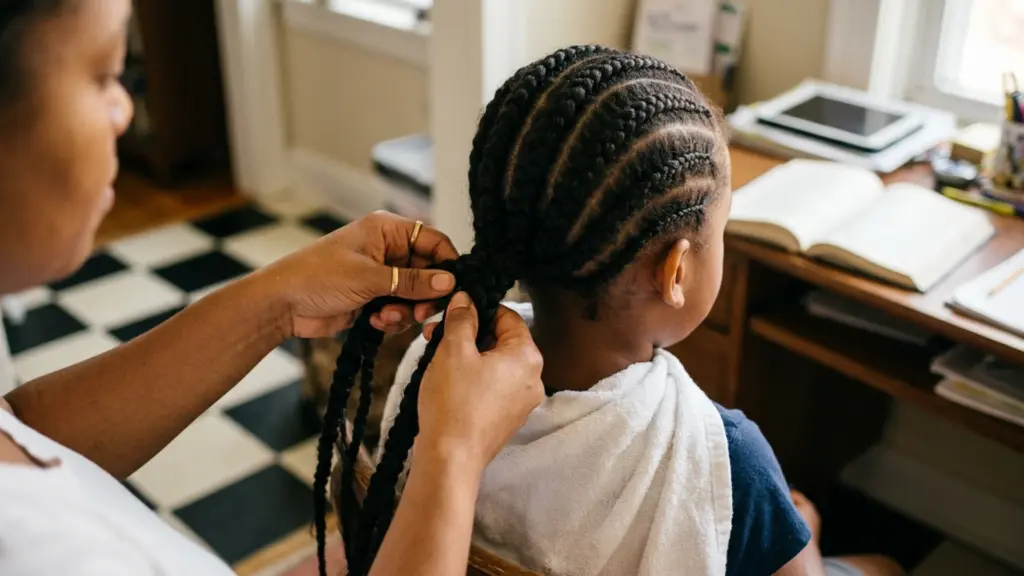
Braids are far more than a single hairstyle; they’re a collection of techniques that create everything from sleek scalp braids for Black women to loose, everyday plaits and long-lasting African hair braiding styles.
Growing up, I watched my uncle spend what felt like hours sectioning, parting, and preparing hair before the first braid was even installed. Back then, I thought braiding was one skill.
I later realized every braid follows its own method, tension pattern, and purpose. Some protect natural hair for weeks, while others take minutes to create before heading out the door.
In this guide, you’ll find types of braids, how they differ, who they suit best, and which styles are worth trying based on your hair type, lifestyle, and maintenance preferences.
Understanding the Main Categories of Braids
Before exploring specific styles, it helps to understand that most braids fall into two broad categories: scalp braids and free-hanging braids.
Scalp braids are woven close to the head, creating structured patterns that can last for weeks with proper care.
Free-hanging braids begin away from the scalp and hang freely, offering more movement and versatility.
Within these categories, you’ll find dozens of variations, each designed for different hair textures, maintenance routines, and styling goals.
Understanding this distinction makes it easier to choose a braid style that fits your needs and lifestyle.
Scalp Braids for Black Women and Close-to-Scalp Styles
These styles are worked directly against the scalp. They sit flat, protect your edges, and form the foundation of most African hair-braiding styles.
They also tend to last longer than loose braids because there’s less movement to cause frizz.
1. Cornrows
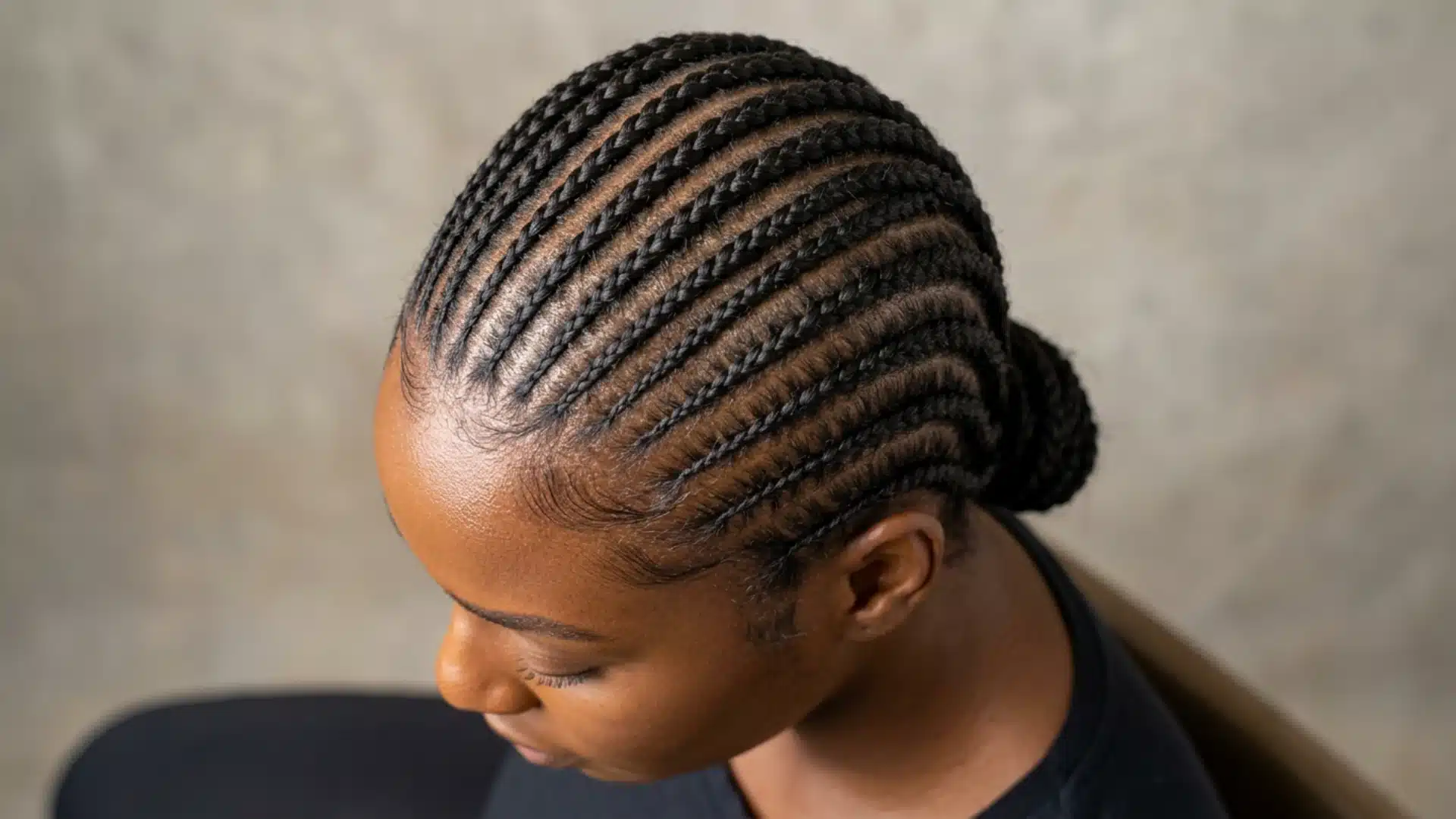
Cornrows are flat, raised rows braided directly onto the scalp using an underhand technique.
They can run straight back, curve into patterns, or form intricate designs. Documented as far back as 3000 BC in Africa, patterns once communicated tribe, age, and social status.
- Who They Suit: All hair types, but hold best on natural, textured hair
- How Long They Last: 2 to 4 weeks
- Styling Range: Wear flat, add extensions for length, or use as a base for other styles
2. Ghana Braids
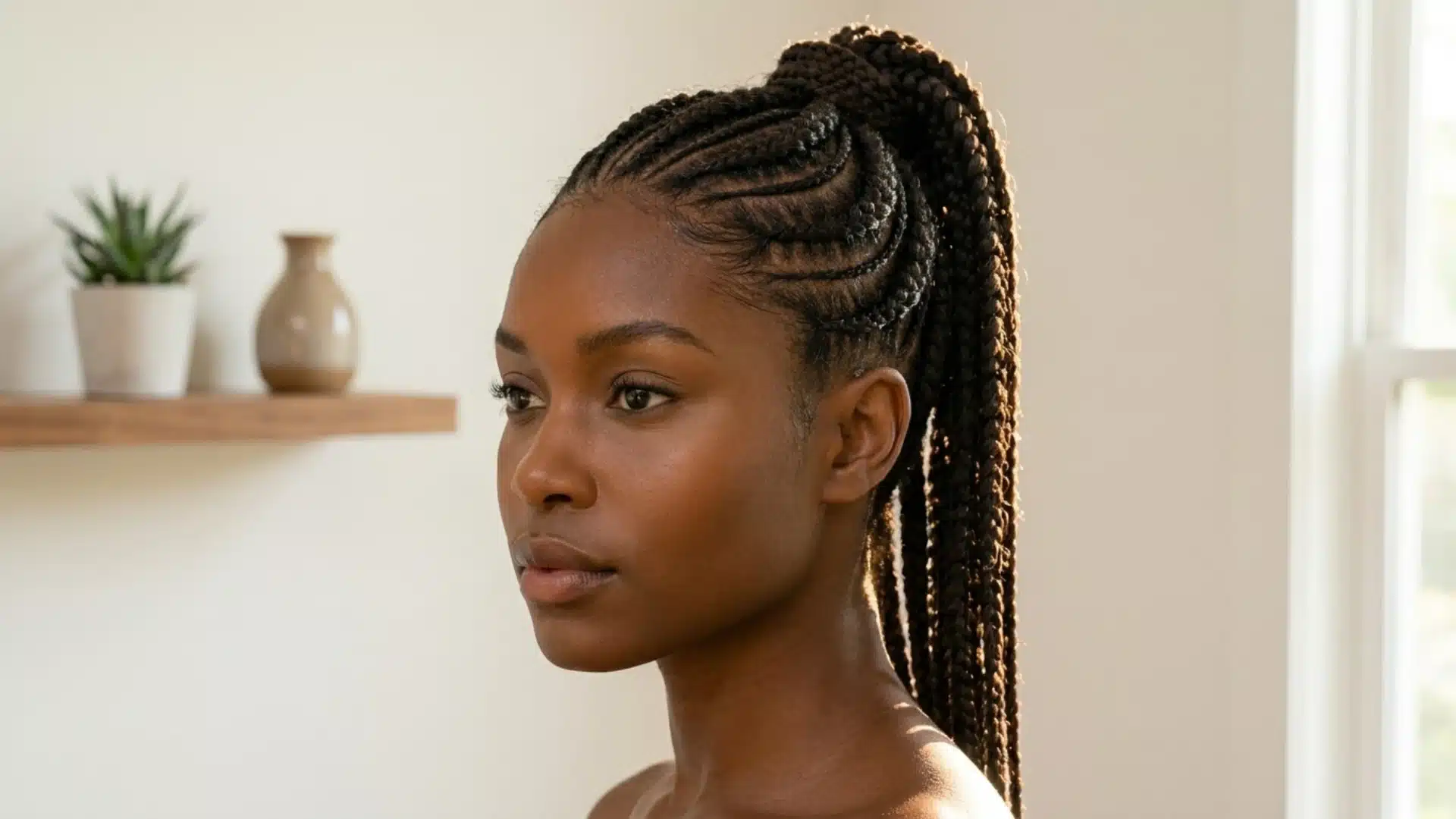
Ghana braids, also called invisible braids or banana braids, originate from Ghanaian tradition and are depicted in 500 BC sculptures.
They are kept close to the scalp like cornrows but start very small at the hairline, gradually increase in size toward the middle, then taper off at the ends.
- Who They Suit: Best on natural and textured hair with coarser textures
- How Long They Last: 4 to 6 weeks with proper scalp care
- Styling Range: Often worn in a high ponytail or wrapped bun
3. Feed-in Braids
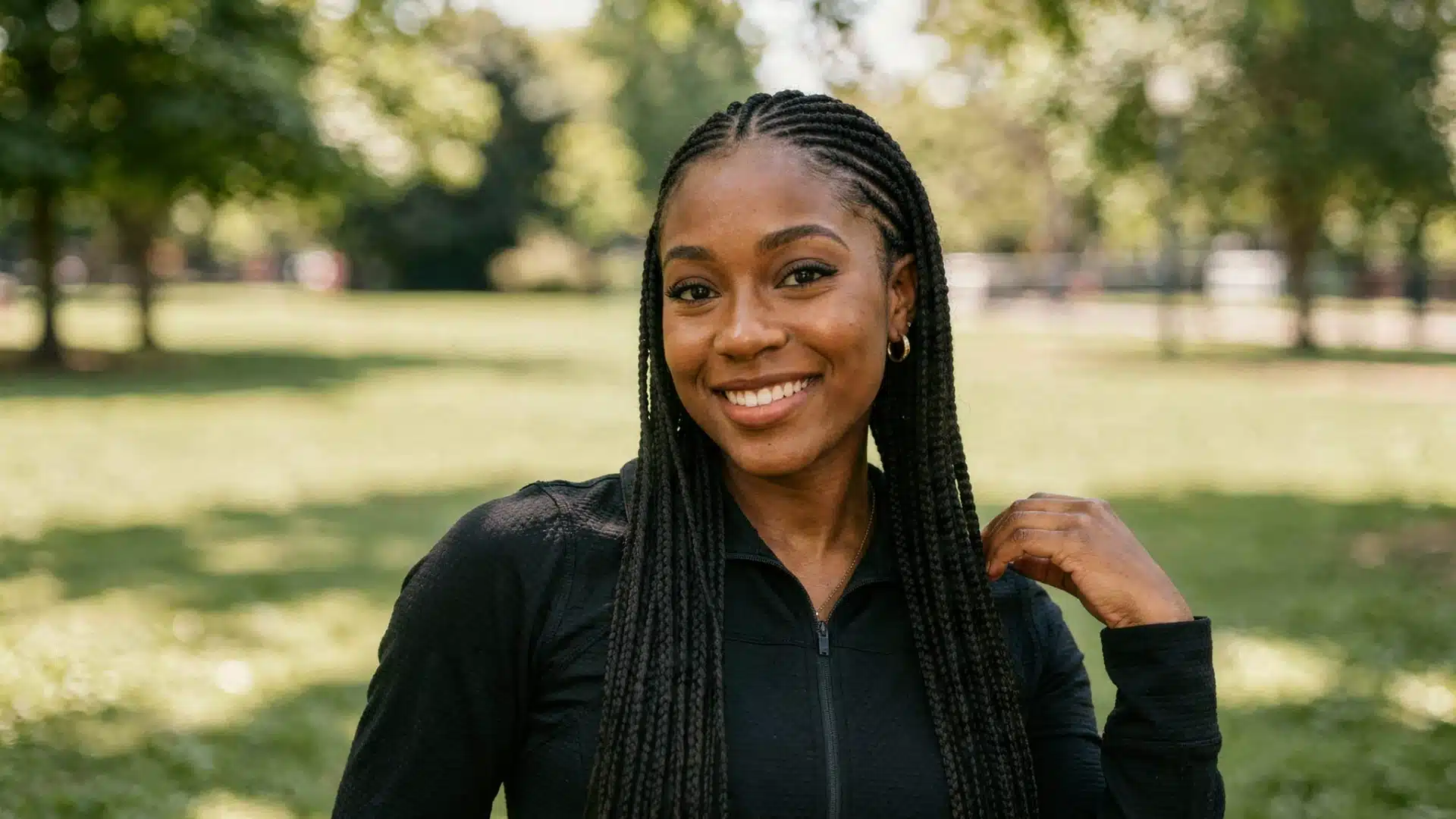
Feed-in braids are a cornrow variation where braiding hair extensions are gradually added as the stylist works down the row.
This gives a thicker, more voluminous result without the heavy knot at the root that older extension methods created.
- Who They Suit: Any hair type; lighter on the scalp than traditional extension cornrows
- How Long They Last: 2 to 4 weeks, depending on design and maintenance
- Styling Range: Can run in any direction, used as a base for jumbo braids, or worn as the finished look
4. Stitch Braids
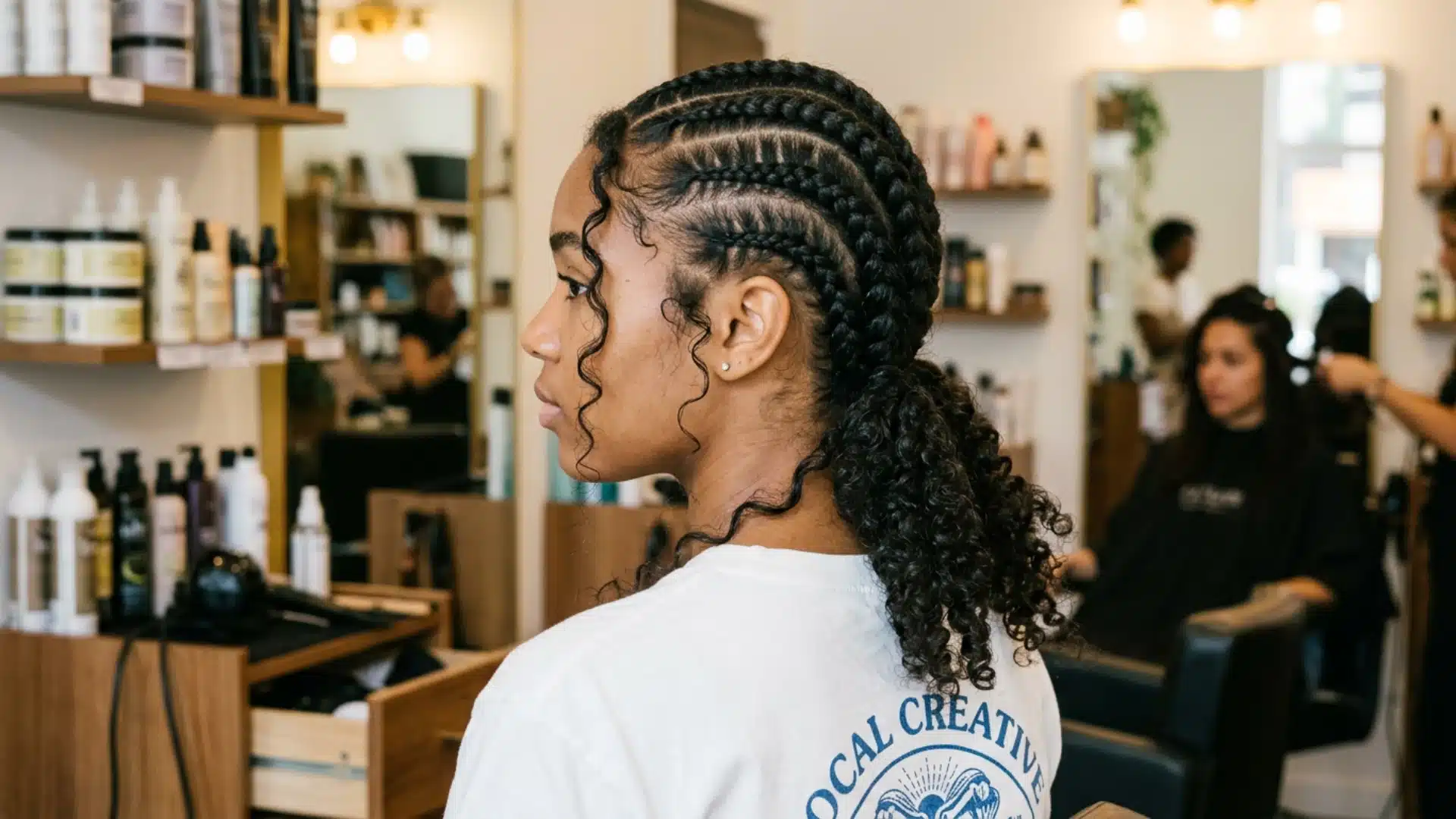
Stitch braids are a cornrow variation that creates a distinctive “stitched” appearance along each row.
The technique uses a pick or comb to pull hair through at even intervals as the braid is formed, creating a horizontal line that bisects each row.
- Who They Suit: Natural hair with enough density to hold definition between rows
- How Long They Last: 2 to 3 weeks
- Styling Range: Best as a standalone look; heavy accessories compete with the stitching detail
5. Lemonade Braids
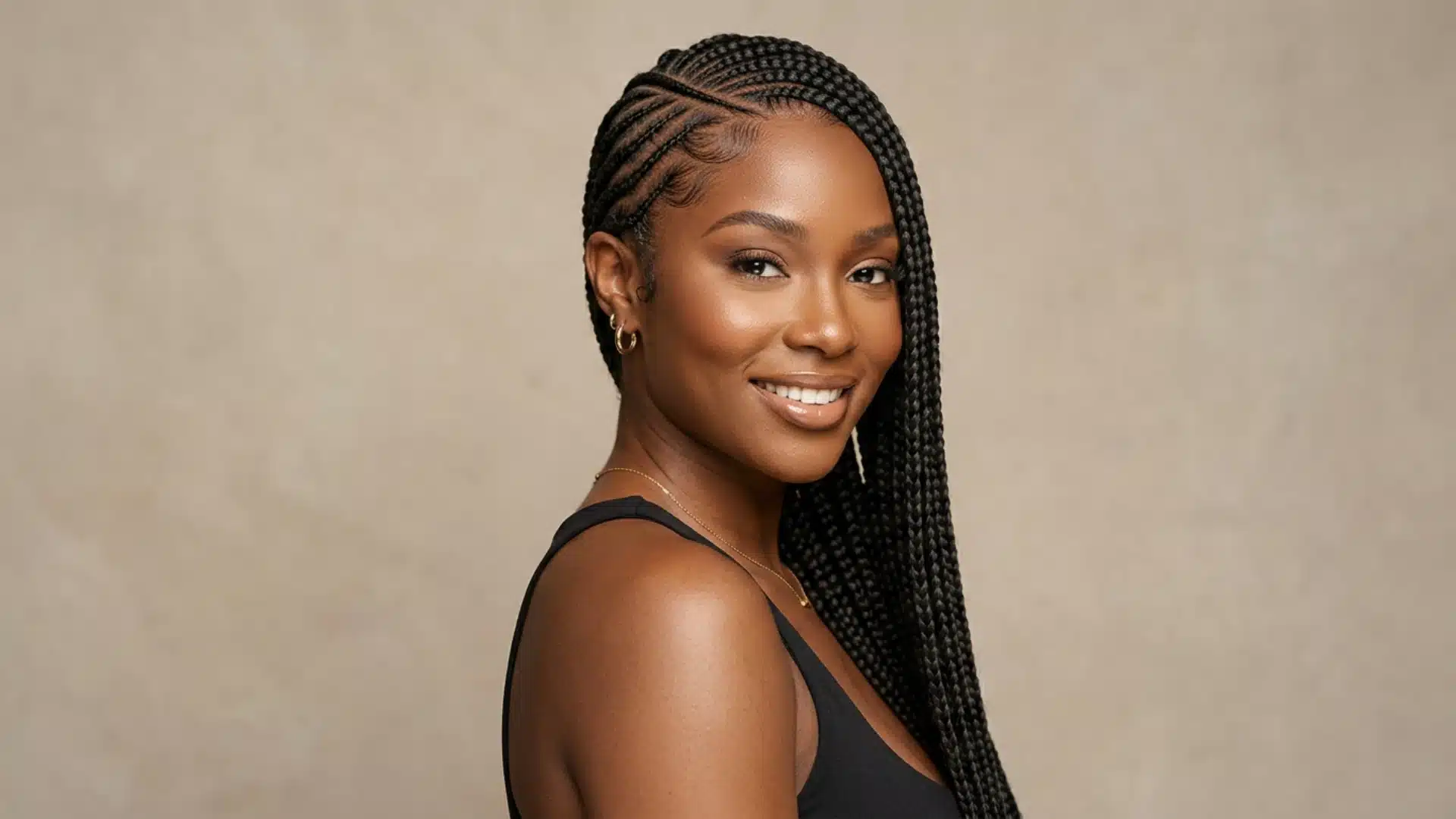
Lemonade braids are cornrows styled to the side, sweeping across the head from one temple toward the opposite ear or the nape of the neck.
The style became widely known after Beyoncé wore the look in her 2016 visual album.
- Who They Suit: Natural, relaxed, and stretched natural hair with some length
- How Long They Last: 4 to 6 weeks
- Styling Range: Worn sleek and clean, or finished with perm-rod curled ends for a softer look
6. Fulani Braids
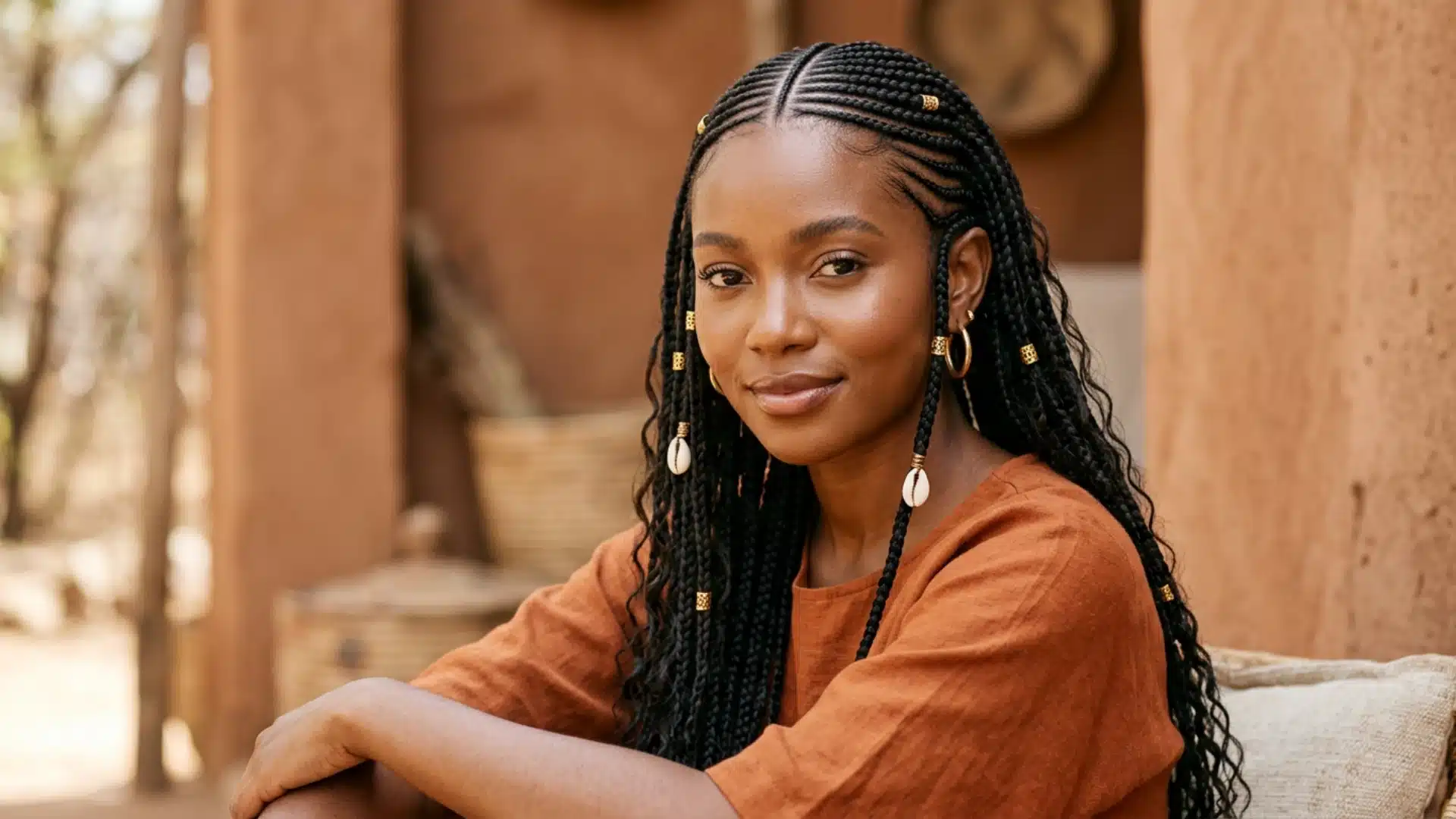
Fulani braids come from the Fula people of West Africa and the Sahel region, where traditionally five long braids were worn with silver or gold coins, beads, and cowrie shells threaded through them.
The modern version blends cornrows on the top of the head with individual braids in the back, often including a center-parted cornrow as a defining feature.
- Who They Suit: Any textured hair type; proportions adapt to any head shape
- How Long They Last: 3 to 5 weeks
- Styling Range: Add beads and cowrie shells to honor the style’s origins, or wear plain for a cleaner look
7. Micro Braids
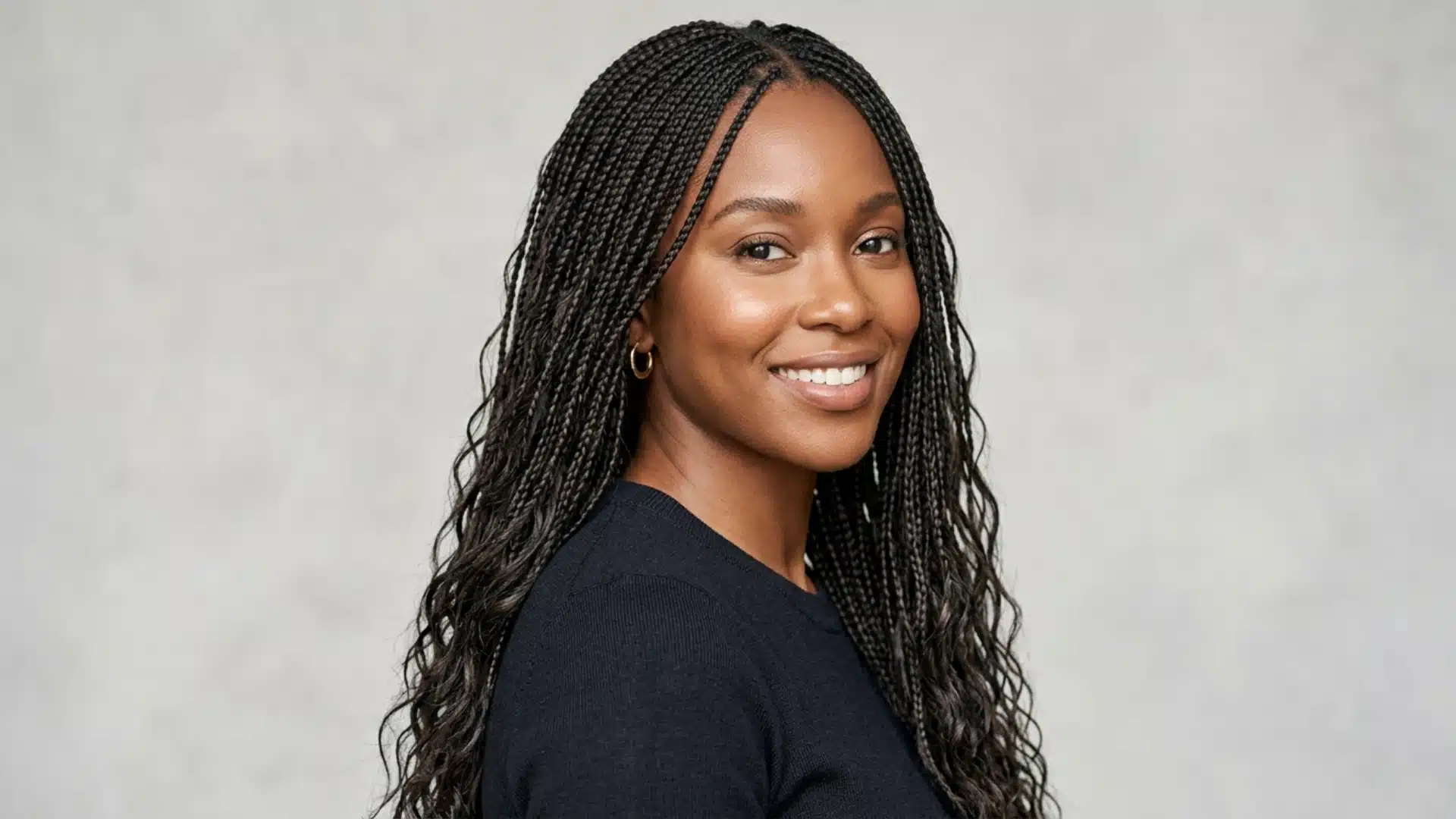
Micro braids are very small individual braids formed from tiny hair sections, with or without extensions.
The trade-off with micro braids is installation time. They take significantly longer to put in than larger styles. For the right person, that’s worth it because of how long it lasts.
- Who They Suit: Natural hair with some density; fine hair may find extensions heavy
- How Long They Last: Up to 8 to 10 weeks with proper maintenance
- Styling Range: Worn loose, pulled up, or styled into any updo since individual braids move freely
Box Braids and Knotless Styles
Box braids are the defining category of modern African hair braiding styles.
Hair is divided into square or triangular sections and braided down, usually with extensions added for length and volume. The variation within this category is what surprises most people.
8. Classic Box Braids
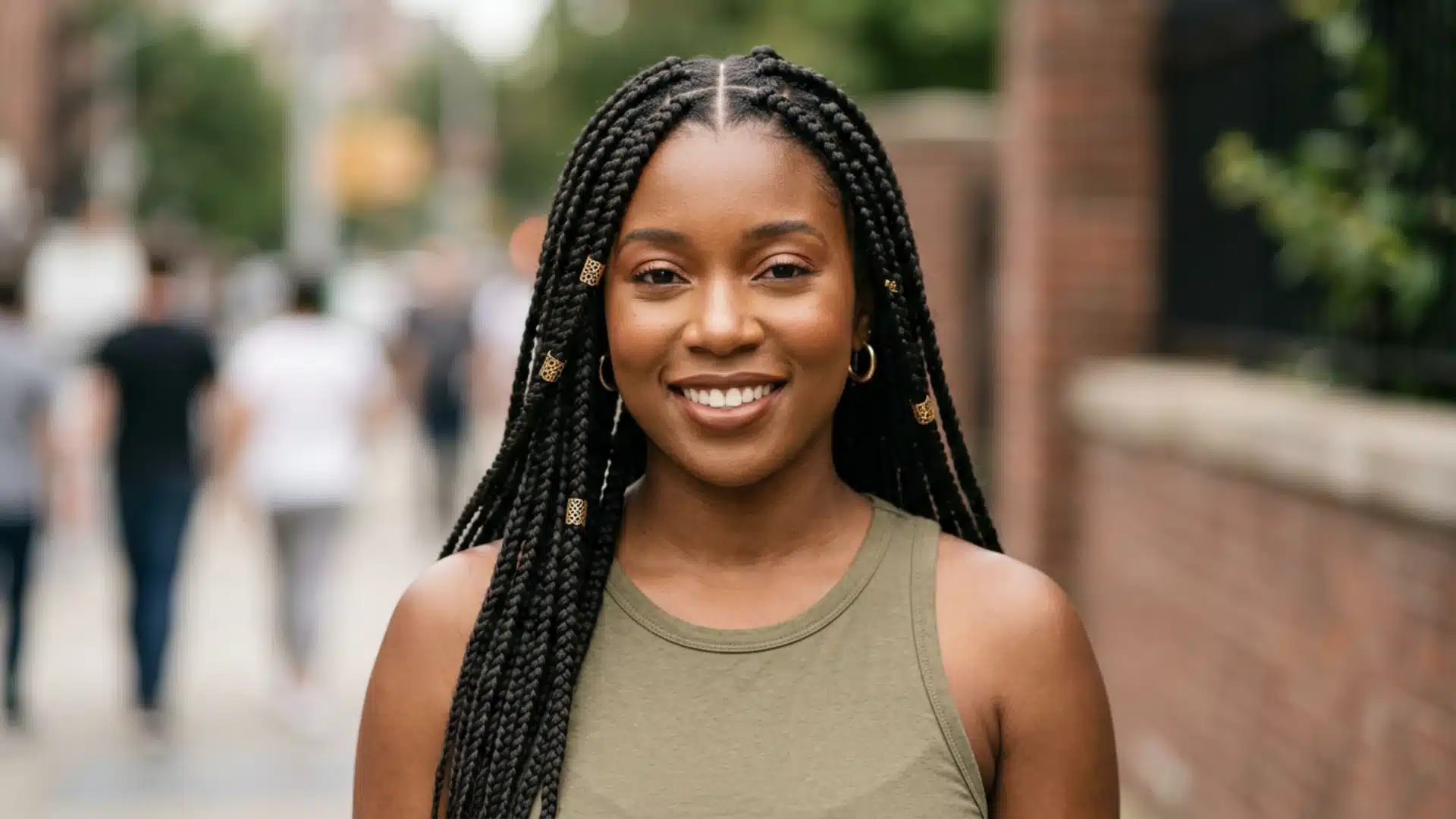
Classic box braids use square parting sections and a three-strand braid worked with extensions. The knot at the root is the visible starting point.
Evidence of box braids dates to 3500 BC in Southern Africa. Janet Jackson made the term itself mainstream in the 1990s, but the style is significantly older than the name.
They come in micro, small, medium, jumbo, and everything between.
- Who They Suit: Any natural or textured hair type
- How Long They Last: 4 to 8 weeks; smaller braids last longer than larger ones
- Styling Range: Wear loose, in a high bun, half-up, or accessorized with cuffs and beads
9. Knotless Braids
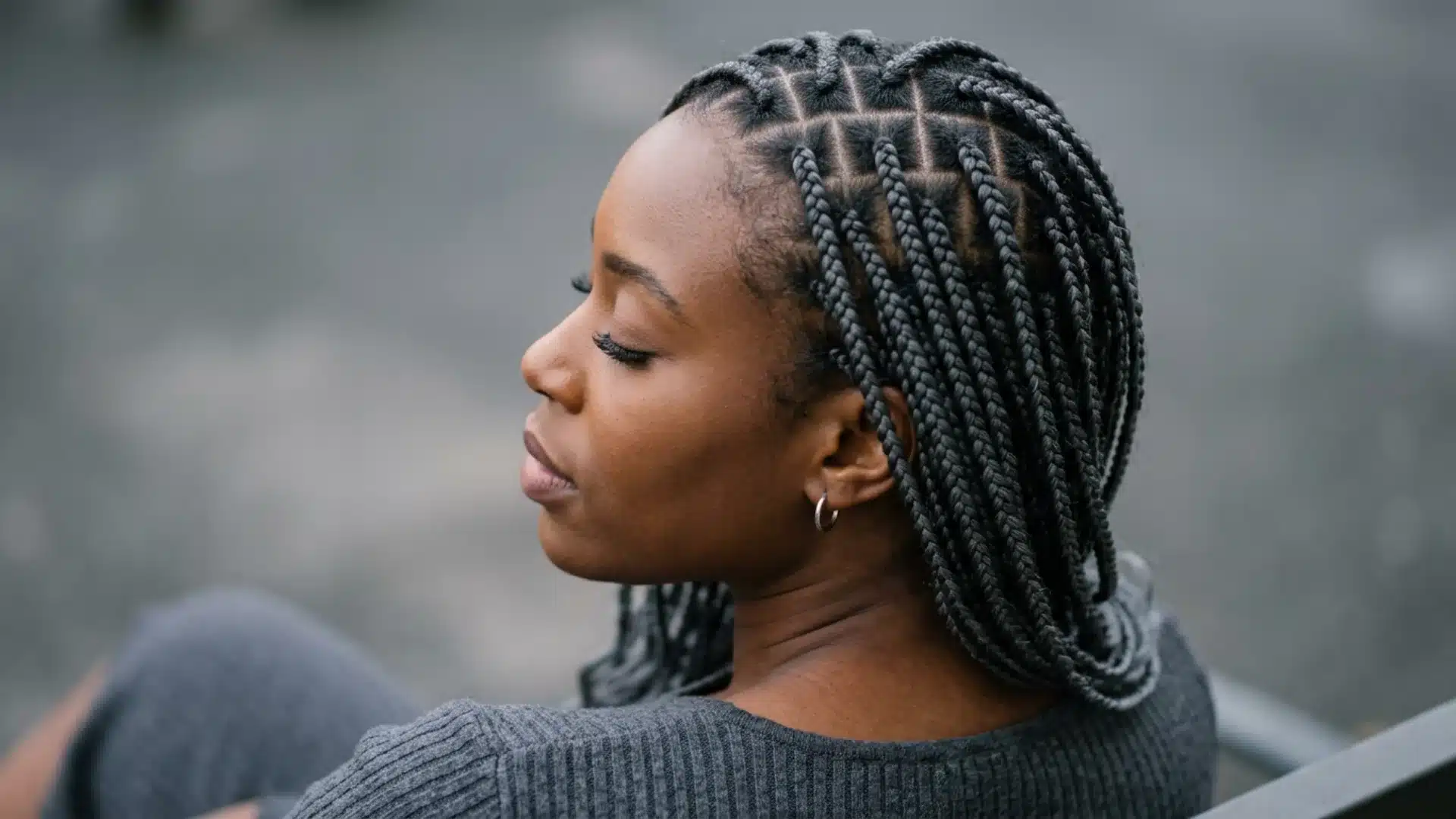
Knotless braids start with your natural hair and feed in extensions gradually, so there’s no knot at the root. This is the main difference from classic box braids.
The result is a flatter braid that sits closer to the scalp and causes less tension on the follicle. They cost more at most salons because they take longer to install, but the difference in the scalp is real.
- Who They Suit: All natural hair types, especially those with a sensitive scalp or tension-related hair loss
- How Long They Last: 4 to 8 weeks; grow out more seamlessly than classic box braids
- Styling Range: Identical range to classic box braids with a lighter, more natural feel at the root
10. Jumbo Braids
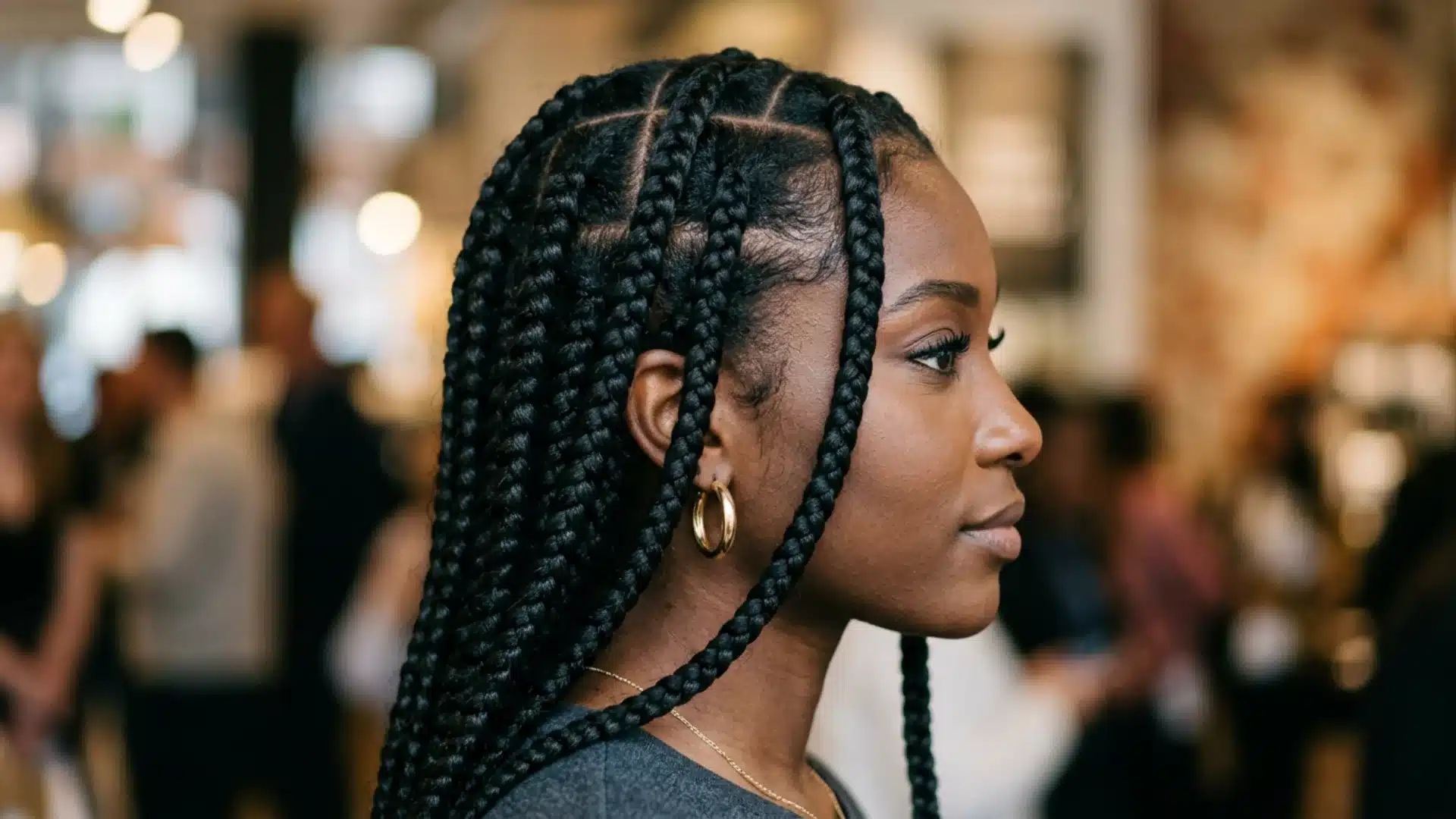
Jumbo braids are box or knotless braids made with large hair sections, making them among the fastest braided styles to install.
Their oversized look creates a bold, statement-making appearance while placing less overall stress on the scalp than densely packed, small braids do.
Because each braid contains more hair, they typically loosen and shows frizz sooner than medium or small-sized options.
- Who They Suit: All natural hair types; not ideal for very fine hair due to root strain
- How Long They Last: 4 to 6 weeks
- Styling Range: Best worn loose or in a high bun; intricate updos are harder to manage at this size
11. Triangle Braids
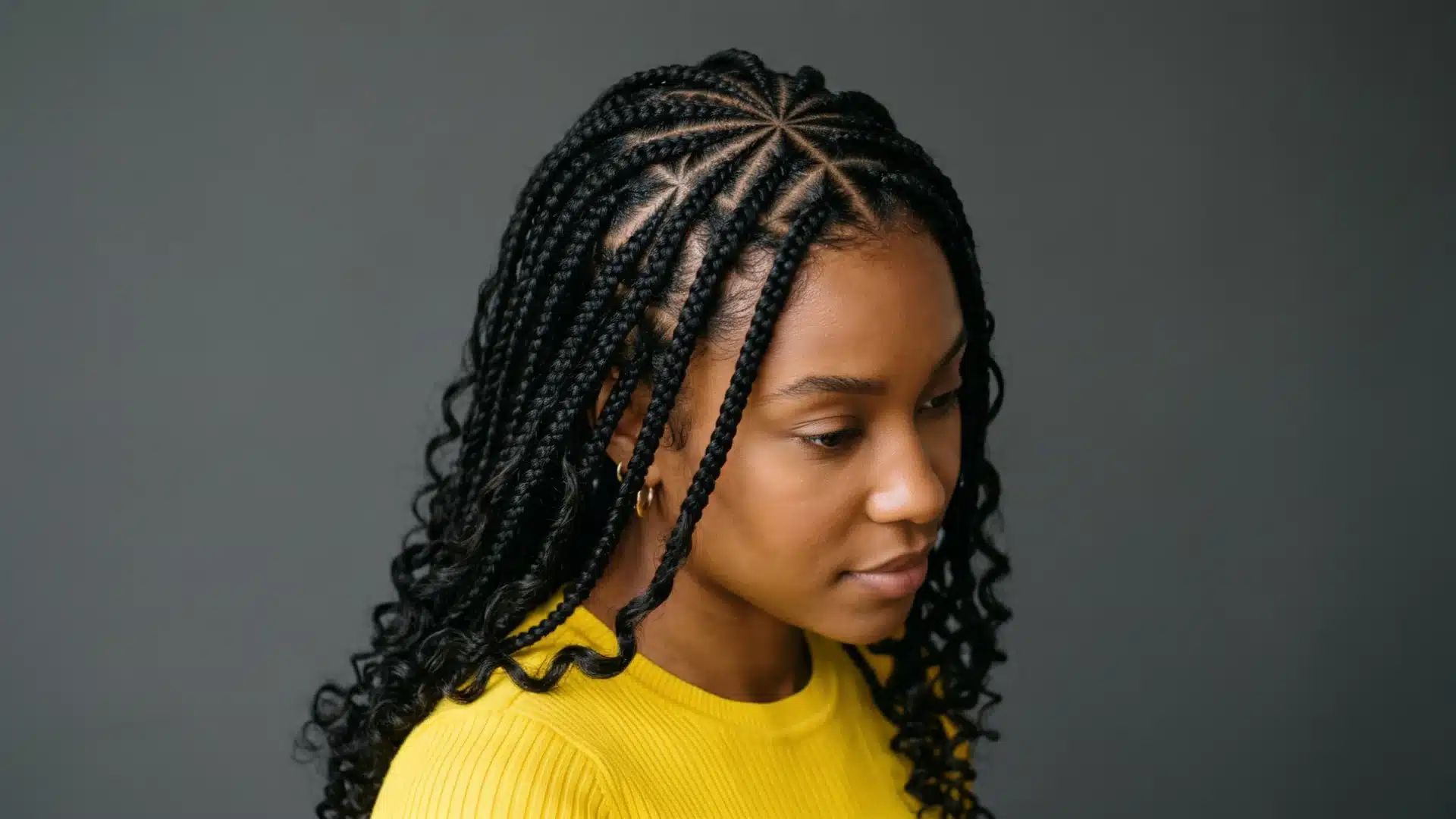
Triangle braids are a variation of box braids that use triangular partings instead of traditional square sections.
The unique geometric pattern adds visual interest at the scalp, giving the style a more modern, customized look even when the braids are worn down.
While the braiding technique itself remains the same, the distinctive parting design helps the style stand out from standard box braids.
- Who They Suit: Any natural hair type
- How Long They Last: 4 to 6 weeks
- Styling Range: Pulling hair partially up or back shows off the parting pattern most effectively
12. Goddess Braids
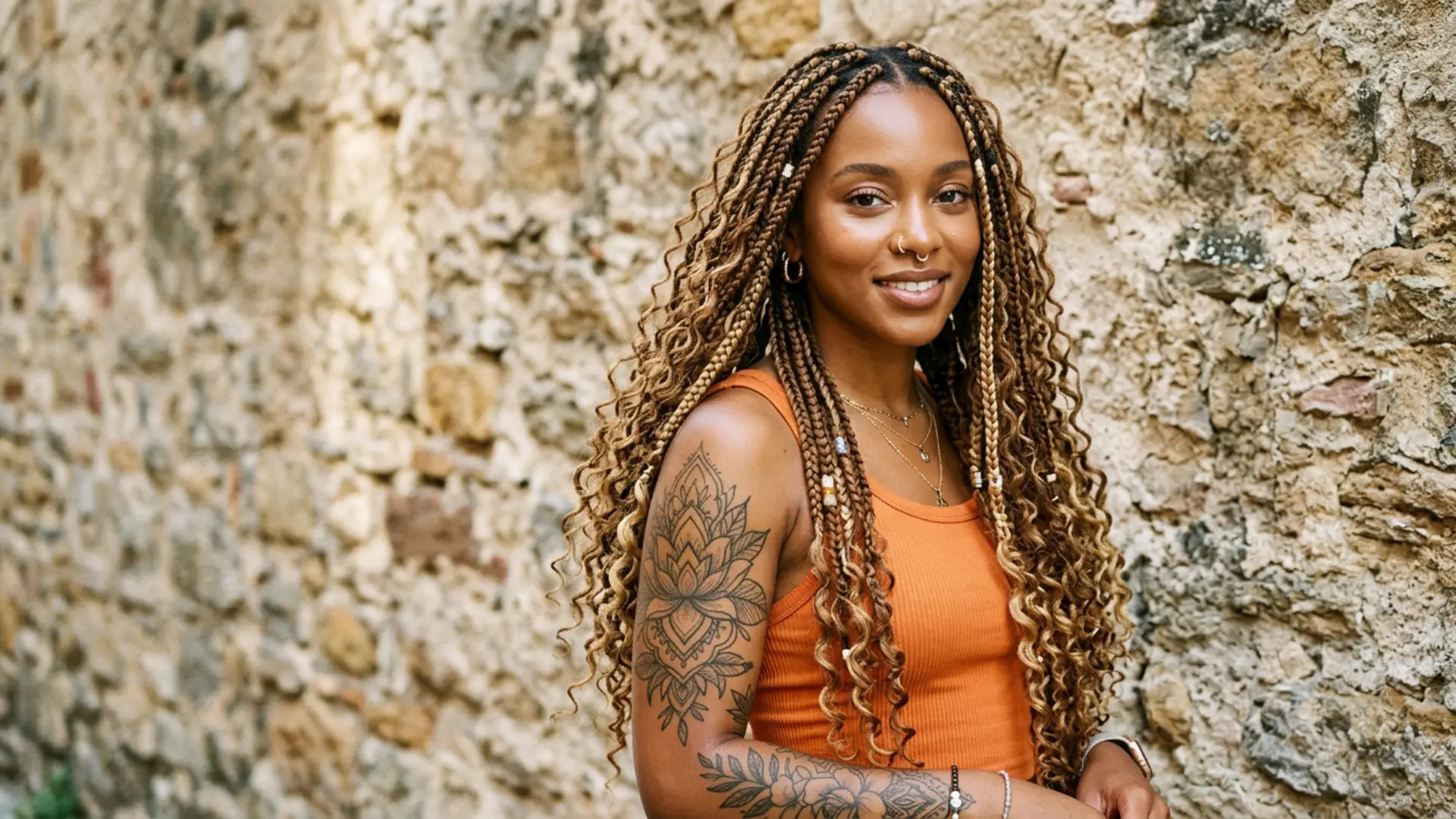
Goddess braids combine the structure of box or knotless braids with loose curly strands woven throughout the lengths or left at the ends.
The added curls create a softer, more romantic appearance that feels less rigid than traditional braids while adding extra volume and movement.
Because the curly pieces are exposed, they tend to frizz and tangle faster than the braided sections and usually require regular moisturizing and curl refreshes to stay defined.
- Who They Suit: Natural hair where curly pieces can match or complement your own texture
- How Long They Last: 3 to 6 weeks
- Styling Range: Works best worn loose or in a loose half-up style to show the mix of textures
Loose and European-Style Braids
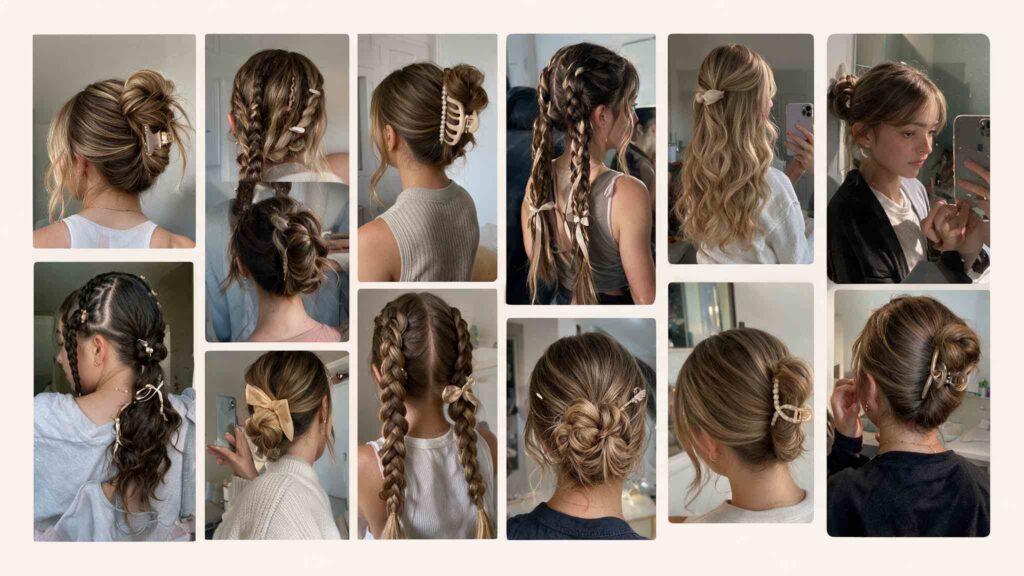
These styles are worked without anchoring the hair to the scalp. They suit straight, wavy, and fine hair textures well, and they’re generally the styles most people learn to do on themselves.
13. Three-Strand Braid
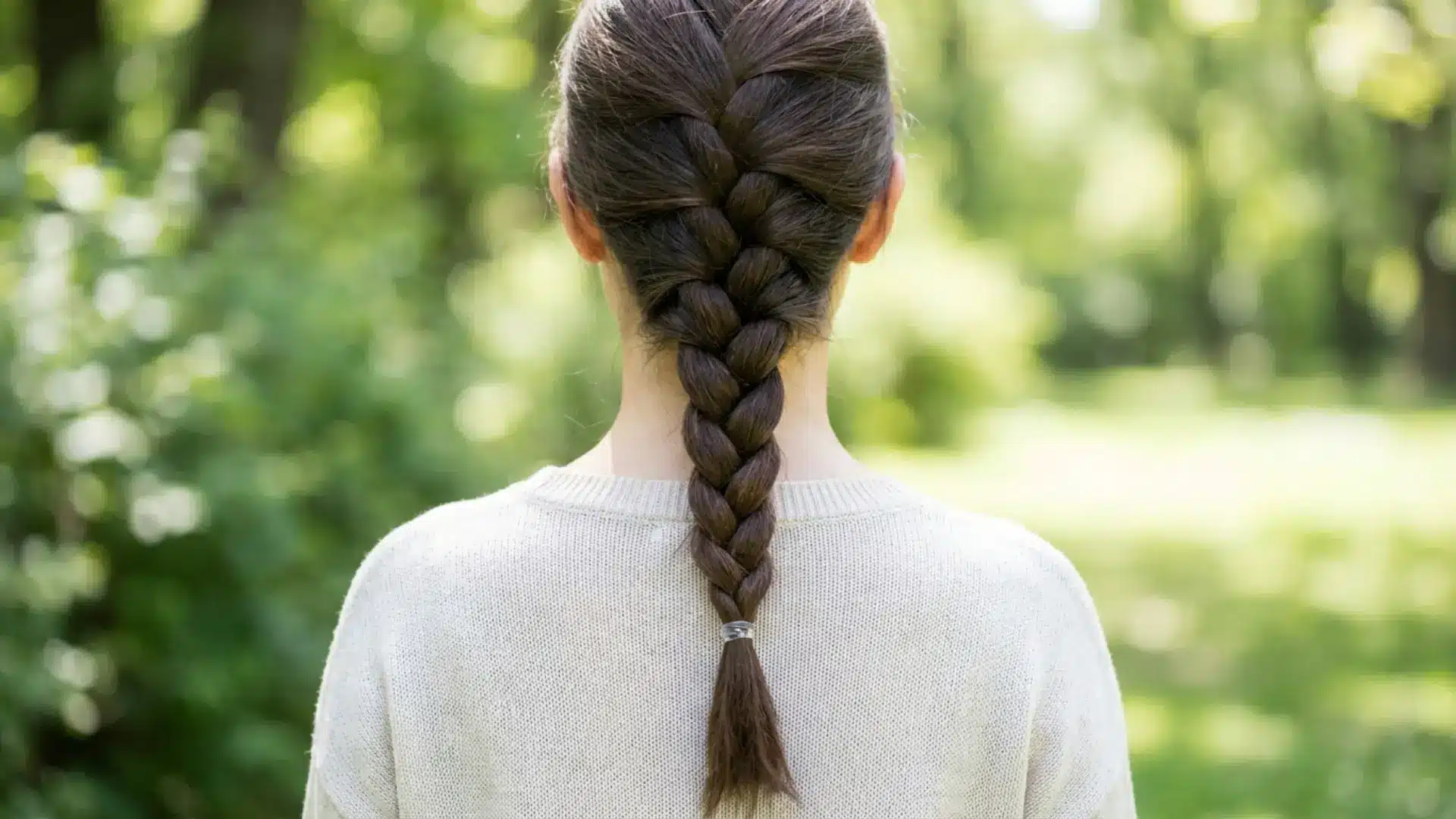
The three-strand braid is the classic braid most people learn first, created by dividing the hair into three sections and alternately crossing the outer strands over the middle.
While simple, it serves as the foundation for countless braided hairstyles, including French and Dutch braids, as well as many intricate updos.
Its quick styling process, minimal skill requirement, and versatility make it one of the most practical braid types for everyday wear.
- Who They Suit: All hair types; fine hair benefits from a light texturizing spray first
- How Long They Last: A few hours to a few days
- Styling Range: Works as a single braid, side braid, low ponytail, or component of larger styles
14. French Braid
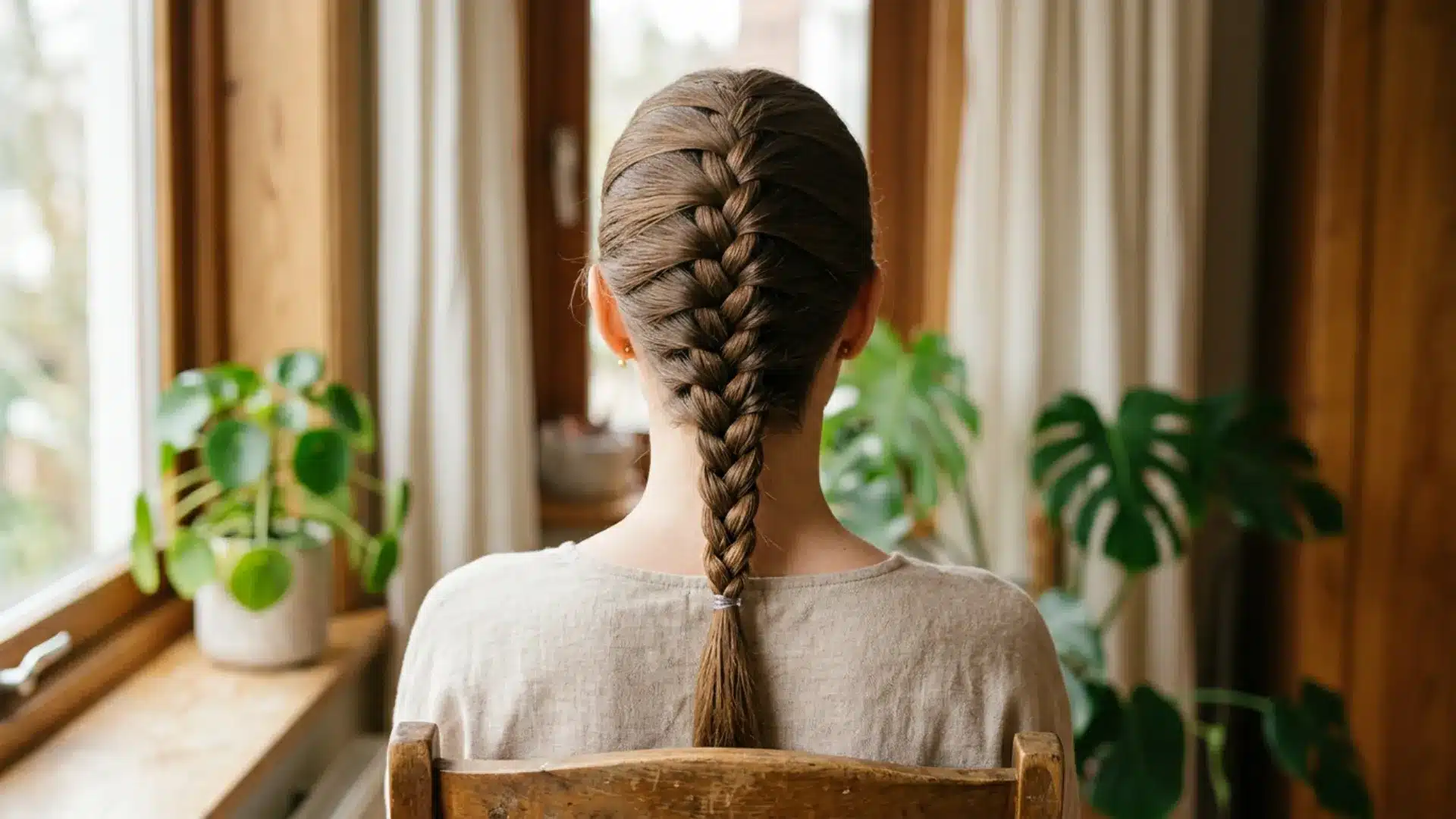
A French braid is created by gradually adding small sections of hair from each side as you braid downward, resulting in a plait that sits close to the scalp and appears to flow naturally from the crown.
Its polished appearance and versatility across various hair lengths have made it one of the most recognizable braid styles worldwide.
- Who They Suit: Straight to wavy hair; curly textures may need stretching first for clean parting
- How Long They Last: 1 to 3 days
- Styling Range: Single braid for casual wear, two side by side for sporty, finished in a bun for formal
15. Dutch Braid
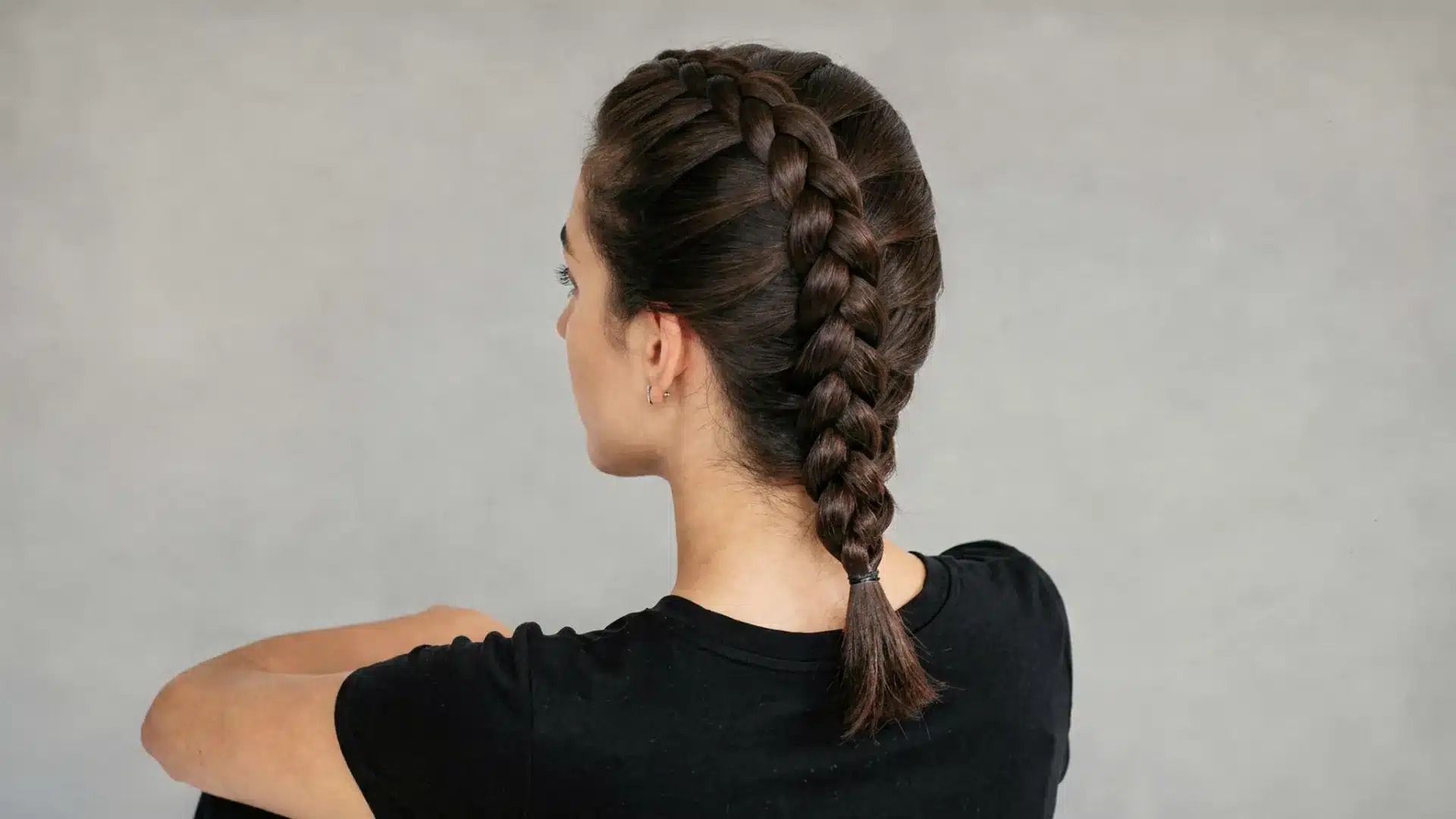
A Dutch braid uses the same technique as a French braid but crosses each section under the middle strand instead of over.
This pushes the braid outward, so instead of lying flat, it stands slightly raised off the scalp.
- Who They Suit: All hair types; the 3D look is most defined on smoother textures
- How Long They Last: 1 to 3 days
- Styling Range: Strong base for crown braids and milkmaid styles; two Dutch braids pulled back form boxer braids
16. Fishtail Braid
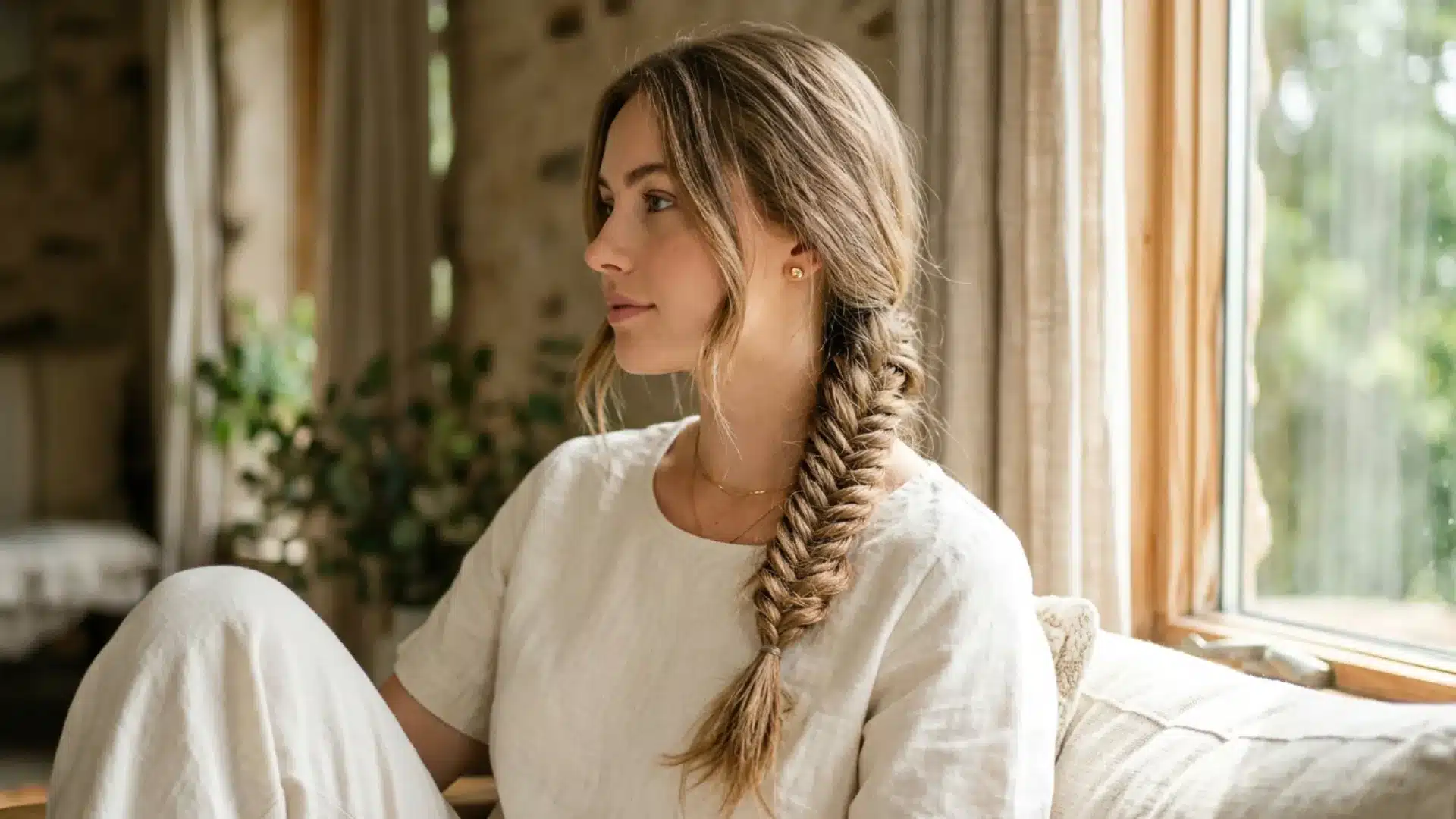
A fishtail braid divides the hair into two sections and alternates pulling thin pieces from the outer edge of each section across to join the other.
There are no fixed strands, which creates the woven herringbone pattern the style is named for.
- Who They Suit: Medium to long hair; short hair doesn’t have enough length for the pattern to read
- How Long They Last: 1 to 2 days
- Styling Range: Side fishtail for semi-formal, loose and pulled-out for boho, tight over one shoulder for polished
17. Waterfall Braid
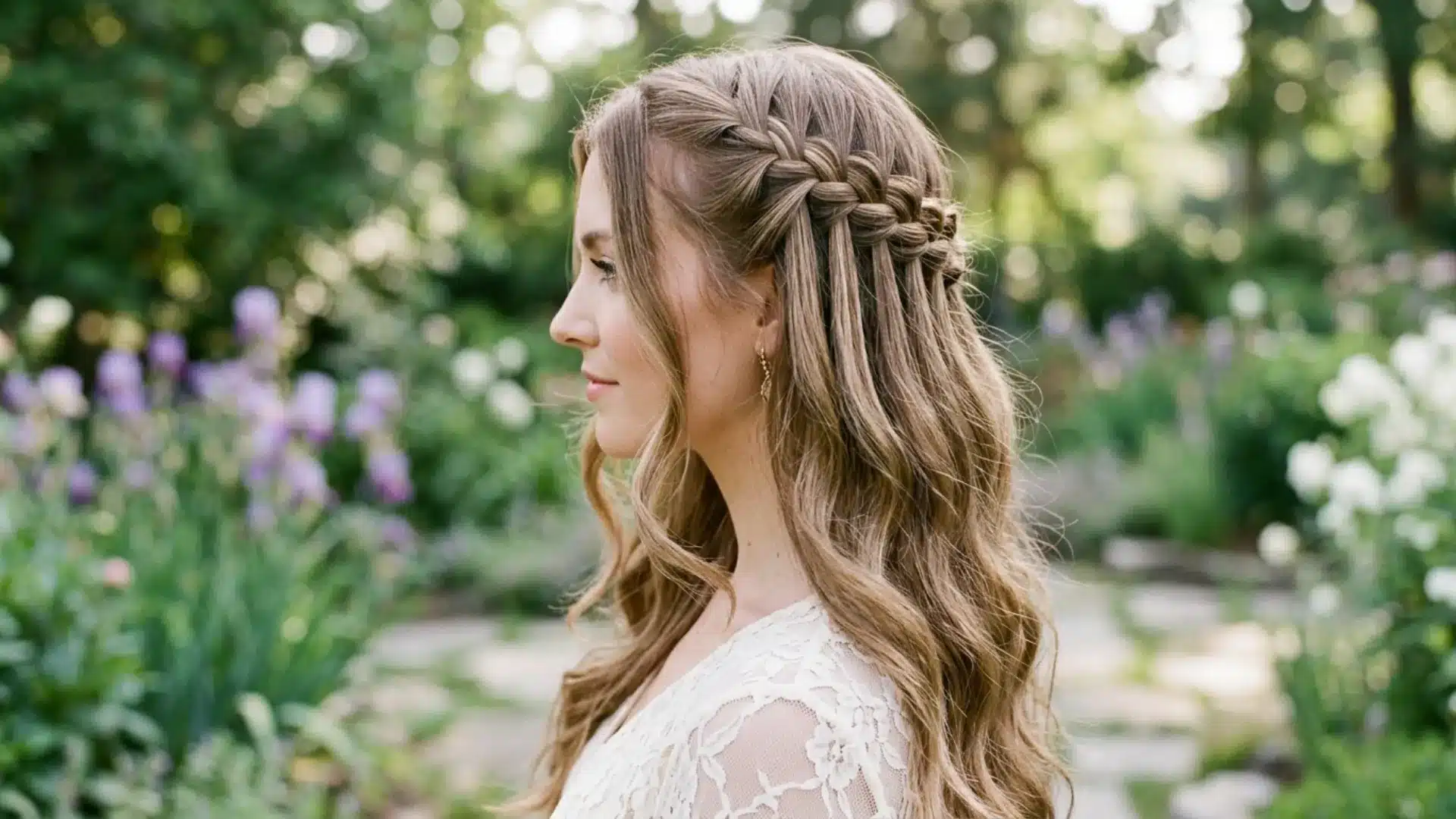
A waterfall braid is a French braid variation where, instead of gathering the dropped section into the braid, you let it fall loose.
The result is a horizontal braid across the crown or the side of the head, with strands cascading through gaps in the braid.
- Who They Suit: Straight and wavy hair; loose sections show the cascading effect best on smoother textures
- How Long They Last: A few hours to a day
- Styling Range: Best for events and bridal looks where half-up height is needed without covering the length
18. Rope Braid
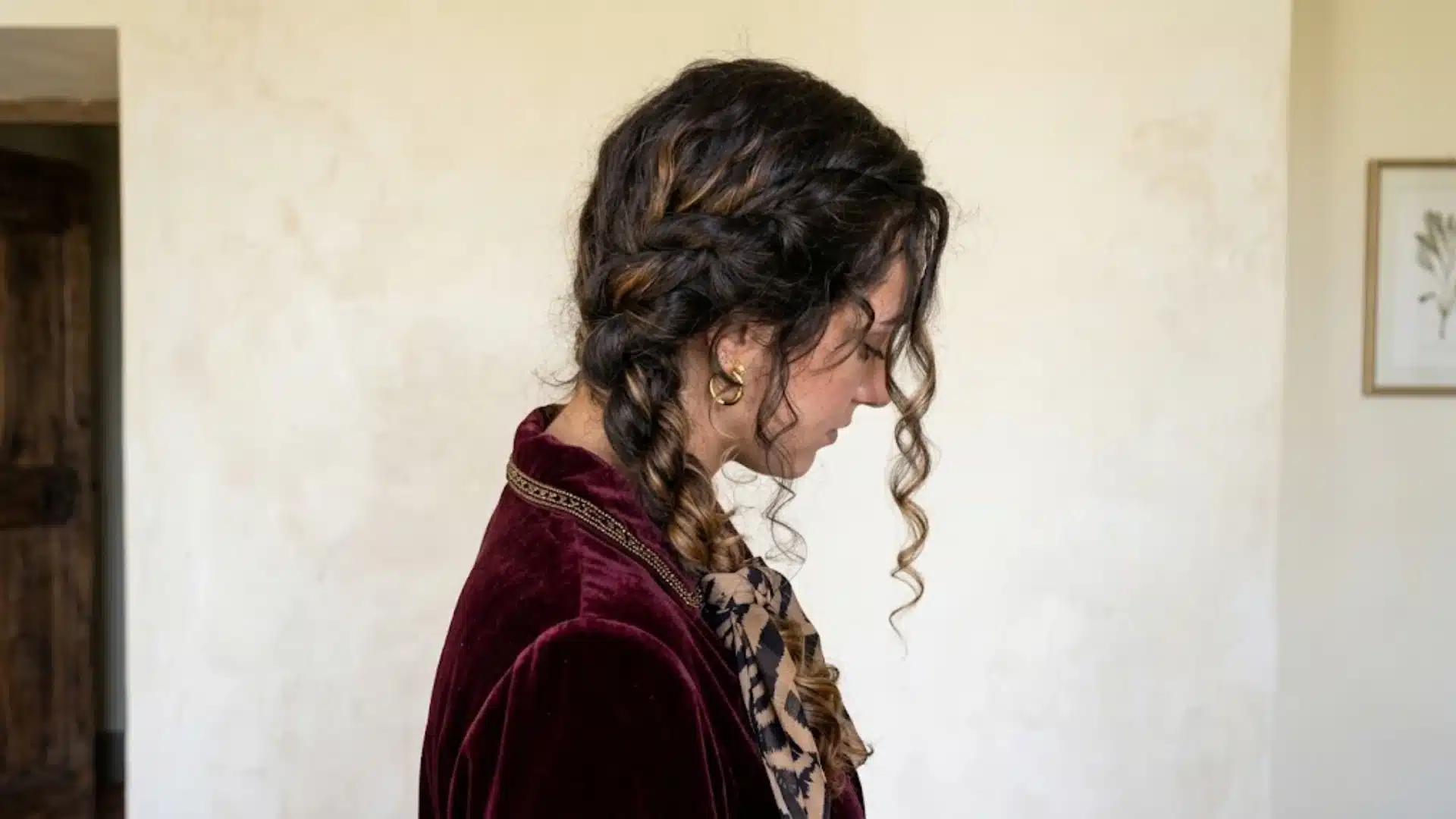
A rope braid, also called a twist braid, is made from two sections of hair twisted in the same direction, then wrapped around each other in the opposite direction.
The tension between the two twists holds the structure together.
- Who They Suit: All hair types
- How Long They Last: 1 to 2 days; natural and coily hair can wear rope twists as a longer-term protective style
- Styling Range: Works as a side braid, low ponytail, or twisted into a bun
Statement and Hybrid Braid Styles
Some braids stand out not because they’re entirely new, but because they blend two or more techniques into a single look.
These styles build on classic braiding methods to create more volume, detail, and personality.
19. Crown Braid
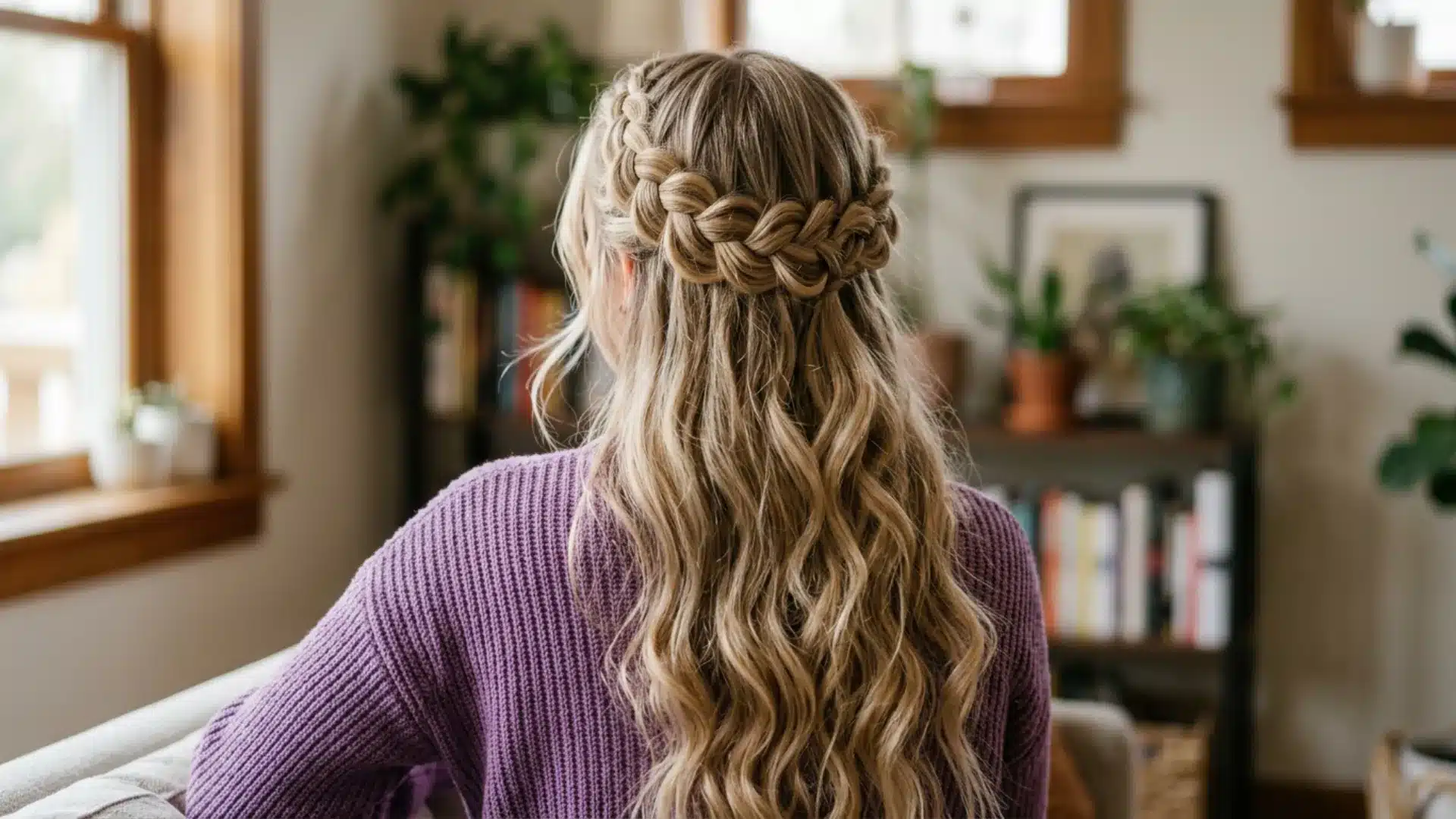
A crown braid is a French or Dutch braid that travels around the perimeter of the head, crossing over the top like a halo.
It can be made from a single continuous braid or from two braids that meet in the middle.
- Who They Suit: Medium to long hair; shorter hair can achieve a partial crown with pins
- How Long They Last: A styling braid, typically worn fresh for a day
- Styling Range: Tight and neat for formal occasions; loose and slightly undone for everyday wear
20. Boxer Braids
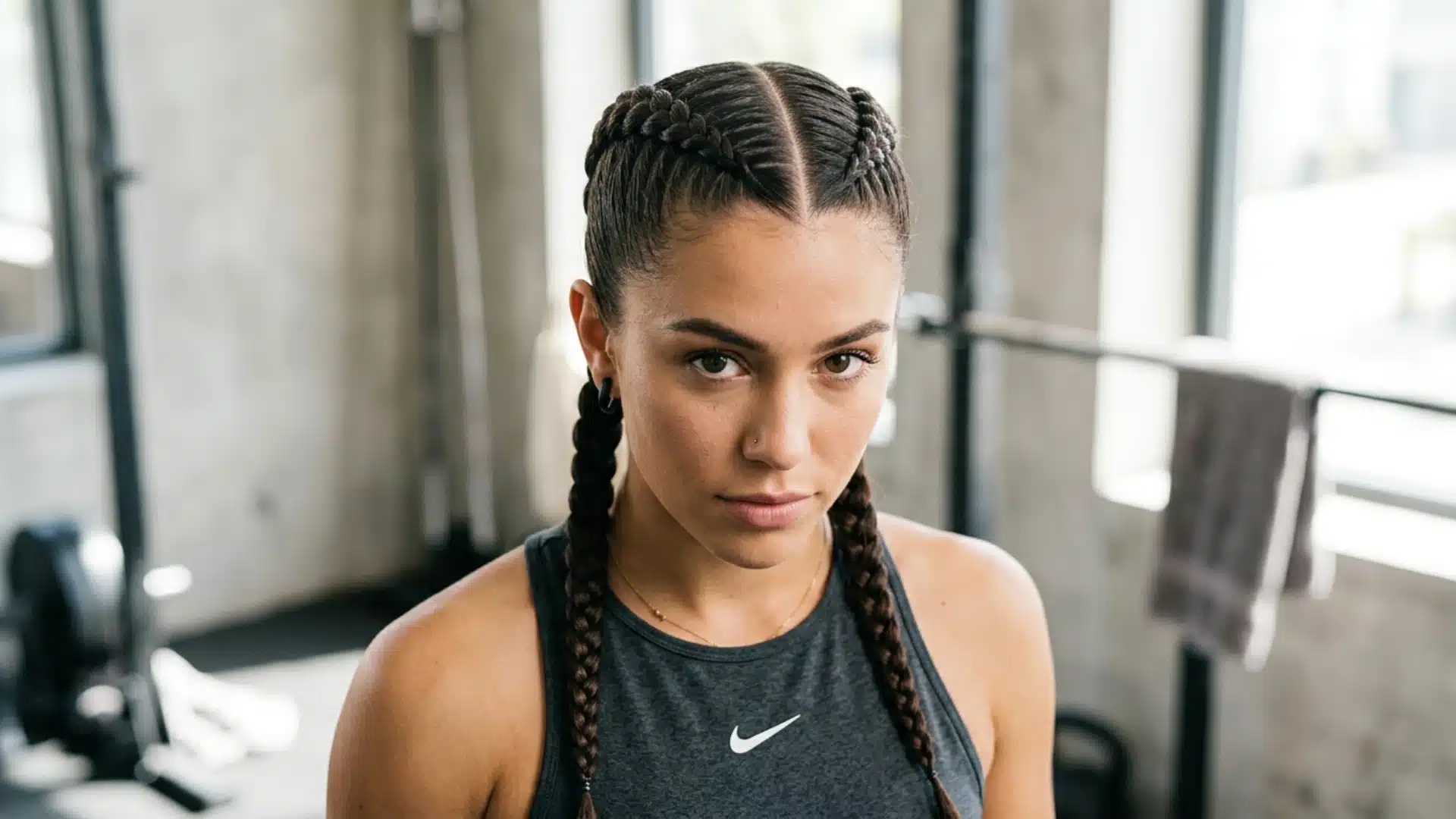
Boxer braids are two tight Dutch braids running from the front hairline straight back to the nape of the neck.
They sit symmetrically on either side of a central part and were named for their use in combat sports to keep hair completely out of the face.
- Who They Suit: Any hair type with enough length
- How Long They Last: 1 to 3 days; longer on natural hair worn with a satin bonnet at night
- Styling Range: Primarily sporty; tucking the ends into a low bun or under dresses the look up
21. Boho Braids
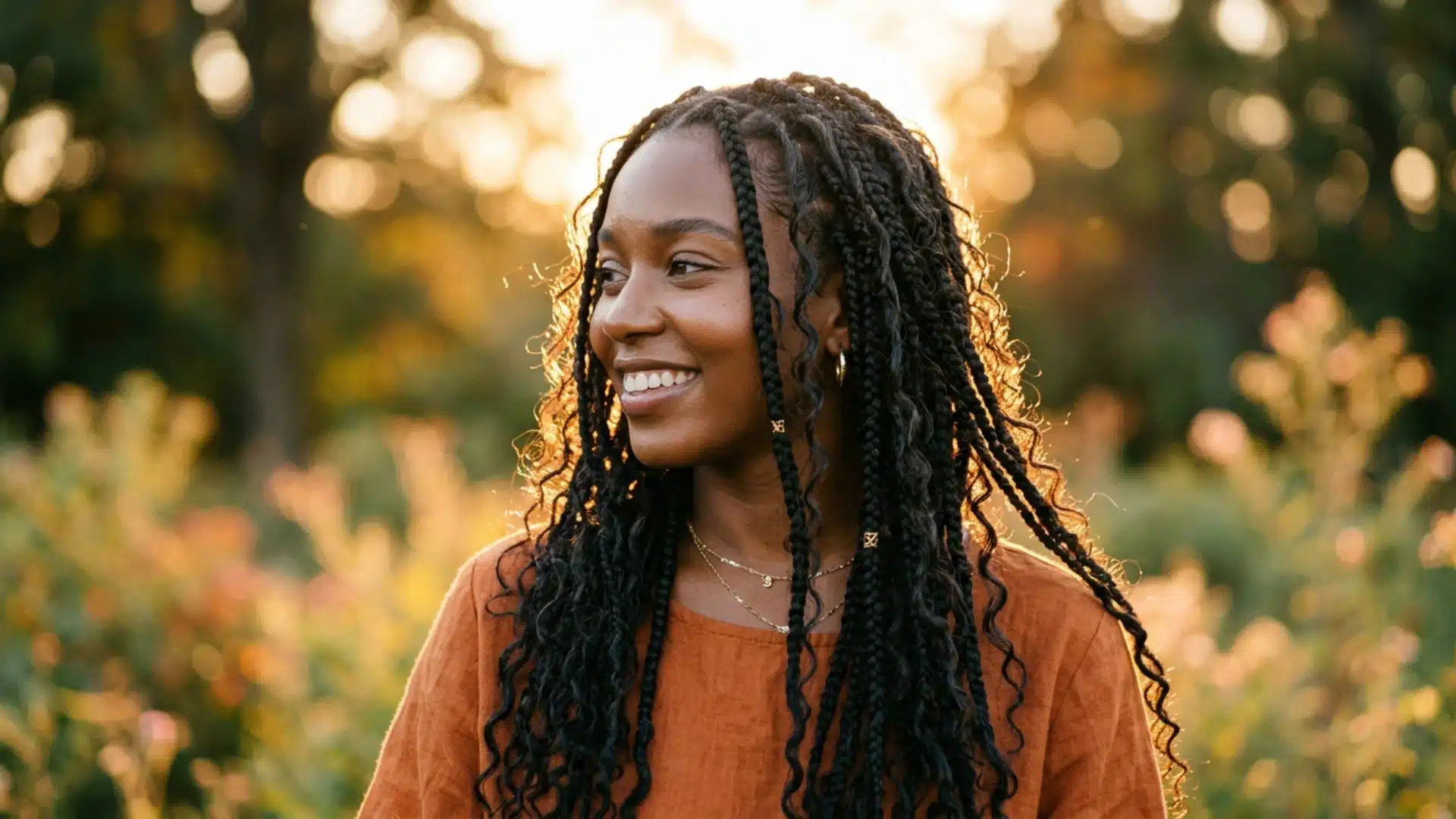
Boho braids are a loose, textured variation on box braids or knotless braids where curly or wavy pieces are intentionally left out at the roots or added throughout for a free, lived-in feel.
They can also describe a looser version of any classic braid with deliberately pulled-out sections for softness.
- Who They Suit: Natural and textured hair for the protective version; all hair types for the casual styling version
- How Long They Last: 3 to 6 weeks as a box braid variation; a few hours to a day as a casual styling choice
- Styling Range: Worn loose by design; the intentional softness doesn’t suit tight, structured updos
How to Choose the Right Type of Braid
Hair texture is the main factor. Scalp braids like cornrows, feed-in braids, and stitch braids need enough natural grip and density to hold the braid flat against the head.
Loose styles like French and Dutch braids suit finer, smoother textures more naturally because they don’t require a scalp anchor.
Longevity matters too, especially if you’re wearing braids as a protective style. Here’s a quick breakdown:
| Style | Typical lifespan | Best for |
|---|---|---|
| Micro braids | 8 to 10 weeks | Length retention, versatile wear |
| Knotless braids | 4 to 8 weeks | Sensitive scalp, natural growth |
| Box braids | 4 to 8 weeks | Versatility, any natural hair type |
| Goddess braids | 3 to 6 weeks | Soft, textured protective look |
| Cornrows | 2 to 4 weeks | Low-maintenance protective base |
| Feed-in braids | 2 to 4 weeks | Volume without root tension |
| French / Dutch braids | 1 to 3 days | Styling, not protective wear |
| Fishtail/waterfall | 1 to 2 days | Events, formal occasions |
Scalp health should be part of your braid decision. Research from the Harvard T.H. Chan School of Public Health suggests that some synthetic braiding hair may contain chemicals, including volatile organic compounds (VOCs), that frequent braid wearers may want to consider.
If you wear braids regularly, researching extension ingredients or choosing high-quality alternatives can be worthwhile.
Maintenance matters too. Sleeping with a satin bonnet or pillowcase helps reduce frizz and extend wear, while a lightweight scalp oil can prevent dryness without causing buildup.
Most importantly, avoid keeping braids in longer than 6–8 weeks, as excessive new growth can increase tension at the roots and raise the risk of breakage.
Conclusion
After putting this guide together, one thing became clear: the best braid isn’t necessarily the most popular or the most photogenic; it’s the one that fits your hair, routine, and comfort level.
If you’re just starting out, a French or Dutch braid is an easy way to build confidence. If you’re looking for long-lasting protection, knotless and feed-in braids remain some of the most comfortable options.
And if styles like Fulani or Ghana braids catch your eye, taking a moment to appreciate their cultural roots adds even more meaning to wearing them.
Have a favorite braid or a style you’re planning to try next? Share it in the comments below.
Frequently Asked Questions
What is the Difference Between Cornrows and Ghana Braids?
Cornrows are braided flat against the scalp with a consistent size throughout. Ghana braids use added hair to create a raised braid that gradually varies in thickness, giving a more dimensional look.
Can All Hair Types Get Box Braids?
Box braids work best on natural and textured hair but can be installed on other hair types with proper preparation. Very fine or fragile hair may be better suited to knotless braids, which place less tension on the roots.
How Do You Keep Scalp Braids from Getting Itchy?
Keep the scalp moisturized with a lightweight oil and cleanse regularly using diluted shampoo. If itching begins immediately after installation, the braids may be too tight.
Is There a Difference Between Boho Braids and Goddess Braids?
Yes. Goddess braids feature loose curly strands added to box or knotless braids, while boho braids are a broader term for braid styles with intentionally loose, textured, or undone elements.