A client came in convinced beef tallow had cleared her skin. She’d been using it for three weeks, and her dry patches were gone, and she felt like she’d cracked some ancient skincare code.
Beef tallow is having a moment. The TikTok version of the story is simple: ancestral fat, skin-compatible fatty acids, no chemicals. But the real skin is messier than that.
Tallow can be genuinely useful for dry, barrier-compromised skin. But if you’re dealing with acne, the picture shifts considerably. Whether it helps, does nothing, or makes things worse depends almost entirely on your skin type, and that part tends to get buried under the testimonials.
Here’s what the research actually shows, and how to figure out where your skin falls.
What is Beef Tallow?
Beef tallow is a rendered animal fat used as a natural moisturizer. Raw fat is heated until the lipids separate from the tissue, leaving a smooth, creamy solid that melts at skin temperature.
A good one, for some people. But it is not an acne treatment, and for a meaningful portion of breakout-prone skin types, it will make things worse.
For dry or barrier-compromised skin, its fatty acids and fat-soluble vitamins may offer soothing hydration without triggering breakouts.
For oily or acne-prone skin, its moderate comedogenic potential and high oleic acid content can clog pores and worsen existing breakouts.
Its arrival in the skincare aisle is relatively recent. Some claims suggest beef tallow can treat acne, reverse aging, or replace an entire skincare routine. However, clinical research doesn’t support these claims.
What Does Beef Tallow Contain?
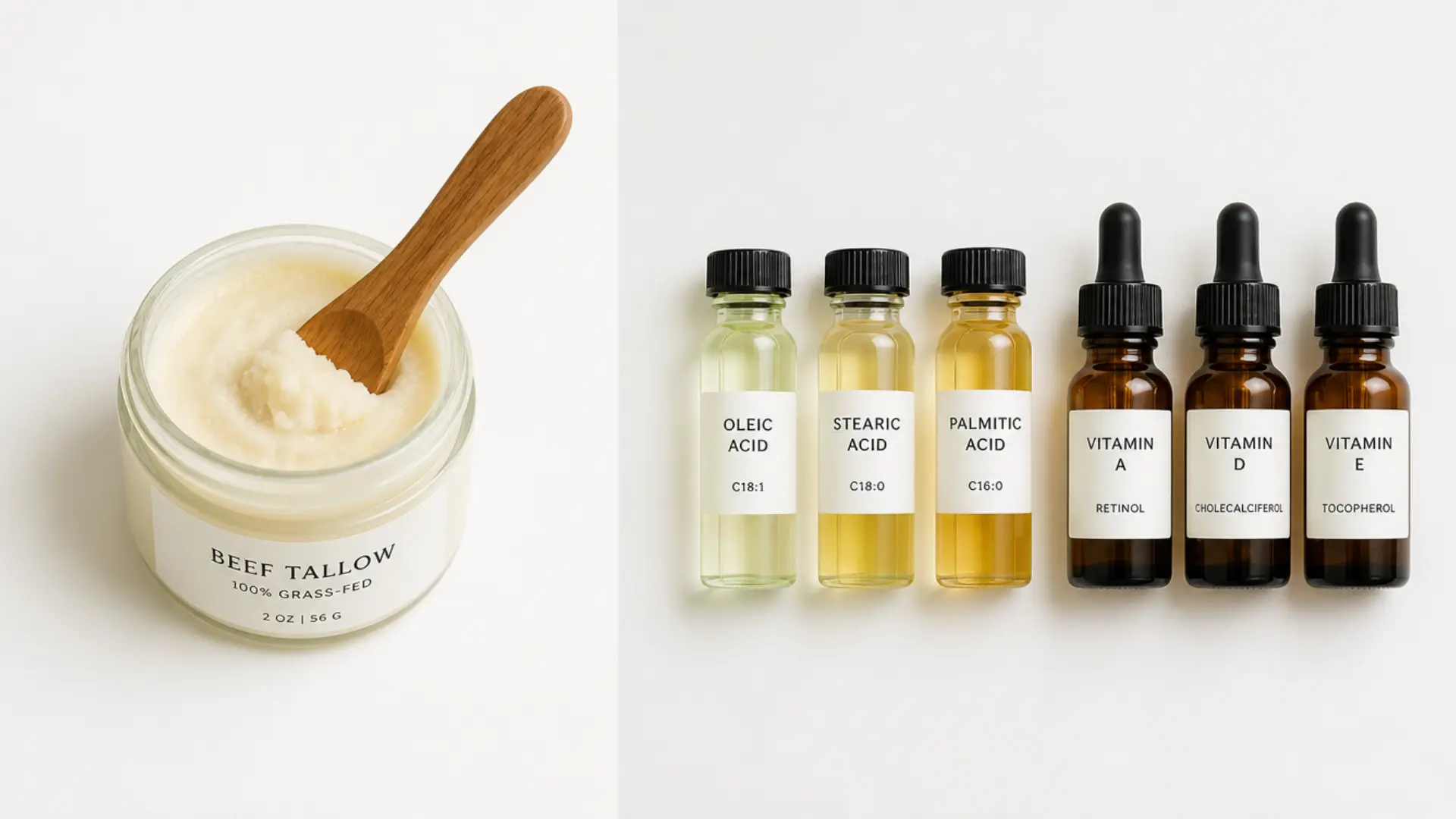
Beef tallow is rich in fatty acids that are similar to those found in human sebum (the skin’s natural oil), which is why people often describe it as “skin-compatible.”
| Component | Benefits for Skin |
|---|---|
| Oleic Acid | Helps moisturize, soften, and nourish the skin. |
| Palmitic Acid | Supports the skin’s protective barrier and helps maintain hydration. |
| Stearic Acid | Helps lock in moisture and contributes to smoother-feeling skin. |
| Vitamin A | Supports skin renewal and promotes a healthy-looking complexion. |
| Vitamin D | Helps support overall skin health and barrier function. |
| Vitamin E | Acts as an antioxidant that helps protect the skin from environmental stressors. |
| Vitamin K | Supports skin recovery and helps maintain an even-looking appearance. |
Why It Matters: The combination of skin-compatible fatty acids and naturally occurring fat-soluble vitamins helps support hydration, barrier function, and overall skin health.
NOTE : Beef tallow does not contain ceramides, which are essential lipids that help maintain and repair the skin barrier. While tallow can moisturize the skin, it cannot replace ceramides the way ceramide-based moisturizers can.
Does Beef Tallow Help with Acne?

Beef tallow does not treat acne. It can moisturize the skin, but it doesn’t unclog pores, reduce acne-causing bacteria, or target inflammation.
Some people with dry or damaged skin barriers may notice less redness and irritation after using tallow.
However, this is due to improved moisturization, not acne treatment. For oily or acne-prone skin, tallow may be too heavy and could clog pores, leading to breakouts.
In short, beef tallow may help soothe dry skin, but there is no clinical evidence in acne treatment guidelines that it treats acne.
NOTE : The information in this section is for general educational purposes. If you have active acne or a skin condition, consult a licensed dermatologist before changing your skincare routine.
What Dermatologists Say About Beef Tallow and Acne?
Dermatologists’ opinions on this trend are fairly consistent, even if the reasons vary slightly.
Dr. Michele Green, a board-certified dermatologist in New York, says that beef tallow contains fatty acids with anti-inflammatory properties that can help reduce redness and swelling.
She is also direct about the limits: “While some anecdotal reports claim quick improvements in skin texture and clarity, there’s no clinical evidence to support that beef tallow clears acne in a specific time frame.”
Many dermatologists flagged the occlusion issue more directly. They noted claims that tallow has retinol-like effects due to its vitamin A content.
There’s no solid evidence supporting these benefits for acne. “In fact,” he said, “the occlusive nature of beef tallow can actually worsen acne by trapping oils and debris in the skin.”
Some put it more bluntly: given how many affordable, widely available skincare products are backed by solid evidence, using an ingredient with this much uncertainty doesn’t make sense. They did not recommend it for acne.
The short version: dermatologists aren’t categorically opposed to tallow as a moisturizer for dry skin. They are uniformly skeptical of it as an acne treatment, and several flag genuine risk for acne-prone skin types.
Beef Tallow Balm vs. Tallow Soap: Does the Form Matter?
One reason people get wildly different results with beef tallow is that the form changes what it actually does on skin.
Tallow balm is the occlusive, leave-on product. It sits on top of the skin, creating a physical barrier. This is where the pore-clogging risk is highest, because the fat remains in contact with skin for hours.
Tallow soap is chemically different. When tallow undergoes saponification (the process of mixing fat with lye to make soap), the fat molecules restructure entirely.
The triglycerides in raw tallow become sodium tallowate, a surfactant that rinses away. It’s not coating the skin the way a balm does. The comedogenic risk is significantly lower when you’re washing the product off.
So someone who breaks out from tallow balm might tolerate tallow soap without issue. These aren’t the same product, and experiences from one don’t map cleanly onto the other.
When you’re reading reviews or social media testimonials, it’s worth checking which form was actually used.
Who Should Avoid Beef Tallow for Acne?
Beef tallow can be a great moisturizer for some people, but it isn’t the right choice for every skin type. Before adding it to your routine, it’s important to understand whether your skin is likely to benefit from it or react badly.
1. You Have Oily or Acne-Prone Skin
If your face becomes shiny within a few hours of cleansing or you’re constantly dealing with clogged pores, beef tallow may not be the best option.
Tallow is rich and highly occlusive, creating a protective layer that locks moisture into the skin. While this can be helpful for dry skin, it may feel too heavy for oily skin and could increase the likelihood of clogged pores and new breakouts.
2. You Have Active Acne
If you’re currently dealing with pimples, cystic acne, blackheads, or whiteheads, keep in mind that beef tallow is a moisturizer, not an acne treatment.
It doesn’t unclog pores, kill acne-causing bacteria, or reduce excess oil production. While it may help relieve dryness caused by acne treatments.
It shouldn’t replace proven ingredients like salicylic acid, benzoyl peroxide, retinoids, or azelaic acid.
3. You Suspect You Have Fungal Acne
People with fungal acne (Malassezia folliculitis) should be especially cautious with heavy fat-based skincare products. Fungal acne often appears as small, itchy bumps that resemble traditional acne.
Because everyone’s skin responds differently, it’s best to speak with a dermatologist before using beef tallow if you suspect fungal acne may be the cause of your breakouts.
4. You Have Sensitive or Reactive Skin
Not all beef tallow products are created equal. Many commercial formulas contain essential oils, fragrances, or plant extracts that can trigger irritation in sensitive skin.
If your skin reacts easily to new products, choose a simple, fragrance-free tallow product and always perform a patch test before applying it to your face.
5. You’re Using Prescription Acne Treatments
If you’re using prescription-strength retinoids, topical antibiotics, or other dermatologist-recommended acne treatments, avoid making major changes to your skincare routine without professional advice.
Your current moisturizer may have been selected specifically to support your treatment plan. Replacing it with a heavier product, such as beef tallow, could affect how your skin responds.
Who are the Ideal Candidates for Beef Tallow?
Beef tallow tends to work best for people with:
- Dry skin: Its rich concentration of fatty acids helps replenish lost moisture and reduce roughness, making skin feel softer and more comfortable.
- Dehydrated skin: By creating a protective barrier on the skin’s surface, beef tallow helps reduce transepidermal water loss and supports longer-lasting hydration.
- A weakened skin barrier: The lipid profile of beef tallow is similar to some of the natural fats found in human skin, which may help support barrier repair and improve resilience against environmental stressors.
- Skin that feels tight, flaky, or irritated: Its emollient properties can help soothe discomfort, reduce flakiness, and leave the skin feeling more nourished and protected.
- Mature or aging skin: The deeply moisturizing nature of beef tallow may help improve skin suppleness and reduce the appearance of dryness-related fine lines.
Beef Tallow Acne: Myth vs Reality
The tallow trend on social media has produced some claims that deserve a direct response. Let’s debunk the myths and know the truth.
| Myth | Reality |
|---|---|
| Beef tallow cures acne | No clinical evidence supports this |
| Beef tallow is identical to human sebum | Similar in composition, not identical |
| Natural means non-comedogenic | Not true; many natural oils clog pores |
| Grass-fed tallow won’t clog pores | No clinical evidence confirms this |
| Tallow clears acne better than proven actives | No comparative clinical trials exist |
How to Test Beef Tallow on Your Skin?
Testing tallow the right way saves you a lot of unnecessary breakouts.
- Patch test first: Apply a small amount to your jaw or inner arm every night for five to seven nights before putting it anywhere near your full face. It is the minimum to catch a reaction before it spreads.
- Use it as the last step: If you’re using any active ingredients like salicylic acid, benzoyl peroxide, or retinoids, let them fully absorb before applying tallow for at least 15 to 20 minutes. Mixing tallow with active ingredients can dilute their effectiveness or irritate.
- Use less than you think: Tallow is dense. A pea-sized amount covers the full face. Applying more doesn’t improve results; it just increases the occlusive load on your pores.
- Choose grass-fed, additive-free: Grass-fed tallow has a higher concentration of conjugated linoleic acid (CLA) and fat-soluble vitamins than grain-fed alternatives. Skip products with added fragrance or preservatives, which increase the risk of irritation for acne-prone skin.
- Give it three weeks: Skin needs time to adjust to new products. If breakouts worsen or new ones appear within the first two weeks and don’t resolve, stop. Don’t rationalize persistent new breakouts as purging.
What Works Better than Beef Tallow for Acne?
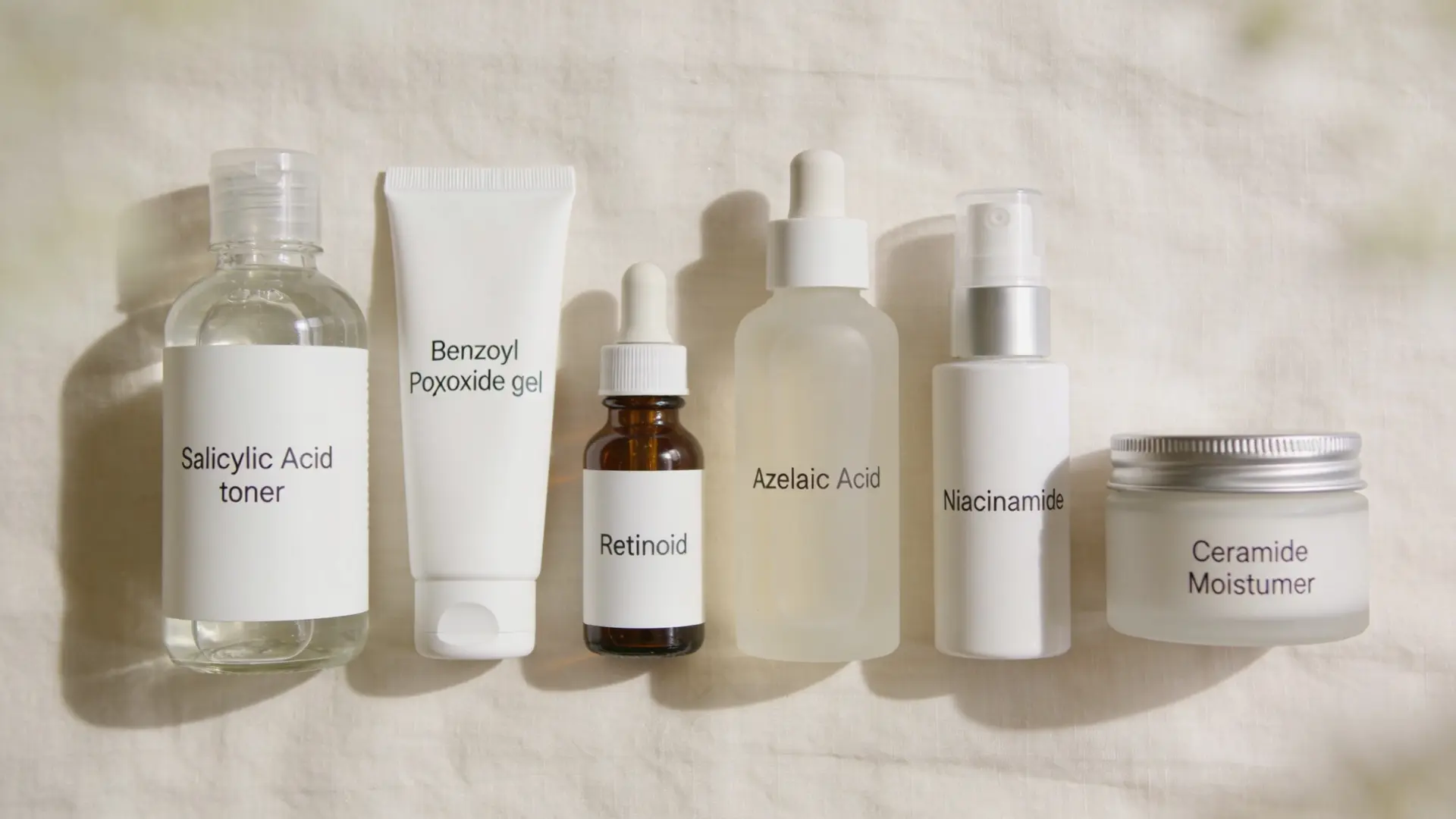
Several skincare ingredients have stronger scientific support than beef tallow and can help treat acne more effectively and safely.
- Salicylic Acid: It unclogs pores, removes excess oil, and helps prevent blackheads, whiteheads, and future breakouts.
- Benzoyl peroxide: It kills acne-causing bacteria and reduces inflammation, making it effective for active pimples.
- Retinoids: These help in speeding up skin cell turnover to prevent clogged pores and improve overall skin texture.
- Azelaic Acid: It fights acne-causing bacteria, calms redness, and helps reduce post-acne discoloration.
- Niacinamide: This controls excess oil, soothes irritation, and supports a healthier skin barrier.
- Ceramide Moisturizers: These are useful for strengthening the skin barrier, locking in moisture, and reducing dryness caused by acne treatments.
Beef Tallow for Acne: Pros and Cons
Here’s a quick look at the potential pros and cons of using beef tallow for acne.
| Category | Pros | Cons |
|---|---|---|
| Moisturizing & Barrier Support | An effective occlusive that helps reduce moisture loss, especially for dry skin. | Lacks ceramides and other clinically proven barrier-repair ingredients. |
| Skin Compatibility | The fatty acid profile is similar to that of human sebum and is often well tolerated by dry skin. | May clog pores in oily or acne-prone skin. |
| Nutrient Content | Contains vitamins A, D, E, and K. | Clinical benefits and concentrations remain uncertain. |
| Acne & Fungal Acne | It can provide moisture without harsh additives. | Does not treat acne and may worsen fungal acne. |
Conclusion
Beef tallow is a moisturizer with a real ingredient story, not a miracle and not a scam. Whether it helps or hurts your acne comes down almost entirely to your skin type.
For dry, barrier-compromised skin that isn’t prone to clogging, it can be a calming, simple choice.
For oily and breakout-prone skin, the risk is real, and the clinical backing for tallow as an acne treatment doesn’t exist.
Before following any trend, the more useful question to ask yourself is: what does my skin actually need?
Acne-prone skin needs pore-clearing actives and non-comedogenic moisture, and there are products backed by decades of research for exactly that.
Have you tried tallow? Did it help, make things worse, or do nothing at all? Real experiences help other readers cut through the noise. Drop your feedback in the comment box.
Frequently Asked Questions
Can You Use Beef Tallow with Retinol or Salicylic Acid?
Yes. Apply retinol or salicylic acid first, wait 15–20 minutes for absorption, then apply beef tallow. Avoid applying tallow first or mixing it with the other ingredients.
Does Beef Tallow Help with Acne Scars?
Beef tallow may support overall skin repair due to vitamins A and E, but there’s no clinical evidence that it fades acne scars. Retinoids, azelaic acid, and professional treatments have stronger evidence supporting them.
Is Beef Tallow Safe for Sensitive Skin?
Beef tallow is generally well tolerated by many people with sensitive skin because it contains skin-compatible fats. However, reactions can vary, so it is best to perform patch testing before using it.