A non-invasive facelift can sound tempting when the mirror starts showing softer cheeks, looser skin, or a less defined jawline. The good news is that surgery is not the only option.
At-home methods like face yoga, gua sha, facial massage, and microcurrent devices may help support circulation and improve the overall appearance of the skin.
Professional treatments such as HIFU, radiofrequency microneedling, injectables, and thread lifts can go further by addressing collagen loss, volume changes, and mild sagging.
I often find that people expect dramatic results, but every treatment has limits. Some offer a subtle lift, while others focus more on texture and firmness.
This blog explains each option clearly, so you can understand what is realistic and what may be worth considering.
What is a Non-Invasive Face Lift?
The phrase “non-invasive” gets used for everything from gua sha to clinic treatments, which makes it easy to misread.
In simple terms, non-invasive means a treatment that aims to lift, tighten, or refresh the face without surgical cuts, stitches, or a long recovery.
A surgical facelift repositions deeper tissue and may require anesthesia. Non-invasive options keep the skin mostly intact, while methods like massage and microcurrent are gentle enough for home use.
Others, like radiofrequency microneedling or thread lifts, sit closer to minimally invasive because they involve needles or dissolvable threads placed under the skin.
Most people turn to these treatments for loose skin, fine lines, dullness, volume loss, uneven skin tone, or a tired look. The best choice depends on the main concern and how much downtime you are willing to take on.
What’s the Difference Between a Nonsurgical and a Surgical Facelift?
A surgical facelift makes incisions near the hairline and behind the ears, repositions deep facial tissue, removes excess skin, and closes with sutures.
It usually needs general anesthesia, takes two to four hours, and requires two to four weeks of recovery. Results can last five to ten years.
A non-invasive facelift uses energy devices, injectables, threads, or at-home tools with little downtime. Results are gradual, last one to two years, and work best for mild to moderate laxity.
| Factor | Surgical facelift | Non-invasive face lift |
|---|---|---|
| Incisions | Yes | No (or micro-entry points only) |
| Anesthesia | General | None or topical numbing |
| Recovery time | 2 to 4 weeks | 0 to 3 days |
| Results longevity | 5 to 10 years | 1 to 2 years |
| Typical cost | $7,000 to $15,000 | $200 to $5,000 depending on treatment |
| Best for | Significant sagging, deep jowls, loose neck skin | Mild to moderate laxity, texture, and volume loss |
| Risk level | Higher (bleeding, scarring, nerve injury) | Lower (redness, swelling, bruising) |
At-Home Non-Invasive Face Lift Techniques

At-home techniques are not shortcuts. They ask for consistency, and they deliver modest, maintenance-oriented results rather than structural correction. For early-stage concerns or as a complement to professional treatment, they are worth building into a routine.
1. Face Yoga and Facial Exercises
Face yoga uses targeted movements to tone facial muscles and improve circulation. The goal is better firmness and support, not larger muscles.
A small study reviewed by Integris Health found that women aged 40 to 65 who practiced facial exercises for 20 weeks showed improved cheek fullness and appeared younger to evaluators.
Visible results usually take about 12 weeks of consistent practice. Daily sessions of 5 to 10 minutes are often recommended, and benefits may fade if the routine is not maintained.
2. Gua Sha
Gua sha is a gentle technique that uses a smooth stone or tool to support circulation, lymphatic drainage, and temporary facial definition.
The facial version uses much lighter pressure than traditional body gua sha. To understand the technique and tool angle, using gua sha on your face and neck helps clarify stroke direction and pressure in detail.
Apply facial oil or serum first so the tool glides smoothly. Start at the neck, then move upward and outward toward the ears. Hold the tool nearly flat, repeat each stroke several times, and use it a few times weekly.
3. Microcurrent Devices
Microcurrent devices use low-level electrical currents to gently stimulate facial muscles. The current is very mild, so it should not feel like a shock, but it can create a light muscle response.
Professional treatments usually use stronger devices and more precise placement, which may provide a quicker, more visible lift before an event.
At-home devices are lower-powered, so results build slowly. With steady use, they may support tone and firmness over several months, but the effect stays subtle and needs regular maintenance.
4. Facial Massage
Facial massage promotes blood flow, which can temporarily make the skin look brighter. It also helps move excess fluid, so puffiness around the eyes and cheeks may look softer.
Use a light oil or serum first, then work upward and outward rather than pulling the skin down.
Start at the neck, move along the jawline, then massage the cheeks, under-eye area, forehead, and temples. Keep the pressure firm but gentle.
Slow circles, light tapping, and soft strokes along the jawline work well. Five minutes in the morning is enough for most people.
Professional Non-Invasive Face Lift Treatments
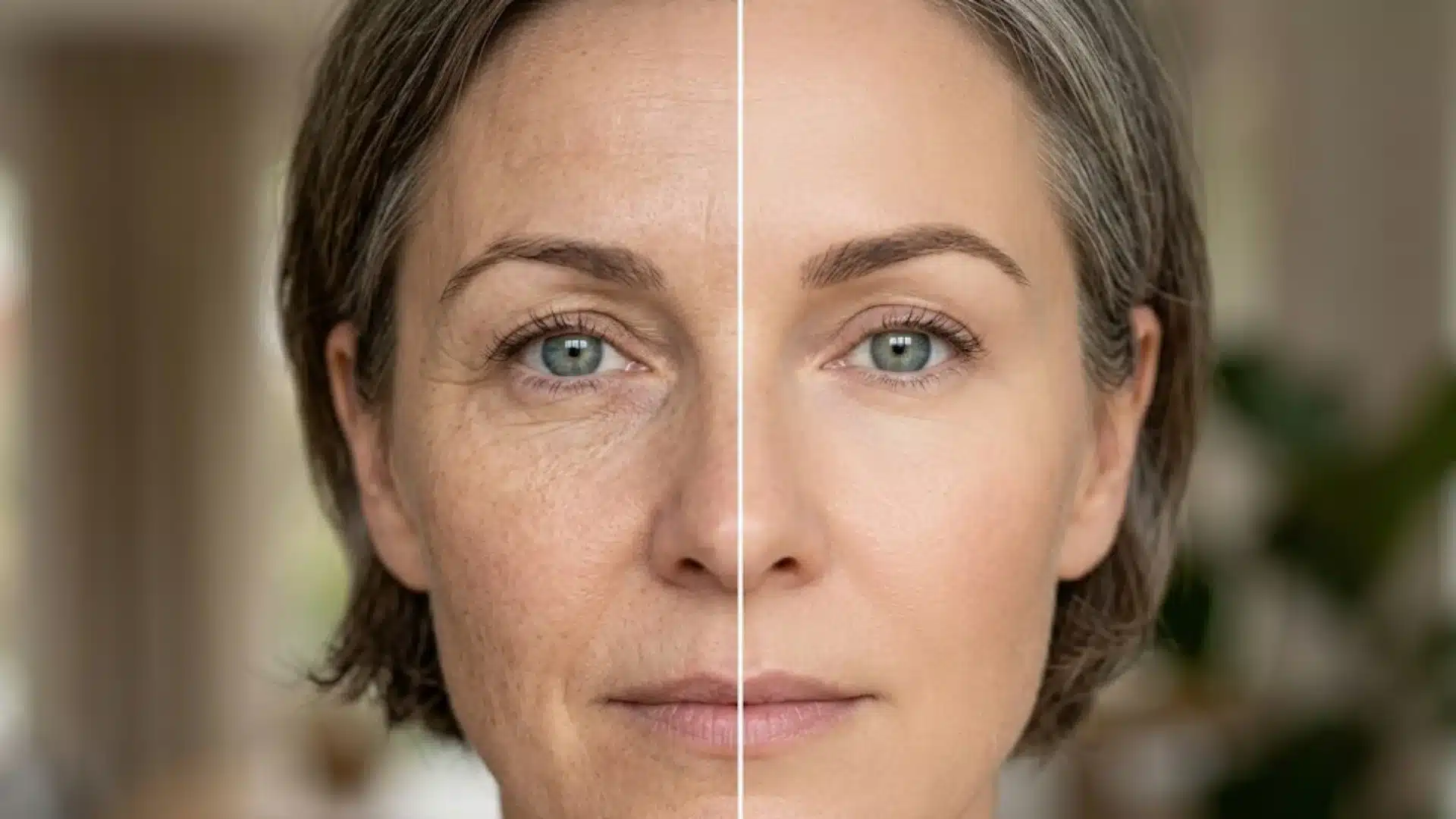
Professional treatments work at tissue depths that no at-home tool reaches. They trigger biological responses in collagen and elastin production that can take months to fully express, which means results are gradual and cumulative rather than immediate
1. HIFU Treatments
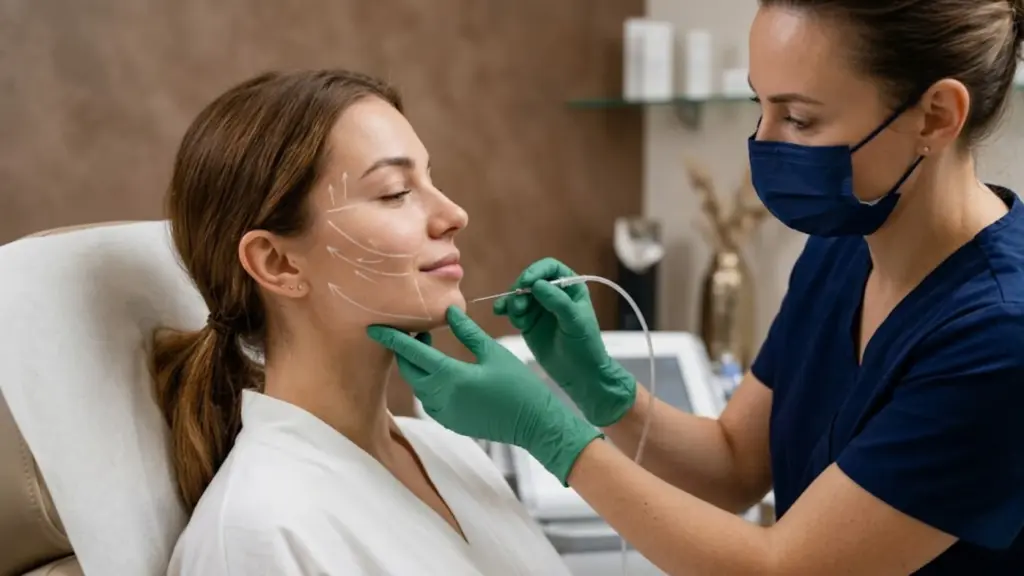
HIFU uses focused ultrasound energy to heat deeper support layers under the skin, including the SMAS layer targeted in surgical facelifts. This heat supports new collagen and creates a gradual lifting effect.
It is often used on the jawline, jowls, neck, under-chin area, brow line, and cheeks. Results are not immediate. Most people see the greatest change after 2 to 3 months, and results may last 12 to 18 months.
What it feels like: HIFU can feel hot, prickly, or tingly during treatment, especially near bony areas like the jawline. Numbing cream may help. Mild redness or swelling usually fades within a day.
Rough cost: A single full-face Ultherapy session typically costs between $800 and $3,500, depending on the provider and region. Most people need one session per year for maintenance.
2. Radiofrequency Microneedling
Radiofrequency microneedling combines tiny needles with RF heat in a single treatment. The needles create controlled micro-injuries, while the heat reaches deeper layers to support collagen and elastin.
It can help with mild laxity, fine lines, enlarged pores, acne scars, and uneven skin. Most plans need three to four sessions, spaced four to six weeks apart. Results build over three to six months, and sun protection is important after each session.
What it feels like: A numbing cream is applied first. During treatment, the skin may feel warm or pressured. Redness, swelling, and a rough sandpaper-like texture can last a few days while healing.
Rough cost: Individual sessions range from $400 to $1,500. Most plans involve three to four sessions, so the total investment is usually between $1,200 and $5,000 before any maintenance sessions.
3. Thread lifts
A thread lift uses dissolvable medical threads placed under the skin to reposition sagging tissue and create a visible lift. It is minimally invasive, not fully non-invasive, because it uses needle entry points and local anesthetic.
Bruising, swelling, dimpling, or temporary unevenness can happen. As the threads dissolve, they support collagen and elastin. Results are often visible right away and may last 12 to 24 months.
What it feels like: The area is numbed first. During a thread lift, pressure and tension may be felt. Mild soreness and swelling can last a few days, and wide facial movements should be avoided early.
Rough cost: Thread lifts typically range from $1,500 to $4,500, depending on the number of threads used and the provider’s experience.
4. Chemical Peels and Laser Resurfacing
Chemical peels use acids to remove damaged outer skin and support fresh cell turnover. Laser resurfacing options use light energy to renew the skin by removing surface layers or creating small repair zones beneath the skin.
Both can improve texture, uneven tone, sun damage, acne scars, and early fine lines.
They do not lift like HIFU or thread lifts, but better skin quality can make mild laxity look firmer. Downtime ranges from a few days to two weeks.
What it feels like: Light peels may tingle or sting slightly. Deeper peels and ablative lasers can feel more uncomfortable, so numbing is often used. Redness and peeling are normal during recovery.
5. Injectables: Botox and Fillers
Botox relaxes muscles that cause frown lines, forehead creases, and crow’s feet, while fillers restore lost volume in areas like the cheeks, temples, and under-eyes.
Injectables are often combined with HIFU or RF microneedling because each targets a different concern: movement lines, volume loss, firmness, or laxity. Together, they can create a more balanced result than one treatment alone.
What it feels like: Botox and fillers both use small injections. Numbing cream may be applied first. Botox is usually quick with mild discomfort, while fillers can cause more temporary swelling or bruising.
Rough cost: Botox is typically priced per unit or per area, ranging from $200 to $600 per session. Fillers vary widely by product and amount, usually running from $600 to $1,500 per syringe
Disclaimer: Professional skin treatments are not suitable for everyone. A consultation with a licensed dermatologist or qualified cosmetic provider can help determine which procedure is appropriate based on your skin concerns, medical history, expectations, and potential risks.
Who Should and Who Should Not Get a Non-Invasive Face Lift
Non-invasive face lifts are best for people with mild to moderate skin laxity who want subtle rejuvenation without surgery.
They are not suitable for those with severe sagging, active skin conditions, certain medical contraindications, or expectations of dramatic surgical-level results.
Good candidates: Non-invasive treatments work best for people who have:
- Mild to moderate skin laxity, early jowling, or volume loss in the cheeks and under-eyes
- Fine lines, enlarged pores, or texture concerns alongside early firmness loss
- Good overall skin health without active infections or open wounds
- Realistic expectations: wanting a refreshed, rested look rather than a decade-reversal
Not a good candidate: You should get professional clearance or avoid these treatments if you have:
- Significant sagging or deep jowls that would require surgical correction to address properly
- Active skin infections, open wounds, cold sore outbreaks, or active acne in the treatment area
- Pregnancy or breastfeeding (most professional devices are contraindicated)
- A pacemaker or metal implants near the treatment area (HIFU and RF devices are contraindicated)
Risks and Benefits of a Non-Invasive Face Lift
Non-invasive face lifts can improve skin firmness, texture, and facial contours with minimal downtime.
Potential risks include temporary redness, swelling, bruising, discomfort, uneven results, and, in rare cases, skin burns, nerve irritation, or prolonged sensitivity.
| Benefits | Risks and Side Effects |
|---|---|
| No surgical incisions, scarring, or general anesthesia required | Temporary redness, swelling, and bruising at the treatment site are the most common side effects and typically resolve within a few days |
| Little to no downtime for most treatments, allowing you to resume daily activities quickly | HIFU applied with incorrect settings can cause burns or temporary nerve sensitivity, particularly in thinner skin areas |
| Gradual, natural-looking improvement that avoids the pulled or overdone appearance sometimes associated with surgery | RF microneedling carries a small risk of infection if aftercare instructions are not followed |
| Treatments can be layered and combined to address multiple concerns at once | Thread lifts can cause dimpling, asymmetry, thread migration, or visible threads under the skin if not placed correctly |
When Does a Non-Invasive Face Lift Make Sense?
Non-surgical options work best for mild to moderate laxity. They can soften early jowling, improve texture, restore some volume, and maintain results, but they won’t replace surgery for significant sagging. If a provider suggests surgery, it’s practical guidance, not a failure.
A few situations where professional treatment is worth considering:
- At-home methods have plateaued, and you want a measurable step up in firmness.
- You’re seeing early jowling, a less defined jawline, or hollowing under the eyes.
- Skin texture concerns like enlarged pores or fine lines aren’t responding to topical products alone.
- You want longer-lasting results than maintenance tools provide but aren’t ready for surgery.
Pregnancy, active skin infections, certain autoimmune conditions, pacemakers, or metal implants near the treatment area may rule out specific procedures. Always disclose your full medical history before booking a professional session.
Non-Invasive vs Minimally Invasive Facelift Options
Non-invasive facelift options work without needles, injections, or threads and usually involve little to no downtime.
Minimally invasive treatments use injections, microneedles, or threads to achieve more noticeable results, but they also carry higher costs and require more recovery time.
| Factor | Non Invasive | Minimally Invasive |
|---|---|---|
| Examples | Face yoga, gua sha, microcurrent, HIFU | Botox, fillers, RF microneedling, thread lifts |
| Needles Required | No | Yes |
| Downtime | Little to none | A few days of redness, swelling, or bruising |
| Results | Usually subtle and gradual | More noticeable and often faster |
| Best For | Early signs of aging and mild laxity | Moderate volume loss, wrinkles, and sagging |
How Long Results Last and What Affects Them
Treatment longevity depends on the procedure, skin condition, age, and daily habits. Consistent aftercare and sun protection make a measurable difference across every treatment category.
- Face yoga and gua sha: Results depend on consistent practice, as both methods primarily support circulation, drainage, and muscle tone. Stop the routine, and the benefits fade within weeks.
- Microcurrent devices: Improvements build with repeated use and decline when regular sessions are paused for too long. Most people see the best results with three to five sessions per week.
- HIFU and RF microneedling: Results typically last 12 to 18 months, though collagen response, age, skin quality, and aftercare all affect this window.
- Thread lifts: Results often last 12 to 24 months. Botox lasts 3 to 6 months per treatment. Fillers last 6 to 18 months depending on the product used and the area treated.
How to Choose the Right Non-Invasive Face Lift Option
The best option depends on age, concerns, budget, and maintenance needs. Prevention with SPF, retinol, and consistent at-home techniques helps younger adults, while professional treatments may better address visible sagging.
The National Institute on Aging notes that UV damage is one of the main drivers of collagen and elastin loss over time, which is why daily sun protection matters as much as any treatment
- Face yoga and gua sha: Best for low-cost maintenance and early firmness. Regular use may reduce puffiness, support circulation, and complement a consistent skincare routine.
- HIFU and Sofwave: Best for mild-to-moderate laxity around the jawline, neck, brow, and cheeks. Results develop gradually through collagen stimulation with minimal downtime.
- RF microneedling: Best when laxity appears alongside texture concerns, acne scars, enlarged pores, or fine lines. It improves skin quality while supporting firmness.
- Thread lifts: Best for moderate sagging when a visible lift is the primary goal. Results appear quickly and may improve further as collagen develops.
- Injectables: Best when volume loss causes hollow cheeks, sunken under-eyes, or a deflated appearance. They restore facial fullness and create subtle lifting effects.
Combination treatments often create balanced results because aging affects several areas at once. HIFU, RF microneedling, and fillers target different concerns. Start with your main issue first, then reassess. Consult a provider if concerns persist.
When to See a Doctor
Most non-invasive treatments are low-risk when performed correctly, but there are situations where you should seek professional medical advice before, during, or after treatment.
Before treatment
- Do you have any of the contraindications listed above (pregnancy, pacemaker, active skin conditions)
- You are unsure whether your degree of sagging is better suited to surgery than non-surgical options
- You are on blood thinners, immunosuppressants, or medications that affect healing
After treatment
- Swelling, redness, or pain worsens after 48 hours rather than improving
- You notice signs of infection: increasing warmth, spreading redness, discharge, or fever
- A lump, hardness, or visible thread appears under the skin after a thread lift
- You experience changes in skin sensation, numbness, or asymmetry that persist beyond two weeks
Conclusion
Non-invasive facelift options suit different budgets, concerns, and recovery needs. At-home tools and consistent skincare can help with mild signs of aging and help prevent them.
For moderate laxity, uneven texture, or concerns that have stalled despite home care, professional treatments often deliver stronger, longer-lasting results.
These treatments are not rivals. Gua sha, face yoga, HIFU, and RF microneedling each target different concerns.
Start with your main issue, understand what each option can realistically do, and give results enough time before deciding whether a treatment is working.
Share what worked for you in the comments. Honest experiences can help others choose where to start.
Frequently Asked Questions
How Long Does It Take to See Results from a Non-Invasive Facelift?
At-home methods may take 8 to 12 weeks. HIFU builds over 2 to 3 months, while RF microneedling improves over 3 to 6 months.
Can Non-Invasive Facelift Methods Be Combined with Skincare Ingredients Like Retinol?
Yes, but timing matters. Retinol usually works well with at-home methods but may need to be paused before and after RF microneedling, peels, or lasers.
Who is Not a Good Candidate for Professional Non-Invasive Face Lift Treatments?
Pregnant people, those with active infections, open wounds, certain autoimmune conditions, pacemakers, metal implants, or treatment-area risks should get professional clearance first.