Wedding dresses may look perfect on the hanger, but the real experience begins when it is worn and adjusted to fit properly.
Understanding what is a wedding dress fitting helps you know why this appointment is an important part of wedding preparation and what happens during the process.
A gown is created with a standard structure, but small changes can make it feel more personal and comfortable.
I have noticed that many brides feel more relaxed when they know what to expect before stepping into their first fitting.
The process involves careful adjustments, thoughtful checks, and final touches that bring the complete look together. Learning these details can help you prepare more effectively and approach each appointment with greater confidence before the wedding day.
What is a Wedding Dress Fitting?
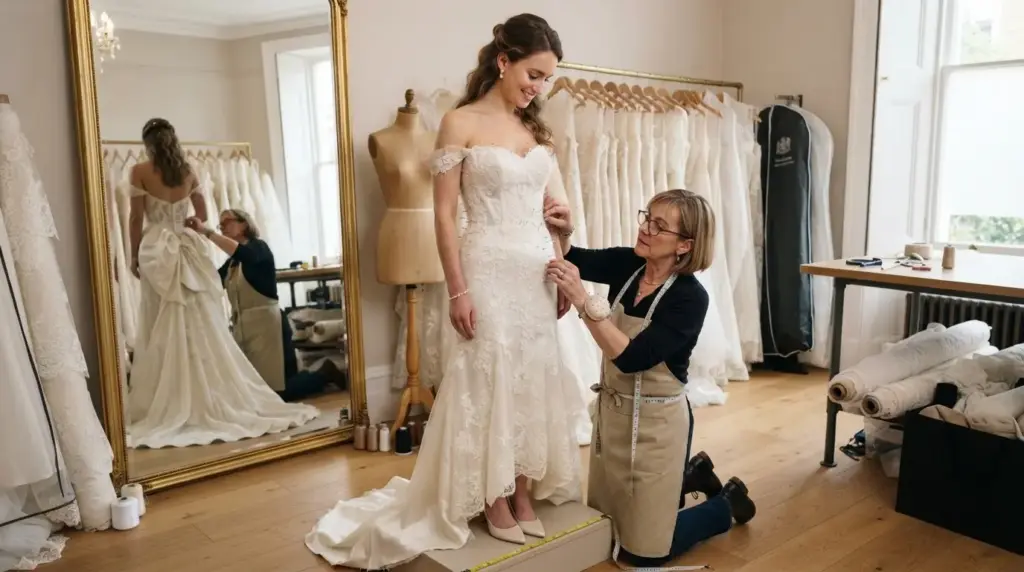
A wedding dress fitting is an appointment where a bride tries on her gown so a professional can check the fit and make necessary adjustments.
Since wedding dresses are usually created using standard measurements, alterations are often needed to match the bride’s body shape, comfort, and style preferences.
During the fitting, areas such as the bust, waist, length, straps, and overall structure are carefully reviewed. The seamstress may mark specific areas for changes and suggest improvements for better movement and support.
A fitting is not just about making the dress smaller or larger; it helps ensure the gown feels comfortable, looks balanced, and allows the bride to move confidently on the wedding day.
Why Does a Wedding Dress Fitting Matter?
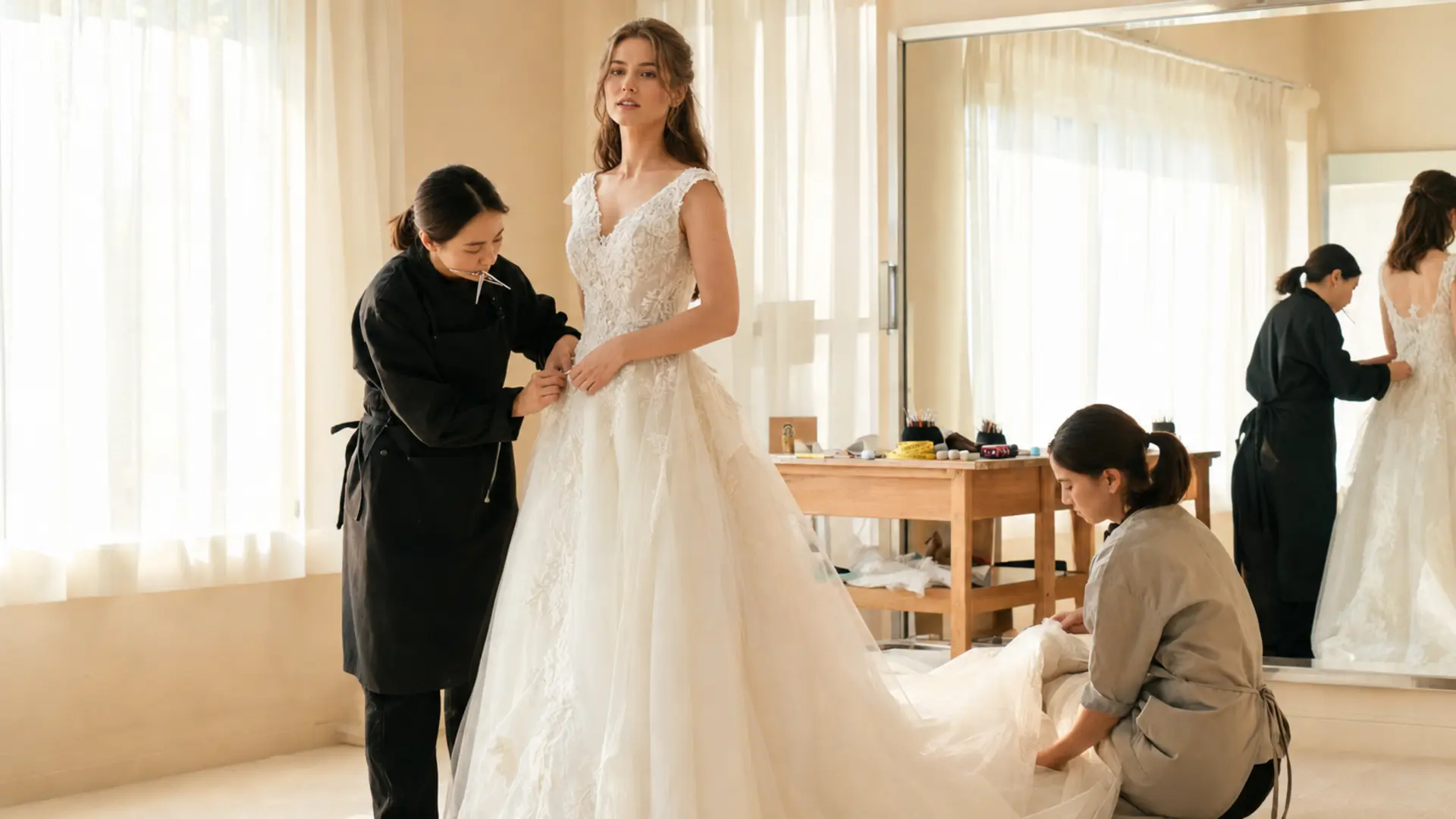
A well-fitted gown helps a bride feel comfortable and confident during one of the most photographed days of her life. Even a beautifully designed dress may need small changes to achieve the intended look.
The main reasons fittings are important:
- Creates a customized fit around the body
- Improves comfort during walking, sitting, and dancing
- Helps accessories work properly with the gown
- Allows enough time for corrections
- Reduces wedding-day fitting concerns
A fitting also gives the bride a chance to notice details that may not be obvious during the first purchase appointment.
The process is valuable because comfort and appearance depend on small details. Proper adjustments allow the gown to move naturally while maintaining its original design.
How Many Wedding Dress Fittings Do You Need?
Most brides need two to three wedding dress fittings, though a gown with major resizing, heavy beadwork, sleeves, or structural changes may need more appointments.
1. First Wedding Dress Fitting
The first fitting is often the longest because the specialist checks the full gown and marks the main changes. The bodice, waist, hips, straps, sleeves, hem, closure, cups, train, and bustle may all be reviewed.
The dress may still look unfinished because this appointment identifies the work. Mention gaping, slipping, pulling, tightness, poor support, or limited movement.
- Suggestion: Before leaving, confirm the price, next fitting, and completion date.
2. Second Wedding Dress Fitting
At the second fitting, you try on the gown after the first round of sewing. The specialist checks the bodice, hem, sleeves, closure, and fabric fall again. Small corrections may be pinned or basted.
Repeat the movement tests and speak up if something feels wrong. Bring the same shoes and undergarments for a consistent check.
- Suggestion: You may also review bustle options at this appointment.
3. Final Wedding Dress Fitting and Pickup
The final fitting is a full approval check, not a quick pickup. View the gown from the front, side, and back. Sit, walk, turn, raise your arms, and take a few dance steps.
Bring the person who will help you dress. They can practice the buttons, corset ties, detachable pieces, and bustle.
- Suggestion: Ask about transport, storage, and steaming before pickup. Request another correction if something hurts or shifts.
What Should You Bring to a Wedding Dress Fitting?
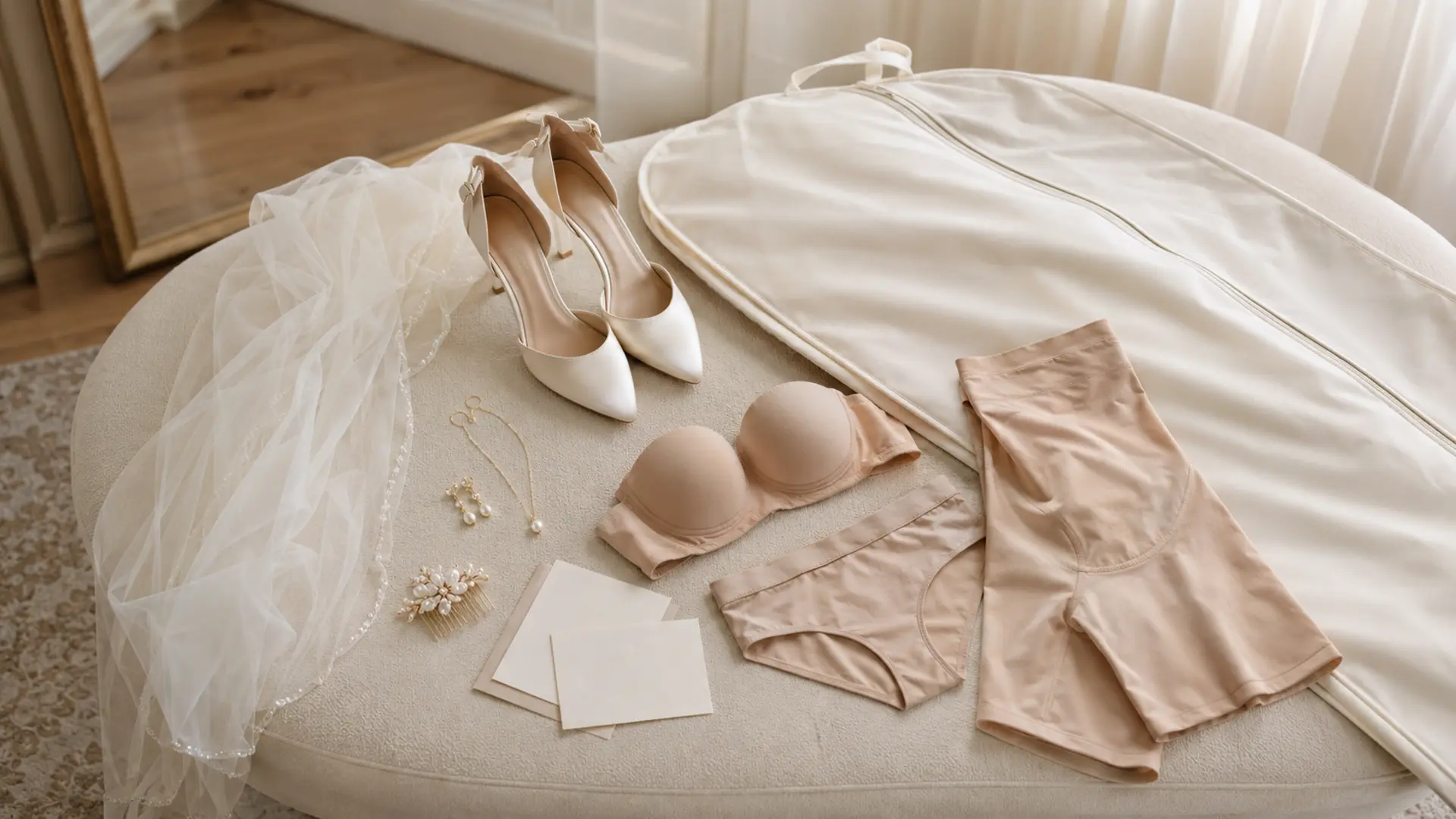
Shoes, underlayers, and accessories can change the length, support, and shape of a gown. Bring the same main items to every appointment so each check reflects the wedding-day setup.
- The exact wedding shoes: A heel difference can change the hem. Bring both pairs if the ceremony and reception shoes have different heights.
- Planned undergarments: Pack the bra, cups, underwear, shapewear, slip, or petticoat.
- Fit-related accessories: Bring a belt, overskirt, detachable sleeves, or any piece that touches the dress.
- Veil and jewelry: Use them to check the neckline, back, sleeves, and balance.
- A hair tie or clip: Pulling your hair back makes the neckline and closure easier to inspect.
- One trusted helper: Choose someone calm who can learn the bustle or closure.
- Notes and approved photos: List concerns and ask before photographing or recording instructions.
- Paperwork: If you are using an outside specialist, bring the gown, garment bag, receipt, and any details supplied by the salon.
In my experience styling brides through fitting after fitting, the fastest way to throw off a hem is showing up in a shoe that is “close enough” to the wedding pair. Bring the actual shoe, not a similar one, even if that means a second trip to grab it.
Wedding Dress Fitting vs Wedding Dress Alteration
A wedding dress fitting and alteration are closely connected, but they serve different purposes. A fitting focuses on checking how the gown fits and identifying what needs adjustment, while alterations involve the actual changes made to improve the fit and finish.
| Wedding Dress Fitting | Wedding Dress Alteration |
|---|---|
| Appointment to evaluate the gown’s fit | Process of modifying the gown |
| Identifies areas needing adjustment | Completes changes like hemming or resizing |
| Includes trying on and checking comfort | Includes sewing and structural adjustments |
A fitting helps create a clear alteration plan, while alterations bring those changes to life. Both steps are necessary to ensure the wedding dress looks polished, feels comfortable, and is ready for the special day.
Common Types of Wedding Dress Alterations
Most wedding dress alterations fall into a handful of categories, and knowing them ahead of time makes it easier to talk through your fitting notes with a seamstress.
- Bodice take-in: The side and back seams are adjusted to reduce excess fabric around the bust and waist. This is one of the most common changes, since it directly affects support and shape.
- Strap and shoulder adjustment: Straps are shortened, lengthened, or repositioned to fit properly without slipping or digging in.
- Hemming: The skirt length is adjusted so the gown clears the floor evenly, accounting for the exact heel height you plan to wear.
- Neckline changes: A neckline may be raised, lowered, or fitted with a modesty panel for comfort or coverage.
- Sleeve and armhole fitting: Sleeves may need to be shortened or the armhole reshaped so the arm moves freely without pulling at the shoulder seam.
- Bustle construction: Fabric loops or buttons are sewn in so the train can be lifted for the reception.
A seamstress I’ve worked alongside always checks bodice fit first, since every other adjustment- straps, neckline, even the hem- shifts once the bodice sits correctly. Get that right early and the rest of the fitting moves faster.
Wedding Dress Fitting Timeline: How Far in Advance to Book
Wedding dress fittings are usually scheduled a few months before the wedding to allow enough time for careful adjustments and finishing touches.
The first fitting is typically scheduled 2–3 months before the wedding and focuses on checking the gown’s fit and identifying any major alterations.
A second appointment may happen 4–6 weeks before the wedding to refine adjustments and improve comfort. The final fitting is often scheduled 1–2 weeks before the big day to confirm that everything fits properly.
The exact timeline depends on the gown’s design, fabric, and alteration needs. Dresses with detailed lace, beading, or structured elements may require extra time, so early planning helps avoid last-minute concerns.
How Much Do Wedding Dress Alterations Cost?
There is no single price that applies to every gown. A simple strap or side-seam change usually takes less work than rebuilding a bodice, moving lace, or hemming several layers of a skirt.
The estimate may depend on:
- The number and type of skirt layers
- Lace, beading, appliqués, or patterned fabric
- Bodice boning and built-in support
- Hem and train construction
- The amount of resizing required
- Added sleeves, panels, cups, lining, or a bustle
- Local labor rates and the specialist’s experience
- Rush work or extra fittings
Ask for a written estimate before work begins. It should show the approved changes, fitting fees, rush charges, payment dates, and any work that may incur extra charges. If you see a general US price range online, treat it as a planning example rather than a quote for your dress.
Fitting Mistakes Brides Should Watch Out For
Wedding dress fitting mistakes can affect the gown’s fit, timeline, and overall experience. Avoiding these common issues helps ensure smoother alterations and better results.
| Mistake | Why It Matters | Better Approach |
|---|---|---|
| Changing shoes or undergarments | Can affect length, support, and fit | Bring planned wedding-day items |
| Not sharing discomfort or changes | Delays may make corrections harder | Communicate concerns and updates early |
| Bringing too many opinions | Creates confusion during decisions | Bring only trusted support |
| Delaying appointments or requesting late changes | Leaves limited time for adjustments | Follow the schedule and discuss changes early |
| Ignoring gown limitations or details | Some designs have alteration limits | Confirm options and costs with the seamstress |
Proper preparation and honest communication help avoid common fitting issues. Keep the seamstress updated about any changes to measurements, plans, or wedding-day requirements.
Questions to Ask Your Bridal Seamstress
These questions clarify the work before permanent changes begin. Request written details for costs and dates.
- Which changes are required for fit, and which are optional?
- Could any change affect the lace, beadwork, neckline, train, or original shape?
- How many fittings are included in the price?
- What does the written estimate cover?
- Could rush fees or extra fitting charges apply?
- When will the fabric be cut?
- What happens if the final fitting reveals another problem?
- Who should attend the bustle lesson?
- How should the gown be transported, steamed, and stored?
- What should you do if a zipper, button, or bustle point breaks?
If an answer is unclear, ask to see the proposed change with pins or temporary stitches before approving it.
Final Thoughts
What is a wedding dress fitting? It is the point where your purchased gown is checked and adjusted for your body, shoes, underlayers, and movement.
Most brides need more than one appointment because the work is reviewed in stages.
Bring the same shoes and undergarments each time, test the dress while sitting and walking, and speak up about pain, slipping, gaping, or restricted movement.
The number of fittings, schedule, and cost will depend on the gown and the specialist. Book early, place every appointment on your wedding calendar, and do not approve the finished dress until it feels secure and comfortable.
Frequently Asked Questions
Should You Tip a Wedding Dress Seamstress?
Tipping depends on the business policy and local custom. Check the invoice or ask the shop directly rather than assuming a tip is required.
Can a Heavily Beaded Wedding Dress Be Altered?
Often, yes. Beads or lace may need to be removed and reapplied around the seams, which can add labor, cost, and fitting time.
Can You Change Specialists After Alterations Have Started?
Possibly. The new specialist must inspect the existing work, remaining seam allowance, available time, and any fabric already cut before accepting the gown.
How are Wedding Dress Fittings Handled During Pregnancy?
Appointments may be moved closer to the wedding. The specialist may suggest flexible closures, extra seam allowance, or changes that can be completed later.
What Should You Do if the Gown is Damaged During Alterations?
Photograph the damage, contact the shop promptly, and review the service agreement. Ask for a written repair plan and details about responsibility for related costs.