I still remember the first client who came to me convinced her skin was “just sensitive”, when really, three months of a trending five-step acid routine had worn her barrier down to almost nothing.
We stripped everything back to a cleanser and a moisturizer for two weeks, and the change surprised her more than any active ever had. That’s usually the lesson with a damaged barrier: less is doing more than you’d expect.
Skin can change fast, and a routine that felt fine last month can suddenly leave your face tight, dry, or irritated.
A damaged skin barrier is often behind that shift, especially after strong ingredients, harsh cleansers, or too many products layered on at once.
If you’re noticing sensitivity or discomfort right now, understanding what’s actually happening under the surface makes the recovery part a lot less confusing.
What is Your Skin Barrier, and Why Does it Matter?
Your skin barrier is the outermost layer of skin, and its job is protection: holding moisture in and keeping irritants and harmful substances out. Think of it as a shield that’s working quietly in the background every day, whether you notice it or not.
It’s built from skin cells, lipids, ceramides, and natural moisturizing factors, all working together to keep things balanced.
Skin cells give it structure. Lipids seal moisture between cells. Ceramides are the fats that keep the whole thing strong, and natural moisturizing factors keep the surface hydrated day to day.
When this layer weakens, skin loses water faster and becomes more prone to dryness, sensitivity, redness, and irritation. A healthy barrier is what lets skin stay comfortable through an ordinary day of stress, weather, products, everything.
Signs Your Skin Barrier Might Be Damaged

Recognizing early changes in your skin can help prevent further irritation. These common signs may indicate that your protective barrier needs extra care and a simpler routine. Other possible signs include:
- Sudden dryness or flaking
- Redness or patches that will not calm down
- New breakouts in unusual places
- Skin that looks shiny but feels dehydrated underneath
- Irritation from products that previously worked well
- Rough or bumpy texture
- Slower recovery after sun or wind exposure
Noticing several of these symptoms does not always mean severe damage, but it may signal the need to adjust your skincare habits and focus on gentle repair.
What Actually Causes a Damaged Skin Barrier

A damaged barrier develops when internal or external stressors weaken the skin’s protective outer layer faster than it can repair itself.
1. Product Overuse
A big reason younger skin ends up with a damaged barrier is simply using too much, too fast. Mixing retinol, acids, and vitamin C all at once, exfoliating every single day, or scrubbing with physical exfoliants can wear the barrier down quickly.
A lot of this comes from following trend routines online without patch testing first, so a product that worked for someone else can backfire on your own skin.
2. Environmental and Lifestyle Triggers
Hot showers and hot water on your face strip away natural oils faster than you’d think. Cold, dry weather, or sitting under AC and heaters all day, can pull moisture out of skin over time.
Harsh foaming cleansers make this worse by stripping the barrier further. Even lack of sleep and ongoing stress play a quieter role here, something that often gets left out of most skincare advice.
3. Underlying Skin Conditions
If you’re dealing with eczema, rosacea, or adult acne, your barrier is already working harder than usual and can weaken faster.
In these cases, skincare swaps alone usually aren’t enough, and it’s worth looping in a dermatologist rather than trying to fix it solo.
Can a Damaged Skin Barrier Heal?
Yes, the skin barrier can usually repair itself when irritation is reduced and proper care is provided. The skin naturally works to restore its protective layer, but the recovery process depends on how much damage has occurred and whether the causes of irritation continue.
Mild barrier damage may improve within a few days to a few weeks when you simplify your routine and focus on hydration.
More severe irritation may require several weeks or longer, especially if the skin continues to be exposed to strong ingredients, harsh products, or environmental stress.
Recovery is not always a straight process. Some days your skin may feel better, while other days it may seem more sensitive. The goal is to create conditions where the skin can repair itself without adding more stress.
How Long Does It Take to Heal?
Skin barrier recovery looks different for everyone, and the timeline depends on the level of irritation and damage. Understanding the stages can help set realistic expectations.
| Level of Damage | Possible Recovery Time | Common Signs |
| Mild | 2 to 4 weeks | Occasional stinging or slight dryness |
| Moderate | 4 to 8 weeks | Regular redness, flaking, or products that keep causing irritation |
| Severe | 8 to 12 weeks or longer | Constant burning, cracked or weeping skin, or ongoing breakouts |
Recovery takes patience, and temporary setbacks can happen along the way. Consistent care, fewer irritants, and a gentle routine can support steady improvement over time.
What Real People Say Helped Them Heal
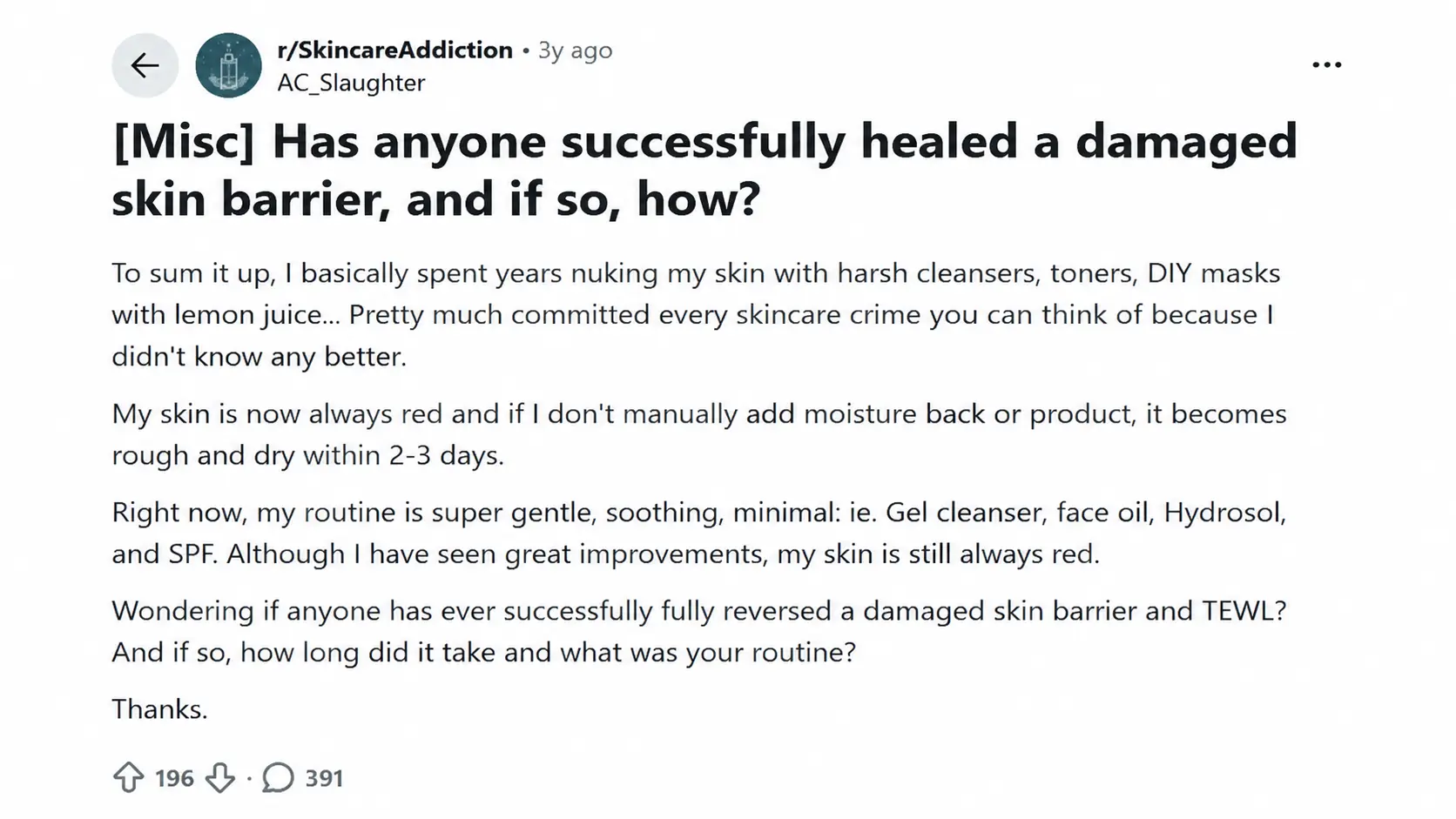
Reddit users in r/SkincareAddiction discuss their experiences with healing a damaged skin barrier and share what helped their skin recover over time. The discussion includes personal stories about dealing with dryness, irritation, sensitivity, and reactions caused by overusing active ingredients or harsh skincare routines.
Many users share how simplifying their products, stopping irritating treatments, and focusing on gentle hydration helped improve their skin.
The conversation also highlights that recovery timelines vary, with some people noticing changes within weeks while others needed longer periods of consistent care.
These real experiences provide practical insights into what barrier repair may feel like and the challenges people face while rebuilding skin tolerance.
The Skin Barrier Recovery Routine: Step by Step
Repairing a weakened skin barrier does not require a complicated routine. The right steps focus on removing triggers, restoring hydration, and slowly helping skin return to a comfortable state
Step 1: Stop these Immediately

Pause retinoids, exfoliating acids like AHA and BHA, and physical scrubs while your skin is irritated. Avoid fragranced products and harsh cleansers that may increase dryness or stinging.
If a product burns or causes discomfort when applied, stop using it until your skin feels calmer. Giving your skin a break helps reduce stress and creates better conditions for recovery.
Step 2: Simplify to a Minimal Routine

During recovery, fewer products are usually better. Reduce your routine to gentle cleansing, moisturizing, and daily sunscreen.
Use a mild, soap-free cleanser and apply moisturizer while the skin is slightly damp to help lock in hydration. Avoid adding new treatments or unnecessary steps until your skin feels balanced and comfortable again.
Step 3: Look for these Ingredients

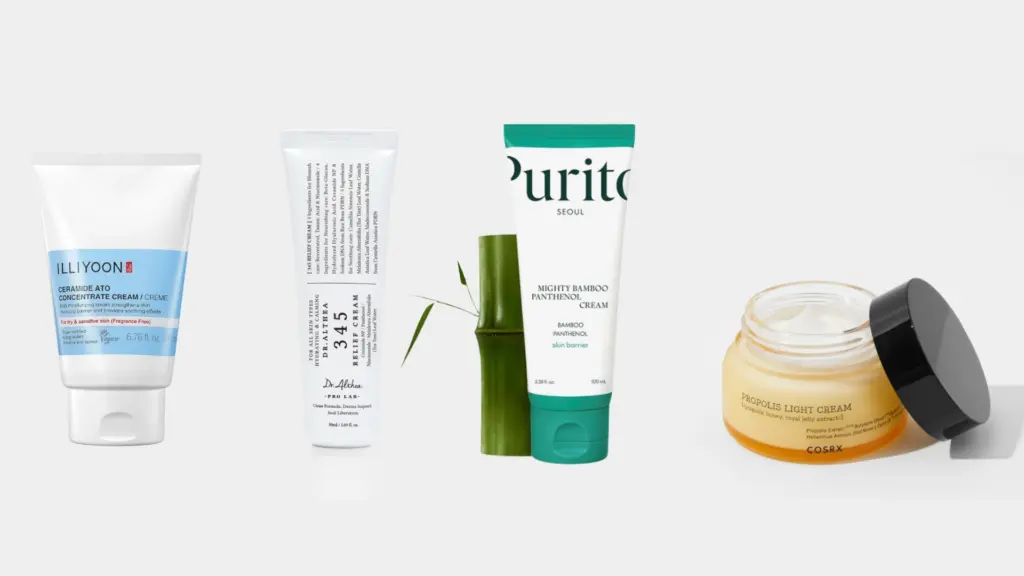
Choose products with ingredients that support hydration and barrier function. Ceramides help strengthen the protective layer, while glycerin and hyaluronic acid attract moisture.
Panthenol and niacinamide may help calm irritation, and squalane provides lightweight hydration. Introduce one product at a time and patch-test new formulas to check how your skin responds.
Step 4: Avoid these While Healing

Certain ingredients and habits can slow recovery. Avoid alcohol-based toners, essential oils, strong fragrances, and physical exfoliants while your skin is sensitive.
Layering too many products can also make irritation harder to manage. Keeping your routine simple allows you to identify what works and prevents unnecessary stress during the healing process.
Step 5: Protect Your Skin Daily

Daily protection plays an important role in maintaining barrier recovery. Apply a broad-spectrum sunscreen every morning to reduce UV-related irritation and support healthier skin.
Avoid excessive sun exposure, harsh weather conditions, and unnecessary touching or rubbing. Small protective habits can help prevent setbacks and keep your skin more stable as it continues rebuilding strength
Common Mistakes that Slow Down Healing
Some skincare habits may seem helpful but can delay barrier recovery. Avoiding these common mistakes allows irritated skin to settle and supports a smoother, more consistent healing process.
| Common Mistake | Why It Slows Healing |
| Restarting Actives Too Soon | Returning to strong ingredients before recovery can trigger irritation. |
| Changing Products Frequently | Too many changes can increase irritation and make it harder to identify causes. |
| Skipping Sunscreen | UV exposure can worsen sensitivity and slow recovery. |
| Applying Too Much Moisturizer | Heavy layers may feel uncomfortable or clog acne-prone skin. |
Healing improves when the skin is given time, protection, and consistency. A simple routine with fewer changes can prevent setbacks and support long-term barrier health
When to See a Dermatologist
Most skin barrier issues improve with gentle care and a simplified routine, but some symptoms may need professional evaluation. Consider getting expert advice if:
- Symptoms continue for 8 to 12 weeks: Persistent irritation despite a gentle routine may need further assessment.
- Redness, burning, or flaking does not improve: Some irritation can take weeks to settle, depending on the cause and skin condition.
- Skin becomes cracked, oozing, or painful: These signs may indicate a more serious issue or possible infection.
- Symptoms keep returning: Repeated flare-ups may point to an underlying condition like eczema or rosacea.
- Your skin does not respond to basic care: A dermatologist can help identify the cause and suggest suitable treatment.
Seeking professional support can help your skin recover when home care is not enough. Some barrier problems need medical guidance to improve properly.
Final Note
Healthy skin often starts with giving it less stress and more consistent care. I have learned that simple routines can make a big difference when skin feels uncomfortable or reactive.
A damaged skin barrier can improve by removing irritating products, restoring moisture, and slowly adding treatments again. You do not need a complicated routine to support recovery.
Gentle cleansing, barrier-friendly ingredients, sunscreen, and patience are the habits that matter most. These steps help you understand your skin better and avoid common setbacks.
Keeping these habits consistent can help you make better choices and support healthier skin over time. Share your experience in the comments and check related skincare blogs for more tips.
Frequently Asked Questions
Can Weather Changes Affect Skin Barrier Health?
Yes, changes in humidity, cold temperatures, wind, and dry indoor air can affect how comfortable your skin feels. These conditions may increase moisture loss and make skin feel more sensitive.
Does Stress Affect the Skin Barrier?
Stress can influence skin health by affecting inflammation, oil production, and overall skin balance. Managing stress, sleeping well, and maintaining healthy habits may support better skin function.
Can Overwashing Your Face Damage Skin?
Yes, washing your face too often can remove natural oils that help protect the skin surface. A balanced cleansing routine helps maintain comfort without creating unnecessary dryness.
Does Diet Influence Skin Barrier Function?
Diet can play a supporting role in skin health. Nutrients such as healthy fats, vitamins, and adequate hydration help maintain normal skin function, although skincare habits also matter.
Can Makeup Affect a Weak Skin Barrier?
Makeup may feel more irritating when skin is already sensitive, especially with heavy formulas or difficult removal. Choosing gentle products and removing makeup carefully can help reduce extra stress.