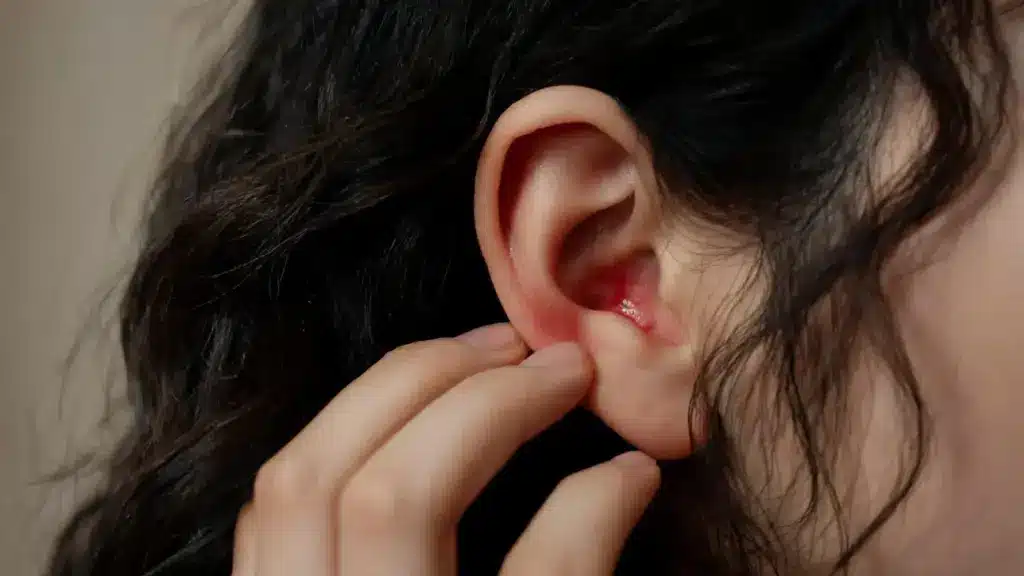
Dry skin in the ears is almost always down to three things: over-cleaning, cold or dry air, or a reaction to hair or skincare products. A fragrance-free moisturizer on the outer ear, plus a few habit changes, usually clears it up within a week or two.
You reach for a cotton swab, pull it out, and notice small white flakes clinging to the tip. Your ears feel tight, itchy, or rough to the touch, and you start wondering if this is ordinary dryness or something closer to eczema.
I spent years coaching swimmers, and chlorine-dried ears were one of the first things I learned to treat, right after chlorine-dried hair.
Dry skin in the ears is a common concern, and most people experience it at some point. It usually responds well to a few simple changes once the cause is identified.
What Does Dry Skin in Ears Mean?
Dry skin in the ears is a loss of moisture and natural oils from the outer ear, ear opening, or canal, which shows up as flaking, tightness, itching, or rough patches. It’s usually mild and resolves once the cause, whether cleaning habits, weather, or a product reaction, is addressed.
Common signs include:
- White flakes on the outer ear or earlobe
- Peeling or rough patches of skin
- Itching around the ear canal entrance
- Tightness after washing or swimming
- Crusty areas near the fold of the ear
There is also a difference between dryness on the outer ear, dryness right at the ear opening, and dryness deeper inside the ear canal.
The skin lining the canal has fewer oil glands than skin elsewhere on the body, which is part of why a dry, crusty ear canal can develop faster than dry skin on the arms or legs.
Can Ear Eczema Cause Dry and Flaky Ears?
Yes, ear eczema can be a common cause of dry, flaky ears. Ear eczema is an inflammatory skin condition that affects the delicate skin around the ear, including the outer ear and sometimes the ear canal.
It weakens the skin barrier, causing moisture loss and making the area more sensitive to irritants. Unlike simple dryness, eczema often causes ongoing itching, redness, scaling, and recurring flare-ups.
People with ear eczema may notice dry patches, peeling skin, cracks, or, in severe cases, clear fluid and crust formation. Normal dryness usually improves with gentle care, while eczema symptoms tend to persist and may require targeted treatment.
Identifying the cause helps select appropriate care and prevent recurrent irritation that can worsen discomfort and affect daily activities around the ears.
Common Causes of Dry Skin in Ears
Dry skin in ears usually traces back to a habit, an environmental shift, or an underlying skin condition. Some causes clear up on their own, while others keep coming back until you address the root trigger.
1. Removing Too Much Earwax

Earwax naturally protects the ear canal by keeping the skin moisturized and preventing irritation. However, frequent cleaning with cotton swabs or inserting objects into the ear can remove this protective layer.
In fact, ENT Health advises against inserting cotton swabs into the ear canal, since they can push earwax deeper and potentially injure the ear canal or eardrum.
- Symptom: Itchy ear canal with white or dry flakes
- Treatment Option: Stop using cotton swabs inside the ear and avoid scratching
2. Ear Eczema and Other Skin Conditions

Ear eczema and other skin conditions can affect the sensitive skin around the ears, leading to recurrent dryness and irritation. These conditions may appear on the outer ear, ear opening, or nearby skin.
Seborrheic dermatitis and psoriasis can also contribute to flaky patches. Psoriasis alone affects roughly 3% of adults in the U.S., and it can show up on the ears the same way it does on the scalp or elbows.
Identifying the condition helps choose suitable care and prevent recurring flare-ups.
- Symptom: Red, itchy, scaly, or cracked skin around the ear
- Treatment Option: Use gentle, fragrance-free moisturizers and seek medical advice for persistent symptoms
3. Environmental Triggers

Environmental factors can weaken the skin barrier around the ears and increase moisture loss. Cold weather, dry indoor air, frequent swimming, heating systems, and air conditioning may make ear skin rough and flaky.
These triggers often cause temporary dryness that improves when moisture levels are restored and exposure is reduced.
“In my experience with swimmers, the outer ear dries out faster than people expect, because chlorine strips the same protective layer that pool water strips from hair.” A ceramide-rich face cream works well on chlorine-dried ears too, since it helps reseal what pool water strips away.
- Symptom: Dry, rough, or tight skin around the ears
- Treatment Option: Use a humidifier and protect ears from harsh dry conditions
4. Irritating Products and Allergies

Certain products and accessories can irritate sensitive ear skin and trigger dryness. Shampoo residue, hair products, fragrances, hair dye, earrings, earbuds, and hearing devices may cause reactions.
This can happen when they repeatedly touch the skin. Identifying and avoiding the trigger can help reduce irritation and prevent future flare-ups. If your skin reacts to nearly everything, sensitive-skin product picks are a reasonable place to start swapping formulas.
- Symptom: Redness or itching after contact with a product or accessory
- Treatment Option: Avoid suspected triggers and switch to gentle fragrance-free products
Why are My Ears Dry and Flaky Inside?
The skin lining the ear canal is thinner and more sensitive than skin on the outer ear, which is part of why dryness inside the canal can feel more uncomfortable than flaking on the outer surface.
A small amount of flaking or shedding skin is normal, since skin naturally renews itself. Flaking becomes more concerning when it is accompanied by pain, swelling, drainage, or a strong itch that does not settle with basic care.
According to the National Institute on Deafness and Other Communication Disorders (NIDCD), part of the U.S. National Institutes of Health, persistent ear symptoms like these are worth discussing with a healthcare provider rather than managing with home remedies alone.
How to Prevent Dry and Itchy Ears
Simple care habits can help maintain the ear’s natural moisture balance and prevent dryness, itching, and flaking.
- Clean ears gently and avoid over-cleaning: Clean only the outer ear, and avoid using cotton swabs or other objects in the ear canal, as they can remove protective oils and cause irritation.
- Use gentle products: Avoid harsh soaps, fragrances, and chemical-based products near the ears, as they may dry out or irritate sensitive skin. A non-greasy daily lotion applied right after washing helps lock in what moisture is left.
- Protect ears from dryness and triggers: Cover ears in cold or dry weather, and limit exposure to allergens such as certain hair products, jewelry, or ear devices.
- Follow eczema care routines: If ear eczema causes recurring dryness or itching, follow recommended treatments and skincare practices to manage flare-ups.
Maintaining gentle ear care habits and avoiding common irritants can help prevent dry, itchy ears and reduce the chances of recurring skin problems.
Dry Skin in Ears vs Ear Infection: How to Tell the Difference
Dry, flaky ears and ear infections can sometimes feel similar, but their symptoms and causes are usually different. Understanding the differences can help identify whether the issue is related to skin irritation or requires medical attention.
| Feature | Dry Skin/Eczema | Ear Infection |
|---|---|---|
| Main symptom | Itching and flaking | Pain and discomfort |
| Skin appearance | Dry patches or flakes | Redness, swelling, discharge |
| Common feeling | Irritation | Pressure or sharp pain |
| Treatment focus | Moisture and skin care | Medical treatment if needed |
Dry, flaky ears are often linked to dry skin or eczema, while infections usually cause pain, swelling, discharge, or other noticeable changes that may require medical care.
When Should You See a Doctor About Dry Skin In Ears?

Most cases of dry skin in ears settle down with basic home care, but a few warning signs suggest it is time to get checked. Knowing these signs can help you avoid letting a minor irritation turn into a larger problem.
Seek medical advice if you notice:
- Ear pain that does not ease up
- Drainage or fluid coming from the ear
- Sudden changes in hearing
- Swelling around the ear or canal
- Bleeding from the ear canal
- Severe itching that disrupts sleep or daily activity
- Symptoms that do not improve after a week or two of gentle care
According to federal hearing health experts, these signs may indicate infection or another condition beyond ordinary dryness that requires professional evaluation.
Final Thoughts
If you have been dealing with dry skin in your ears, itching, or those frustrating white flakes, small changes in your ear care routine can make a noticeable difference.
Avoiding harsh cleaning habits, protecting moisture, and paying attention to possible triggers can help keep irritation under control.
Since every person’s skin reacts differently, it is important to notice what causes your symptoms and choose gentle solutions that work for you.
If dryness keeps returning or is accompanied by pain, swelling, or discharge, consider speaking with a healthcare professional for proper guidance.
Start by giving your ears the care they need today, and take simple steps toward healthier, more comfortable skin.
Frequently Asked Questions
Can Swimming Make Ear Flaking Worse?
Yes. Frequent swimming can dry out the skin lining the ear canal, especially in chlorinated water. Rinsing ears with clean water after swimming and drying them gently afterward can reduce irritation and lower the chance of ongoing flaking.
Does Diet Affect Ear Skin Dryness?
Diet is not a primary cause of ear skin dryness, though staying hydrated supports overall skin health. Most ear flaking is related to cleaning habits, environmental exposure, or skin conditions rather than food choices, so focus on gentle ear care first.
Are Hearing Aids Linked to Ear Flaking?
Yes, in some cases. Constant contact and moisture buildup from hearing aids can irritate the skin in the ear over time. Regularly cleaning devices and giving the ear occasional breaks can help reduce friction-related dryness and flaking.
Can Stress Trigger Eczema Flare-Ups In the Ear?
Stress can contribute to eczema flare-ups in some people, including around the ears, though it is rarely the only factor. Identifying other triggers, such as products or weather, alongside stress management often provides better long-term results.