Will extensions just make your thin hair look worse? That’s the question most people never ask before buying, until they’re standing in the mirror with a set tugging at their roots and showing through anyway.
Thin hair and extensions aren’t actually a bad combination; the wrong type is, and most sets on the market were never designed with fragile strands in mind.
This guide breaks down exactly which extensions are built for fine or thinning hair, how much weight your hair can safely carry before it becomes a problem, and how to pick a set that adds real volume without adding risk, so you can stop guessing and start choosing.
Can You Wear Hair Extensions If You Have Thin Hair?
Yes, thin hair can wear extensions, but the method has to match the condition and density of the natural hair. Healthy fine strands with stable shedding may support lightweight extensions, while fragile, breaking, or actively thinning hair needs more caution.
Adding moderate fullness is also very different from attaching long, heavy extensions that place more tension on the roots. Low-density hair can make clips, tapes, beads, bonds, and tracks easier to see, so placement and attachment size matter just as much as weight.
If shedding is increasing, bald areas are appearing, or the scalp feels irritated, extensions should not be used simply to hide the problem.
The American Academy of Dermatology recommends seeing a board-certified dermatologist when unexplained hair loss occurs because many conditions can cause thinning.
Can Your Hair Be Too Thin for Extensions?

Sometimes, yes. The goal is not to find an extension method that technically attaches to the hair. It is to determine whether your existing hair is strong and dense enough to support it comfortably.
| Hair Situation | Are Extensions Appropriate? | Main Consideration |
|---|---|---|
| Thin through the ends with reasonable root density | Often | Lightweight extensions may add fullness without excessive bulk |
| Naturally fine but otherwise healthy hair | Often | Low-profile attachments and controlled weight matter |
| Active hair loss or obvious bald patches | Get assessed first | Extra pulling can place more stress on already affected hair |
| Hair that is breaking or shedding noticeably | Get assessed first | The cause should be identified before adding ongoing tension |
| Thinning mainly around the crown or part | Traditional extensions may not solve it | A topper or targeted hairpiece may provide better coverage |
Extensions make the most sense when the natural hair that supports them is healthy enough for the attachment method being considered.
Best Types of Hair Extensions for Fine Hair
Once the hair is strong enough for extensions, the right method should add fullness without creating bulky attachment points, visible tracks, or unnecessary tension on fine strands.
1. PU Weft Clip-Ins
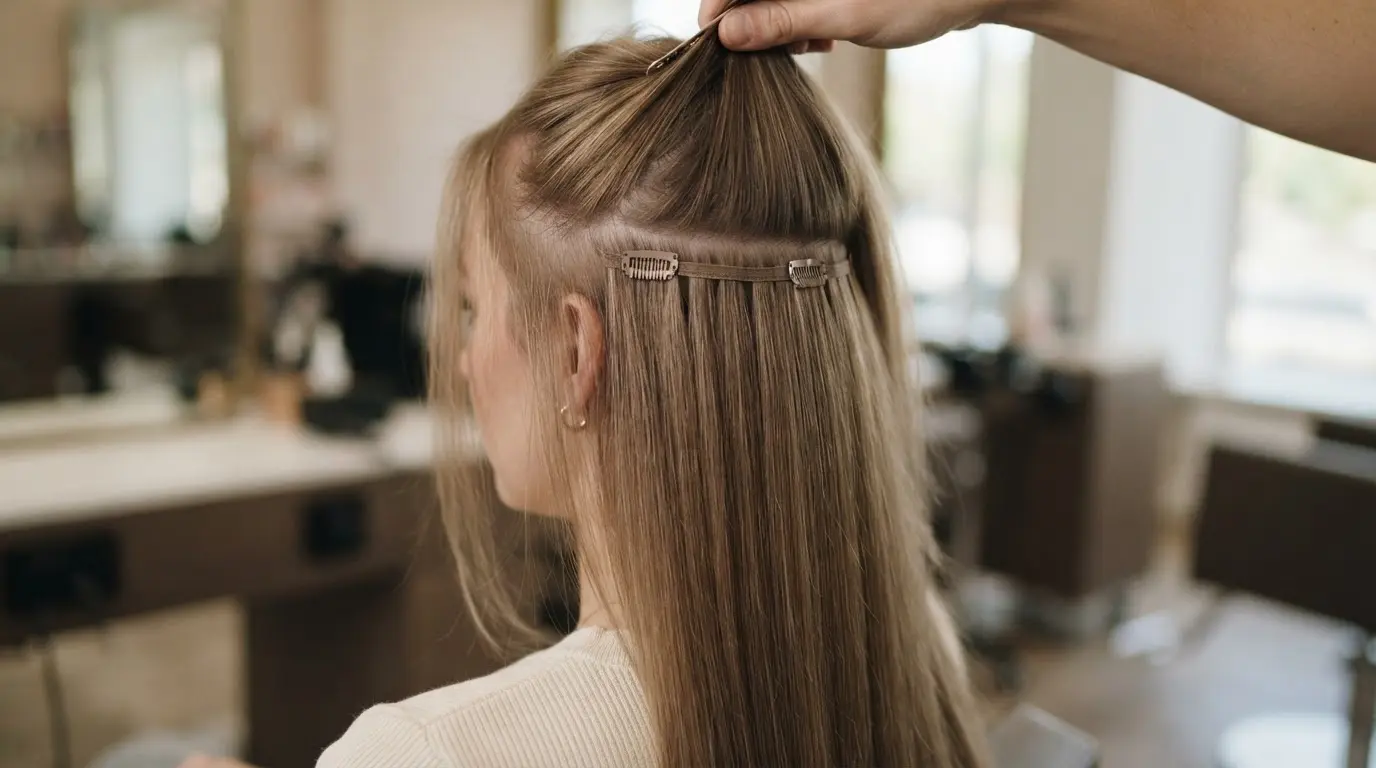
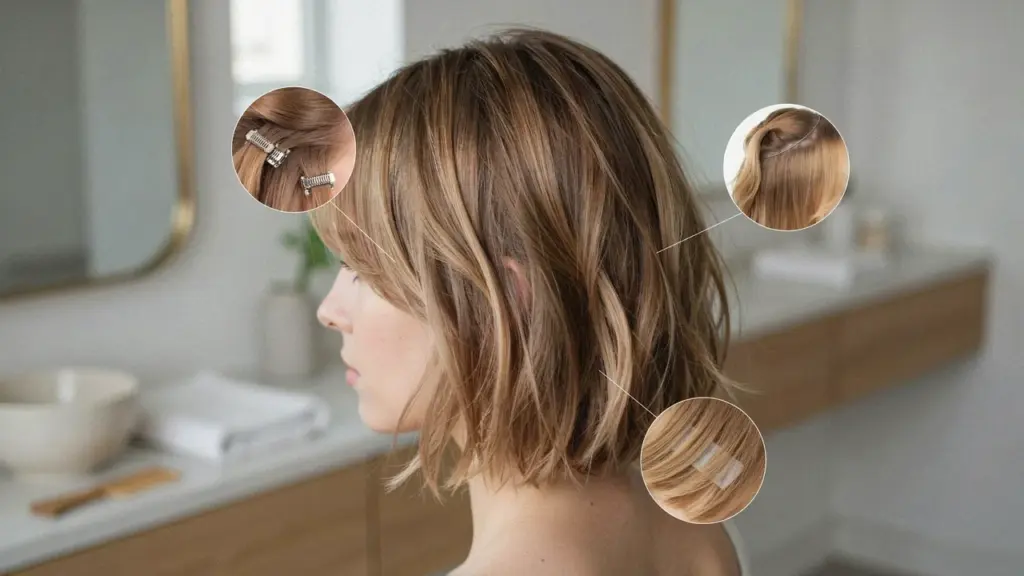
PU weft clip-ins use a thin polyurethane or silicone-style base that sits flatter than traditional fabric tracks. Their lightweight design helps them blend under fine hair while allowing easy removal after wear.
They work well for temporary volume, but careful placement and color matching matter because sparse strands can make poorly positioned clips or mismatched wefts easier to notice overall.
- Estimated cost: Around $150–$400 per set
- Best for: Occasional volume, events, and removable daily wear
2. Tape-In Extensions
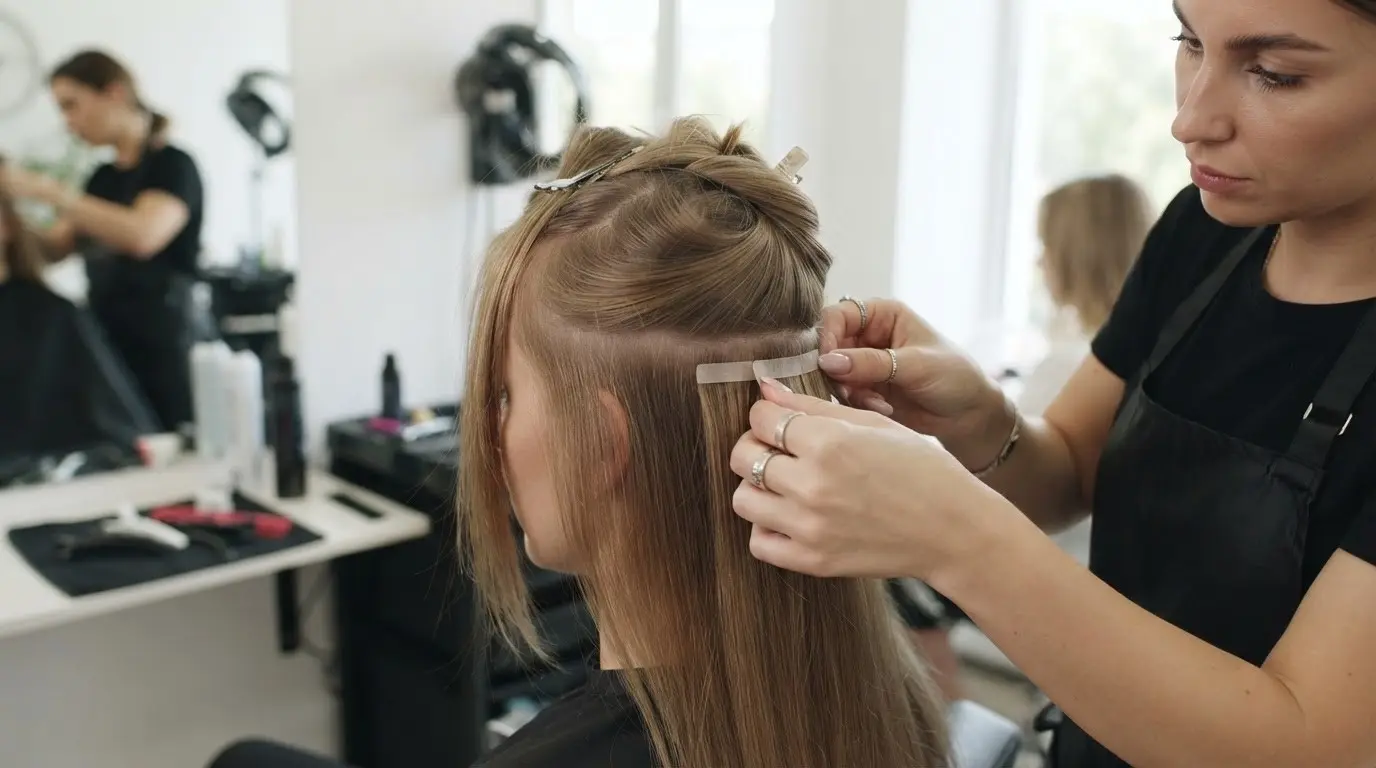
Tape-in extensions use flat adhesive tabs that attach across small sections of natural hair, helping distribute weight more evenly than single-point methods.
Their low-profile shape can blend well under fine hair when fitted correctly. They require professional application, careful removal, and regular move-up appointments, making them better suited to healthy fine hair without active shedding or significant breakage at present.
- Estimated cost: Around $200–$600 per installation
- Best for: Longer-lasting volume with a flatter attachment
3. Hand-Tied or Genius Wefts
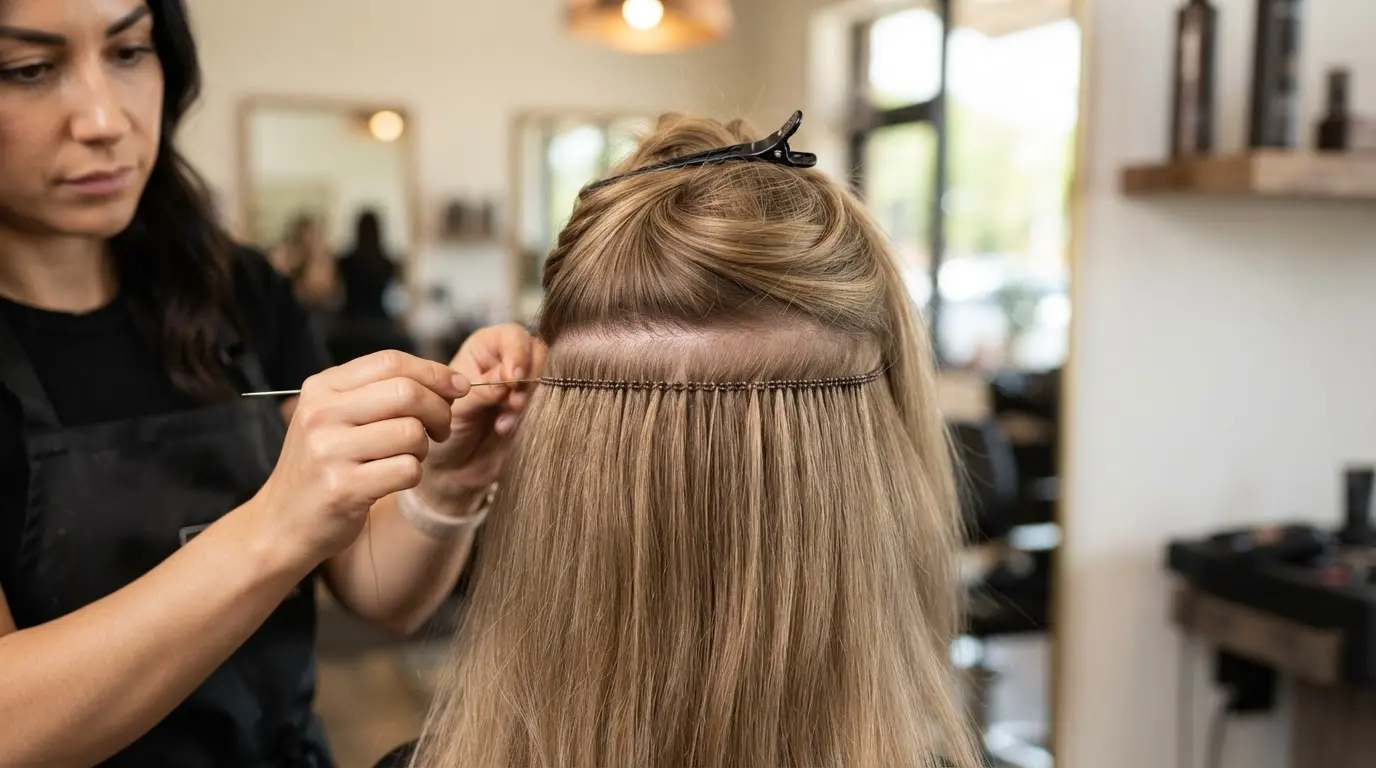
Hand-tied and Genius wefts use different constructions, but both can create a flatter, less bulky row than traditional machine wefts. They are usually installed professionally using a beaded row system.
When fitted correctly, their low-profile shape can blend well under fine hair. They require professional application, careful removal, and regular move-up appointments, making them better suited to healthy fine hair without active shedding or significant breakage at present.
- Estimated cost: Around $500–$1,200 per installation
- Best for: Longer-term fullness with enough healthy root density
4. Hair Toppers and Fill-Ins
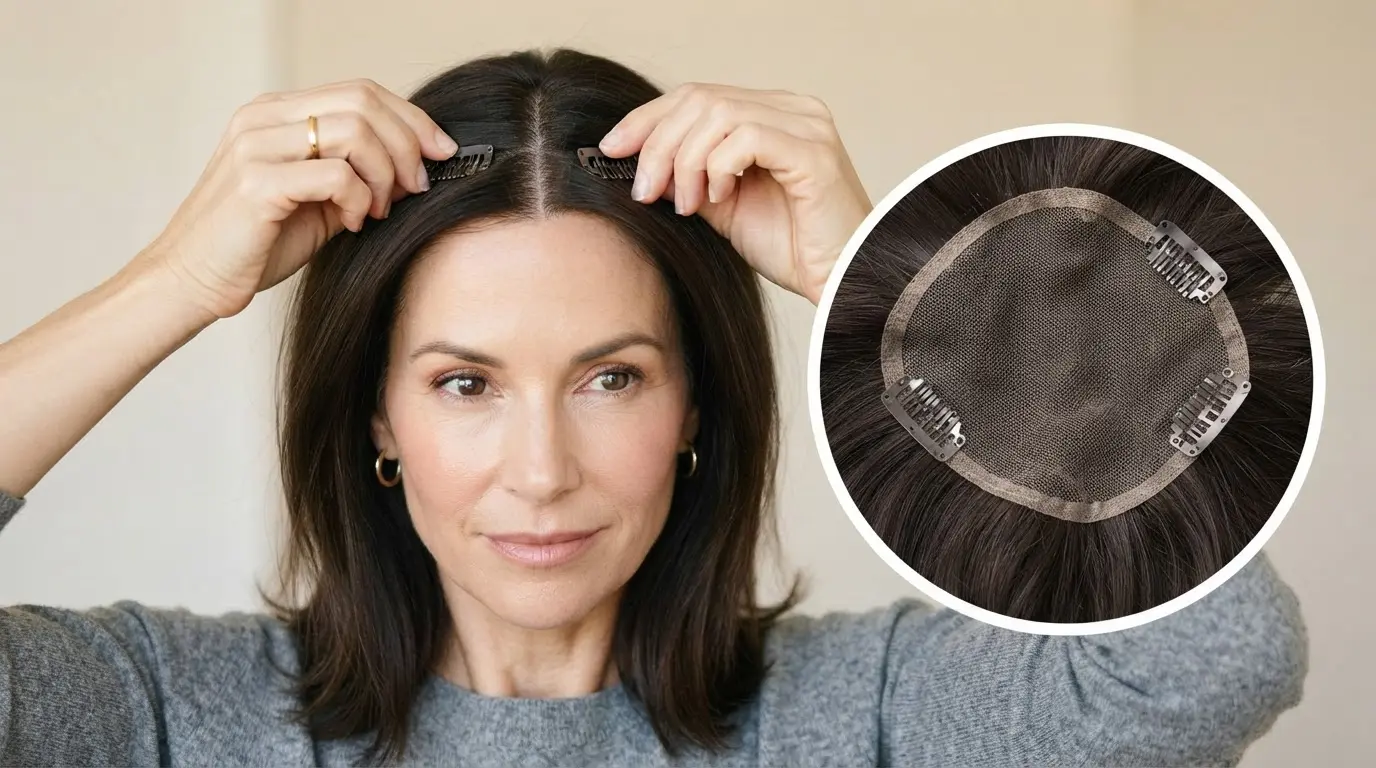
Hair toppers and fill-ins focus on coverage rather than extra length. They sit over areas such as a widening part, sparse crown, or localized thinning where traditional extensions may not solve the visible concern.
A properly sized piece can blend with surrounding hair, but attachment points should rest on stronger sections without creating persistent pulling or discomfort during regular wear.
- Estimated cost: Around $100–$300 for smaller fill-in pieces
- Best for: Crown thinning, widening parts, and localized sparse areas
Each option suits a different hair concern, so choosing by density, placement, wear time, and coverage needs is more useful than relying on one method alone.
Methods That Need More Caution on Very Thin Hair
Not every popular method is an obvious first choice when natural density is low. Individual keratin bonds, I-tips, micro-links, and similar methods place separate attachment points throughout the hair.
They can create natural-looking movement when properly fitted, but each attachment still needs enough healthy natural hair to support it.
Micro-link extensions, for example, are generally considered better suited to hair with enough strength and density to support the beads, and very fine hair can be more susceptible to breakage with an unsuitable installation.
Sew-in methods also require caution if the supporting hair has to be pulled tightly. Repeated tension is a recognized risk factor for traction alopecia.
None of that means every bond, bead, or row installation damages thin hair. It means these methods deserve an individual assessment, not a blanket recommendation based on how small the attachments look.
How Much Extension Weight Is Safe for Thin Hair?
Extension sets are often sold by gram weight, so it is reasonable to assume there must be a specific number that counts as “safe.”
A 100 g set may be manageable for one person and excessive for another because the result depends on natural density, hair condition, attachment method, number of attachment points, extension length, and where the added weight is placed.
Instead of shopping by a fixed number, consider these factors:
- Natural root density: Lower density means fewer natural strands are available to support added hair.
- Added length: Longer extensions can add more leverage and may require more hair to blend naturally.
- Weight distribution: Spreading an appropriate amount of hair across suitable attachment points may reduce concentrated pulling.
- Natural-hair condition: Hair that is breaking, shedding, chemically compromised, or already under tension needs more caution.
- Your actual goal: Adding modest volume usually requires less added hair than creating a dramatic length change.
Treat extension weight as a fitting decision, not a universal chart. Ask how much hair is actually being added and why that amount suits your density.
Human Hair vs Synthetic for Fine Hair
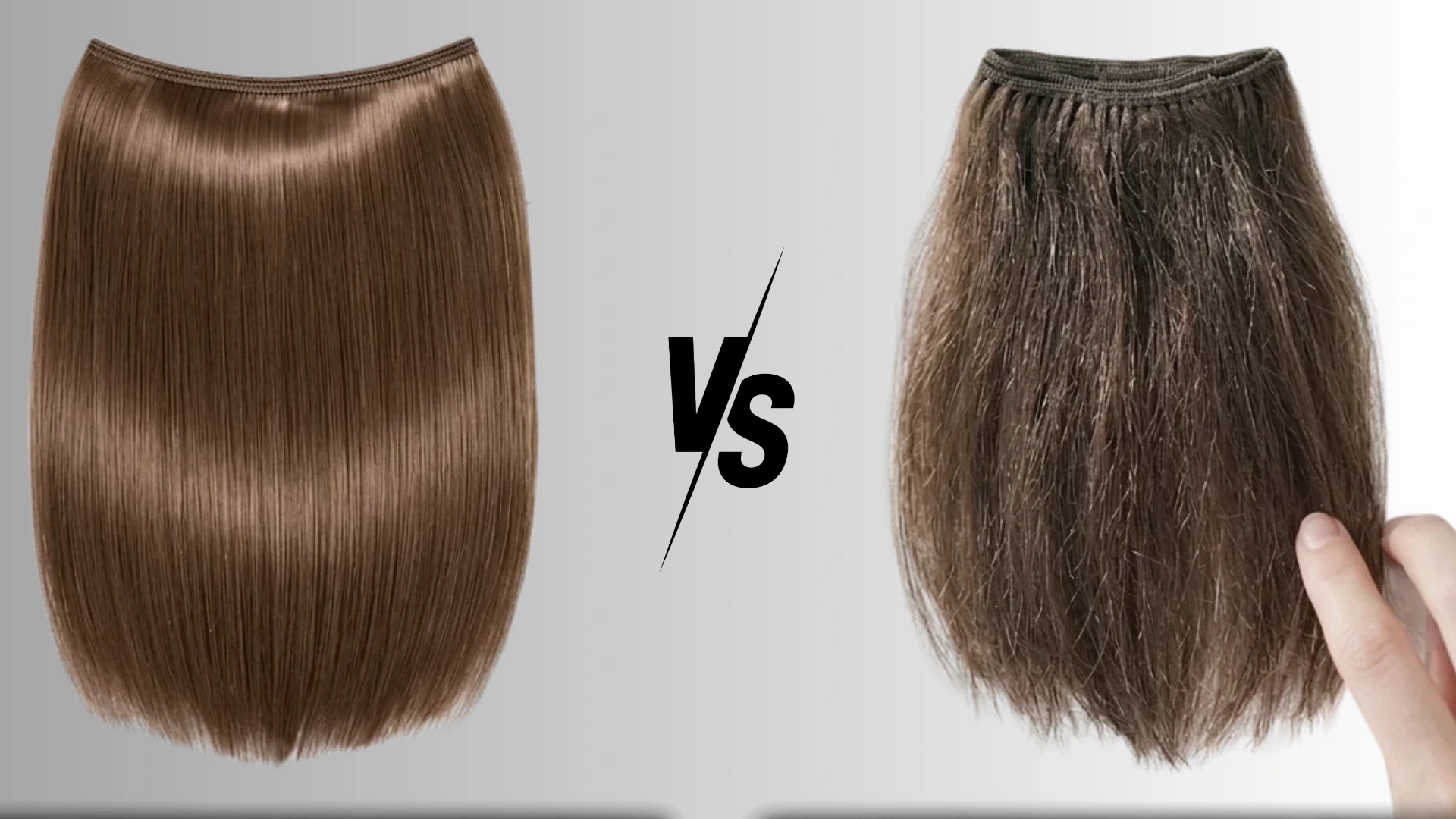
If you’re choosing extensions specifically to avoid damage, the material matters as much as the type you pick. Synthetic fibers are heavier per strand and trap more heat against the scalp, exactly the two things fine hair can least afford.
| Factor | Human Hair | Synthetic Hair |
| Natural movement | Usually behaves more like your own hair | Varies widely by fiber quality |
| Heat styling | Generally allows heat styling with suitable care | Only some heat-resistant fibers tolerate styling tools |
| Color and texture blending | Often easier to customize | Depends heavily on product quality |
| Longevity | Quality human hair can often be reused with proper care | Usually has a shorter usable life |
| Safety for fine hair | Depends on weight and attachment | Also depends on weight and attachment |
For fine or thinning hair, the lighter weight and better breathability of human hair are what actually protect your roots, not just a nicer finish.
Fixing Common Extension Problems
Fine hair tends to reveal extension problems faster, so correct small issues with placement, weight, or scalp comfort early before they become harder to manage.
- Clips slipping: Check the clip grip and placement. Reposition the piece or reduce the amount of extension hair if the section feels overloaded.
- Tension or headaches: Pain can signal excessive pulling. Loosen, reposition, or remove the attachment instead of waiting for discomfort to settle.
- Visible attachments: Wefts, clips, or tapes may sit too high, carry too much hair, or lack enough natural coverage.
- Itching or irritation: Buildup is one possible cause, but persistent itching, burning, crusting, or soreness should be assessed, not ignored.
- Breakage near attachments: Have the area checked early instead of continuing wear until the next scheduled appointment.
Persistent pain, irritation, slipping, or breakage means the installation needs attention. Adjusting the method early can better protect comfort, appearance, and the natural hair underneath.
Best Options for Crown and Part-Line Thinning
Crown and part-line thinning often needs a different approach because standard extensions add fullness below, while toppers are designed to cover sparse areas on top.
- Choose a topper or fill-in piece when thinning is concentrated around the crown or part.
- Measure the sparse area so the base rests on stronger surrounding hair.
- Match the shade near the roots and part, not just the ends.
- Choose a density that blends naturally with the existing hair.
- Reposition or remove the piece if clips cause pulling or soreness.
- Use traditional extensions when the main goal is added length or fullness through the sides and ends.
For localized thinning, a properly fitted topper often works better than a full extension set because it places coverage exactly where the visible thinning appears.
When Should You Avoid Hair Extensions?
There are situations where finding a different extension type should not be the first step.
Active unexplained hair loss, bald patches, rapidly increasing shedding, significant breakage, scalp pain, inflammation, or an existing extension installation that appears to be worsening thinning all deserve attention before another set is applied.
Hair loss can have hereditary, hormonal, autoimmune, medical, nutritional, medication-related, or styling-related causes. A dermatologist can help identify what is happening rather than assuming every case of thinning is simply “fine hair.”
Repeated pulling deserves particular attention. AAD notes that traction alopecia caused by continual pulling can eventually lead to permanent hair loss.
Extensions are a cosmetic way to add hair. They are not a treatment for the reason someone is losing hair
Final Takeaway
The right extensions should make thin hair look fuller without adding unnecessary stress at the roots. If I were choosing a set, I’d focus on weight, attachment type, placement, and the condition of the natural hair before anything else.
You also need to think about visibility, comfort, maintenance, and where thinning is most noticeable. Lightweight clip-ins, tape-ins, halos, and suitable wefts can all work in the right situation, while toppers may make more sense for crown or part-line thinning.
Hair extensions for thin hair are not about adding the most volume possible. They are about choosing what the hair can support comfortably. If you have tried extensions on fine hair, share your experience in the comments.
Frequently Asked Questions
Are There Hair Extension Options for Men with Thin Hair?
Yes, toppers, hairline fill-ins, and lightweight clip-in pieces are increasingly designed specifically for men’s thinning patterns, focusing on natural-looking coverage rather than length.
Do Hair Extensions Cause Permanent Hair Loss?
Not typically on their own. Permanent damage usually comes from excessive weight, prolonged tension, or repeated poor-quality installs, not extensions themselves.
Is There a Minimum Hair Length Needed for Extensions?
Most methods require at least 3 to 4 inches of hair to clip, tape, or bead onto securely; shorter hair usually limits your options.
How Long Does It Take Extensions to Blend and Look Natural?
With proper color matching and placement, extensions typically blend immediately; it’s poor color or weight choices, not time, that usually cause an obvious look.