Longer, fuller hair sounds simple to get until you start looking into extensions and realize there are half a dozen methods, several materials, and a lot of confusing terminology.
If you’ve ever wondered how a few clips or a handful of tiny beads can hold extra hair in place for weeks at a time, you’re not alone.
At the most basic level, hair extensions work by attaching extra strands of hair close to your natural roots, so they blend in and move with your own hair.
Here, we’ll cover the different types of extensions, how each one attaches, how long they last, how to maintain them, how to pick a matching color, and what other people say about wearing them.
What are Hair Extensions and What are they Made Of?
Hair extensions are added sections of hair designed to increase length, volume, thickness, or add color without changing natural hair permanently.
They are usually made from either human hair or synthetic fibers. Human hair comes from real hair that is collected and processed for extension use
Synthetic extensions use man-made fibers created to resemble natural strands. Extensions also differ in how the hair is arranged.
Wefts contain multiple strands attached along a seam and are commonly used for clip-ins, tape-ins, and sew-ins. Individual strands are smaller sections applied separately in methods such as fusion and micro-links.
Depending on the attachment method, extensions may be removed after one day or remain secured for several weeks, making them a flexible alternative to longer-term restoration procedures.
How Do Hair Extensions Work?
No matter which extension method is used, the basic process stays similar: prepare the natural hair, secure the added hair, then blend both together for a natural-looking finish.
- Prepare the natural hair: The stylist first checks the hair’s thickness, texture, condition, and density to choose a suitable method. The hair is then sectioned carefully, while the extension color and texture are matched with the natural hair.
- Attach the extra hair: Extensions are positioned close to the scalp without sitting directly against the roots, since prolonged root tension has been linked to hair loss in clinical research. Depending on the method, they may be secured using clips, adhesive tape, thread, keratin bonds, or small beads.
- Blend the extensions: After installation, the stylist trims and shapes the added hair so it falls naturally with the existing length. The finished result is also checked for uneven areas, visible attachments, or noticeable color differences.
When each step is done carefully, the extensions sit more comfortably, stay less noticeable at the roots, and blend more naturally with the wearer’s own hair.
What are the Different Types of Hair Extension Methods?
There is no single best hair extension method for everyone. The right choice depends on your hair type, how often you want to wear extensions, your budget, and how much maintenance you are comfortable with.
1. Clip-In Extensions
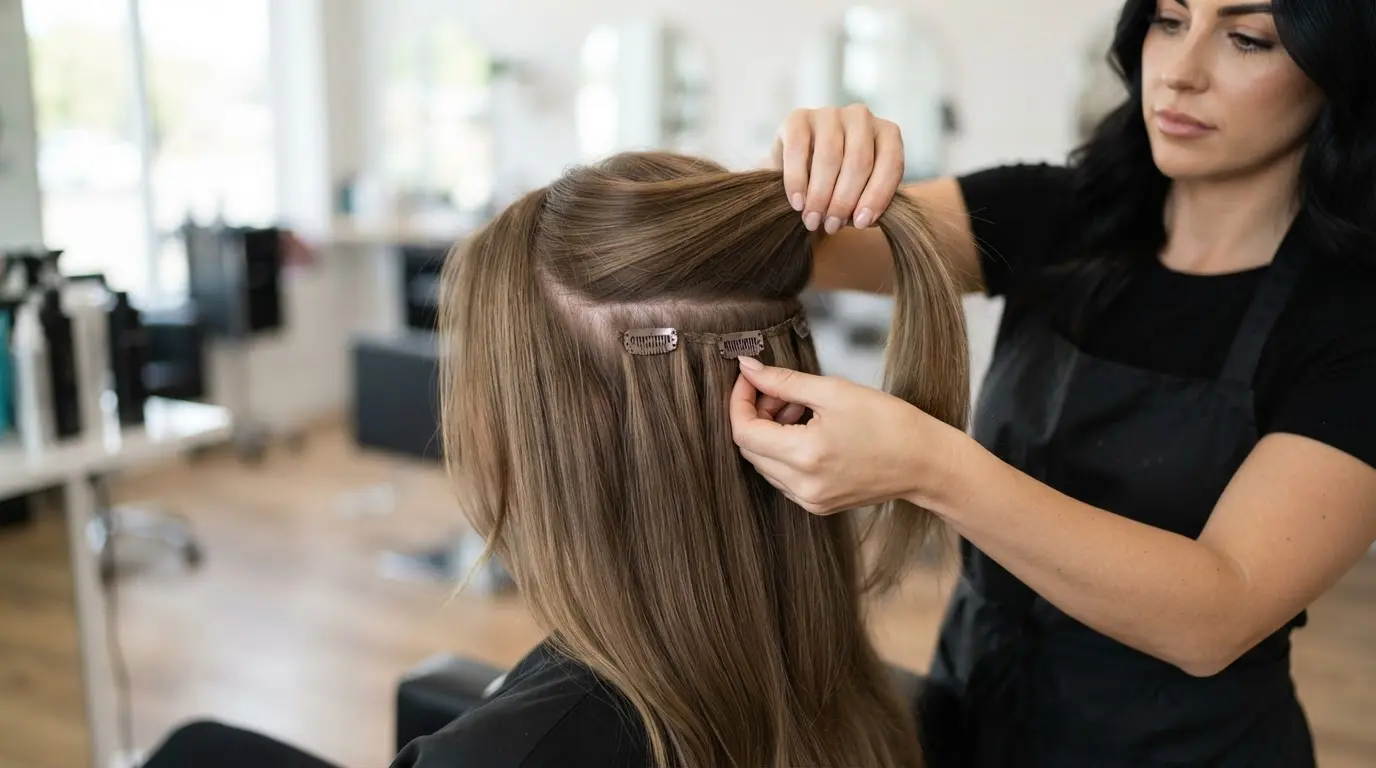
Clip-in extensions are temporary wefts fitted with small pressure clips that fasten close to the roots, often a comfortable pick for finer or delicate strands. They can be applied and removed at home, making them convenient for short-term use.
Clip-ins should be taken out before sleeping, showering, or swimming to reduce tangling and pulling. Gentle brushing and proper storage help keep them in good condition between uses.
- Best For: Occasional wear, events, photos, or quick length and volume
- Pros: Reusable, easy to remove, and does not require salon installation
- Cons: May shift if fitted poorly and can feel heavy after extended wear
2. Tape-In Extensions
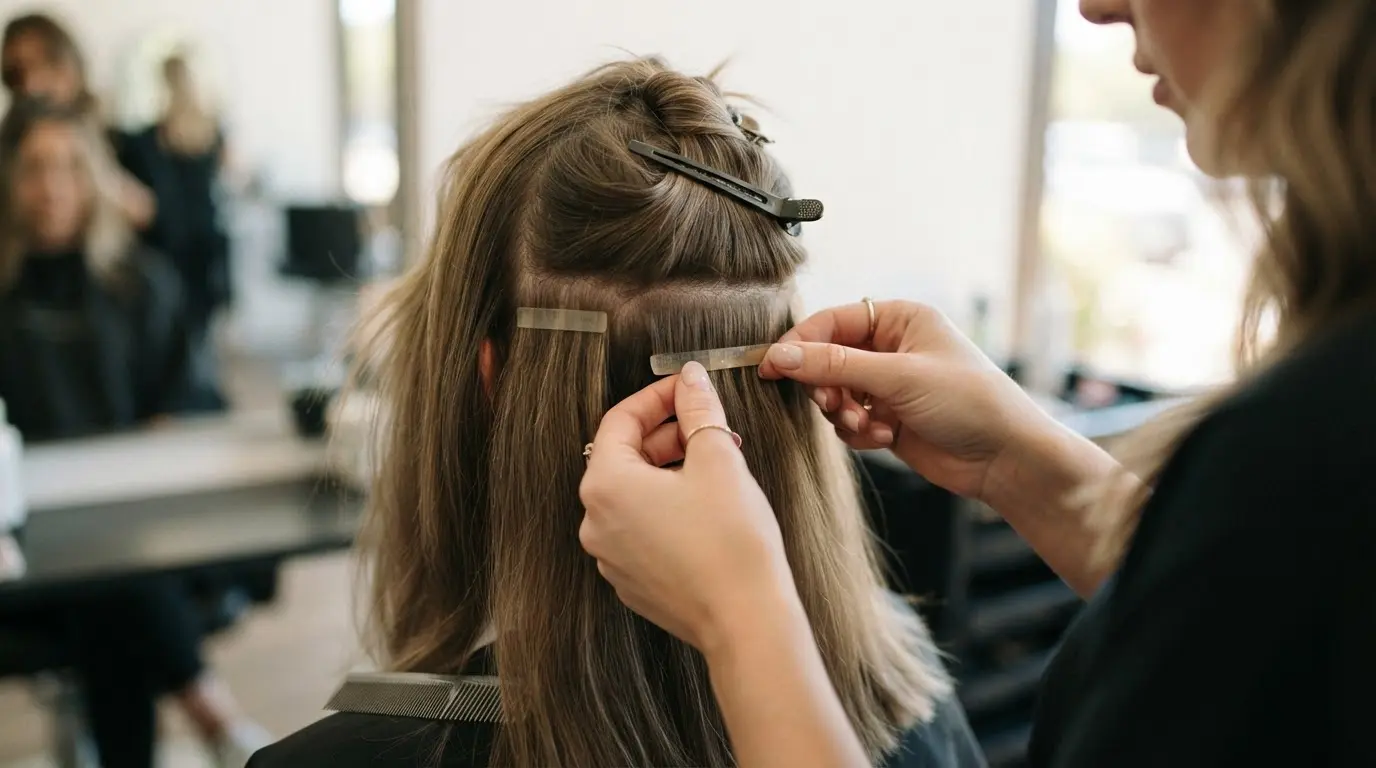
Tape-ins use thin wefts with adhesive strips placed around small sections of natural hair. The flat attachment helps the extensions sit close to the scalp and blend smoothly.
They normally remain in place for several weeks before needing repositioning as the natural hair grows. Oils and heavy conditioners should be kept away from the adhesive areas because they may weaken the hold.
- Best For: Regular wear with a lightweight, flatter attachment
- Pros: Lies close to the scalp and usually takes less installation time than strand-by-strand methods
- Cons: Requires salon maintenance and extra care around adhesive areas
3. Sew-In Extensions
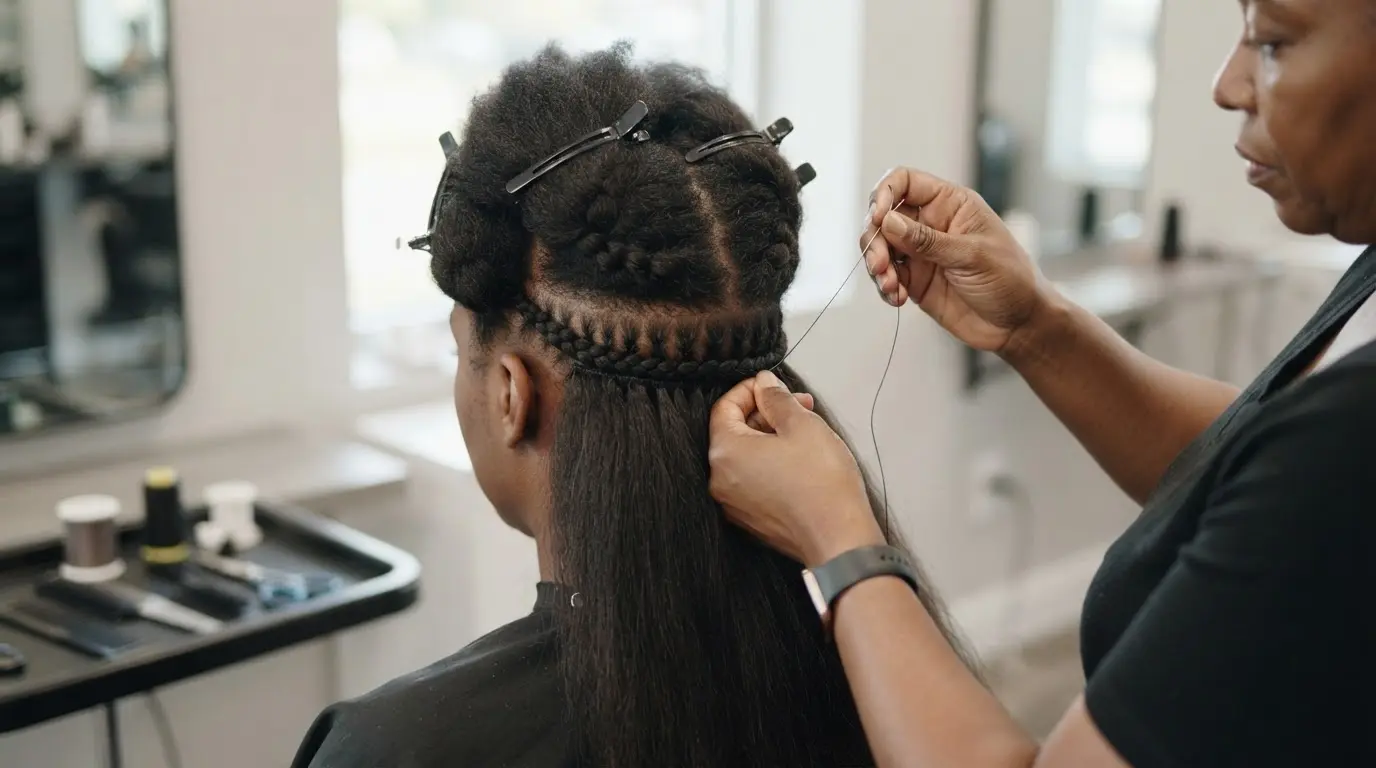
Sew-in extensions use wefts that are stitched onto braided sections of natural hair with thread. The braided base provides support for the added hair and creates a secure attachment without adhesive.
Regular scalp cleansing and careful washing are important while they are installed. Sew-ins also need professional removal or reinstallation once the braids loosen or natural hair grows out.
- Best For: Thicker or coarser hair that can support a braided base
- Pros: Secure attachment, no adhesive, and suitable for added length and fullness
- Cons: Tight braiding or excessive weight may place unwanted tension on natural hair
4. Fusion Extensions
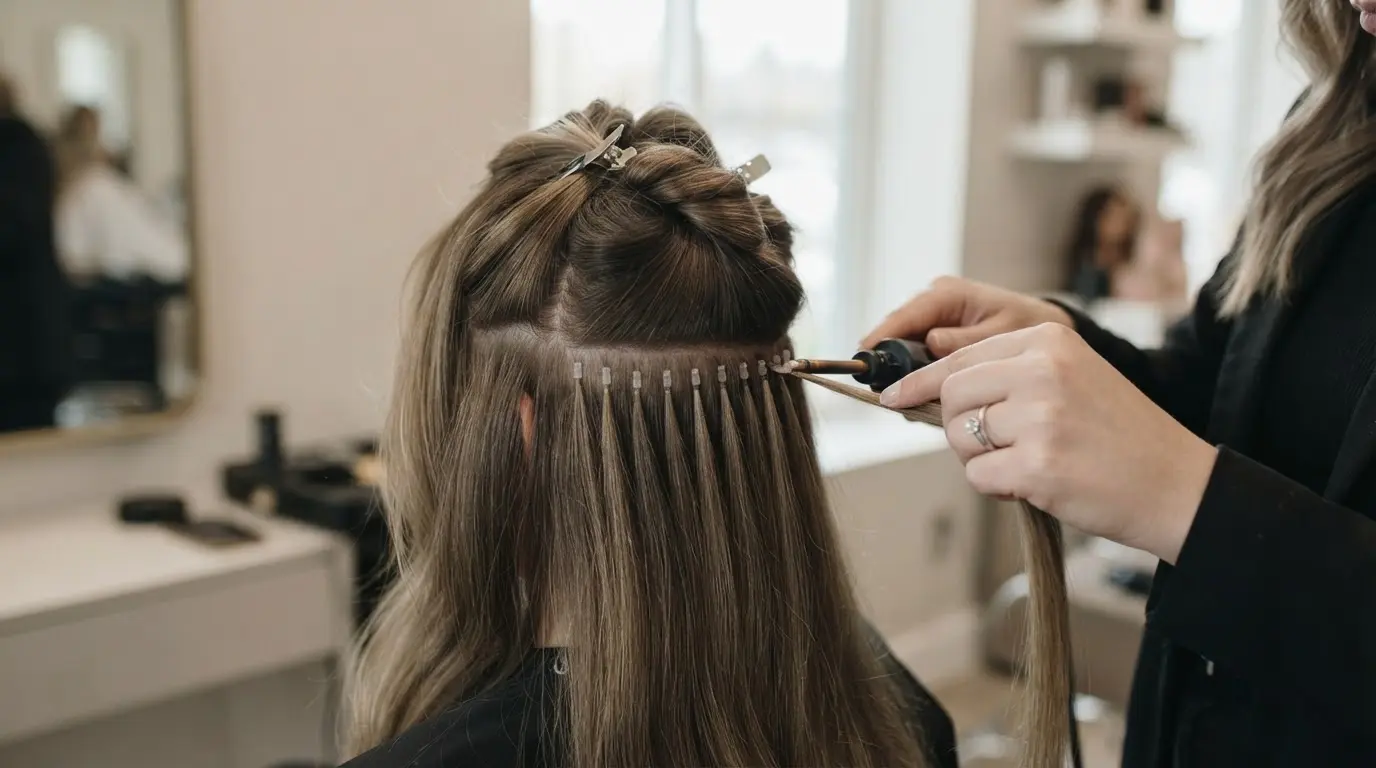
Fusion extensions use small groups of extension hair attached individually with keratin-based bonds. A heated tool softens the keratin so each bond can be secured around a section of natural hair, and some keratin-based products can release formaldehyde when heated, so it’s worth asking what’s in the bonding product.
Because the strands are applied separately, they allow flexible movement and styling. Removal should always be done professionally with the appropriate bond-removal product rather than pulling the extensions out.
- Best For: Longer wear and flexible individual-strand placement
- Pros: Low-profile bonds, natural movement, and longer continuous wear
- Cons: Installation takes longer, uses heat, and requires careful professional removal
5. Micro-Link Extensions
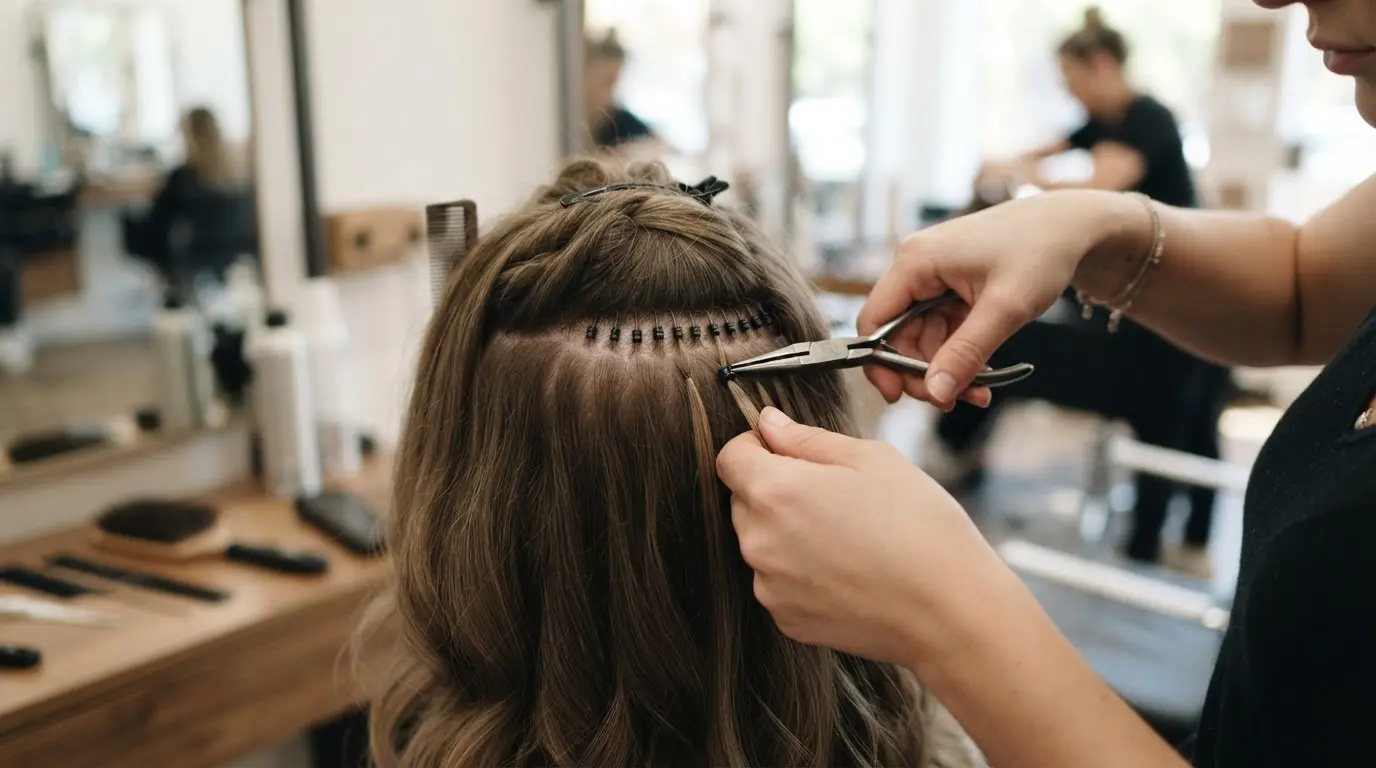
Micro-link extensions, also called micro-beads or I-tips, attach individual extension strands using small beads rather than glue or heat. Natural hair and the extension strand are placed inside a bead, which is then clamped securely near the root.
As natural hair grows, the beads move downward and need professional adjustment to maintain comfortable placement, and this is where durability differences between methods tend to show up most.
- Best For: Those who prefer a glue-free and heat-free attachment method
- Pros: Individual strand movement, reusable components, and no adhesive
- Cons: Beads can become visible as they grow out and may create tension if poorly positioned
Each hair extension method offers a unique way to add length and volume, with different levels of commitment and care.
Real Hair or Synthetic? Comparing Your Two Options
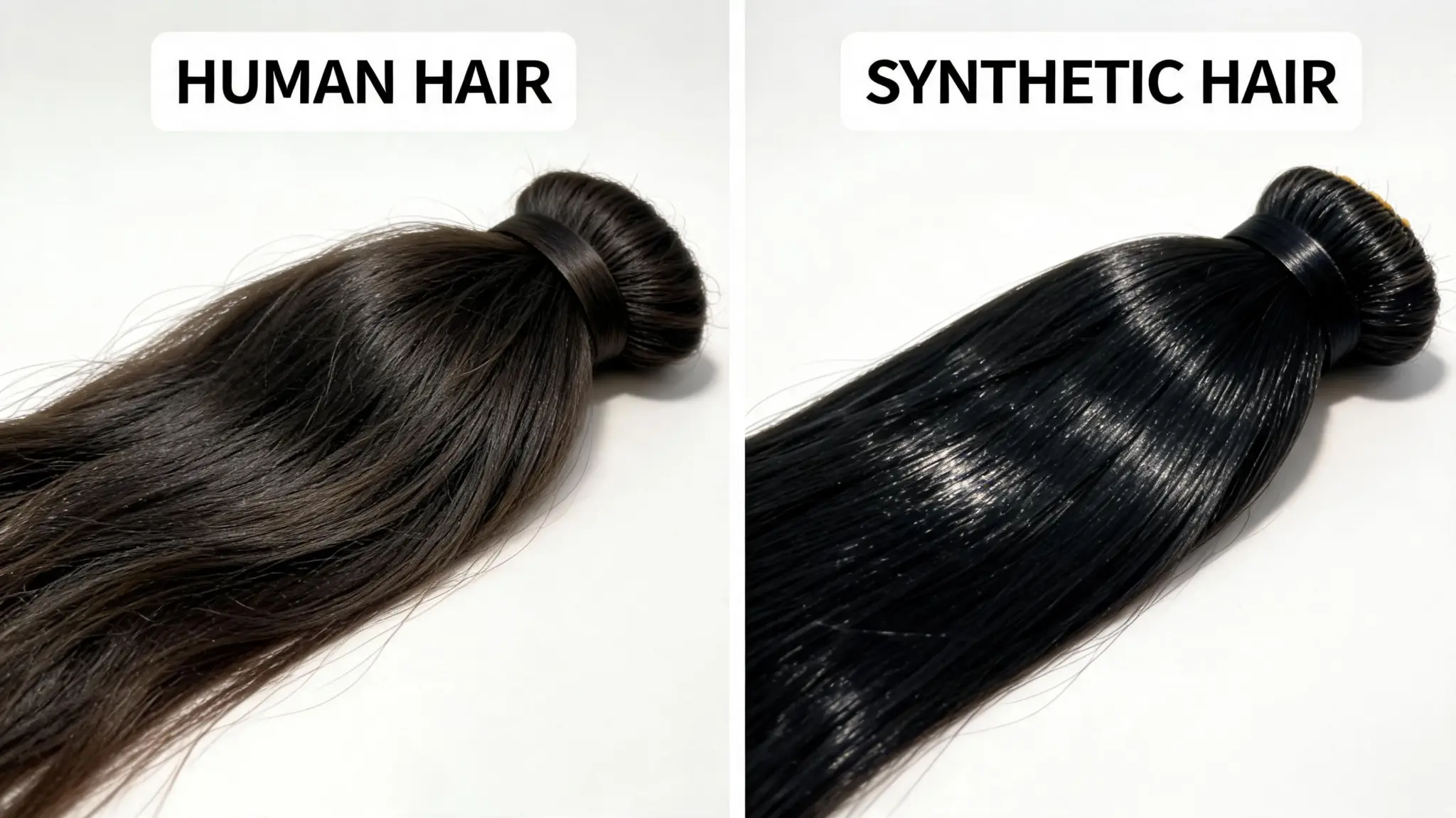
Material choice affects nearly everything about how extensions look, feel, and hold up over time. Here’s a quick side-by-side comparison to help you weigh appearance, styling flexibility, cost, and lifespan before deciding.
| Feature | Human Hair | Synthetic Hair |
|---|---|---|
| Appearance | Blends closely with natural hair | Can look shinier or less natural |
| Styling | Can be heat-styled, curled, straightened | Limited or no heat tolerance |
| Cost | $100 to $300 | $20 to $150 |
| Lifespan | Can last a year or more with care | Usually needs replacing sooner |
If you want something you can style and reuse long-term, human hair is generally worth the extra cost. If you need a one-time look for a short period, synthetic can do the job for less money, and it helps to know that cosmetic hair products are sold without needing FDA approval first.
How Long Do Hair Extensions Last?
The lifespan of hair extensions depends on more than just the installation method. Proper care, hair quality, and application technique all affect how long extensions stay in good condition.
Gentle washing and brushing can help extend their life, while higher-quality hair usually handles more washing and styling.
A proper installation also plays an important role, as rushed or incorrect application can cause extensions to loosen or wear out faster.
While the extension method determines the expected wear time, consistent maintenance helps keep extensions looking better for longer.
What Do Hair Extensions Actually Feel Like to Wear?
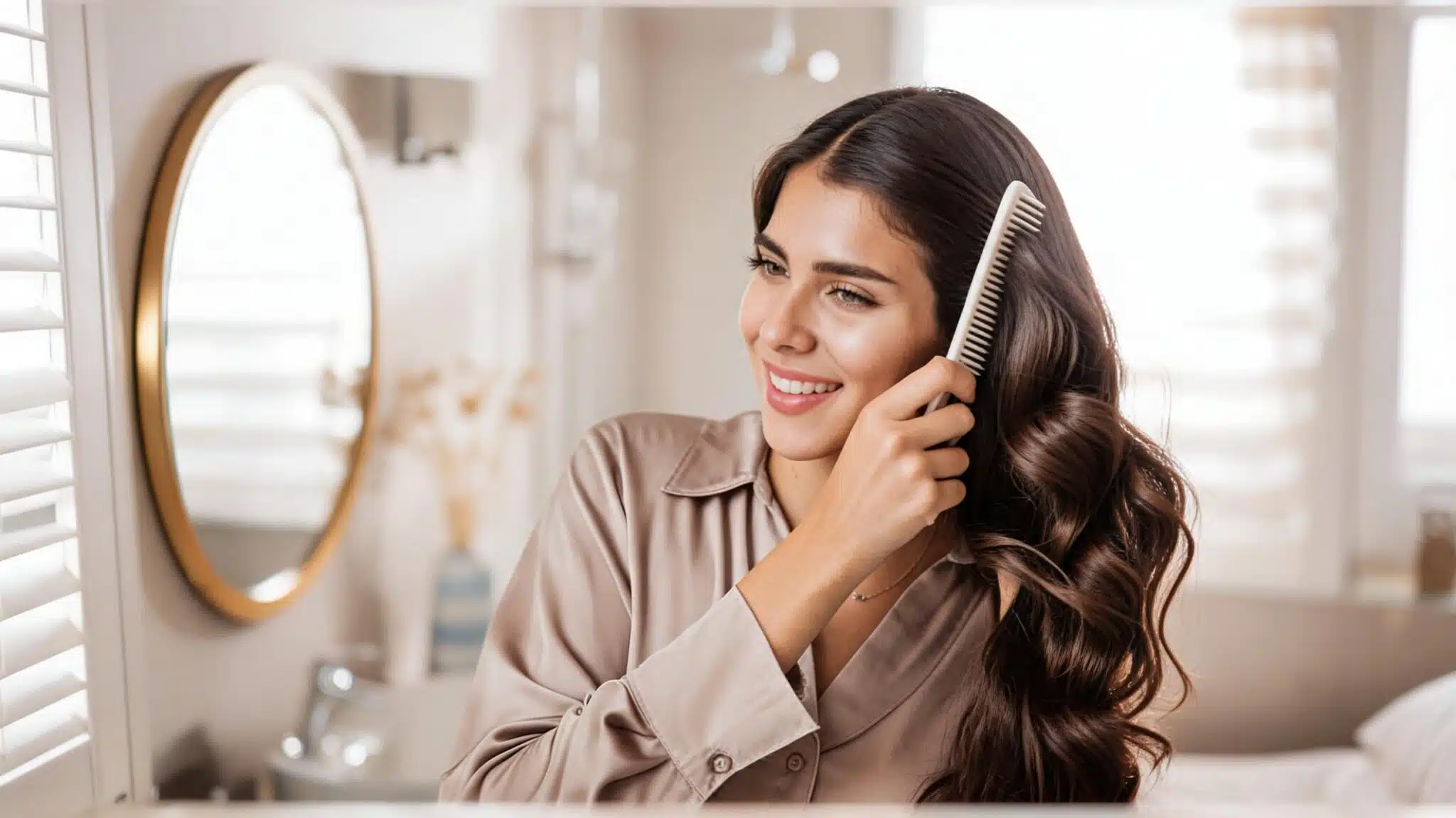
Wearing hair extensions can feel different at first. These everyday experiences explain what to expect during sleeping, washing, styling, and adjusting.
- First few days: You might notice slight tension near the roots, especially with fusion or micro-links, similar to a tight ponytail. This usually fades as you adjust.
- Sleeping: Loosely braiding hair before bed helps prevent tangling, especially for sew-ins and tape-ins.
- Washing: Most methods require washing hair in sections, brushing gently from the ends up, and avoiding heavy conditioner near the attachment points.
- Styling: Extensions generally hold curls and styles longer than natural hair alone, though heat should be kept away from bonds, tape, and beads.
- Getting used to them: Most people say the odd feeling wears off within a week as the extensions settle in with normal movement.
Most people adjust to extensions with time and proper care. Simple changes in daily routines can make wearing them more comfortable.
Do Hair Extensions Look Natural?
Hair extensions can look natural when the added hair matches the wearer’s color, texture, density, and haircut, and when attachment points remain hidden during normal movement.
A good color match is only one part of the result. Too little extension hair can leave a visible line between short natural ends and longer added hair, while too much can create bulk that does not match natural density.
Placement matters as well. Tabs, beads, rows, clips, and bonds need enough natural hair above and around them to stay covered during common hairstyles. The final cut then connects natural lengths with the extensions so the two do not fall as separate layers.
A useful test is movement rather than a still photo. Turning the head, changing the part, lifting the hair, and trying a usual ponytail can reveal visible attachment points or blending problems before leaving the salon.
Are Hair Extensions Bad for Your Hair?
Extensions are not automatically damaging, but repeated pulling, excessive weight, tight installation, poor removal, or unsuitable placement can stress natural hair. Dermatologists specifically warn that extensions and weaves can contribute to traction alopecia when they pull on hair for long periods.
| Possible Problem | Why It Can Happen | Safer Response |
|---|---|---|
| Root tension | Attachments are too tight or heavy | Ask for adjustment instead of waiting through pain |
| Breakage | Natural strands support too much weight | Match extension weight to hair density |
| Tangling | Grown-out attachments are neglected | Keep scheduled maintenance appointments |
| Thinning | Repeated tension affects the same areas | Change placement or pause extensions when advised |
Takeaway: Pain, headaches, bumps, broken hairs, or visible thinning deserve attention. Early adjustment is more sensible than assuming discomfort is simply part of wearing extensions.
If shedding or thinning continues after removal, a dermatologist can assess the scalp and hair rather than relying on salon advice alone.
What are Real People Saying About Their Hair Extensions?
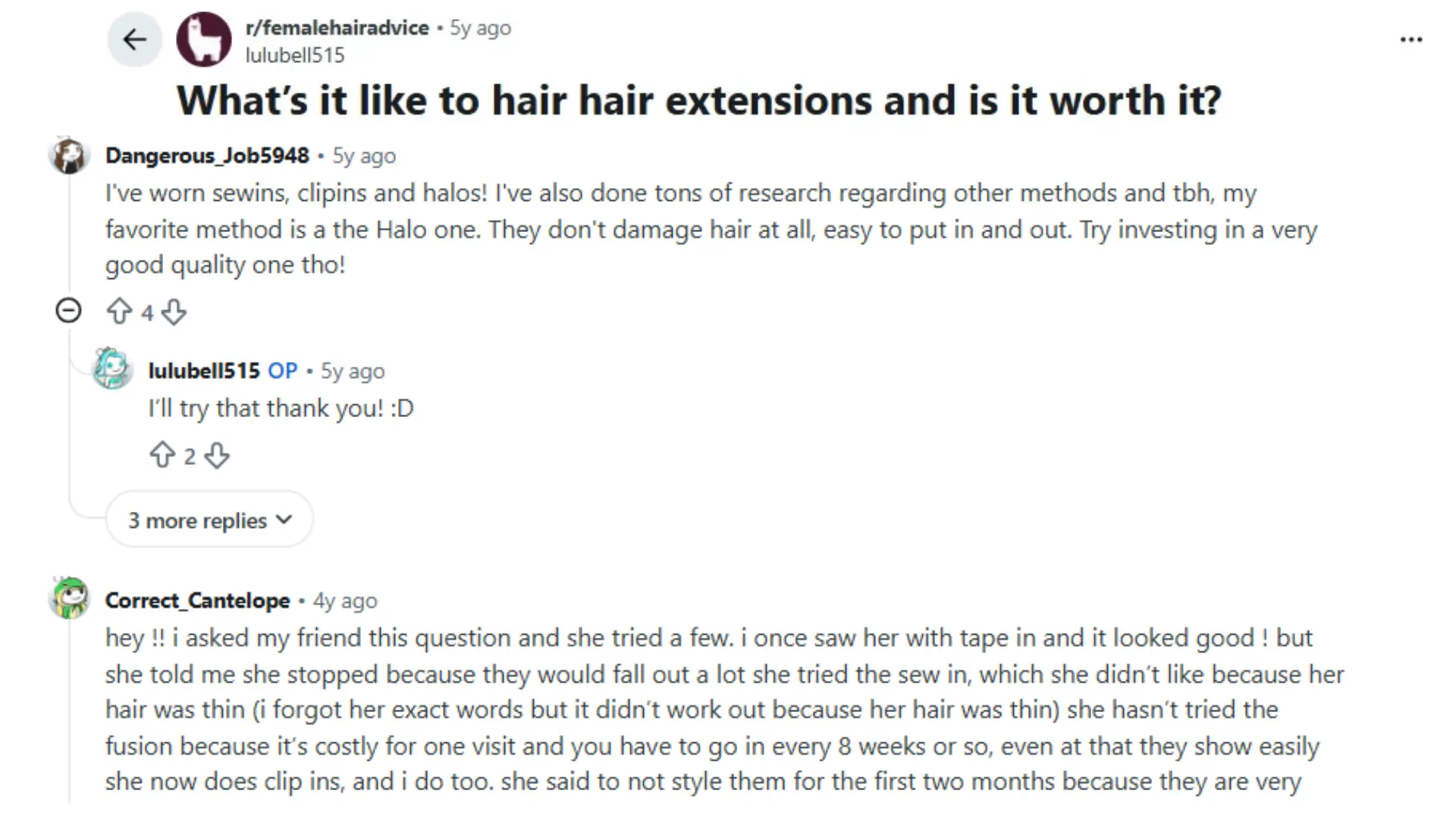
People discussing hair extensions often focus on how different methods fit into daily life. In the Reddit discussion shown above, users talk about the differences between clip-ins, weaves, tape-ins, and other extension methods.
Some mention that clip-ins are convenient because they can be added in the morning and removed at night, making them suitable for occasional use.
Others point out that methods like weaves or semi-permanent extensions take more time and maintenance but can last longer.
Users also discuss factors like cost, installation options, and choosing a method based on how often someone wants to wear extensions.
These comments reflect personal experiences and opinions, not professional advice.
How Do You Maintain Hair Extensions Properly?
Good maintenance protects both the added hair and the attachment points. The exact routine should follow the stylist and manufacturer because tape, beads, bonds, wefts, clips, and synthetic fibers do not all respond to products in the same way.
- Detangle gently and support the hair near installed attachment points.
- Start brushing lower lengths before working upward toward the roots.
- Keep conditioner and oily products away from adhesive or bonds when instructed.
- Wash the scalp without aggressive rubbing around rows, tabs, beads, or bonds.
- Dry roots and attachment areas carefully, rather than leaving them damp for long periods.
- Secure long hair loosely at night to reduce tangling.
- Attend move-up or maintenance appointments before attachments become overly grown out.
A simple, consistent routine is more useful than adding many products. Care should protect attachment strength, prevent tangles, and reduce unnecessary pulling on natural hair.
Wrapping Up
Hair extensions make more sense once the focus moves away from length alone and toward the attachment holding that extra hair in place. Knowing how hair extensions work helps set realistic expectations for comfort, blending, washing, styling, maintenance, and natural-hair care.
I would treat the first appointment as a fit decision, not simply a beauty appointment. You should know where the attachments will sit, how often they need attention, what the ongoing cost looks like, and which signs mean something needs adjusting.
Temporary pieces can suit occasional changes, while longer-wear systems ask for more commitment. If extensions are being considered, bring everyday hairstyle and maintenance questions to the consultation before choosing a method
Frequently Asked Questions
What is the Definition of Hair Extensions?
Hair extensions are strands or wefts of real or synthetic hair attached to natural hair to add length, volume, or color variation.
How Do Permanent Hair Extensions Work?
“Permanent” usually refers to methods like fusion or micro-links that stay in for months rather than being removed daily, though they still need periodic maintenance and eventual removal.
Can Hair Extensions Damage Natural Hair?
They can if the weight is too heavy, the installation is poor, or care instructions aren’t followed, but well-fitted extensions with proper maintenance shouldn’t cause lasting damage.
How Long Do Hair Extensions Usually Last?
This depends on the method, ranging from several months of occasional wear for clip-ins to 3–4 months of continuous wear for fusion or micro-links.
Can You Wash Hair Extensions?
Yes, most methods can be washed, though the frequency, products, and technique vary depending on whether they’re clipped in, taped, sewn, or bonded.