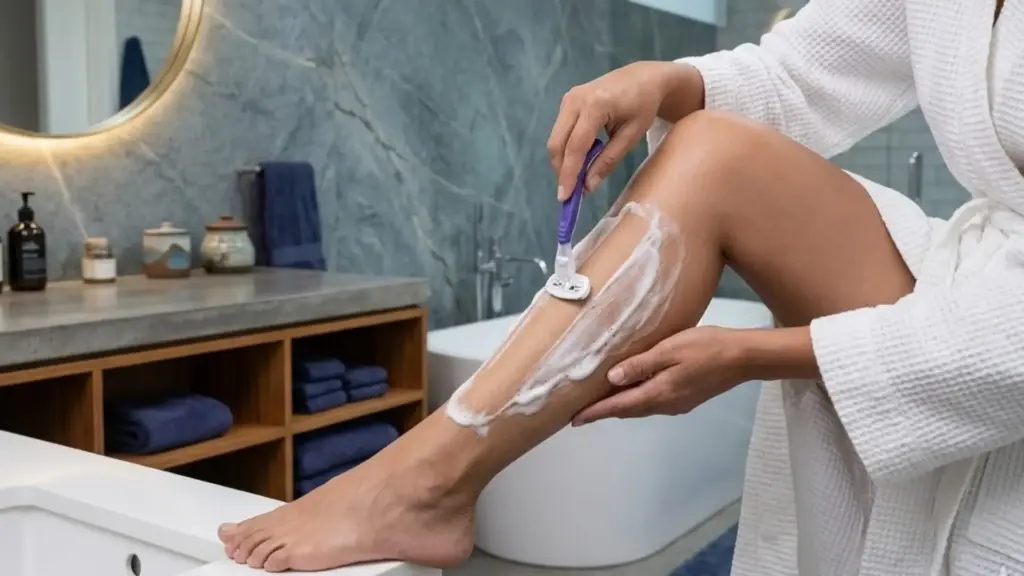
You finish shaving; everything feels smooth for about 30 minutes… then the itch hits like clockwork.
That slow-building, maddening tingle that makes you regret ever picking up a razor. Turns out it’s not “just sensitive skin” or bad luck; it’s your immune system screaming.
The worst part? Most people treat every kind of post-shave irritation the same way and stay stuck in the cycle forever.
In this blog, I’m breaking down exactly why your skin starts to itch after shaving, how to stop it in minutes, and the simplest shaving routine that keeps the itch gone for good.
Why Your Skin Becomes Itchy After Shaving
Every time a razor moves across your skin, it does more than cut hair. Each stroke disrupts your skin’s protective lipid barrier, the thin layer of natural oils that keeps your skin resilient and hydrated.
Once that barrier is compromised, your immune system interprets it as a minor injury and releases histamine in the area.
Those histamines trigger inflammation, and inflammation is what causes that familiar itch. This is why you often feel itchy an hour or two after shaving and not immediately during it.
What catches most people off guard is that not all post-shave irritation is the same thing.
There are 3 conditions that shaving can trigger, and knowing which one you are experiencing matters because each one behaves differently.
- Razor burn is surface-level redness and stinging caused by excessive friction, usually from a dull blade or shaving without shaving cream. It’s not an infection and typically fades within a day or two.
- Razor bumps form when freshly cut hair curls back into the skin instead of growing outward. The skin reacts with a small, raised, inflamed bump. People with curly or coarse hair are significantly more prone to this.
- Folliculitis is when the hair follicle itself becomes infected, most often by bacteria. The American Academy of Dermatology states that it produces red, acne-like pustules that can be itchy and painful, and unlike razor burn, it does not resolve quickly on its own.
In my work with clients, razor burn accounts for the overwhelming majority of post-shave complaints, and it is the easiest of the three to fix.
But knowing the difference means you are not treating an infection the same way you would treat simple friction irritation, which is a mistake I have seen cause weeks of unnecessary discomfort.
How to Stop Itching After Shaving?
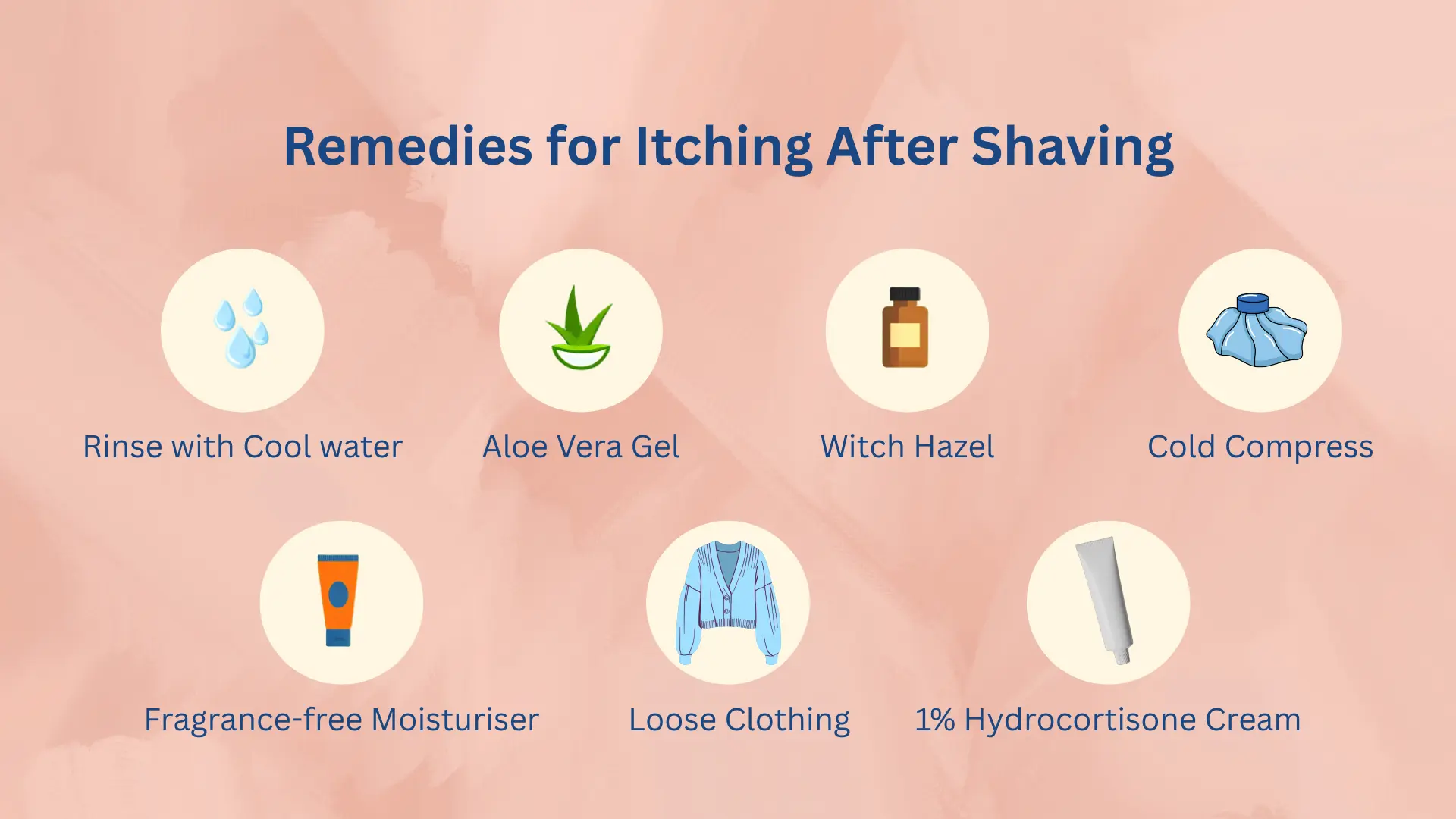
Freshly shaved skin often reacts before it settles. The right first steps can be the difference between quick relief and hours of irritation. These techniques work best when applied in order, starting immediately after you put the razor down.
1. Rinse the Area with Cool Water First
After you put the razor down, the first move is simple and free. Rinse the shaved area with cool water for at least 30 seconds.
Cool water lowers the skin’s surface temperature, tightens the capillaries that the blade has aggravated, and slows the histamine release before the itch has time to build.
The word cool matters here because hot or warm water does the opposite; it keeps pores open and worsens the inflammatory response.
Once you have rinsed, pat the area dry with a clean soft towel. Never rub. Rubbing puts friction back onto skin that has already had more than enough of it.
2. Apply Pure Aloe Vera Gel or Witch Hazel
Aloe vera is the first thing I reach for whenever a client comes in with post-shave irritation, and there is solid science behind why it works.
Research compiled by the National Institutes of Health confirms that its gel contains anti-inflammatory compounds.
Aloe vera gel contains bradykinase, which actively reduces skin inflammation on contact, alongside high water content that helps restore moisture to a barrier the razor has just stripped.
But you need to look out for the product quality. Many green-tinted gels on the shelf contain alcohol and synthetic fragrance, both of which will compound the irritation rather than calm it.
Look for a product that lists Aloe barbadensis leaf juice as the first ingredient. I keep a tube in the refrigerator at home and in the studio. That extra chill on contact makes a noticeable difference.
If you do not have aloe on hand, witch hazel is an excellent second option. It is an astringent with natural anti-inflammatory properties that tightens pores and reduces redness quickly.
Choose an alcohol-free version. Many standard drugstore witch hazel formulas contain alcohol, which will sting freshly shaved skin.
3. Hold a Cold Compress on the Area
If rinsing has not brought enough relief on its own, a cold compress is your next step. Fold a clean cloth, run it under cool water, wring it out gently, and hold it against the shaved area for around 10 minutes.
The sustained contact draws heat out of the skin, reduces localized swelling, and calms the nerve endings responsible for sending the itch signal to the brain.
It works on the same principle as pressing something cool against a minor burn. For areas like the underarms or the bikini line, where rinsing under running water is not always practical, this is often the most accessible and immediately effective option.
One small variation you can make is adding a pinch of sea salt to the water before soaking the cloth, which may further support healing.
Sea salt has mild antiseptic and anti-inflammatory properties that can reduce redness, particularly on legs and the bikini line.
4. Moisturize Right Away with a Fragrance-Free Product
Right after shaving, the skin is at peak moisture loss. The lipid barrier has been disrupted, and without support, dryness sets in quickly, and the itch intensifies as the skin begins to tighten.
A fragrance-free, alcohol-free moisturizer or natural oil applied while the skin is still slightly damp helps seal hydration in before it can evaporate.
Ingredients worth looking for include shea butter, jojoba oil, sweet almond oil, and hyaluronic acid.
Hyaluronic acid is particularly effective on freshly shaved facial skin because it draws moisture into the skin without adding any weight or clogging pores.
Coconut oil works well on legs and arms, but is best avoided near the face as it can clog pores.
Whatever you reach for, fragrance-free is the one requirement you cannot skip on freshly shaved skin.
5. Use 1% Hydrocortisone Cream with Caution
When aloe and moisturizer are not enough, and the itch is persistent and disruptive, an over-the-counter 1% hydrocortisone cream can help.
It works by suppressing the localized inflammatory response at the skin’s surface, bringing down redness and itch faster than soothing agents alone.
According to MedlinePlus, it should be applied in a thin layer and only for short periods, as prolonged use can thin the skin over time.
Do not apply it to open wounds, infected areas, or near the genital area if there is any discharge present. It is a useful backup for acute flare-ups, not a routine step in your post-shave care.
6. Wear Loose Clothing and Do Not Scratch
One of the most overlooked causes of prolonged itch is what goes onto the skin after shaving, rather than what is applied to it.
Tight clothing creates friction against freshly shaved follicles, and that repeated mechanical irritation is often what keeps the itch alive hours after you have put the razor down.
Wear loose, breathable cotton for at least two to four hours post-shave and let the area breathe as much as possible.
As for scratching, you MUST resist it. Scratching sensitized skin introduces bacteria, worsens the inflammation, and can turn a manageable surface irritation into something that takes far longer to calm down.
If the urge is strong, a cool compress placed over the area is always the better response.
How to Stop Itching After Shaving in Sensitive Areas
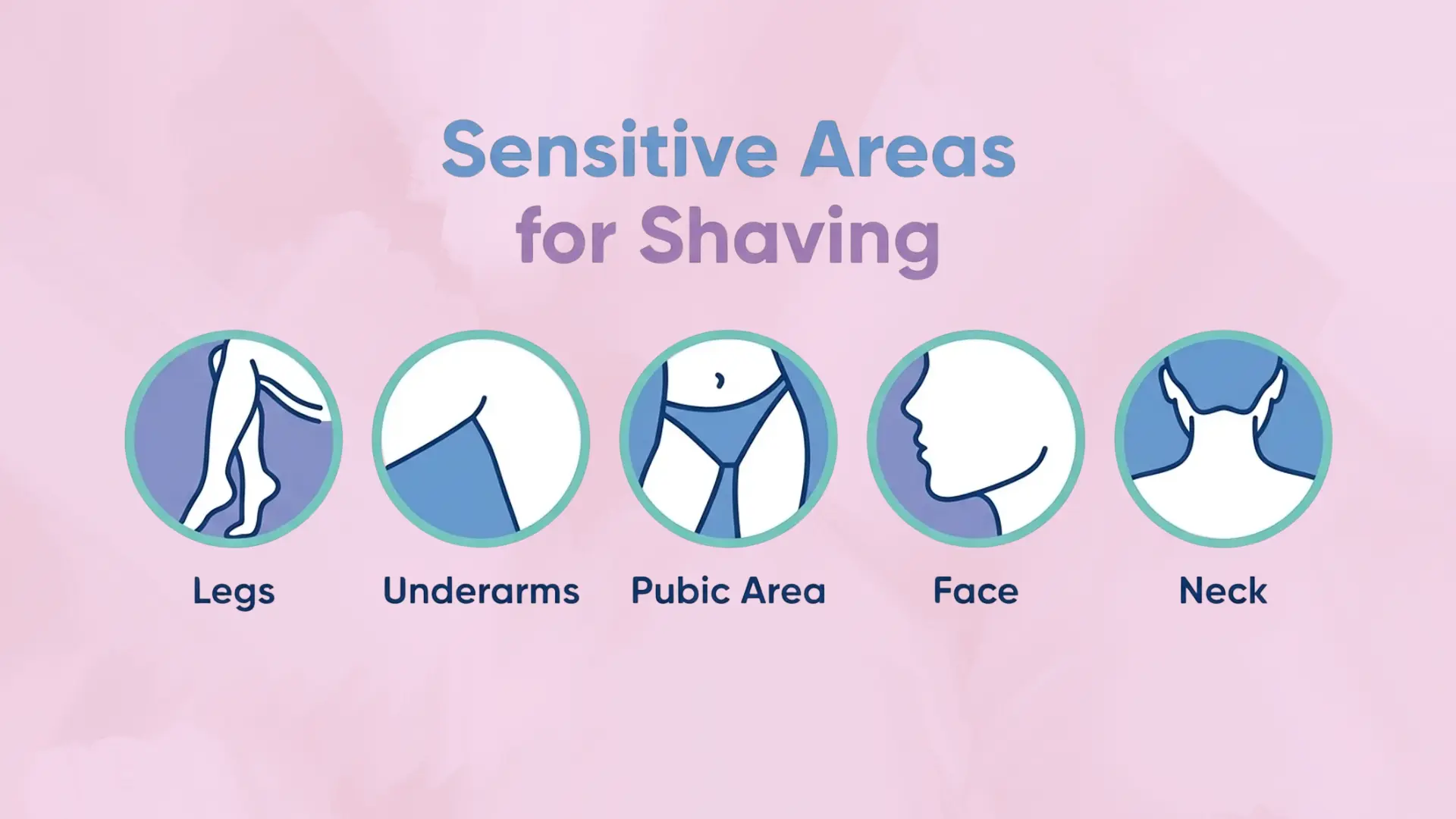
Sensitive areas have thinner skin, trickier hair growth patterns, and far less tolerance for shaving errors. The same technique that works fine on your legs can cause days of irritation when applied to the underarms or bikini line. Each zone needs a slightly different approach.
1. Legs
Legs are the most commonly shaved area and also the most forgiving when the technique is decent. Always shave at the end of your shower, never at the start.
By that point, the hair is softened, the skin is warm, and the razor glides rather than drags. Moisturize immediately after, while the skin is still slightly damp.
The ankles and knees deserve extra attention because the skin there sits directly over bone with little cushion underneath, making nicks and irritation far more likely.
Do not apply fragranced lotions, retinol, or AHA exfoliants directly onto freshly shaved skin. The barrier is open, and these ingredients will absorb too aggressively, causing stinging and prolonged redness.
2. Underarms
Underarm skin is particularly reactive after shaving. Research published on PubMed found that shaving the armpit significantly enhances histamine-induced itch sensitivity, meaning the skin is primed to overreact to anything applied to it after the razor.
Shave downward in the direction the hair grows and avoid going over the same patch more than once. After shaving, let the area settle before applying anything.
Do not apply deodorant or antiperspirant immediately after shaving. Most formulas contain alcohol, fragrance, and aluminum compounds that will sting and inflame freshly shaved skin.
Wait at least 2 to 3 hours and choose a fragrance-free formula when you do.
3. Bikini Line and Pubic Area
This is the area my clients ask about most, and honestly, it is the one that goes wrong most often because people apply the same technique they use on their legs and expect the same result.
The skin is thin, the hair is coarser, and the environment is warm and enclosed, which prolongs irritation here more than anywhere else.
Always trim longer hair with a small clipper before using a razor. Use a clean, dedicated razor for this area and replace it frequently. Again, shave in the direction of hair growth only.
Note: Avoid coconut oil near the vaginal area as it can disrupt natural pH balance. Never use retinoids, alcohol-based products, or anything with synthetic fragrance on this zone post-shave.
4. Face and Neck
Facial hair rarely grows in one uniform direction, and the neck is where most people get it wrong.
Identify which direction your hair grows by pulling the skin taut in front of a mirror, and always shaving in that direction to reduce irritation and prevent ingrown hairs.
Apply shaving cream and let it sit for two to three minutes before the first stroke. For people prone to sensitivity, a single-blade or safety razor is worth considering.
Research from PMC found that safety razors produced noticeably less post-shave skin redness compared to multi-blade cartridge razors.
Apply a fragrance-free SPF moisturizer before going outdoors after shaving your face. Freshly shaved skin has lost its outermost protective layer and is significantly more vulnerable to UV damage.
People who regularly manage facial grooming often find that pairing careful shaving habits with complementary treatments such as eyebrow tinting reduces how often they need to shave or tweeze around the brow area, lowering cumulative skin irritation over time.
The Right Shaving Routine to Prevent Itching After Shaving
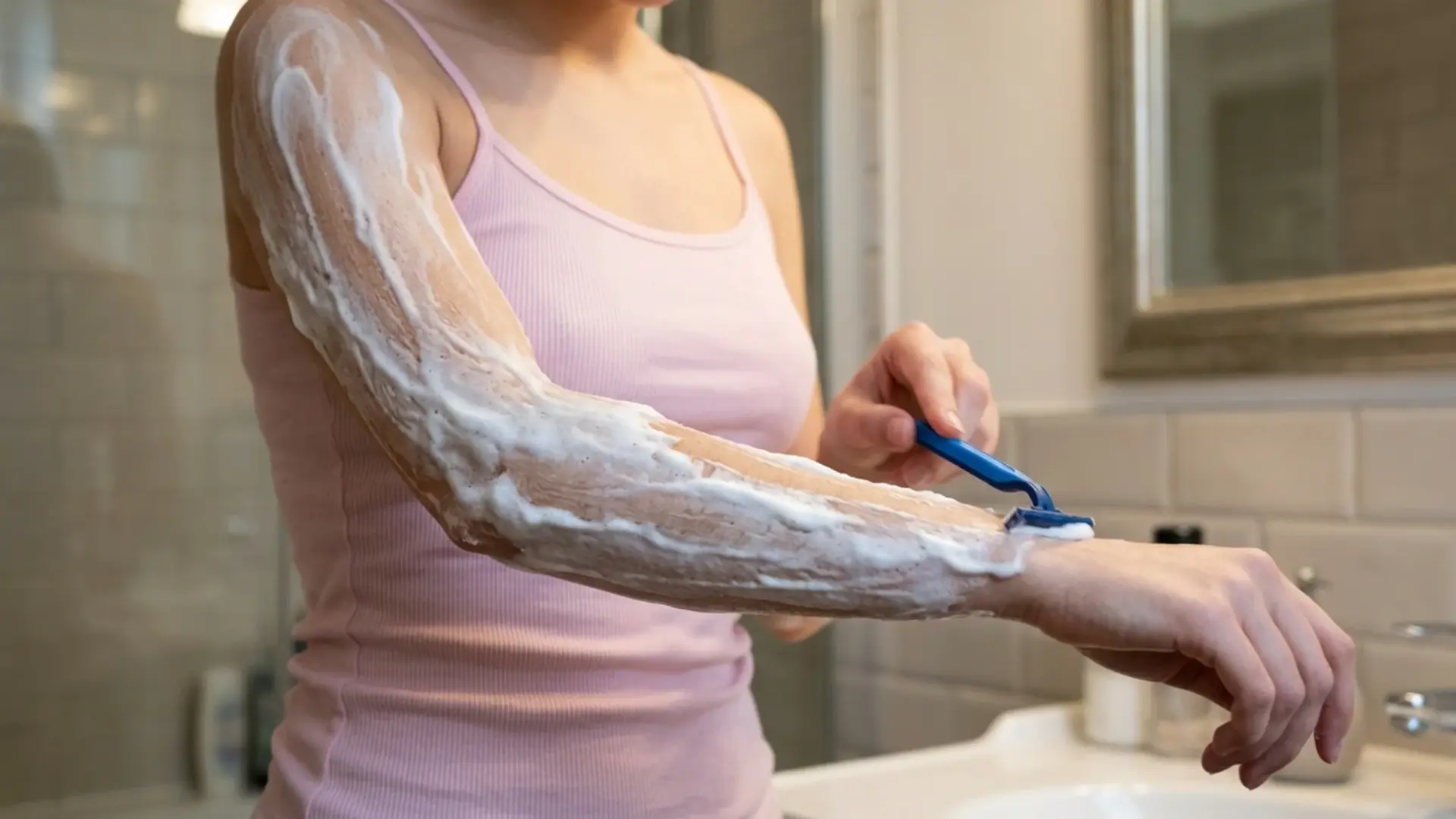
A consistent routine before, during, and after shaving removes almost every condition that causes irritation in the first place.
- Soften the Skin First: Shave at the end of a warm shower, not the beginning. Five minutes in warm water is enough to open the follicles and soften the hair shaft, so the blade cuts cleanly rather than dragging.
- Exfoliate the Day Before, Not the Same Day: A gentle scrub or washcloth 24 hours before shaving clears the dead skin cells that trap hairs and cause bumps. Exfoliating on the same day leaves the skin too sensitized before blade contact.
- Apply Shaving Cream and Wait: A fragrance-free, alcohol-free cream or gel needs 2 to 3 minutes on the skin to work. Rushing past this step is one of the most common reasons people experience irritation. Look for formulas with aloe vera, glycerin, or shea butter. The American Academy of Dermatology suggests that applying a moisturizing shaving cream is one of the most effective steps for preventing razor bumps.
- Shave with The Grain: Always shave in the direction of your hair growth using short strokes, and rinse the blade after every pass. Pressing hard is never necessary. Let the blade weight do the work.
- Moisturize Immediately After Rinsing: Apply a fragrance-free lotion or gentle oil while the skin is still slightly damp to seal the barrier before moisture loss begins.
- Shaving Too Soon After Other Skin Treatments: Using retinoids, chemical exfoliants, or self-tanning products within 24 hours before shaving significantly heightens the risk of barrier damage and prolonged redness. The skin needs time to stabilize between treatments.
Best Ingredients and Products to Soothe Itchy Skin After Shaving
Knowing which ingredients to reach for is just as important as any technique. Here is a practical breakdown of what actually works on post-shave skin, and where to find it without spending a lot.
| Ingredient | Why It Helps | Budget-Friendly Pick |
|---|---|---|
| Aloe Vera | Reduces inflammation and cools the skin on contact. Restores moisture to a disrupted barrier without clogging pores. | Seven Minerals Organic Aloe Vera Gel |
| Ceramides | Rebuilds the protective lipid layer that the razor strips away. Dermatologist-developed and gentle enough for daily post-shave use. | CeraVe Daily Moisturizing Lotion |
| Colloidal Oatmeal | A natural anti-itch agent that forms a protective film over sensitized skin and calms the inflammatory response. | Aveeno Daily Moisturizing Lotion |
| Allantoin | Promotes skin cell renewal and soothes micro-abrasions left by the blade. Found in many fragrance-free after-shave balms. | Check the label on any drugstore fragrance-free balm |
| Shea Butter | A rich occlusive that seals hydration into dry or coarse-hair-prone skin. Best for body areas like legs and arms. | Unrefined raw shea butter at most natural grocery stores |
Note: Avoid anything listing alcohol, synthetic fragrance, or menthol in the first five ingredients. Those three are the fastest way to turn mild irritation into a full flare-up.
Common Mistakes That Make Shaving Itch Worse
Most post-shave irritation is not about skin type. It is about habits that quietly compound the damage every single shave.
- Using a Dull Razor: A blade that has done more than five to seven shaves drags instead of cuts, multiplying friction with every stroke.
- Shaving Dry or Skipping Cream: No lubrication means direct blade-to-skin friction. Irritation is almost guaranteed.
- Shaving Against the Grain: This sharpens the cut edge of the hair, making it far more likely to curl back into the skin.
- Exfoliating on The Same Day: Scrubbing immediately before shaving leaves skin too raw and sensitized before the blade even touches it.
- Wearing Tight Clothing Right After: Fabric friction on open follicles is one of the most overlooked reasons itch lingers for hours.
- Storing the Razor in The Shower: Constant moisture breeds bacteria on blades, turning a routine shave into a potential source of folliculitis.
When to Consult a Dermatologist for Itching After Shaving
Most post-shave irritation is temporary and clears up with the right care within a day or two. But over the years, working with clients whose skin I got to know well, I learned to recognize when something was no longer just surface irritation.
There are certain signals your skin sends that are worth taking seriously, and knowing them can save you weeks of unnecessary discomfort.
- Redness and itch that persist beyond 5 to 7 days despite consistent at-home care. Normal razor burn does not linger this long.
- White or yellow pus-filled bumps form at the follicle site. If you notice small red bumps accompanied by pain, fluid drainage, or fever, reaching out to your healthcare provider promptly is the right step. These are signs of folliculitis that need targeted treatment.
- Spreading redness or warmth around the shaved area. Surface irritation stays localized. Warmth that spreads is a signal of infection.
- Bumps that keep coming back in the same spot, especially for people with coarser or curlier hair. Recurring ingrown hairs that do not resolve with technique changes can progress to scarring over time and require professional assessment.
- Burning after every single shave, even after you have changed your routine. This can point to contact dermatitis, an allergic reaction to a product ingredient, which a dermatologist can identify and treat properly.
Conclusion
The itch you feel after shaving is never random. It is a predictable response from skin that has been scraped, stripped, and left unprotected.
That predictability is actually good news because it means the fix is within your control. Most people do not need expensive products or complicated routines.
They need to stop repeating the two or three minor mistakes that keep the cycle going. Change the blade more often. Let the cream sit longer. Stop reaching for fragranced products on raw skin.
These are not dramatic shifts, but they compound over time, resulting in skin that genuinely stops reacting.
The difference between skin that itches for hours and skin that settles in minutes almost always comes down to what you did in the five minutes surrounding the shave itself.
Which shaving mistake from this list were you guilty of? Drop it in the comments below. You are probably not the only one.
Frequently Asked Questions
Does Hair Grow Back Thicker and Itchier After Shaving?
No. Shaving creates a blunt hair tip that feels coarser, but the hair itself does not change in thickness, texture, or growth rate.
How Long Does Post-Shave Itching Last?
Razor burn and mild itch typically resolve within a few hours to 2 days. If itching persists beyond 5 to 7 days or is accompanied by bumps, pus, or spreading redness, consult a healthcare provider to rule out folliculitis or infection.
Does Hair Removal Cream Cause the Same Post-Shave Itch?
Rarely. Chemical depilatories don’t cut hair or damage the barrier the same way, so the itch is usually minimal unless you’re allergic.
Can Switching from Razors to Electric Trimmers Stop Itching?
Yes, electric trimmers cut above the skin surface, significantly reducing barrier disruption. They are a strong option for chronically irritation-prone skin.