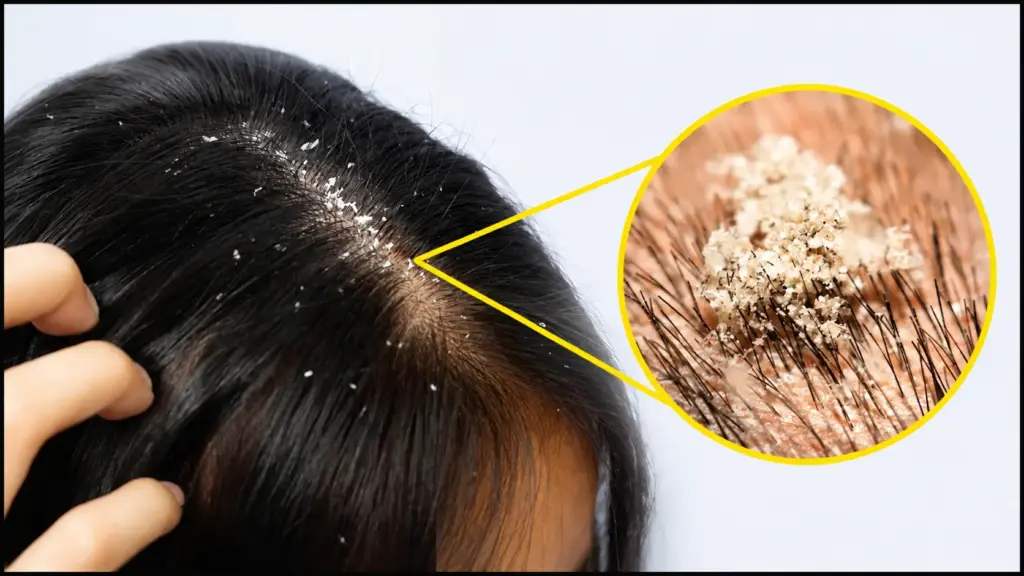
Have you ever looked at your hair after a wash and wished it felt softer, smoother, and healthier without spending more on another hair product?
That simple thought is why fermented rice water has become a popular choice among people looking for natural additions to their hair care routines.
Made by fermenting rice in water, this traditional hair rinse has gained attention for its potential to improve hair texture, add shine, and strengthen strands.
However, getting the best experience depends on how you prepare and use it. From fermentation time to proper dilution, small details can make a big difference in how your hair responds to this treatment.
What is Rice Water for Hair?
Rice water is the cloudy liquid left behind after soaking, boiling, or fermenting rice. It contains starch, amino acids, and trace vitamins that can coat the hair shaft, making strands feel smoother and easier to manage. Results vary by hair texture, existing damage, and how often you use it.
Fresh rice water is milder. Fermented rice water sits for a day or two first, which changes its chemistry and, according to most people who use it, gives a stronger effect on shine and strand strength
However, results can vary depending on hair texture, existing damage, and how frequently it is used.
Fresh rice water and fermented rice water are two common options. Fresh versions are usually milder, while fermented mixtures develop a stronger composition after sitting for a period of time.
It sits alongside other DIY hair treatments as a low-cost way to test what your hair responds to before committing to store-bought products.
Why Fermentation Changes What Rice Water Does
Fermentation lowers the pH of rice water and breaks down its larger proteins into smaller, more bioavailable amino acids and peptides, which the hair shaft can actually absorb rather than just sit on top of it.
This lines up with recent peptide research findings showing that fermenting rice breaks its protein down into smaller, more active peptide fragments.
In my own practice, I tell clients to think of fermentation as pre-digesting the protein. Fresh rice water sits on the strand. Fermented rice water gets absorbed into it.
That distinction matters if you already use protein treatments in your routine, since it changes what counts as too much.
One caveat worth repeating: rice water, fermented or not, works on the hair you already have. It does not speed up growth from the follicle. If shine and reduced breakage are your goal, it is a solid supporting tool. If hair growth is the goal, look elsewhere.
Benefits of Using Rice Water for Hair
Rice water is best treated as a supportive step in your routine rather than a fix that works overnight. These are the changes people notice most often.
- May Help Reduce Hair Breakage: The starch and trace proteins in rice water can coat the hair shaft, helping smooth the outer layer (the cuticle) and make strands more resistant to snapping during brushing or styling.
- Can Make Hair Feel Smoother and Softer: Many people notice hair feels easier to comb through and less rough to the touch after a rice water rinse, likely thanks to that same starchy coating.
- May Support a Healthier Scalp Environment: Used correctly (and not left on too long), rice water can be part of a clean scalp routine, since it doesn’t leave heavy residue the way some oils or creamy products can if buildup isn’t managed.
- Can Improve Hair Appearance: Shine, reduced frizz, and an overall healthier-looking texture are commonly reported benefits, though results vary depending on hair type and how consistently it’s used.
Rice water sits closer to a protein treatment than a moisturizing one, which is why pairing it with a richer conditioning treatment matters more than people expect.
How to Use Apple Cider Vinegar Rinse on Hair
There are two main approaches people use to make rice water: a quick soak and a full fermentation.
1. The Soaking Method (Quick Rice Water)
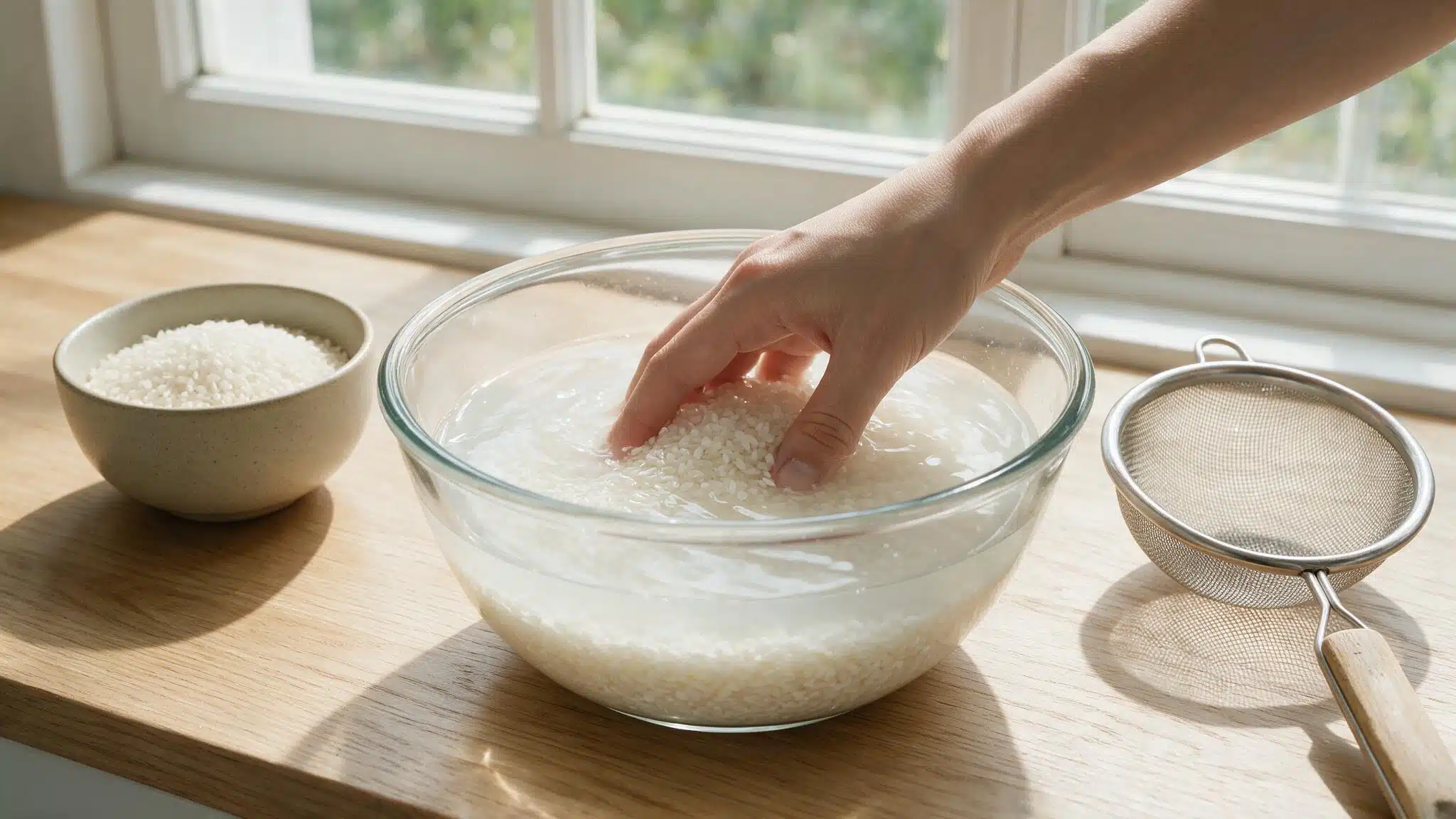
To get started with the rice,e you need to rinse half a cup of rice. This helps to remove the dust that’s on the surface of the rice. After you rinse the rice, put it in a bowl.
Add two to three cups of water to the bowl with the rice. Let the rice sit in the water for a while,e like 15 to 30 minutes. Every so often, swish the rice around in the water. You will notice that the water starts to look cloudy.
2. The Fermentation Method (Fermented Rice Water)
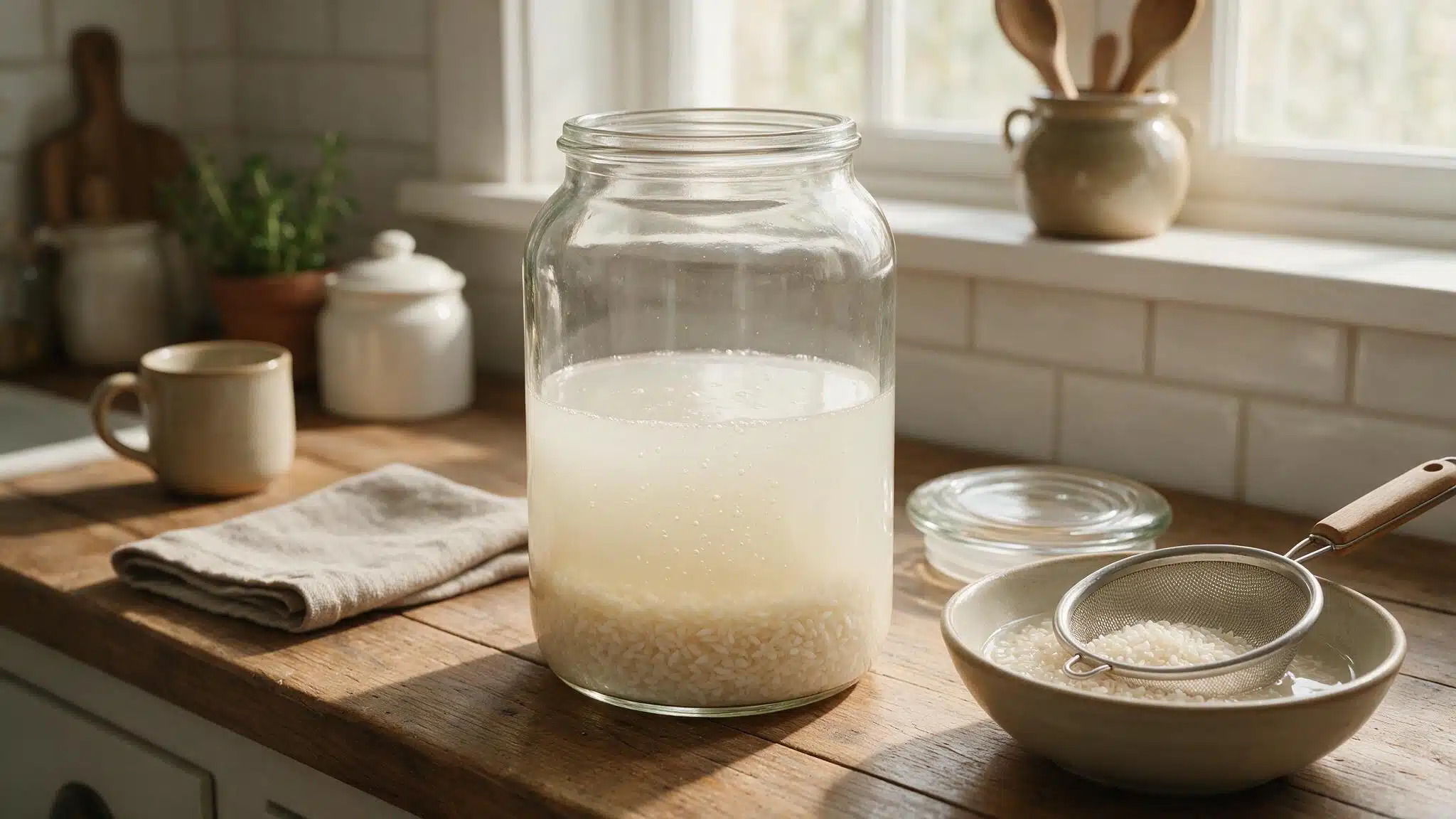
Follow the rinsing and soaking steps above, but instead of using the water right away, put the strained liquid in a jar with a cover and leave it at room temperature for 24 to 48 hours.
You will see bubbles, and the liquid will start to smell a bit sour, which means that the fermentation of the liquid is starting. The liquid will have a tangy smell; ll it will not smell bad.
3. Diluting Fermented Rice Water
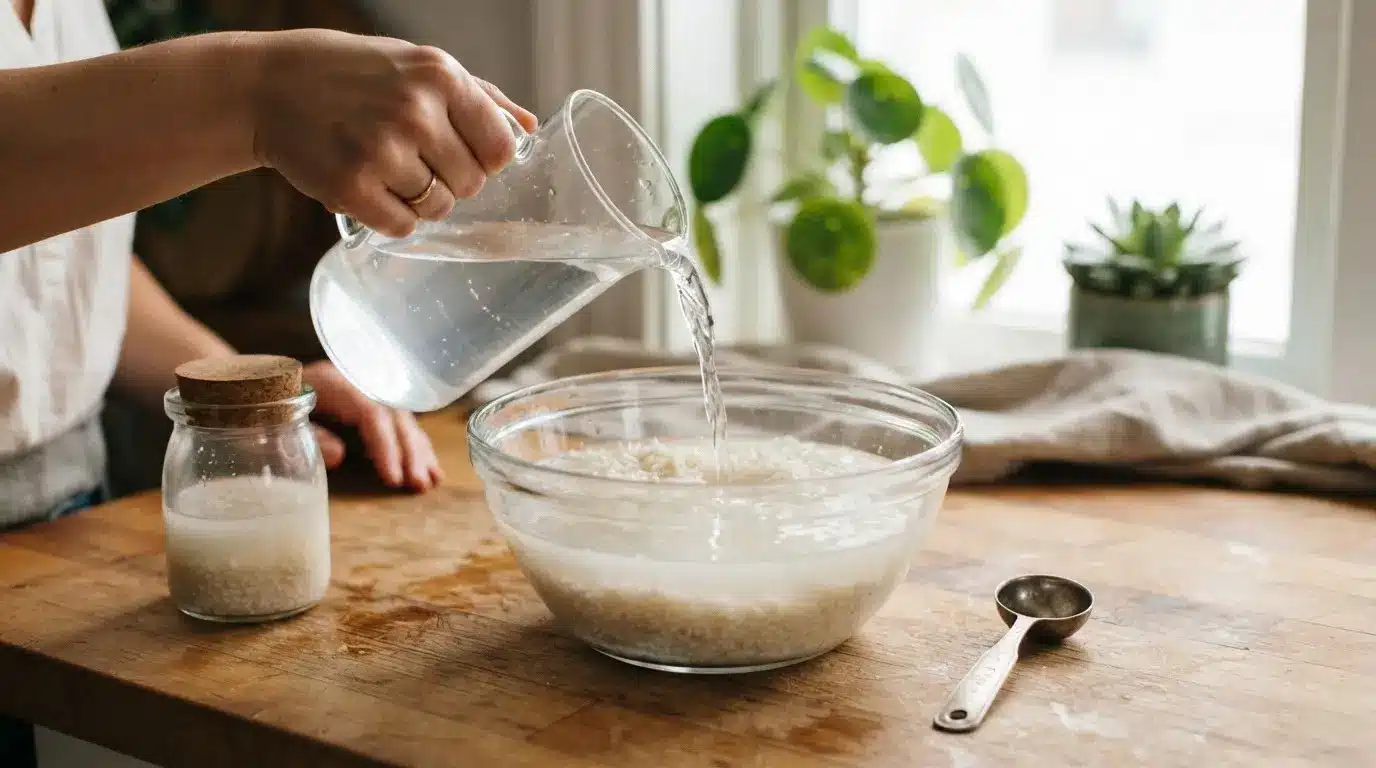
Fermentation makes the liquid more concentrated and acidic, so dilute it with plain water in a one-to-one ratio before applying it to your scalp.
This step matters most if you have a sensitive scalp, since undiluted fermented rice water can feel harsh or drying with repeated use.
Anyone who has tried a vinegar-based scalp rinse will recognize the same logic: acidity needs to be diluted before it touches the scalp, not after.
4. Adding Essential Oils
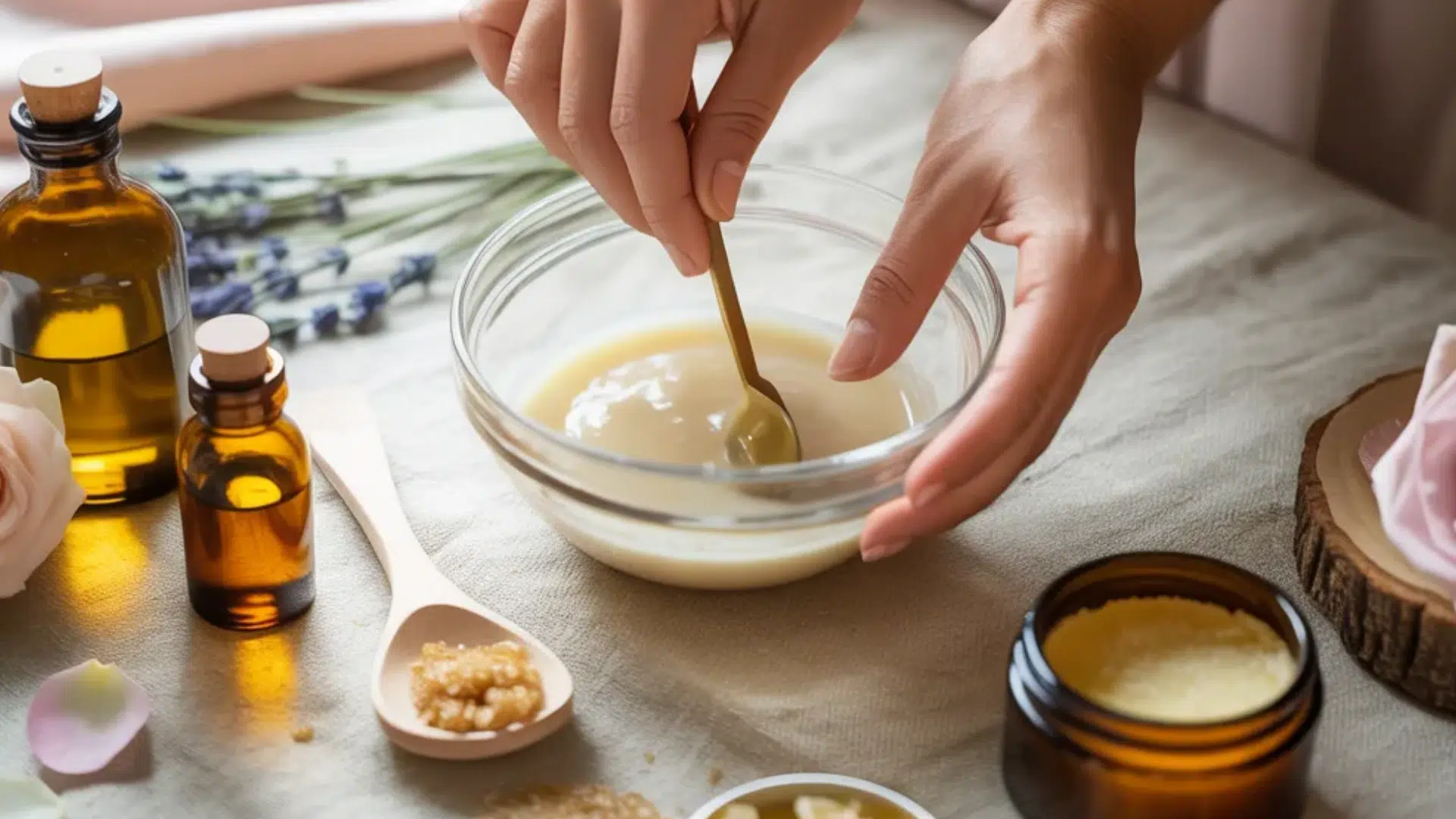
A few drops of lavender, rosemary, or tea tree oil can mask the fermented odor and provide additional scalp benefits.
Add the oil after diluting, and shake the mixture well before each use since oil and water separate naturally. For guidance on using them safely, an essential oil safety guide is a solid starting point.
A gentle routine, proper storage, and regular use are key when adding fermented rice water to your hair care habits.
How to Use Apple Cider Vinegar Rinse on Hair Step by Step
Using an apple cider vinegar rinse correctly can help refresh the scalp, remove buildup, and improve hair feel without causing unnecessary dryness. Follow these steps to apply it safely and effectively
Step 1: Wash Your Hair Normally: Wash your hair with shampoo if needed to remove oil or buildup. Remove excess water before applying the ACV rinse for even distribution.
Step 2: Apply the ACV Mixture: Apply the diluted ACV mixture primarily to your scalp, then spread it through your hair lengths as needed. Avoid contact with your eyes to prevent irritation.
Step 3: Let It Sit Briefly: Leave the rinse on your hair for a few minutes before washing it out. Avoid keeping concentrated mixtures on your scalp for too long.
Step 4: Rinse Thoroughly: Rinse your hair well with clean water to remove residue and reduce the vinegar smell. Use a moisturizing conditioner afterward if your hair feels dry.
Using the right amount of diluted apple cider vinegar and following proper timing can help make the rinse a comfortable addition to your hair care routine.
How Often Should Rice Water Be Used on Hair?
Most hair types do well with fermented rice water once a week, while dry or protein-sensitive hair should stretch that to every 10 to 14 days. Finding the right frequency depends on your hair’s moisture level and the concentration of your mixture.
| Hair Type | Recommended Use |
|---|---|
| Normal hair | Once weekly |
| Dry hair | Every 10 to 14 days |
| Oily scalp | Once weekly |
| Coarse hair | Adjust based on response |
If hair feels stiff or rough after a session, that is a sign to add more moisture or space treatments further apart. Since the research on this doesn’t support faster growth from more frequent use, a steady weekly rhythm does more for your hair than reaching for it daily. A steady schedule beats a strong one.
Who Should Avoid Using Rice Water on Hair Frequently?
People with very dry hair, sensitive scalps, or protein-sensitive strands should limit or avoid frequent use of fermented rice water. A few groups in particular should be cautious.
- Very dry hair: the starch and protein content can pull moisture out with frequent use.
- Sensitive or easily irritated scalps: the acidity in fermented rice water can trigger a reaction.
- Protein-sensitive hair: common in curly or chemically treated hair that already carries too much protein in its routine.
Patch testing a small section of scalp or skin before your first full application is a simple way to catch a reaction early.
How Long Can Homemade Rice Water Be Stored?
Fresh rice water is best used the same day, while fermented rice water can be refrigerated and kept for up to about a week. Homemade batches do not contain preservatives, so shorter storage windows are safer.
- Keep it in a clean airtight container.
- Refrigerate fermented rice water.
- Check smell and appearance before use.
- Discard if mold appears.
Avoid storing large amounts for long periods because homemade mixtures do not contain preservatives. Fresh preparation reduces the risk of using spoiled products.
Fermented Rice Water vs Other Hair Treatments: Which Works Better?
Comparing fermented rice water with other options helps you understand where it fits in a balanced hair care routine.
| Treatment | Main Purpose | Best For | Limitation |
|---|---|---|---|
| Fermented Rice Water | Strengthens strands and adds shine | Weak, damaged, or dull hair | Can build up protein if overused |
| Plain Rice Water | Light conditioning and softness | Occasional light hydration | Fewer nutrients than fermented version |
| Protein Hair Masks | Deep repair for damaged hair | Chemically treated or heat-damaged hair | Can feel heavy if overused |
| Deep Conditioners | Adds moisture and softness | Dry, frizzy hair. | Doesn’t add protein strength |
| Scalp Oils | Nourishes scalp and roots | Dry scalp or hair thinning concerns | Doesn’t repair strand damage |
It leans more toward a protein treatment than a moisturizing one, which is why balancing it with regular conditioning matters.
Tips for Safe and Effective Use
Using fermented rice water correctly can help you get the most from this traditional hair care practice while reducing the chances of irritation or dryness. Follow these simple tips to maintain scalp comfort and support healthy-looking hair.
- Always do a patch test on your scalp before your first full application, especially if you have sensitive skin.
- Store fermented rice water in the refrigerator and use it within a week to reduce the risk of bacterial growth.
- Alternate fermented rice water treatments with a moisturizing conditioner to help prevent protein overload and maintain hair balance.
- Use filtered or boiled water when preparing your rice water to minimize impurities that may affect scalp health.
- Avoid leaving fermented rice water on your hair for longer than recommended, as extended use may cause dryness or scalp discomfort.
These precautions can make fermented rice water a safer addition to your hair care routine while helping you maintain balanced, manageable hair.
Final Thoughts
Rice water can be a simple addition to a hair routine when it is prepared and applied with care. I believe the biggest takeaway is that consistency and balance matter more than frequent use of strong mixtures.
You can start with a mild preparation, follow the proper application steps, and adjust as needed based on how your hair feels.
Learning how to use rice water for hair helps you avoid common mistakes while creating a routine that suits your needs.
I recommend trying small changes first and paying attention to your results. Share your experience in the comments or check related hair care tips for more ideas.
Frequently Asked Questions
Can I Use Fermented Rice Water on Colored Hair?
Yes, fermented rice water is generally safe on colored hair. The one exception is black or purple rice, which can tint very light or bleached strands slightly, since the pigment in the grain can transfer during a rinse.
Does Fermented Rice Water Help with Hair Growth?
No, there is no reliable evidence that fermented rice water speeds up hair growth from the root. What it can do is strengthen existing strands and reduce breakage, which helps hair hold on to the length it already has.
Can Fermented Rice Water Damage Hair?
It can, if it is used undiluted or too often. Overuse without proper dilution or follow-up conditioning leads to protein buildup, making hair feel dry, stiff, or brittle rather than soft.
How Long Should I Leave Fermented Rice Water in My Hair?
A few minutes up to about 20 minutes is enough for most hair types. Leaving it on longer does not provide additional benefit and increases the risk of dryness, especially if the mixture was not diluted first.
Can I Use Rice Water Every Day?
No, daily use is one of the most common mistakes people make with this treatment. Once a week for most hair types, or every 10 to 14 days for dry or protein-sensitive hair, is a safer starting point.