Dry, frizzy, or tired-looking hair can make even a good hair day feel impossible, especially after weeks of heat styling, coloring, sun exposure, or product buildup.
Before buying another costly treatment, it is worth looking at what simple kitchen ingredients can do for hair that needs extra care.
A homemade hair mask can help add moisture, soften rough texture, support shine, and leave strands feeling smoother when the ingredients match the right hair concern.
The real trick is knowing what your hair actually needs. Hair that feels brittle needs a different kind of care than hair that turns greasy by the next morning.
Fine, curly, damaged, and oily hair all react differently to natural ingredients. With the right recipe, a simple mix from your kitchen can feel like a small reset for stressed hair.
What Makes a DIY Hair Mask Effective?
A homemade hair mask works when each ingredient has a clear function. Honey is a humectant, meaning it draws moisture toward the hair shaft and holds it there.
Coconut oil and olive oil act as emollients: they coat the cuticle and help prevent water loss, which is why rough strands feel smoother after an oil-based mask.
Eggs and yogurt add temporary protein, which can support weak or damaged areas and reduce breakage.
Ingredients like castor oil and rosemary oil are primarily used on the scalp, where they may support circulation around the follicle.
Homemade masks have real limits worth knowing. Kitchen oils mostly sit on the hair surface.
DIY masks still help, but consistent weekly use over several weeks is where the results show up, not after a single application.
Homemade Hair Masks for Every Hair Concern
Homemade hair masks can target dryness, frizz, breakage, dullness, oiliness, and scalp buildup when the ingredients are matched to the problem. The best option depends on hair type, texture, and how the hair feels before treatment.
1. Avocado and Honey Deep Conditioning Mask
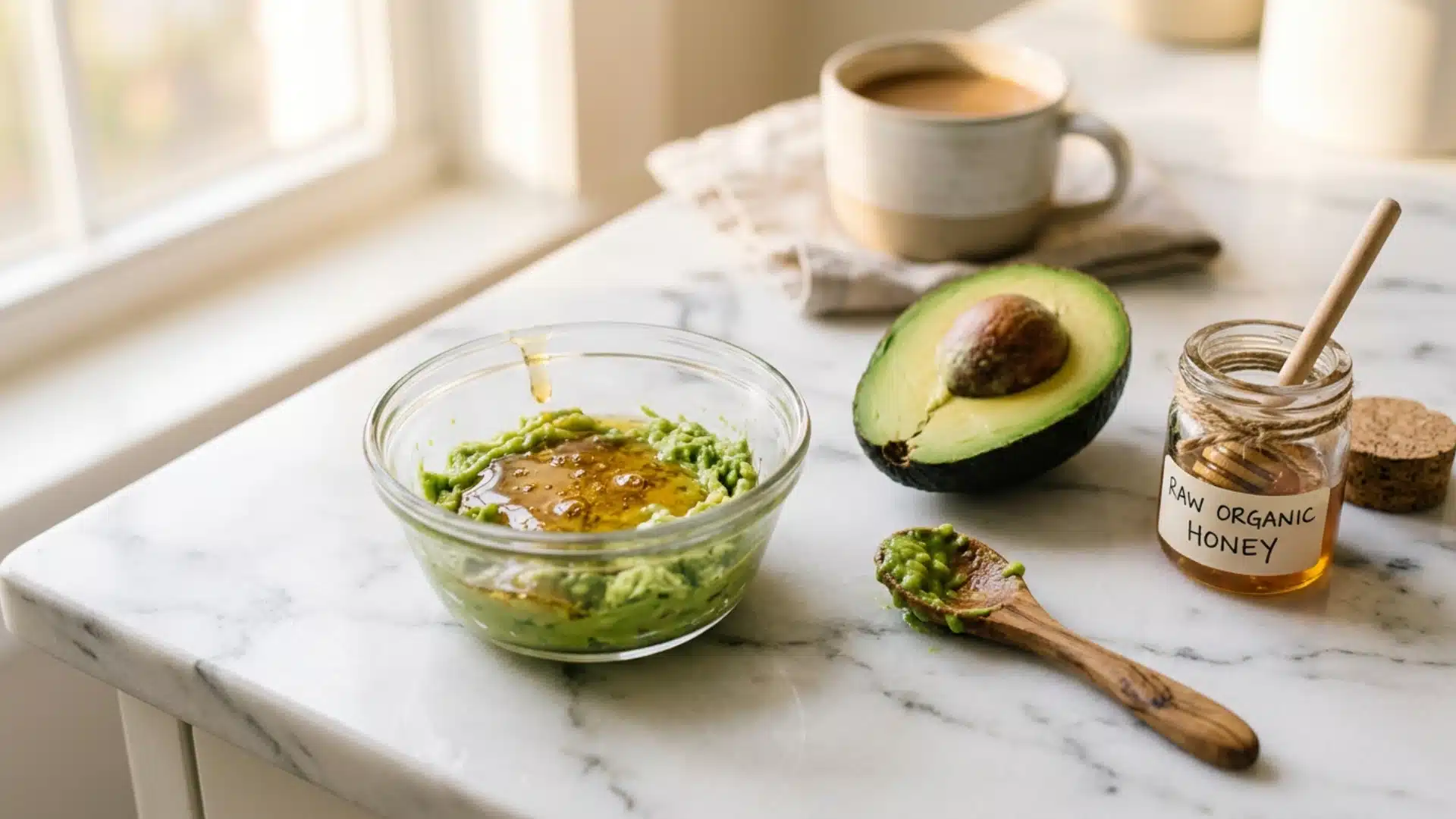
Best for: Dry hair, brittle ends, color-treated hair.
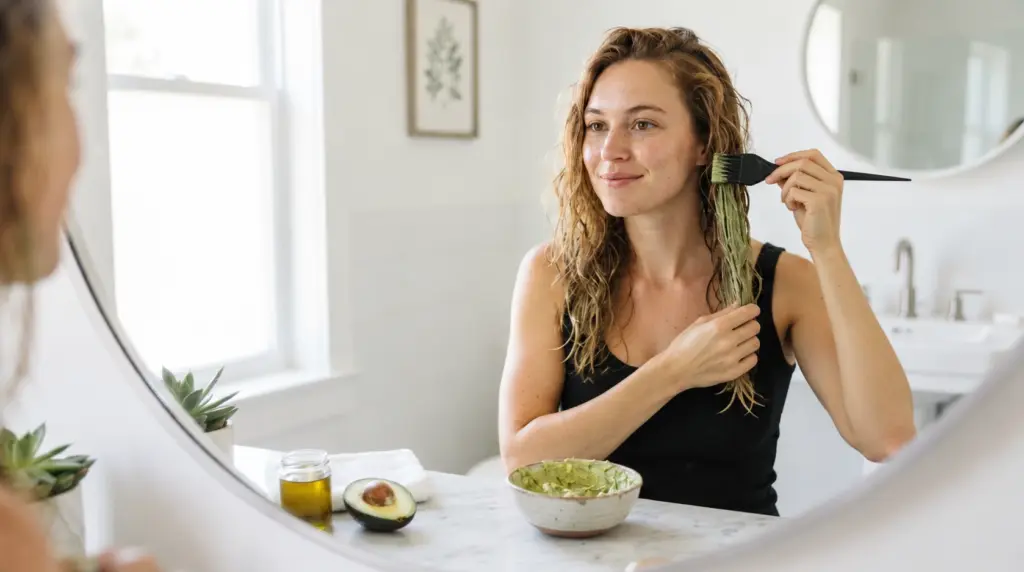
Avocado and honey work well when hair feels rough, dull, or weak near the ends. Avocado adds softness and coats dry strands, while honey helps pull in moisture for a smoother feel.
Steps:
- Mash half a ripe avocado until smooth.
- Mix with 2 tablespoons of raw honey.
- Apply to damp mid-length and ends.
- Cover for 30 minutes.
- Rinse with lukewarm water, then shampoo once. Use weekly when needed.
Use weekly for dry or color-treated hair, or every two weeks for maintenance.
2. Coconut Oil and Egg Repair Mask
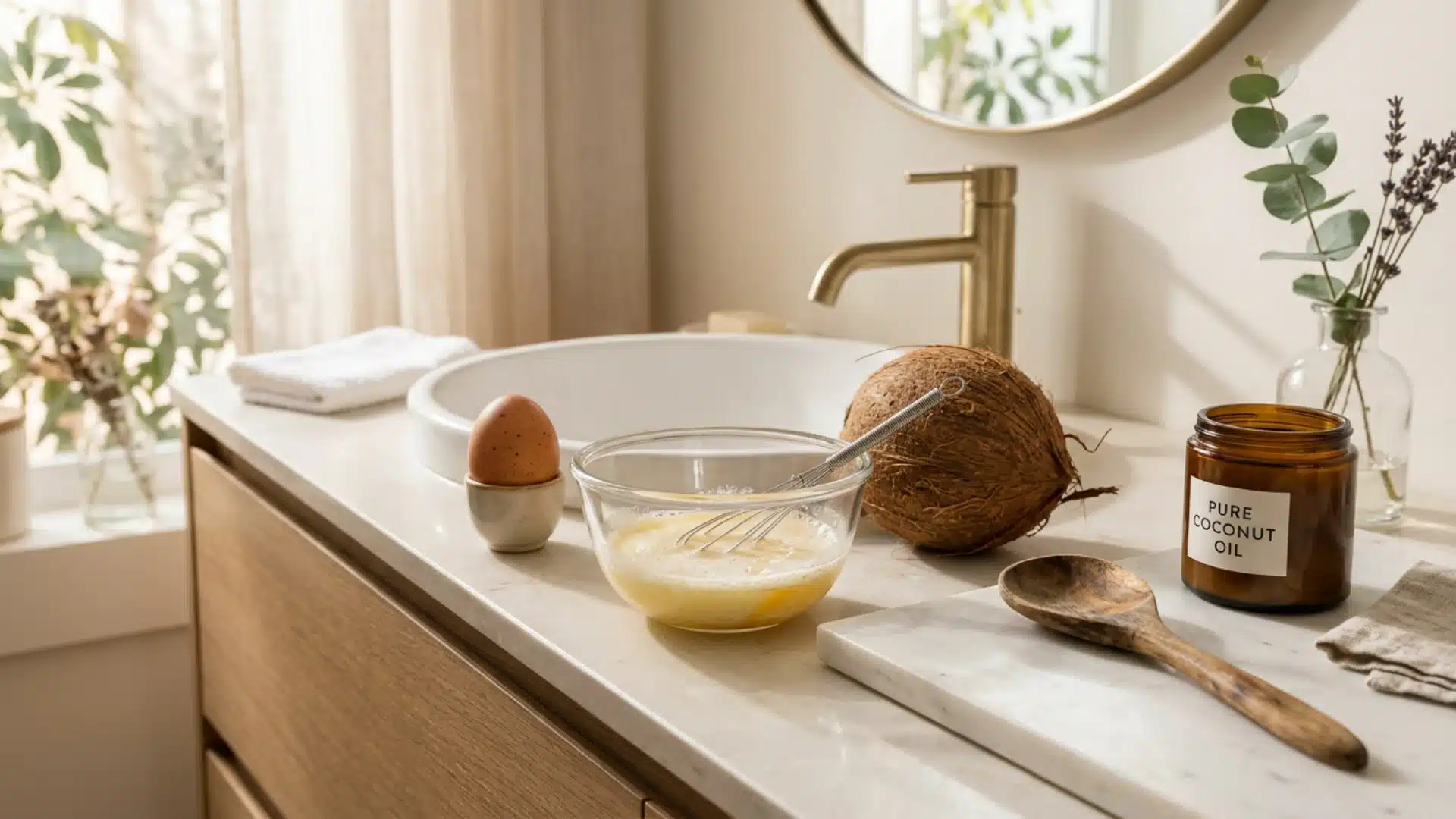
Best for: Damaged hair, weak strands, protein loss.
Coconut oil’s molecular structure allows it to penetrate the hair shaft rather than just coat the surface, which is why it’s particularly useful for protein-loss damage.
Research published in the Journal of Cosmetic Science found that coconut oil significantly reduced protein loss in both damaged and undamaged hair compared to mineral oil and sunflower oil.
Egg adds a temporary protein layer that helps weakened strands feel stronger.
Steps:
- Whisk 1 whole egg until smooth.
- Mix with 2 tablespoons of melted coconut oil.
- Apply to damp hair from root to tip.
- Cover for 20 minutes.
- Rinse with cool water first, then shampoo once.
One caution from practice: If your hair is high-porosity, coconut oil can sometimes block moisture uptake rather than support it. In that case, swap it for argan oil in this recipe.
3. Castor Oil and Rosemary Scalp Growth Mask
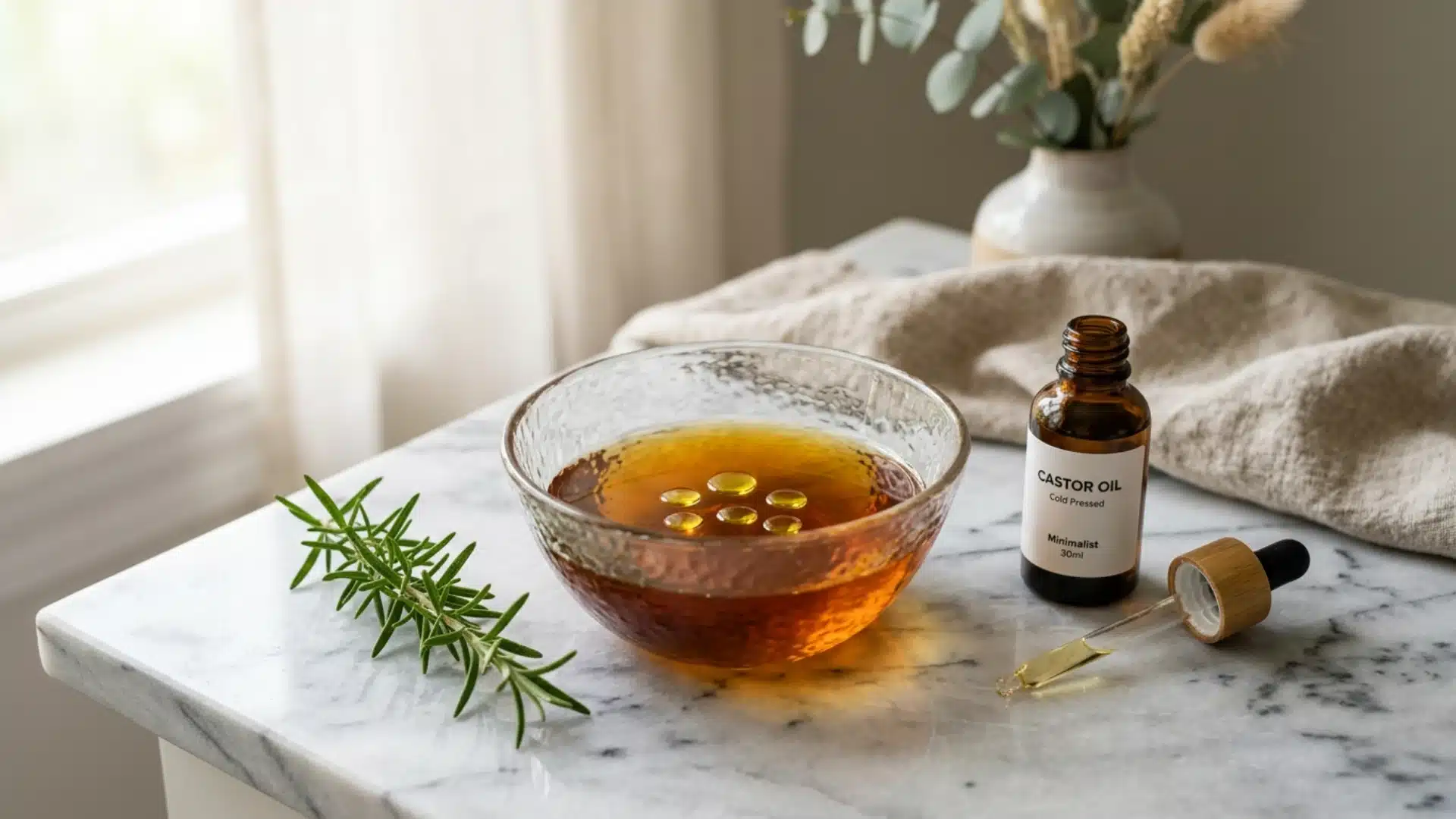
Best for: Slow growth, thinning edges, neglected scalp.
Castor oil and rosemary oil are both primarily scalp treatments, not hair-length treatments.
Castor oil coats and conditions the scalp; rosemary oil appears in scalp-focused growth routines and has been studied for its potential to support hair density. Apply this only to the scalp and roots, not the lengths.
Steps:
- Mix 2 tablespoons of castor oil with 5 drops of rosemary oil.
- Warm between your palms.
- Apply directly to the scalp.
- Massage for 5 minutes.
- Leave for 45 minutes, then shampoo well.
4. Banana and Olive Oil Strengthening Mask
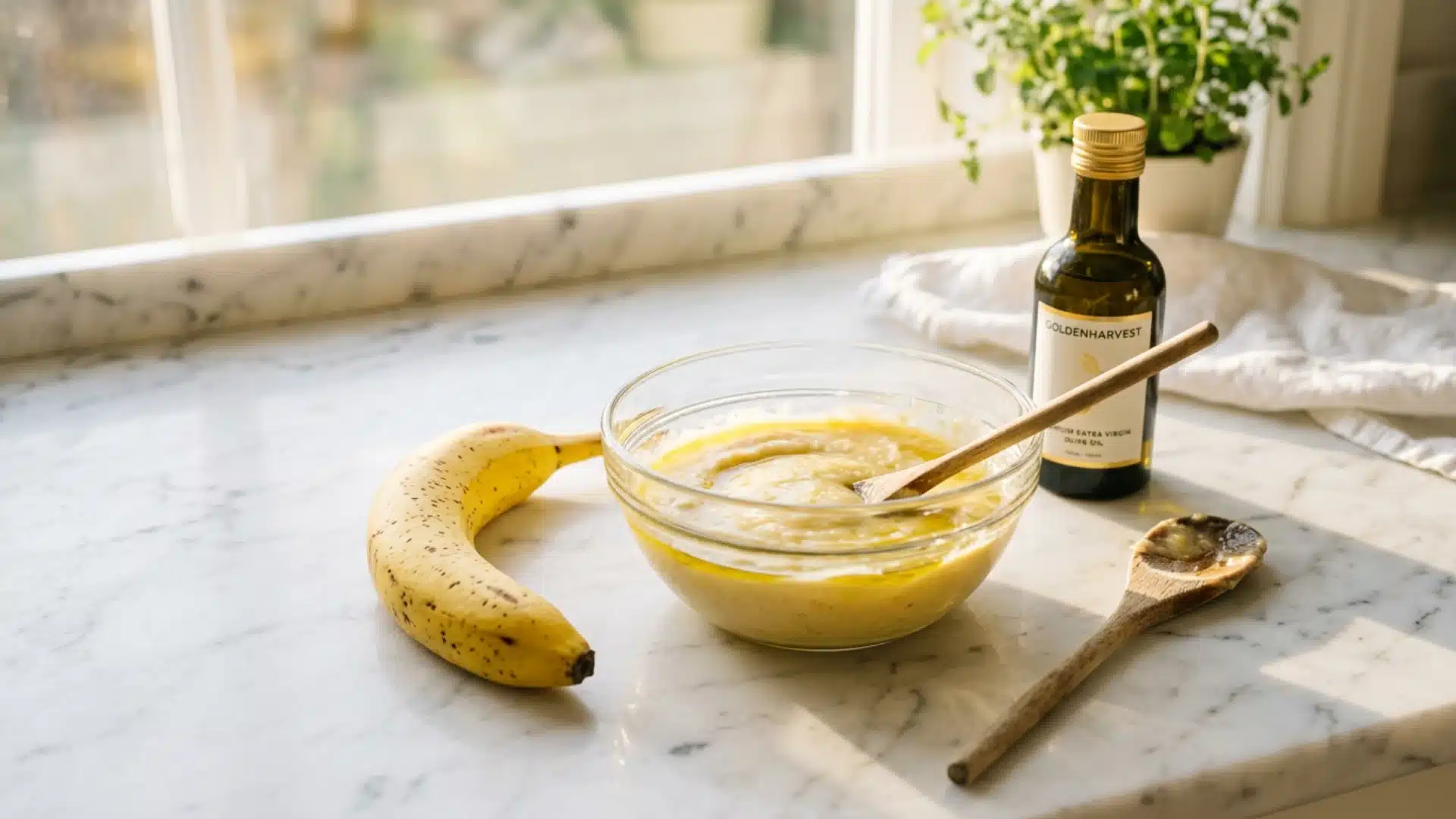
Best for: Fine hair, breakage-prone strands, limp hair.
Blend the banana thoroughly before mixing in anything else. Partially blended banana leaf chunks that are nearly impossible to rinse out and can sit in hair for days.
Olive oil adds a light slip and softness without the heaviness of coconut oil, making it a better option for fine hair that gets weighed down easily.
Steps:
- Blend 1 ripe banana until completely smooth.
- Mix in 1 tablespoon of olive oil.
- Apply to damp lengths and ends.
- Cover for 30 minutes.
- Rinse thoroughly, then shampoo and condition as usual.
5. Egg White and Lemon Clarifying Mask
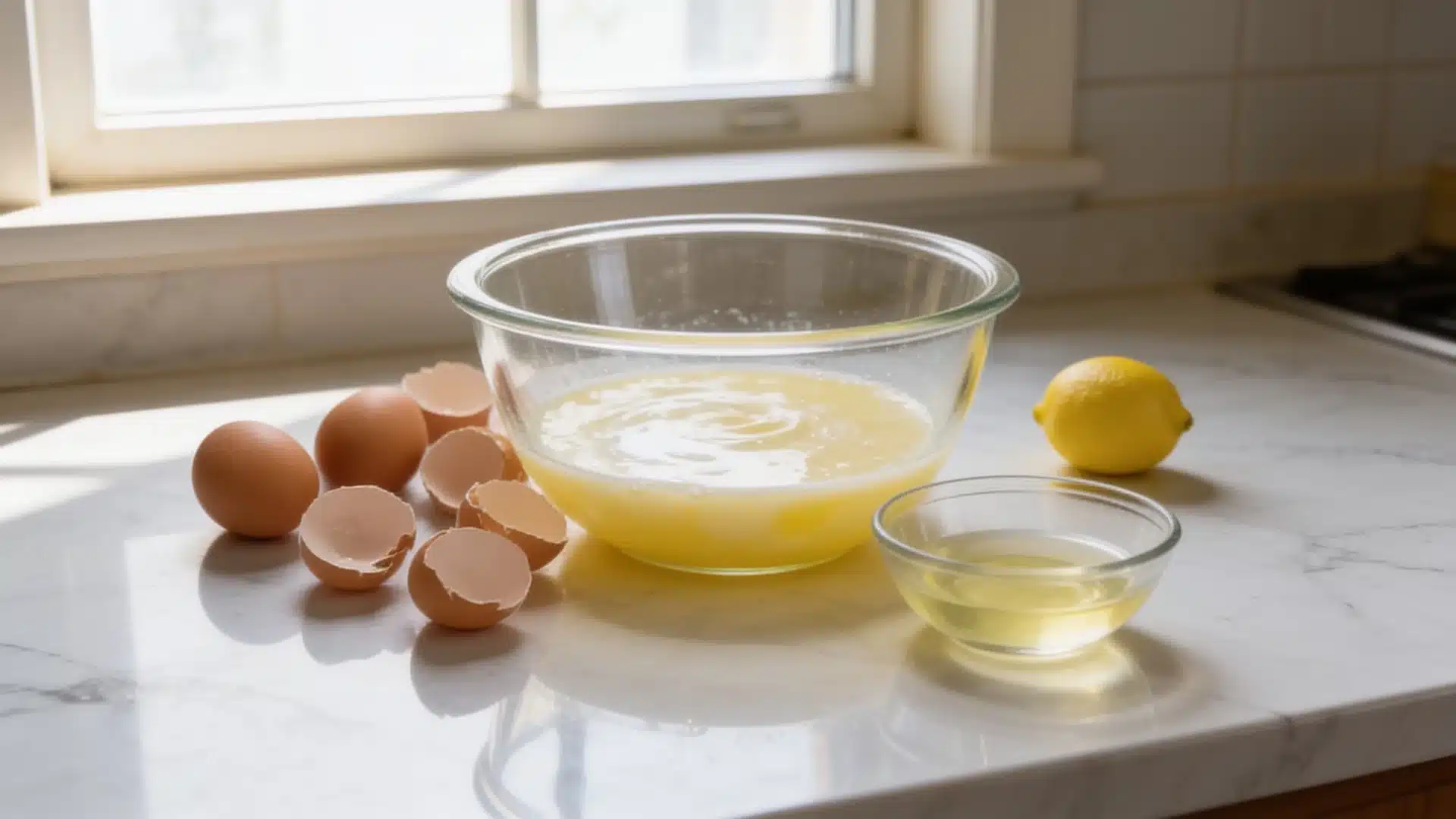
Best for: Oily scalp, product buildup, limp hair.
Egg white helps absorb excess oil at the scalp, while lemon provides a light clarifying effect by gently lowering scalp pH.
Skip this on color-treated hair; lemon can lift artificial color, especially on lighter shades.
Steps:
- Whisk 2 egg whites lightly.
- Add juice from half a lemon.
- Apply to the scalp and lengths.
- Leave for 20 minutes without heat.
- Rinse with cool water, then shampoo. Avoid lemon on color-treated hair.
6. Apple Cider Vinegar and Bentonite Clay Scalp Mask
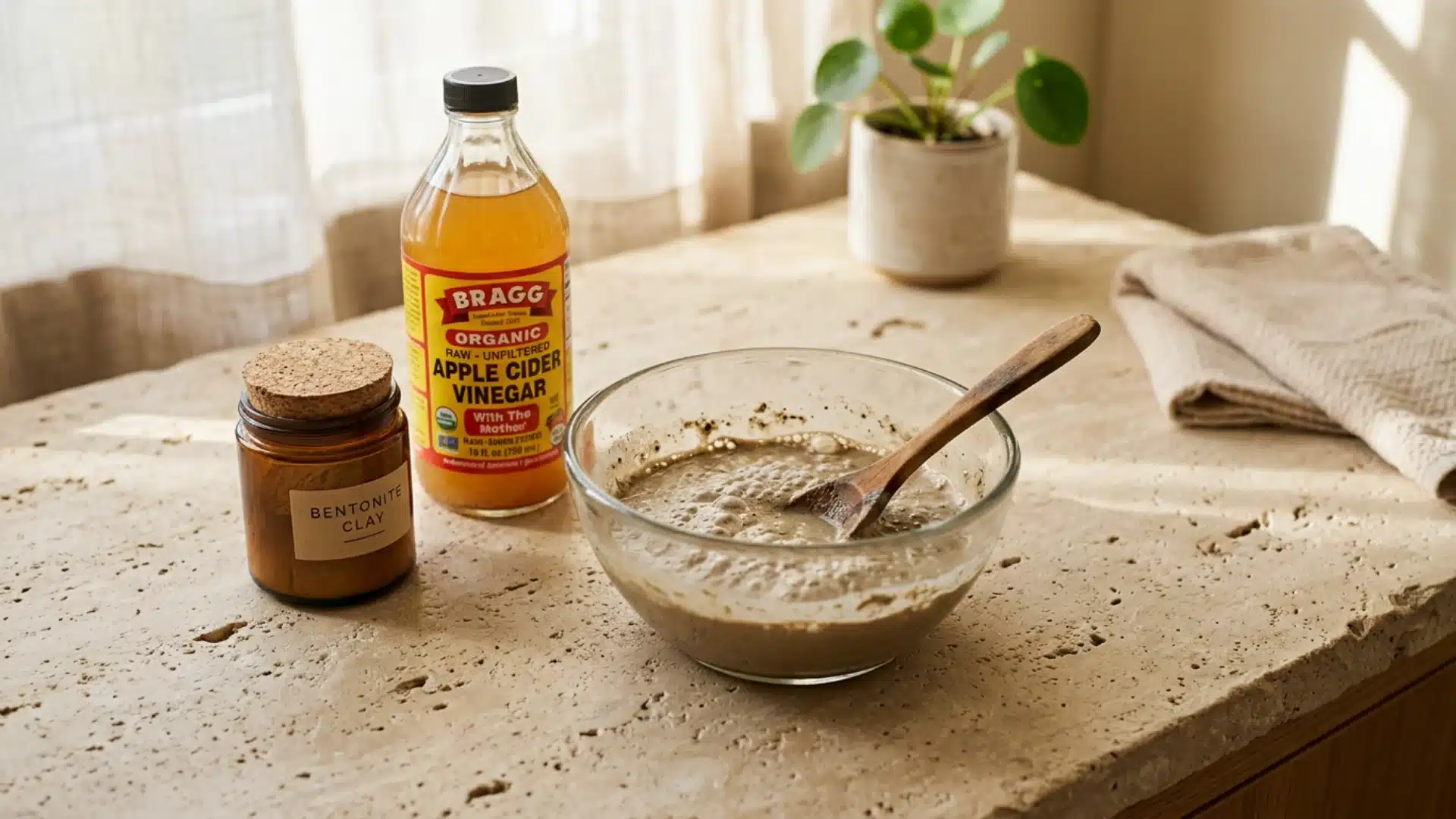
Best for: Buildup, dandruff, oily roots.
Apple cider vinegar refreshes the scalp and helps restore a slightly acidic pH after alkaline buildup from products. Bentonite clay absorbs oil and residue.
Together, they’re one of the most effective DIY combinations for a scalp that feels coated or itchy after extended product use.
If you’re also reassessing how often you wash, this mask pairs well with spacing out shampoo days once your scalp baseline is reset.
Steps:
- Mix 2 tablespoons of bentonite clay with 2 tablespoons of apple cider vinegar.
- Add 1 tablespoon of water.
- Apply to the scalp only.
- Leave for 20 minutes.
- Rinse well, then lightly condition the lengths.
7. Yogurt and Honey Smoothing Mask
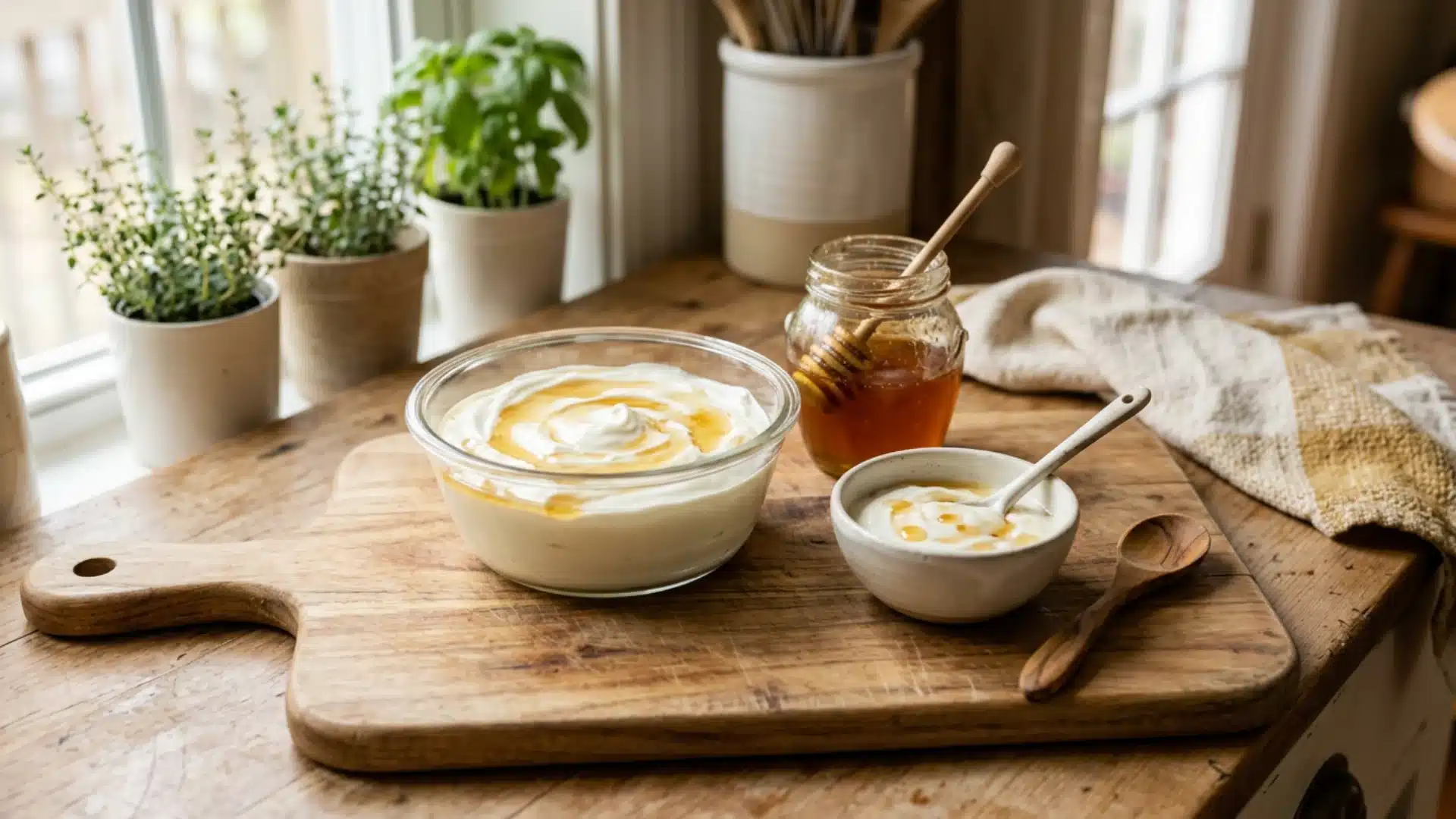
Best for: Frizzy hair, coarse texture, humidity-prone hair.
Yogurt softens the cuticle with its lactic acid, while honey retains moisture and makes frizz easier to manage after drying.
This combination works particularly well for curly and coily hair types that experience frizz due to moisture fluctuations.
Steps:
- Mix 3 tablespoons of plain yogurt with 1 tablespoon of raw honey.
- Apply to damp hair from roots to ends.
- Comb through gently.
- Cover for 30 minutes.
- Rinse with cool water, then shampoo lightly.
8. Aloe Vera and Argan Oil Lightweight Mask
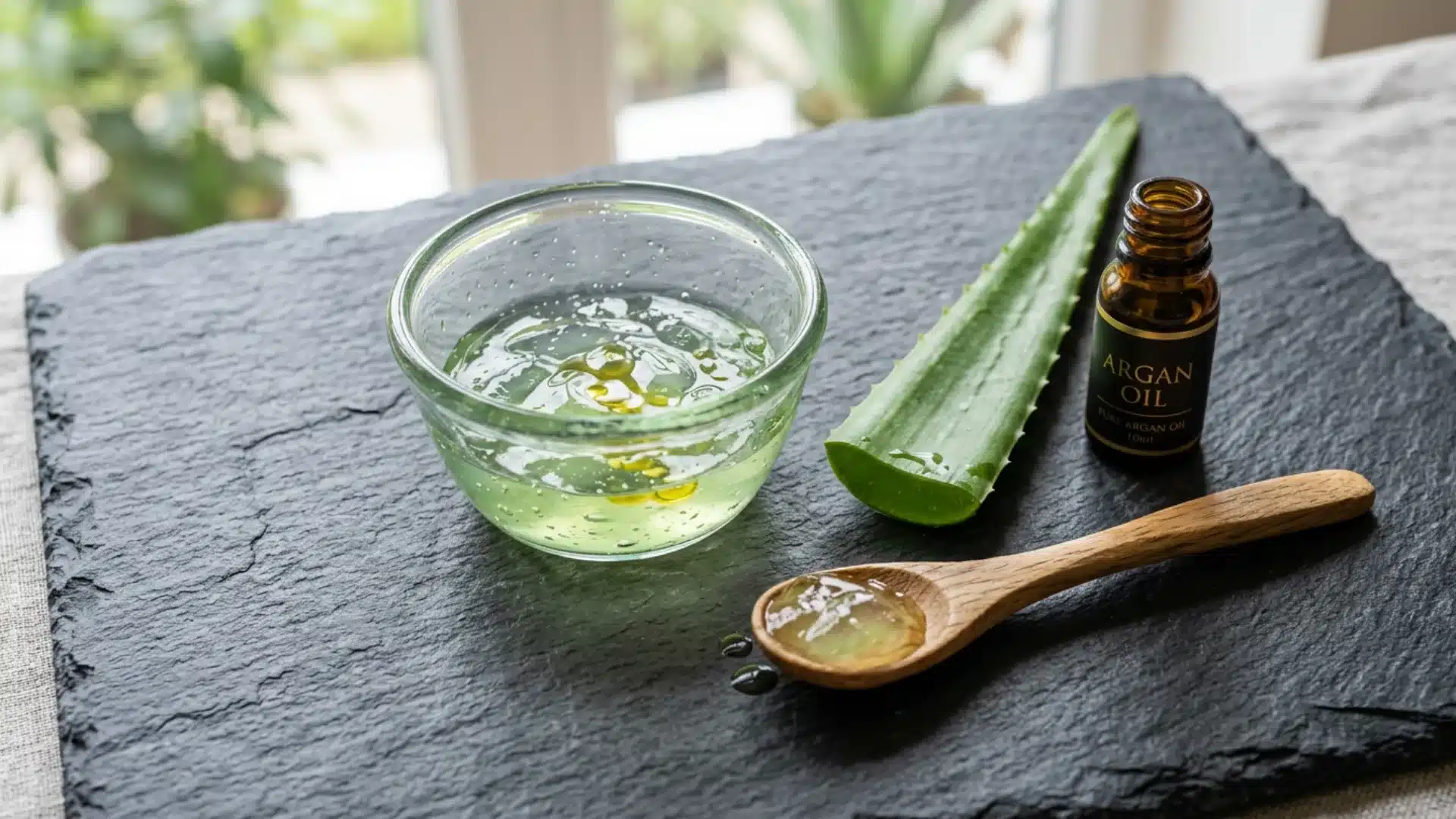
Best for: Fine hair, sensitive scalp, lightweight moisture.
This is the least likely of all masks to cause buildup or weigh down fine hair. Aloe vera is mostly water, so it hydrates without coating.
Argan oil adds shine and a small amount of fatty acids without the heaviness of coconut or castor oil. Use this when hair feels dry at the ends, but you’ve had bad experiences with oil-heavy masks.
Steps:
- Scoop 3 tablespoons of aloe vera gel.
- Add 1 teaspoon of argan oil. Mix well.
- Apply to damp mid-length and ends.
- Leave for 20 minutes.
- Rinse with cool water. No shampoo needed.
9. Onion Juice and Coconut Oil Growth Mask
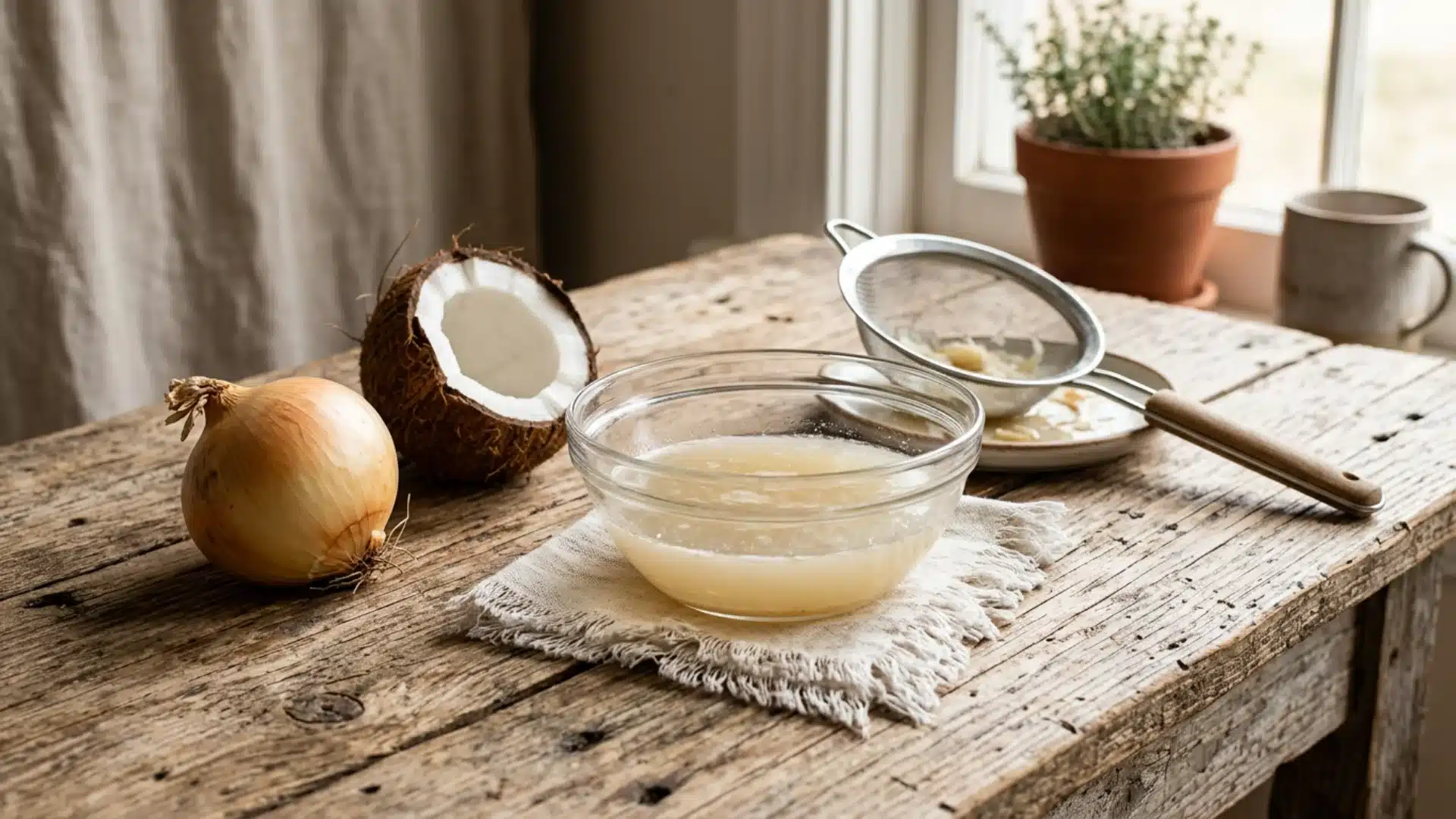
Best for: Hair loss, sparse areas, slow growth.
Patch test first: this one is non-negotiable. Onion juice can cause scalp irritation, redness, or itching, particularly on sensitive or inflamed skin.
If you have active scalp conditions, skip this mask and see a dermatologist before trying sulfur-based treatments.
The smell is strong and will linger through one shampoo cycle. A quick rinse with diluted lemon juice before shampooing can help cut through it. Plan this one for a day you’re staying home.
Steps:
- Blend 1 medium onion and strain the juice.
- Mix 2 tablespoons of onion juice with 1 tablespoon of coconut oil.
- Apply to the scalp.
- Leave for 30 minutes.
- Shampoo twice, then condition.
10. Mayonnaise and Castor Oil Deep Moisture Mask
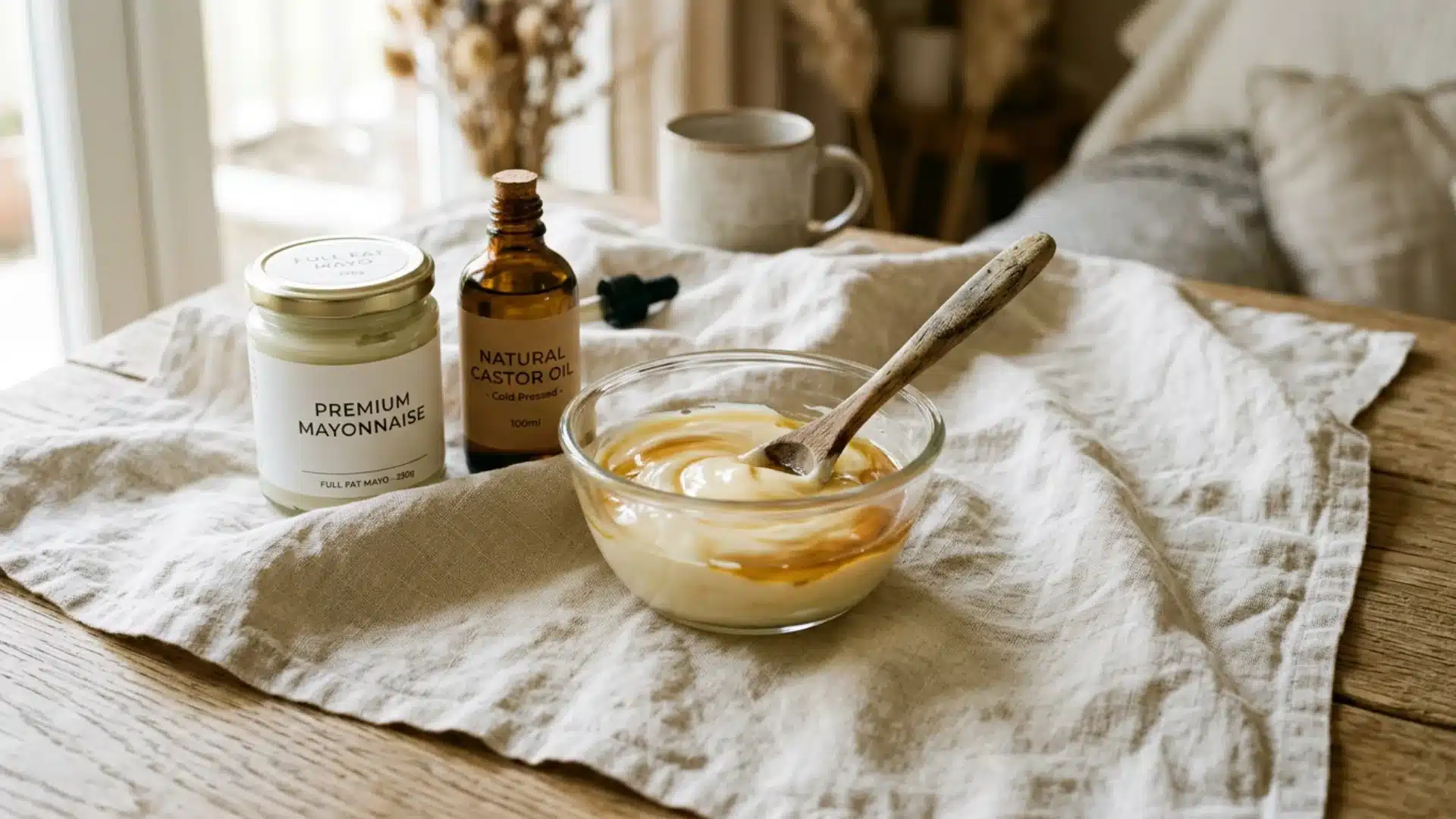
Best for: Very dry hair, over-processed hair, chemical damage.
Mayonnaise contains oil, egg, and an emulsifier, which means it distributes more evenly than plain oil and leaves less residue after rinsing.
Castor oil adds heavier moisture and helps fill in damaged areas on the shaft. This is a good option after bleach or relaxer processing, where the cuticle is severely disrupted.
For color-treated hair that has been bleached multiple times, you may also want to read about color-treated hair care before adding protein or heavy moisture treatments.
Steps:
- Mix 2 tablespoons of full-fat mayonnaise with 1 tablespoon of castor oil.
- Apply to dry hair from roots to ends.
- Cover for 45 minutes.
- Rinse with warm water.
- Shampoo twice.
11. Cinnamon and Coconut Oil Scalp Stimulating Mask
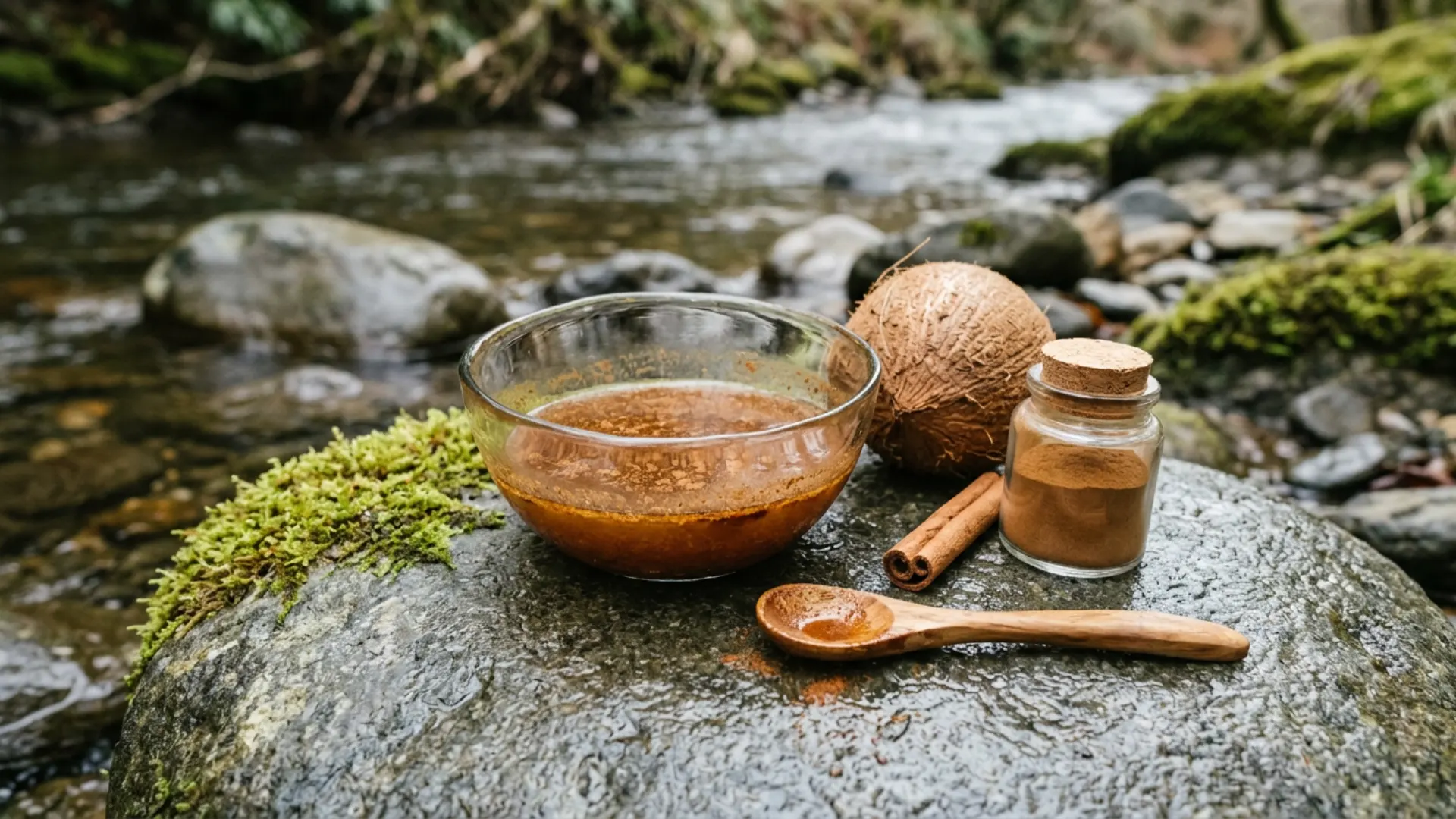
Best for: Dull hair, slow growth, sluggish scalp.
Cinnamon is warming on the scalp and may help stimulate circulation when used in small amounts. Coconut oil buffers the intensity of the spice on the scalp.
Do not exceed 20 minutes. Extended contact with cinnamon increases the risk of irritation, especially for sensitive skin.
Patch test on your inner wrist first and wait 15 minutes before applying to the scalp.
Steps:
- Mix 2 tablespoons of melted coconut oil with 1 teaspoon of cinnamon.
- Patch test on your wrist first.
- Apply to the scalp and roots.
- Leave for 20 minutes only.
- Rinse with warm water, then shampoo.
How to Apply Any Homemade Hair Mask Correctly?
Application technique matters as much as the ingredients. Start with damp hair, not soaking wet, so the mixture coats strands without being diluted by water.
Divide hair into four sections before applying the mask so it reaches every area evenly.
- Damp hair only: Damp, not dripping wet. Excess water dilutes the mask before it can work.
- Sectioning: Four sections give full coverage without missing areas at the back.
- Placement: Protein masks (egg, yogurt) can be applied from root to tip. Oil-heavy masks work best from mid-length to ends unless the recipe is a scalp treatment.
- Cool rinse first: Always rinse egg-based masks with cool water first. Hot water sets the egg protein and can leave a cooked-egg film on hair.
- Frequency: Weekly for dry or damaged hair, every one to two weeks for normal hair, every two weeks for oily scalp masks. Pair this with knowing how often you wash to avoid over-treating.
What Does Your Hair Actually Need First?
Read your hair first, then choose the mask that matches what it actually needs.
- Protein loss: Brittle strands, snapping ends, mushy hair, or hair that stretches too far when wet may need protein support.
- Moisture need: Dry ends with a rough texture usually need moisture, not more protein.
- Greasy scalp: Flat roots by day two may need a clarifying or absorbent mask rather than an oil treatment.
- Low porosity: Water sits on the surface, and heavy oils like coconut oil can make hair feel greasy.
- High porosity: Hair absorbs moisture quickly but loses it quickly, so sealing ingredients may work better.
- Quick test: Drop one clean strand in water, then check whether it floats or sinks after a few minutes.
What Reddit Says About DIY Hair Masks?
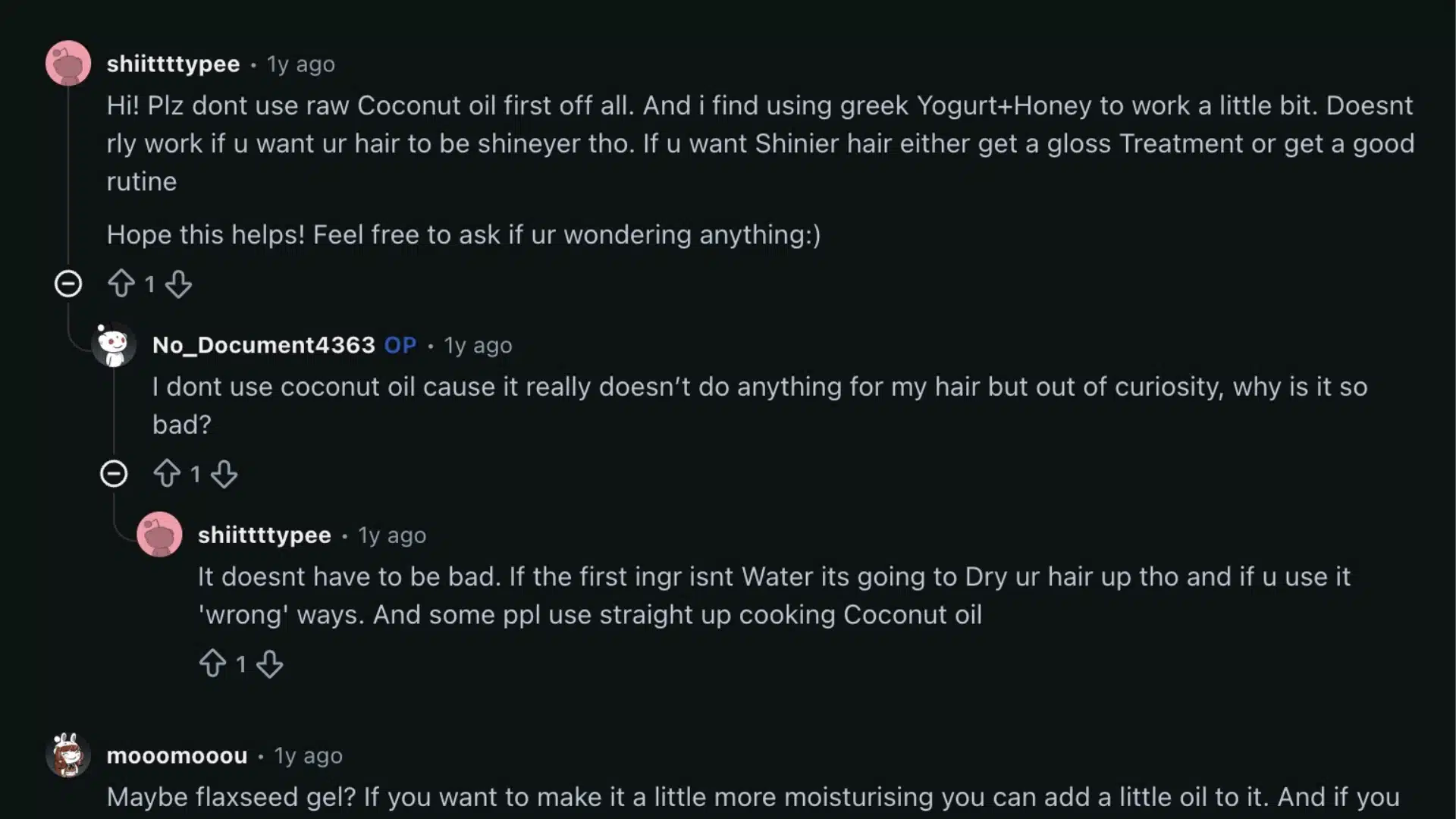
Reddit discussions on DIY hair masks for thick, dry hair show mixed results.
Many users say Greek yogurt and honey can help add softness and a light moisture boost, though they may not make hair noticeably shinier.
Coconut oil is often seen as hit-or-miss because it can leave some hair feeling heavy or unchanged.
Flaxseed gel is another popular suggestion, especially for anyone wanting hydration without greasy roots.
Some also add rice water to flaxseed gel for a mild protein boost. Reddit users also point out that homemade masks may not work as reliably as a good deep conditioner.
Overall, the best approach is to test lightweight ingredients first and avoid heavy oils near the scalp.
Common Mistakes to Avoid with Homemade Hair Masks
Small application errors can undo a good mask recipe.
The most common ones are timing mistakes with protein-heavy ingredients and skipping the patch test on strong ingredients like cinnamon or onion juice.
- Skipping the patch test: Eggs, nut oils, cinnamon, and essential oils should all be tested on the inner wrist for 15 minutes before application to the scalp.
- Over-timing protein masks: Egg-based masks should stay on for 20 to 30 minutes. Longer contact can saturate hair with too much protein, causing stiffness and brittleness, the opposite of what you want.
- Hot water rinse on egg masks: Always rinse cool first. Hot water will set the egg and leave residue.
- Acidic ingredients on colored hair: Lemon juice and apple cider vinegar can fade artificial color, particularly on lighter shades. For color-treated hair care, stick to honey- or yogurt-based masks instead.
- Heavy oils on fine roots: Keep castor oil, coconut oil, and mayonnaise off fine or thinning roots. Apply from mid-length to ends only.
Conclusion
A homemade hair mask works best when it matches what your hair needs right now.
If your ends feel rough, choose moisture before reaching for protein. If your scalp turns oily fast, use a clarifying mask instead of heavy oils.
I would start with one simple recipe, then watch how your hair feels after washing, drying, and styling.
You do not need ten treatments at once, because that usually makes results harder to read. Give your chosen mask three to four weeks, and stop if your scalp feels itchy, tight, or irritated.
The goal is softer, easier hair, not a messy routine that feels like homework. Which homemade hair mask are you trying first? Tell us, share with us in the comments below.
Frequently Asked Questions
How Long Does a Homemade Hair Mask Last in the Fridge?
Most homemade hair masks are best used fresh, but masks made with eggs, yogurt, or banana can be stored in an airtight container in the fridge for up to two days.
Oil-only masks like the coconut and castor oil versions can last up to a week refrigerated. Anything with fresh fruit or onion juice should be used the same day.
Can I Use a Homemade Hair Mask on Hair Extensions?
Oil-based masks can loosen the bond of tape-in or glue-in extensions, so apply only from mid-length to the ends and avoid the attachment points.
Clip-in extensions can handle any mask that does not contain harsh acids, but check the extension’s care guide first, since synthetic fibers react differently than human hair.
Is It Safe to Leave a DIY Hair Mask on Overnight?
Oil-only masks, like the coconut and argan versions, are generally safe to leave on overnight with a shower cap or an old pillowcase.
Avoid overnight use of protein-heavy masks (egg, yogurt) since extended contact can over-saturate the hair with protein and cause stiffness. Never leave cinnamon-based masks on overnight.