When eczema flares, even the smallest touch can feel like too much. The skin feels tight, itchy, and tired, and all anyone wants is a little relief that feels gentle and safe.
That is why so many people start looking at coconut oil for eczema and wonder if something so simple could actually help.
Maybe a jar is already sitting in the kitchen. Maybe a friend swears by it. Still, sensitive skin makes every new product feel like a risk.
Coconut oil sounds comforting, but does it really calm dryness, or could it make things worse? Before rubbing it on irritated skin, it helps to understand what it can and cannot do.
For anyone searching for a natural way to soothe rough, dry patches, this topic often starts with one honest question: Is coconut oil worth trying?
What is Eczema?
Eczema is a common skin condition that causes the skin to be dry, itchy, red, and irritated. It happens when the skin barrier becomes compromised and cannot retain moisture effectively.
Because of this, the skin loses water more quickly and becomes more sensitive to soaps, weather changes, sweat, dust, and certain fabrics.
Eczema is not contagious, so it cannot spread from one person to another by touch. Many people get flare-ups, which means symptoms can come and go.
Some days the skin may look calm, while other days it may feel rough, itchy, or inflamed. Eczema can affect babies, children, and adults.
Good skincare, regular moisturizing, and avoiding known triggers can help manage symptoms and reduce discomfort, but severe cases may need medical treatment from a trusted doctor or dermatologist.
Is Coconut Oil Good for Eczema?

Coconut oil for eczema can be good for some people, but it does not work for everyone.
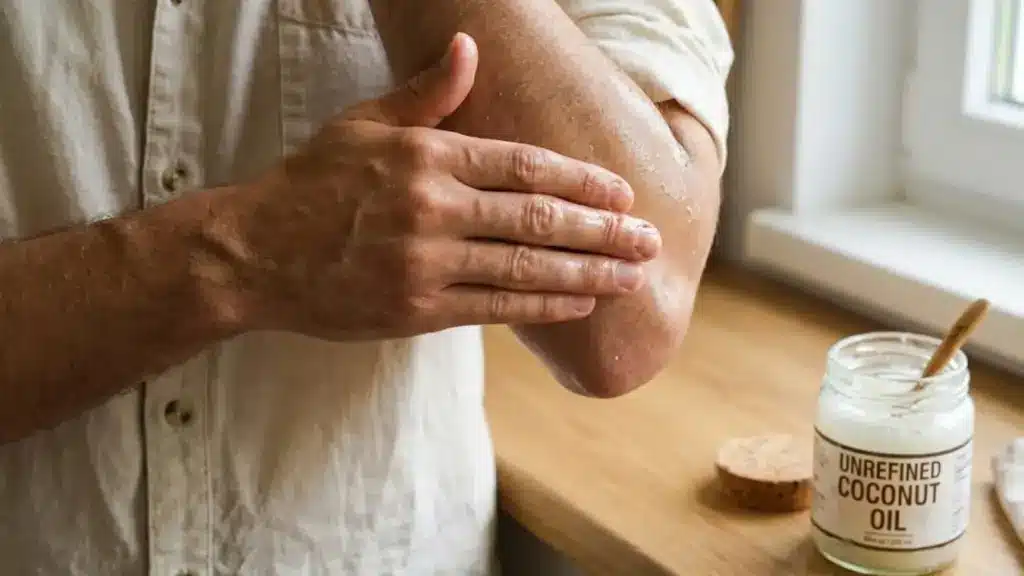
It may help when eczema-prone skin feels dry, rough, tight, or itchy because it can lock in moisture and make the skin feel softer.
- It works best on mild dryness, not active, weeping flares
- It can be used as an added layer over a fragrance-free moisturizer after bathing
- Plain virgin coconut oil is usually the best choice
- Avoid coconut oil with fragrance, color, or added chemicals
- Do a small patch test before using it on larger areas
Coconut oil has fatty acids that may support the skin barrier, which matters because eczema-prone skin loses moisture fast.
Still, it is not a cure and should not replace medicine. Avoid it on cracked, bleeding, oozing, or infected skin.
How Coconut Oil May Help Eczema Symptoms?
Coconut oil may help some eczema symptoms by adding moisture, softening dry patches, and supporting the skin barrier. It works best for mild dryness rather than severe flare-ups.
1. It May Help Lock in Moisture
Coconut oil may help eczema-prone skin retain moisture by forming a light barrier on the skin’s surface. This barrier can slow water loss, especially after bathing.
Dry skin often makes eczema feel tighter, itchier, and more uncomfortable. When the skin stays moisturized, it may feel calmer and less rough.
For best results, apply a thin layer of coconut oil over slightly damp skin, not fully dry skin. It may help seal in hydration.
2. It May Support the Skin Barrier
Eczema often means the skin barrier is weaker than it should be. That weak barrier lets moisture escape and allows irritants to bother the skin more easily.
Coconut oil may help soften rough patches and provide extra comfort to dry areas. A stronger moisture barrier can reduce some irritation, but coconut oil should not be the only part of the routine.
Use it with gentle cleansing, regular moisturizing, and trigger control for better eczema care.
3. It May Reduce Itching Caused by Dryness
Coconut oil may calm itching when the itch comes from dry skin. When eczema patches become dry and tight, the skin can feel more irritated and harder to ignore.
Adding moisture may make the area feel softer and less itchy. Still, coconut oil will not fix every type of eczema itch.
Severe itching, swelling, pain, or broken skin may need medical care. Scratching can also damage the skin and worsen flare-ups.
4. It Has Natural Antimicrobial Properties
Coconut oil contains fatty acids, including lauric acid, that may help limit some bacteria on the skin. This may be useful because eczema-prone skin can be more open to irritation.
Still, this does not mean coconut oil can treat an infection. If the skin is oozing, crusted, painful, warm, or spreading, a doctor should check it.
Coconut oil may support daily care, but it should not replace proper medical treatment.
What Type of Coconut Oil is Best for Eczema?
Choose plain coconut oil with no fragrance, color, or added chemicals. Eczema-prone skin is sensitive, so a simple option is usually safer.
| Type of Coconut Oil | Why it May Help |
|---|---|
| Virgin coconut oil | Less processed and may help soften dry patches of eczema. |
| Cold-pressed coconut oil | Made with less heat, it keeps the oil close to its natural form. |
| Organic coconut oil | A good choice if it is plain and free from added ingredients. |
| Refined coconut oil | Has a milder smell and may feel lighter on the skin. |
| Fragrance-free coconut oil | Better for sensitive skin because fragrance can cause irritation. |
| Coconut oil with essential oils | Not ideal, as essential oils may irritate eczema-prone skin. |
| Coconut oil blends | Use with caution because extra ingredients may trigger a reaction. |
How to Safely Use Coconut Oil for Eczema?
Coconut oil may help dry eczema patches feel softer, but it should be used with care. Eczema skin can react quickly, so start slow and watch how the skin responds. A small amount is usually enough.
- Do a patch test first: Apply a tiny amount of coconut oil to a small area of skin and wait 24 hours. Stop using it if redness, burning, bumps, or more itching appears.
- Apply it on slightly damp skin: Use coconut oil after a bath or shower when the skin is still a little damp. This may help seal in moisture and reduce dryness.
- Use only a thin layer: Too much coconut oil can feel greasy and may bother sensitive skin. A light layer is enough to soften dry patches.
- Timing matters. Whether you apply it in the morning or at night depends on your overall routine. Understanding how routine timing matters can help you decide where coconut oil fits best for your skin.
- Avoid broken or infected skin: Do not use coconut oil on bleeding, oozing, crusted, or painful eczema. These signs may need medical care.
- Stop if symptoms get worse: Coconut oil does not suit everyone. If the skin feels more itchy, red, or irritated, wash it off gently and avoid using it again.
Possible Side Effects of Coconut Oil on Eczema
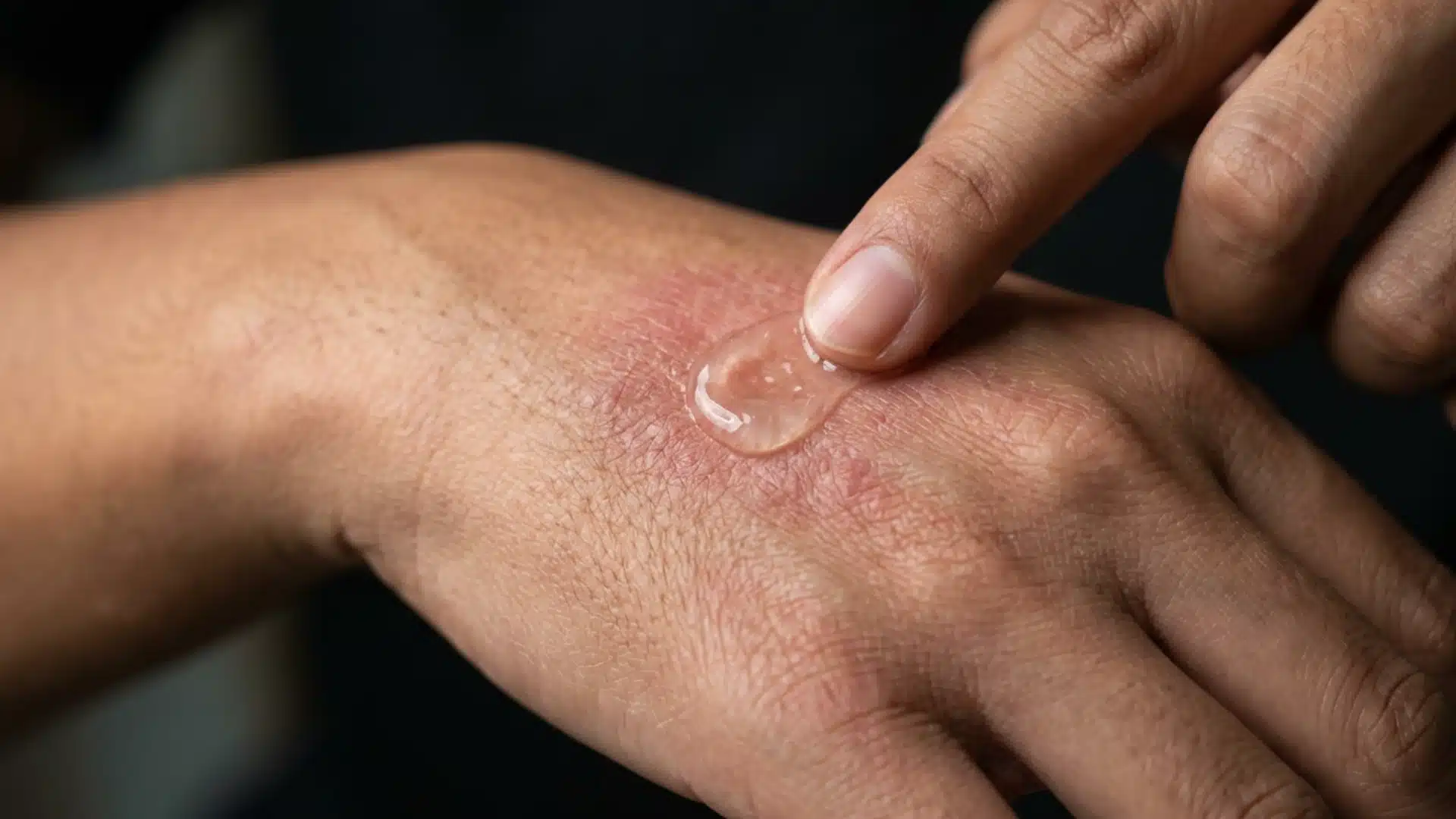
Coconut oil is natural, but that does not mean it is safe for every skin type. Eczema-prone skin can be sensitive, and some people may notice more discomfort after using it. Always patch test first and stop using it if the skin reacts badly.
- More itching: Coconut oil may make some eczema patches feel itchier, especially if the skin is already inflamed or very sensitive.
- Redness or burning: Some people may feel stinging, warmth, or redness after applying coconut oil. This can mean the skin does not tolerate it well.
- Clogged pores: Coconut oil can feel heavy on the skin and may clog pores, especially on the face, chest, or back.
- Allergic reaction: A coconut allergy is uncommon, but it can occur. Swelling, rash, hives, or strong itching are warning signs.
- Worse infected skin: Coconut oil should not be used on oozing, crusted, painful, or infected eczema. These signs may need medical care.
Who Should Avoid Coconut Oil for Eczema?
People with a known coconut allergy should avoid coconut oil for eczema.
It can cause a rash, swelling, hives, or stronger itching. People with acne-prone skin should also be careful, especially on the face, chest, and back, because coconut oil can clog pores.
Avoid using it on eczema that is bleeding, oozing, crusted, warm, painful, or spreading, as these may be signs of infection and need medical care.
Babies and young children should only use coconut oil after a pediatrician says it is safe. Anyone with very sensitive skin or a history of contact allergies should patch test first.
Coconut oil should also be avoided if it causes burning, redness, bumps, or more irritation after use. It may help with some dry patches, but it is not right for everyone or every flare-up.
Tips for Managing Eczema Naturally
Natural eczema care focuses on keeping the skin calm, moisturized, and protected from common triggers. These tips may help reduce dryness and irritation, but they should not replace medical treatment if symptoms are severe, infected, or not improving.
- Moisturize every day: Use a gentle, fragrance-free moisturizer after bathing and whenever the skin feels dry. Regular moisture can help reduce tightness, roughness, and itching.
- Take short lukewarm showers: Hot water can dry out the skin and make eczema feel worse. Keep showers short and use mild, fragrance-free cleansers.
- Wear soft, breathable fabrics: Cotton and loose clothing are often easier on sensitive skin. Rough fabrics like wool may cause itching and irritation.
- Avoid known triggers: Sweat, dust, harsh soaps, pet dander, and certain foods may trigger flare-ups in some people. Track what makes symptoms worse.
- Do not scratch the skin: Scratching can break the skin and increase the risk of infection. Keep nails short and use a cold compress when itching feels strong.
Conclusion
Managing eczema can feel frustrating, especially when dry, itchy skin keeps coming back.
Coconut oil for eczema may help some readers by sealing in moisture, softening rough patches, and calming dryness-related itching.
Still, it is not a cure and not the right choice for every skin type. The safest approach is to choose plain virgin coconut oil, patch test first, use a thin layer, and avoid applying it to infected, bleeding, or oozing skin.
Pair it with gentle skincare, short lukewarm showers, fragrance-free products, and regular moisturizing.
When symptoms are severe or keep returning, a dermatologist can guide the next step.
Have you tried coconut oil for eczema? Share your experience in the comments below so other readers can learn from it and feel less alone.
Frequently Asked Questions
Can Coconut Oil Help Scalp Eczema?
Coconut oil may soften dry patches on the scalp, but it can also leave buildup. Use a small amount, avoid scratching, and ask a dermatologist if flakes or redness continue.
Can Coconut Oil Be Mixed With a Moisturizer?
Yes, some people apply moisturizer first, then a thin layer of coconut oil to seal it in. Avoid mixing products in the jar to prevent contamination issues.
How Long Does Coconut Oil Take to Show Results?
Some dryness may feel better after one use, but eczema changes take time. If symptoms do not improve within several days, stop and consider medical advice.