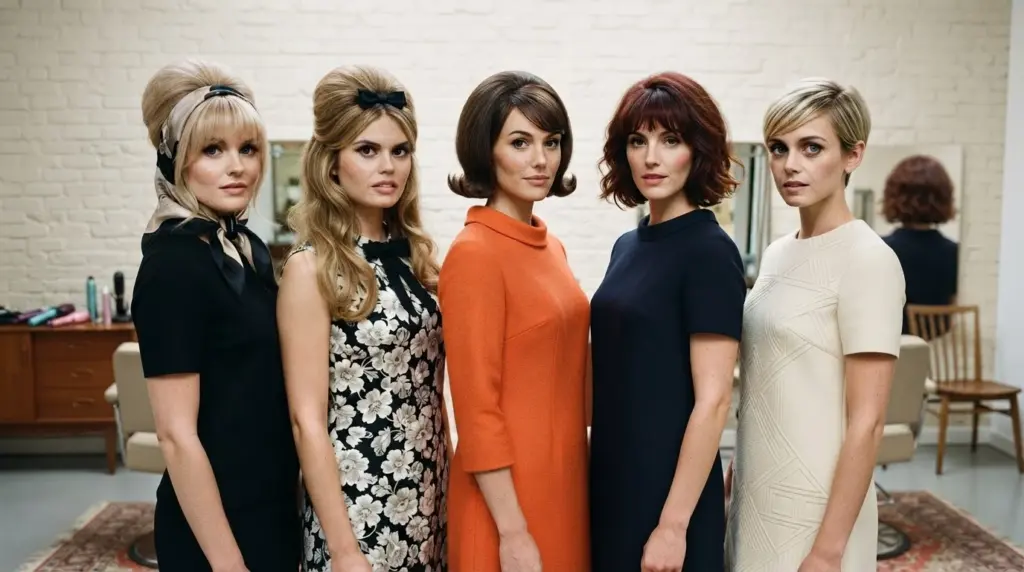
What made 1960s hair so instantly recognizable? The decade moved from towering beehives and rounded bouffants to sharp Mod cuts, flipped ends, long center-parted styles, and natural Afros.
These bold shifts reflected changing fashion, music, and culture, giving women and men more ways to shape their personal look.
I still get clients who bring in a photo of their mother’s beehive and ask for the shape without the height, and that’s really the heart of this guide. 1960s hairstyles still inspire retro beauty today, but most of the 24 looks below can be adapted with softer volume, lighter hold, and simpler styling methods.
Ahead, you’ll find recognizable looks, useful period context, practical styling techniques, and modern versions that feel easier to wear now.
What Defined 1960s Hairstyles?
Hair in the 1960s shifted in three clear waves: sculpted volume, sharp precision cutting, and finally a looser, more natural direction.
Early in the decade, beehives and bouffants were popular, using rollers, teasing, backcombing, and hairspray to create height at the crown.
By the mid-1960s, Mod fashion brought geometric bobs, precise crops, sleek shapes, and flipped ends. Vidal Sassoon became closely associated with precision cuts that relied more heavily on the haircut itself than elaborate roller setting.
Toward the late 1960s, longer center-parted hair, looser texture, and natural Afros became more visible. Smithsonian collections document the growing visibility of natural Black hair during the decade and its connection with Black cultural identity and the Black Power movement.
In my experience, the shape a client asks for tells you more about which part of the decade they’re picturing than the word “sixties” ever does: a request for height means early 1960s, a request for a blunt line means Sassoon-era Mod, and a request for movement means 1968 or later.
Iconic 1960s Hairstyles to Recreate
From sculpted beehives to relaxed late-decade waves, these 24 looks span short, medium, and long hair, covering formal updos, casual styles, Mod cuts, and softer retro versions for modern wear
1. Classic Beehive
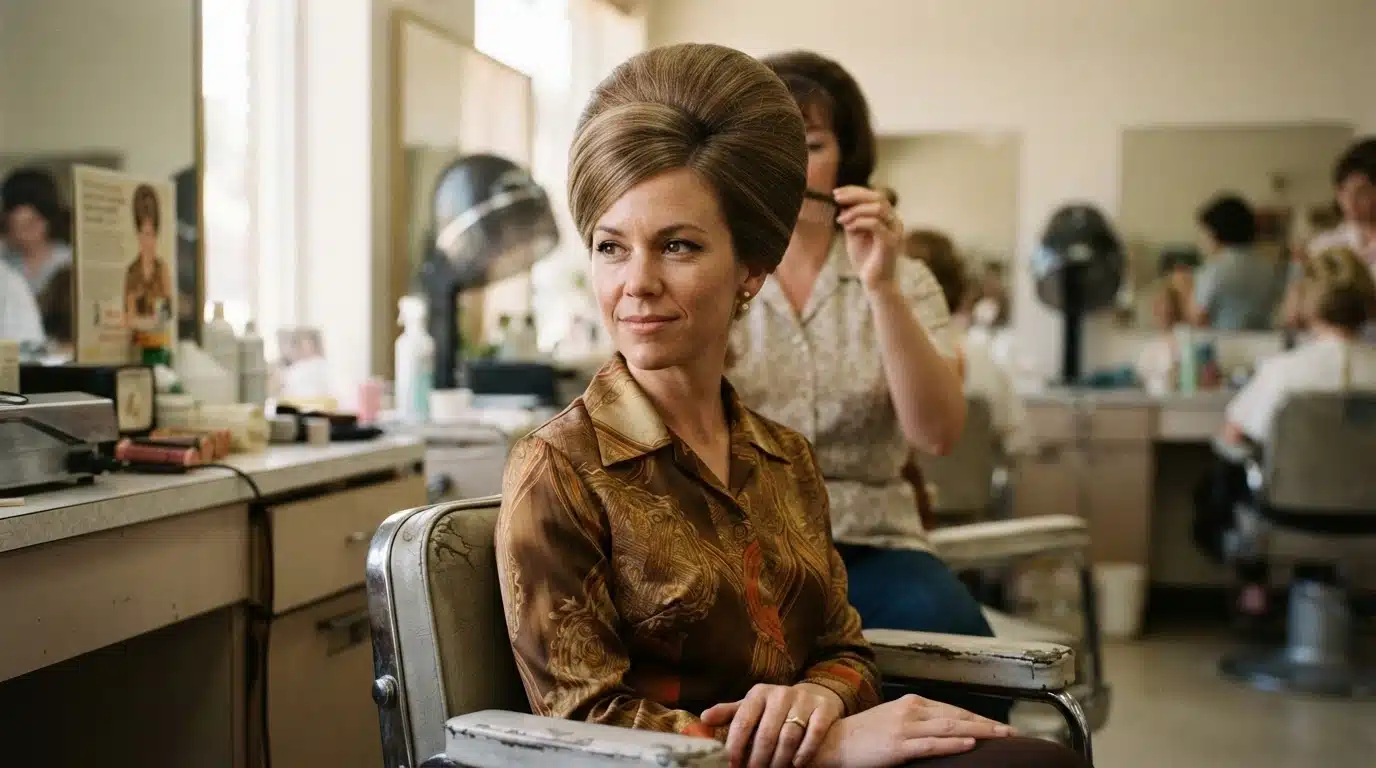
The classic beehive builds height above the crown, creating a tall, rounded shape that instantly signals early 1960s glamour. Section the hair, backcomb, smooth it over, and pin it to hold the structure.
For a more wearable update, keep the same rounded outline but reduce the height, soften the surface, and leave a little movement around the hairline for everyday wear today. For hold, many stylists still reach for aerosol hairspray, a product whose formulas are now tightly regulated to protect the ozone layer.
- Best for: Formal events and bold crown height.
- Tip: Tease underneath; smooth the surface.
- Hair length: Medium to long.
2. Soft Bouffant
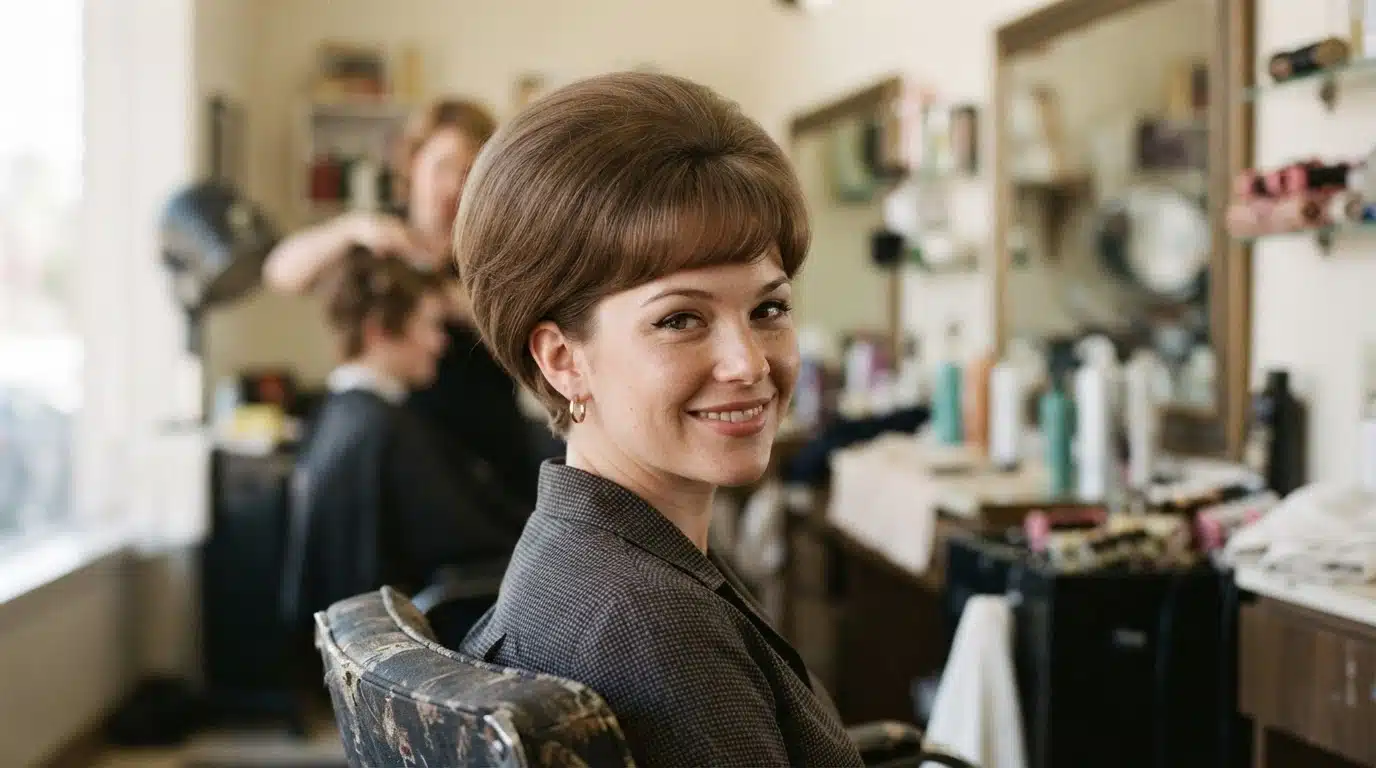
A soft bouffant spreads volume across the crown and sides rather than pushing the hair sharply upward like a beehive. The shape feels fuller, rounder, and easier to wear.
Recreate it with large rollers or a round brush, add light teasing at the roots, then smooth the top layer while keeping enough lift to preserve the curved silhouette comfortably today.
- Best for: Everyday retro and softer formal looks.
- Tip: Tease mainly at the crown.
- Hair length: Medium to long.
3. Half-Up Bouffant
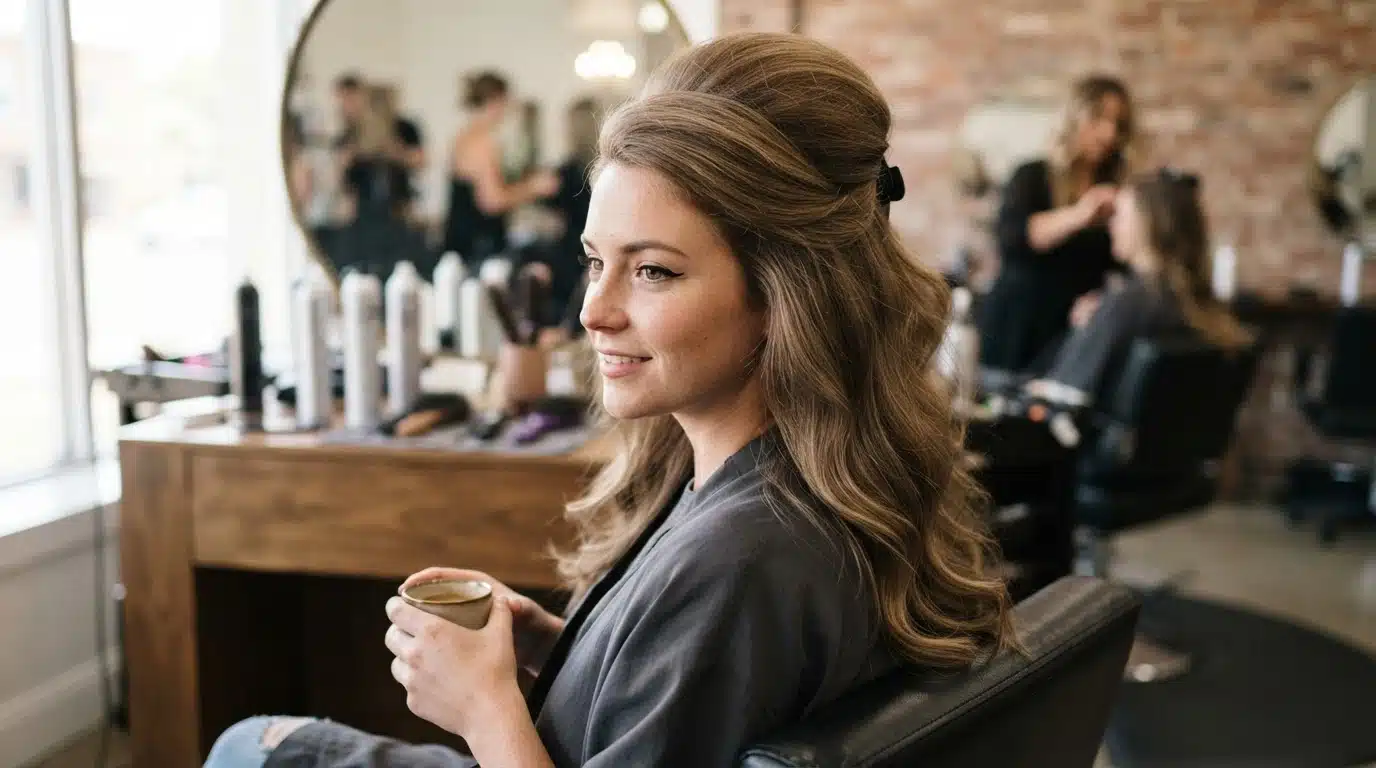
The half-up bouffant combines lifted crown volume with loose hair through the lengths, making it a flexible choice for medium and long hair. Lightly tease the crown, smooth the surface, and secure the upper section at the back.
Keep the remaining hair straight, softly curled, or gently waved depending on how polished or relaxed you want the finish to appear.
- Best for: Parties, dates, and weddings.
- Tip: Pin loosely to preserve volume.
- Hair length: Medium to long.
4. Brigitte Bardot-Inspired Half-Up Hair
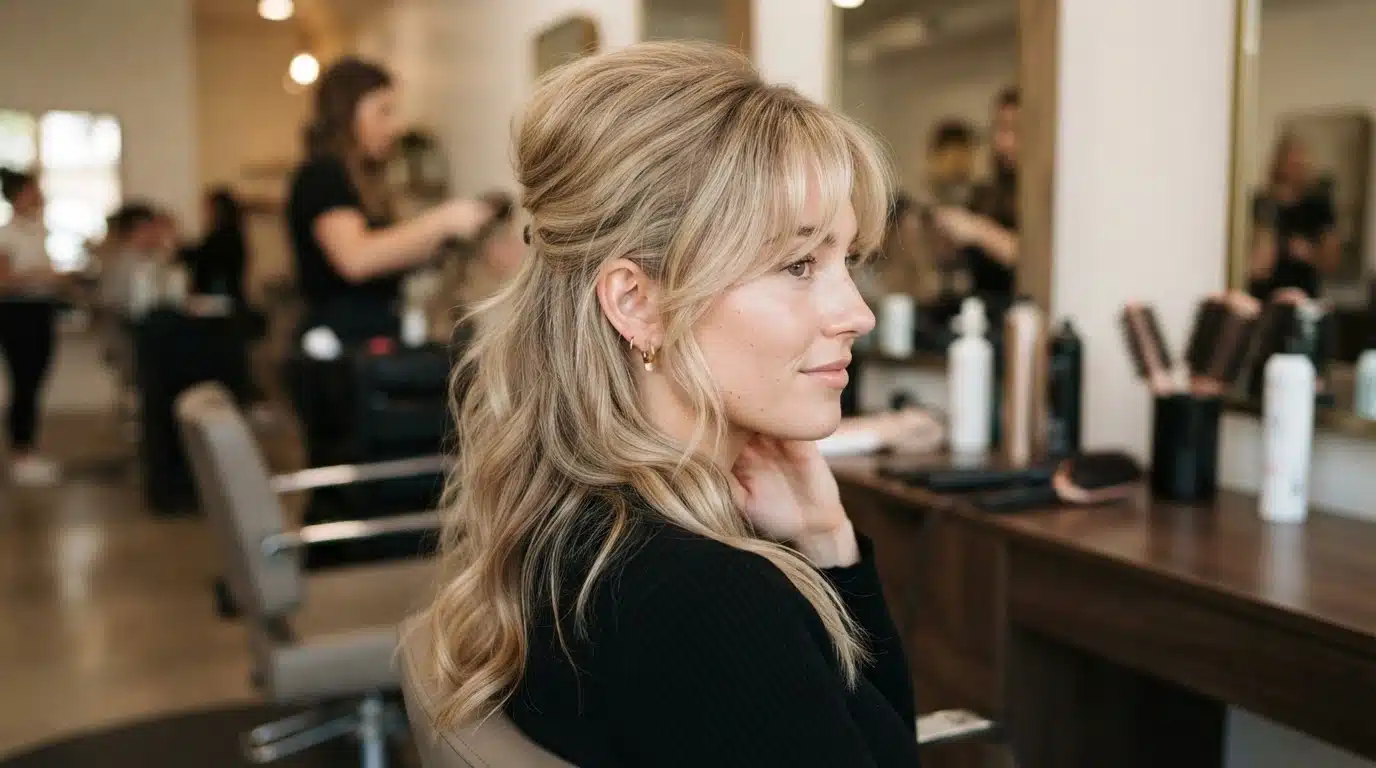
Brigitte Bardot-inspired half-up hair uses soft crown lift, loose lengths, and face-framing pieces instead of a tightly sculpted finish. The volume sits lower and looks less formal than a traditional bouffant.
Add teasing near the crown, secure the top section loosely, and leave a few front pieces free to create the characteristic undone shape without making the result look messy.
- Best for: Casual evenings and parties.
- Tip: Keep the finish slightly relaxed.
- Hair length: Medium to long.
5. Flipped Bob
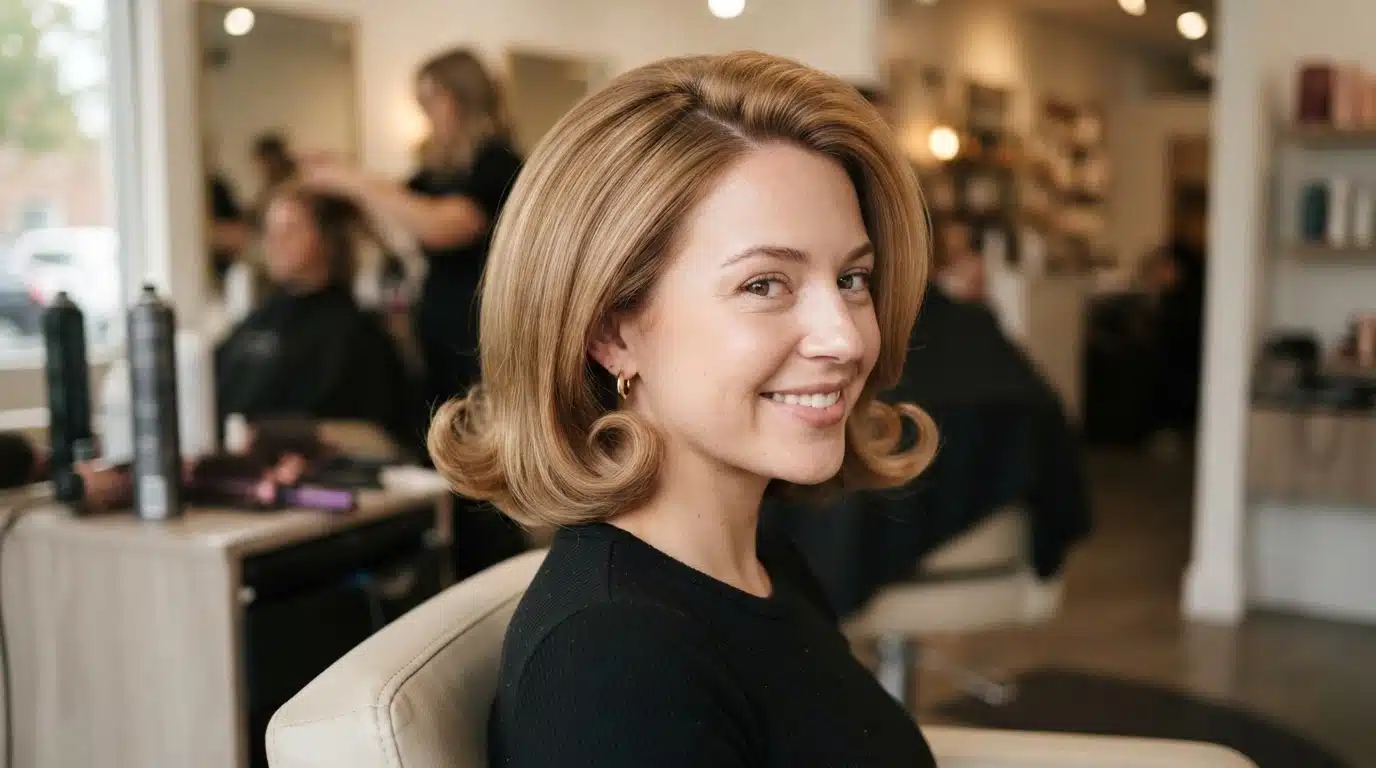
The flipped bob is defined by smooth hair with ends curled outward, creating a playful edge around the jaw or shoulders. It works especially well on straight or lightly wavy hair.
Set the ends with rollers, turn them outward with a round brush, or use a styling iron, keeping the bend controlled rather than curling the ends into tight ringlets.
- Best for: Daily wear and retro styling.
- Tip: Flip only the final few inches.
- Hair length: Chin to shoulder length.
6. Bouffant Bob
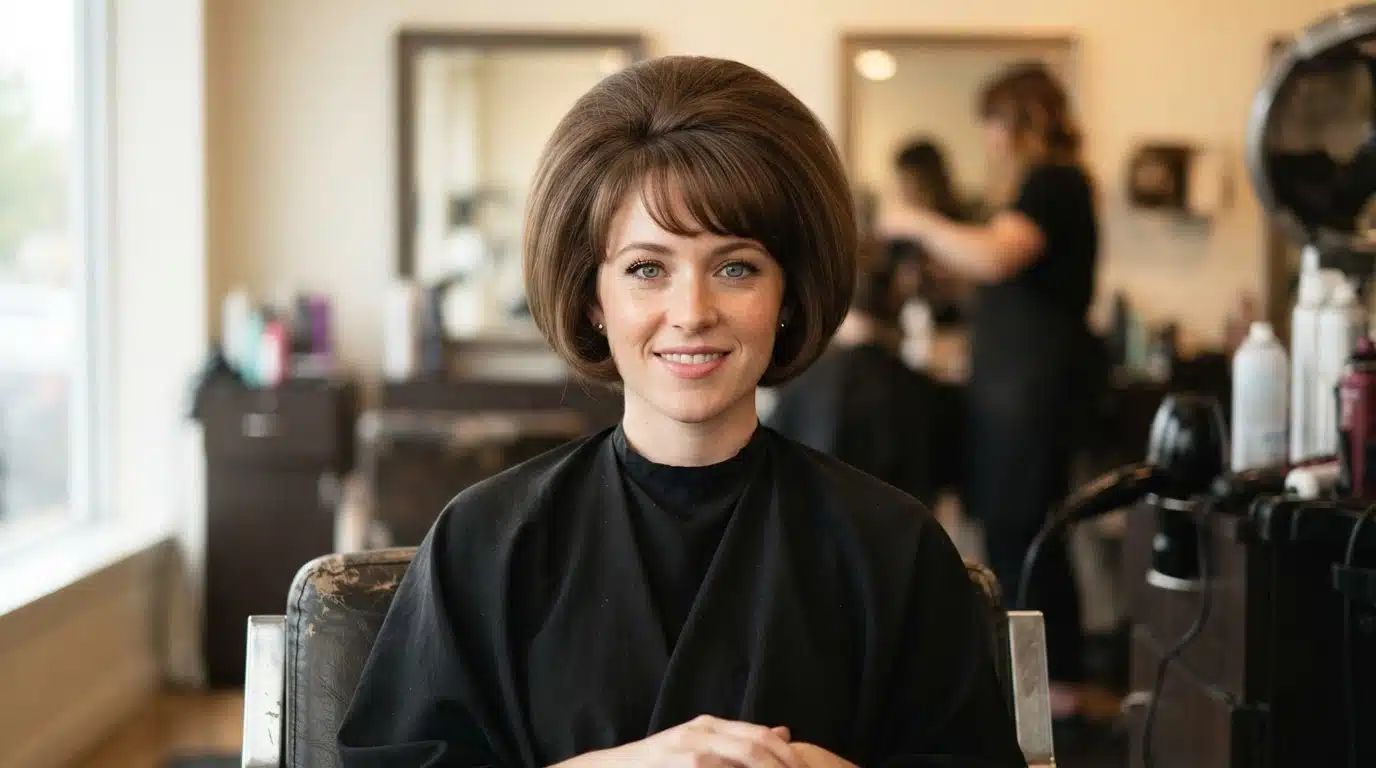
A bouffant bob pairs a shorter cut with rounded crown volume, giving early 1960s polish without the extreme height of a full beehive. The sides stay smooth while the upper section carries most of the fullness.
Use rollers for body, tease lightly at the crown, and brush the surface into a soft dome that follows the haircut’s natural shape overall.
- Best for: Short hair needing extra fullness.
- Tip: Keep most volume at the crown.
- Hair length: Chin to shoulder length.
7. Vidal Sassoon Geometric Bob
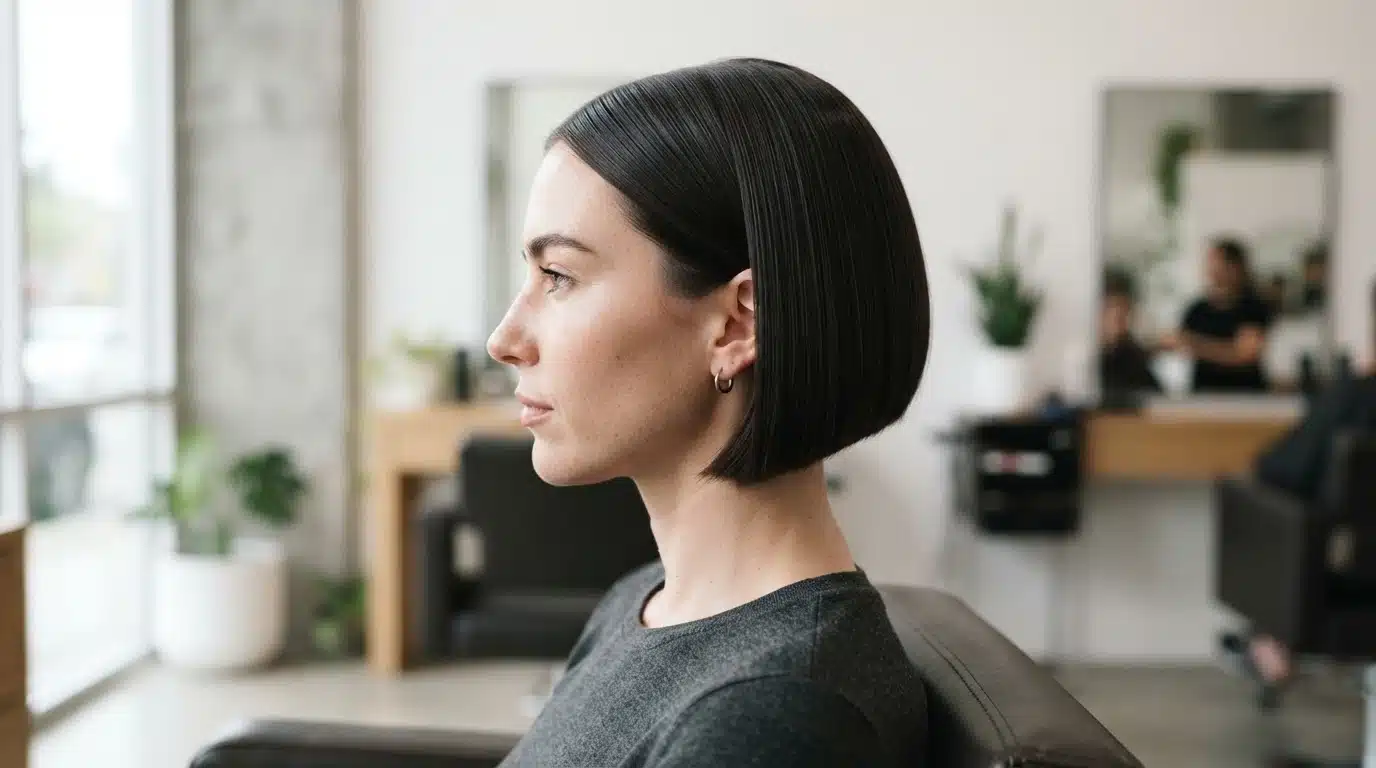
The Vidal Sassoon geometric bob moved away from heavy setting and teased height toward precise cutting, sharp lines, and controlled shape. Its clean angles became closely linked with mid-1960s Mod fashion.
The cut depends more on structure than styling, so a smooth blow-dry and careful sectioning are usually enough to highlight the crisp outline and strong shape of the hair.
- Best for: Sharp Mod styling.
- Tip: Focus on a well-shaped precision cut.
- Hair length: Short to chin length.
8. Sleek Mod Bob
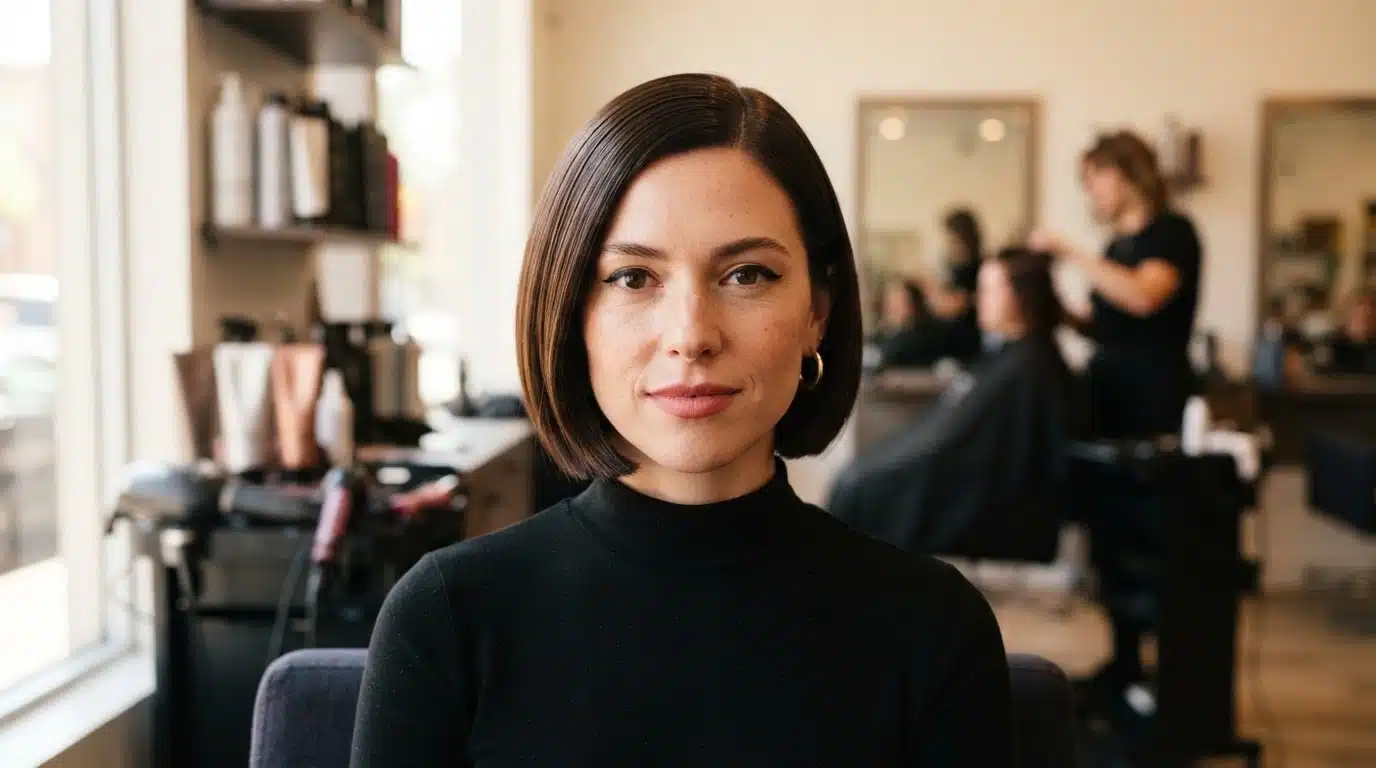
The sleek Mod bob offers a softer way to wear the sharp, graphic haircuts associated with the mid-1960s. Keep the shape neat, the surface smooth, and the crown controlled rather than heavily teased.
A round brush can add slight bend at the ends, while a light finishing product helps maintain shine and definition without making the hair look overly stiff.
- Best for: Work and everyday Mod styling.
- Tip: Use lightweight finishing products.
- Hair length: Jaw to shoulder length.
9. Twiggy-Inspired Pixie
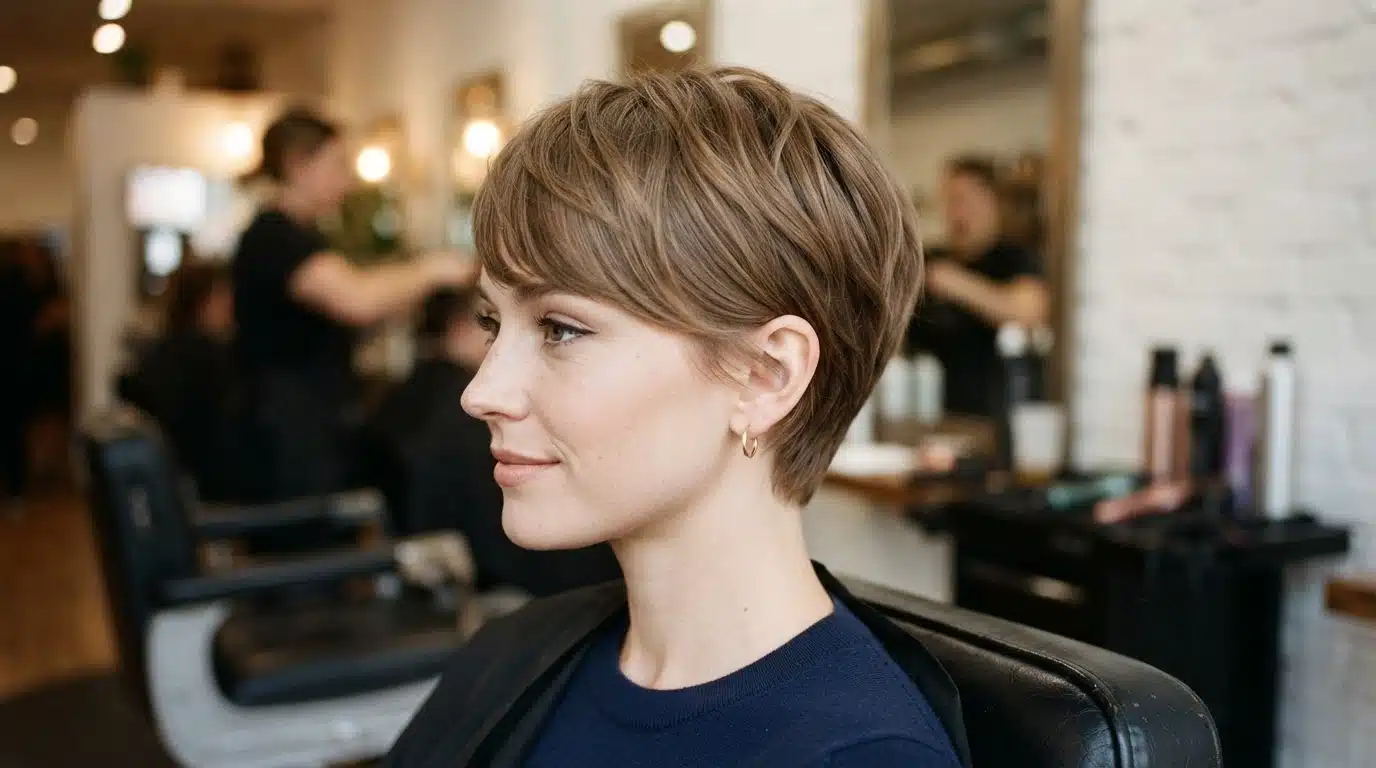
A Twiggy-inspired pixie keeps the hair cropped close with a neat, side-swept direction that frames the face and highlights the eyes. Unlike fuller early-1960s shapes, this cut relies on clean lines and minimal volume.
Style it with a small amount of lightweight product, guide the fringe to one side, and keep the finish smooth rather than puffed or heavily curled.
- Best for: Low-maintenance short styling.
- Tip: Use minimal product for definition.
- Hair length: Very short.
10. Mia Farrow-Inspired Crop
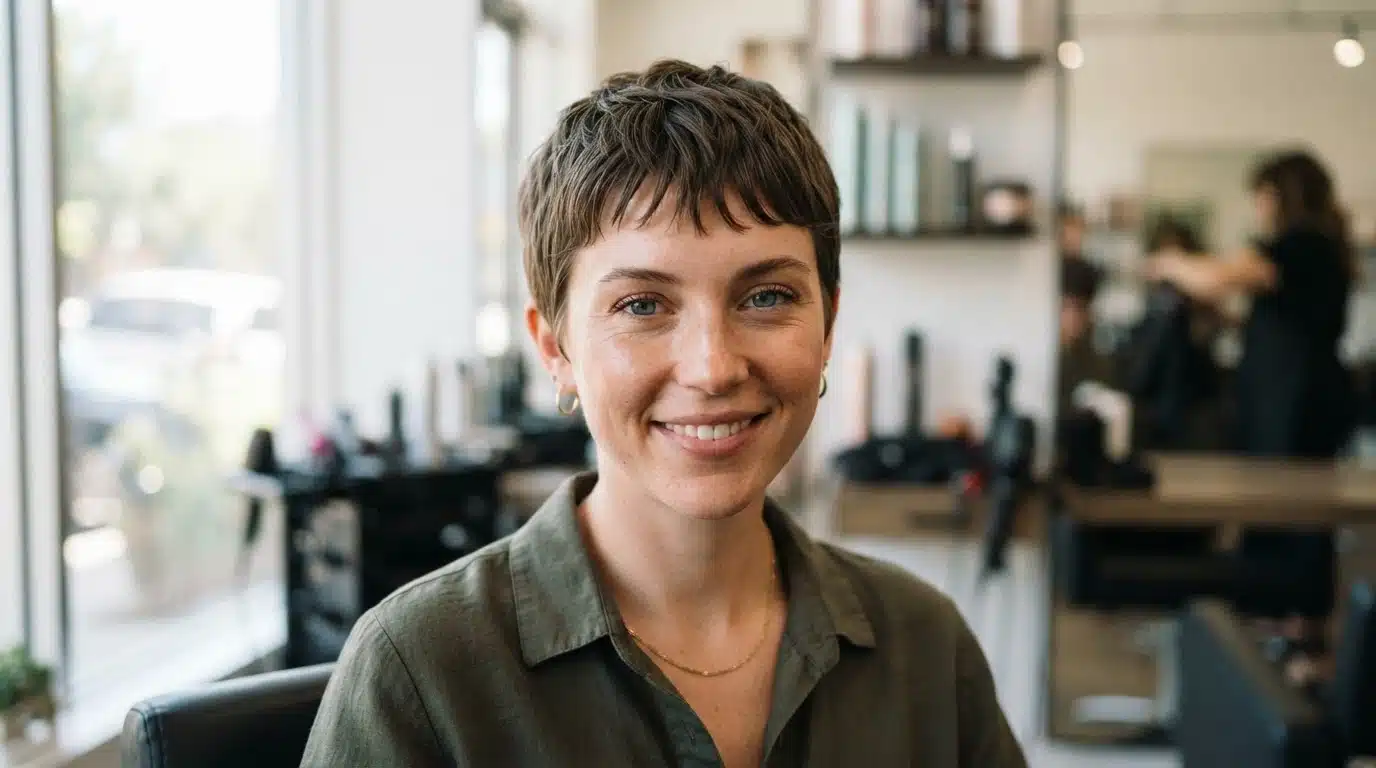
The Mia Farrow-inspired crop is very short, neat, and close to the head, creating a striking contrast to the fuller bouffant and curled sets seen earlier in the decade. Its appeal comes from simplicity and precision.
Keep styling minimal, use fingers or a small brush to guide the shape, and avoid adding unnecessary crown volume that would change the silhouette.
- Best for: Minimal everyday styling.
- Tip: Maintain the shape with regular trims.
- Hair length: Very short.
12. Pageboy
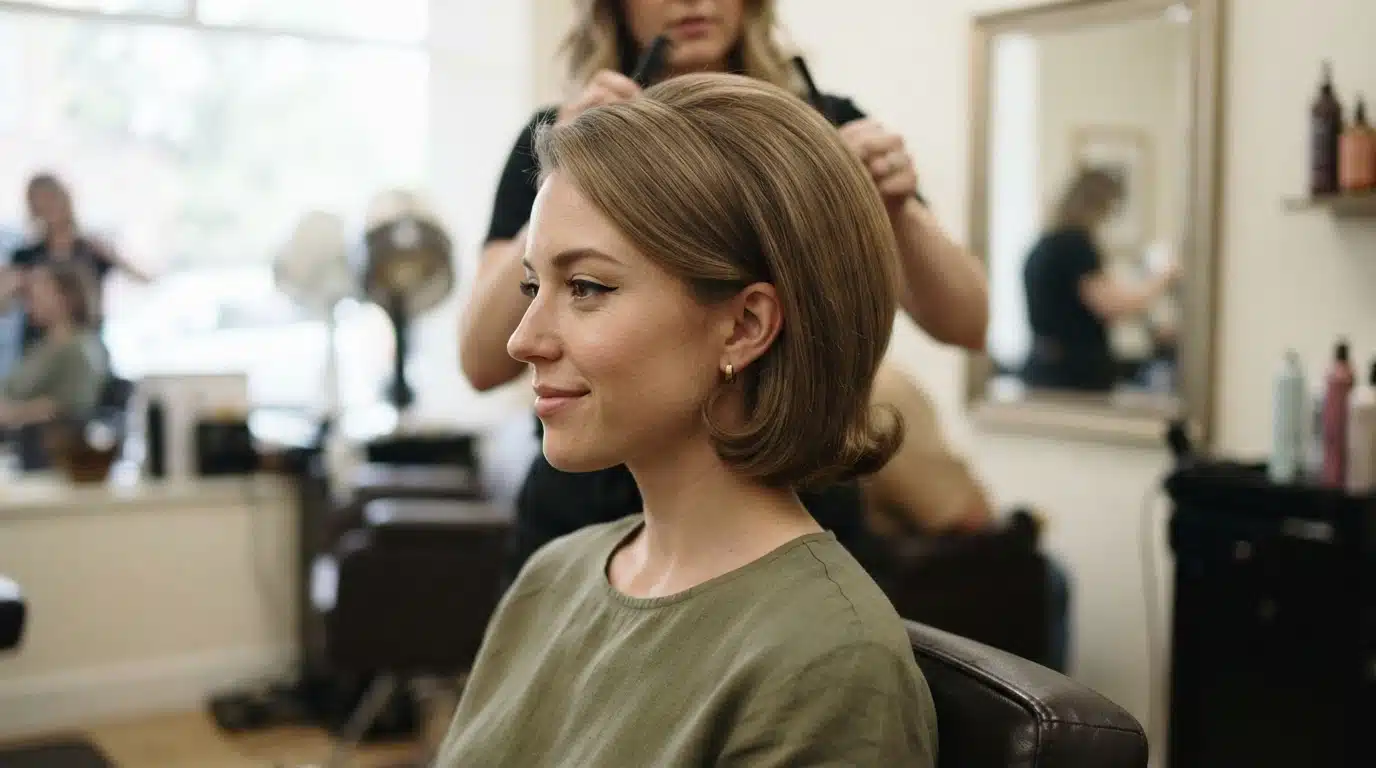
The pageboy creates a smooth, rounded silhouette with the ends curved inward toward the neck or jaw. Its controlled shape makes it a practical choice for straight and medium-textured hair.
Blow-dry with a round brush or set the ends on rollers, then brush everything into one continuous curve, keeping the surface sleek and the outline balanced evenly on both sides.
- Best for: Smooth, polished styling.
- Tip: Keep both sides evenly curved.
- Hair length: Chin to shoulder length.
13. High Ponytail with Crown Volume
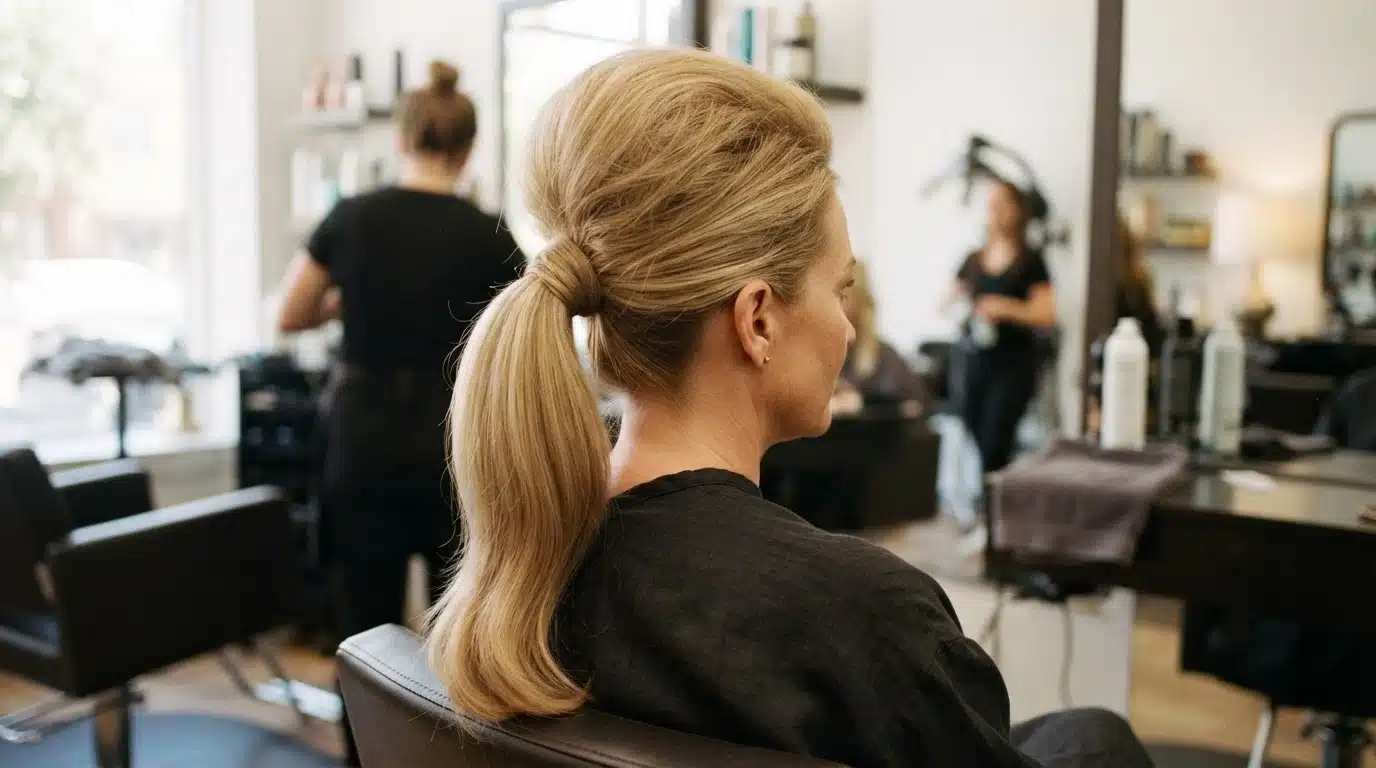
A high ponytail becomes distinctly 1960s when you lift the crown before pulling the hair back. The added height gives a simple style more shape and period character.
Gently tease the crown, smooth the top layer, then gather the ponytail without flattening the volume. Finish by curling ends outward or leaving them softly rounded for movement through the lengths. A gentle overnight wrap can help the ponytail keep its shape until morning.
- Best for: Casual days and parties.
- Tip: Avoid flattening the crown when tying.
- Hair length: Medium to long.
14. Ribbon Ponytail
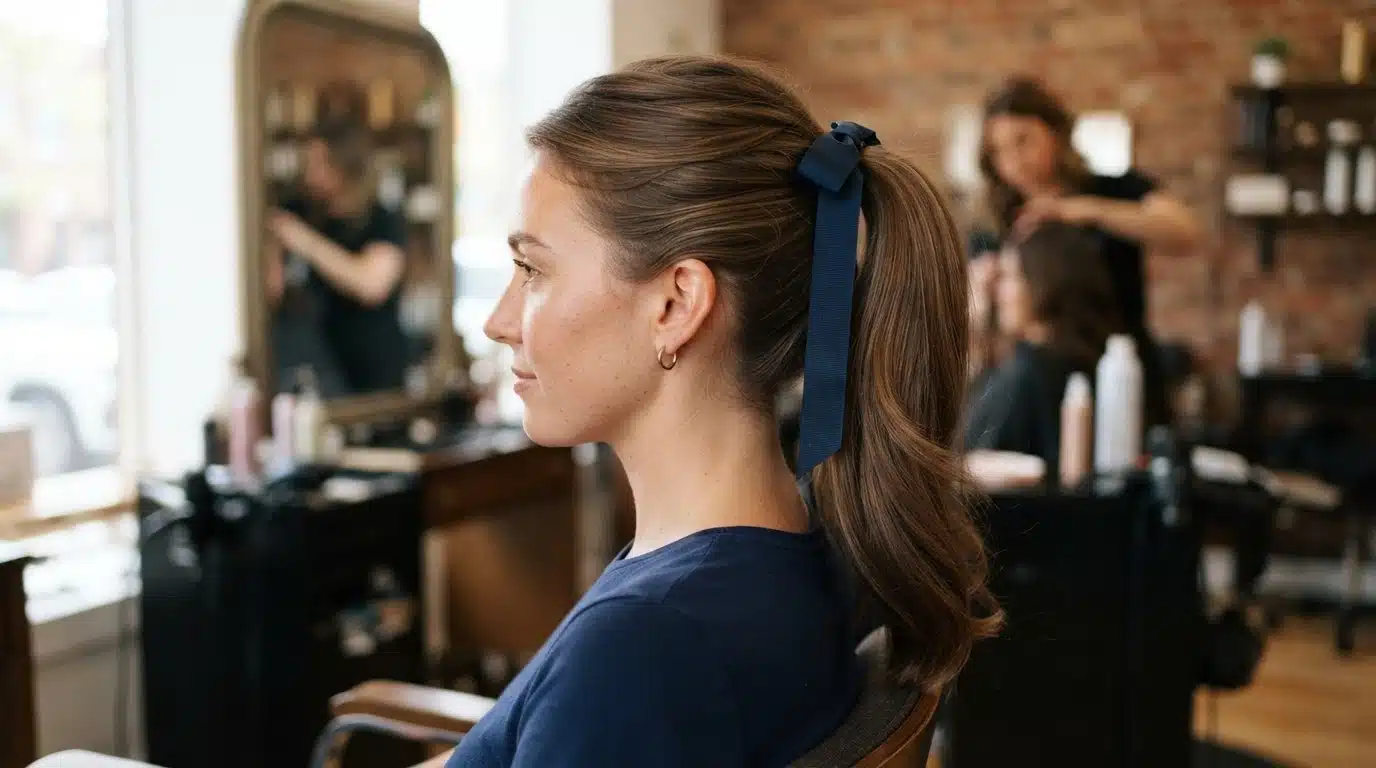
The ribbon ponytail adds a clear retro detail to an otherwise simple hairstyle, making it one of the easiest 1960s-inspired options for daily wear. Start with a smooth or lightly lifted ponytail, then tie a ribbon around the base.
Choose a neat bow and keep the rest of the styling restrained so the accessory remains the main period reference point.
- Best for: Beginners and quick retro styling.
- Tip: Keep the bow proportionate to the ponytail.
- Hair length: Medium to long.
15. Headband Bouffant
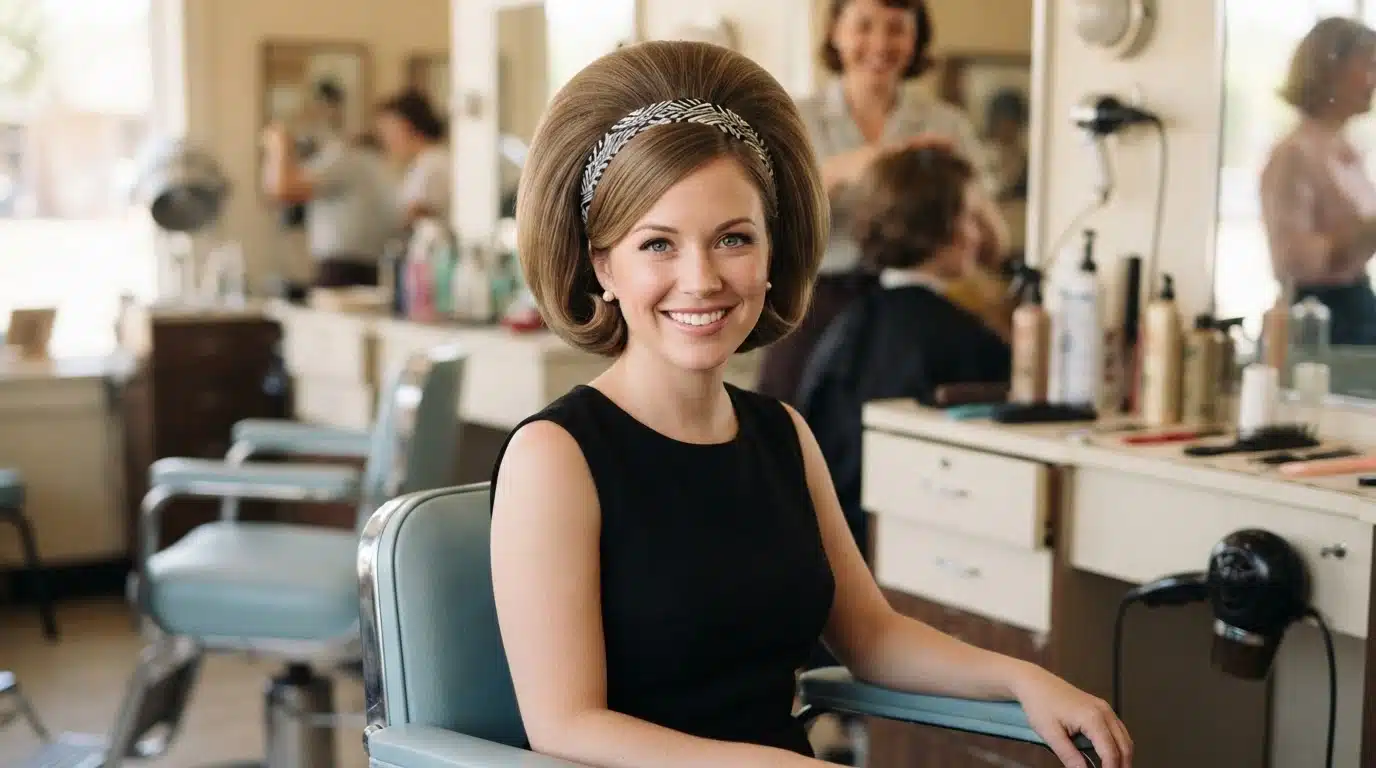
A headband bouffant combines moderate crown height with a wide band placed near the hairline, creating a recognizable 1960s shape without requiring an elaborate updo.
Build light volume at the crown, smooth the surface, and secure the headband. The lengths can stay straight, curled, or flipped, making this style adaptable to several hair textures and occasions.
- Best for: Parties and retro outfits.
- Tip: Add the headband after creating volume.
- Hair length: Medium to long.
16. Scarf-Wrapped Hairstyle
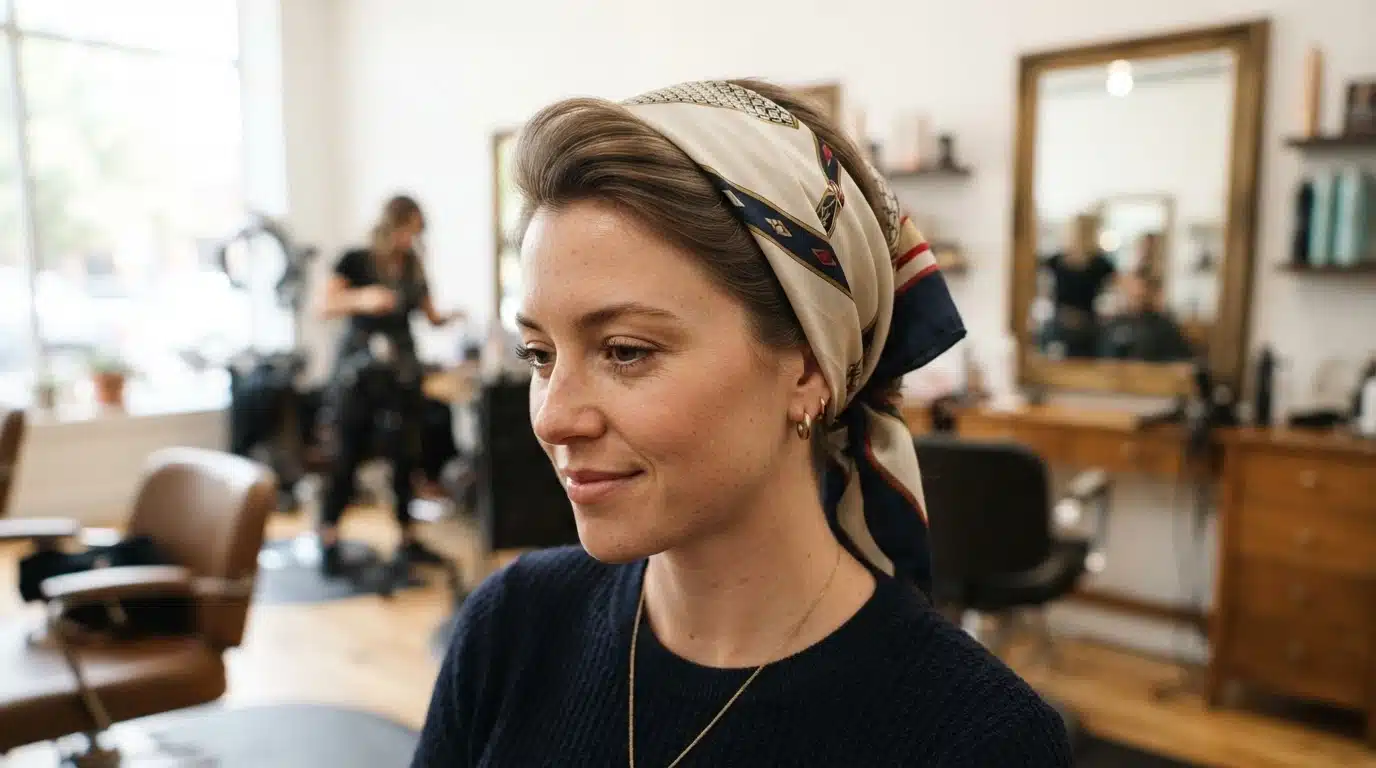
A scarf-wrapped hairstyle gives straight, waved, or loosely pinned hair a strong 1960s reference without complicated styling. Fold a lightweight scarf into a narrow band and place it around the head or ponytail, depending on the look you want.
Keep the hair underneath smooth or softly textured and avoid combining too many accessories so the scarf remains the main detail.
- Best for: Quick and casual styling.
- Tip: Pin slippery scarves discreetly.
- Hair length: Short, medium, or long.
17. French Twist
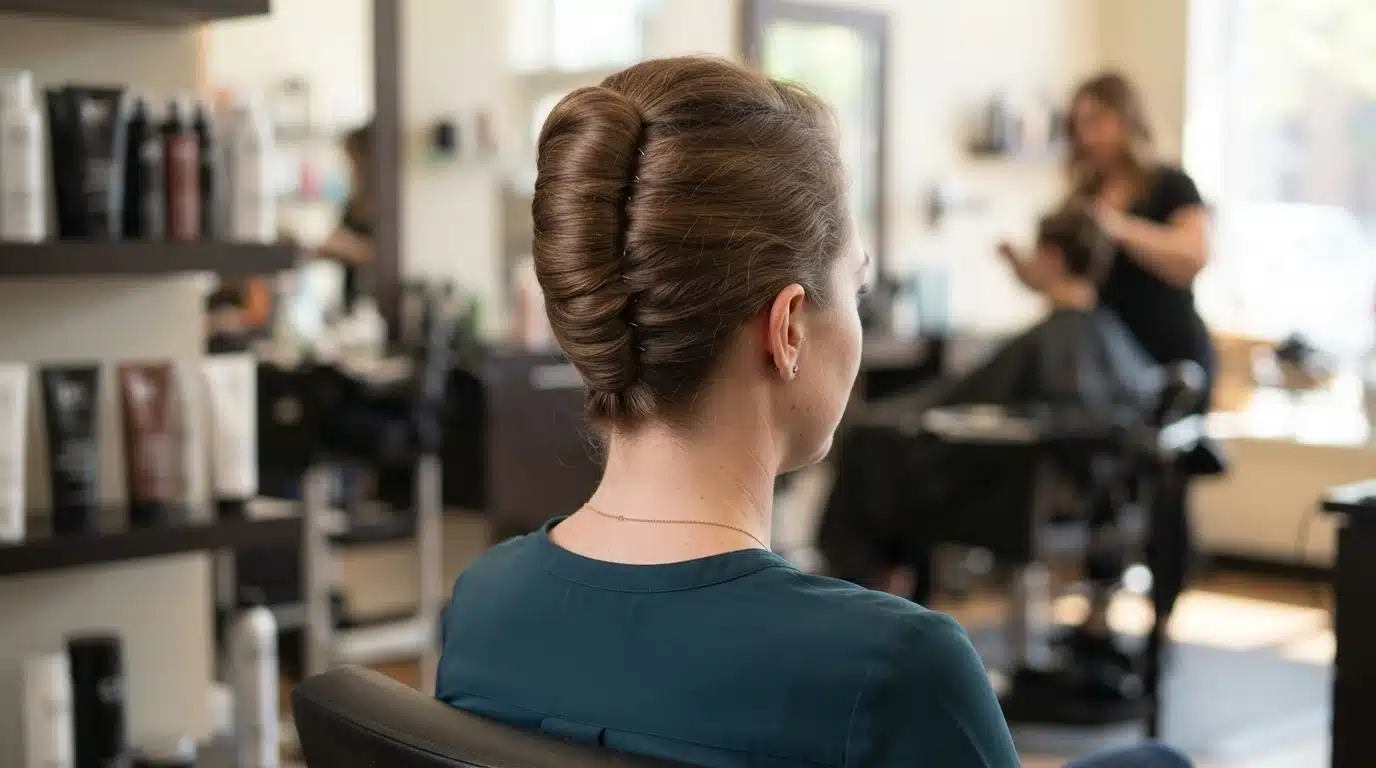
The French twist creates a smooth vertical roll at the back of the head, making it a polished option for evening wear, formal events, and dressier 1960s looks.
Gather the hair toward one side, secure it with pins, then roll the lengths inward and pin again. Smooth the outer surface carefully while keeping enough internal tension to hold the shape.
- Best for: Weddings and formal events.
- Tip: Create a secure pin base first.
- Hair length: Medium to long.
18. Sculpted Chignon
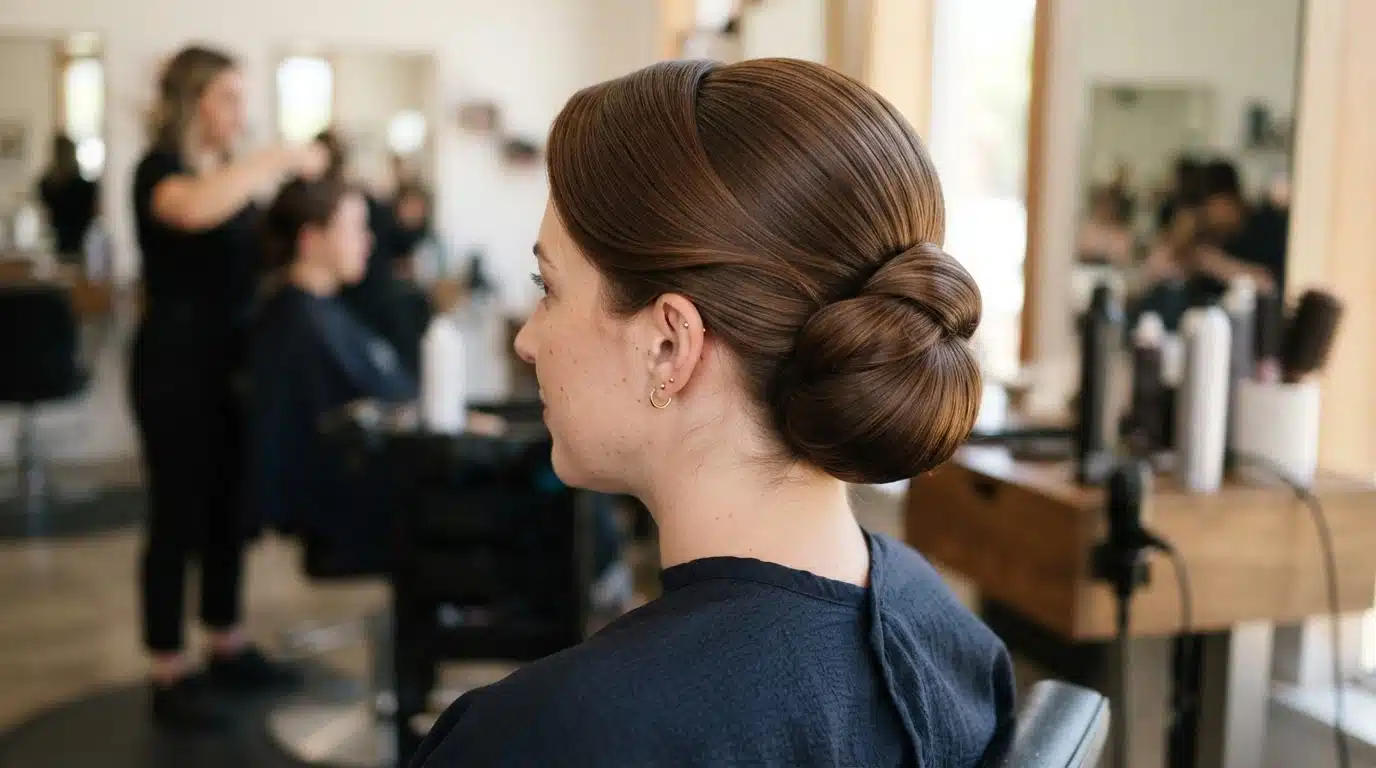
A sculpted chignon gathers the hair into a controlled low shape at the nape, offering a refined alternative to taller updos. The finish should look smooth, balanced, and securely pinned.
Start with brushed hair, twist or coil the lengths into a compact bun, and hide the ends underneath. A slight crown lift can add period character without overwhelming the silhouette.
- Best for: Formal and evening wear.
- Tip: Add slight crown lift if desired.
- Hair length: Medium to long.
19. Voluminous Curls
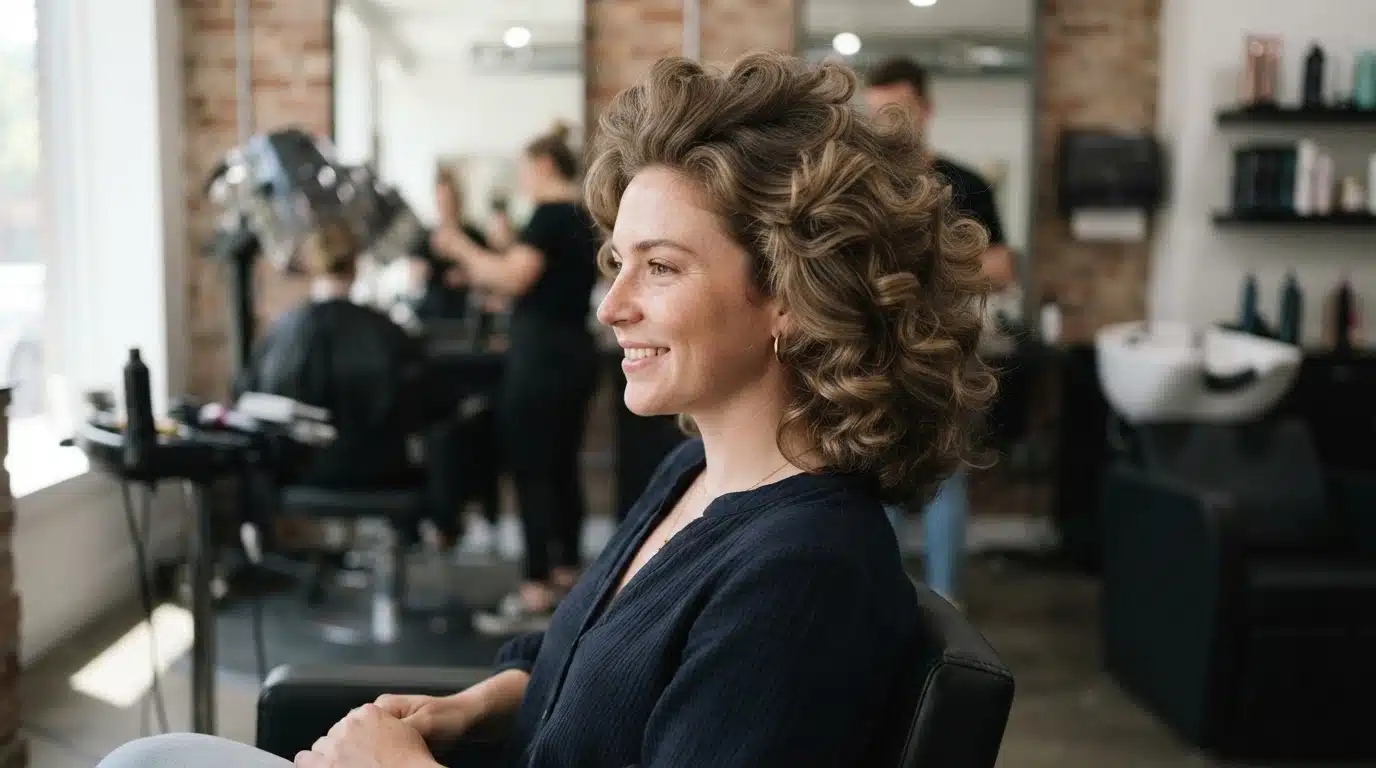
Voluminous curls bring softness and fullness to 1960s styling, especially when created with a roller set rather than tight individual ringlets. Large rollers help form rounded waves and controlled body through the lengths.
Once cooled, brush the curls gently to combine them into a fuller shape, then use light hairspray to maintain volume while allowing the hair to move naturally.
- Best for: Parties and a fuller retro look.
- Tip: Brush curls together after cooling.
- Hair length: Medium to long.
20. Soft Shoulder-Length Flip
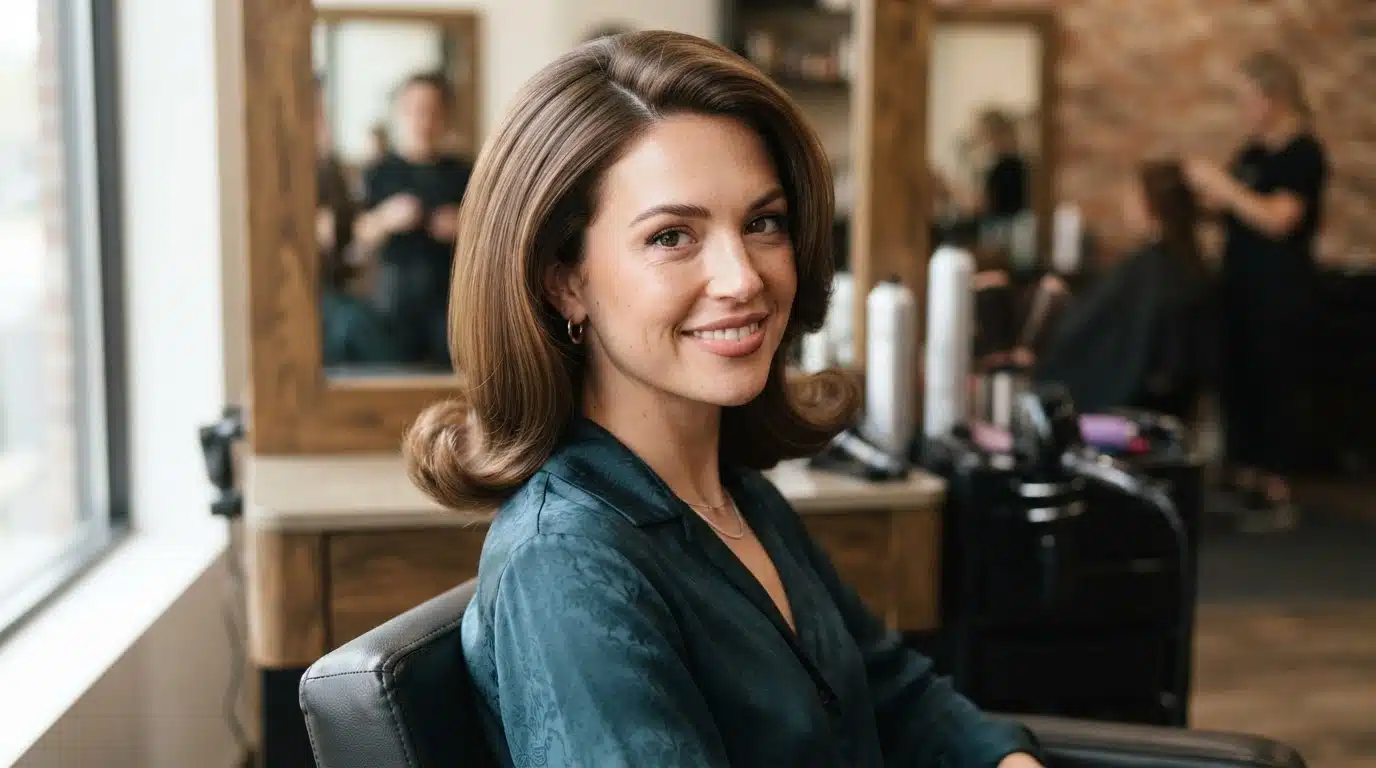
The soft shoulder-length flip keeps the outward-curled ends associated with 1960s hair but reduces the stiffness and sharpness of the classic version. It works well for medium-length hair that already has natural movement.
Use a round brush or large roller to turn only the ends outward, then keep the crown relatively smooth for an easy, balanced finish.
- Best for: Everyday subtle retro styling.
- Tip: Keep the outward bend broad.
- Hair length: Shoulder length.
21. Long Straight Center-Parted Hair
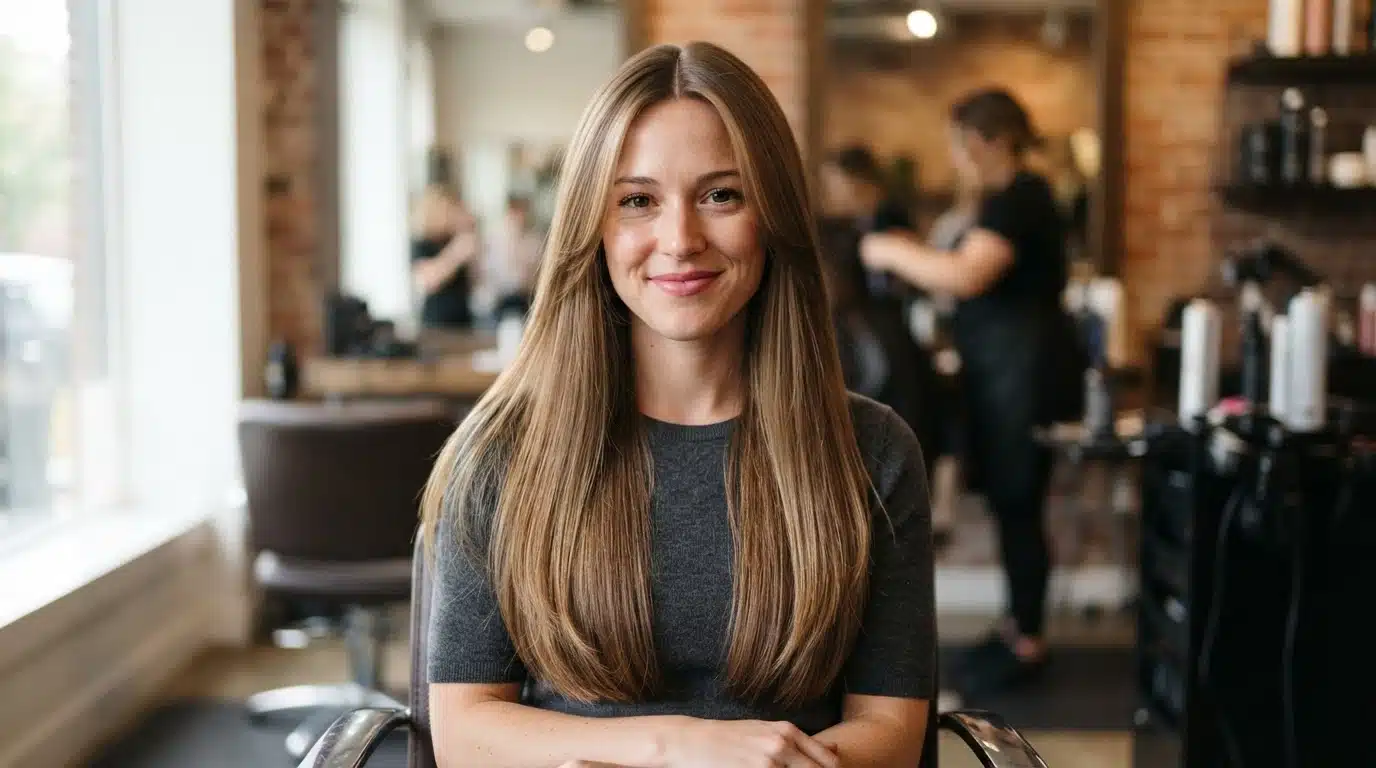
Long, straight, center-parted hair reflects the simpler direction that became more visible later in the 1960s. Instead of heavy teasing or sculpted curls, the focus is on clean length, a middle part, and movement.
Smooth the hair with a brush or blow-dryer, keep the ends relaxed, and avoid adding excessive volume that would shift the style toward earlier decade shapes.
- Best for: Simple late-’60s styling.
- Tip: Keep crown volume minimal.
- Hair length: Long.
22. Loose Late-’60s Waves
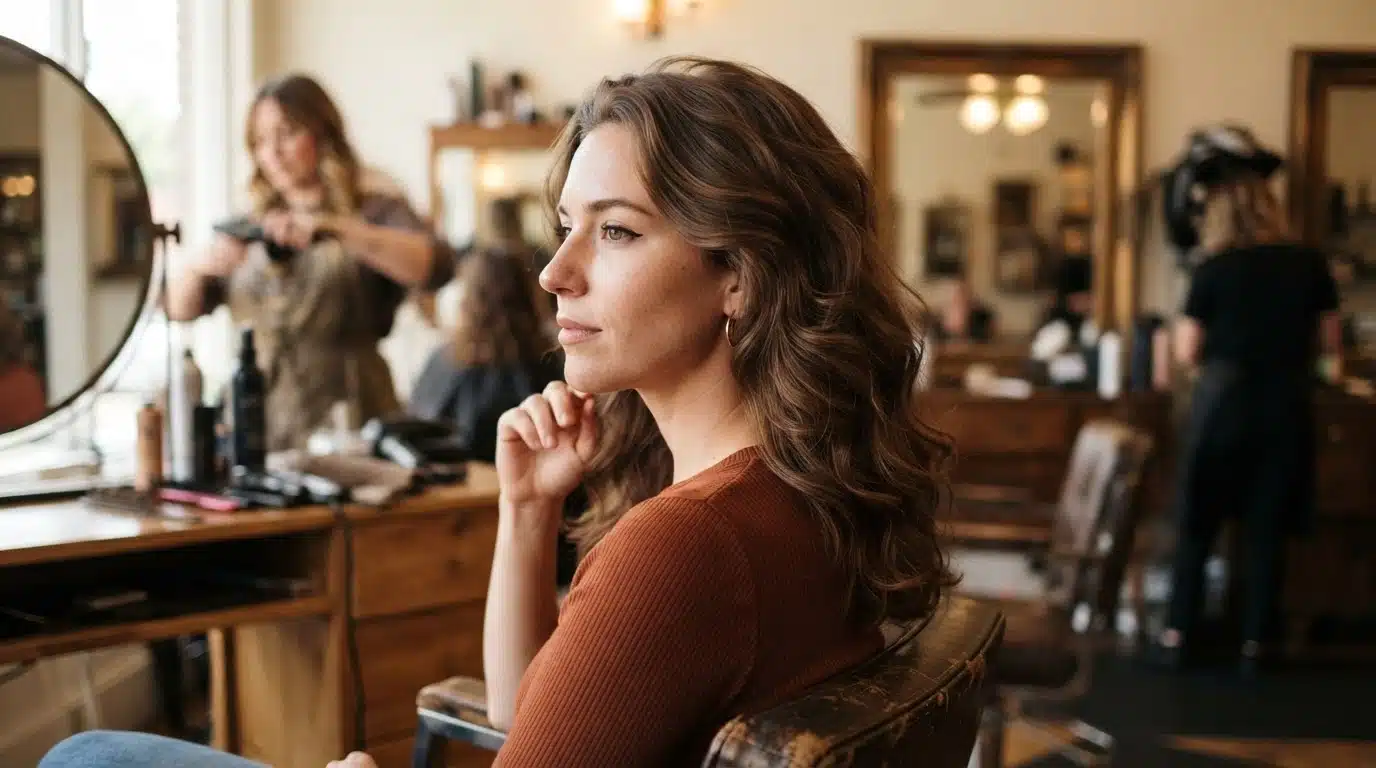
Loose late-1960s waves have a softer, freer shape than the controlled roller sets popular earlier in the decade. The hair usually falls naturally around the shoulders with gentle bends rather than structured curls.
Create the effect with large rollers, braids, or a wide styling tool, then separate the waves lightly with your fingers instead of brushing them into a shape.
- Best for: Casual, relaxed styling.
- Tip: Separate waves gently with fingers.
- Hair length: Medium to long.
23. Natural Afro
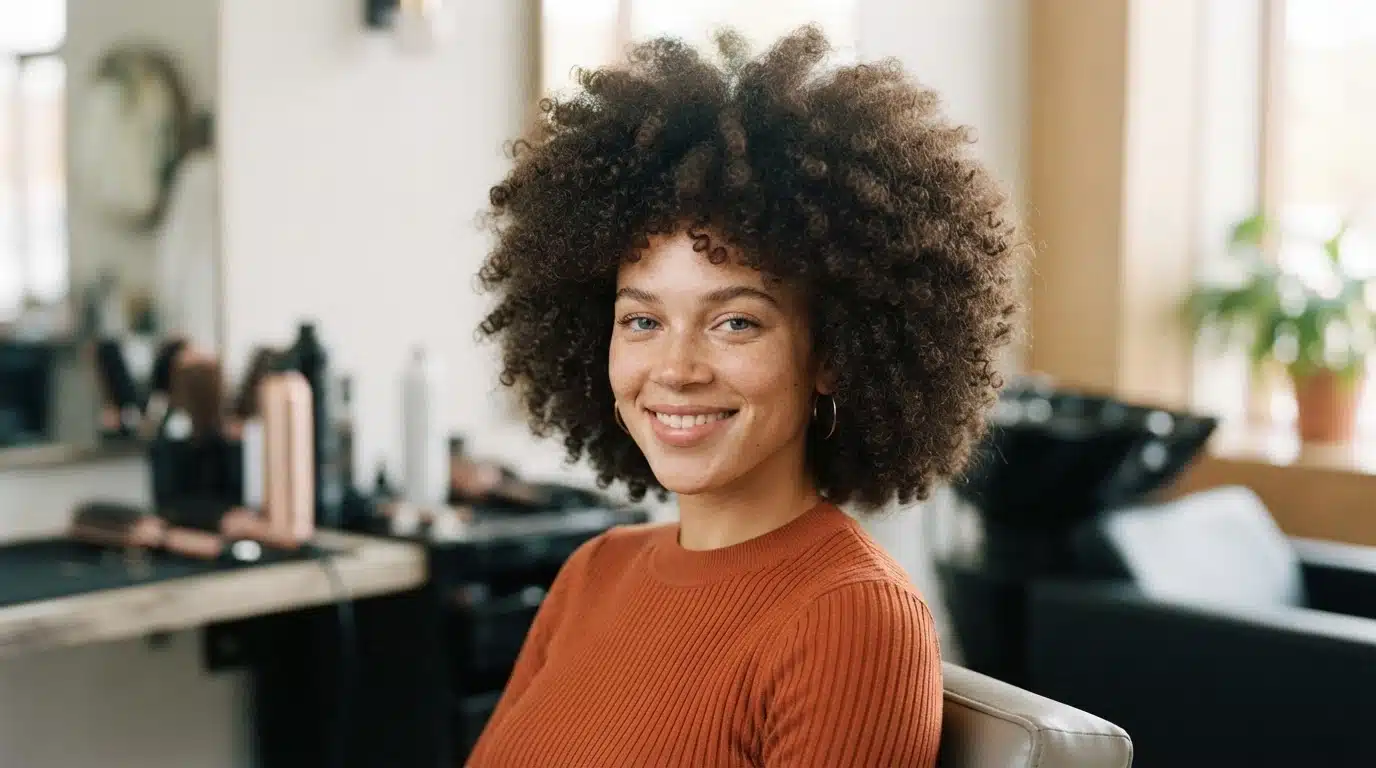
The natural Afro became increasingly visible in the late 1960s, carrying cultural meaning as well as a rounded silhouette. Rather than reshaping textured hair to fit earlier beauty standards, the style centers natural curl and coil patterns.
Shape gently with a wide-tooth comb or pick, maintain balanced fullness, and focus on healthy texture rather than forcing excessive height or symmetry.
- Best for: Naturally curly and coily textures.
- Tip: Shape gently to reduce pulling.
- Hair length: Short, medium, or long.
These styles show how varied 1960s hair could be, from precise crops to full volume updos. Choose the shape that best suits your length, texture, styling time, and preferred retro finish.
Hair Trends From the 1960s by Era
The decade did not follow one continuous hair trend. Early, mid, and late 1960s hairstyles developed noticeably different shapes as fashion and cultural attitudes changed.
| Period | Main Hair Direction | Recognizable Styles |
|---|---|---|
| Early 1960s | Rounded volume, roller sets, structured styling | beehive, bouffant, bubble cut, chignon |
| Mid-1960s | Shorter precision cuts, Mod shapes, graphic lines | geometric bob, five-point cut, pixie, pageboy, flip |
| Late 1960s | Longer lengths and more natural texture | center-parted straight hair, loose waves, natural Afro |
The progression is useful when recreating a period-specific look. A high bouffant suggests a different part of the decade than a short geometric crop or long center-parted hair.
How to Make 1960s Hair Feel Modern
Modern versions of 1960s hairstyles usually keep one recognizable period detail while reducing stiffness, excessive volume, or heavy product use.
- Keep some rounded lift without recreating the tallest version of a beehive or bouffant
- Replace rigid curls with loose bends, brushed-out curls, or relaxed waves
- Concentrate backcombing around the crown instead of teasing the entire hairstyle
- Use one retro feature such as flipped ends, a wide headband, crown lift, a ribbon, or a center part
- Choose flexible-hold styling products that maintain shape without making the hair look overly stiff
- Leave soft face-framing pieces to make half-up styles and bouffants easier to wear today
- Keep short Mod cuts clean and precise rather than adding unnecessary volume or accessories
A current version does not need to copy every period styling method. Keeping the recognizable silhouette is often enough to make the 1960s reference clear.
How to Recreate 1960s Hairstyles at Home
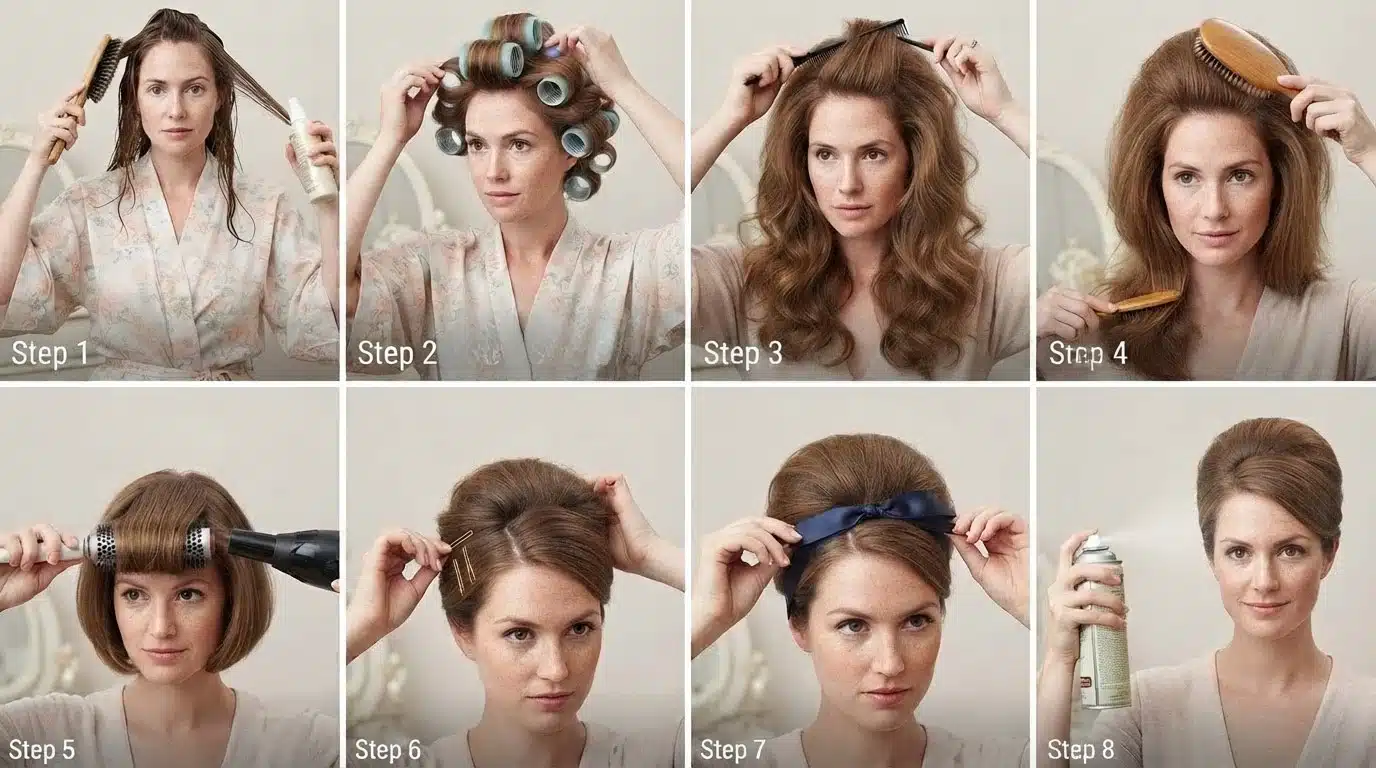
Most 1960s hairstyles were built around a few core techniques rather than completely different styling methods. Creating volume, shaping the crown, controlling texture, and adding the right finishing details can help recreate many iconic retro looks with simple tools.
- Step 1: Prepare the hair: Start with dry hair that has enough texture to hold its shape. Apply heat protection before using heated tools.
- Step 2: Separate the crown: Divide the upper section from the sides and lower lengths.
- Step 3: Build the base. Work through small crown sections and gently backcomb toward the roots.
- Step 4: Create the height: Continue until you have enough internal volume for the beehive size you want.
- Step 5: Smooth the surface: Lightly brush only the visible outer layer so the backcombing underneath remains intact.
- Step 6: Shape and pin: Guide the hair into a rounded upper shape and secure hidden sections with bobby pins.
- Step 7: Set the style: Finish with hairspray once the final silhouette is in place.
Not every 1960s hairstyle needs extreme height or heavy styling. Softer volume, subtle flips, and simple accessories can capture the decade’s character while creating a practical look for today.
Common Mistakes When Recreating 1960s Hairstyles
1960s hairstyles are known for bold shapes and careful styling. Understanding common mistakes helps recreate these iconic looks with better balance, softness, and control.
| Common Mistake | Better Approach |
|---|---|
| Teasing the entire head | Add volume only where the hairstyle needs lift. |
| Flattening teased sections while smoothing | Gently brush the outer layer to keep hidden volume. |
| Making every style extremely large | Match the height and fullness to the specific hairstyle. |
| Applying too much hairspray too early | Build the shape first, then add controlled hold. |
| Creating overly tight flipped ends | Shape a soft outward bend instead of a curl. |
| Combining too many retro details | Choose one or two vintage elements for balance. |
The mistake I see most in my chair isn’t the teasing itself; it’s smoothing too hard afterward and flattening the very volume the client just spent ten minutes building. Choose the right silhouette, styling method, and details to create a balanced retro look.
Final Retro Touch
1960s hair moved from dramatic beehives and bouffants to sleek Mod cuts, softer waves, and natural styles, offering a wide range of looks to recreate.
From classic volume techniques and iconic cuts to modern styling adjustments, these looks show how the decade influenced beauty trends across generations.
Whether you prefer bold height, polished shapes, or relaxed retro details, 1960s hairstyles provide plenty of inspiration for a unique look.
Comment below with your thoughts and share which 1960s hairstyle you would like to recreate for your next vintage-inspired look.
Frequently Asked Questions
Can I Create 1960s Hairstyles Without Cutting My Hair?
Yes, you can recreate many 1960s looks without a haircut. Styles like bouffants, half-up volume, flipped ends, and scarf looks work well with your current hair length.
Which 1960s Hairstyle Is Easiest for Beginners?
Simple styles like ribbon ponytails, scarf-wrapped hair, and soft flips are easier starting points because they need less teasing, pinning, and styling time.
How Can I Add 1960s Volume to Fine Hair?
Use rollers, light root teasing, and careful smoothing to create lift without adding excessive weight. Focus volume at the crown for a balanced retro shape.