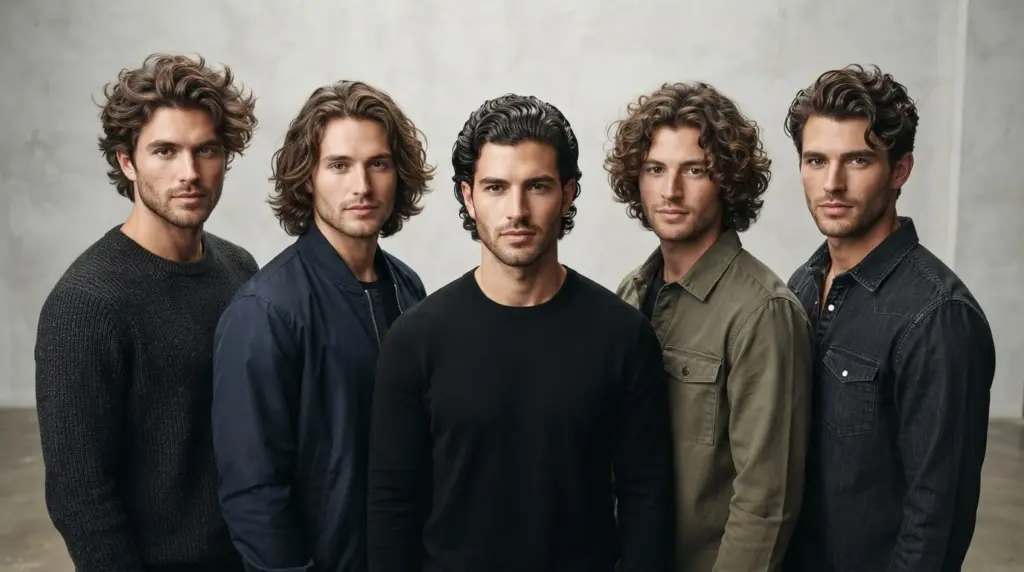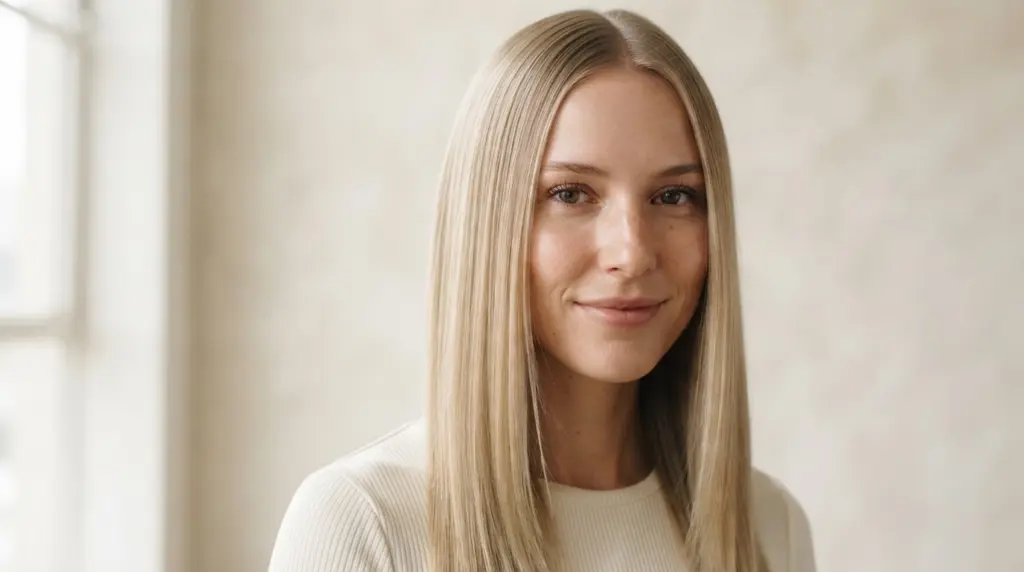
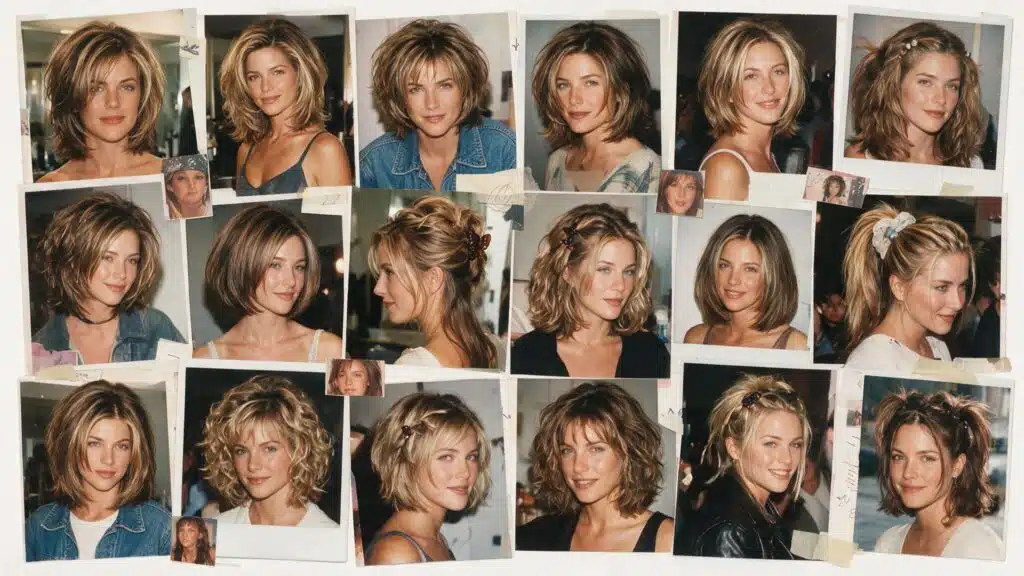
I still remember a client bringing a photo of Jennifer Aniston’s haircut to my uncle’s shop and asking, “make it move like that.” That moment showed me that great layering is about creating natural movement, not just copying a cut.
90s hair never really left. It came back through old photographs, family stories, and new generations trying the same shapes again.
These looks held up because they were built on real texture, easy movement, and simple accessories- nothing that needed a full styling session to look finished.
Below are the 90s cuts and styles that still work today, along with what to ask for, realistic styling time, and easy ways to make each look feel personal.
What Made 90s Hairstyles So Iconic?
The 90s were not defined by a single trend. Grunge, pop culture, music, and television all shaped hairstyles during the decade, creating looks that were different but equally memorable.
Shows like Friends and Beverly Hills, 90210 turned certain haircuts into salon requests almost overnight.
Music also influenced styling, with grunge bringing messy textures and relaxed shapes, while pop trends favored smoother, polished finishes. Both styles continue today with updated versions.
What made 90s hairstyles stand out was the mix of textures, playful accessories like butterfly clips and scrunchies, bold parting choices, and effortless-looking finishes.
Although many styles appeared casual, they often relied on careful cutting and styling techniques, since curl and wave patterns come down largely to the shape of the hair follicle itself, to create that relaxed appearance.
The Most Popular 90s Hairstyles
From cult-classic cuts to statement-making texture, these are the 90s hairstyles that defined an entire decade. Each one comes with the what, why, and how to bring it back today.
1. The Rachel Cut
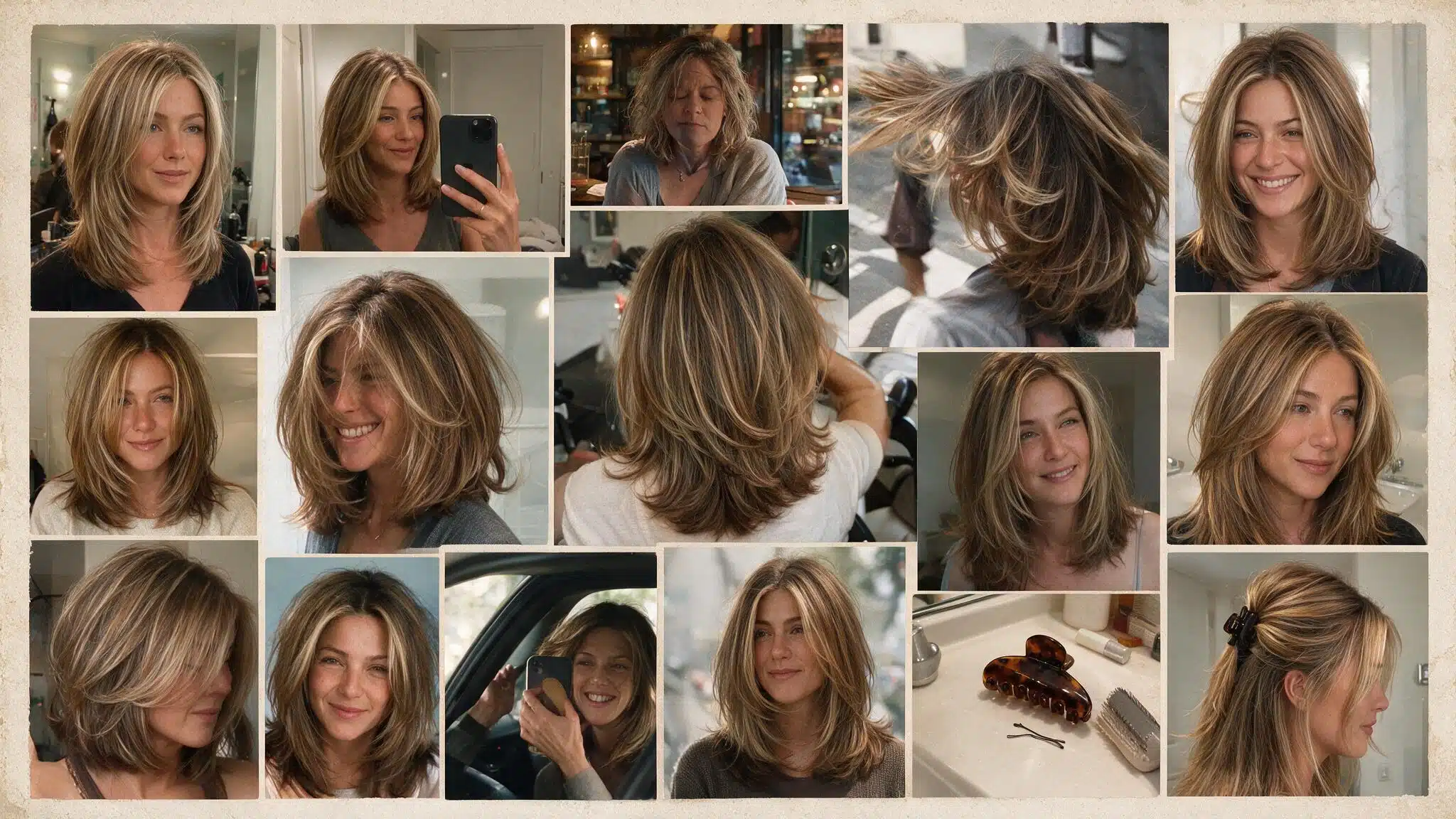
Long, blended layers starting at the cheekbone define this cut, built to bounce outward rather than lay flat. Ask for razor-cut face-framing layers.
Modern versions soften the flip with loose waves instead of a blowout. A mini clip holds back face-framing pieces without flattening volume; it works best on medium-to-long hair, where layering has room to move.
2. 90s Supermodel Blowout
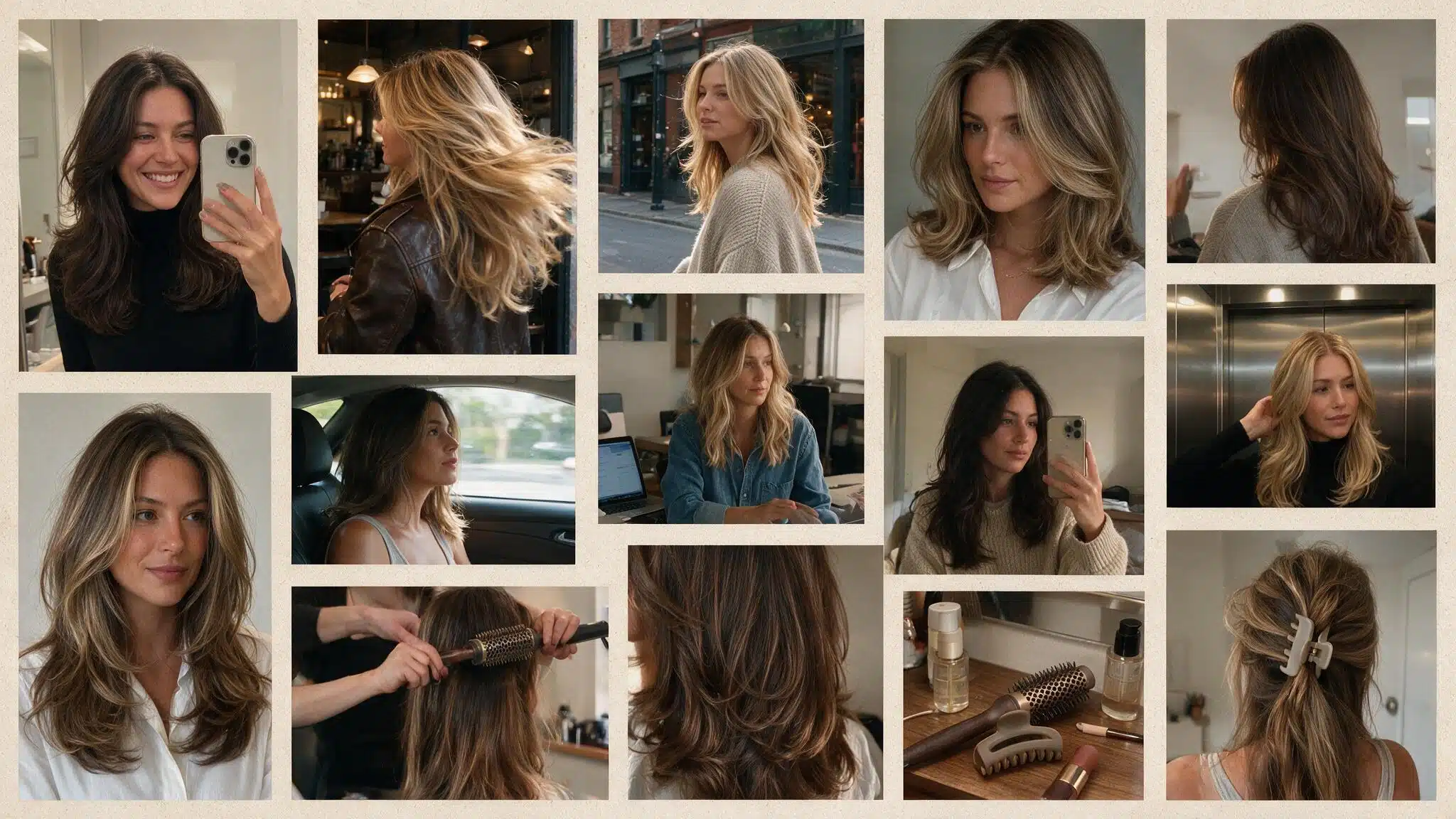
Big, bouncy, and full of body, this look ruled 90s runways with glossy, photo-ready volume. The signature “bend” curls ends inward or outward, never straight.
Blow-dry with a round brush, lifting at the roots. A claw clip lifts one section while drying the rest; it works best on long hair, where there’s enough length for the curl to swing.
3. Textured Shag
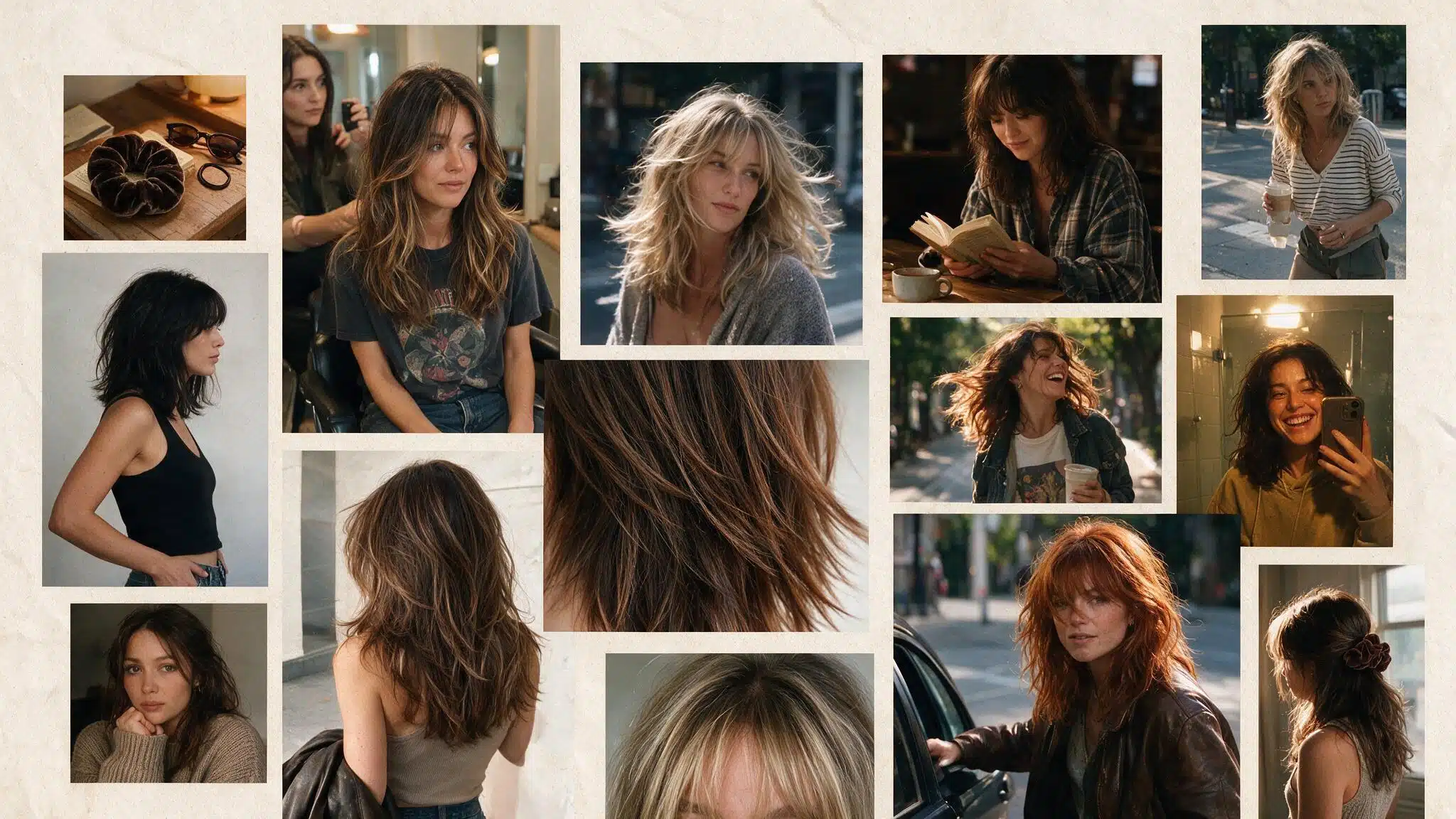
Choppy, layered, and effortlessly undone, the shag suits anyone wanting texture without much styling effort. Ask for razor-cut layers around the crown and ends, where flyaways are part of the charm.
Modern shags add curtain bangs or balayage. A scrunchie holds face-framing layers back on humid days. Suits medium-length hair best for layering room.
4. 90s Bob
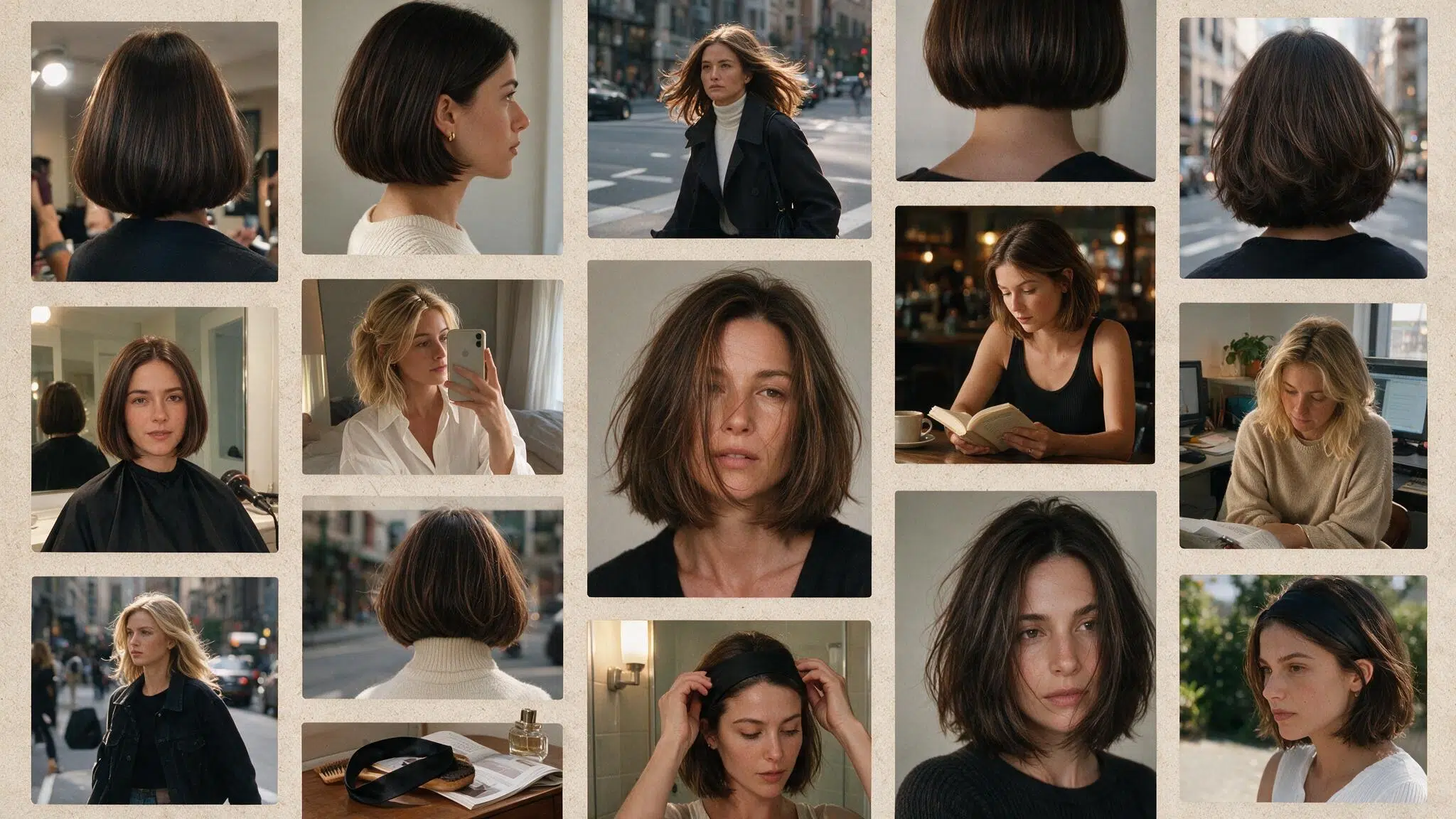
Sleek, chin-length, and often paired with blunt bangs, the 90s bob is all about clean lines. Straighten hair and tuck ends inward for the rounded shape.
Modern takes add slight texture or a subtle wave. A thin headband or mini clip keeps bangs in place. Best on short to medium lengths, since longer hair loses the bob’s precision.
5. 90s Pixie Cut
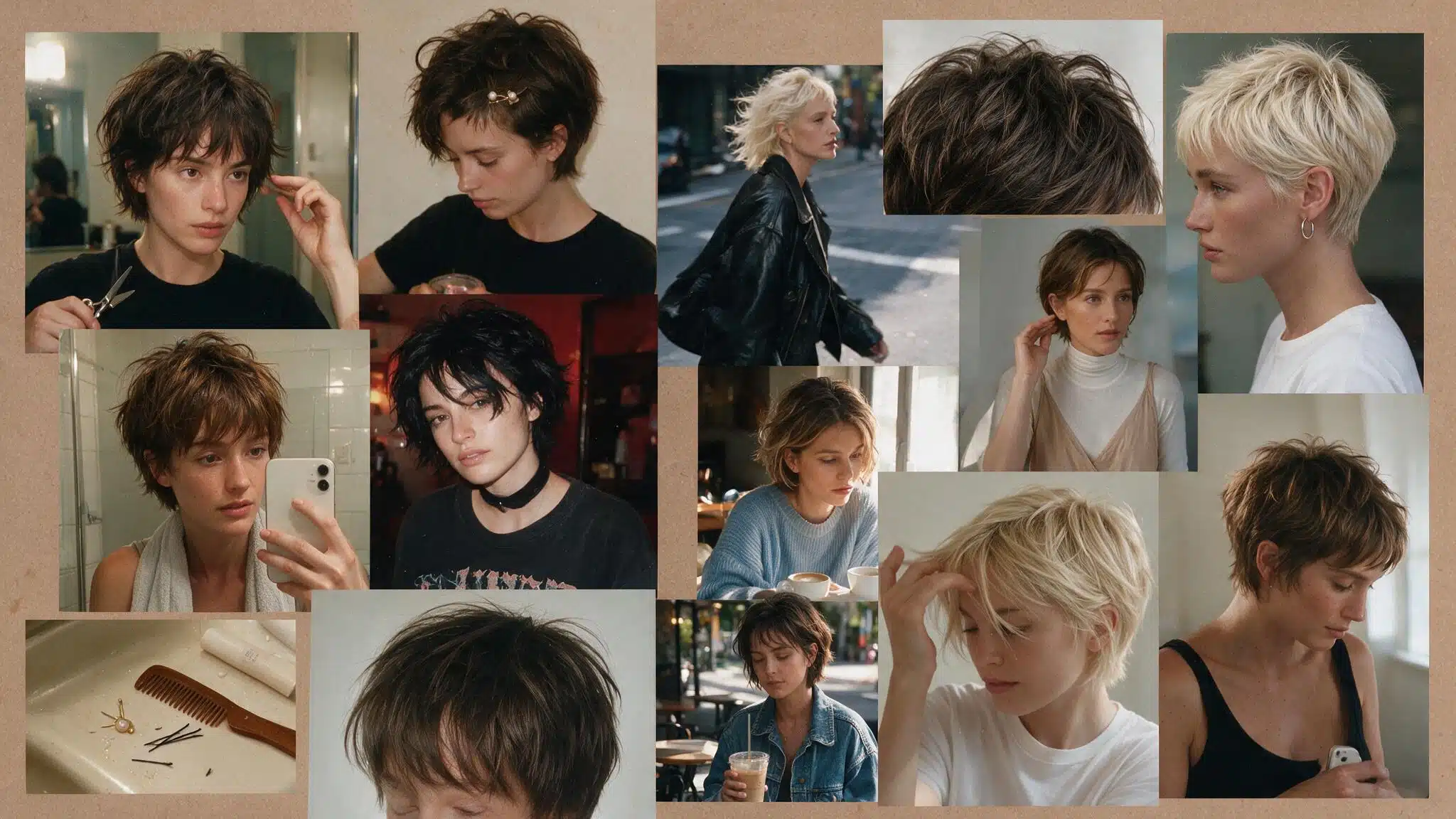
Short, edgy, and effortlessly confident, the pixie works both sleek and messy. Use a small amount of wax for texture at the crown. Modern versions keep slightly longer front pieces for flexibility.
A single decorative pin near the temple adds detail without overwhelming the length. Built specifically for short hair, relying on close-cropped, low-maintenance ease.
6. Crimped Waves
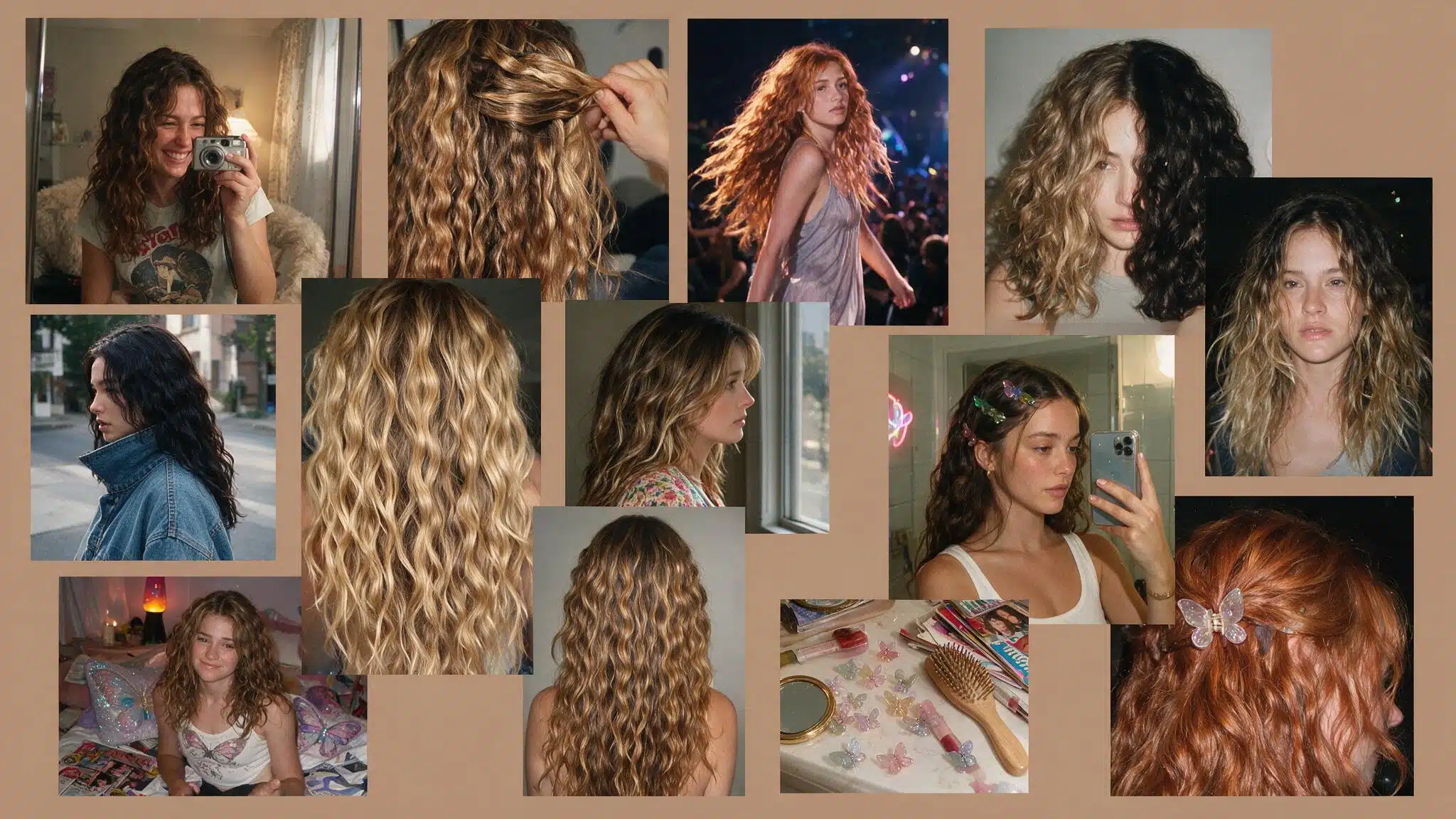
Zigzag texture from root to tip made crimped hair instantly recognizable in any 90s photo. Use a crimping iron in small sections for the ripple effect.
Modern versions crimp only sections, blending with sleek strands, since repeated heat tool exposure can wear on strands over time. A butterfly clip pinned along one section adds a playful touch. Works on medium to long hair, where the zigzag pattern reads clearly.
7. Curtain Bangs
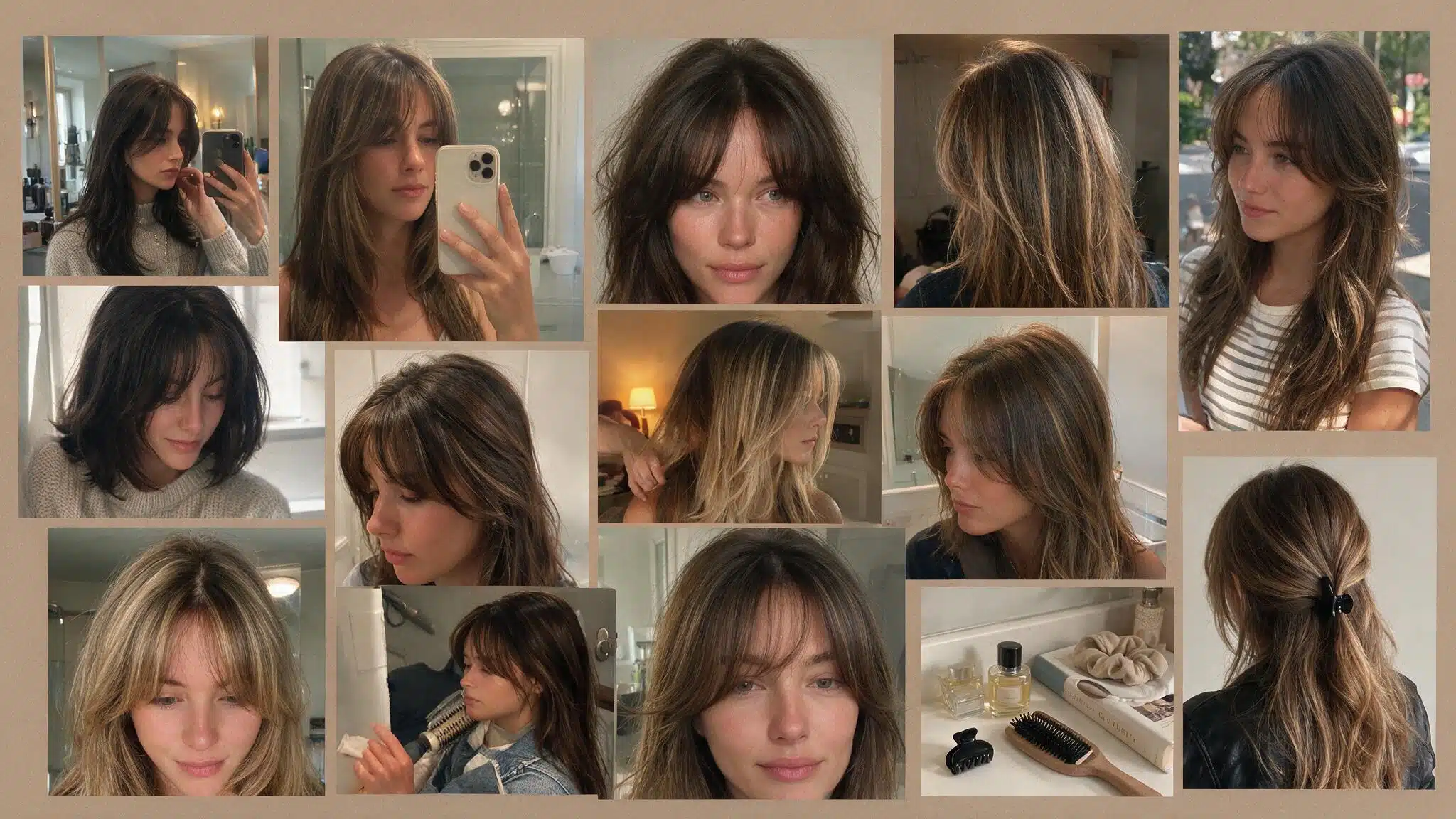
Center-parted and framing both sides of the face, curtain bangs soften features without a full fringe. Ask for bangs cut slightly longer at the outer edges.
Style with a round brush, curling ends inward and outward. A mini clip pin pins one side back on windy days. Suits medium to long hair, giving bangs room to blend naturally.
8. Permed Curls
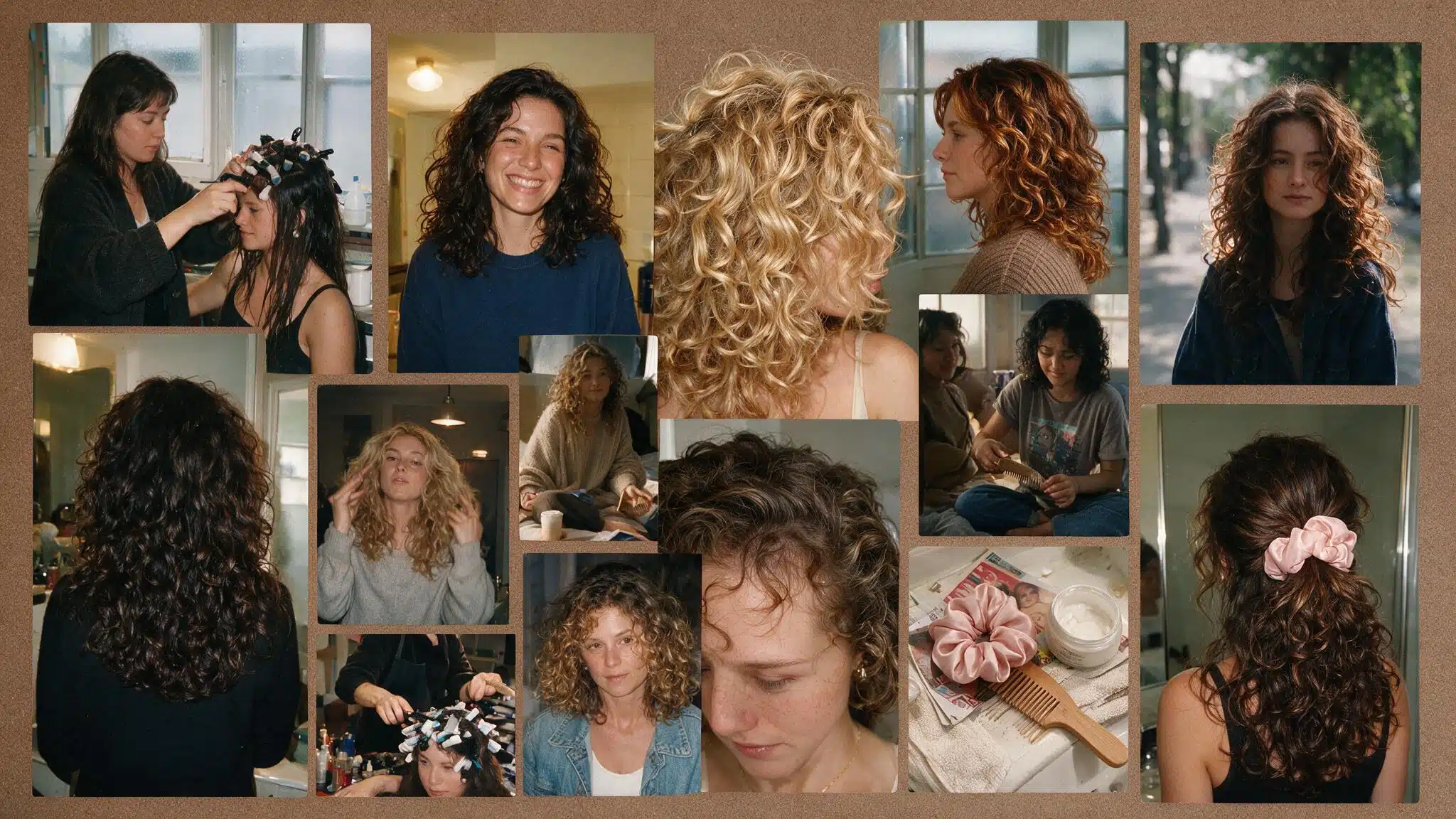
Bouncy, uniform curls achieved through chemical treatment made perms a defining 90s statement. Ask for a loose to medium perm depending on desired curl definition.
Modern versions favor looser, more natural curl patterns. A scrunchie or fabric tie avoids snagging curl definition. Suits medium to long hair, where curl patterns actually form and hold shape.
9. Half-Up Space Buns
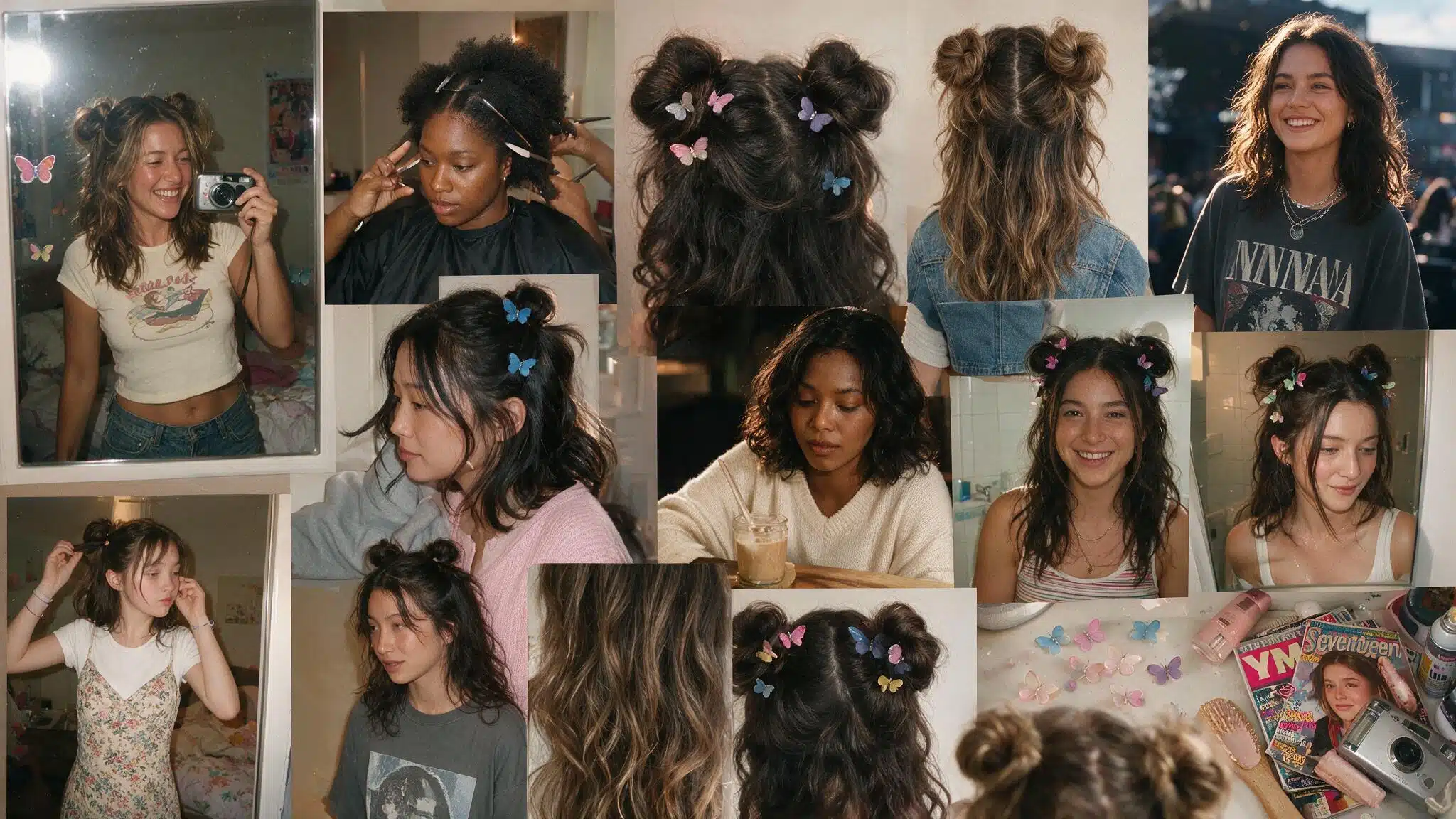
Two symmetrical buns positioned high on the head give this look playful, youthful energy. Section hair evenly, twist, and secure each bun with bobby pins.
Modern versions loosen the buns and pull out face-framing pieces. Butterfly clips near each bun add a coordinated touch, and the same shape reads as an edgier hairstyle look with darker makeup. Works best on medium to long hair, since shorter lengths struggle to hold shape.
10. Slicked-Back Bun
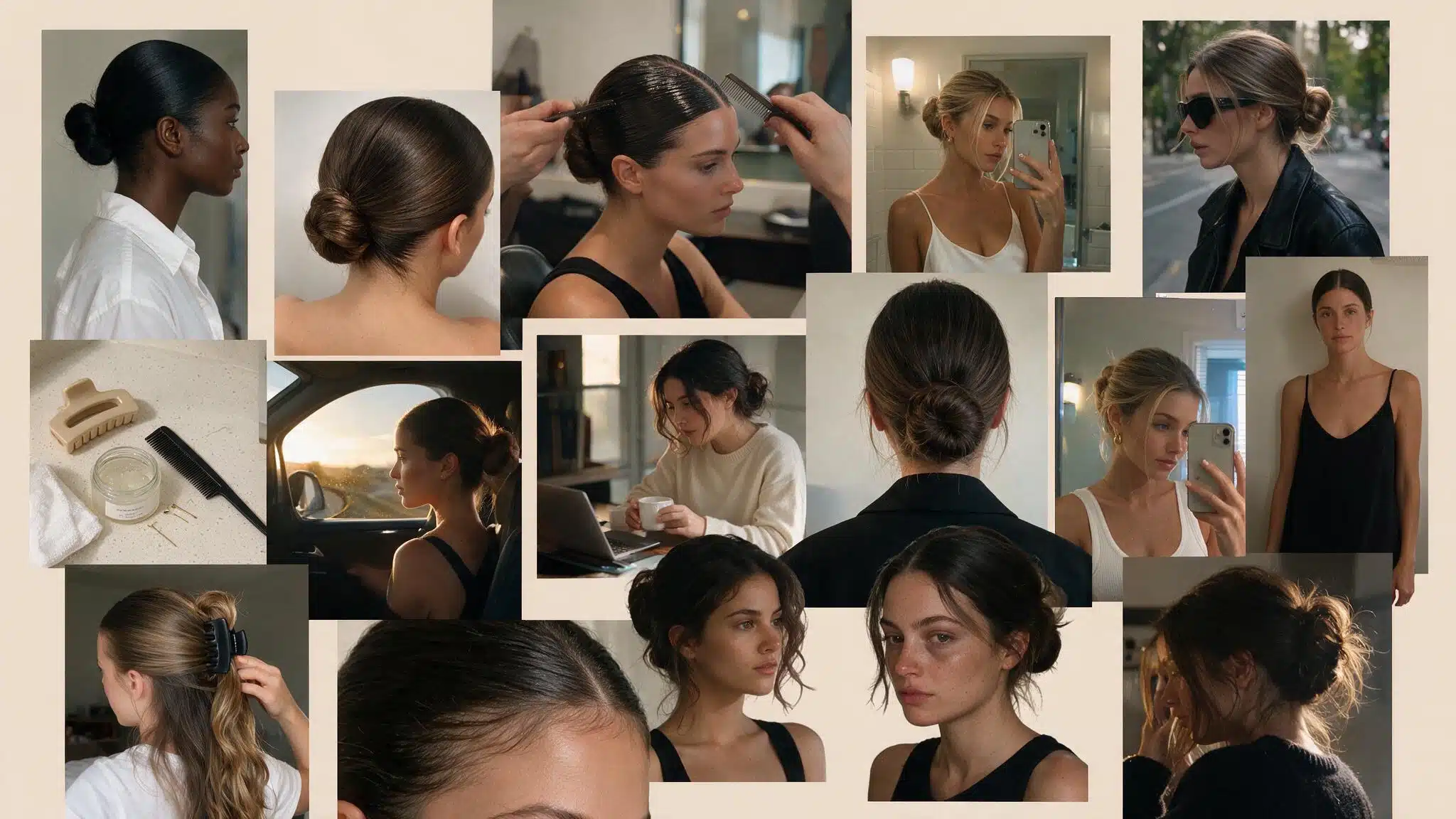
Sleek, polished, and pulled tightly off the face, this bun brought sophistication to 90s red carpets. Use gel to smooth flyaways before gathering hair into a low, tight bun.
Modern takes leave a few soft pieces loose around the face. A claw clip offers a quicker alternative. Suits medium to long hair, since shorter lengths can’t gather securely.
11. Finger Waves
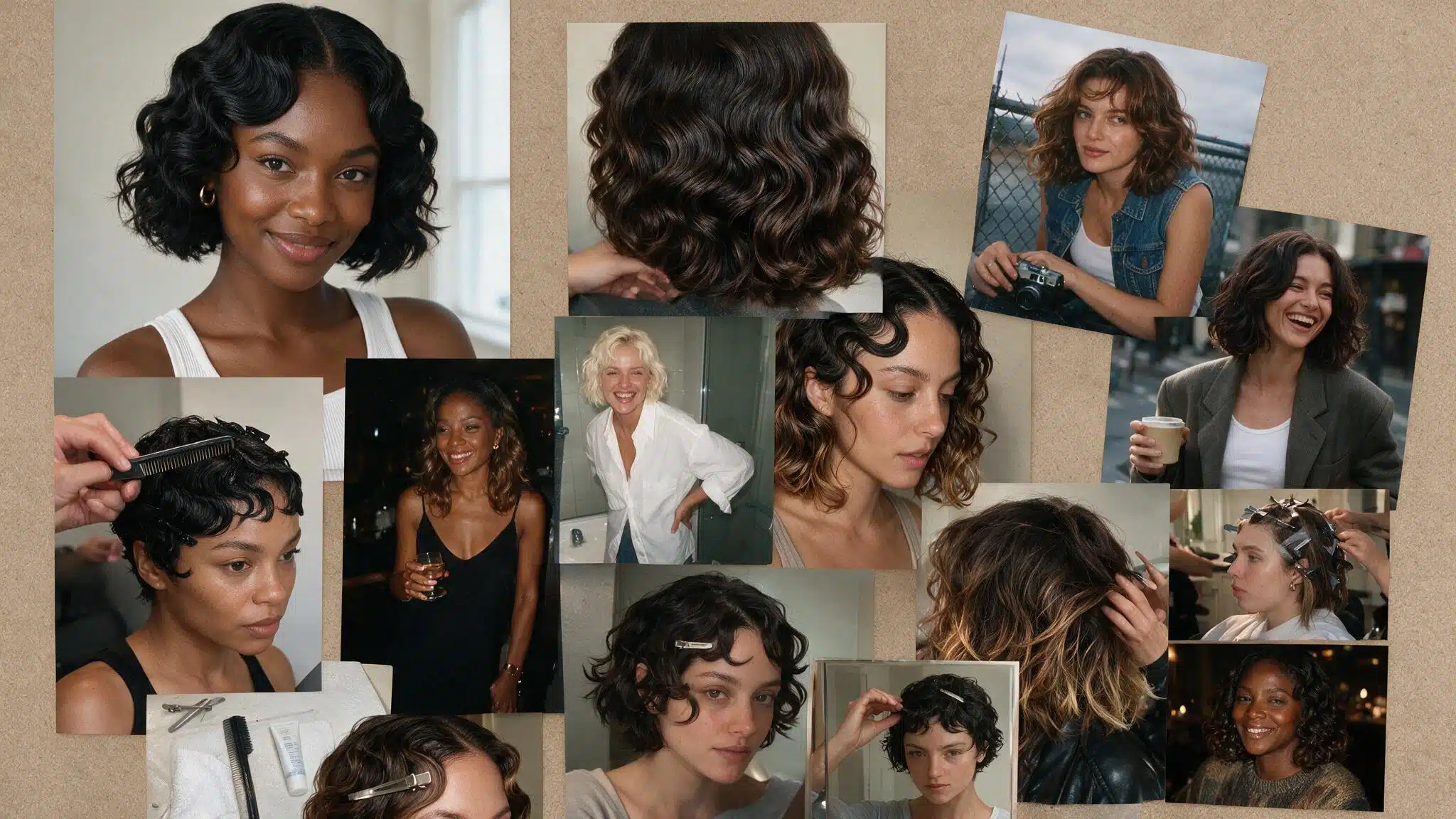
Smooth, S-shaped ridges pressed close to the scalp gave finger waves a glamorous, vintage edge. Use setting gel and a fine-tooth comb, securing with clips while drying.
Modern versions loosen the wave pattern slightly. Flat, snap-close clips hold each wave without leaving a crease. Best on short to medium hair, so waves sit close to the scalp.
12. High Ponytail
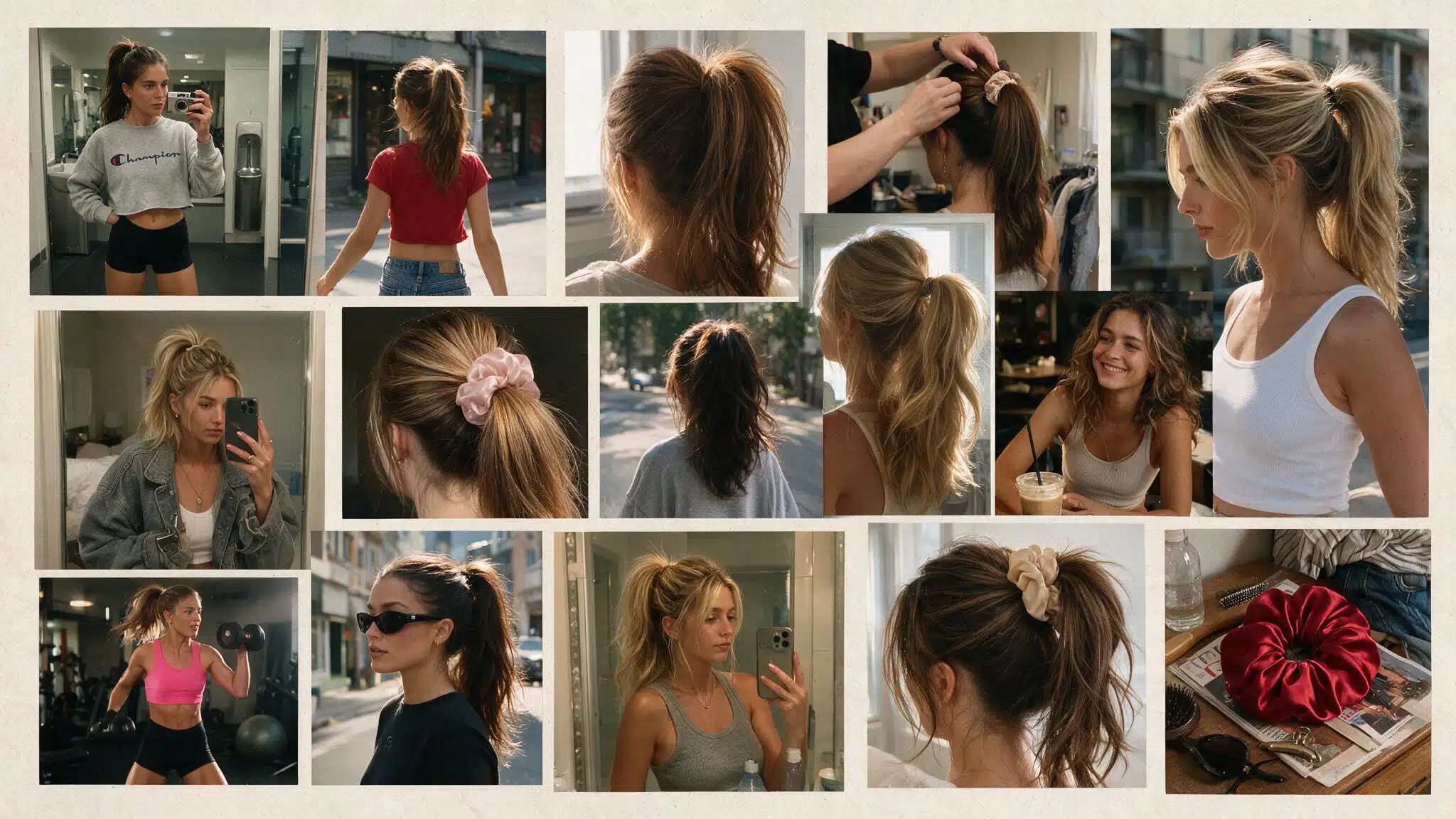
Sleek and pulled straight up, the high ponytail became a 90s staple for a sporty look. Gather hair at the crown, smooth flyaways, and secure tightly.
Modern versions wrap hair around the base to hide the elastic. A scrunchie remains the classic, gentler choice. Suits medium to long hair, so the ponytail has length to swing and show movement.
13. Box Braids
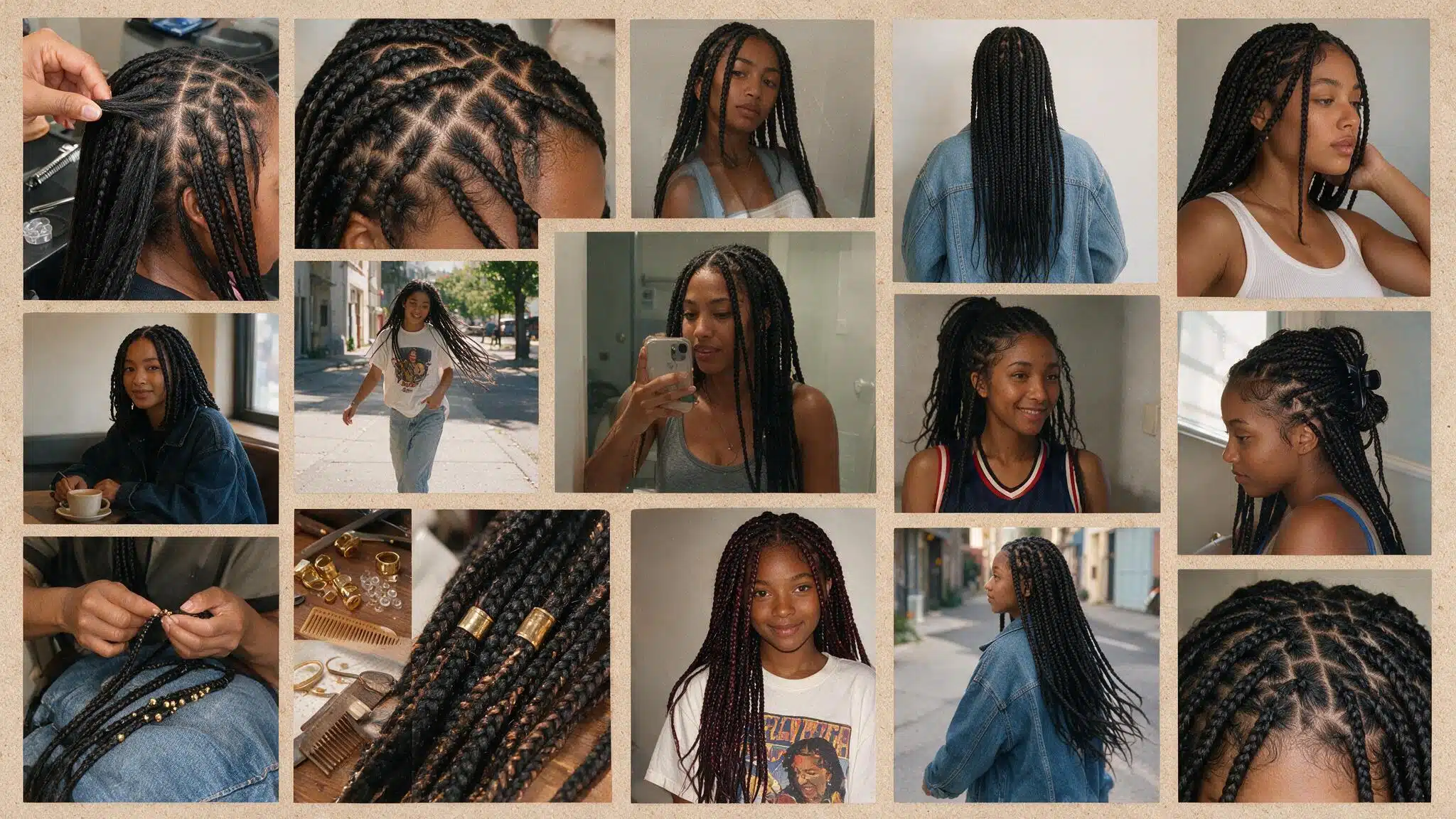
Neat, uniform braids sectioned across the scalp gave box braids lasting versatility throughout the 90s. Ask for consistent parting sizes for even tension.
Modern versions favor chunkier sections for a quicker, lighter install. Beaded clips or hairpins threaded onto braids add color. Works on any length, though longer braids offer more styling versatility for updos.
14. Wet-Look Hair
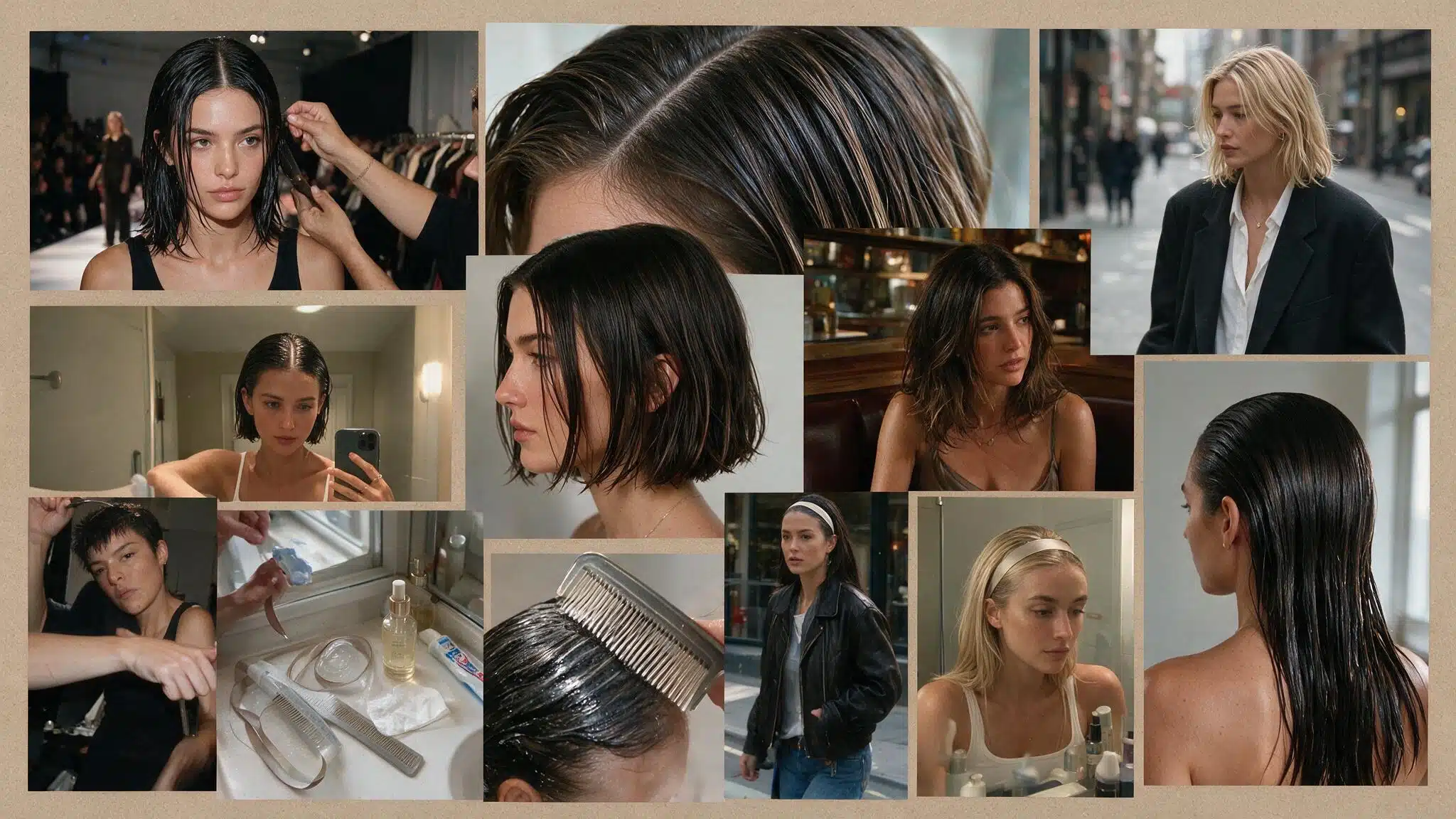
Glossy, slicked-down strands gave wet-look hair a sleek, editorial edge on 90s runways. Apply lightweight gel to damp hair, then comb straight back or into a side part.
Modern versions use serum instead of gel for shine without stiffness. A thin headband keeps the style intact. Works on short to medium hair, where strands stay controlled.
15. Beach Waves
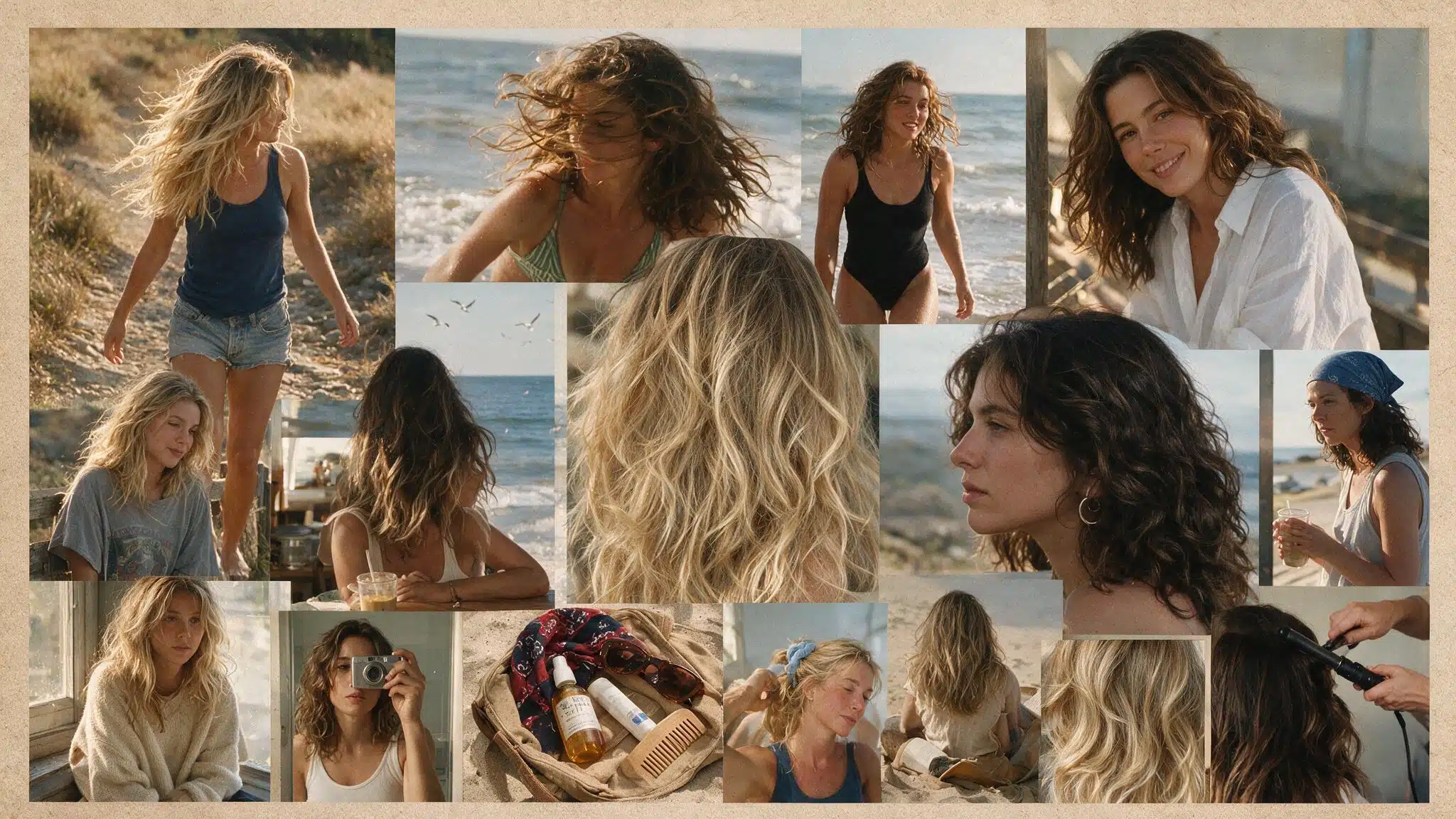
Loose, tousled waves gave off an effortless, sun-kissed vibe from 90s surf and skate culture. Use a curling wand on alternating sections, then loosen with fingers once cool.
Modern versions add texturizing spray for grip. A bandana tied loosely around the crown complements the texture. Suits medium to long hair best, since shorter lengths don’t hold the wave long.
16. French Twist
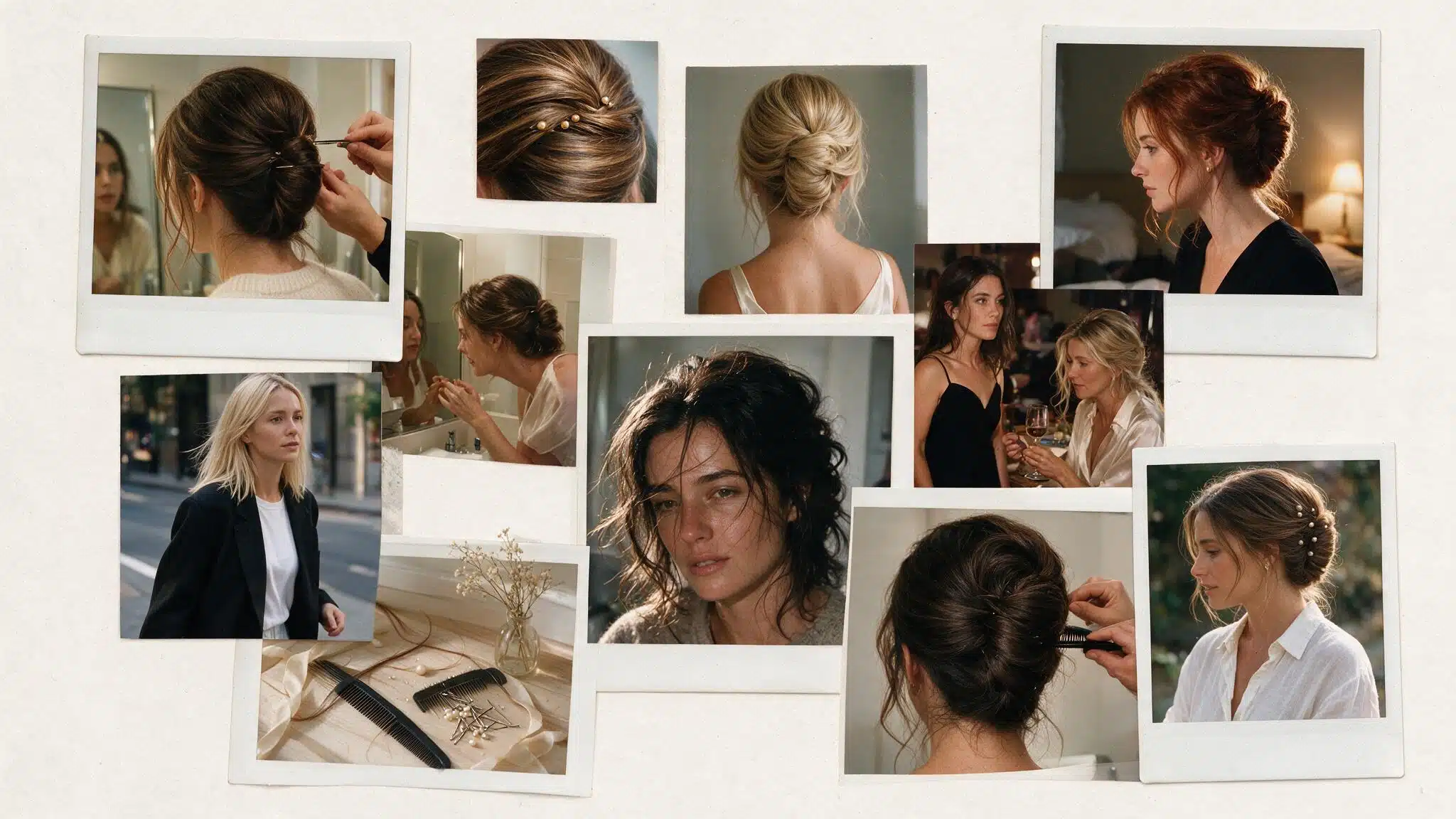
Elegant and polished, the French Twist suited 90s red carpets calling for understated sophistication. Twist hair upward from the nape, pin securely, and tuck loose ends in.
Modern versions loosen the twist and pull a few pieces free. Decorative hairpins dress it up without overwhelming its clean lines. Best on medium to long hair, for enough length to twist properly.
17. Afro Curls
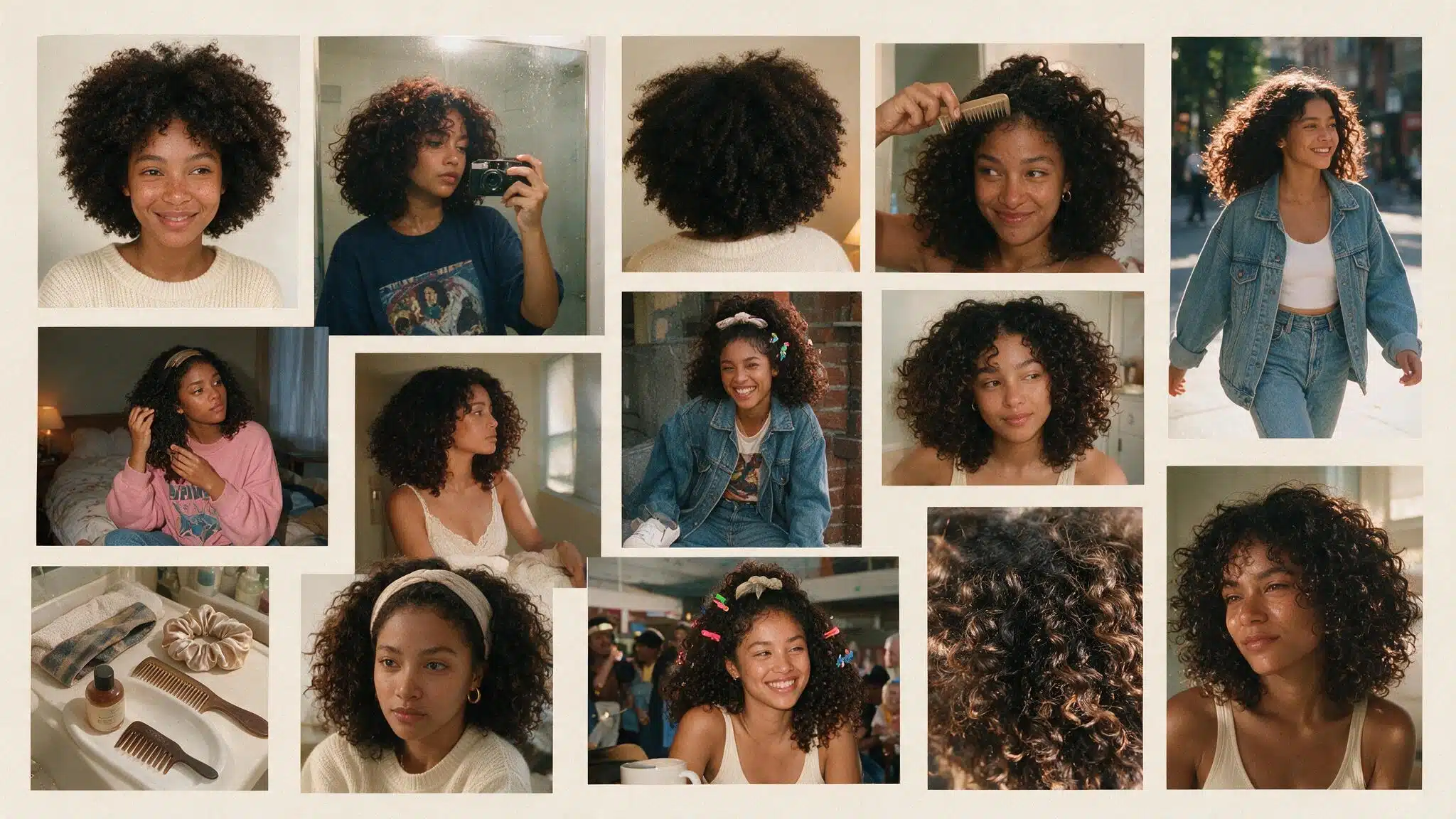
Natural, voluminous curls worn proudly without straightening became a powerful 90s statement. Use a wide-tooth comb or pick to shape and lift curls at the roots.
Modern versions favor defined, moisturized curls using curl creams. Fabric scrunchies or soft headbands avoid snagging natural texture. Suits short to medium natural hair, where curl density holds shape and volume.
18. Double French Braids
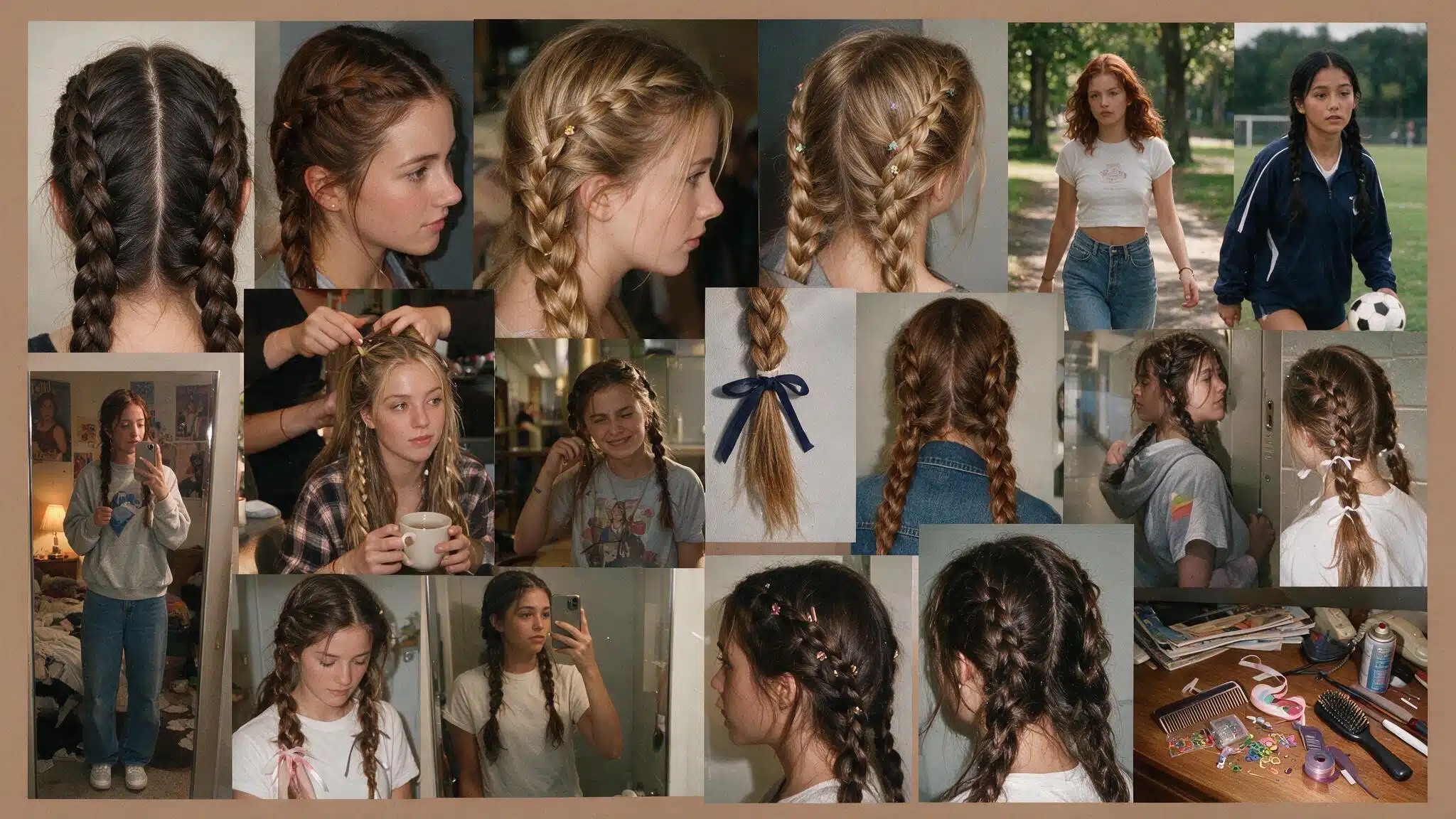
Two tight braids running from crown to nape give this look a sporty, no-fuss appeal. Part hair down the middle, then braid each side close to the scalp.
Modern versions loosen the braids and pull out a few pieces. Small snap clips secure loose ends without bulk. Works on medium to long hair, needing enough length to braid all the way down.
19. Chunky Highlights Blowout
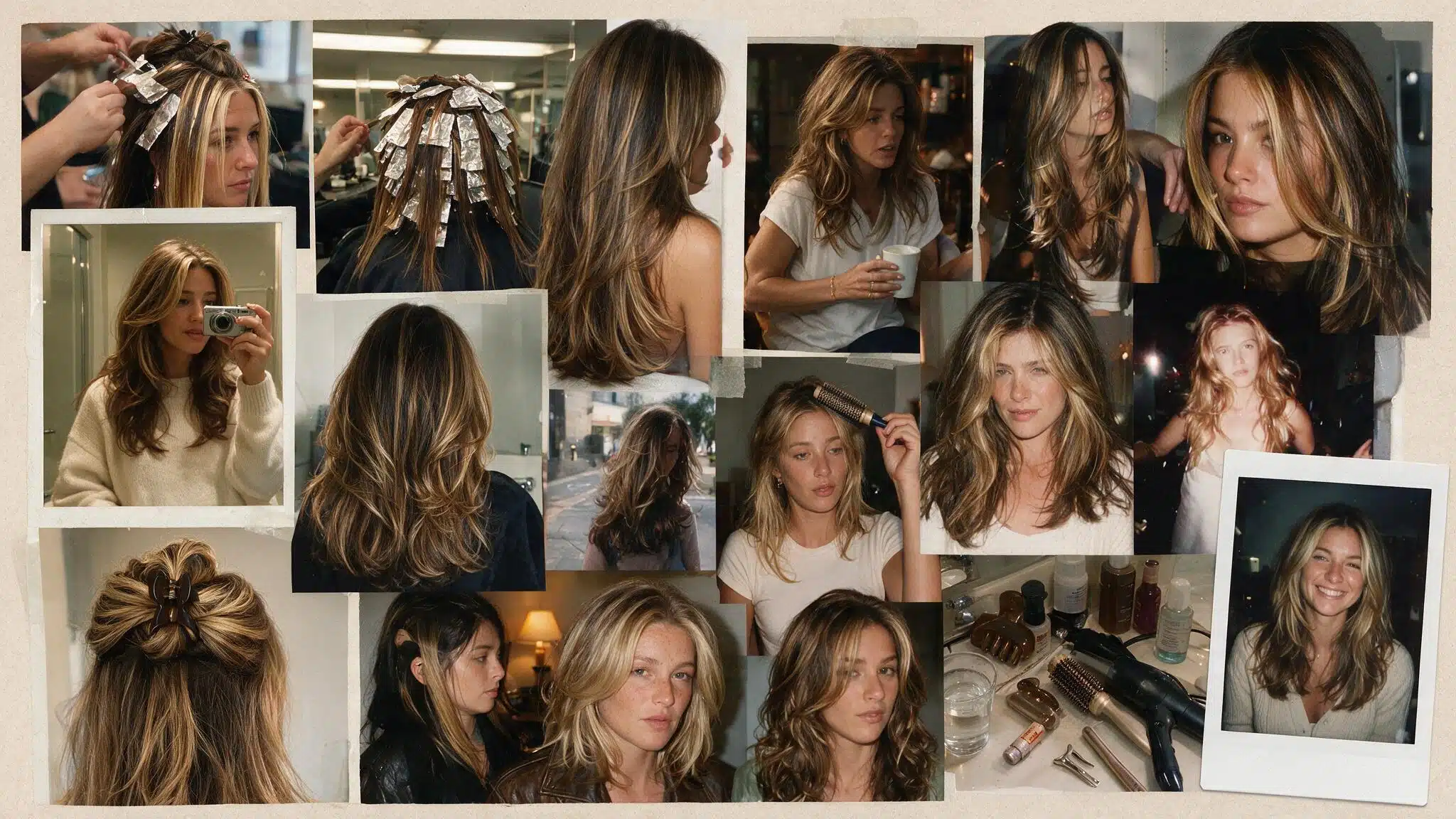
Bold, chunky highlights paired with a voluminous blowout became a signature look for 90s pop stars. Ask for thick, face-framing highlight sections rather than fine pieces.
Blow-dry with a round brush, emphasizing highlighted pieces at the crown. A single claw clip lifts the crown for extra height. Suits medium to long hair, giving highlights room to show through movement.
20. The Bowl Cut
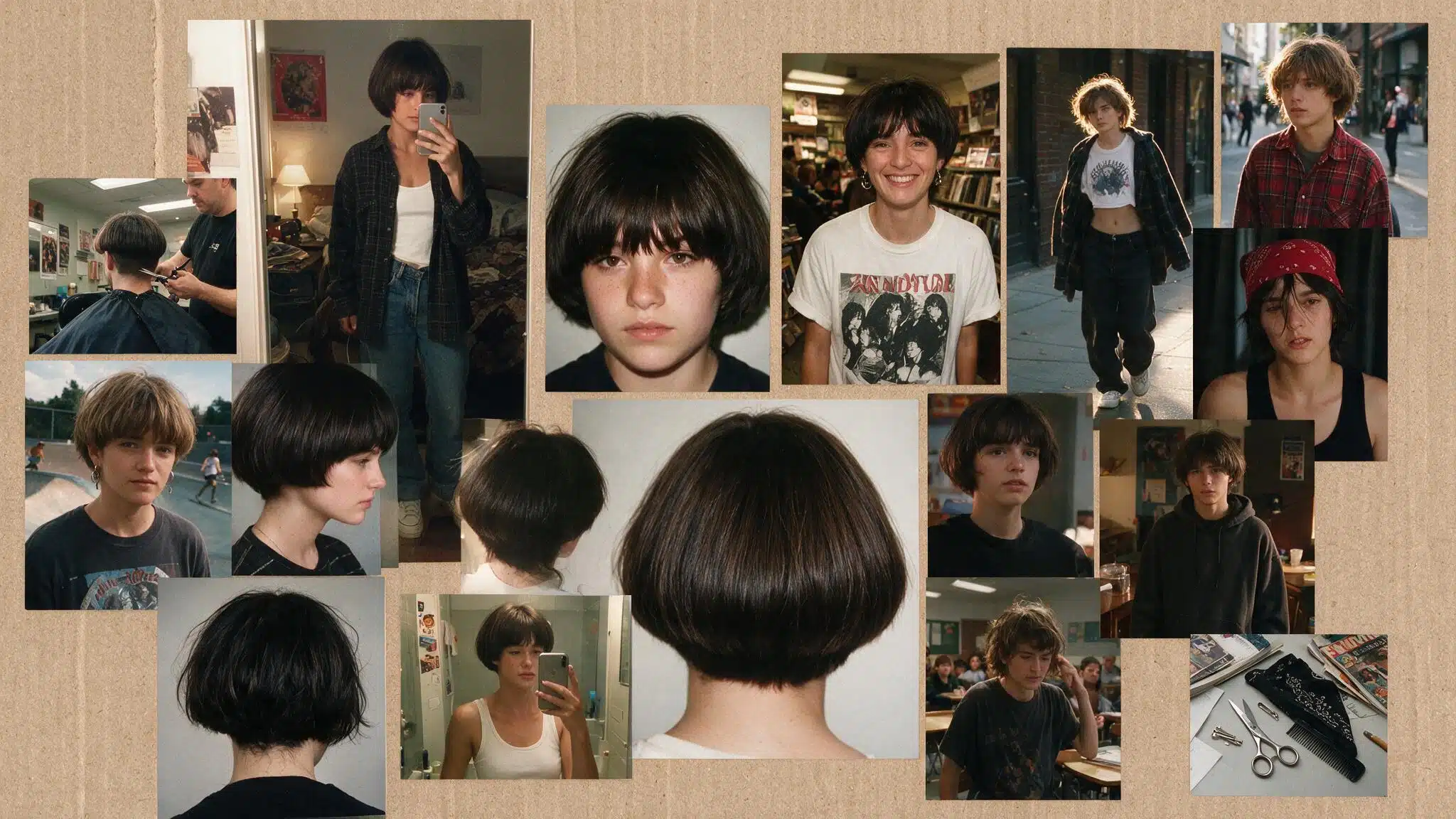
Blunt, rounded, and famously unisex, the bowl cut carried a rebellious energy through 90s skate and music scenes. Ask for a straight, even cut just above the eyebrows and ears.
Modern versions soften the blunt edge and add subtle texture at the ends. A bandana nods to skate culture. Works best on short, straight hair, since curl disrupts its rounded shape.
21. Bantu Knots
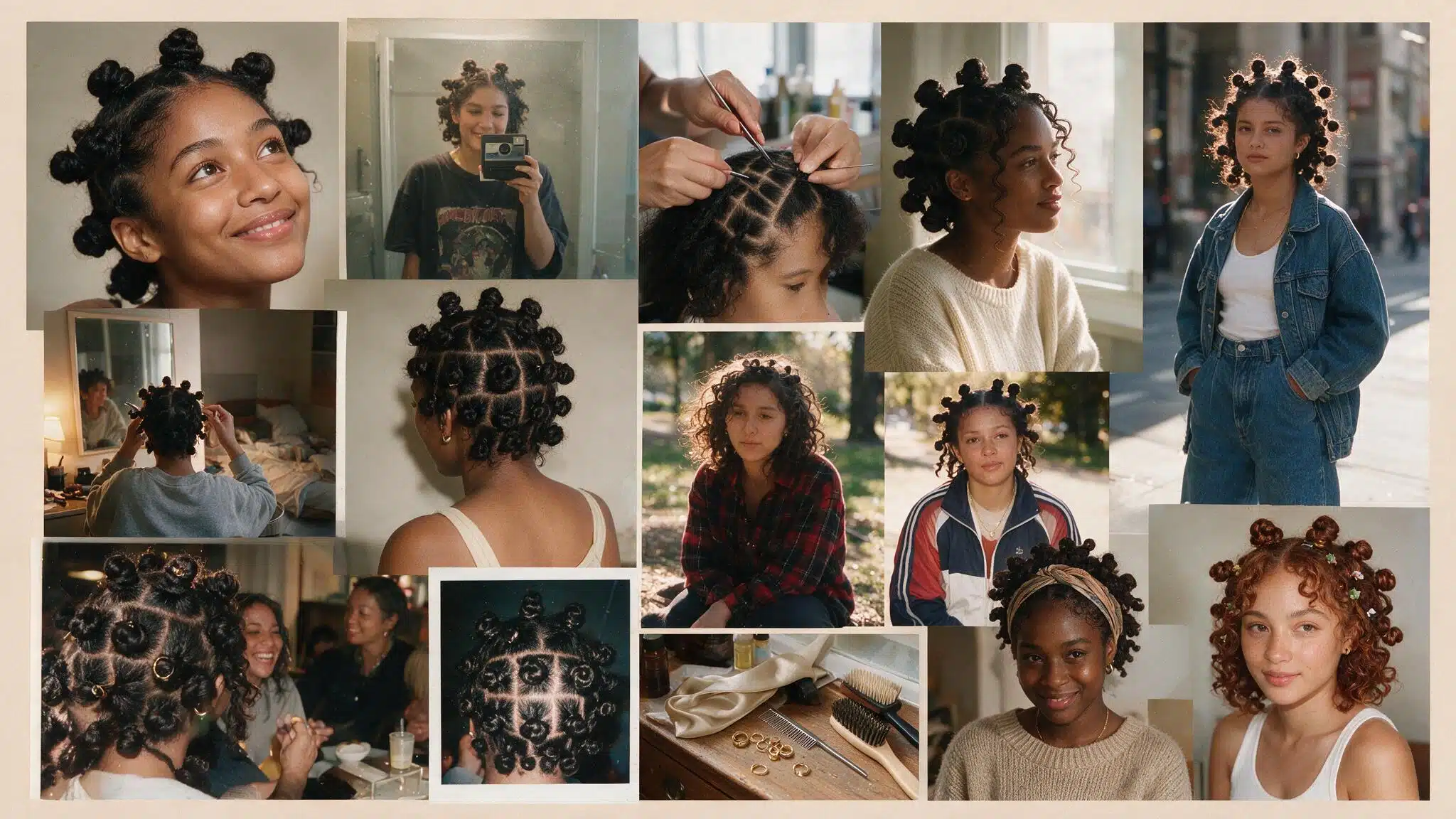
Small, coiled knots sectioned across the scalp give Bantu knots a striking, sculptural look rooted in African hair traditions. Section hair, twist each piece tightly, and wrap into a coil secured at the base.
Modern versions leave a few ends loose for a softer finish. Small hairpins hold each knot in place; it suits short to medium natural hair, holding its coil shape without slipping.
Whichever style draws you in, these cuts prove 90s hair still holds serious style power. Save your favorites, screenshot the mood boards, and get ready to bring some throwback flair into your next salon visit.
How to Create a 90s Hairstyle Today
You don’t need a full retro transformation to get the feel right. A few techniques, the right layers, and a couple of classic accessories go a long way.
- Start with the right cut or layers. Face-framing layers, soft bangs, or textured cuts give you the foundation for most of these looks.
- Add volume with a round brush. Lifting at the roots while blow-drying is most of what creates that fuller 90s shape.
- Bring in the right accessories. Butterfly clips, scrunchies, claw clips, and headbands do a lot of the visual work on their own.
- Let texture stay natural. Skip the overly polished finish; soft waves and slightly undone texture read as more authentic to the era.
- Adapt it for how you actually live. Softer layers, simpler accessories, and a finish that fits your regular routine make the look wearable day-to-day, not just for one event.
Small adjustments to layers, volume, and accessories are usually enough to make a 90s-inspired look feel current and easy to keep up with.
90s Hairstyles vs Modern Versions
Most of these looks have been softened for easier daily wear, while keeping what made them recognizable in the first place.
| 90s Style | Modern Update |
|---|---|
| Heavy layers | Softer blended layers |
| Extra volume | Natural-looking volume |
| Tight curls | Loose textured waves |
| Bright accessories | Minimal accessories |
| Sharp cuts | More wearable shapes |
Modern takes on 90s hairstyles focus on comfort and flexibility. They keep the decade’s recognizable details while making the styles easier to maintain and personalize.
How to Choose the Right 90s Hairstyle for You
Choosing a 90s-inspired hairstyle depends on your features, hair type, lifestyle, and style preference. The right look should feel nostalgic while remaining easy to wear.
- Consider your face shape to find cuts, layers, or bangs that suit your features.
- Choose a style that matches your natural hair texture and works with your hair type.
- Pick a hairstyle based on how much daily styling and maintenance you prefer.
- Match the look with your personal style, from bold retro to subtle inspiration.
- Decide between a full 90s makeover or a modern version with small retro details.
A suitable 90s hairstyle blends classic trends with your everyday needs. Choosing the right cut and styling approach helps create a look that feels natural and wearable.
Final Cut
I’ve cut enough of these to know the ones that stick aren’t the ones copied exactly off a photo; they’re the ones adjusted to fit the person sitting in the chair.
The Rachel works because of how it moves on your hair, not because it moved that way on someone else’s.
So take what speaks to you here. Maybe it’s just a claw clip and a round brush on a Tuesday, or maybe it’s asking for the full shag at your next cut. Either one counts.
90s hair earned its way back because it was never really about the decade; it was about texture and movement that actually held up to a full day. Start small, see how it wears, and build from there.
Frequently Asked Questions
What Makeup and Fashion Trends Match 90s Hairstyles?
90s hairstyles pair well with trends like brown lip shades, thin eyebrows, slip dresses, denim pieces, crop tops, leather jackets, and minimal jewelry for a complete throwback style.
Did Hair Color Trends Influence 90s Hairstyles?
Yes, hair color played a role in many 90s looks. Natural brunette shades, blonde highlights, bold streaks, and low-maintenance tones were commonly paired with popular cuts and styles.
How Can You Make 90s Hairstyles Last All Day?
Using lightweight styling products, proper sectioning, heat protection, and finishing sprays can help maintain volume, texture, and shape without making hair feel stiff.
Are 90s Hairstyles Easy to Maintain?
Maintenance depends on the style. Short cuts and simple clip-based looks require less upkeep, while layered cuts and blowouts may need regular trims and styling sessions.