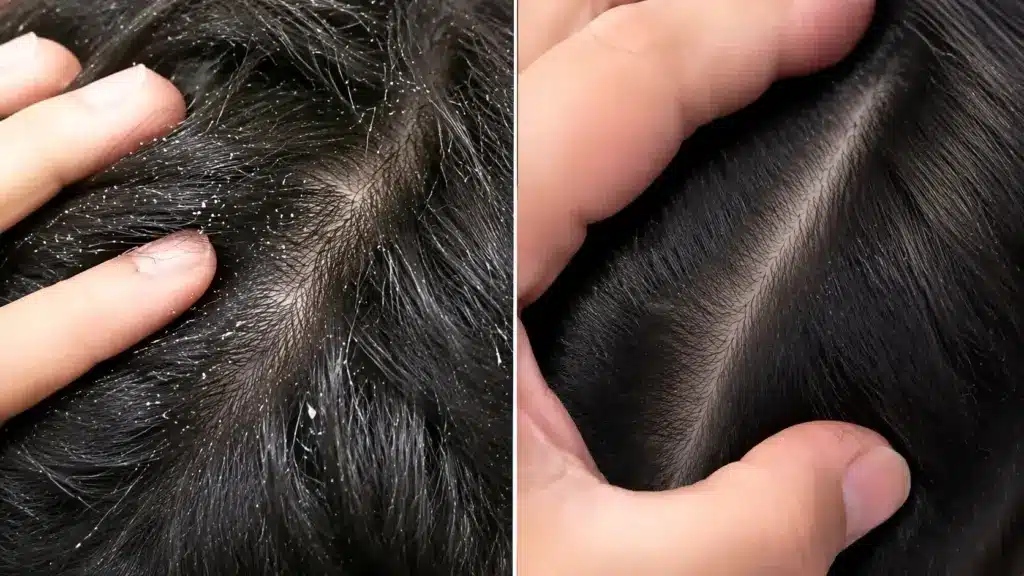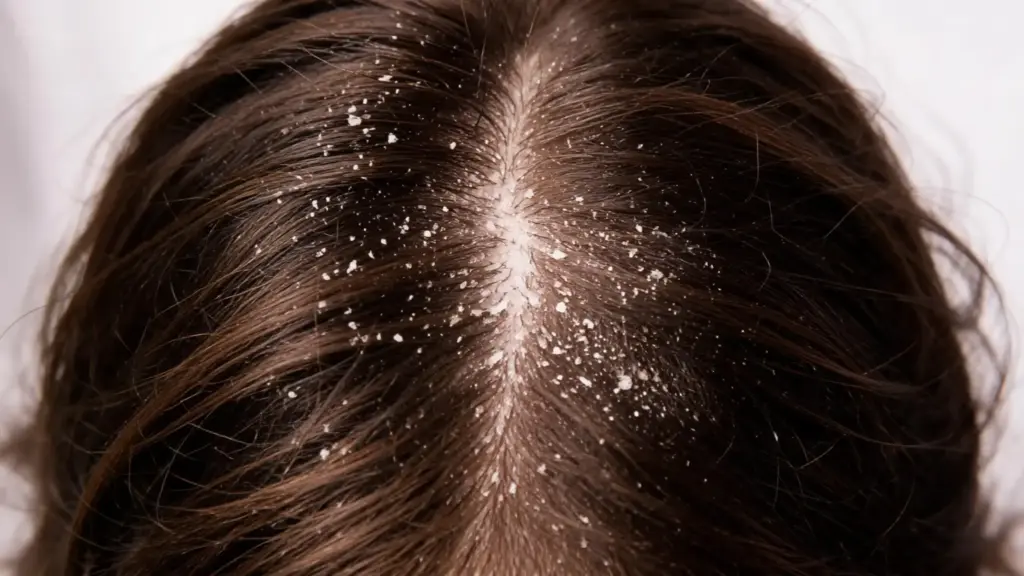
Flaky scalp and a question that never quite gets a straight answer: is dandruff a fungus? Here’s the short version.
Dandruff itself isn’t a fungal infection, but a yeast called Malassezia, which lives on every scalp, is usually behind it.
When oil production shifts or your scalp reacts more than it should, that yeast can trigger the flaking, tightness, and itch you’re dealing with.
I’ve spent years doing scalp consultations, and “is my dandruff contagious” is one of the first questions clients ask. It isn’t. Once you understand what Malassezia actually does, the rest of your scalp routine gets a lot easier to figure out
Is Dandruff a Fungus?
No. Dandruff is not a fungus on its own, but a naturally occurring yeast called Malassezia globosa is the main trigger behind it. Malassezia lives on every scalp, fungus included, and usually causes zero problems.
Trouble starts when Malassezia feeds on excess sebum, breaking it down into oleic acid. About half of people are sensitive to that byproduct, and adjusting your wash routine can help keep the oil supply in check.
If you’re one of them, your scalp speeds up skin cell turnover to try to shed the irritant, and those extra cells clump into the flakes you can see and feel.
Dandruff doesn’t spread from person to person the way a fungal infection does. It’s a reaction between your own Malassezia levels, your oil production, and how sensitive your scalp happens to be. That’s why two people can share a pillow for years, and only one of them deals with flakes
What Type of Fungus Causes Dandruff?
Malassezia globosa is the yeast most closely tied to dandruff, and it’s naturally part of a healthy scalp’s microbiome. It only becomes a problem when the balance shifts.
Four things tend to tip that balance:
- Rising scalp oil production
- Higher personal sensitivity to Malassezia’s byproducts
- Changes in overall scalp condition, including pH and hydration
- Existing irritation or inflammation
Treatment isn’t about wiping Malassezia out. You can’t, and you wouldn’t want to, since it’s a normal part of scalp health. The real goal is to control how active it gets and to calm the irritation it causes along the way.
The Role of Malassezia in Scalp Flaking
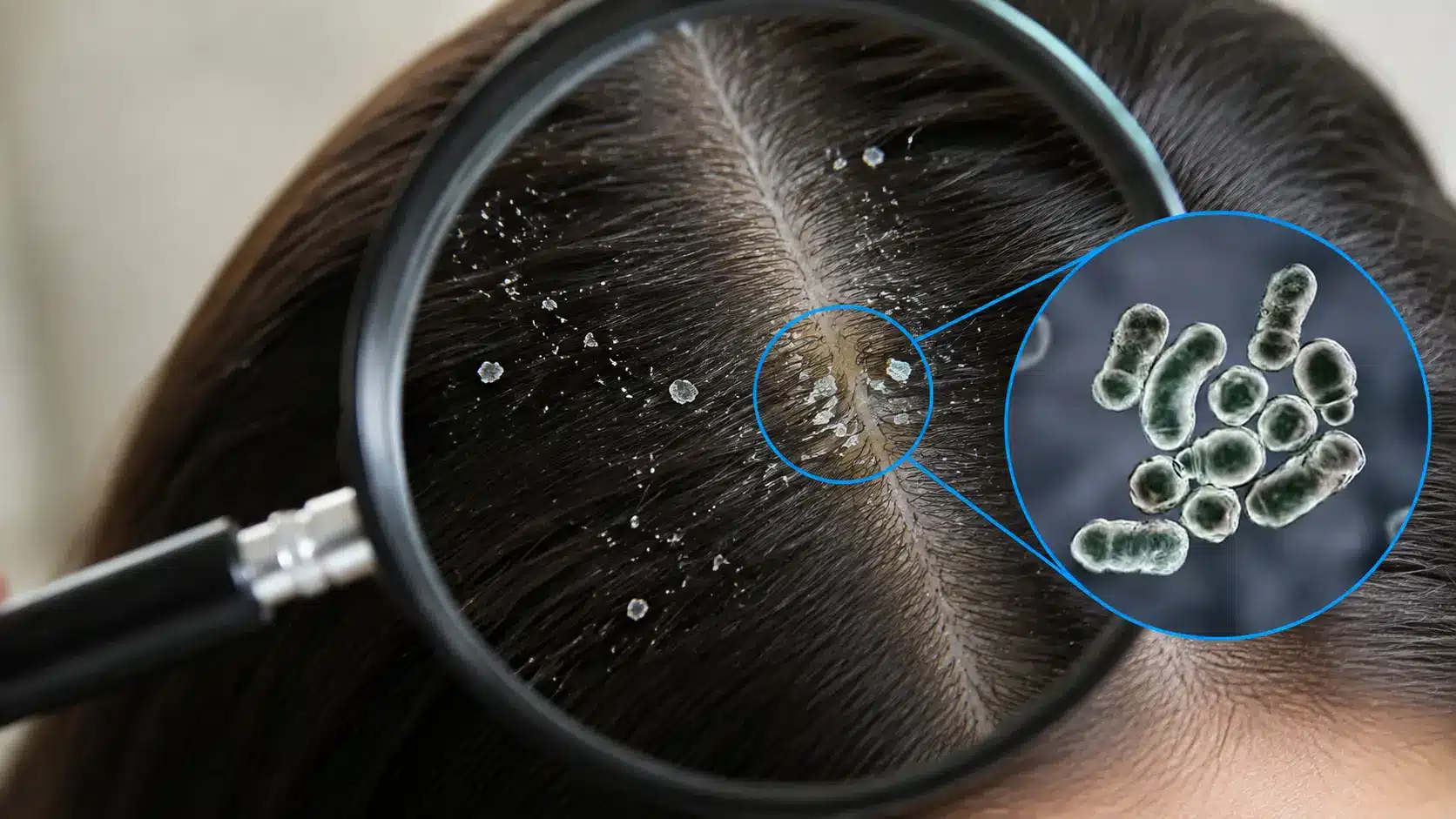
Yeast activity plays an important role in the development of dandruff by affecting the scalp environment. Understanding how Malassezia interacts with oil and skin cells explains why flakes appear.
1. Feeds on Scalp Oil
Malassezia uses sebum, the natural oil produced by the scalp, as a food source. When excess oil is present, yeast activity may increase, creating conditions that contribute to scalp imbalance.
This higher activity can make flakes more noticeable, especially in people whose scalps are more sensitive to changes in oil levels and the balance of microorganisms.
2. Triggers Scalp Irritation
During its activity, Malassezia can break down scalp oils and produce fatty acids. Some individuals may react to these byproducts, leading to irritation, itching, or inflammation.
The scalp response can disturb the normal skin environment and contribute to the conditions that allow dandruff flakes to develop more easily.
3. Speeds Up Skin Shedding
When the scalp becomes irritated due to increased yeast activity, skin cells may shed faster than usual. These excess cells combine with scalp oil and form visible flakes.
This faster shedding process is one of the main reasons dandruff appears as white or yellowish patches on the scalp and hair.
4. May Worsen Scalp Conditions
In some cases, increased Malassezia activity may contribute to stronger scalp reactions, including conditions like seborrheic dermatitis, and, in more persistent cases, to hair thinning. This can cause more noticeable symptoms such as greasy flakes, redness, itching, and discomfort.
Managing yeast activity and reducing scalp irritation can help improve symptoms and maintain a healthier scalp environment.
Factors That May Increase Malassezia Activity
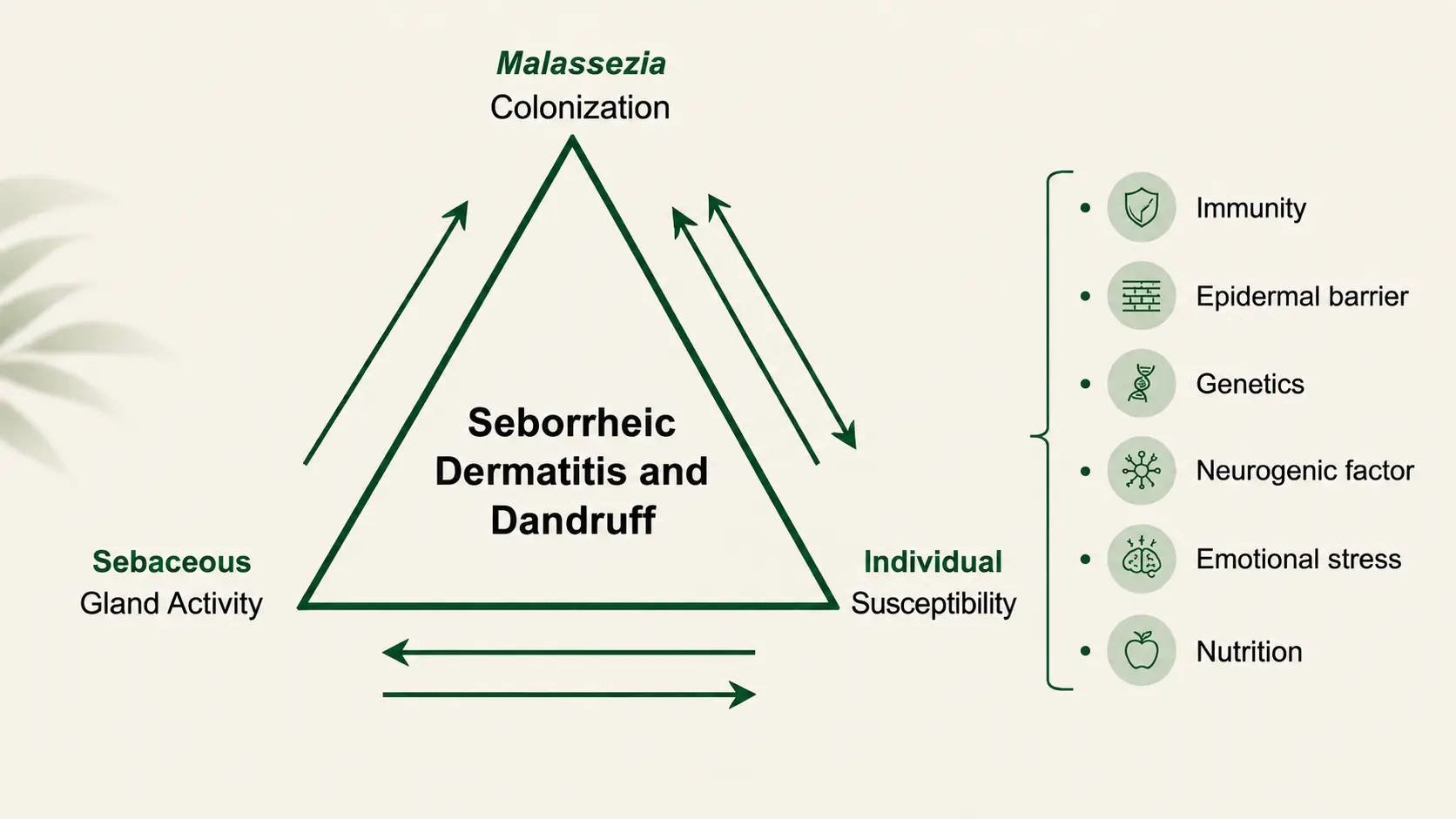
Several scalp and lifestyle factors can influence Malassezia activity and make dandruff symptoms more noticeable. Understanding these everyday triggers behind flaking can help you manage recurring flakes more effectively.
- Excess Scalp Oil: Higher sebum production can provide more nutrients for Malassezia, increasing yeast activity and making dandruff flakes more noticeable.
- Hormonal Changes: Shifts in hormones can affect scalp oil production and sensitivity, creating conditions that may contribute to dandruff flare-ups.
- Stress Factors: Stress may influence scalp health by affecting oil balance, inflammation, and skin barrier function, which can worsen dandruff symptoms.
- Product Buildup: Styling products, oils, and residue can trap oil and dead skin cells, increasing irritation and making flakes more visible.
- Seasonal Changes: Weather changes, humidity, and dry conditions can affect scalp balance and may trigger increased flaking in some individuals.
Identifying personal triggers and maintaining a suitable scalp care routine can help reduce conditions that support excessive yeast activity while improving scalp comfort and overall balance.
What Users Discuss About Dandruff Online
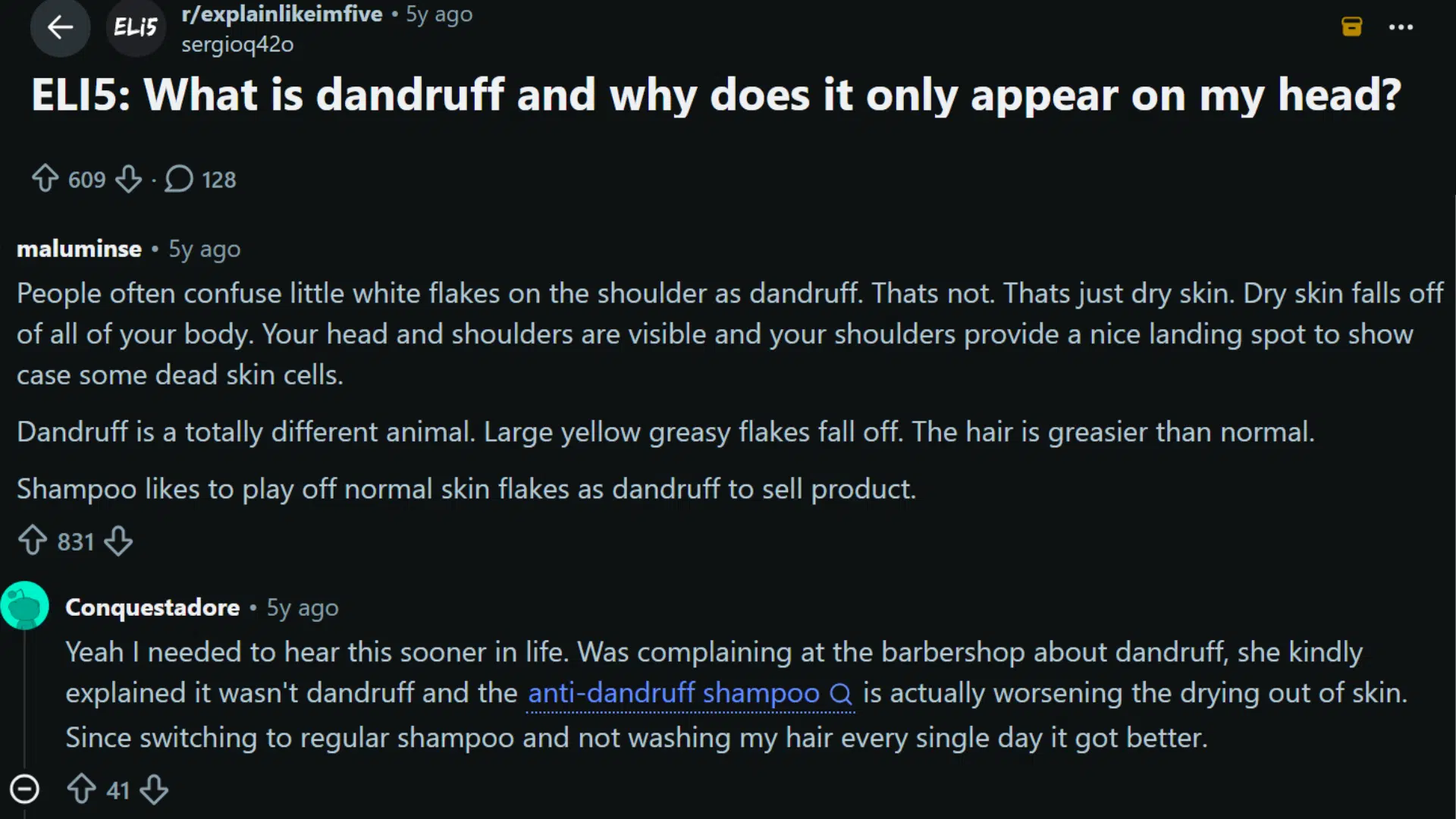
Reddit discussions about dandruff often focus on why flakes appear, why they return, and whether scalp microorganisms play a role. Users frequently discuss the difference between dry scalp and dandruff, as well as their experiences with different shampoos and scalp care routines.
Many discussions highlight curiosity about why dandruff persists despite regular hair washing. These conversations often point toward factors such as scalp oil, yeast activity, and individual scalp sensitivity rather than simple hygiene issues.
Dandruff is linked with Malassezia, a yeast that naturally lives on the scalp and interacts with scalp oils.
Community experiences can provide useful perspectives, but individual treatment results may vary. Persistent itching, severe irritation, or ongoing flakes may require advice from a dermatologist.
Dandruff vs Fungal Scalp Infection vs Dry Scalp
Dandruff, fungal scalp infections, and dry scalp can look similar but have different causes. Knowing the difference helps you choose the right scalp care approach.
| Condition | Cause | Symptoms | Management |
|---|---|---|---|
| Dandruff | Malassezia activity and scalp sensitivity | Flakes, itching, mild irritation | Anti-dandruff shampoo and scalp care |
| Fungal Infection | Infectious fungi | Hair loss patches, redness, inflammation | Medical antifungal treatment |
| Dry Scalp | Lack of moisture | Dry flakes and tightness | Moisturizing scalp care |
Understanding the cause behind scalp flaking can help you avoid incorrect treatments and manage symptoms more effectively. Persistent itching, hair loss, or severe irritation may require professional evaluation.
Can Yeast Overgrowth Cause Stronger Scalp Problems?
Malassezia activity can sometimes contribute to stronger scalp reactions, especially when the skin becomes sensitive or inflamed. In some cases, this response is linked with seborrheic dermatitis, which may cause increased flaking, redness, itching, and scalp discomfort.
Seborrheic dermatitis involves scalp inflammation connected with oil production, skin sensitivity, and Malassezia activity. It may cause thicker flakes, greasy scaling, irritation, and discomfort in areas with higher oil production.
Certain scalp changes may require professional evaluation, especially when regular dandruff care does not improve symptoms. These signs may include persistent itching, thick scalp buildup, painful areas, continued redness, hair thinning, or unusual shedding.
Persistent scalp concerns may have causes beyond regular dandruff. Professional guidance can help identify the condition and suitable treatment options.
Ways to Manage Malassezia-Related Dandruff
Managing dandruff involves reducing scalp irritation, controlling flakes, and maintaining a balanced scalp environment. The right approach depends on scalp type, symptoms, and how frequently flare-ups occur.
- Anti-Dandruff Shampoo Options: Active ingredients such as ketoconazole, zinc pyrithione, and selenium sulfide can help manage Malassezia-related dandruff and reduce scalp flaking.
- Scalp Care Habits: Regular cleansing, gentle products, and avoiding buildup can help maintain scalp balance and improve comfort.
- Managing Personal Triggers: Identifying triggers like oil, stress, products, and seasonal changes can help reduce dandruff flare-ups.
Maintaining a consistent scalp care routine, choosing suitable products, and understanding personal triggers can help manage dandruff symptoms and support a healthier, more balanced scalp over time.
Can Malassezia Be Removed Completely?
No, removing Malassezia completely is not the goal because it is naturally part of the scalp environment. The focus is maintaining balance and preventing excessive activity that may contribute to flaking.
Consistent scalp care, suitable hair products, and awareness of personal triggers can help manage symptoms effectively. Since scalp conditions may return due to changes in oil production, sensitivity, stress, or lifestyle factors, long-term maintenance may be needed.
Following a suitable routine can help keep the scalp comfortable and support better overall scalp health.
When Should You See a Dermatologist for Dandruff?
Dandruff can often improve with proper scalp care, but certain signs may indicate the need for professional guidance. Monitoring changes in symptoms can help you understand when additional support may be useful.
| Signs to Watch For | Why Dermatologist Advice May Help |
|---|---|
| Severe itching | May indicate increased irritation or another scalp condition |
| Persistent flakes | May require a different treatment approach |
| Thick scales or crusts | Could suggest conditions beyond regular dandruff |
| Red or painful areas | May indicate inflammation or scalp sensitivity |
| Hair loss | Requires evaluation to identify the underlying cause |
| Spreading irritation | May suggest another scalp concern |
A dermatologist can help determine whether symptoms are linked to dandruff, seborrheic dermatitis, psoriasis, or another scalp condition and recommend suitable treatment.
Final Thoughts
The connection between dandruff and fungus is often misunderstood. While dandruff is not a contagious fungal infection, Malassezia yeast can influence scalp flaking and irritation when the scalp environment becomes unbalanced.
A better approach is to focus on maintaining scalp health rather than trying to completely remove this naturally occurring yeast. Using suitable hair care products, managing oil levels, and recognizing personal triggers can help reduce recurring flakes.
If scalp symptoms persist, worsen, or accompany redness, discomfort, or hair changes, professional guidance from a dermatologist can help identify the underlying cause and support effective treatment.
Frequently Asked Questions
Can Dandruff Happen Even After Washing Hair Regularly?
Yes, dandruff can still occur despite regular washing because it is influenced by scalp oil, Malassezia activity, and skin sensitivity. Proper cleansing helps, but it may not completely prevent flaking.
Does Brushing Remove Dandruff Flakes Permanently?
No, brushing only temporarily removes visible flakes. It does not address the underlying causes of dandruff. Managing scalp oil, yeast activity, and irritation is important for reducing repeated flaking.
Can Changing Shampoo Suddenly Trigger Dandruff?
Yes, switching shampoos suddenly may irritate the scalp or affect its balance. Choosing suitable products and allowing your scalp time to adjust can help reduce discomfort and maintain scalp health.
Is Dandruff Worse During Winter?
Yes, colder weather and dry air can affect scalp moisture and comfort. Reduced humidity during winter may make flakes more noticeable and increase scalp dryness or irritation.
Can Dandruff Affect Eyebrow or Facial Areas?
Yes, Malassezia-related conditions may affect oily skin areas beyond the scalp, including eyebrows and facial regions. Persistent flaking in these areas may need advice from a dermatologist.
Can Yeast Overgrowth on the Scalp Be Reversed?
Yeast activity on the scalp cannot be completely removed because Malassezia naturally exists there. However, suitable scalp care and targeted treatments can help maintain balance and reduce dandruff symptoms.