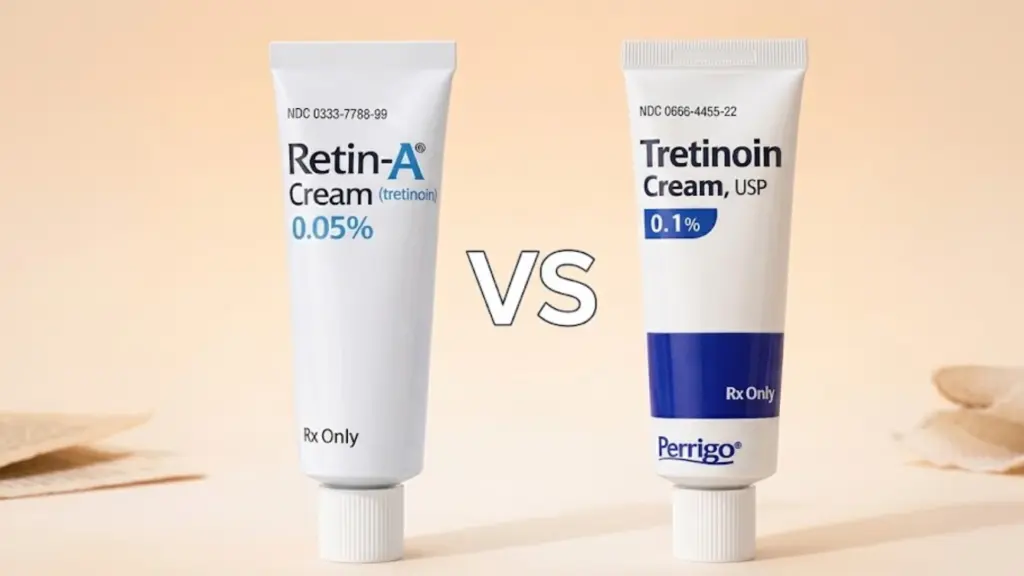
Retin-A and tretinoin are not two totally different treatments. Retin-A is a brand name, while tretinoin is the active ingredient used inside it.
That is where most of the confusion starts. People often see both names on creams, prescriptions, or skincare guides and think they may work in different ways.
In reality, the main talk around retin-a vs tretinoin comes down to brand name, generic name, formula, price, and how each product feels on the skin.
Ahead in this blog, you will learn what tretinoin is, what Retin-A is, how they compare, and whether one works better than the other.
You will also see their benefits, common side effects, usage tips, and simple mistakes to avoid before adding them to your routine.
What is Tretinoin?
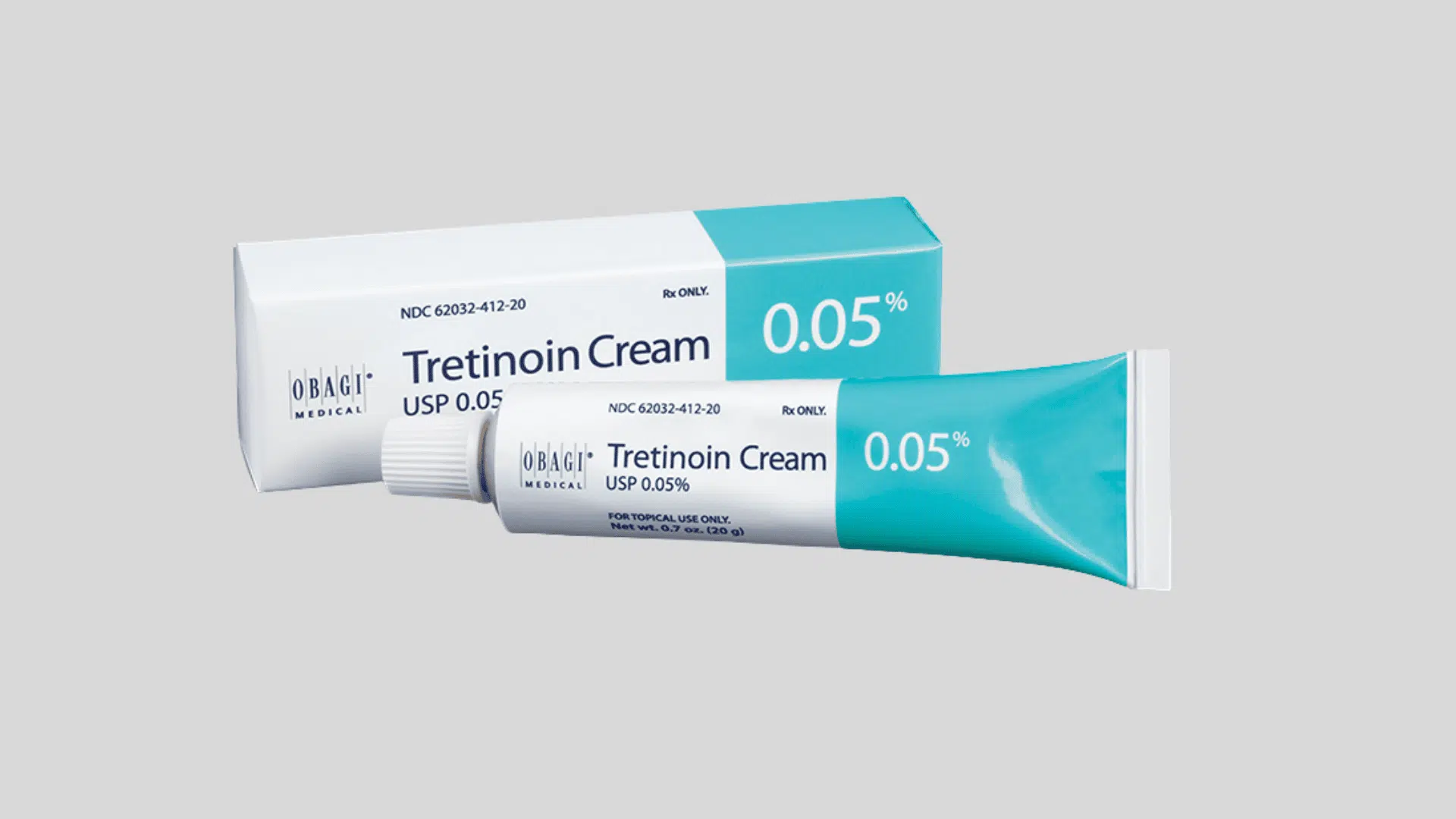
Tretinoin is a prescription retinoid that comes from vitamin A. It is commonly used to treat acne and is also prescribed for concerns such as fine lines, rough skin texture, and dark spots.
When applied to the skin, tretinoin encourages old skin cells to shed more quickly and allows new cells to replace them.
This helps keep pores clear, which can reduce acne breakouts and prevent new blemishes from forming.
Over time, the increased cell turnover may also improve uneven texture and help fade post-acne marks and discoloration.
Many people also use tretinoin as part of an anti-aging routine since it can improve the appearance of fine lines and leave the skin looking smoother and more even with consistent use.
What is Retin-A?
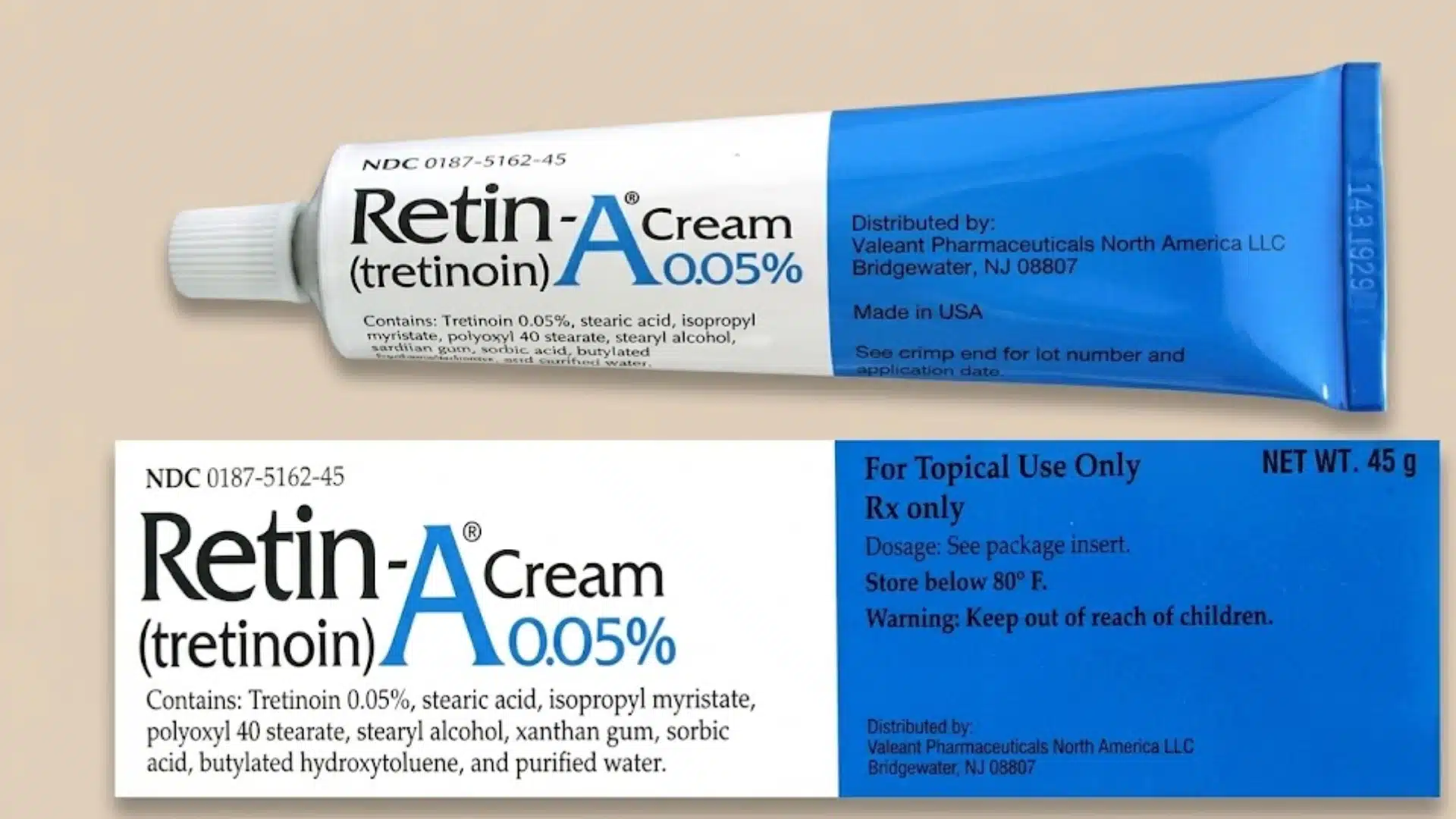
Retin-A is a brand-name prescription medication that contains tretinoin as its active ingredient.
Because of this, Retin-A and tretinoin work in the same way and are often prescribed for many of the same skin concerns.
It is commonly used to treat acne, improve skin texture, and reduce the appearance of fine lines and certain dark spots.
The main difference is that Retin-A is a specific branded product, while tretinoin is the generic name of the medication.
Retin-A is available in several forms, including creams, gels, and liquid solutions. It also comes in different strengths, allowing dermatologists to choose a concentration based on skin type and treatment goals.
Since it contains the same active ingredient as generic tretinoin, Retin-A delivers similar results when used consistently and as directed.
Difference Between Retin-A vs Tretinoin
Since the active ingredient is identical, the differences between Retin-A and generic tretinoin are practical ones. They don’t affect how the medication works, but they do affect your experience of using it.
| Difference | Retin-A | Generic Tretinoin |
|---|---|---|
| Cost | Usually costs more, around $150 to $300 or more without insurance | Usually costs less, around $20 to $80 through discount programs |
| Insurance | May need prior authorization before coverage | Often preferred by insurance plans |
| Inactive ingredients | Uses the brand’s own base ingredients | Uses the same active ingredient, but inactive ingredients can vary |
| Retin-A Micro | Available as a microsphere formula that releases tretinoin slowly | Not the same as Retin-A Micro |
| Availability | May be less widely stocked | Usually more widely available at standard pharmacies |
Benefits of Using Retin-A and Tretinoin
Retin-A and tretinoin offer similar skin benefits because both work through the same active ingredient and support steady skin renewal over time.
- Helps clear acne: They help stop dead skin cells from clogging pores, which can reduce pimples, blackheads, and whiteheads.
- Supports smoother skin: Regular use can improve rough texture by helping the skin shed old cells and bring newer cells to the surface.
- Helps fade dark spots: They may gradually improve post-acne marks and uneven tone by supporting faster skin cell turnover.
- Softens fine lines: Long-term use can make fine lines look less noticeable by improving skin renewal and supporting a smoother surface.
- Improves overall skin tone: They can help the skin look clearer, fresher, and more balanced when used with daily sunscreen.
How to Use Retin-A and Tretinoin Safely
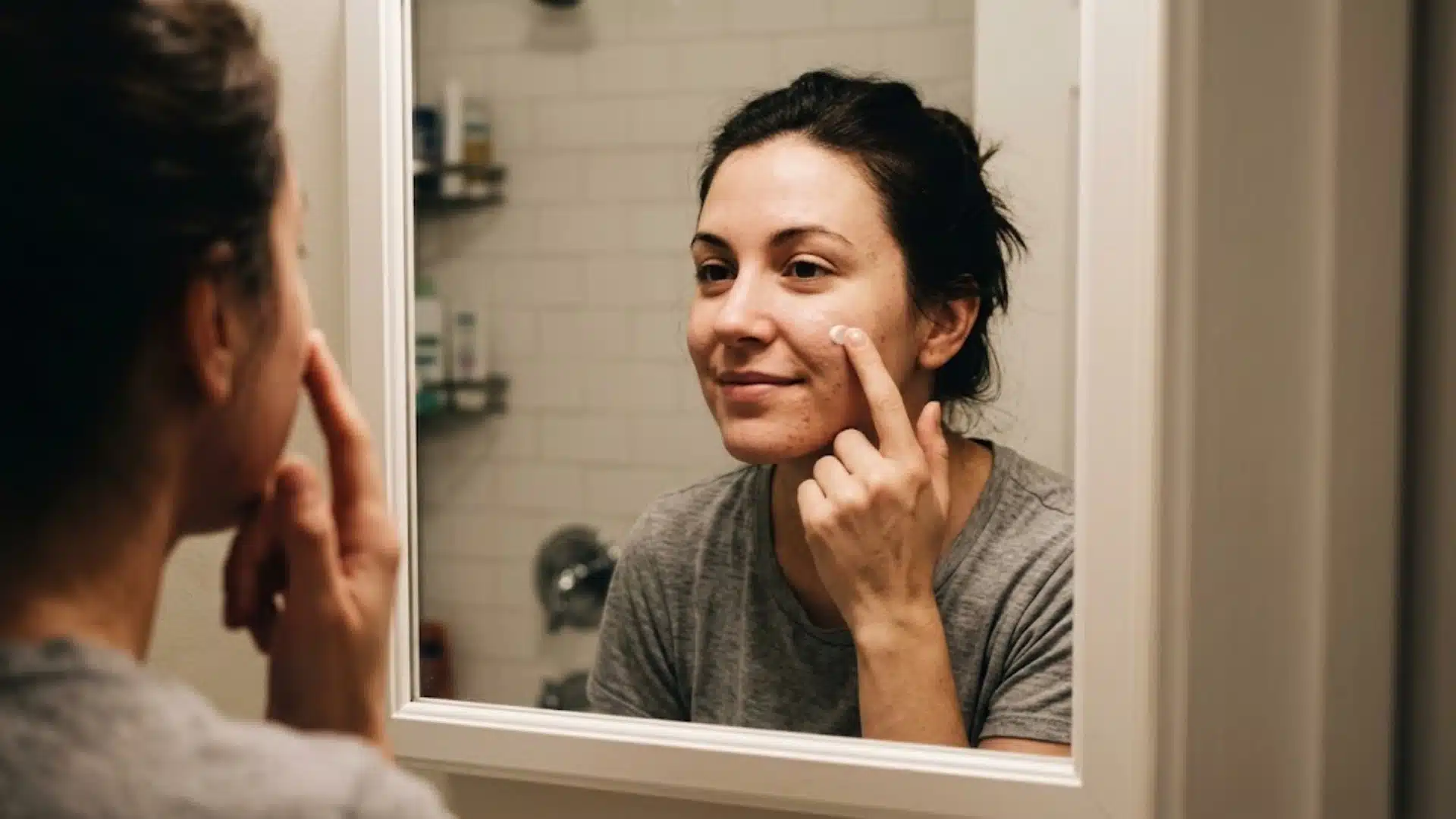
The steps are the same for Retin-A and generic tretinoin. Use it slowly at night so your skin can adjust without extra irritation.
If building a skincare routine around an active ingredient like tretinoin, pairing it with a gentle, non-stripping cleanser and a barrier-focused moisturizer can make a real difference during the adjustment period.
- Apply at night: Tretinoin can break down in light, so use it before bed after washing your face with a gentle cleanser
- Wait before applying: Let your skin dry for 20 to 30 minutes, since damp skin can absorb more product and cause more irritation
- Use a pea-sized amount: it’s enough for your whole face. Using more will not make it work faster
- Avoid sensitive areas: Keep it away from the corners of your eyes, nostrils, and mouth because the skin there is thinner
- Moisturize and use SPF: Apply moisturizer to reduce dryness, and wear sunscreen every morning because tretinoin makes skin more sun-sensitive
These effects often ease with time. No irritation does not mean tretinoin is not working; your skin may be tolerating it well.
What to Avoid When Using Tretinoin
Avoid harsh exfoliants, strong acids, benzoyl peroxide, drying toners, and other retinoids on the same night unless your dermatologist approves. Too many active ingredients at once can damage your skin barrier.
| What to Avoid | Why |
|---|---|
| Benzoyl peroxide at night | It can deactivate tretinoin. If using both, apply benzoyl peroxide in the morning and tretinoin at night. |
| AHA and BHA acids | Using multiple exfoliating actives can increase irritation and damage the skin barrier. |
| Waxing and facial procedures | Skin becomes more fragile during tretinoin use, increasing the risk of irritation or injury. |
| Applying to wet or damp skin | Damp skin increases tretinoin absorption, which can lead to more irritation, especially when starting. |
Common Retin-A and Tretinoin Side Effects
During the first few weeks, skin may go through retinization as it adjusts to faster cell turnover. Common side effects include dryness, peeling, redness, and sensitivity.
- Dryness and flaking: Tretinoin reduces oil production and accelerates the shedding of the outer skin layer. Your skin will likely feel tighter and look flakier before it settles.
- Redness and sensitivity: Some redness in the first few weeks is expected. If it becomes severe or doesn’t ease after the adjustment period, speak to your dermatologist about lowering your concentration.
- Initial breakout (purging): Tretinoin can push clogged material to the surface more quickly, which may appear as a sudden increase in breakouts. This is temporary. Most people see it resolve within four to six weeks.
- Sun sensitivity: Your skin is more prone to burning while using tretinoin. Daily broad-spectrum SPF 30 or higher is not optional. Daily broad-spectrum SPF 30 or higher is non-negotiable. Mayo Clinic’s tretinoin lists sun protection as one of the most important precautions.
Disclaimer: Side effects vary by individual. If irritation becomes severe or you develop hives, swelling, or difficulty breathing, stop use immediately and seek medical attention.
Which One Should You Choose: Retin-A or Tretinoin?
For most people, generic tretinoin is the straightforward choice. The active ingredient is the same, and the lower cost makes it easier to stay on it long enough to see results.
Retin-A Micro may be worth a conversation with your dermatologist if standard cream formulas irritate your skin.
Its microsphere delivery system releases tretinoin gradually rather than all at once, which can make the adjustment period more manageable for safe makeup for sensitive skin types.
Generic 0.025% cream used with a good moisturizer can also work well for sensitive skin it’s not your only option.
Ask your dermatologist about concentration, whether a cream or gel formula suits your skin type, and whether your insurance covers one more readily than the other. Plans vary, and a quick call to your pharmacy or insurer can save you money.
Conclusion
If your prescription says Retin-A or tretinoin, the active ingredient is identical. What shapes your results is consistency, concentration, and how well you protect your skin while it adjusts.
Start low, go slow, moisturize, and wear SPF every morning. Those habits matter more than the name on the tube.
The confusion between these two names is understandable. The skincare world has not made this clear.
Once you know they are the same thing, you can make a practical choice based on cost, formulation, and what your dermatologist recommends for your skin type.
Have you switched from Retin-A to generic tretinoin, or are you just starting out? Share your experience in the comments.
Frequently Asked Questions
Can I Use Tretinoin Every Night as a Beginner?
No. Start two to three nights weekly for the first month. Nightly use too soon can cause irritation and slow your progress.
Is Retin-A Micro Better for Sensitive Skin than Generic Tretinoin Cream?
Retin-A Micro may feel gentler because it releases tretinoin slowly. Generic 0.025% cream with moisturizer can also work well for sensitive skin.
How Long Does It Take to See Results from Tretinoin?
Texture may improve in six to eight weeks. Acne often improves within three months. Fine lines and dark spots usually take longer.