Have you ever noticed tiny white bumps appearing on your face, seemingly out of nowhere? Those stubborn little spots are called milia, and understanding what causes milia on the face is the first step to keeping your skin smooth and healthy.
As someone who has spent years researching skin concerns and sharing practical advice, I’ve seen firsthand how these harmless cysts can frustrate even the most careful skincare routines.
Milia form when dead skin cells get trapped beneath the surface, creating tiny, pearly bumps that don’t respond to regular acne treatments.
In this blog post, I’ll break down the common triggers, explain why they appear, and share ways to manage and prevent them effectively, so your skin can stay clear and comfortable.
What are Milia Actually?
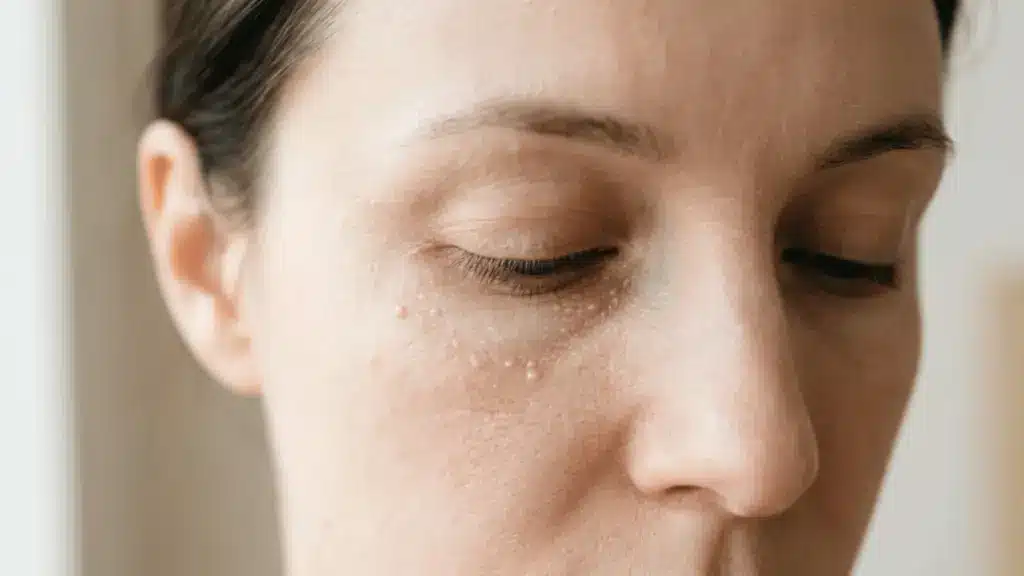
Milia are tiny cysts filled with keratin, a natural protein in skin, hair, and nails, that sit just beneath the skin’s surface.
Each cyst is firm, round, and measures about one to two millimeters, often looking like a small white or pale yellow pearl.
Unlike whiteheads, milia do not involve pores, oil, or bacteria. Their contents are trapped under a thin layer of skin, making them impossible to squeeze out; attempting to do so can irritate the surrounding area without removing the cyst.
Milia most commonly appear on the face, especially around the eyes, eyelids, cheeks, and nose. The eye area is particularly prone because it has fewer oil glands, leaving the skin drier and less able to shed dead skin cells naturally, allowing keratin to accumulate.
If you’ve been trying to figure out whether what you’re dealing with is a pimple vs cyst difference, milia fit closer to the cyst category , though they’re the most benign version of one.
How Does Milia Form on the Skin?
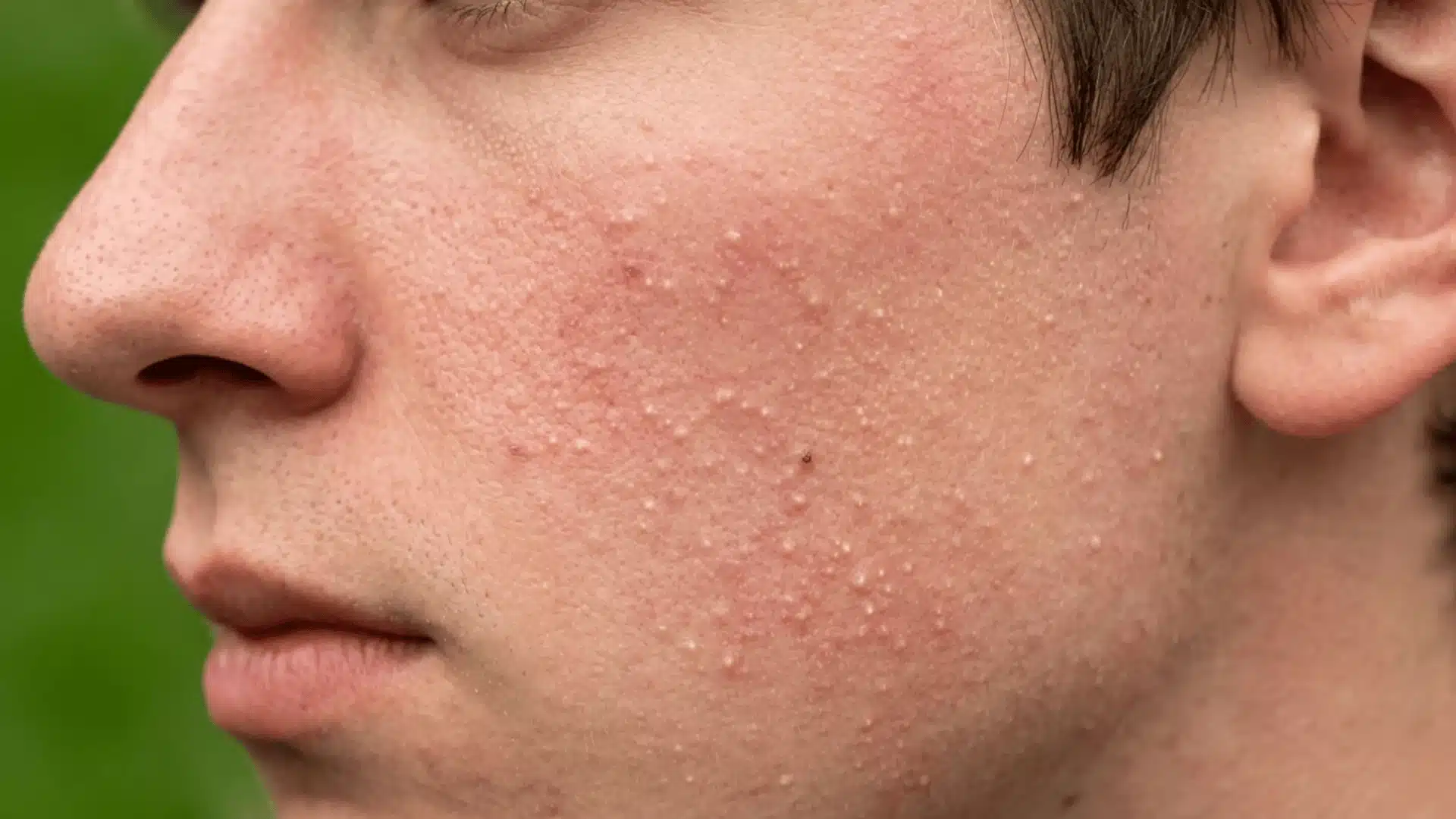
The skin sheds dead cells continuously. New cells form deep in the dermis, travel upward, and eventually flake away from the surface to make room for the cells behind them. This cycle, called cell turnover, keeps the skin surface clear and functioning.
When that cycle slows down or gets disrupted, old cells don’t shed the way they should. Instead of falling away, they accumulate just below the skin’s surface.
New skin grows over them, and those trapped cells harden over time into a small cyst. That cyst is a milium. Multiple cysts are milia.
The process is passive. Your skin isn’t reacting to bacteria or producing excess oil. It’s simply failing to clear out old material, and the result is a sealed pocket of hardened keratin sitting where it has no way out.
That’s also why standard acne treatments don’t touch them; they’re addressing the wrong mechanism entirely.
What Actually Causes Milia on the Face
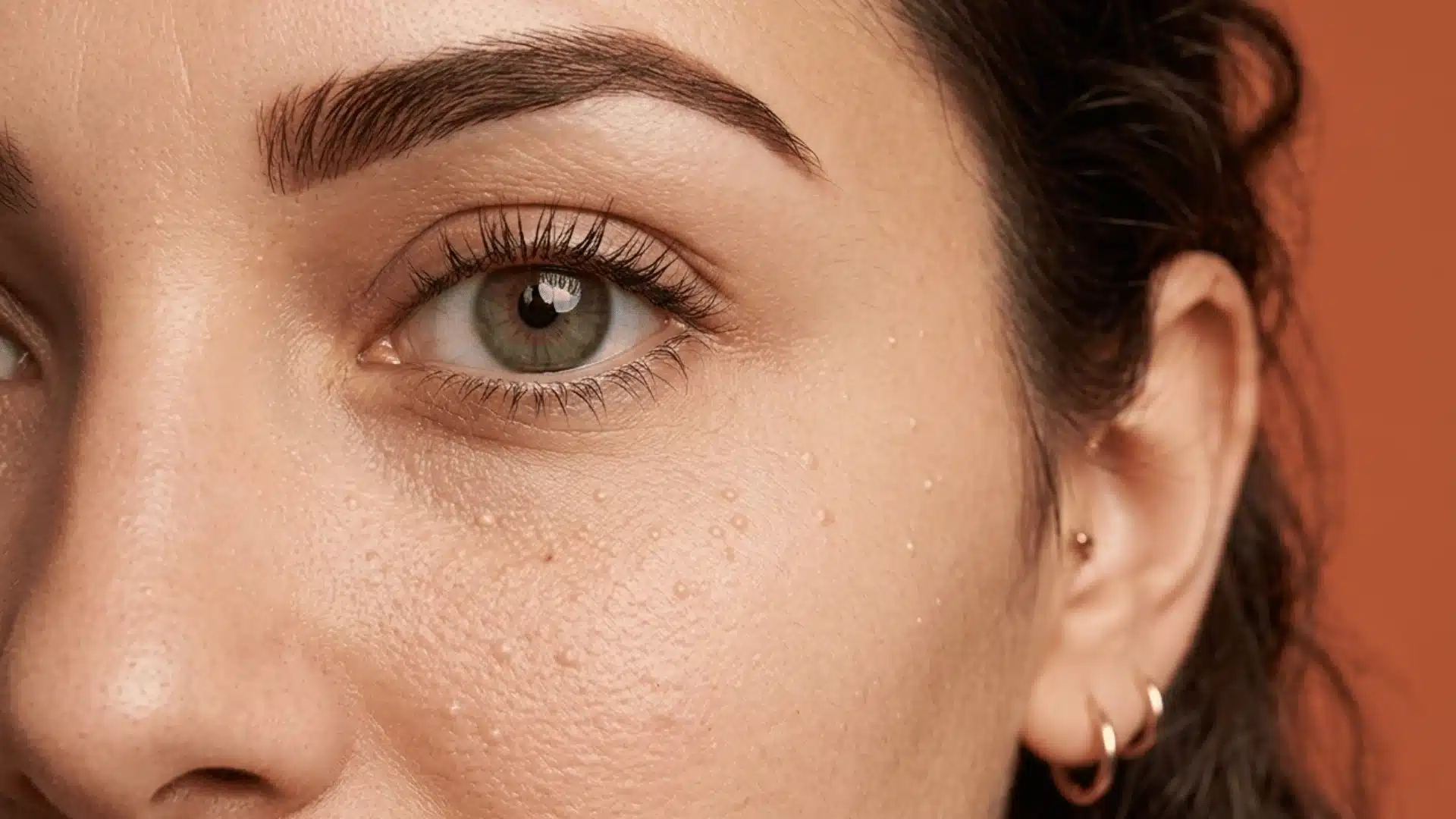
Several different factors can interfere with normal skin cell shedding and lead to milia formation. Some are external (your skincare routine, sun exposure), and some are internal (genetics, medication, underlying conditions). Most adult milia trace back to one or more of the following.
1. Dead Skin Cell Buildup
This is the core issue. When your skin’s natural exfoliation process slows down, dead cells accumulate below the surface rather than shedding.
Skin turnover naturally slows with age, which is part of why milia tend to be more common and persistent in adults than in children.
If you’re not doing anything to support regular exfoliation, that buildup has nowhere to go.
2. Heavy or Comedogenic Skincare Products
This is the one most people don’t see coming. Rich creams, occlusive balms, and petroleum-based products, especially when applied around the delicate eye area, can create a barrier that prevents the skin from shedding naturally.
The skin still generates dead cells, but with nowhere to go, they get sealed in. Eye creams with very thick textures are a frequent culprit.
The eye area doesn’t have the oil glands to break down heavy ingredients the way the rest of the face does.
Disclaimer: If you’re unsure whether a product is contributing to milia, consider pausing it for a few weeks and observing whether new bumps stop forming.
3. Sun Damage and UV Exposure
Chronic sun exposure damages the upper layers of skin over time, interfering with the normal cell turnover process.
Healthline notes that skin damage from sun exposure is a recognized cause of secondary milia. UV damage thickens the outer layer of skin, making it harder for dead cells to shed naturally.
This is secondary milia territory; the skin is forming cysts as a response to the damage rather than as a primary condition.
4. Skin Trauma
Burns, blisters, rashes, and any procedure that injures the skin surface can trigger milia as the skin heals. Dermabrasion, chemical peels, and laser resurfacing are common examples.
When the skin repairs itself after trauma, the healing process can disrupt normal cell turnover, causing keratin to get trapped beneath the new tissue.
Secondary milia that form this way can be harder to shift because the underlying skin is already compromised.
5. Long-Term Topical Steroid Use
Prolonged use of steroid creams can thin the skin and impair its ability to regenerate properly. This is a well-documented cause of secondary milia.
The skin loses some of its capacity for self-renewal, and dead cells begin to accumulate beneath the surface.
If you’ve been using a prescribed steroid cream on your face for an extended period, this is worth discussing with your doctor, particularly if small bumps are appearing where the cream is applied.
6. Inflammatory Skin Conditions
Eczema and rosacea don’t directly cause milia, but the inflammation they generate can disrupt the skin’s normal shedding process.
Rashes, recurring flare-ups, and damaged skin barrier function all create conditions where keratin is more likely to get trapped.
Milia appearing alongside a flare-up of either condition are usually secondary milia — the skin forming cysts in response to ongoing inflammation.
7. Genetics and Skin Type
Some people are simply more prone to milia than others. Certain inherited conditions increase the likelihood of developing milia repeatedly, regardless of skincare habits.
Primary milia in adults, which appear without any obvious external trigger, are often influenced by genetics.
If other people in your family have dealt with persistent milia, that context matters when you’re trying to understand your own skin.
Different Types of Milia and Who is Affected
Understanding the various types of milia helps identify their causes, affected age groups, and severity, guiding appropriate care and distinguishing between common and rare forms.
- Primary milia: The most common type in adults. These form directly from trapped keratin without any obvious skin damage or external trigger. They tend to appear on the cheeks, eyelids, and forehead. They may resolve on their own over a few weeks to months, or they may persist.
- Secondary milia: These develop after some form of skin trauma, a burn, a blister, a reaction to a product, or a cosmetic procedure. They form as the skin heals and are generally more stubborn than primary milia.
- Neonatal milia affects roughly 40-50% of newborns, typically appearing on the nose and face. This type resolves on its own within the first few weeks of life and needs no treatment.
- Milia en plaque: A rarer type, more common in middle-aged women, where milia cluster on a raised patch of skin, usually behind the ears, on the eyelids, or along the jaw. This type is often associated with an underlying inflammatory skin condition.
- Multiple eruptive milia: An uncommon condition where groups of milia appear suddenly over weeks to months, usually on the face, upper arms, and abdomen. These can be itchy, unlike most milia.
Skincare Habits that Increase Your Milia Risk
Even without a genetic predisposition or underlying skin condition, certain daily habits can increase the risk of milia formation.
These habits often disrupt the skin’s natural shedding process, allowing dead cells to accumulate and form small cysts, particularly around delicate areas like the eyes.
Common habits that contribute include:
- Using rich, occlusive creams near the eyes: Thick nighttime moisturizers can trap keratin in the thin, dry skin under and around the eyes.
- Sleeping in makeup: Residue blocks natural exfoliation, causing buildup over time.
- Skipping exfoliation or overloading products: Avoiding exfoliation or layering too many creams and serums prevents normal cell turnover, making the skin prone to milia.
Adjusting these routines by using lighter products, removing makeup before bed, and supporting gentle exfoliation can significantly reduce milia risk over time.
How to Prevent and Treat Milia at Home
Supporting regular skin cell turnover is key to preventing milia. Simple at-home habits, gentle exfoliation, and proper products can reduce new formation and improve skin texture.
- Gentle Cleansing: Wash the face twice daily with a non-comedogenic cleanser to remove surface debris and product residue, preventing new milia from forming.
- Chemical Exfoliation: Use mild alpha hydroxy acids (like lactic or glycolic acid) or beta hydroxy acids (salicylic acid) a few times weekly to help dead cells shed.
- Cell Turnover Boosters: Retinol accelerates cell renewal, while niacinamide supports the skin barrier, encouraging gradual resolution of milia without irritation.
- Lighter Eye Products: Switch thick creams for gel-based or water-light formulas around the eyes to prevent keratin entrapment in delicate skin.
- Avoid Picking: Never squeeze milia; hardened keratin cannot be removed manually. Persistent or clustered bumps are best treated by a dermatologist using a sterile lancet.
When to See a Dermatologist
At-home care can help prevent new milia and give existing bumps a better chance to settle, but some cases need a dermatologist.
Book an appointment if the bumps have stayed for more than two to three months, keep spreading after a burn or skincare procedure, sit together on a raised patch of skin, or do not clearly look like milia.
A dermatologist can check the bumps, confirm what they are, and remove milia safely with sterile tools. This is usually a quick in-office step with a low risk of marks when done correctly.
It is also much safer than squeezing them at home, which can irritate the skin, cause swelling, leave dark spots, or lead to scarring.
Conclusion
Milia are one of those skin concerns that feel more mysterious than they are.
Once you understand that they’re about cell turnover, specifically, dead skin cells that didn’t shed when they should have, the path forward gets clearer.
If you’ve made those changes and milia keep coming back, that’s useful information too.
Persistent milia that don’t respond to a sensible routine are worth a conversation with a dermatologist, both to confirm what you’re dealing with and to explore professional removal options.
Have you figured out what triggers your milia? Drop it in the comments.
Frequently Asked Questions
How Long Does It Take for Milia to Go Away on Their Own?
In adults, milia can resolve on their own within a few weeks to a couple of months if left alone. Some persist for much longer, particularly secondary milia or those in the eye area.
Does Diet Have Any Connection to Milia Formation?
There is no strong clinical evidence linking specific foods directly to milia formation. Milia are primarily a structural issue with cell turnover rather than a dietary or inflammatory response, the way some forms of acne can be.
Do Milia Hurt or Itch?
Most milia do not hurt or itch. They usually feel like small, firm bumps under the skin. If the area becomes painful, itchy, red, swollen, or irritated, it may not be simple milia and should be checked by a skin professional.