After years of working with clients with everything from eczema-prone skin to oily T-zones, I still get asked the same question in the treatment room: Is shower gel the same as body wash? Short answer: not quite, and the difference can show up in how your skin feels after you rinse.
They serve the same basic purpose, but their formulas can differ. Some offer a lighter, more foaming cleanse, while others focus more on moisture and conditioning. Neither is automatically the better choice; your skin type and needs matter more.
Here’s how shower gel vs. body wash compares, which one may suit your skin type, and the small shower habits that can affect how your skin feels afterward.
Shower Gel vs. Body Wash: The Basics
At first glance, shower gel and body wash sit on the same shelf and promise the same result: clean skin. The formulas behind them usually aim at different goals, though. One leans toward a big, foamy clean. The other leans toward softness and moisture retention.
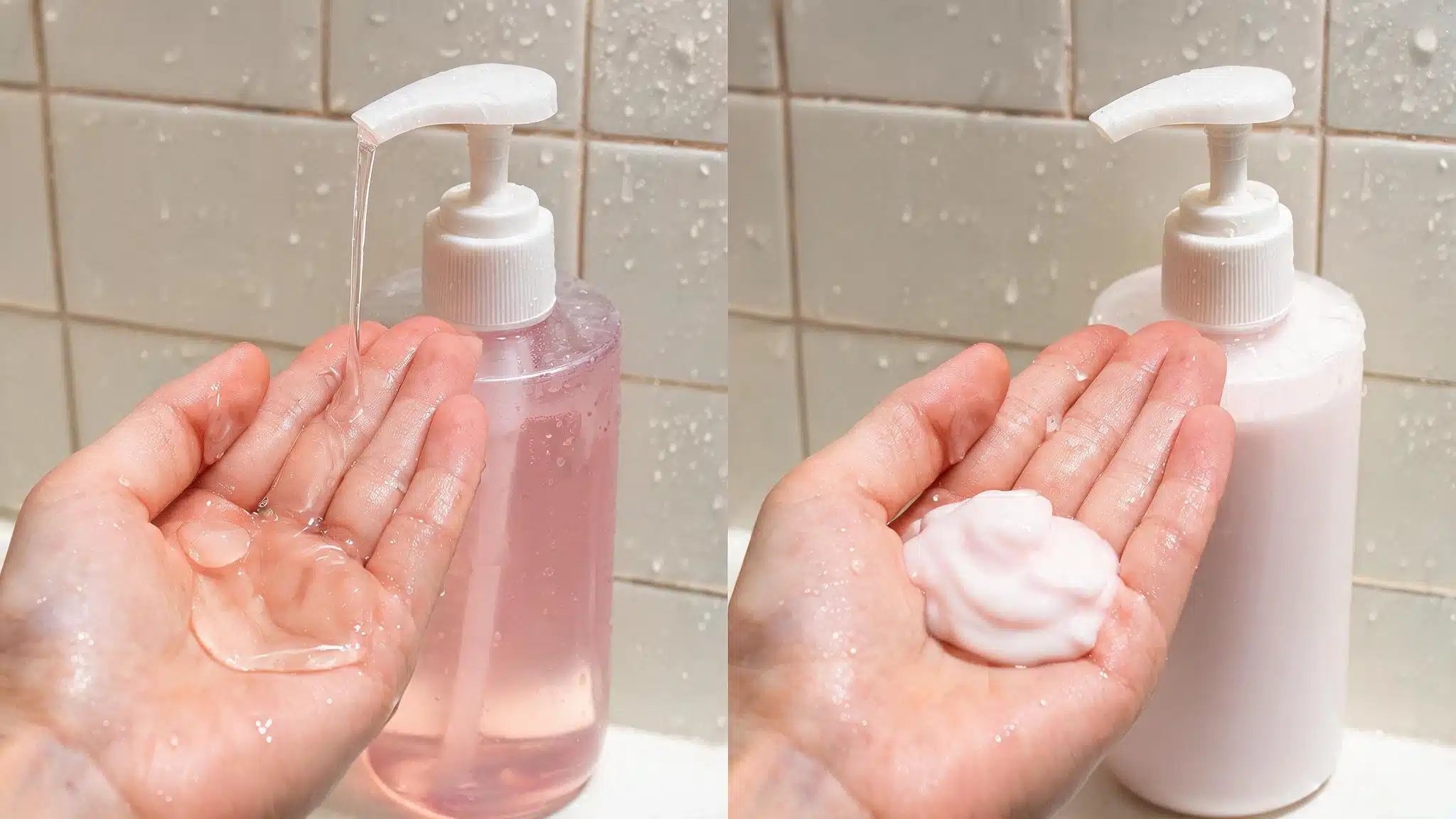
What is shower gel? Shower gel is a clear or semi-clear liquid cleanser with a thicker, gel-like texture that builds a big, foamy lather, making it a common pick for anyone who wants a fast, deep-clean feeling in the shower.
Most gels rely more on cleansing ingredients called surfactants and fewer added oils, so they rinse clean without leaving residue. Skin usually feels fresh and light right after rinsing, though it can feel a little tight if your skin already runs dry.
What is body wash? Body wash usually has a creamier texture that sits between liquid soap and lotion, built around milder surfactants plus added oils, butters, or humectants.
It’s gentler by design, which makes it a common everyday pick for normal to dry skin. After rinsing, skin usually feels soft and slightly coated rather than stripped clean, and for many of my clients with dry or eczema-prone skin, that coated feeling matters as much as the barrier-repair moisturizer they layer on right after.
Shower Gel vs. Body Wash at a Glance
Shower gel and body wash perform the same basic cleansing job, but they can differ in texture, lather, formulation, skin feel, and the overall experience they create in the shower.
Feature | Shower Gel | Body Wash |
|---|---|---|
Main purpose | Cleanses the body | Cleanses the body |
Texture | Usually thicker and gel-like | Usually creamy or lotion-like |
Lather | Often bubbly or foamy | Often softer or creamier |
Skin feel | Fresh, lightweight | Soft, conditioned |
Moisturizing ingredients | Fewer, lighter humectants | Fewer, lighter humectants |
Fragrance | Often stronger, energizing scents | Often softer, comfort-driven scents |
Best suited to | Normal/oily skin or refreshing feel | Dry skin or moisturizing preference |
Daily use | Yes, if formula is gentle | Yes, if formula is gentle |
I keep both on my own shower shelf for exactly this reason: one for mornings when I want to feel awake, one for nights when my skin’s had enough.
Shower Gel vs Body Wash: Key Differences
Shower gel and body wash perform the same basic cleansing job, but they can differ in texture, lather, formulation, skin feel, and the overall experience they create in the shower.
1. Texture and Consistency
Texture is usually the easiest difference to notice. Shower gel tends to hold a more defined gel consistency, while body wash may feel creamier or more lotion-like.
That difference affects how each product spreads and feels, but texture alone does not tell you how gentle, hydrating, or effective the cleanser will be.
2. Ingredients and Formula
Both rely on surfactants to lift oil and debris off skin so it can rinse away. Common surfactants include sodium laureth sulfate and cocamidopropyl betaine, and both show up across gels and washes at different concentrations, so the ingredient name alone won’t tell you which category a bottle belongs to.
Body washes commonly add more humectants and emollients, like glycerin or shea butter, but shower gels can contain those too.
I read ingredient lists with clients more often than they’d expect, and half the time the surfactant names look nearly identical between a “gel” and a “wash” sitting side by side. That’s part of why a gentle daily cleanser matters more than whether the label says shower gel or body wash.
3. Cleansing Experience and Lather
Shower gels are often associated with a bubbly, fresh lather, while creamy body washes tend to produce softer foam. The amount of foam is mostly sensory.
A cleanser that bubbles more isn’t automatically better at cleansing. I’ve had clients switch products purely chasing bigger bubbles, and their skin barely noticed the change either way.
4. Moisture and After-Shower Feel
One of the most noticeable differences shows up after rinsing. Some shower gels leave skin feeling light and thoroughly rinsed, while moisturizing body washes tend to leave it feeling softer.
This is the complaint I hear most in the treatment room: “it rinses off clean, but my skin still feels tight an hour later.” That tightness is often a sign a cleanser pulled skin outside what researchers call the skin’s acid mantle, its natural, slightly acidic protective layer.
If your skin regularly feels tight after bathing, pick a gentle formula with moisturizing ingredients rather than choosing by category alone.
5. Fragrance and Sensory Preference
Shower gels are often marketed around refreshing scents, cooling sensations, or energizing shower experiences. Body washes may instead emphasize comfort, softness, and creamy textures.
These are marketing and formulation tendencies, not rules. Fragrance strength varies considerably from one product to another in both categories.
Overall, the biggest differences are sensory rather than functional. Both products cleanse your body, while the individual formula determines how gentle, moisturizing, fragranced, or lightweight that cleanse feels.
Which One Suits Your Skin?
Your skin type is a better starting point than choosing based on packaging, fragrance, or how much a product lathers. Even then, the formula matters more than the words “shower gel” or “body wash.”
Skin Type or Preference | Better Starting Point | What Matters Most |
|---|---|---|
Dry skin | Moisturizing body wash | Humectants, emollients, gentle cleansing |
Oily skin | Lightweight shower gel or body wash | Comfortable cleansing without excessive stripping |
Sensitive skin | Either | Gentle, fragrance-free formula |
Normal skin | Either | Texture and after-shower preference |
Skin that feels tight after bathing | Conditioning body wash | Moisturizing ingredients and mild cleansing |
Fresh, lightweight preference | Shower gel | Gel texture and easy rinse-off |
There is no universal winner. The better cleanser is the one that cleans effectively without repeatedly leaving your skin tight, itchy, dry, or uncomfortable.
Why the Formula Matters More Than the Label
Neither “gel” nor “wash” is a regulated term, so the split between them comes down to two things: how much surfactant is in the formula, and how much of that surfactant is balanced out by oil or humectant.
Surfactants are the cleansing ingredients that lift oil, sweat, and dirt off skin so water can rinse them away. Every gel and every wash relies on them, just at different concentrations.
Skin’s natural surface sits in a mildly acidic range, generally around pH 4.5 to 5.5. A cleanser that pulls skin far outside that range, gel or wash, can leave the barrier feeling tight or reactive, regardless of which shelf it came from. It’s the same low-pH thinking behind the Korean skincare routines, just applied to the body instead of the face.
The tradeoff with a heavier surfactant load is that it can lift some of the skin’s own oils along with the dirt. That’s why some gel formulas feel tight on drier skin with daily use.
In practice, I tell clients to check their skin twenty minutes after a shower, not right when they step out. Tight and squeaky isn’t the same as clean; it’s often a sign the formula stripped more than it needed to.
Common Skin Concerns and Which Cleanser Helps
Skin type is a good starting point, but specific concerns often matter more than a dry, oily, or normal label. A few I see often in the treatment room:
- Keratosis pilaris (rough bumps on arms or thighs): a gentle, fragrance-free body wash with a small amount of lactic or salicylic acid can help smooth texture over time. Daily use of a high-foam gel here tends to dry the bumps out further.
- Body acne or clogged pores on the back and chest: look for a gel or wash with salicylic acid or benzoyl peroxide, and let it sit on skin for 60 to 90 seconds before rinsing so the active ingredient has contact time to work.
- Eczema-prone or very reactive skin: a fragrance-free, low-surfactant body wash with ceramides or oat extract is usually the safer everyday choice. Save foam-forward gels for occasional use, not daily rotation.
- Keeping the skin barrier calm after heavy pool or chlorine exposure: this one comes from my own years coaching competitive swimmers. Chlorine strips the skin barrier fast, and it aligns with CDC swimming guidance to rinse off before residue sits on skin too long. A moisturizing body wash right after a swim, followed by a barrier cream, does more than switching cleansers alone.
You don’t need a dermatologist visit to start. It just needs a few weeks of consistent use to see whether a formula is actually helping.
Is Shower Gel Body Wash?

Technically, yes: shower gel and body wash both clean the body, and in many cases, the terms are used interchangeably at stores.
The real difference sits in formulation and marketing rather than function. Brands label a product “shower gel” when it’s thinner and foam-focused, and “body wash” when the formula leans creamy and moisture-focused.
For daily hygiene, either one does the job. But if your skin has specific needs, extra dryness, sensitivity, or oil control, the formula differences start to matter more than the label on the bottle.
So while the shower gel vs body wash naming can blur together, the ingredient list is where the real distinction lives.
How Do You Choose the Right One for Your Skin?
Here’s the short checklist I actually walk clients through in the treatment room before they commit to a new bottle:
- Think about the season: Skin needs shift with the weather, so a formula that worked fine in summer might feel too drying once winter hits.
- Check the packaging: A pump bottle is easier for quick, daily grab-and-go showers, while a flip-cap bottle suits a smaller bathroom counter.
- Test before you commit: Grab a travel-size version first; a reaction on your arm shows up fast, and it saves a full-size bottle from going to waste.
- Look at the price per use: Thicker formulas often last longer per bottle, which can offset a slightly higher price on the shelf.
- Read the label for certifications: A dermatologist-tested or hypoallergenic mark tells you more than a trendy claim if your skin reacts easily.
Answering these narrows the shelf down fast, and you’ll likely land on the formula your skin’s been asking for all along.
What to Look for on the Label
The front of a bottle tells you whether a product is marketed as shower gel or body wash. The ingredient list gives you a better idea of what the formula is designed to do.
If You Want | What to Look For |
|---|---|
More hydration | Glycerin and other humectants |
Softer skin feel | Emollients, oils, butters, conditioning ingredients |
Barrier-focused care | Ceramides or other barrier-supporting ingredients |
Sensitive-skin routine | Gentle, fragrance-free formula |
Lightweight cleanse | Simple gel or lightweight wash formula |
Less post-shower tightness | Mild cleanser plus moisturizing ingredients |
Do not rely too heavily on marketing terms such as “natural,” “hypoallergenic,” “deep cleansing,” or “moisturizing.” They do not tell you everything about how the complete formula will behave on your individual skin.
It is also worth distinguishing fragrance-free from unscented when sensitive skin is a concern. A product can be formulated to have little noticeable smell without necessarily being completely free of fragrance ingredients.
Common Shower Product Mistakes

A few small habits can undo the benefits of even the right formula:
- Choosing based only on scent: a great smell doesn’t mean the formula suits your skin
- Using harsh formulas on dry skin: heavy-foaming gels can strip natural oils if your skin is already dry
- Over-cleansing: washing more than once or twice a day can wear down your skin’s natural barrier
- Skipping moisturizer after bathing: even the most hydrating body wash isn’t a substitute for a proper lotion or cream afterward
- Skipping a full rinse after pool or lake time: chlorine and lake bacteria sit on skin longer than people think. A full rinse with a gentle cleanser as soon as possible cuts down on breakouts and irritation; it’s the single biggest habit I coach swimmers on.
- Reusing a wet loofah or puff for weeks without drying it: these tools trap bacteria fast in a damp bathroom. Rinse it and hang it to fully dry between uses, or swap it out every few weeks.
Small changes like these often matter more than which bottle you buy.
Final Thoughts
Neither shower gel nor body wash wins by default. The better cleanser is whichever one leaves your skin calm and comfortable twenty minutes after your shower, not whichever bottle looks nicer on the shelf.
If you’re still asking whether shower gel is really the same as body wash, the honest answer sits in the ingredient list, not the label on the front.
That’s what the shower gel vs body wash question really comes down to: not which one sounds better, but which one your skin actually agrees with.
Tell me in the comments what your skin’s dealing with right now- dryness, breakouts, or something in between- and I’ll help you land on a formula that’s actually worth keeping past the first bottle.
Frequently Asked Questions
Can Shower Gel and Body Wash Be Mixed or Alternated in the Same Week?
Yes, many people switch between the two depending on the season or how their skin feels, with no issues. Rotating formulas can even help you notice which one your skin responds to better across different weather and humidity levels.
Do Dermatologists Recommend One Over the Other?
Not universally. Dermatology guidance tends to focus less on the gel-versus-wash label and more on fragrance level, surfactant strength, and how a formula fits a specific skin condition.
Are Natural or Organic Versions of These Products Better for Skin?
Not automatically; check the ingredient list, since “natural” labeling doesn’t guarantee a gentler or more effective formula. Some plant-based ingredients can still irritate sensitive skin, so patch-test before switching your whole routine.
Does Water Temperature Change How Shower Gel or Body Wash Works?
Yes. Hot water strips surface oils faster than lukewarm water, regardless of which cleanser you use. Lukewarm water paired with a gentle formula protects the skin barrier better than switching products alone.
How Long Should You Leave Shower Gel or Body Wash on Skin Before Rinsing?
For a basic daily clean, a quick lather and rinse, about 20 to 30 seconds, is enough. For formulas targeting acne or texture, ones with salicylic acid or benzoyl peroxide, let it sit for about 60 to 90 seconds so the active ingredient has contact time before rinsing.