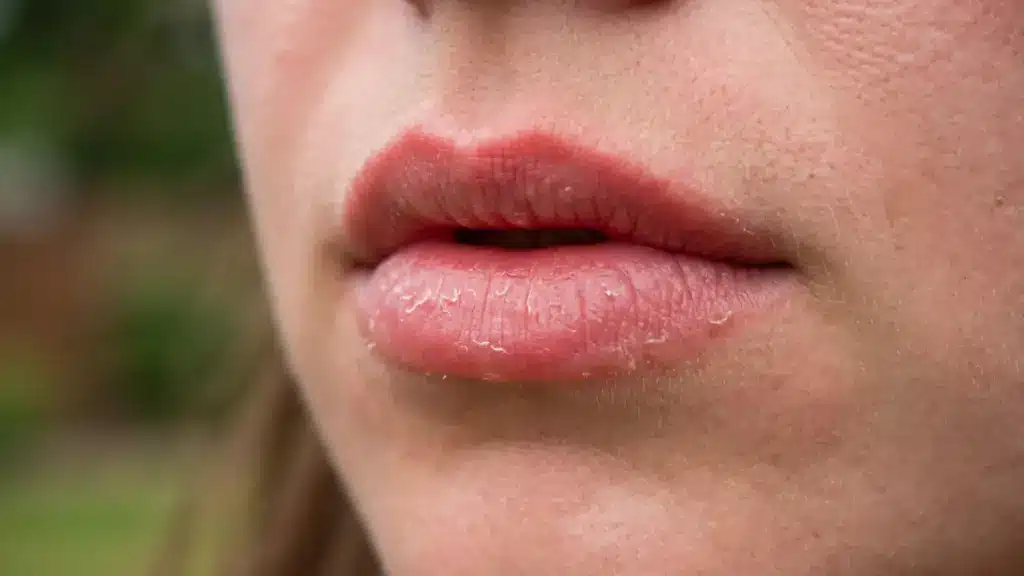
Your lips are throbbing after a long afternoon outside, and now you are staring in the mirror, trying to figure out what is actually happening.
Is it just sunburn, or is a cold sore starting to form in the same spot? A lot of people confuse the two, and treating one like the other can slow down healing.
Sun blisters appear as small white or clear, fluid-filled bumps on skin that is already burned, while cold sores tingle first and cluster in one recurring spot, often triggered by the same UV exposure.
Here is how to calm the burn fast and exactly what you are dealing with so you can start healing quickly.
Why Lips Get Sunburned So Easily
Lips burn more easily than the rest of the face because they have a much thinner outer layer of skin that offers very little natural protection against UV rays.
Unlike other areas of the skin, the lips do not contain oil glands, which means they cannot produce sebum to lock in moisture or strengthen the skin barrier.
They also have very low melanin levels, the pigment that helps absorb and block UV radiation, making them more vulnerable to direct UV damage.
The lower lip is especially at risk because it naturally faces upward and receives more direct sun exposure throughout the day.
In addition, most people forget to apply SPF lip balm as regularly as they apply sunscreen to the face, leaving their lips exposed for long periods without protection.
Early Signs of Sunburned Lips
A sunburn on the lips often causes several symptoms at once, with the severity depending on how long your lips were exposed to UV rays. Here are the most common signs to watch for:
- Redness: The lips may appear pink, bright red, or patchy a few hours after prolonged sun exposure, and the redness often becomes more noticeable over time.
- Tenderness: Your lips can feel sore and sensitive, making everyday activities like eating, drinking, or talking uncomfortable.
- Swelling: Mild to moderate swelling may make your lips look fuller than usual and feel tight, especially when speaking or eating.
- Dryness: Sunburn strips away moisture, leaving your lips dry, rough, and stretched, especially when you smile or speak.
- Peeling Skin: As the damaged skin heals, the outer layer may begin to flake. Avoid picking at it to prevent irritation.
- Fluid-Filled Blisters: More severe sunburns can cause small white or clear blisters that protect the damaged skin underneath.
- Burning Sensation: A persistent burning or stinging feeling is common and often becomes more noticeable when eating salty, spicy, or acidic foods.
- Eating Discomfort: Sensitive lips can make eating and drinking painful, particularly with hot, citrus, or heavily seasoned foods.
How to Treat Sunburned Lips?
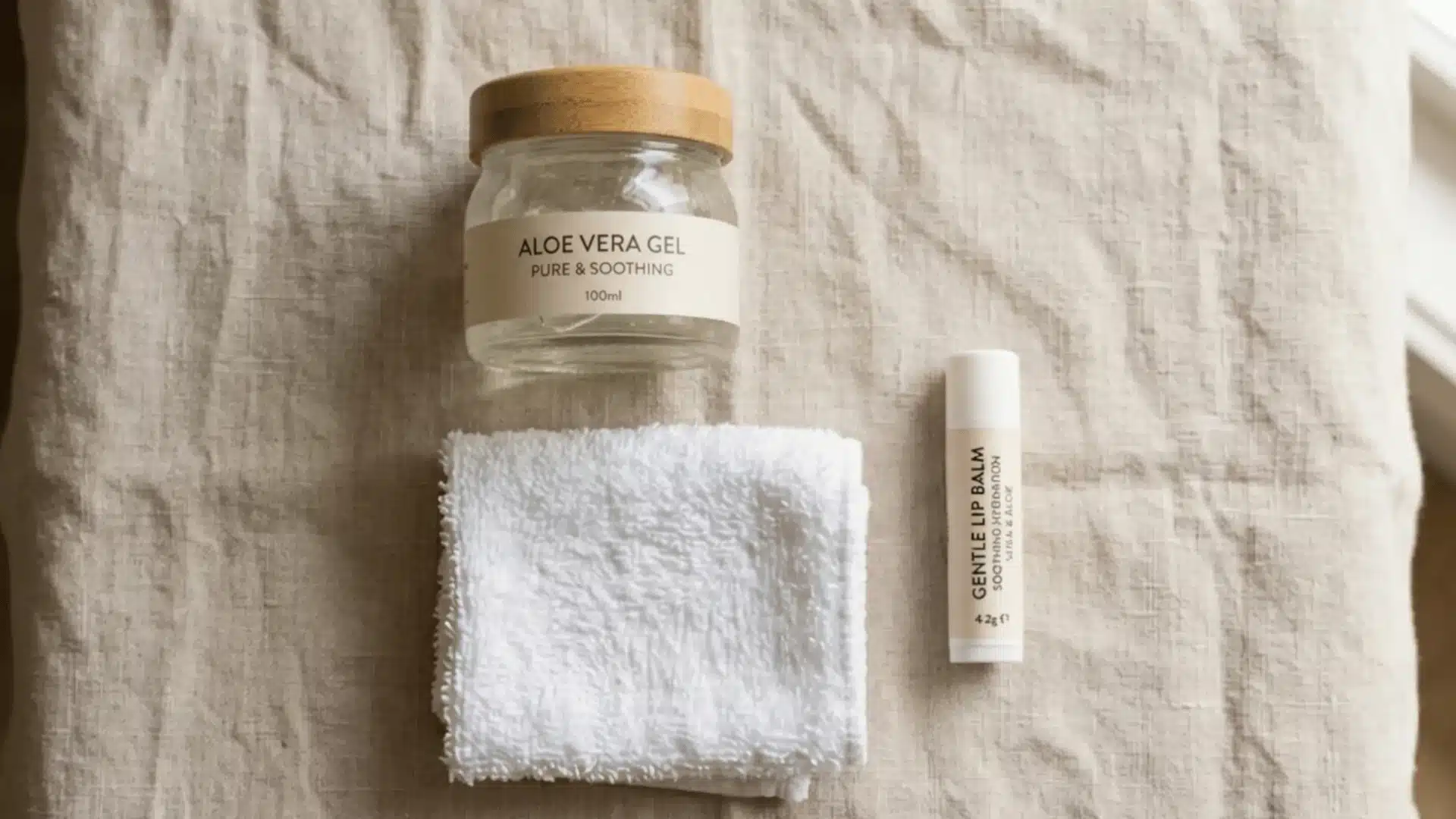
If your lips are sunburned, the first priority is to cool the skin, restore moisture, and prevent further irritation. Acting quickly can reduce discomfort, minimize peeling, and help your lips heal faster.
1. Cool the Lips and Reduce Inflammation
Start by applying a cool, damp compress to your lips for 10 to 15 minutes several times a day. This helps lower the skin’s temperature, ease swelling, and relieve the burning sensation without causing additional irritation.
If needed, an over-the-counter anti-inflammatory medication, such as ibuprofen, may help reduce pain and swelling during the first day or two.
2. Restore Moisture and Protect the Skin
Once the initial heat begins to subside, keep your lips hydrated with a fragrance-free lip balm, ceramide-based ointment, or a lightweight aloe vera gel.
Reapply whenever your lips start to feel dry, especially after eating or drinking. Consistent hydration supports the skin barrier and reduces cracking as the damaged tissue begins to heal.
3. Eat and Drink Without Irritating Your Lips
Choose soft, cool foods such as yogurt, smoothies, and oatmeal while your lips heal. Avoid very hot foods and beverages, as well as anything salty, spicy, or highly acidic, since these can increase stinging and discomfort.
If drinking is painful, using a straw can help minimize direct contact between liquids and your lips.
4. Stay Hydrated and Limit Sun Exposure
Drink plenty of water to help your body recover and prevent your lips from becoming even drier. Until the burn has healed, avoid direct sun exposure whenever possible.
If you need to be outdoors, wear a wide-brimmed hat and protect your lips with a broad-spectrum lip balm with SPF 30 or higher to prevent additional UV damage.
5. Let the Healing Process Happen Naturally
As the sunburn heals, your lips may become dry, flaky, or start peeling. This is a normal part of the recovery process and should not be rushed.
Avoid peeling loose skin or popping blisters, as this can delay healing, increase the risk of infection, and make your lips more sensitive. Continue moisturizing regularly until the skin has fully recovered.
Can You Put Petroleum Jelly on Sunburned Lips?
It depends on timing. Right after a burn, petroleum jelly can trap heat against the skin and worsen inflammation, since it forms a thick, occlusive layer before the burn has cooled.
In those first 24 to 48 hours, a lightweight, water-based aloe vera gel or a ceramide-rich lip balm is the better choice, as it helps cool, soothe, and hydrate the damaged skin without trapping excess heat.
Once the initial heat and swelling have settled, an occlusive balm like petroleum jelly can help seal in moisture and support the skin as it peels and rebuilds.
Think of it as a second-stage product rather than a first-response one. Longer-term, the better approach is prevention, and that starts with understanding how SPF works on skin, which has almost no natural defense against UV radiation.
Healing Timeline for Sunburned Lips
Most sunburned lips heal without complications, but recovery time depends on the severity of the burn. Knowing what to expect at each stage can help you avoid unnecessary worry and support proper healing.
1. First 24–48 Hours After Sunburn
A mild sunburn without blistering typically heals within 3 to 5 days with consistent cooling, hydration, and moisturizing.
During this time, the redness and tenderness gradually fade, while dryness and tightness become less noticeable. Protecting your lips from further sun exposure is important to prevent the healing process from starting over.
2. Days 3–5: Peeling and Early Recovery Phase
Between days 3 and 5, the intensity of pain usually starts to reduce, but dryness and peeling become more noticeable.
The damaged outer layer of skin begins to flake as the body removes injured cells. Lips may still feel slightly tender, but swelling typically decreases during this phase. I
t is important not to pick or peel the skin, as this can slow healing and increase irritation. Regular moisturizing helps maintain comfort and supports faster recovery.
3. Days 5–10 (If Blistered Lips Are Present)
If sunburned lips develop blisters, the healing process usually extends to 5–10 days. During this period, blisters gradually dry out and shrink as new skin forms underneath.
The area may still feel sensitive, but the pain will gradually decrease with proper care. It is important to avoid popping or disturbing the blisters, as they act as a natural protective layer.
Gentle hydration, sun protection, and patience are key to ensuring smooth healing without complications.
Understand how peeling skin heals during recovery and why you should avoid picking at loose skin.
Sun Blister on Lips vs Cold Sore: How to Tell the Difference
Here, most of the confusion occurs, since both conditions can appear on the lips as painful, fluid-filled bumps.
| Feature | Sun blister | Cold sore |
|---|---|---|
| Cause | Severe UV damage to the skin | Herpes simplex virus (HSV-1) |
| Appearance | Small, white or clear, isolated bumps | Cluster of small blisters, often reddish at the base |
| Pain | Sore to the touch, tied to the burn | Sharp, throbbing pain that can start before any blister appears |
| Tingling | Not typical | A common warning sign is one to two days before the blister forms |
| Blister location | Anywhere the sun touched, including beyond the lip line | Usually the same spot every time, on or near the lip border |
| Fluid | Clear | Clear to yellowish, may turn cloudy |
| Contagious | No | Yes, especially while blistered |
| Healing time | About 3 to 10 days, depending on severity | About 7 to 10 days without treatment |
| Treatment | Cooling, moisture, anti-inflammatories | Antiviral creams or oral medication |
| Recurrence | Only with repeated sun exposure | Can recur in the same spot for life |
What to Avoid While Your Lips Heal?
Certain habits and products can make sunburned lips more painful or slow the healing process. Avoid the following until your lips have fully recovered:
- Picking at Skin: Pulling at flaking or peeling skin can delay healing, increase irritation, and even leave uneven texture behind. Let the damaged skin shed naturally.
- Popping Blisters: Blisters act as a protective barrier over the damaged skin underneath. Breaking them open increases the risk of infection and can slow recovery.
- Spicy Foods: Foods containing capsaicin, such as chili peppers and hot sauces, can cause intense stinging and make already inflamed lips feel even more painful.
- Acidic Drinks: Citrus juices, soft drinks, and other acidic beverages can irritate cracked or sunburned lips, worsening burning and discomfort during healing.
- Menthol Products: Although menthol creates a temporary cooling sensation, it can dry out damaged skin and make sunburned lips feel more irritated over time.
- Camphor Ingredients: Camphor is commonly found in cold sore treatments, but it can be too harsh for sunburned lips and may increase dryness or irritation.
- Excessive Licking: Licking your lips may provide brief relief, but saliva evaporates quickly, leaving the lips even drier and slowing the healing process.
Can Sunburn Trigger a Cold Sore?
Yes, sun exposure can trigger a cold sore, especially in people who already carry the herpes simplex virus type 1 (HSV-1).
Once infected, the virus remains inactive in nerve cells but can reactivate when exposed to triggers such as UV radiation.
Sunlight may damage skin cells and nearby nerve endings, which can start a repair response that unintentionally activates the virus.
This is why some people notice tingling, itching, or burning on the lips a day or two after prolonged sun exposure, even before any visible blisters appear.
People prone to cold sores can reduce risk by using a broad-spectrum SPF lip balm, especially during outdoor activities or extended sun exposure.
When to See a Doctor for Sunburned Lips?
If you experience any of these warning signs, consult a healthcare provider promptly to determine the cause and receive the appropriate treatment.
- Fever: A fever along with sunburned lips may indicate an infection or a more severe reaction that should be evaluated by a healthcare provider.
- Pus or Discharge: Yellow, green, or foul-smelling drainage from a blister can indicate infection and should not be ignored.
- Severe Swelling: Swelling that makes it difficult to eat, drink, speak, or fully close your mouth requires prompt medical assessment.
- Trouble Swallowing: Difficulty swallowing may indicate significant swelling or another condition that needs immediate medical evaluation.
- Trouble Breathing: Any swelling that affects your breathing is a medical emergency and should be treated without delay.
- Persistent Bleeding: Lips that continue to bleed or crack deeply despite proper care may need professional treatment to heal correctly.
- Eye Symptoms: If you suspect a cold sore and develop redness, pain, or irritation around the eyes, seek medical care as soon as possible.
- Recurring Blisters: Blisters that repeatedly appear without obvious sun exposure may indicate an underlying condition rather than simple sunburn.
Conclusion
Sunburned lips are uncomfortable, but they are manageable once you know the routine: cool the burn, moisturize gently, skip anything acidic or picking at the skin, and give it a few days.
Knowing the difference between a sun blister and a cold sore also matters, since one calls for cooling and patience while the other calls for an antiviral. The best fix, though, is avoiding the burn altogether.
Make an SPF lip balm part of your everyday routine, not just a beach-day afterthought, and your lips will thank you all season.
Have a remedy that worked for you? Share it in the comments so other readers can try it too.
Frequently Asked Questions
Can Sunburned Lips Increase Your Risk of Lip Cancer Over Time?
Repeated lip sunburns, especially blistering ones, are linked to a higher long-term risk of skin cancer on the lips, including a precancerous condition called actinic cheilitis.
Is It Normal for a Sunburned Lip to Feel Numb Before It Starts Hurting?
Sunburn pain usually builds gradually rather than starting with numbness. If you notice tingling or numbness before any redness appears, that sensation is more typical of a cold sore in its early stage. It is worth watching closely over the next day to see which direction it goes.
Can Toothpaste or Food Allergies Be Mistaken for Sunburned Lips?
Yes, some toothpaste ingredients and food allergens can cause swelling, redness, or a burning sensation on the lips that resembles sun damage. The key difference is timing. Sunburn follows direct sun exposure, while an allergic reaction usually follows eating, drinking, or brushing your teeth.
Does Using a Straw Help Protect Sunburned Lips While They Heal?
Yes, sipping through a straw reduces direct contact between liquids and damaged skin, which can limit stinging from acidic or hot drinks. It is a simple habit that makes eating and drinking more comfortable during the first few days of healing.