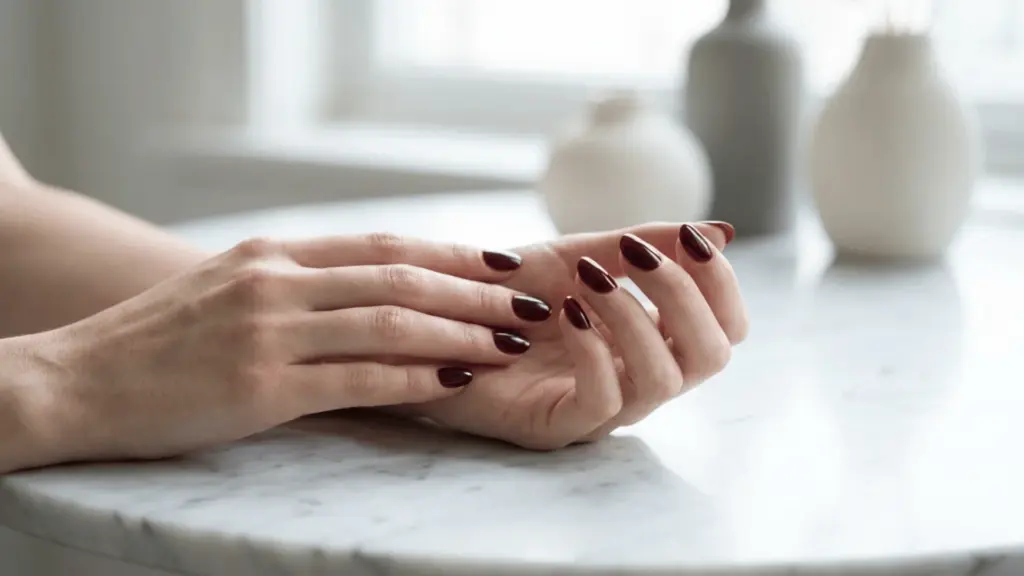
Tired of nail polish looking perfect one day and chipped the next?
UV gel nails can feel like the perfect middle ground when regular polish chips too fast and acrylics feel too heavy. The shine lasts, the finish looks clean, and the nails are ready as soon as the lamp cures them.
For anyone who wants a longer-lasting manicure without constant touch-ups, UV gel nails are often the option that makes the most sense.
Still, many people wonder what UV gel nails actually are, how the lamp works, and whether the process is safe for natural nails.
This post breaks it all down in a simple way, from curing and application to removal, safety, nail types, and who should try them.
What are UV Gel Nails?
UV gel nails are manicures that use gel polish or other gel products and require UV light to cure.
Regular nail polish dries when solvents evaporate. Gel polish stays soft until a UV or LED nail lamp activates it.
A basic UV gel manicure includes a base coat, color coat, and top coat. The base helps gel attach, the color adds shade and style, and the top coat seals it with a glossy finish.
Gel manicure feels different because the cured coating is stronger, more flexible, and more chip-resistant than regular polish. It gives a polished look without repainting every few days.
Gel nails need correct curing, careful application, and safe removal. Poor technique can lead to peeling, lifting, weak nails, or skin irritation.
How Do UV Gel Nails Work Under the Lamp?
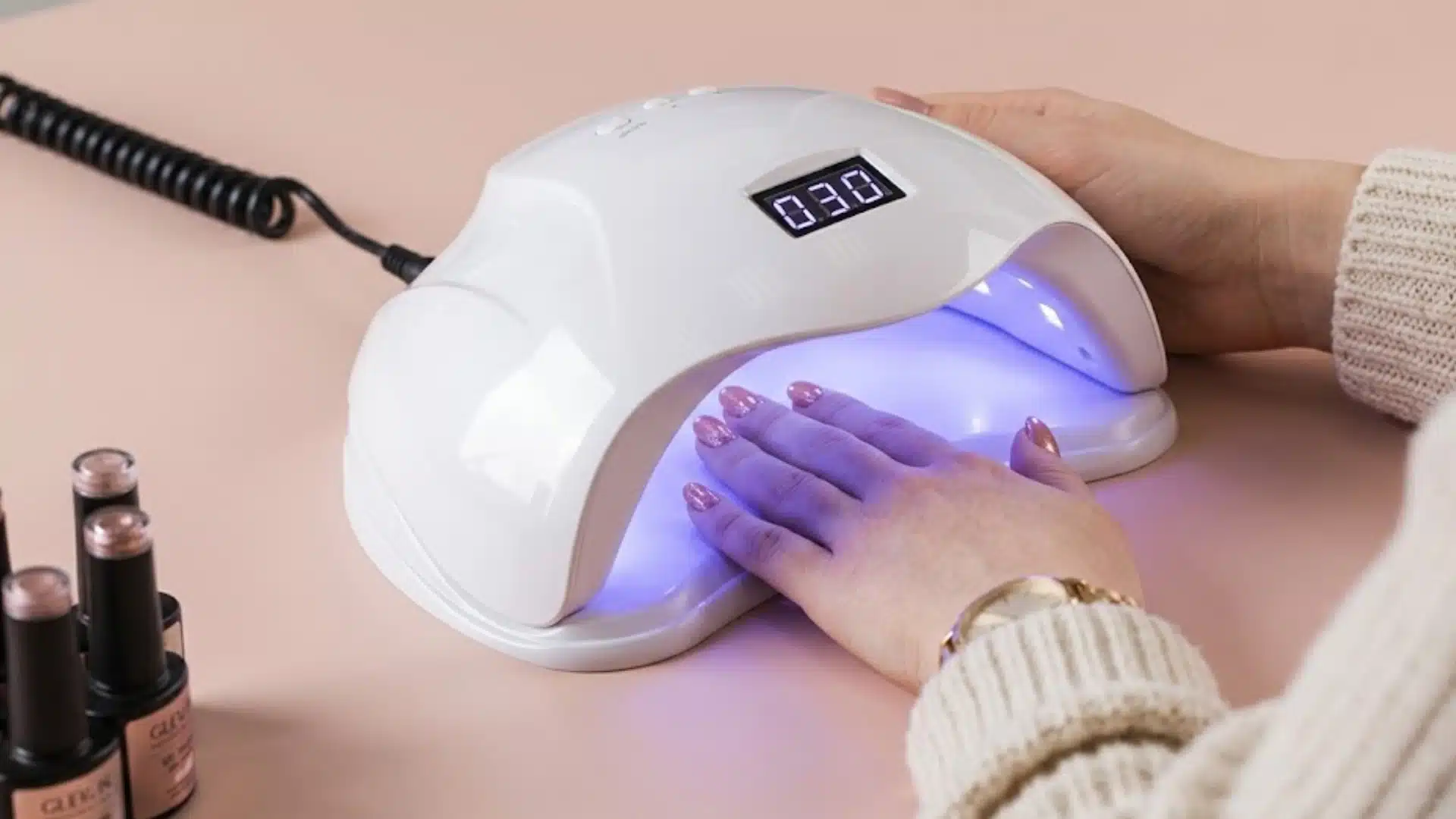
Gel does not dry the way regular nail polish does. It cures, which means it hardens through a light reaction. The formula contains light-reactive ingredients called photoinitiators.
When the hand goes under the UV or LED lamp, the light activates these ingredients. That starts a small chain reaction inside the gel.
As the reaction moves through the layer, the soft gel links together and forms a firm polymer network. This is what gives gel nails their smooth shine and stronger finish.
Thin layers cure better because the light can pass through them more evenly. Thick layers can block light from reaching the lower part of the gel.
The same thing can happen when the wrong lamp is used for the product. In both cases, the gel may look done on top but stay under-cured underneath.
Why the Gel Can Feel Warm?
Gel can feel warm under the lamp because curing gives off heat. This happens when the light starts the hardening reaction inside the gel.
Most of the time, the warmth is mild and passes quickly. It can feel stronger when the layer is too thick, because more product is curing at once. That extra reaction can create a sharper heat spike.
Thin or damaged nails may also feel more sensitive. When the nail plate is weak, over-filed, or already sore, there is less natural protection between the gel and the nail bed.
That can make normal curing warmth feel more intense. A warm feeling is common, but sharp heat should not be ignored.
The hand can be eased out of the lamp for a moment, then placed back in once the feeling settles.
UV Lamp vs LED Lamp: What’s the Difference?
Most people use “UV lamp” as a catch-all term, but there are real differences between a traditional UV lamp and a modern LED lamp, and they matter for curing speed, compatibility, and safety.
| Feature | Traditional UV lamp | LED lamp | UV/LED combo lamp |
|---|---|---|---|
| Light spectrum | Broad (365–405 nm) | Narrow (mostly ~405 nm) | Both |
| Curing time per layer | 2–3 minutes | 30–60 seconds | 30–60 seconds |
| Gel compatibility | Works with almost all gel types | LED-specific gels only | Most gel types |
| Bulb lifespan | Needs replacing every ~6 months | Up to 50,000 hours | Up to 50,000 hours |
| UV exposure | Higher (broader spectrum) | Lower (narrower, shorter sessions) | Lower than traditional UV |
Traditional UV lamps cure a wider range of gel formulas, including many older or hard gel products. LED lamps are faster and emit less UV overall, but they only cure gels specifically formulated for LED wavelengths.
UV/LED combo lamps, now common in both salons and home kits, handle almost everything and are usually the most practical choice.
Always check your gel polish label. Using an incompatible lamp is a common reason gel lifts or stays tacky after curing.
What Happens During UV Gel Nail Application and Removal
Many people search for information about UV gel nails to understand what happens during the appointment. A clear application and removal process also helps readers understand why salon technique matters so much.
How are UV Gel Nails Applied
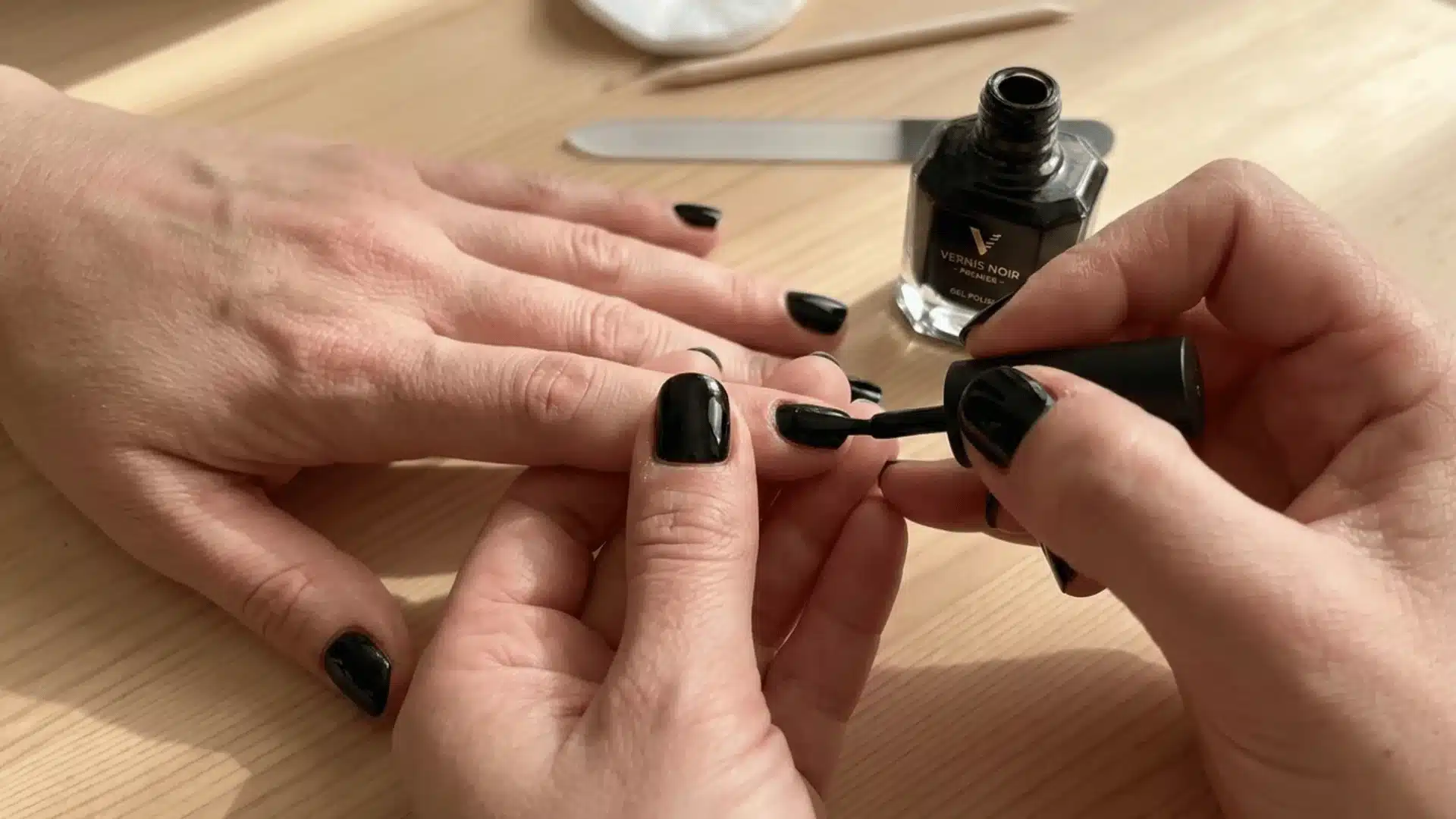
A proper gel manicure starts with nail preparation. The nail tech cleans the nail plate, shapes the edge, and gently pushes back the cuticle.
Light buffing may remove shine, but the natural nail should not be filed aggressively.
The base coat goes on first and cures under the lamp. Then the color gel is applied in thin layers, with each layer cured before the next is applied.
The top coat is applied last to seal the color and create shine.
A careful nail tech keeps gel away from the surrounding skin. Gel sitting on the skin can increase the risk of irritation or allergy, especially if it is not properly cured.
How are UV Gel Nails Removed
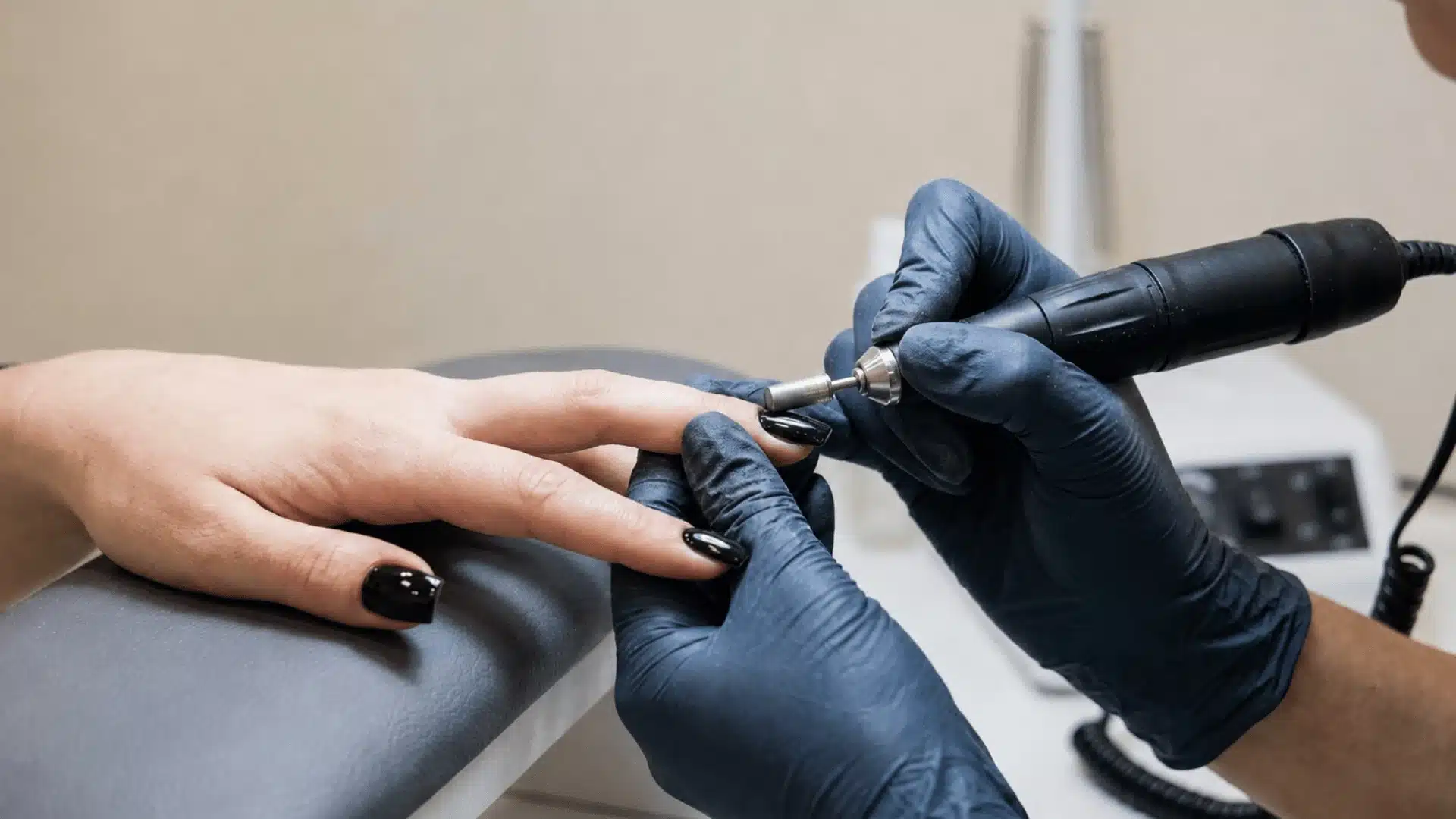
Removal depends on gel type; soft gel usually soaks off with acetone.
The top layer is lightly filed, then acetone-soaked cotton is placed on the nail and wrapped with foil. After soaking, the softened gel is gently removed.
Hard gel does not soak off the same way. It usually needs careful filing by a trained nail tech. Filing too much can thin the natural nail, so hard gel removal should not be rushed.
Peeling gel nails off can damage natural nails. The gel can pull up layers from the nail plate, leaving the nails rough, weak, and sensitive.
More soak time or professional removal is always safer than forcing the product off.
Good aftercare also helps UV gel nails last longer. Cuticle oil keeps the nail area flexible and less dry. Gloves help protect the manicure during cleaning or long dishwashing sessions.
How Do UV Gel Nails Differ from Regular Polish and Acrylics
UV gel nails sit between regular polish and acrylic nails, offering better wear than regular polish while feeling lighter than acrylics.
| Feature | UV Gel Nails | Regular Polish | Acrylic Nails |
|---|---|---|---|
| Strength | Stronger than regular polish, flexible on nails | Light strength, best for natural nails | Strongest option, good for extensions |
| Wear time | Usually lasts two to three weeks | Usually lasts a few days | Usually lasts three to four weeks |
| Finish | Long-lasting glossy finish | Glossy at first, but fades faster | Can look polished, sculpted, or dramatic |
| Best for | Natural-looking manicures with better durability | Quick color changes or short-term wear | Long extensions, sculpted shapes, or added strength |
| Feel on nails | Lightweight and flexible | Lightest option | Thicker and heavier than gel |
| Removal | Soft gel needs an acetone soak | Comes off with standard remover | Usually needs filing and acetone |
| Maintenance | Moderate maintenance | Low maintenance | Higher maintenance |
Types of UV Gel Nails: Soft Gel, Hard Gel, and Builder Gel
Not every gel manicure uses the same product. Salons may use the phrase gel nails to describe different services, but they are not all the same.
The main difference is how much strength they add, how they are used, and how they are removed.
The three common types are:
- Soft gel: This is the most common option for regular gel manicures. It applies like polish, cures under a lamp, and usually soaks off with acetone. It works best for natural nails when the goal is color, shine, and chip resistance
- Hard gel: This is stronger and often used for overlays or extensions. It can add structure and length, but it does not soak off like soft gel. A nail tech usually files it down during removal or maintenance
- Builder gel: This strengthens natural nails and can sometimes create short extensions. Some builder gels soak off, while others need filing. The exact removal method depends on the formula
Choosing the right one depends on what the nails need. Soft gel is enough for color and shine. Hard gel is better when length and strength matter.
Builder gel is a good middle option when natural nails need support.
Readers who want a more in-depth comparison can review different gel nail polish types before choosing a salon service or a home kit.
Pros and Cons of UV Gel Nails
UV gel nails have strong benefits, but a few drawbacks are worth considering before booking a salon visit or trying them at home.
| Pros | Cons |
|---|---|
| Thin layers create a smooth and glossy finish. | Thick or rushed layers may not cure properly. |
| Each cured layer helps the manicure last longer. | Poor curing can cause lifting, peeling, or irritation. |
| Soft gel removal can be gentle when done with enough soak time. | Peeling gel off can damage the natural nail plate. |
| A professional application keeps gel away from the skin. | Gel on the skin may increase the risk of irritation or allergy. |
| Good aftercare can help the manicure last longer. | Rough removal or over-filing can leave nails thin and weak. |
| UV gel nails dry quickly after curing. | Exposure to UV light may concern some users. |
| The finish can stay shiny for weeks. | Removal takes more time than regular polishing. |
Who Should Choose UV Gel Nails?
UV gel nails work best for people who want glossy, long-lasting nails without the heavier feel of acrylic extensions
- Long wear: Best for people who want a manicure that lasts about two to three weeks, with a steady shine and fewer chips.
- Busy lifestyle: Good for busy schedules, vacations, weddings, events, and low-maintenance routines without frequent polish touch-ups.
- Natural look: Suitable for anyone who likes a natural nail look without the thickness of acrylics or heavy extensions, for everyday wear.
- Smooth finish: A good choice for people who want thin, smooth, and polished nails with a glossy salon finish that stays neat.
- Weak nails: Not ideal for weak, peeling, painful, or damaged nails that need a break before another manicure service or gel application.
- Sensitive skin: People with skin sensitivity or nail-product allergies should be cautious before trying repeated gel services or new formulas.
- Safe removal: Best for anyone who wants to remove gel properly, not peel it off and damage the natural nails during removal.
Conclusion
UV gel nails are a smart choice for anyone who wants a glossy manicure that lasts longer than regular polish without the heavier feel of acrylics.
The gel formula stays soft until a UV or LED lamp cures it, creating a smooth, flexible, and chip-resistant finish.
The best results come from proper nail prep, thin coats, correct lamp curing, safe removal, and simple aftercare like cuticle oil and hand protection.
Soft gel, hard gel, and builder gel each serve different needs, so choosing the right type matters. UV lamp exposure is usually brief, but sunscreen or UV-blocking gloves can provide additional protection.
What do you think about UV gel nails? Share your experience in the comments and help other readers decide.
Frequently Asked Questions
How Long Do UV Gel Nails Last?
UV gel nails usually last around two to three weeks with proper application. The exact wear time depends on nail growth, gel type, curing quality, habits, and protection from water, pressure, and picking.
Can UV Gel Nails Be Done on Short Nails?
Yes, UV gel nails can be done on short nails. Gel polish works well on short natural nails because it adds shine, smoothness, and light protection without requiring extra length.
Is it Okay to Shower After Getting UV Gel Nails?
Yes, you can shower after getting UV gel nails because the polish is fully cured under the lamp. Still, it is better to avoid very hot water or prolonged soaking right after the appointment.
Can You Paint Over UV Gel Nails?
Yes, you can paint regular nail polish over cured UV gel nails if the gel surface is clean and intact. Use a non-acetone remover when taking the regular polish off, because acetone can weaken or disturb the gel layer underneath.