Some dresses look beautiful on the rack, but only a few have the kind of shape that feels easy, flattering, and reliable the moment you wear them.
That is where this classic silhouette earns attention. It has moved through fashion history, bridal collections, office wardrobes, and everyday style because it solves a common problem: finding a dress that looks polished without feeling too fitted or too formal.
When searching for what a line dress is, the goal is usually to understand more than a quick definition.
The shape, history, styling, uses, and lasting popularity all explain why this dress remains so loved.
This blog post walks through its meaning, key features, fashion roots, styling ideas, and its strong place in wedding fashion.
What is an A-line dress?
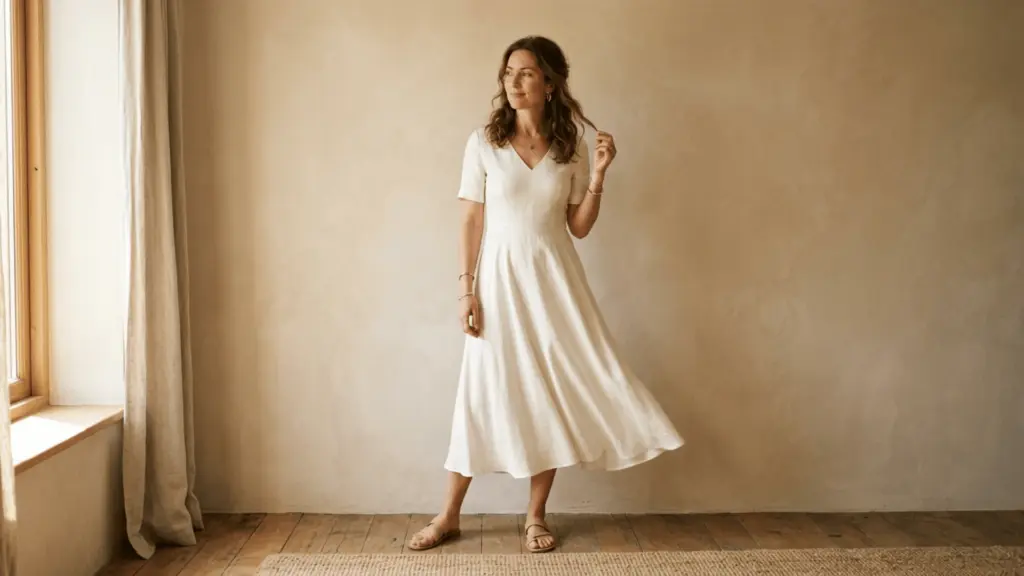
An A-line dress is fitted through the shoulders, bust, or waist, then gradually flares outward toward the hem. The silhouette mirrors the capital letter “A,” narrower at the top and wider at the bottom.
The flare can be subtle and soft or wider and more structured depending on the fabric and cut. This silhouette creates balance by defining the upper body while skimming over the hips and thighs.
Most A-line dresses flare from the natural waist, though some styles begin at the bust, at the empire waist, or at the high hip. The silhouette comes in every length: mini, knee-length, midi, tea-length, and floor-length.
That range is part of why it works for so many occasions, from casual afternoon plans to black-tie events and bridal wear.
The History and Origin of the A-Line Dress
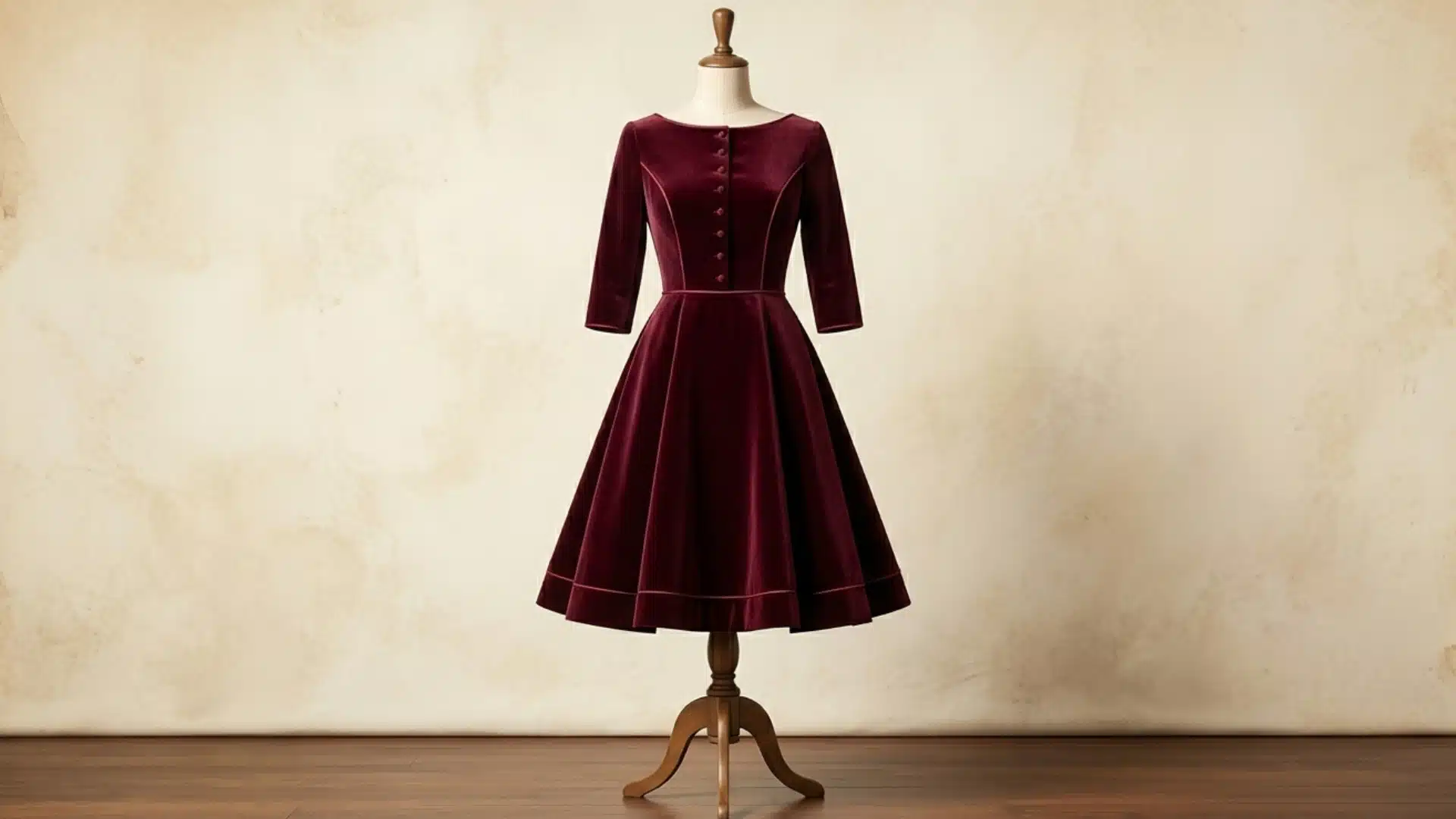
The A-line silhouette gained prominence in the 1950s, following the highly structured postwar New Look era.
Christian Dior introduced the term “A-line” for his Spring/Summer 1955 collection, after his H-line of 1954. It featured narrow shoulders, a less-defined waist, and a smooth flare toward the hem, forming a capital “A.”
The Metropolitan Museum of Art and other institutions describe this evolving look as creating a triangular shape that widened over the hips and legs.
In 1958, Yves Saint Laurent advanced the concept in his Trapèze collection for Dior, introducing looser, more fluid shapes that flared dramatically from the shoulders and further de-emphasized the waist.
By the 1960s, shorter hemlines and greater ease made the A-line a popular choice for daywear, evening dresses, and modern bridal styles.
The shape fell slightly out of fashion by the early 1980s, but came back strongly in the late 1990s and has remained popular ever since.
That kind of longevity usually means a silhouette is doing something right.
A-Line Dresses vs. Other Silhouettes: Key Comparisons
Dress silhouettes can look similar in product photos but feel completely different to wear. Here’s how the A-line compares with the styles it’s most often confused with.
| Silhouette | Shape and fit | Best for | Key difference from A-line |
|---|---|---|---|
| A-line | Fitted at the top, gradually flares toward the hem | Most body types, casual to formal | Balanced silhouette with comfortable movement |
| Fit-and-flare | Fitted through the bodice and waist, flares more dramatically | Creating an hourglass shape | More defined waist and fuller skirt |
| Sheath | Follows the body’s natural shape with minimal flare | Sleek, tailored, professional looks | More body-hugging, less forgiving on hips and thighs |
| Mermaid | Fitted through the torso and thighs, flares near the knees | Formal events, curve-forward styles | More dramatic and restrictive, less freedom of movement |
| Ballgown | Fitted bodice, very full and voluminous skirt | Weddings, galas, formal occasions | Creates a dramatic princess-style look with far more volume |
Is an A-Line Dress Good for All Body Types?
Yes, an A-line dress works for most body types because its shape creates balance without clinging. The fitted upper part defines the bust, shoulders, or waist, while the skirt gently flares over the hips and thighs.
- Pear shape: The A-line is particularly flattering here. It highlights the waist while the flare flows past the hips and thighs without drawing attention to them.
- Rectangle shape: The flare adds the appearance of curves where they may be less defined.
- Hourglass shape: A well-fitted A-line follows and highlights a naturally defined waist without being restrictive.
- Apple shape: Styles with a higher waistline, V-neckline, or softer fabric tend to feel and look most comfortable.
- Petite frames: Shorter lengths keep proportions balanced. A mini or knee-length cut will visually lengthen the legs.
- Taller frames: Midi and floor-length styles work beautifully and carry more visual weight.
If you want to go deeper into which dress suits your body shape, we’ve broken down the full picture separately.
Popular A-Line Dress Styles and Variations

An A-line dress can appear in many designs because the name describes the shape, not one fixed style. The main differences lie in the bodice, seams, neckline, sleeves, and skirt details.
- Basic A-line: Clean bodice, smooth flare, and minimal detail. Versatile enough to work for casual outings or formal events.
- Princess seam: Vertical seams shape the body without visible darts, giving a more polished, tailored finish.
- Wrap bodice: An adjustable front that ties at the waist, creating natural definition that flatters a range of sizes.
- Tiered or pleated skirt: Layers and pleats add volume and movement, making this version feel relaxed and romantic.
- Shirt dress A-line: A button-front bodice meets an A-line skirt for a neat, put-together daytime look.
- Necklines: V-neck lengthens the torso, square neck frames the collarbone, off-shoulder feels romantic, and high neck looks sleek.
- Sleeves: sleeveless, puff, long, or detachable sleeves change the season and mood.
These variations make the silhouette flexible for work, events, and bridal looks.
How to Style an A-Line Dress for Any Occasion
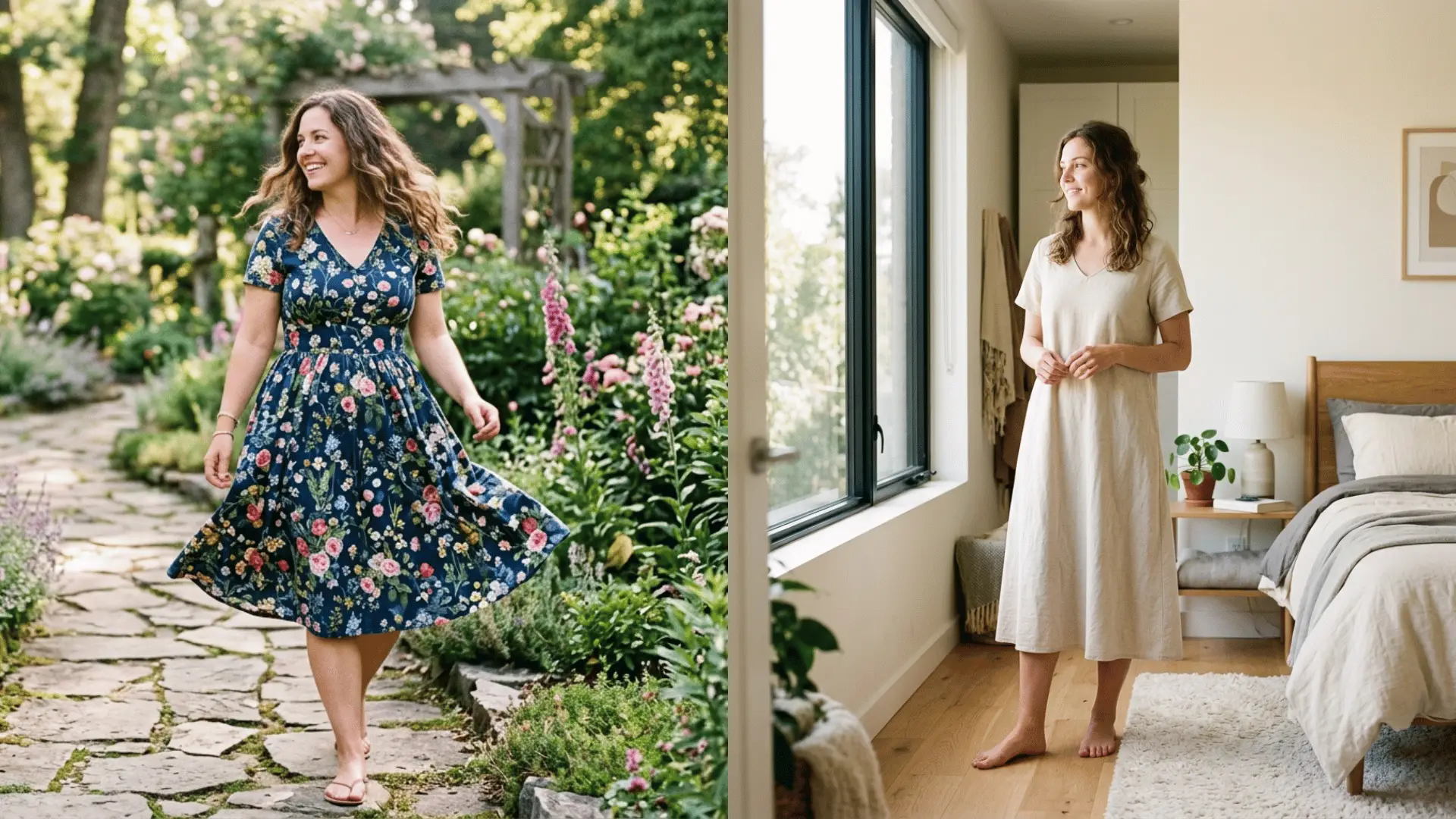
The right fabric, length, neckline, and accessories can make an A-line dress feel polished, relaxed, elegant, or more flattering for your body shape and occasion.
- For work: Choose a knee-length or midi A-line dress in crepe, cotton blend, or suiting fabric. Add a blazer, loafers, or low heels for a clean office look.
- For casual wear: Pick cotton, linen, denim, or jersey styles. Pair them with sneakers, sandals, or a cropped jacket for easy daytime dressing.
- For evening events: Go for satin, lace, chiffon, or smooth crepe. Add heels, simple jewelry, and a clutch to make the outfit look dressier.
- For waist definition, use a slim belt or choose a wrap bodice to create a more defined waistline.
- For extra coverage: Select sleeves, higher necklines, or a tailored jacket for a modest and refined finish.
Why A-Line Wedding Dresses are a Popular Bridal Choice?
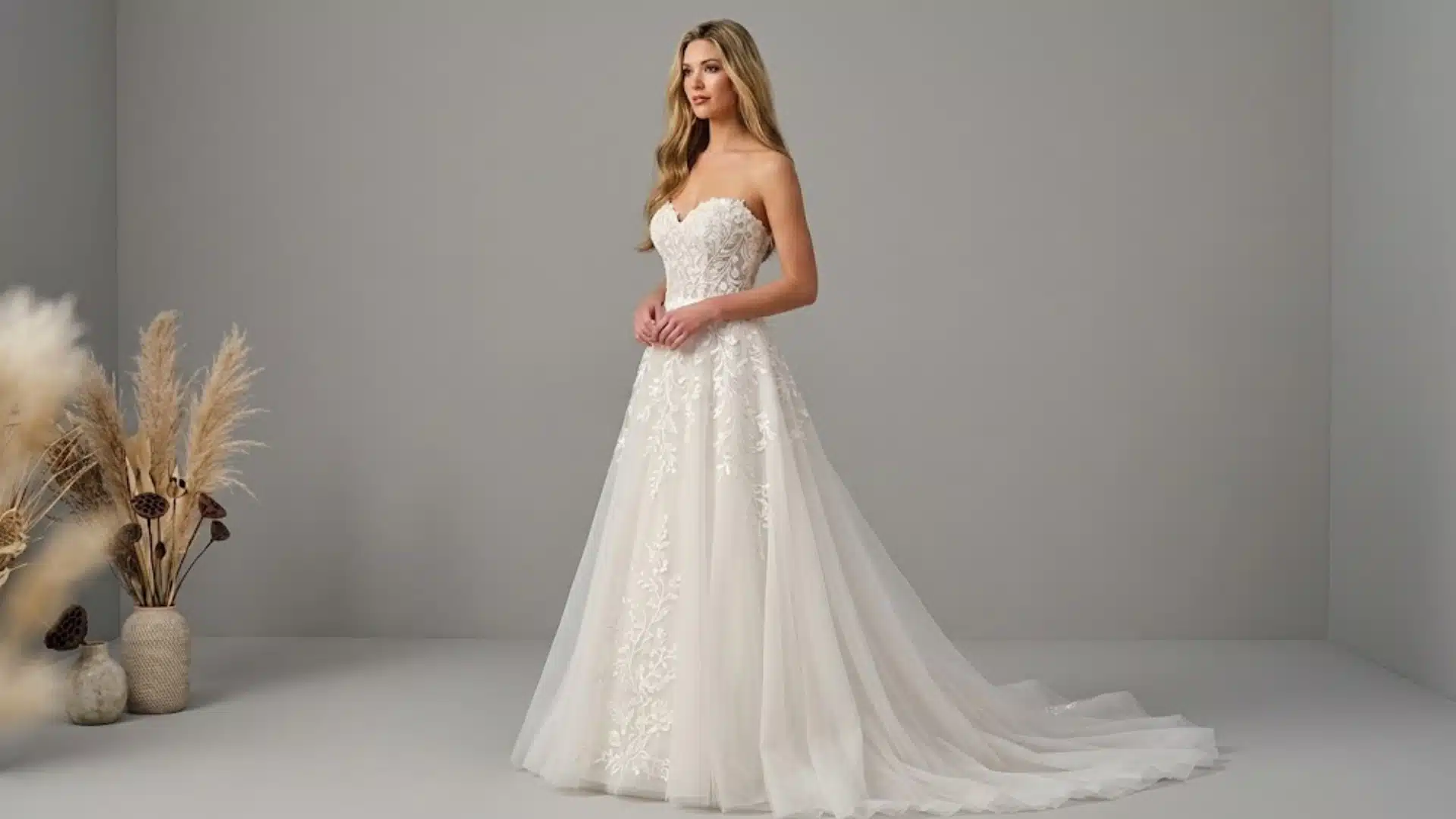
A-line wedding dresses are among the most popular bridal styles, and that’s not an accident. The shape works in a cathedral, a garden, a city hall, and a beach setting without needing to be reinvented for each one.
It flatters the waist, allows for easy movement across a full day of events, and photographs well from every angle without constant adjustment.
Fabrics and details that change the feel
- Lace: Creates a timeless look. Works well for traditional and vintage-inspired weddings.
- Satin: Smooth, structured, and clean. Classic bridal finish.
- Tulle: Adds softness and volume without the weight of a ball gown.
- Chiffon: Light and airy. Popular for outdoor and destination weddings.
- Modern details: Square necklines, corset bodices, thigh slits, pockets, illusion lace, and detachable sleeves give A-line wedding dresses a contemporary feel.
Celebrity Inspirations and Current Trends in A-Line Bridal Gowns
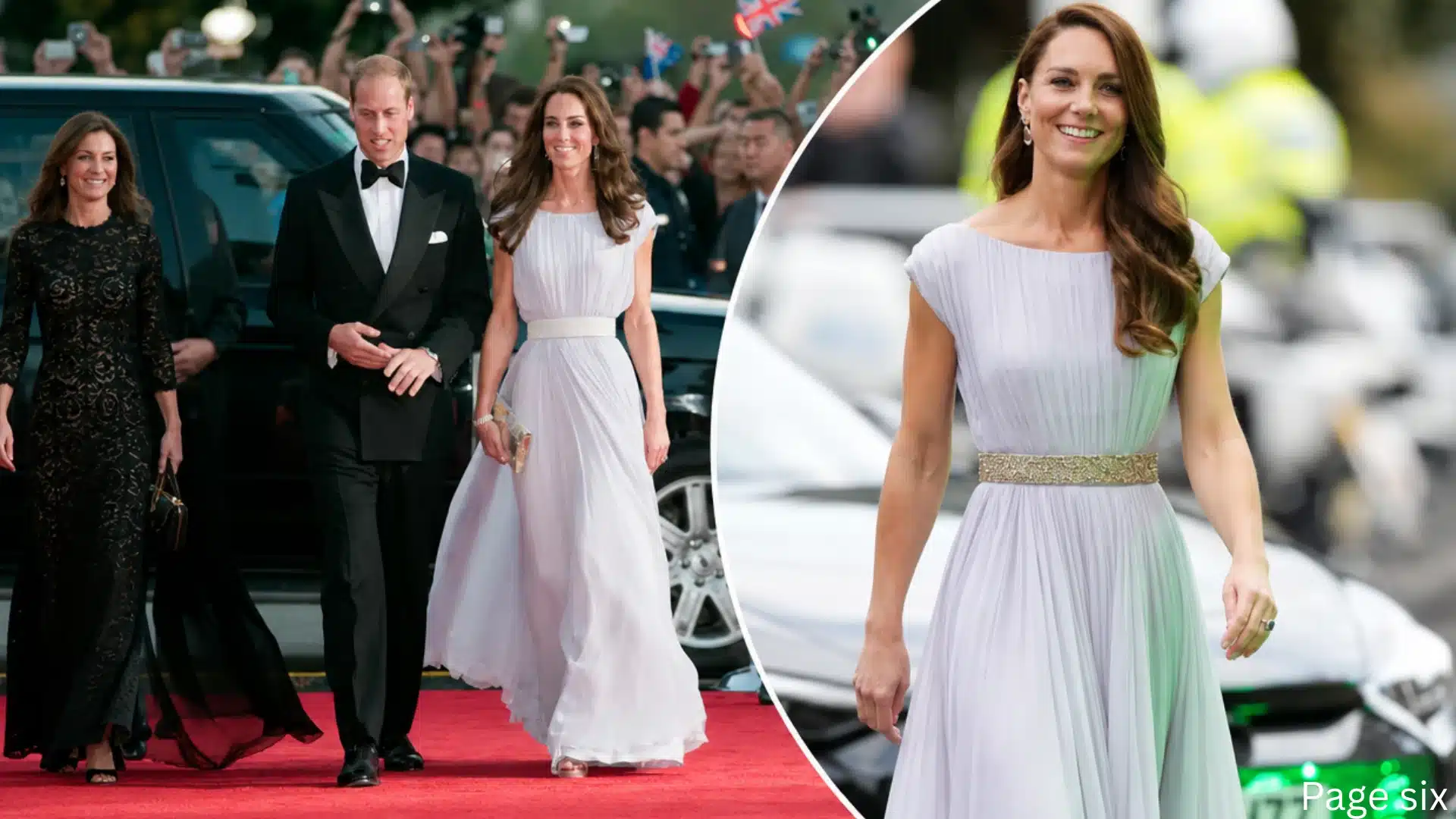
A-line bridal gowns have long been popular for their combination of elegance, comfort, and timeless appeal.
Celebrity brides have helped showcase the silhouette’s versatility, with Kate Middleton famously wearing an Alexander McQueen gown featuring a fitted lace bodice and a graceful A-line skirt.
Today, modern brides are embracing updated versions with clean satin fabrics, square necklines, basque waists, floral appliqué, pearl details, and detachable sleeves or overskirts.
Lightweight fabrics and minimalist designs are also trending, offering the sophistication of a traditional bridal gown without the weight of a ball gown.
As a result, A-line wedding dresses remain a top choice for brides seeking both style and comfort.
How to Shop for an A-Line Dress that Fits
Knowing the silhouette is useful. Knowing how to find one that actually fits is more useful. A few things to look for before you buy:
- Fit at the bodice first. The upper part of an A-line dress sets the whole silhouette. If the shoulders pull or the bust gaps, the flare won’t sit right either.
- Check where the flare starts. Natural waist, empire, or high-hip flares all create different shapes. Know where yours falls and match it to your proportions.
- Consider fabric weight. Lighter fabrics like jersey and chiffon give a softer flare. Heavier fabrics like crepe and satin hold more structure. The occasion and how much shape you want should guide this choice.
- Hemline and height. Petite frames generally do better with knee-length or mini cuts. Taller frames can carry midi and floor-length well. Wearing longer pieces on a petite frame can cut the leg line and visually shorten the silhouette.
- Alterations are straightforward. A-line dresses are among the easier styles to tailor. Hemming, taking in the bodice, and adjusting the waist are all common and usually affordable adjustments.
Conclusion
An A-line dress remains useful because it gives structure, comfort, and style without forcing one fixed look.
It can suit casual days, office outfits, evening events, and bridal wear depending on fabric, length, neckline, and details. Its history also shows why the silhouette has stayed relevant, from Dior’s 1950s fashion influence to modern wedding collections.
For anyone still asking what an A-line dress is, the simplest way to understand it is as a balanced shape that supports movement, flatters many figures, and adapts to different settings.
When choosing one, focus on fit at the top, fabric weight, and the occasion.
Have a favorite A-line style or bridal look? Share your thoughts in the comment section below.
Frequently Asked Questions
Can A-Line Dresses Be Altered Easily for a Perfect Fit?
Yes, A-line dresses are generally easy to alter. Common adjustments such as hemming, taking in the bodice, or adjusting the waist can help achieve a more customized fit.
What Fabrics Work Best for A-Line Dresses in Different Seasons?
Lightweight fabrics like cotton, linen, chiffon, and jersey are ideal for spring and summer, while satin, velvet, wool blends, and heavier crepe fabrics are well-suited to fall and winter.
Are A-Line Dresses Appropriate for Formal Black-Tie Events?
Absolutely. Floor-length A-line gowns in luxurious fabrics such as satin, silk, lace, or tulle are a popular choice for black-tie events because they combine elegance, comfort, and timeless style.