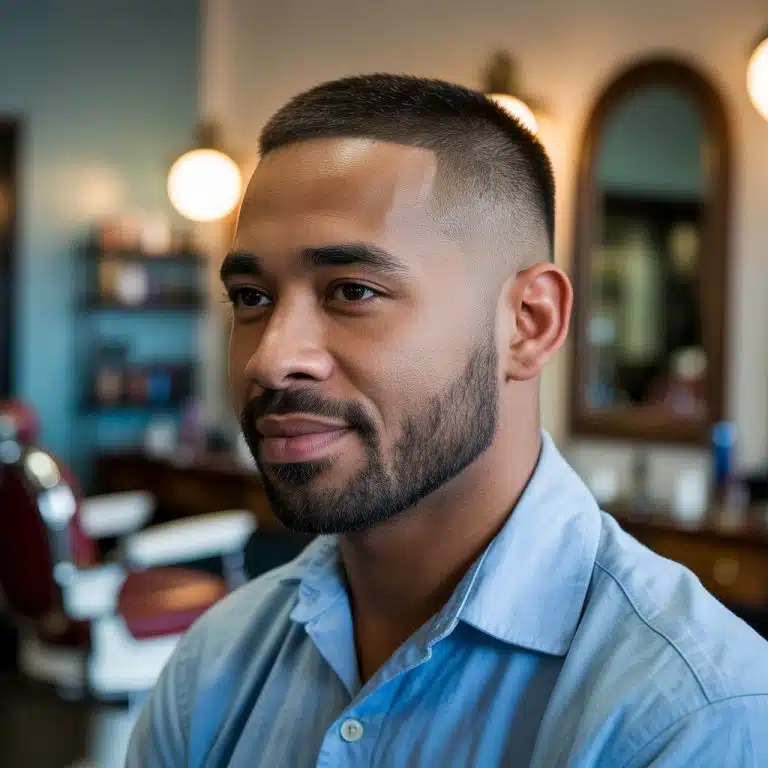

If you’re staring at a hair growth chart or a “big chop” photo trying to picture 2 inches of hair on your own head, you’re not alone. What that length actually looks like depends on more than a number on a ruler.
Your hair type, texture, and whether it’s wet or dry all change how it reads day to day.
Below, you’ll find real comparisons for two inches of hair across straight, wavy, curly, and coily textures, plus the common haircuts and grow-out stages where this exact length shows up most.
I’ve spent enough time behind a barber chair to know this is one of the lengths clients ask about most. By the end, you’ll have a clear, realistic sense of what to expect.
What Does 2 Inches of Hair Look Like?
Two inches of hair is roughly the length of your thumb from the first knuckle to the tip, or about the width of two credit cards stacked side by side.
That’s a fixed, precise measurement, so two inches means the same physical length no matter whose hair you’re measuring, even though it can look different depending on texture.
On straight hair, this usually means hair that just barely covers the ears or sits in a short, choppy layer around the head. It’s short enough that it won’t stay in most ponytail holders yet, but long enough to look intentional rather than freshly shaved.
Two inches of hair is also a common benchmark people reference after a big chop, a buzz cut grow-out, or several months of consistent hair growth following hair loss.
How Long Does it Take to Grow 2 Inches of Hair?
Since hair growth speed varies by person and hair type, and an inch is a fixed, precisely defined unit of measurement regardless of hair texture, here’s roughly what to expect for reaching two inches of hair.
- On average, scalp hair grows about half an inch per month, meaning two inches of hair typically takes around four months of consistent growth to achieve
- Curly and coily hair often appears to grow more slowly, even at a similar actual growth rate, since shrinkage pulls the visible length upward
- Genetics, age, and overall health all influence individual growth speed, so some people may reach two inches slightly faster or slower than average
- Growth tends to be fastest in your teens through twenties, gradually slowing as hormonal changes and aging affect hair follicles over time
Knowing roughly what timeline to expect makes it much easier to stay patient during the wait, especially if you’re growing hair out after a cut or hair loss.
How 2 Inches Compares to Other Hair Lengths
Two inches is easiest to picture next to the lengths on either side of it, since most people searching this length are also weighing whether to wait longer or cut sooner.
| Length | What It Generally Looks Like |
|---|---|
| 1 inch | Close to a grown-out buzz cut; barely covers the scalp on straight hair, still shows scalp through coily hair |
| 2 inches | Covers the ears on straight hair; enough for a defined pixie, TWA, or textured crop |
| 3 inches | Starts to fall past the ears; enough length for a longer pixie or a short bob on straighter textures |
| 4 inches | Reaches toward the jaw on straight hair; the shortest length that usually holds in small clips |
| 6 inches | Shoulder-grazing on straight hair; typically the first point curly and coily hair can hold a low ponytail |
Used this way, two inches sits right at the transition point: past the “just grown out” stage, but still a few months from length that behaves predictably in a ponytail or clip.
What 2 Inches of Hair Looks Like on Different Hair Types
Two inches of hair can look completely different depending on texture, curl pattern, and how much the hair shrinks naturally. These examples help show why 2-inch hair should be judged by both the ruler measurement and the way the hair sits naturally.
1. Straight Hair
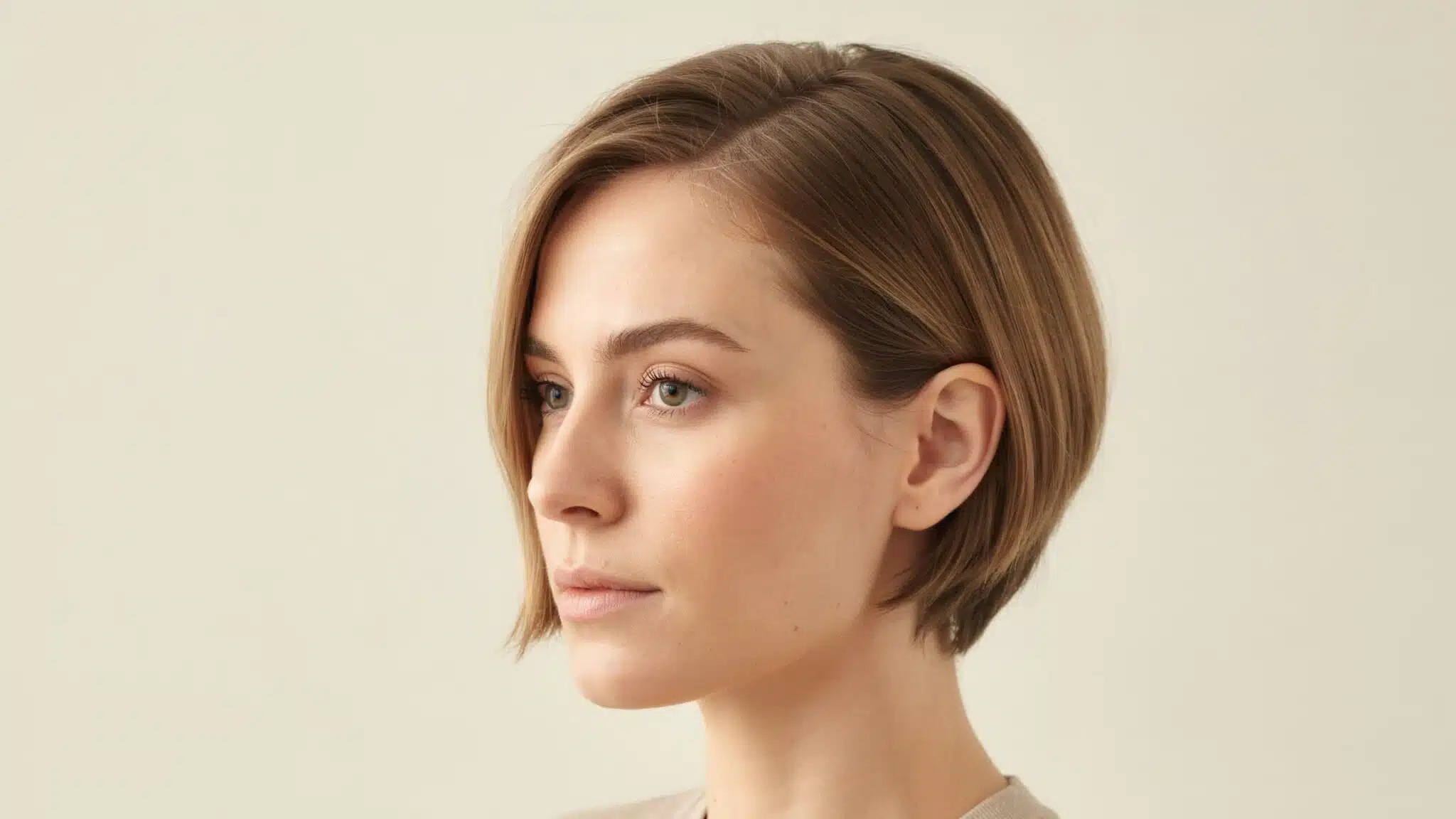
On straight hair, two inches lies somewhat flat against the head, often just barely reaching or covering the tops of the ears. It’s long enough to have some natural movement and won’t stick straight up the way very short buzzed hair does.
This length works well for a soft, textured crop, and it typically looks close to its true measurement since straight hair has no coil pulling it upward.
2. Wavy Hair
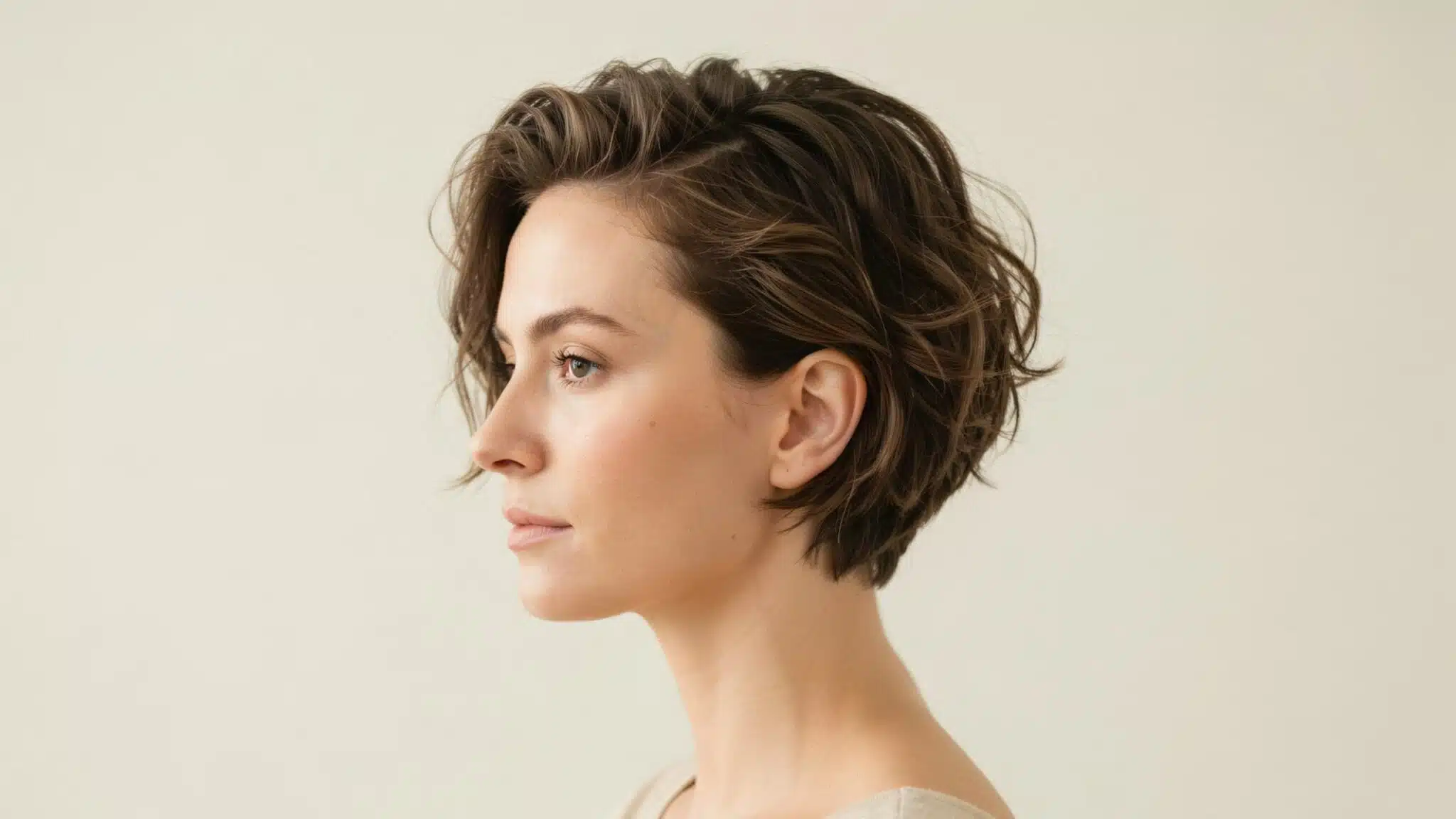
Wavy hair at two inches tends to show a bit more volume and texture than straight hair at the same length, often creating a soft, tousled look rather than lying flat.
The natural bend in wavy hair means it may appear slightly shorter than its actual length once it dries, since waves pull strands upward. This length often works well for a textured pixie or a casual crop.
3. Curly Hair
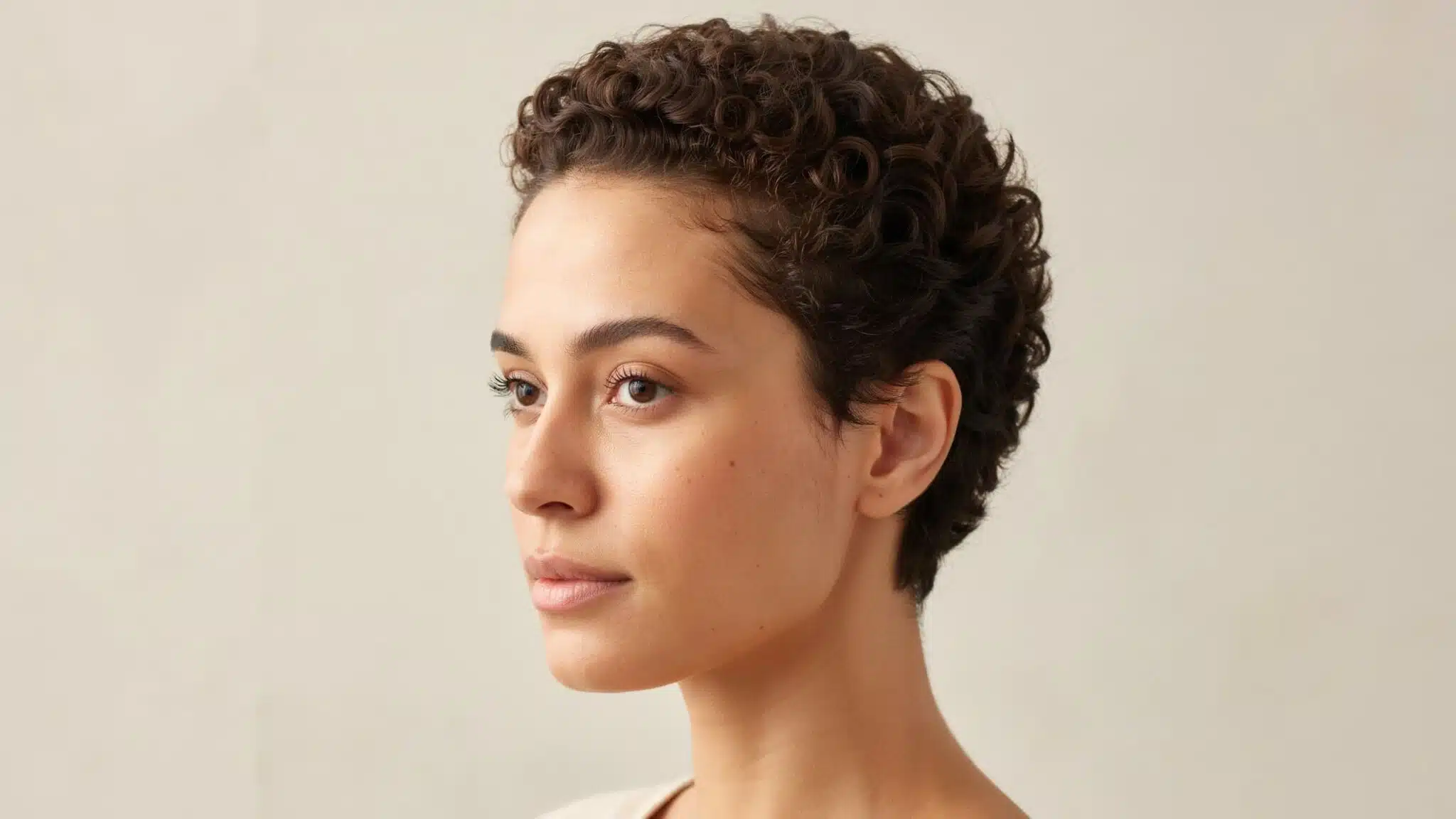
Curly hair often hides length because curls naturally coil upward toward the scalp. Two inches of stretched curly hair may look closer to a shorter crop when worn naturally. The final appearance depends on curl size, moisture level, and shrinkage.
This length can still show defined curls, shape, and texture, especially when paired with the right haircut and curl-enhancing products.
4. Coily Hair
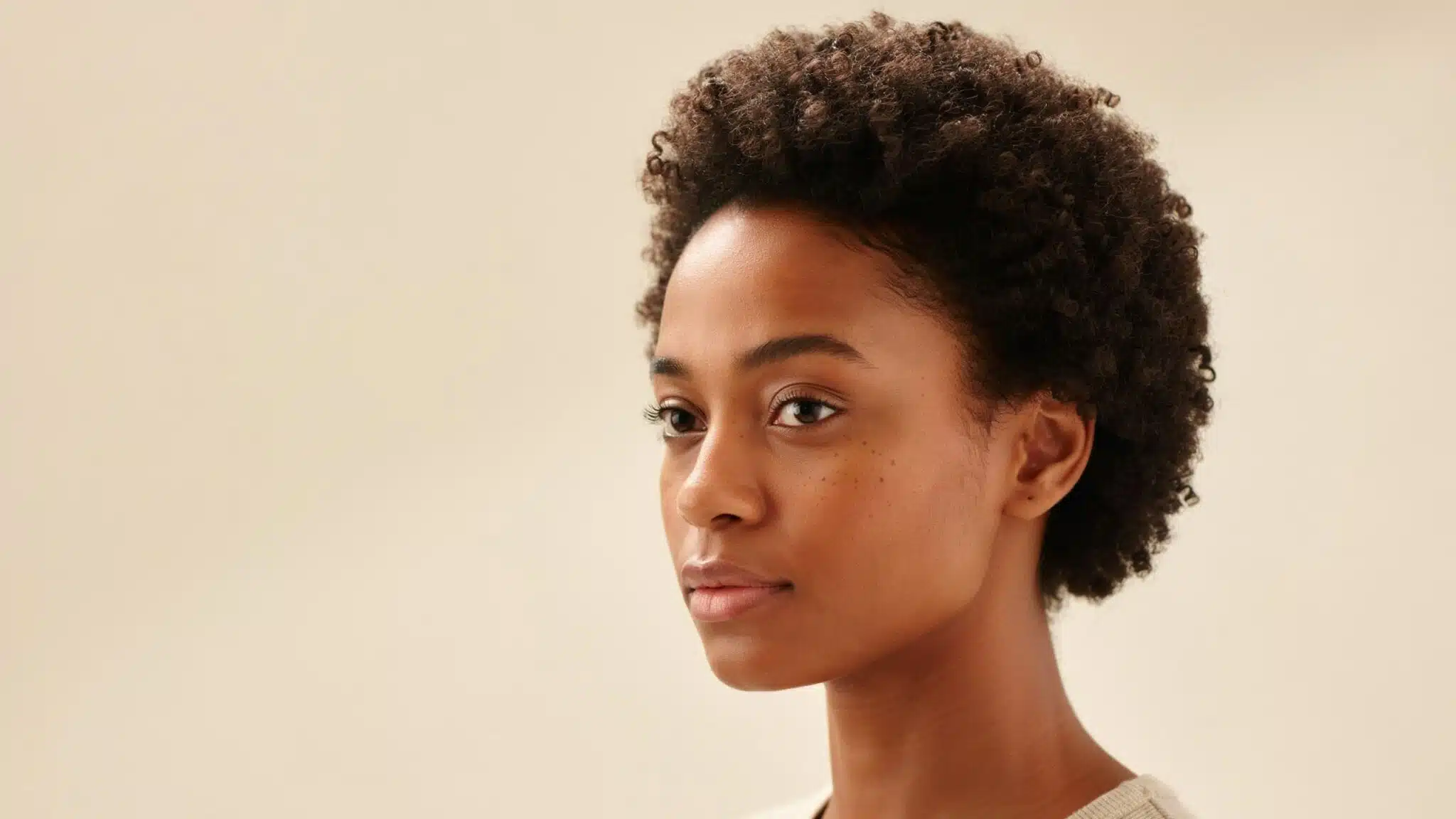
Coily hair usually shows the biggest difference between measured length and visible length because tighter curl patterns create more shrinkage.
Two inches of stretched coily hair may appear much shorter when dry and natural. Even at this length, coily hair can create a defined shape, rounded silhouette, or short textured style with proper moisture and styling techniques.
Takeaway: The ruler measurement stays the same, but what does 2 inches of hair look like depends heavily on texture, shrinkage, density, and styling choices.
Does 2 Inches of Hair Look Different on Men and Women?
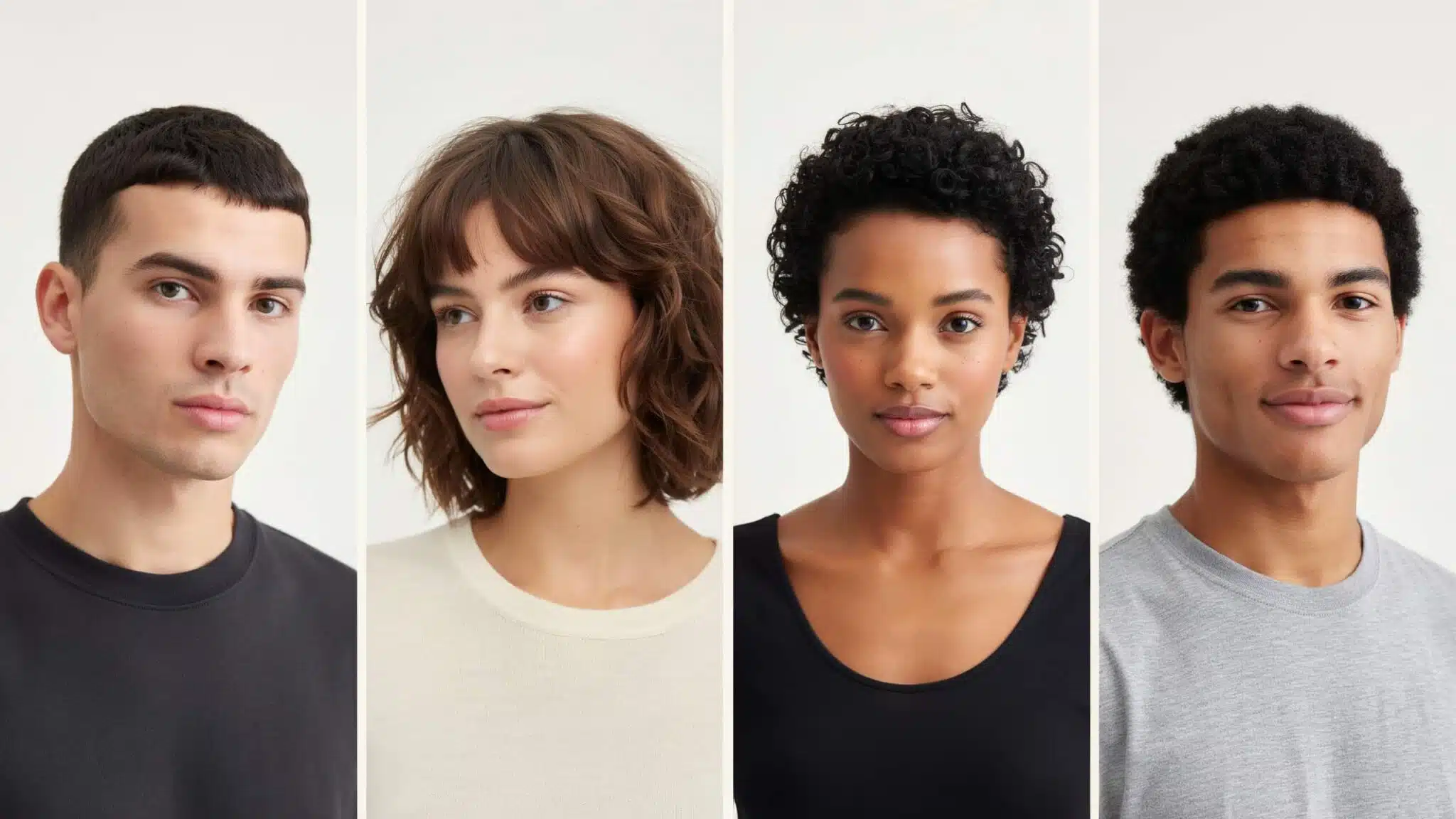
Beyond hair type, 2-inch hair often reads very differently depending on common styling expectations for men and women.
| Factor | On Men | On Women |
|---|---|---|
| Common Context | Grown-out buzz cut or fade | Post-big-chop or pixie grow-out stage |
| Typical Styling | Often kept as-is, styled with light product | Frequently shaped into a defined pixie cut |
| Perceived Length | Can look like a complete, intentional short style | Sometimes described as an in-between transitional stage |
| Texture Visibility | Curl or wave pattern shows clearly at this length | Same shrinkage effects, though styling often manages it differently |
Neither reading is more correct than the other; it really comes down to the styling choices and hair texture involved rather than gender itself.
Common Haircuts and Hairstyles at 2 Inches
A few specific haircuts and growth stages consistently line up with 2-inch hair, and the same length looks noticeably different depending on the cut and texture involved.
- Grown-out buzz cut: several months past a shaved or very short cut, where hair has enough length to show texture and slight movement
- Pixie cut: a classic short style that typically sits right around two inches on top, with even shorter sides
- TWA (teeny weeny afro): a common stage in the natural hair transition after a big chop, where curl pattern becomes visible again
- Textured crop: a popular men’s style that uses two inches of length on top styled with a matte product for texture
- Short shag layers: choppy, textured layers that work well at this length for both straight and wavy hair types
Seeing your length in the context of an actual haircut, rather than just a number, often makes it much easier to picture how your own hair will look at this stage.
How to Accurately Measure 2 Inches of Hair
Getting an accurate measurement of 2 inches of hair matters more than it might seem, especially since wet hair and dry hair can measure differently.
| Step | What to Do |
|---|---|
| Use a flexible tape measure | A soft tape measure follows the natural fall of hair more accurately than a rigid ruler |
| Measure on dry hair | Wet hair stretches slightly, especially if it’s curly, which can inflate your measurement |
| Start from the scalp | Measure from where hair exits the scalp, not from an arbitrary starting point along the strand |
| Account for shrinkage separately | If you have curly hair, measure a stretched strand to get the true length, since curl pattern affects the visible result but not the actual measurement |
In my own chair, this is usually the point where guard choices start to matter. It’s long enough to hold a shape but still short enough that a rushed cut shows on camera.
Taking a quick photo next to a ruler each time you measure also makes it much easier to track your actual progress over several months.
Final Thoughts
What 2 inches of hair looks like comes down to your hair type and the styling choices you make once you get there, more than the number itself.
It’s a genuinely meaningful length, long enough to work with in a real haircut, but still short enough to feel like a transitional stage for a lot of people growing their hair out.
If you’re currently tracking your own progress toward two inches, take a measurement today using a flexible tape measure on dry hair, and check back again in a month to see how much closer you’ve gotten.
Frequently Asked Questions
Can You Donate 2 Inches of Hair?
Most hair donation organizations require a minimum length of 8 inches or more, so two inches on its own typically isn’t enough to donate, though it can count toward future growth if you’re planning ahead.
Is 2 Inches Enough Length for a Ponytail?
It depends on your hair’s thickness and texture, but two inches is usually too short to stay secured in a standard ponytail holder without significant help from bobby pins or texturizing product. Most people need closer to four to six inches before a ponytail holds reliably on its own.
Does Hair Look Shorter When It’s Wet?
Yes, especially for curly and coily hair, since wet strands stretch out and then contract back to their natural curl pattern as they dry, which can make length look inconsistent between wet and dry styling.
Is There a Difference Between 2 Inches of Growth and 2 Inches of Cut Length?
Yes, two inches of growth refers to new hair added since your last cut, while two inches of cut length refers to your hair’s total length from root to end, and confusing the two is a common source of unrealistic growth expectations.