Have you tried every hair product on the shelf and still ended up with hair that looks flat by the end of the day? I get it, a good product alone isn’t the whole answer.
Learning how to make hair shiny usually comes down to technique: how you wash, dry, and style, not just what you buy. Stylists rely on a specific order of steps, and once you know it, you can copy it.
You’ll get a full step-by-step routine here, plus product guidance and professional techniques for different hair types.
I’ll also cover quick fixes for tonight and what to do if shine still isn’t showing up. By the end, you’ll have an expert-backed plan instead of guesswork.
Understanding What Makes Hair Shiny
Hair shine depends on how smoothly your strands reflect light. The outer layer of each hair strand, known as the cuticle, creates a glossy appearance when it stays flat and aligned.
When hair becomes dry, damaged, or rough, the cuticle lifts and creates an uneven surface, causing light to scatter and making hair look dull or frizzy, a pattern that shows up across many common hair and scalp conditions.
Several factors influence shine, including moisture balance, cuticle smoothness, product buildup, heat damage, chemical treatments, and your natural hair texture.
Genetics also play a role, as straight or fine hair may reflect light differently than curly or coarse hair. However, many causes of dull-looking hair come from daily habits you can improve with the right care routine.
Why Your Hair Looks Dull Even After Washing
Clean hair does not always mean shiny hair. Dullness can come from buildup, damage, or habits that affect how smoothly your strands reflect light.
- Product Buildup: Styling products, dry shampoo, and oils can leave residue on the hair surface, making strands feel heavy and preventing light reflection. Occasional clarifying can help remove buildup.
- Hard Water And Minerals: Hard water gets its name from dissolved calcium and magnesium minerals, which can coat the hair and make it feel dry, rough, and less reflective. A mineral-removing shampoo may help restore softness.
- Heat And Chemical Damage: Frequent heat styling, coloring, and chemical treatments can weaken the cuticle, causing hair to look dull and frizzy. Heat protection and gentle care can reduce further damage.
- Rough Hair Habits: Aggressive towel drying, harsh brushing, and skipping conditioner can increase friction and dryness. Gentle handling helps maintain a smoother, shinier surface.
Finding the cause of dullness makes it easier to choose the right solution. A targeted routine works better than adding more products without addressing the problem.
How to Make Your Hair Shiny with The Right Hair Care Routine
Real shine depends on three things working together: daily hair-care technique, the products you choose, and knowing when a professional method beats home care for lasting results.
Step 1: Wash And Clarify Your Hair Properly
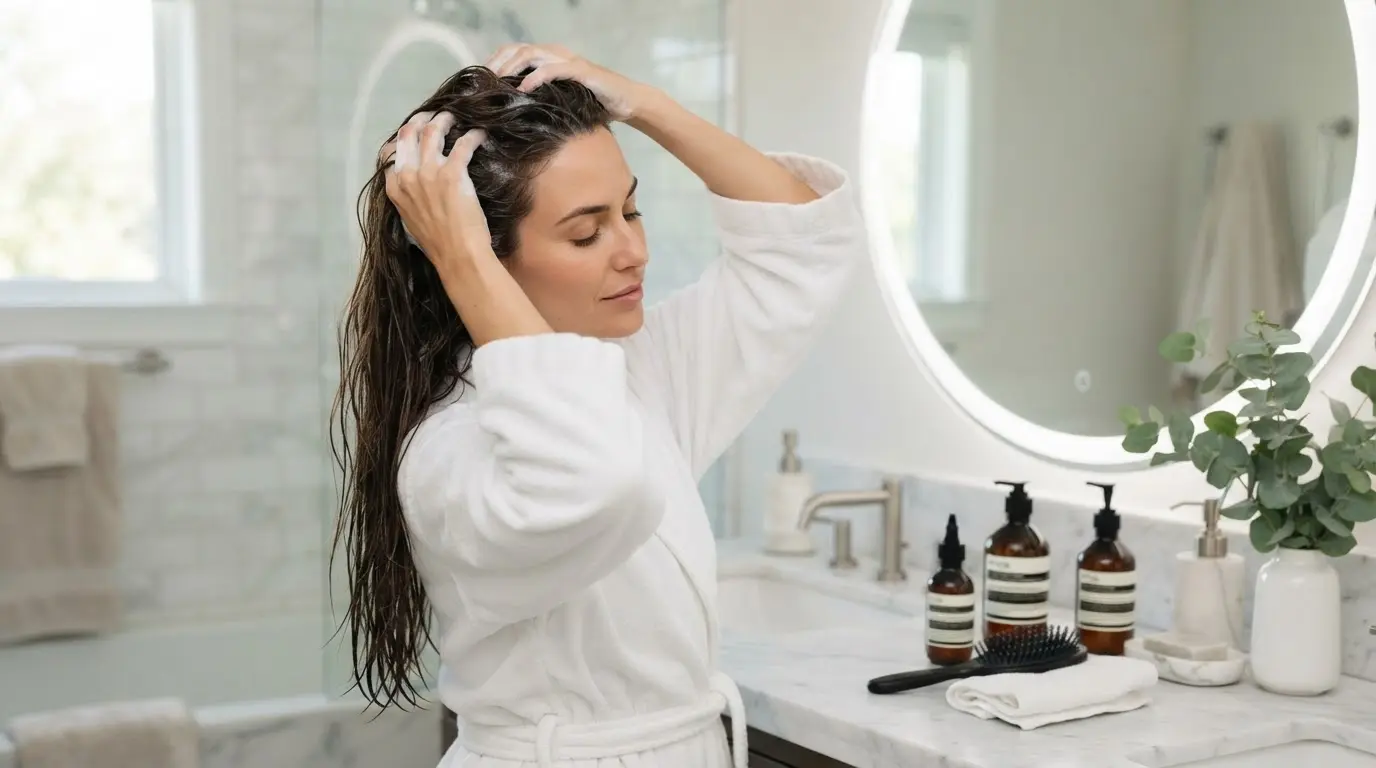
Start with a clean scalp because excess oil, styling residue, and buildup can make hair look heavy and prevent light from reflecting evenly.
Focus shampoo mainly on your scalp, where oil and product buildup collect, and keep a consistent washing schedule to prevent buildup from returning too quickly.
Clarify your hair only when it feels coated, or your regular products stop working properly. Avoid frequent clarifying, especially after coloring, because it can remove too much moisture.
Step 2: Condition and Mask for Smoother Hair
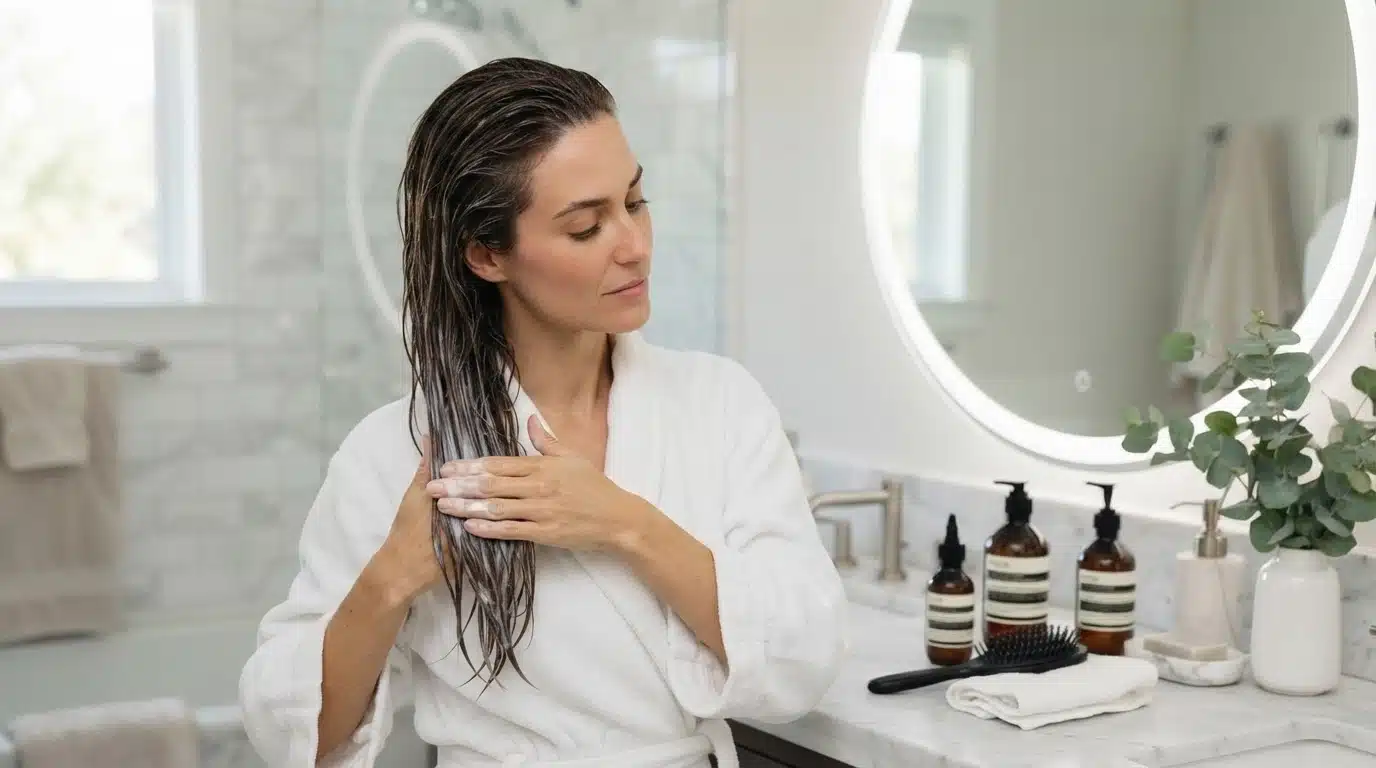
Conditioning helps smooth rough areas along the hair surface while adding moisture that improves softness and manageability.
Apply conditioner mainly from the mid-lengths to the ends, where hair is usually the driest. For extra dryness or damage, add a coconut oil mask to restore moisture and improve the look of dull strands.
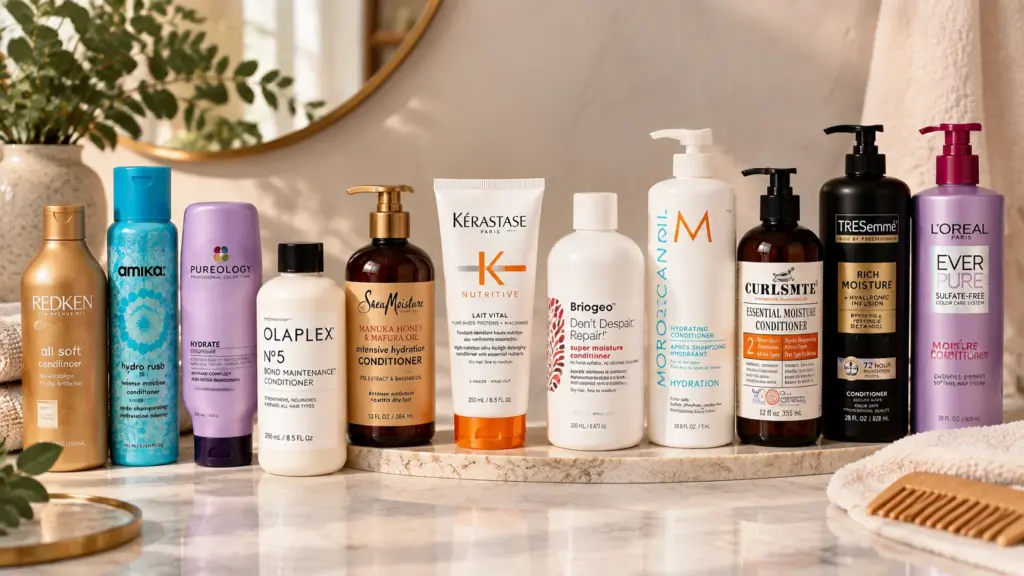
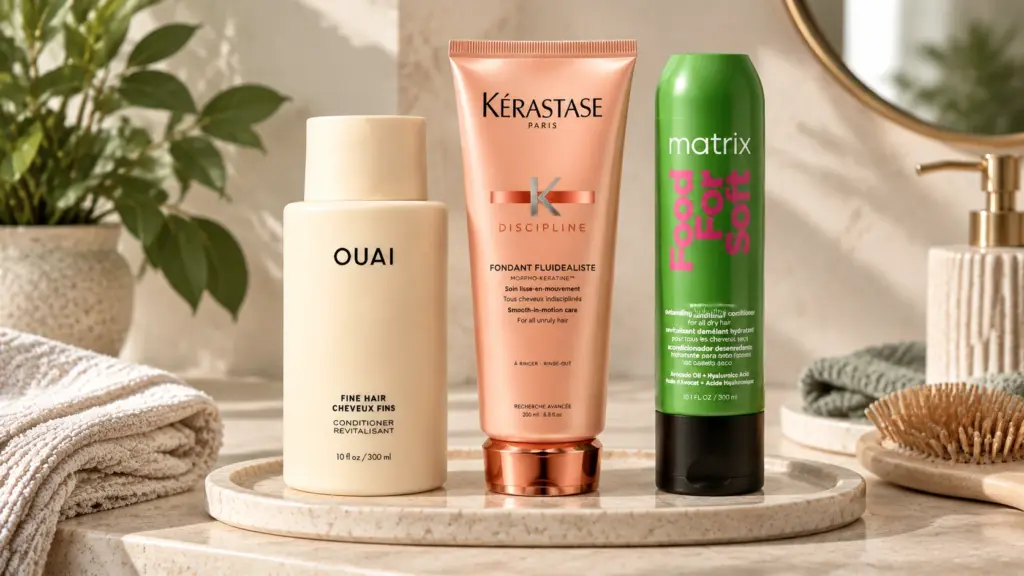
Choose products based on your hair type. Fine hair usually needs lightweight formulas, while thick or coarse hair may benefit from richer conditioning treatments.
Step 3: Dry Your Hair Without Creating Frizz
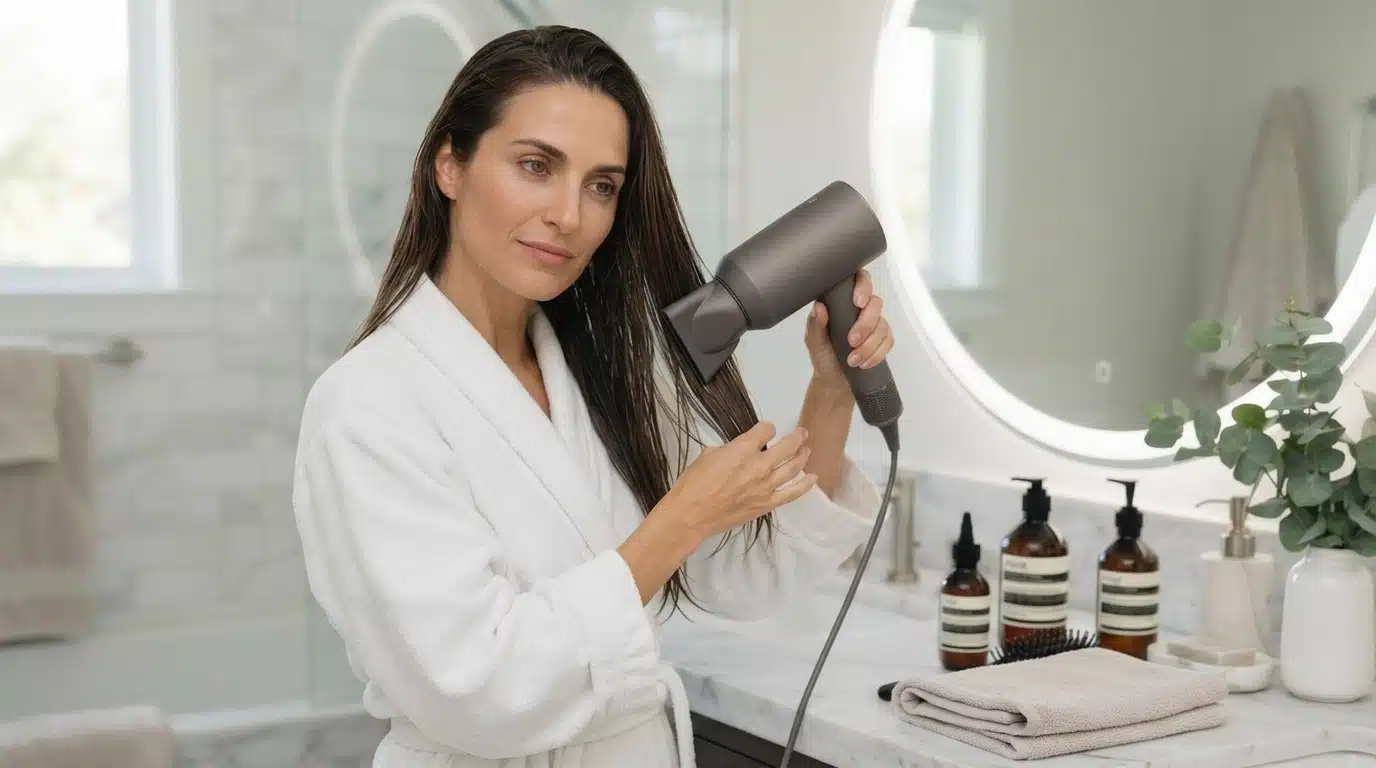
Drying can support a smooth finish or create extra frizz, so handling wet strands carefully is key to maintaining shine.
Blot your hair gently with a towel instead of rubbing it, direct airflow downward along the hair shaft, and finish with cooler air when possible. These techniques help keep the cuticle smoother while reducing flyaways.
Avoid rough towel movements or constantly changing the direction of your dryer. Keeping the strands aligned as moisture evaporates creates a sleeker finish and helps hair look more reflective.
Step 4: Protect Your Hair Before Heat Styling
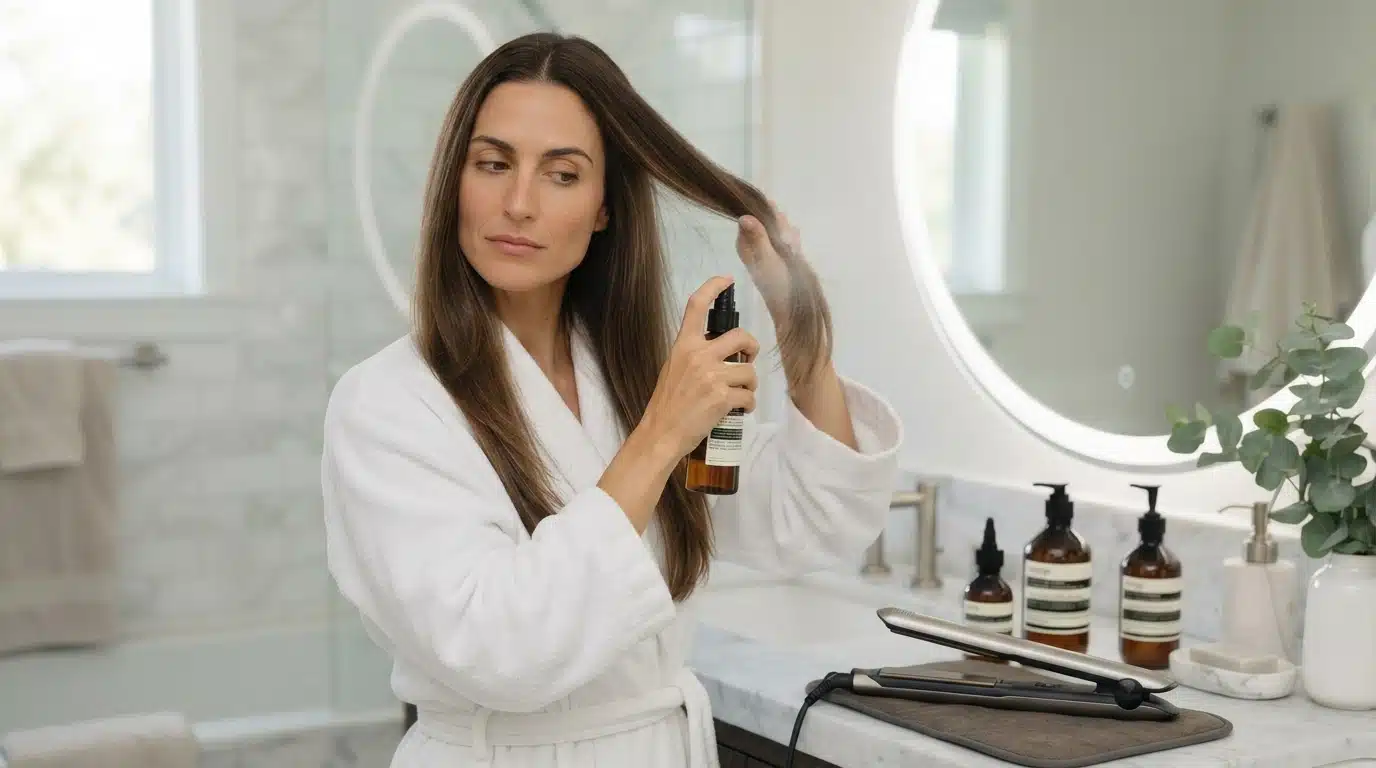
Heat styling can create a smooth, polished look, but repeated exposure to high temperatures may weaken the hair surface and make strands appear dry over time.
Apply a heat protectant spray before using styling tools, keep the temperature at a moderate level, and avoid going over the same section repeatedly. Working with smaller sections allows you to style more efficiently while reducing unnecessary heat exposure.
Controlled styling helps create a glossy finish without adding extra stress that can lead to roughness and dullness.
Step 5: Finish Your Routine with Shine-Boosting Products
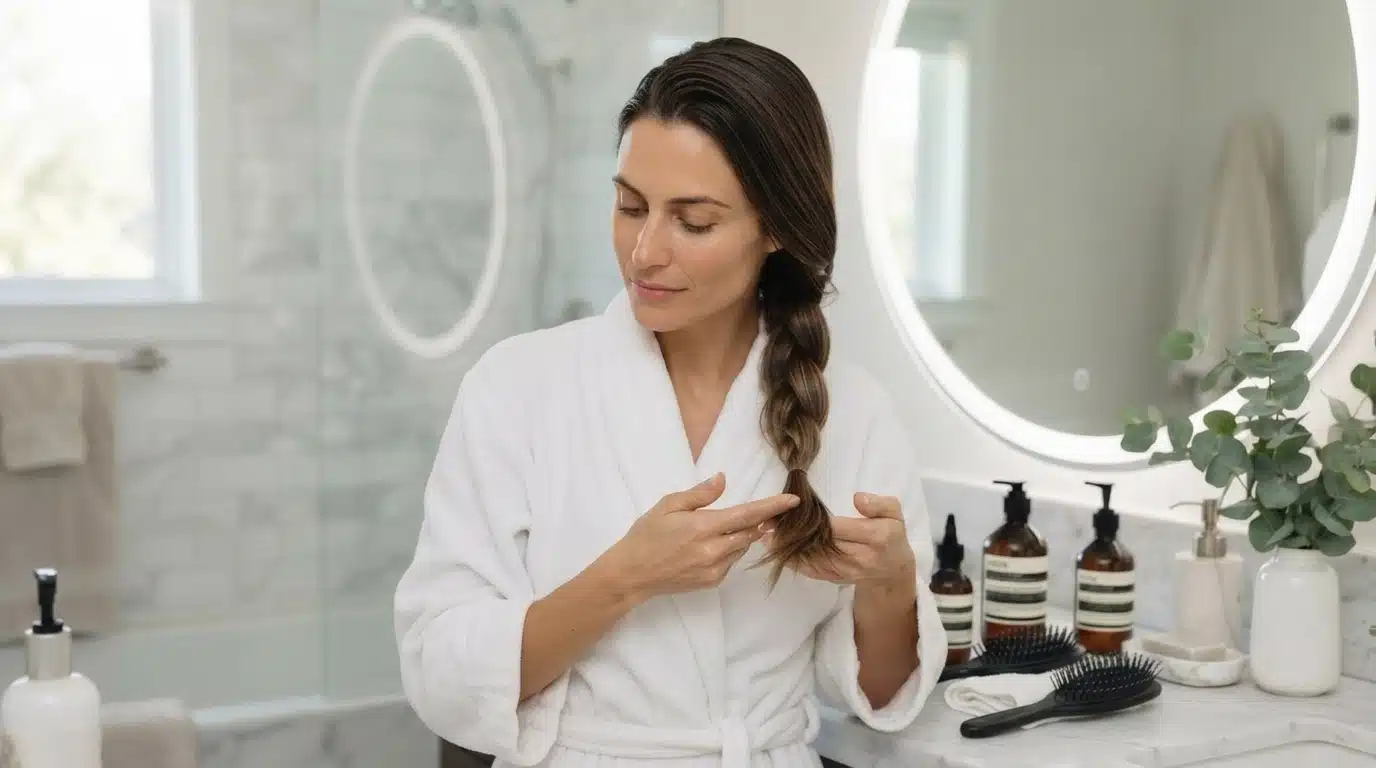
Finishing products add the final touch after styling, while nighttime habits help maintain smoothness by reducing friction and tangling.
Apply a small amount of oil or serum through the mid-lengths and ends, not the scalp. Using a smoother pillowcase, keeping hair loosely braided, and trimming damaged ends regularly can also help preserve a polished appearance between wash days.
The key is consistency. Repeating the same shine-focused routine gives your hair time to respond instead of constantly switching products and techniques.
Best Ingredients that Help Make Hair Shiny
The right ingredients can improve how your hair looks by supporting moisture, smoothness, and surface protection. Instead of choosing products only because they promise “shine,” look for formulas that match what your hair is missing.
| Ingredient | How It Helps Hair Shine |
|---|---|
| Argan oil | Helps soften dry strands and improves smoothness |
| Jojoba oil | Adds lightweight moisture without feeling heavy |
| Panthenol | Helps hair retain moisture and feel smoother, since it comes from a vitamin B5 derivative |
| Keratin | Supports damaged-feeling hair by improving strength and texture |
| Silicones | Create a smooth coating that helps reflect light |
| Ceramides | Help support the hair surface and reduce roughness |
Silicones are sometimes misunderstood, but they can be useful for creating temporary shine because they smooth the outside of the hair. The best choice depends on your hair type, styling habits, and how your strands respond to products.
How to Make Your Hair Shiny Based on Your Hair Type
Your hair type affects how it holds moisture, responds to products, and reflects light. Adjusting your routine helps you create shine without making hair flat or heavy.
- Fine hair needs lightweight hydration to avoid losing volume. Use light conditioners, apply oils only to the ends, and avoid heavy masks near the roots.
- Thick or coarse hair often needs extra moisture because natural oils spread more slowly. Rich conditioners, hair masks, and smoothing oils can help soften strands and improve shine.
- Curly or coily hair benefits from moisture-focused care. Use leave-in conditioners, reduce friction while drying, and focus on healthy curl definition instead of trying to create flat shine.
- Color-treated hair needs gentle care to protect the cuticle. Use color-safe products, condition regularly, and limit heat styling to maintain softness and gloss.
Understanding your hair type makes every shine step more effective. The right balance of moisture, protection, and styling helps your strands look smoother, healthier, and more reflective
How to Make Hair Shiny Quickly Before an Event
If you need your hair to look shinier today, focus on improving the surface appearance rather than trying to change the condition of your hair overnight. Quick shine usually comes from smoothing the outer layer, reducing frizz, and adding controlled moisture.
Start with freshly cleaned hair if possible, but avoid using too much conditioner or heavy products that can make strands look flat. After drying, apply a small amount of shine serum or lightweight oil through the mid-lengths and ends.
For an extra polished finish:
- Use a blow dryer with a brush to smooth the hair surface
- Finish with cool air to reduce flyaways
- Apply products gradually instead of adding too much at once
- Smooth the ends with your hands after styling
If your hair becomes frizzy in humid weather, a lightweight anti-frizz product can help maintain a smoother appearance. The goal is to create reflection without making the hair look coated or greasy.
Salon Treatments that Can Add Extra Shine
At-home care can improve your hair’s appearance, but professional treatments can provide a more noticeable boost when your strands need extra smoothing or conditioning.
| Treatment | What It Does | Best For |
|---|---|---|
| Hair gloss | Adds shine and enhances the appearance of color without major changes | Anyone wanting a temporary glossy finish |
| Hair glaze | Adds shine while depositing subtle tone or color | Color-treated hair needing refreshment |
| Deep conditioning treatment | Restores moisture and improves softness | Dry or damaged hair |
| Professional blowout | Uses styling techniques to create a smooth finish | Events or short-term shine |
Before choosing a salon treatment, ask your stylist how long the results typically last and whether it works well with your hair type or current color treatment.
A professional service can improve the look of your hair, but maintaining that shine still depends on your daily routine afterward.
Shiny Hair vs. Greasy Hair: How to Tell the Difference
There is a clear difference between healthy shine and excess oil. Shiny hair reflects light evenly across the strands, creating a smooth and glossy appearance, while greasy hair usually looks heavy, flat, and oily, especially near the roots. A few signs can help you tell the difference:
Shiny hair usually:
- Looks smooth and polished from roots to ends
- Reflects light evenly without appearing wet
- Feels soft and lightweight when touched
- Maintains natural movement and volume
- Looks fresh even without extra product buildup
Greasy hair often:
- Appears oily or darker around the scalp area
- Feels sticky, heavy, or coated
- Clumps together instead of separating naturally
- Loses volume and looks flat quickly
- Becomes oily soon after washing or styling
To judge your actual shine, check your hair in natural daylight because bathroom lighting can sometimes make dull hair appear shinier than it really is.
Final Verdict
Shiny hair comes down to a few consistent habits: gentle washing, proper conditioning, careful drying, controlled heat, and a small amount of the right finishing product.
Buildup and dryness need different fixes, so pinpointing your actual cause matters more than adding random products.
Fine, thick, curly, and color-treated hair each need slightly different amounts and priorities, so adjust the routine rather than copying it exactly.
Salon treatments like gloss or glaze can add an extra boost when home care isn’t enough. This is the same routine stylists rely on, just adapted for your bathroom instead of their chair.
Start with one or two changes today, and give your hair a few weeks to show the difference.
Frequently Asked Questions
Why is My Hair Soft But Dull?
Soft hair and shiny hair aren’t the same thing. Surface roughness, natural hair shape, or leftover product can still block light from reflecting evenly.
Does Diet Affect How Shiny Hair Looks?
Diet plays a smaller role than styling habits, but low protein, iron, or essential fatty acids can sometimes show up as dull, brittle strands.
Does Sleeping with Wet Hair Affect Shine?
Sleeping with wet hair can increase friction and make strands more prone to tangling and breakage. Drying hair before bed and using gentle fabrics can help maintain a smoother appearance and reduce morning frizz.
Can Trimming Your Hair Make it Look Shinier?
Regular trims don’t change the shine of new growth, but removing damaged split ends can make hair look smoother, healthier, and more polished because uneven ends scatter light instead of reflecting it evenly.