Most people think applying oil is just about adding shine or softness. But what if the way it is being used is the reason it feels greasy or ineffective, rather than helping?
A hair mask with coconut oil is a simple conditioning treatment where warm oil, sometimes mixed with ingredients like honey or aloe, is applied and left on before rinsing.
The difference between oil sitting on the surface and actually absorbing into the hair is something many people overlook.
Small details like timing and application method can completely change the results.
Getting it wrong does not just waste effort; it can leave hair heavier, dull, and harder to manage.
In this blog, this covers what coconut oil does, which works best, and how to use it the right way
What is a Hair Mask with Coconut Oil?
Coconut oil is a saturated plant oil extracted from the meat of mature coconuts. It is solid at room temperature and melts into a clear, smooth liquid when warmed slightly. That warm liquid state is what you want when using it on hair.
It has been used in hair care across South Asian, Southeast Asian, and Pacific Island cultures for generations. The reason it holds up well in a conditioning mask is its fatty acid composition.
Coconut oil is primarily made up of lauric acid, a medium-chain fatty acid with a low molecular weight and a straight linear structure.
That combination lets it move through the hair cuticle and into the cortex, rather than simply sitting on the outer surface of the strand.
Most oils stay on the surface. They can add shine and reduce friction, but they do not reach the internal structure of the hair. Coconut oil is different in that it gets inside.
DIY Coconut Oil Hair Mask for Different Hair Needs
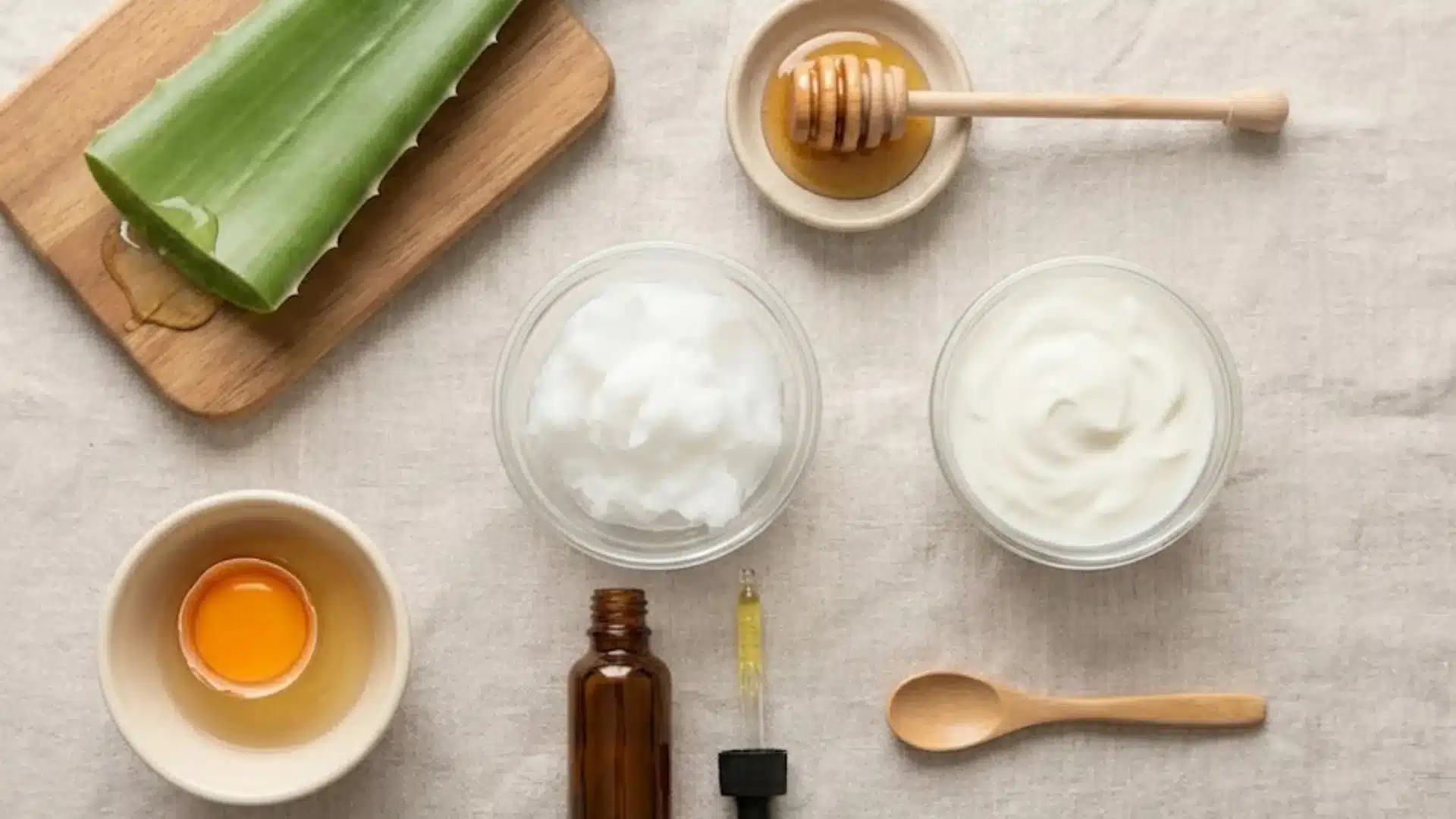
These five homemade coconut oil hair mask recipes use simple pantry ingredients to target dryness, damage, scalp issues, dullness, or breakage. Each recipe includes a best-for note so you can match the treatment to your specific concern.
1. Coconut Oil + Honey Hair Mask
Honey acts as a humectant, drawing moisture into the hair, while coconut oil seals it in, leaving hair softer and more hydrated.
Ingredients:
- 2 tablespoons coconut oil
- 1 tablespoon honey
- Essential oils, vitamin E oil, or argan oil (optional)
Instructions:
- Combine all ingredients in a bowl and mix thoroughly until the texture is smooth, creamy, and well blended, with no lumps.
- Apply Mask to clean, damp hair, focusing on lengths and ends for better absorption and even coverage throughout the hair strands.
- Leave On let the mask on your hair for about 40 minutes to deeply nourish, hydrate, and improve overall hair softness and shine
2. Coconut Oil + Aloe Vera Hair Mask
Aloe vera soothes the scalp and provides hydration, while coconut oil helps lock in moisture and smooth the hair.
Ingredients:
- 2 tablespoons coconut oil
- 2 tablespoons aloe vera gel
- Essential oils or vitamin E oil (optional)
Instructions:
- Blend well, mixing all ingredients in a bowl until fully combined into a smooth, lump-free mixture.
- Apply evenlya apply to clean, damp hair, including the scalp, ensuring even coverage from roots to ends for maximum nourishment.
- Massage the scalp gently to boost absorption, stimulate circulation, and help nutrients penetrate deeply into the hair follicles.
- Leave on, let the mask sit for 30 minutes to allow proper hydration, softness, and improved overall hair texture and manageability.
- Rinse with lukewarm water, then shampoo once to fully remove the mask and prevent residue buildup.
3. Coconut Oil + Egg Hair Mask
Egg yolk is rich in fats that coat and strengthen the hair, while coconut oil reduces dryness and improves texture.
Ingredients:
- 2 tablespoons coconut oil
- 1 egg yolk
- Essential oils (optional)
Instructions:
- Whisk the egg yolk with the cooled, melted coconut oil until smooth, creamy, and fully blended without separating.
- Apply evenly to clean, damp hair, spreading from roots to ends for even coverage and better nourishment.
- Leave on let it on for 20 minutes to deeply condition, strengthen strands, and enhance softness and natural shine
4. Coconut Oil + Yogurt Hair Mask
Yogurt gently cleanses and softens the hair, helping remove buildup, while coconut oil smooths and adds shine.
Ingredients:
- 2 tablespoons yogurt
- 1 tablespoon coconut oil
- Essential oils (optional)
Instructions:
- Combine the yogurt and coconut oil in a bowl and mix until smooth and evenly blended, with no lumps.
- Section your hair so every strand will receive even coverage and consistent conditioning from the mask.
- Apply to clean, damp hair, focusing on mid-lengths and ends for better absorption without weighing down the roots.
- Leave on for 30 minutes so the ingredients can deeply penetrate strands, improving hydration, softness, and overall manageability.
- Rinse thoroughly and shampoo to remove all residue, leaving hair clean, soft, and visibly smoother with improved shine and texture.
5. Coconut Oil + Castor Oil Hair Mask
Castor oil is thick and helps reduce breakage and make hair look fuller, while coconut oil makes it easier to apply and prevents heaviness.
Ingredients:
- 1.5 tablespoons coconut oil
- 0.5 tablespoon castor oil
- Vitamin E oil (optional)
Instructions:
- Warm gently until liquid, then mix well for a smooth consistency, ensuring easy application and better absorption into hair strands without overheating the mixture.
- Target lengths apply to clean, damp hair, focusing only on the lengths to avoid greasy roots while deeply nourishing dry, damaged ends.
- Processing time leave on for 30–45 minutes to allow the ingredients to penetrate deeply, improving softness, hydration, and overall hair texture.
- Cleanse shampoo properly twice to fully remove the oil, preventing buildup while leaving hair fresh, lightweight, and soft with a healthy shine.
Benefits of a Hair Mask with Coconut Oil
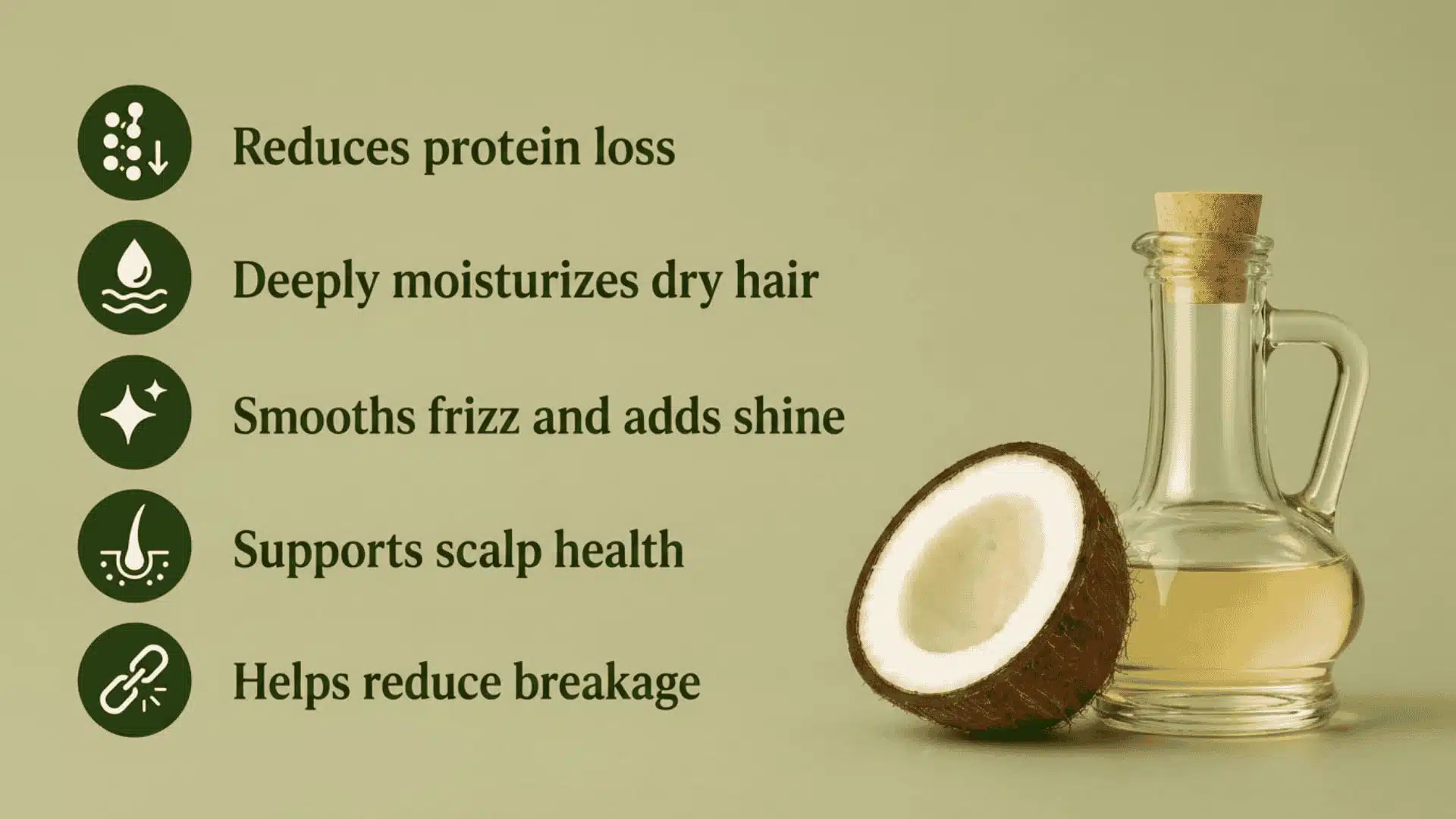
A hair mask with coconut oil supports hair strength, moisture balance, and scalp health, helping improve texture, shine, and overall hair health over time.
- Reduces protein loss: Hair is made of keratin, which gets depleted by heat, styling, and chemicals. A study published by the National Library of Medicine shows coconut oil reduces protein loss before and after washing, unlike other oils.
- Deeply moisturizes dry hair: It slows moisture loss and fills gaps in damaged cuticles, leaving hair softer. Fine, dry hair benefits from a small amount applied mainly to the ends.
- Smooths frizz and adds shine: By smoothing raised cuticles, it creates a more even surface, helping hair reflect light better and appear shinier without surface buildup.
- Supports scalp health: It has antifungal properties that may help reduce dandruff and flaking. Use only on dry scalps, and seek treatment if flaking persists.
- Helps reduce breakage: Penetrates the hair shaft to reduce swelling, stress, and breakage. For women facing thinning beyond conditioning, hair implants offer advanced options worth knowing.
Consistent use also protects hair from daily damage, improves manageability, enhances natural softness, and supports long-term scalp balance, making it a simple, affordable addition to a sustainable hair care routine for all hair types.
How to Repair Dry, Dull Hair with Coconut Oil
Repairing dry, dull hair with coconut oil is simple and effective when done regularly.
Start by warming a small amount of coconut oil until it is slightly liquid, then gently massage it into your scalp using your fingertips.
Work the oil through the lengths of your hair, focusing on dry ends that need extra care.
Leave it on for at least one hour or overnight for deep nourishment. Wash your hair with a mild shampoo to remove excess oil and follow with a light conditioner if needed.
Repeat this process two to three times a week for the best results. Coconut oil helps restore moisture, adds shine, and improves overall hair texture, making it look healthier, softer, and more manageable over time.
Tips for Using a Coconut Oil Hair Mask
Small details in application timing, placement, and frequency change the result more than most people expect.
- How often: 1 to 2 times a week suits dry or damaged hair. Normal hair does well with once weekly. Fine or oily hair needs less about every 2 weeks, on the ends only. More frequent use does not improve results; it builds up residue.
- Where to apply: Start at the tips and work upward, stopping 1 to 2 inches from the roots. Mid-lengths and ends are older, more exposed, and more in need of treatment.
- Avoid the scalp if oily: The scalp produces its own oil. Adding more on top can block follicles and add heaviness. Keep the application on the lengths if the scalp already runs oily.
- Before washing: I almost always recommend applying coconut oil as a pre-wash treatment rather than a post-wash treatment. Putting it on before shampooing protects the shaft during washing when most mechanical stress on the hair actually occurs, and it rinses out more completely than when applied to already-clean hair.
- Overnight option: Leaving it overnight gives the oil more time to absorb, which helps with very dry or damaged hair. Apply to dry or slightly damp hair, keeping the oil away from the scalp to prevent transfer and buildup on the pillowcase.
How to Wash out Coconut Oil Easily
This is where most people run into trouble, and the fix is one step most skip.
Use lukewarm water. Apply shampoo directly to oiled hair before adding water.
Shampoo is surfactant-based and breaks down oil most effectively when it comes into direct contact with it; adding water first dilutes it, making the job significantly harder. Work it through evenly, then rinse well.
One round is enough for most hair types. If the hair still feels heavy after rinsing, a second shampoo focused on the roots and mid-lengths usually clears it.
If you regularly use leave-in, dry shampoo, or styling creams alongside this mask, run a clarifying shampoo once a month. Multiple products stacked up create a buildup that a regular shampoo cannot fully clear.
Common Mistakes to Avoid when Using a Coconut Oil Hair Mask
Avoiding common mistakes helps the mask work better, prevents buildup, and keeps hair from feeling heavy, greasy, or harder to manage after use.
- Using too much oil: More is not better. One to two tablespoons is enough for shoulder-length hair. Excess oil is harder to rinse and can leave residue that weighs hair down.
- Leaving it too long on fine hair: Fine hair absorbs oil quickly. Around 30 minutes is enough. Longer use, especially overnight, can make hair flat and greasy.
- Skipping pre-rinse shampoo: Apply shampoo to dry, oiled hair first. This helps break down oil. Adding water first can make removal harder.
- Applying to an oily scalp: Avoid the roots if the scalp is already oily. Extra oil can block follicles and increase greasiness.
- Not adjusting for hair type: Different hair types genuinely need different amounts and timing. In my client work, this is the single most common reason someone gives up on a treatment that could actually work for them: they used the wrong amount for too long, saw greasiness, and concluded the product was at fault rather than the approach.
Conclusion
A hair mask with coconut oil fits into a routine without much effort. There is no special equipment, and the ingredients are already in most kitchens.
Whether you start with the plain base recipe or try the honey version for dry hair, the approach stays the same: warm the oil, apply it to damp hair from mid-lengths to ends, let it sit, then rinse thoroughly.
Start with one way. Use it 2 or 3 times and watch how your hair responds. Adjust the amount, the timing, or the frequency from there. Small, steady changes are the ones that tend to stick, and this is a low-risk place to start.
Small, steady changes tend to work best. This is a simple, easy-to-adjust, low-risk way to improve how your hair feels and looks over time.
Which recipe are you planning to try first? Share in the comments. I would love to hear what works for your hair type.
Frequently Asked Questions
Can I Apply Coconut Oil to My Hair Before Heat Styling?
Yes, coconut oil can be used before heat styling. Apply a few drops to dry ends to reduce protein loss. Use very little, as too much can cause steam during styling and leave buildup on tools.
How Does Humidity Affect a Coconut Oil Hair Mask?
In high humidity, hair absorbs moisture from the air, which can affect how oil sits. The mask still works as a pre-wash treatment, but overnight use may cause migration. If oil spreads too much, limit it to 30–60 minutes.
Is Daily Use of Coconut Oil Hair Masks Safe?
Daily use of a coconut oil hair mask is not always necessary. Overuse can lead to buildup and greasy hair. It is best to apply it 2 to 3 times a week for balanced moisture and healthy-looking hair.