
Seeing a noticeable clump of hair near the drain can make an ordinary shower feel alarming. If you are wondering, “is it normal to lose hair in the shower,” the answer is often yes, because washing can release strands that were already ready to shed.
Still, a sudden increase, repeated heavy shedding, or changes in hair density can point to something worth paying closer attention to.
The amount seen during washing can be affected by hair length, wash frequency, shedding patterns, breakage, and conditions such as telogen effluvium.
Ahead explains what normal shower shedding can look like, why more hair may appear at certain times, which signs deserve attention, and when professional advice may help clarify what is happening.
Is It Normal to Lose Hair in the Shower?
Yes, some hair loss in the shower is normal. Hair naturally moves through a growth cycle, and individual strands eventually reach a stage when they are shed.
According to the American Academy of Dermatology, losing about 50 to 100 hairs per day is considered normal. Washing does not necessarily cause these hairs to fall out. Shampooing, rinsing, conditioning, and running your fingers through your hair can simply release strands that were already ready to shed.
Loose hairs can also remain caught among surrounding strands until wash day. This means one shower may collect hair that would otherwise have fallen out gradually onto clothing, bedding, or a hairbrush.
I see this at the chair more than people expect. A client will apologize for “shedding everywhere” during a wash, and nine times out of ten it is just several days of loose hair finally letting go at once.
That is why a single heavy-looking clump does not automatically mean something is wrong. Learning to spot shedding versus true loss makes changes from your usual pattern more useful to watch than one wash day
How Much Hair Loss in the Shower Counts as Normal?
Daily shedding estimates vary depending on the source, and none of them are meant to be counted strand by strand in real life. The table below compares how those ranges typically translate to what you would notice in the shower.
| Estimate Type | What It Typically Looks Like | What It Means for Shower Hair |
|---|---|---|
| Commonly cited baseline | A light scatter of loose strands, easy to overlook | A broad average across most hair types |
| Broader range sometimes used | A small handful, more common after a few days between washes | Higher end common in thicker or longer hair |
| Upper-limit estimate | A noticeable amount, but not alarming on its own | Framed as a ceiling rather than a target |
These descriptions overlap far more than they conflict. The number that actually matters, a range consistent with the ordinary hair cycle, is not a precise count from any chart, but whether your own amount has changed from what feels typical for you.
Why Does Hair Loss Look Worse During a Shower?

Water and conditioner work through tangles during a wash. That motion frees strands that had already detached but stayed caught in surrounding hair, which is the main reason shower shedding looks heavier than it is.
People who wash less often, once or twice a week, tend to see a noticeably larger amount at once, since several days’ worth of loose strands get released together instead of falling away gradually between washes. This is one reason adjusting your wash frequency can make shower shedding feel more predictable.
Detangling, finger-combing, and towel-drying add extra motion that can dislodge a few more strands than a quick rinse alone would.
Length adds to the effect too, since long strands take up more visible space in the drain than the same number of short ones, even when the total shed that day has not changed.
Shedding vs. Breakage vs. Thinning: Key Differences
Not all hair loss looks the same once you look closely at the strands. People often use one phrase to describe three different patterns, and the table below separates them so you can tell which one actually applies to you.
| Pattern | What You Notice | What It Usually Means | What To Do |
|---|---|---|---|
| Shedding | Full strands with a small white bulb at the end | A normal part of the hair growth cycle | Usually nothing, unless the amount has clearly increased |
| Breakage | Short pieces without a root, uneven or frayed ends | Damage from heat, chemicals, or rough handling | Ease up on heat styling and handle wet hair gently |
| Thinning | A widening part, a smaller ponytail, visible scalp | A gradual change in hair density over time | Track the change and consult a dermatologist if it continues |
Knowing which pattern applies changes what comes next. Shedding usually needs no action at all, breakage points toward a habit or product to adjust, and thinning is the pattern most worth raising with a dermatologist for a proper evaluation.
Why Am I Losing so Much Hair in the Shower?
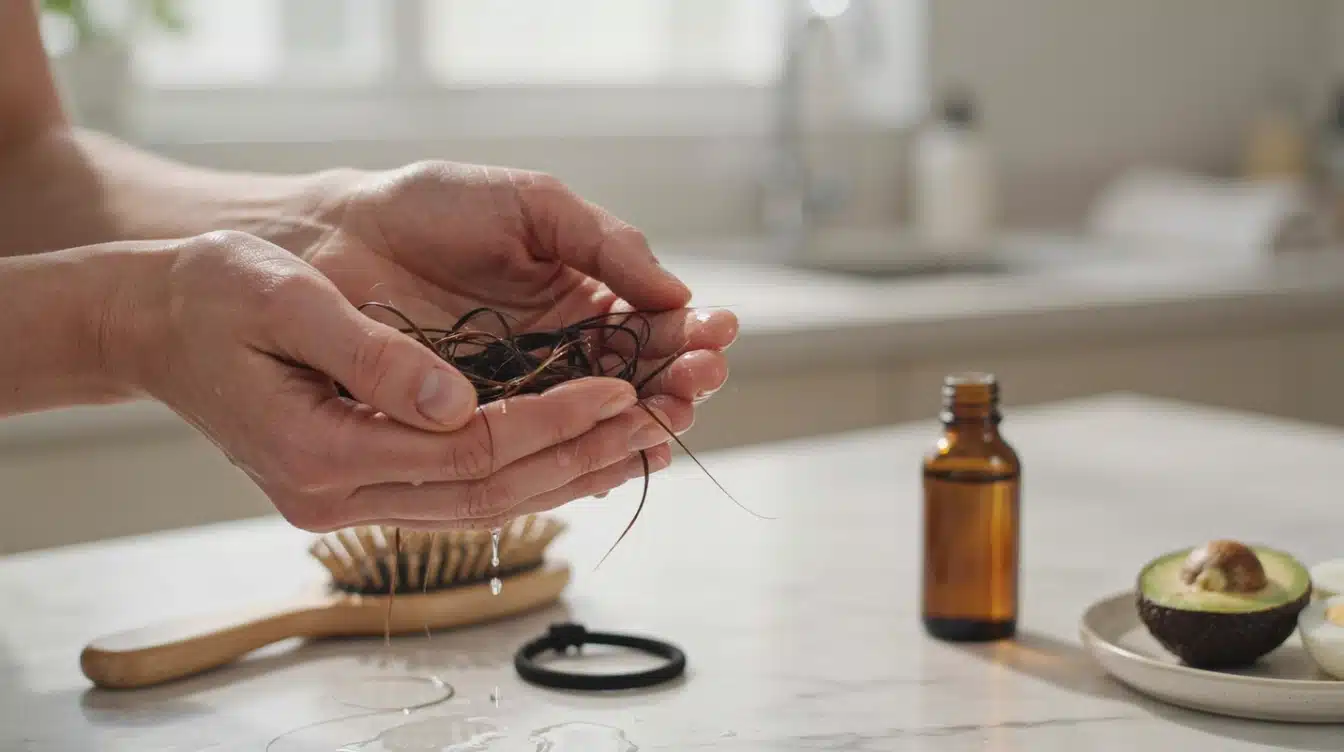
Several everyday and medical factors can push more hair into the shedding phase at once, and working through them one by one is the fastest way to answer why you are losing so much hair in the shower in your specific situation.
1. Stress, Illness, and Telogen Effluvium
Telogen effluvium can cause sudden, widespread hair shedding when more follicles than usual enter the resting and shedding phases.
It often appears a few months after triggers such as severe stress, high fever, illness, surgery, childbirth, or major weight loss, a delayed shedding pattern documented in clinical literature.
The shedding is usually spread across the scalp rather than limited to one bald patch and often improves after the underlying trigger resolves.
2. Hormonal Changes and Medical Conditions
Hormonal changes can affect the hair growth cycle and lead to increased shedding or gradual thinning. Postpartum changes, menopause, thyroid disorders, and other health conditions may contribute.
These causes are more worth investigating when increased shower shedding appears alongside other symptoms or noticeable changes in hair density.
A healthcare professional can help determine whether hormones or an underlying condition may be involved, including hormonal hair loss treatment options for women.
3. Rapid Weight Loss and Nutritional Problems
Rapid weight loss, restrictive diets, inadequate protein intake, and certain nutritional deficiencies can interfere with normal hair growth and increase shedding.
Low levels of nutrients such as iron or zinc may sometimes play a role, a link addressed in NIH data on iron deficiency effects, but supplements should not be taken automatically for hair loss.
If nutrition is suspected, a healthcare professional can assess your diet, symptoms, and whether testing for a deficiency is appropriate.
4. Medications
Some medications can cause increased hair shedding as a side effect, particularly when you start a new medicine or your dosage changes. The connection may not always be obvious because shedding can appear later.
If your hair loss began after a medication change, discuss it with the prescribing healthcare professional. Do not stop or adjust prescribed medicine without medical guidance.
5. Hair Styling and Mechanical Damage
Tight ponytails, braids, extensions, bleaching, frequent heat styling, aggressive brushing, and rough detangling can damage hair and make more strands appear during washing.
This is the category I see most often behind the chair. Traction from tight styles builds slowly, so by the time someone notices extra hair in the shower, the tension has usually been there for months.
Checking if you see full-length strands or shorter broken pieces can help distinguish between shedding and damage.
Everyday Habits that Affect Shower Hair Loss
Daily routines can quietly raise or lower how much hair shows up during a wash, sometimes more than any medical cause does. The table below highlights the habits worth reviewing first if your shedding has recently felt heavier than usual.
| Habit | Effect on Shower Hair Loss |
|---|---|
| Washing with very hot water | Strips natural oils and weakens strands, adding to breakage over time |
| Rough towel-drying or aggressive brushing | Pulls out strands that were already loose, plus some breakage |
| Frequent heat styling | Weakens strands, increasing breakage rather than shedding |
| Tight ponytails or braids | Adds tension at the root, which can loosen strands over time |
Small adjustments to these habits often reduce how heavy shower hair loss looks within a few wash cycles, even before considering whether a medical cause could also be contributing to the change.
How Can You Tell if You are Losing Too Much Hair?
Trying to count every strand after each shower is rarely the most practical way to judge hair loss. A sustained change from your normal shedding pattern or a visible change in hair density is more useful.
Watch for:
- much more hair than you normally see during several wash days
- increased shedding outside the shower as well
- a noticeably thinner ponytail
- a widening part
- increased scalp visibility
- a receding hairline
- distinct bald patches
- shedding that continues for several months
- scalp redness, scaling, pain, burning, or persistent itching
The AAD also distinguishes excessive hair shedding from hair loss. With excessive shedding, more strands than usual are being released. With some forms of hair loss, the follicle may produce progressively thinner hair or stop producing hair normally.
This distinction is one reason visible changes in your part, hairline, or density matter alongside what you see in the drain.
Your Step-by-Step Shedding Checklist
The habits above explain what might be adding to your shedding, but if you’re still asking why am I losing so much hair in the shower after reading them, this checklist tells you whether what you’re seeing needs action or just patience.
- Compare shedding with your normal wash day: Look for a repeated increase rather than one unusually large clump, and consider whether longer gaps between washes may have made accumulated shedding more noticeable.
- Distinguish shedding from breakage: Full-length hairs suggest shedding, while shorter, uneven pieces are more consistent with breakage.
- Check for changes in hair density: Compare your part width, ponytail thickness, and scalp visibility with how they looked several months ago.
- Think about recent triggers: Consider illness, fever, surgery, childbirth, major stress, rapid weight loss, restrictive dieting, or medication changes during the previous few months.
- Handle wet hair gently: Avoid aggressive towel rubbing, pulling through knots, or unnecessary tension while hair is wet.
- Watch for scalp symptoms: Persistent itching, redness, scaling, tenderness, or pain deserves attention, particularly when it occurs with hair loss.
If most answers point to a recent, explainable change, the shedding is likely temporary. Persistent or unexplained changes deserve professional input.
Will Hair Lost in the Shower Grow Back?
Hair lost through normal daily shedding is generally replaced as follicles continue their growth cycles.
When shedding is excessive, regrowth depends on the underlying cause. Temporary telogen effluvium often improves after its trigger has passed or been addressed. Other types of hair loss, including hereditary, autoimmune, inflammatory, traction-related, or scarring conditions, may require specific treatment.
Seeing hair in the drain alone cannot predict whether it will grow back. Stable overall density and unchanged shedding are more consistent with normal turnover. Continued thinning, bald patches, or progressive changes warrant professional evaluation.
When to See a Dermatologist
Most shower hair loss resolves on its own without treatment, but a handful of signs suggest it is worth booking a professional opinion soon.
- A sudden, sharp increase that has lasted more than a few weeks
- Visible bald patches or a rapidly widening part
- Scalp redness, itching, burning, or flaking that does not improve
- Large clumps that continue at every wash for more than a month
- Shedding paired with fatigue, weight change, or other new symptoms
A board-certified dermatologist can identify the exact cause quickly and recommend a plan suited to what is actually happening with your scalp and hair.
Final Verdict
Is it normal to lose hair in the shower? In most cases, yes, it is a normal part of the growth cycle, not a sign that something is wrong.
Wash frequency, hair length, and life changes affect how heavy a single wash day looks, even when nothing serious is happening. Paying attention to your own baseline, instead of counting exact strands, gives a clearer picture than one alarming clump ever could.
If the shedding fits a recent stress, illness, or habit change, it will likely settle within a few months. If it continues, worsens, or comes with scalp symptoms or thinning, do not wait it out.
Book a consultation with a board-certified dermatologist for a plan that fits your hair.
Frequently Asked Questions
Can Hard Water Cause More Hair to Fall out in the Shower?
Hard water is not a proven cause of follicular hair loss, but mineral buildup may make hair more prone to breakage. If strands snap rather than shed from the root, water quality may contribute.
Does Washing Your Hair Every Day Cause Hair Loss?
Daily washing does not normally cause true hair loss. Shampooing mainly releases hairs that were already ready to shed. Your ideal washing schedule depends on scalp oiliness, hair texture, styling habits, and how dry or fragile your strands are.
Does Swimming in Chlorinated Water Increase Shower Hair Loss?
Chlorinated water can leave hair drier and more vulnerable to damage, which may increase breakage during a later wash. That is different from true hair shedding from the follicle, so checking whether strands are broken matters.
Can Detangling Conditioner Make it Look Like More Hair is Falling Out?
Conditioning and detangling help free loose strands that were already caught within the hair. Seeing more strands during this step doesn’t necessarily mean the conditioner caused hair loss, especially if your overall density remains unchanged.